

PROM Exercises for Dogs After TPLO Surgery
Learn safe and effective PROM exercises for dogs after TPLO surgery to aid recovery and improve joint mobility.

This article is for informational purposes only and is not a substitute for professional veterinary advice. Every case is unique, so always consult your veterinarian for guidance specific to your pet.
This content is intended for veterinary professionals for educational purposes. It does not replace clinical judgment or tailored advice. Always rely on your training, expertise, and the specific context of your patients.

PROM passive range of motion is one of the first rehabilitation exercises prescribed after TPLO surgery in dogs.
It prevents joint stiffness, reduces scar tissue formation, and keeps the stifle flexible during the weeks when your dog cannot yet bear full weight on the operated leg.
Done correctly, it is safe, gentle, and straightforward. Done incorrectly, it risks disrupting the healing osteotomy.
Quick answer: Start PROM 2 to 5 days post-TPLO. Dog on their side, operated leg up — flex and extend the stifle gently for 10 reps, 3 times daily. Never force the joint. Ice for 5 to 10 minutes after each session.
Key takeaways
- PROM begins 2 to 5 days after TPLO: starting too early stresses the healing osteotomy; follow your surgeon's timeline
- Correct position: dog on their side, operated leg up; support the leg above and below the stifle with both hands
- 10 repetitions, 3 times daily: the standard protocol recommended by Veterinary Specialty Center and Midwest Veterinary Specialists
- Never force the joint: move only within the pain-free range; stop if your dog vocalizes, flinches, or tenses
- Follow PROM with a cold pack: 5 to 10 minutes of icing after each session reduces post-exercise swelling
- Discontinue PROM around weeks 6 to 8 when your dog approaches near-full range of motion
What is PROM and why does it matter after TPLO?
Passive range of motion means you move your dog's leg through its natural range of motion your dog's muscles are completely relaxed.
This is different from active exercises where the dog uses their own muscles.
After TPLO surgery, the stifle joint is swollen, painful, and protected by surrounding muscles that naturally tighten to guard the injury.
Without gentle movement, this guarding leads to stiffness, scar tissue adhesion, and reduced joint flexibility that can persist long after the bone has healed.
Midwest Veterinary Specialists explains that for the first two weeks after TPLO, the main rehabilitation goals are to decrease pain and maintain range of motion in the stifle joint.
PROM is one of the primary tools for achieving this in the early phase.
PROM also improves local circulation to the healing tissues, reduces swelling, and maintains the nerve pathways that control normal limb movement all of which support faster recovery.
When to start PROM after TPLO
Most surgeons prescribe PROM beginning 2 to 5 days after surgery. TPLO Info recommends starting passive range of motion exercises and icing as early-phase rehabilitation cornerstones in the first two weeks.
Veterinary Specialty Center's post-TPLO protocol specifies PROM starting in the early post-operative period with 10 slow repetitions 3 times daily, followed by an ice pack.
Do not begin earlier than your surgeon advises. The osteotomy site needs initial stability before mechanical stress is introduced. Your surgeon's discharge instructions take priority over general guidelines.
How to perform PROM: step-by-step
Setup
Position your dog lying on a comfortable, non-slip surface a yoga mat or folded blanket works well. The operated leg should be facing up.
If your dog is uncomfortable lying on their side, some surgeons allow PROM with the dog standing, though lying down is generally more controlled.
Hand position
Place one hand above the stifle (on the thigh) and your other hand below the stifle (around the lower leg/hock area).
This two-hand support prevents any rotation or twisting of the joint during movement.
Edmonton West Animal Hospital advises supporting the leg with one hand to prevent twisting, using the other to gently bend and straighten the leg.
The movement
Flex the stifle by gently bringing the lower leg toward the body (bending the knee), then extend it back to a neutral position.
The motion should be smooth, slow, and continuous a gentle bicycle-pedaling motion as described by Veterinary Specialty Center.
Move only to the point where you feel natural resistance. The goal is to maintain and gradually improve range not to force progress.
Each cycle (one flex and one extension) counts as one repetition.
Repetitions and frequency
- 10 repetitions per session
- 3 sessions per day
- Space sessions throughout the day: morning, afternoon, and evening
TPLO Info confirms PROM can be performed three times daily for 10 to 15 repetitions each.
After each session
Apply a cold pack (frozen peas wrapped in a thin towel work well) over the stifle for 5 to 10 minutes after PROM.
Veterinary Specialty Center specifies icing after PROM for 5 to 10 minutes, 3 times daily for at least the first 3 days.
Cold therapy reduces the local inflammation that gentle exercise naturally produces, keeping the joint comfortable between sessions.
Warm packs before PROM (weeks 2 onward)
After the first 5 days, Midwest Veterinary Specialists recommends applying warm packs before PROM sessions to relax the tissues and increase blood flow.
Warming before exercise improves the flexibility of the surrounding muscles and makes the movement more comfortable for your dog.
Apply a warm (not hot) damp towel or heat pack for 5 minutes before beginning. Do not apply heat in the first 5 days when active inflammation is at its peak.
What NOT to do during PROM
- Do not push past the point of resistance forcing the joint can damage healing tissue
- Do not perform PROM if your dog is acutely distressed or in significant pain
- Do not skip the cold pack afterward this step reduces unnecessary post-exercise swelling
- Do not perform PROM with the dog standing in the first 2 weeks unless specifically instructed
- Do not increase repetitions or speed without veterinary guidance
When to stop PROM
PROM is discontinued when your dog achieves near-full range of motion typically around weeks 6 to 8. At this point, your dog transitions to active weight-bearing exercises that build muscle strength.
Veterinary Specialty Center's protocol specifies discontinuing PROM sometime during the 3- to 6-week phase when achieving almost full range of motion, transitioning to slow leash walks and sit-to-stand exercises.
For the full range of motion exercise progression that follows PROM, see TPLO range of motion exercises for dogs.
For the broader rehabilitation program that PROM fits into, see TPLO rehab exercises for dogs. For the physical therapy timeline, see when to start physical therapy after TPLO surgery.
Frequently asked questions
How do I know if I'm doing PROM correctly?
Your dog should remain relaxed throughout. A correctly performed PROM session produces no tensing, flinching, or vocalization.
If your dog stiffens or reacts, you have either gone too far in range or are moving too quickly. Slow down and reduce the range.
Ask your vet or rehabilitation therapist to demonstrate the technique at the first post-op recheck.
My dog won't stay still for PROM. What should I do?
This is common, especially in the first few days when the dog is in pain and confused. Keep sessions short, use a calm voice, and try high-value treats to hold attention.
Some dogs respond better to PROM immediately after a short leash walk when they are slightly tired.
If your dog is too distressed to cooperate, contact your surgeon adequate pain management is essential for PROM compliance.
Can PROM hurt my dog's TPLO repair?
When performed correctly within the pain-free range of motion, PROM does not stress the osteotomy.
The forces generated during gentle passive flexion and extension are far below what would disrupt the fixation plate.
The key safeguard is never forcing the joint stay within comfortable range and stop if resistance is met.
Should I do PROM on the other (unaffected) legs too?
Yes. Post-TPLO Info notes that PROM can also be performed on the other three limbs, as they compensate for the injured leg and are under increased load during recovery.
Gentle range of motion work on all limbs supports overall flexibility and comfort.
What happens if I miss PROM sessions?
Occasional missed sessions are not catastrophic, but consistency matters. Regular PROM prevents the progressive stiffening and scar tissue formation that makes rehabilitation harder as weeks pass.
Aim to complete all three daily sessions, and communicate with your surgeon if you are struggling to keep up with the protocol.
Resources
- Veterinary Specialty Center. TPLO Aftercare for Pets. vetspecialty.com
- Midwest Veterinary Specialists. Post-Operative Care and Rehabilitation Following TPLO. midwestveterinaryspecialists.com
- TPLO Info. Rehab for Dogs After TPLO Surgery. tploinfo.com
- Edmonton West Animal Hospital. TPLO Rehabilitation Guide. vetinedmonton.com
- PMC. Effects of Underwater Treadmill Programme on Canine Joint Range of Motion. ncbi.nlm.nih.gov

Get a Free Poster
Enhance your workspace with a high-quality radiographs reference poster, designed for veterinary professionals. This free physical poster will be shipped directly to you—just fill out the form to request your copy.




Taking Great TPLO Radiographs
Click Below to Watch Live Video Demos


We'll send you a Free Wall Poster with all the steps
Step #1
Getting Ready
Ensuring a clean surgical field starts with proper skin preparation. This video demonstrates the best practices for:
- Shaving the patient – Achieving a close, even shave while minimizing skin irritation
- The Dirty Scrub – The initial skin prep step to remove surface debris and reduce bacterial load before the sterile scrub.
Following these techniques helps reduce infection risk and improve surgical outcomes. Watch the video to see how it’s done effectively!


Step #2
Reduce Your Risks
Many surgeons are shocked to find out that their patients are not protected from biofilms and resistant bacteria when they use saline and post-op antibiotics.
That’s Where Simini Comes In.
Why leave these risks and unmanaged? Just apply Simini Protect Lavage for one minute. Biofilms and resistant bacteria can be removed, and you can reduce two significant sources of infection.
Step #3
Take the Course
Preventing surgical infections is critical for patient safety and successful outcomes. This course covers:
- Aseptic techniques – Best practices to maintain a sterile field.
- Skin prep & draping – Proper methods to minimize contamination.
- Antibiotic stewardship – When and how to use perioperative antibiotics effectively.
Stay up to date with the latest evidence-based protocols. Click the link to start learning and earn CE credits!

Things to know
TPLO Surgery for Older Dogs: Is It a Worthwhile Option?
Considering TPLO surgery for your old dog? Learn the benefits, risks, and alternatives to ensure the best decision for their joint health
Age alone does not disqualify a dog from TPLO surgery.
The decision for an older or senior dog depends on overall health status, concurrent conditions, quality of life goals, and individual assessment -- not a chronological cutoff.
Many senior dogs benefit substantially from TPLO, while some older dogs are better managed conservatively. Understanding how to approach this decision is essential.
Quick answer: TPLO is viable for most older dogs with CCL rupture who are medically suitable for anesthesia. Published data estimates 85 to 90% of senior dogs regain near-normal or improved limb function. Age increases anesthetic risk and slows recovery -- manageable factors, not contraindications. Pre-surgical bloodwork and cardiac evaluation reduce risk.
Key takeaways
- Age alone is not a contraindication for TPLO: a comprehensive veterinary assessment is essential; the decision is based on health status, not chronological age
- 85 to 90% of senior dogs regain near-normal or improved limb function: comparable to the 90 to 95% general TPLO population; older dogs achieve similar success with appropriate post-operative care
- The primary risk factors for senior dogs are anesthetic risk and comorbidities: older dogs are more likely to have heart disease, kidney disease, or arthritis complicating anesthesia; pre-surgical screening manages these risks
- Recovery takes longer in older dogs: senior dogs need a longer recovery with extra monitoring and rehabilitation; timelines should be extended and expectations adjusted
- Conservative management is appropriate for some older dogs: very elderly dogs with limited activity needs, multiple health concerns, or advanced concurrent arthritis may benefit more from conservative management
- The quality of life cost of not operating is significant: untreated CCL rupture means chronic joint pain, progressive arthritis, and severe mobility impairment; TPLO offers a better quality of remaining life for many senior dogs
What changes with age in TPLO candidates
Anesthetic risk
General anesthesia in older dogs carries higher risk than in young adults. The primary reasons:
Cardiovascular function: cardiac output typically decreases with age. Dogs with occult cardiomyopathy, valve disease, or arrhythmias have reduced ability to compensate for the cardiovascular demands of general anesthesia. Pre-surgical cardiac evaluation (auscultation, chest radiographs, echocardiography if indicated) identifies and quantifies this risk.
Renal function: anesthesia and NSAIDs both affect renal perfusion. Dogs with reduced GFR are at risk for acute kidney injury. Pre-surgical blood chemistry (BUN, creatinine, SDMA) establishes baseline renal function and guides anesthetic protocol choices.
Hepatic function: the liver metabolizes most anesthetic agents. Hepatic insufficiency prolongs drug effect and increases toxicity risk. Pre-surgical liver enzyme panel and bile acids test if enzymes are elevated.
Thermoregulation: older dogs lose body heat more quickly during anesthesia. Active warming protocols (circulating warm water blankets, warm IV fluids, warm recovery environment) are particularly important.
Healing and regeneration
Bone healing takes longer in older dogs. The osteotomy that consolidates in 8 weeks in a 3-year-old Labrador may take 10 to 14 weeks in a 10-year-old dog.
Radiographic confirmation of healing before lifting restrictions is therefore even more critical in senior dogs.
Muscle rebuilding is also slower. Full muscle recovery may take 6 to 9 months rather than 4 to 6 months in older dogs.
Pre-existing arthritis
Most older dogs with CCL disease have concurrent arthritis in the affected stifle at the time of presentation.
This does not prevent TPLO from providing benefit, but it affects the baseline from which the dog recovers.
Upland Animal Hospital confirms: dogs with advanced degenerative joint disease may not be ideal candidates; existing joint damage could limit improvement in mobility.
The realistic expectation is not a return to young-dog mobility, but elimination of instability pain and slowing of further arthritis progression -- both of which meaningfully improve quality of life.
Pre-surgical assessment for older dogs
The pre-surgical workup for a senior dog should include:
Complete blood count: rule out anemia, infection, and thrombocytopenia.
Blood chemistry panel: kidney function (BUN, creatinine, SDMA), liver function (ALT, ALP, GGT), albumin, glucose.
Urinalysis: assess renal concentrating ability and rule out urinary tract infection (a source of bacteremia that can seed the implant).
Chest radiographs: assess cardiac silhouette and pulmonary fields for occult cardiac disease or pulmonary abnormalities.
Electrocardiography: if cardiac auscultation reveals arrhythmia or murmur.
Echocardiography: if the cardiac evaluation suggests significant structural disease; quantifies severity and guides anesthetic protocol.
Blood pressure: hypertension is common in older dogs and affects anesthetic management.
Companion Animal Hospital confirms: older patients are more likely to have heart disease, kidney problems, or arthritis complicating anesthesia and recovery. Each patient is evaluated thoroughly to weigh complications against expected benefits.
When TPLO is appropriate for older dogs
TPLO is generally appropriate when:
- Pre-surgical assessment confirms the dog is medically suitable for general anesthesia
- The dog has a good quality of life before the CCL rupture
- The owner is committed to the post-operative care demands
- Life expectancy is at least 1 to 2 years (enough time to benefit from the recovery period)
- Pain from CCL instability is significantly reducing the dog's quality of life
SustainableVet.org confirms: 85 to 90% of senior dogs regain near-normal or improved limb function. Older dogs achieve similar success rates when conditions like arthritis are managed well.
When conservative management may be more appropriate
Conservative management (strict rest, NSAIDs, physical therapy, weight management) may be more appropriate when:
- The dog has severe concurrent cardiac, renal, or hepatic disease that significantly elevates anesthetic mortality risk
- Pre-existing arthritis is so advanced that functional improvement from TPLO is unlikely
- The dog has very limited mobility needs (sedentary older dog in minimal pain before the CCL event)
- Life expectancy is significantly limited by a concurrent condition
Chewy confirms: TPLO can be performed in dogs of any age, but your veterinarian will consider overall health in senior dogs.
Upland Animal Hospital confirms: very elderly dogs might benefit more from conservative management if they have limited activity needs and multiple health concerns.
Adjusting expectations and the recovery plan for older dogs
For older dogs undergoing TPLO:
- The restriction period is the same (8 to 12 weeks) but radiographic healing may take longer; follow-up imaging should be extended if healing is not confirmed at the standard 6 and 12 week timepoints
- Recovery plans should include additional physiotherapy support, hydrotherapy, and pain management beyond the standard protocol
- Concurrent arthritis management (joint supplements, periodic NSAIDs, hydrotherapy) continues long-term after recovery
- Body condition monitoring is critical -- older dogs are more likely to gain weight during restriction
SustainableVet.org confirms: senior dogs need a longer recovery with extra monitoring and rehabilitation. Physical therapy helps, but patience and adjusted expectations are essential.
For the surgery overview, see what is TPLO surgery in dogs?. For recovery, see post-surgery recovery after TPLO in dogs. For long-term outcomes, see long-term outcomes of TPLO surgery.
For anesthesia protocol, see TPLO anesthesia protocol in dogs.
Frequently asked questions
My dog is 11 years old with a torn CCL. Should I get TPLO?
Age 11 is not a contraindication. The decision depends on your dog's overall health. Schedule a thorough pre-surgical assessment including bloodwork, urinalysis, and chest radiographs.
If your dog is medically suitable for anesthesia and has a reasonable life expectancy, TPLO will likely provide a better quality of remaining life than conservative management of an unstable stifle.
Does TPLO take longer to heal in older dogs?
Yes. Bone healing in older dogs typically takes 2 to 4 weeks longer than in young adults.
Muscle recovery also takes longer -- expect 6 to 9 months rather than 4 to 6 months. Radiographic follow-up should reflect this extended timeline.
Is the anesthetic risk for TPLO too high in senior dogs?
This depends entirely on the individual dog's health status. Pre-surgical assessment quantifies anesthetic risk. Many senior dogs in good health tolerate TPLO anesthesia well.
Dogs with significant cardiac or renal disease have elevated risk that must be weighed against the benefit of surgical stabilization. There is no population-level answer -- only individual assessments.
Can conservative management work for an older dog with CCL rupture?
For some older dogs, yes.
For most medium and large dogs over 15 kg with complete CCL rupture, conservative management does not restore normal joint stability, and chronic pain with progressive OA is the expected outcome.
Whether conservative management is appropriate depends on the dog's baseline activity level, severity of rupture, concurrent health status, and owner goals.
What is the recovery quality like for older dogs after TPLO?
With appropriate rehabilitation and arthritis management, most older dogs achieve meaningful improvement in mobility and pain control after TPLO.
The realistic goal is not the function of a young adult dog but rather elimination of the pain of joint instability and a return to comfortable daily activity.
SustainableVet.org confirms: when combined with weight management and physical therapy, TPLO offers lasting relief, often keeping dogs active well into their senior years.
Resources
- SustainableVet. TPLO Surgery for Older Dogs. sustainablevet.org
- Companion Animal Hospital Maize. Senior Dogs and TPLO. maizevet.com
- Upland Animal Hospital. What Is TPLO Surgery in Dogs? uplandanimalhospital.com
- ACVS. Cranial Cruciate Ligament Disease. acvs.org
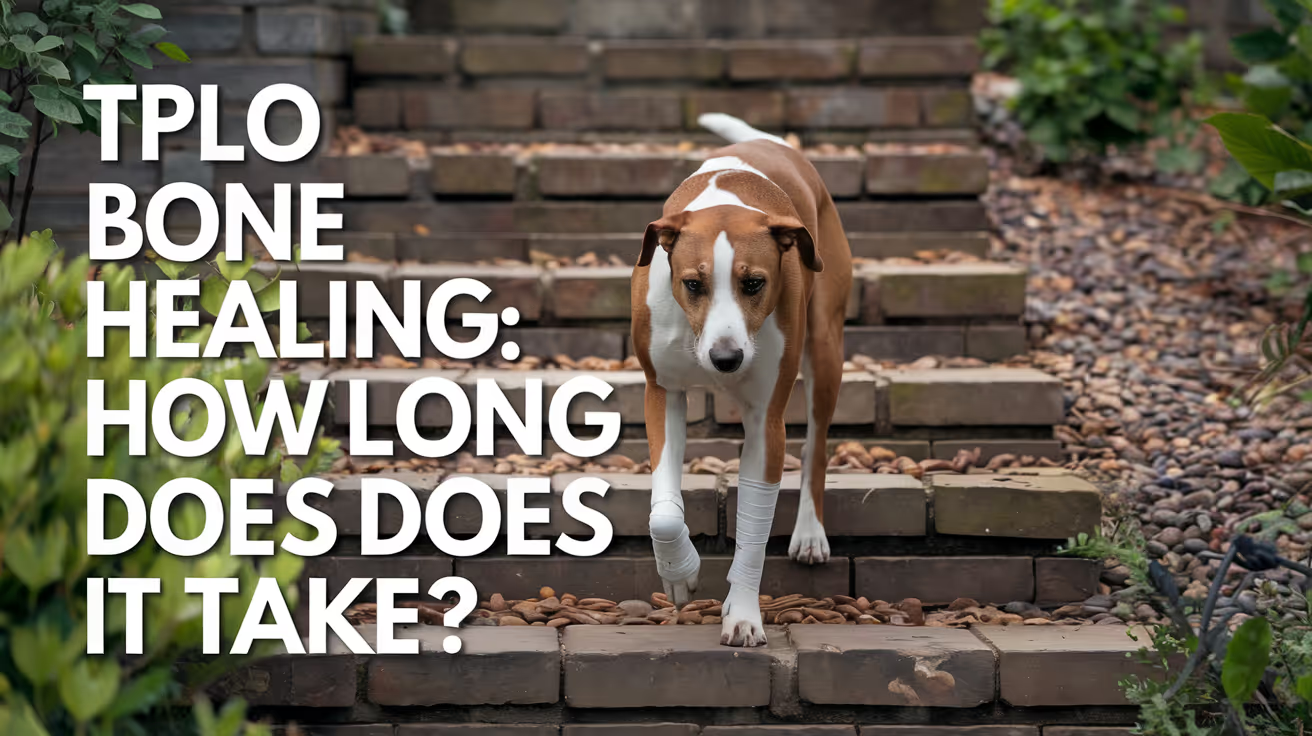
TPLO Bone Healing Time in Dogs Explained
Learn about TPLO bone healing time in dogs, factors affecting recovery, and how to support your pet's healing after surgery.
Tibial Plateau Leveling Osteotomy (TPLO) is a common surgical procedure used to treat cranial cruciate ligament (CCL) injuries in dogs. Understanding the bone healing time after TPLO surgery is important for pet owners to manage their dog's recovery effectively. This article explains the typical healing timeline, factors influencing bone healing, and how to support your dog during this critical period.
TPLO bone healing time in dogs usually ranges from 8 to 12 weeks, depending on various factors such as the dog's age, size, and overall health. This guide will help you learn what to expect during recovery, signs of proper healing, and tips to ensure your dog regains full mobility safely.
What is the typical bone healing time after TPLO surgery in dogs?
Bone healing after TPLO surgery is a gradual process that involves the formation of new bone tissue at the osteotomy site. Most dogs show significant healing within 8 to 12 weeks post-surgery. However, the exact time can vary based on individual factors.
- Healing duration range: Most dogs' bones heal sufficiently between 8 and 12 weeks after TPLO surgery, allowing gradual return to activity.
- Initial bone stability: The surgical plate and screws provide immediate stability, helping bones start healing without shifting.
- Radiographic confirmation: Veterinarians use X-rays around 8 weeks post-op to assess bone healing progress before increasing activity.
- Complete remodeling: Full bone remodeling and strength restoration can take several months beyond initial healing.
Understanding this timeline helps owners plan post-operative care and follow veterinary advice to avoid complications.
What factors influence TPLO bone healing time in dogs?
Several factors affect how quickly a dog's bone heals after TPLO surgery. Recognizing these can help you provide better care and anticipate recovery challenges.
- Dog's age: Younger dogs tend to heal faster due to better bone regeneration capacity compared to older dogs.
- Body weight and size: Larger or overweight dogs may experience slower healing because of increased stress on the surgical site.
- Overall health: Dogs with good nutrition and no underlying diseases generally heal more efficiently.
- Post-surgery activity level: Excessive movement or jumping can delay healing by stressing the osteotomy site.
By managing these factors, you can support your dog's recovery and reduce the risk of delayed healing or complications.
How can you support your dog's bone healing after TPLO surgery?
Proper care after TPLO surgery is crucial to promote bone healing and prevent setbacks. Owners should follow veterinary instructions closely and create a safe environment for recovery.
- Strict rest and confinement: Limit your dog's activity to prevent excessive strain on the healing bone during the first 8 weeks.
- Controlled leash walks: Short, slow walks help maintain muscle tone without risking injury to the surgical site.
- Balanced nutrition: Provide a diet rich in protein, calcium, and vitamins to support bone regeneration.
- Regular veterinary check-ups: Follow-up visits allow monitoring of healing progress and early detection of complications.
These steps help ensure your dog recovers safely and regains full function after TPLO surgery.
What signs indicate proper bone healing after TPLO surgery?
Monitoring your dog for signs of proper healing can reassure you that recovery is on track. Some clinical and radiographic signs are important to watch for.
- Decreased lameness: Gradual improvement in weight-bearing and reduced limping suggest healing progress.
- Reduced swelling and pain: Less inflammation around the surgical site indicates tissue recovery.
- Stable surgical site: No abnormal movement or instability when the leg is gently handled.
- Positive X-ray findings: Evidence of new bone formation bridging the osteotomy gap confirms healing.
If you notice worsening lameness or swelling, contact your veterinarian promptly as these may indicate complications.
What complications can affect TPLO bone healing time?
Some complications can delay or impair bone healing after TPLO surgery. Being aware helps you seek timely veterinary care if needed.
- Infection risk: Surgical site infections can slow healing and require antibiotics or further treatment.
- Implant failure: Loosening or breaking of plates and screws can destabilize the bone and delay healing.
- Delayed union or nonunion: Sometimes bones heal slowly or fail to unite, needing additional intervention.
- Excessive activity: Early or vigorous exercise can disrupt healing and cause complications.
Prompt veterinary attention for any concerns can prevent prolonged recovery and improve outcomes.
How long should activity be restricted after TPLO surgery?
Activity restriction is essential to protect the healing bone and surgical site. Most veterinarians recommend strict rest with limited movement for the first 8 weeks.
- First 2 weeks: Complete confinement with minimal movement, avoiding stairs and jumping.
- Weeks 3 to 8: Controlled leash walks only, gradually increasing duration based on healing progress.
- After 8 weeks: Veterinary assessment guides gradual return to normal activity if healing is adequate.
- Full recovery timeline: Most dogs resume normal activity by 12 to 16 weeks post-surgery after full bone remodeling.
Following these guidelines helps prevent re-injury and supports successful healing after TPLO surgery.
Conclusion
TPLO bone healing time in dogs typically ranges from 8 to 12 weeks, with full recovery taking several months. Understanding this timeline and the factors that influence healing helps owners provide the best care during their dog's recovery.
Strict activity restriction, proper nutrition, and regular veterinary follow-ups are key to ensuring your dog heals well after TPLO surgery. Watching for signs of proper healing and potential complications allows prompt action to support your pet's health and mobility.
FAQs
How long does it take for a dog's bone to heal after TPLO surgery?
Most dogs' bones heal sufficiently between 8 and 12 weeks after TPLO surgery, but full remodeling may take several months.
Can older dogs heal as well as younger dogs after TPLO?
Older dogs may heal more slowly due to reduced bone regeneration, but with proper care, they can still recover well after TPLO surgery.
When can my dog start walking normally after TPLO?
Controlled leash walks usually begin after 2 weeks, with gradual increase after 8 weeks based on veterinary assessment of healing.
What signs mean my dog is not healing properly after TPLO?
Signs like increased swelling, worsening lameness, or instability at the surgical site suggest complications and need veterinary evaluation.
Is physical therapy helpful during TPLO recovery?
Physical therapy can aid muscle strength and joint mobility but should only start after bone healing is confirmed by your veterinarian.
Zlig vs TPLO: Which Surgery Is Better for Dogs?
Compare Zlig and TPLO surgeries for dogs to understand which is better for cruciate ligament injuries and recovery outcomes.
Zlig (STIF-VETLIG) is an intra-articular synthetic implant used to reconstruct the cranial cruciate ligament inside the joint a conceptually different approach from TPLO, which changes joint mechanics rather than replacing the ligament.
Both are valid surgical options for CCL rupture in dogs, and the evidence base for Zlig, while smaller than for TPLO, is growing.
Quick answer: Zlig replaces the torn CCL inside the joint using a synthetic fiber implant through small bone tunnels. A 107-case prospective study reported good to excellent results in 97 cases. TPLO has a much larger evidence base and is the ACVS first-choice for large dogs.
Key takeaways
- Zlig reconstructs the CCL inside the joint using a synthetic fiber implant through small bone tunnels; TPLO changes joint geometry instead
- A 107-case prospective study reported good to excellent results in 97 cases: the largest Zlig dataset, single-centre, without controlled TPLO comparison
- TPLO has a significantly larger evidence base: 25+ years of RCTs and ACVS first-choice status for dogs over 60 lbs
- Zlig requires only small bone tunnels, no osteotomy: bone-cutting complications such as delayed union are not relevant
- Implant failure is the primary Zlig-specific risk: the synthetic ligament may stretch or fail over time in large or very active dogs
- Zlig suits bilateral CCL cases in small to medium dogs: both knees can sometimes be addressed in one procedure
How Zlig works
Zlig stands for Z-Ligament. The procedure uses a synthetic fiber implant (marketed as STIF-VETLIG GLOBAL) placed intra-articularly inside the joint capsule to replace the torn CCL.
Unlike extracapsular techniques (lateral suture, Tightrope) which place material outside the joint, Zlig anatomically reproduces the CCL's position within the joint.
The procedure involves drilling small bone tunnels through the femur and tibia at the anatomical insertion points of the CCL.
The synthetic implant is passed through these tunnels and secured, providing immediate mechanical stability similar to the original ligament.
Because there is no bone cutting or tibial rotation, Zlig is less invasive than TPLO and significantly faster to perform.
Recovery may be faster in the early post-operative period for the same reason.
The hund-kreuzbandriss.de clinical commentary (German veterinary reference site) notes: TPLO is a fairly invasive technique that causes irreversible changes.
Intra-articular reconstruction with synthetic fibers only requires small bone tunnels, and complications from osteotomy when they occur are not always easy to correct.
Who makes the Zlig implant?
The Zlig system uses the STIF-VETLIG GLOBAL implant, manufactured in France.
The procedure was developed primarily in France and Germany. It is gaining awareness in other countries but remains far less available than the major TPLO systems.
The highly porous intra-articular fiber design promotes fibroblast penetration and collagen fiber ingrowth over time, which the manufacturers propose increases implant longevity by improving resistance to flexion and torsional forces.
What the evidence shows
Primary Zlig outcome study
A prospective study by Le Doze, Paris, and Pages (2012 to 2021, 107 cases) found good to excellent results in 97 of 107 cases.
The study was conducted at two veterinary clinics in France. This is the most comprehensive Zlig-specific outcome dataset in the veterinary literature.
The hund-kreuzbandriss.de review confirms: Reconstruction of the CCL using the intra-articular synthetic implant STIF-VETLIG GLOBAL leads to good to excellent results in 97 cases in this prospective study from 2012 to 2021.
Limitations of current Zlig evidence
- The primary study is single-centre, non-randomized, and lacks a direct comparison control group
- Long-term data beyond the study's follow-up period is limited
- The procedure has not been evaluated in large-scale randomized controlled trials comparable to those available for TPLO and TTA
- The evidence base is substantially smaller than for TPLO (25+ years of multi-centre data)
TPLO evidence in context
TPLO has been evaluated in prospective randomized studies, force plate gait analysis trials, and multi-year cohort studies across dozens of institutions.
The ACVS recommends TPLO as the most commonly performed procedure for dogs over 60 lbs based on this evidence base.
Zlig vs TPLO: key differences
Patient selection
Zlig may be preferred when:
- Small to medium breed dogs (primary candidate group in current evidence)
- Bilateral CCL rupture in a small dog where simultaneous correction in one anaesthesia event is desired
- Dog owner prefers to avoid the irreversible tibial changes of an osteotomy
- The surgeon is specifically trained in the Zlig technique
TPLO is typically recommended when:
- Dogs over 30 to 40 lbs, especially large and giant breeds
- Dogs with steep tibial plateau angle (TPA) some are not suitable candidates for Zlig due to concurrent patellar luxation or excessive tibial ridge concavity
- The ACVS first-choice recommendation is preferred, with the largest evidence base
- General specialty practice context where Zlig expertise is not available
Hund-kreuzbandriss.de notes: dogs with a steep tibial plateau angle, concurrent patellar luxation, or excessive concavity of the tibial ridge are not good candidates for Zlig.
In these cases, TPLO represents an excellent and often the only alternative.
For the full surgical alternatives overview, see alternatives to TPLO surgery for dogs. For the TPLO vs Tightrope comparison, see Tightrope vs TPLO surgery for dogs.
Frequently asked questions
Is Zlig as effective as TPLO?
For small to medium dogs, the single-centre prospective study shows good to excellent results in the majority of cases.
A direct head-to-head randomized comparison with TPLO in matched patient populations has not been published, so direct effectiveness comparison is not currently possible.
TPLO has a much stronger and broader evidence base overall.
Can large dogs have Zlig surgery?
The current evidence base for Zlig is strongest in small to medium dogs. Large dogs generate higher joint forces that place more demand on the synthetic implant over time.
Many surgeons with Zlig experience reserve it for smaller patients, though there is no absolute size cutoff in the literature.
What happens if the Zlig implant fails?
The synthetic ligament can stretch or rupture over time. If this occurs, the stifle returns to instability and lameness.
Revision surgery would typically involve a different approach TPLO or TTA since the anatomy has not been altered by the Zlig procedure, making revision more straightforward than after an osteotomy.
How long does Zlig surgery take?
Shorter than TPLO in most cases, because no osteotomy is performed.
The exact duration varies by surgeon experience and patient anatomy, but the minimally invasive nature of the procedure is one of its practical advantages.
Where can I find a surgeon who performs Zlig?
Zlig is performed by veterinary surgeons specifically trained in the technique, primarily in France and Germany where the procedure was developed, and increasingly in other countries.
Board-certified veterinary orthopedic surgeons can advise whether the technique is available in your region.
Resources
- Hund-Kreuzbandriss. Zlig Method: A Study. (Le Doze et al., 2012 to 2021 prospective study summary.) hund-kreuzbandriss.de
- Hund-Kreuzbandriss. TPLO vs TTA vs ZLig vs Suture Retraction: 6 Methods. hund-kreuzbandriss.de
- ACVS. Cranial Cruciate Ligament Disease. acvs.org
- Vetamac. TPLO Surgery for Dogs: Success Rates and Alternative Options. vetamac.com

TPLO Plate Rejection Symptoms in Dogs
Learn to recognize TPLO plate rejection symptoms in dogs, including signs, causes, and treatment options for better recovery.
TPLO plate rejection is one of the less common but more serious complications that can follow tibial plateau leveling osteotomy surgery.
The term "rejection" is sometimes used loosely distinguishing between true immune-mediated rejection, infection, and implant loosening matters because the treatment differs significantly for each.
Quick answer: True TPLO plate rejection is rare — implants are highly biocompatible. It produces persistent swelling, heat, pain over the plate, and sometimes a draining tract. Infection produces identical symptoms. Contact your vet if lameness worsens or discharge appears weeks to months after surgery.
Key takeaways
- True immune-mediated plate rejection is rare: TPLO plates are made from highly biocompatible titanium or stainless steel
- Symptoms overlap significantly with infection: pain, swelling, heat, and discharge occur in both; bacterial culture distinguishes them
- Infection is the most common implant complication: TPLO infection rates range from 0.8 to 14.3%; true rejection is a small subset
- Signs typically appear weeks to months after surgery: worsening lameness after initial improvement is the classic red flag
- A draining tract (fistula) over the plate is a hallmark sign of implant-associated infection or rejection
- True rejection requires plate removal: once the osteotomy heals (at least 12 weeks), the plate is removed; bone heals without it
What is TPLO plate rejection?
The TPLO plate and screws are made from medical-grade titanium or stainless steel.
These materials are designed to be biologically inert the body should recognize them as neutral foreign material and wall them off without reaction.
Laguna Hills Animal Hospital explains that in some cases, the TPLO plate is rejected by the dog's body because it is perceived as a foreign object.
True immune-mediated rejection occurs when the immune system mounts an inflammatory response against the implant material itself. This is distinct from:
- Periprosthetic infection: bacteria colonize the implant surface and cause chronic infection around the plate; this is far more common than true rejection
- Mechanical failure: the plate bends, breaks, or screws loosen due to excessive force; this is a structural problem, not an immune reaction
- Normal post-surgical inflammation: expected in the first 2 to 3 weeks; should be improving, not worsening
In clinical practice, the distinction between true rejection and low-grade infection is often made by bacterial culture of the fluid or tissue at the site.
True aseptic rejection produces inflammation without bacterial growth; periprosthetic infection produces the same symptoms with positive cultures.
Symptoms of TPLO plate rejection
Dog Discoveries' veterinary reference describes plate rejection as: the knee becomes inflamed and sore around the plate, the dog feels constant pain and irritation, and the dog gets worse rather than better.
Signs of trouble are generally seen weeks to months after surgery rather than in the immediate post-operative period.
Key symptoms to monitor:
Worsening or persistent lameness: a dog that was improving and then regresses, or one whose lameness fails to improve beyond the expected baseline, is showing a key red flag. This is distinct from the expected early post-TPLO lameness that should be progressively improving week by week.
Localized swelling over the plate: visible or palpable swelling directly over the plate site (proximal medial tibia) that does not resolve with rest and is not reducing over time.
Warmth and heat at the surgical site: warmth beyond the first 2 to 3 post-operative weeks suggests ongoing inflammation.
Draining tract (fistula): a small hole in the skin near the surgical site that produces persistent clear, bloody, or purulent discharge. This is a hallmark of implant-associated complications either infection or reaction. Vet Playas confirms persistent drainage or discharge, especially with a foul odor, may indicate infection or plate rejection.
Pain on palpation: the dog reacts to direct pressure over the plate site.
Failure to heal: the dog is not progressing as expected at radiographic rechecks; osteotomy bridging is delayed or absent.
How plate rejection is diagnosed
Clinical examination: systematic palpation of the plate site, assessment of lameness grade, and comparison to expected recovery trajectory.
Radiographs: assess osteotomy healing, implant position, screw integrity, and periimplant bone quality. Periprosthetic bone loss suggests infection or chronic reaction.
Culture and sensitivity: fluid or tissue from the surgical site is cultured to determine whether bacteria are present and which antibiotics are effective. Culture-negative inflammation supports true rejection; culture-positive results confirm infection.
Blood work: elevated inflammatory markers (C-reactive protein, white blood cell count) confirm systemic involvement.
Treatment
For infection (most common implant complication)
Culture-directed antibiotic therapy is initiated. If the osteotomy is not yet healed, the plate must remain in place removing the plate before the osteotomy heals causes the bone segments to lose support.
Targeted antibiotics and local wound management may control infection until healing is sufficient.
If the infection does not resolve with antibiotics, surgical debridement or implant removal (if the bone has healed) may be required.
For the full infection management guide, see TPLO plate infection signs and treatment.
For true aseptic rejection
Plate removal is the definitive treatment. Laguna Hills Animal Hospital confirms that the bone plate must remain in place for at least 12 weeks to allow the bone to heal.
Once healing is confirmed radiographically typically at 10 to 12 weeks the plate can be safely removed.
The bone does not require the plate long-term; it is a scaffold to hold the osteotomy while it heals.
When to contact your veterinarian
Contact your vet if:
- Lameness worsens or plateaus instead of progressively improving
- You notice new swelling, heat, or discharge at the surgical site weeks after surgery
- A draining tract appears at or near the incision
- Your dog shows signs of pain at the plate site on palpation
- Radiographs at rechecks show unexpected findings around the plate or screws
For the implant failure guide, see TPLO implant failure signs and causes. For the plate removal recovery guide, see TPLO plate removal recovery guide.
For the full complications reference, see 15 common complications after TPLO surgery in dogs. For the plate infection article with antibiotic treatment details, see TPLO plate infection signs and treatment.
For when the plate needs to come out due to infection, see when does a TPLO implant need to be removed due to infection.
Frequently asked questions
How common is TPLO plate rejection in dogs?
True immune-mediated rejection is uncommon. TPLO plates are manufactured from highly biocompatible titanium or stainless steel.
The more common implant complication is infection (0.8 to 14.3% of TPLO cases depending on the study), which produces similar symptoms to rejection.
Metal allergy or true rejection accounts for a small subset of these cases.
How do I know if it's plate rejection or infection?
The symptoms overlap significantly. Bacterial culture of fluid from the site distinguishes them: culture-positive means infection; culture-negative inflammation in the right clinical context suggests true rejection.
Both require veterinary evaluation do not attempt to manage either at home.
Can the plate stay in if my dog is rejecting it?
No. If true rejection is diagnosed and the plate is causing ongoing inflammation, it must be removed once the osteotomy has healed sufficiently.
Most dogs do not require the plate after 10 to 12 weeks once the bone has consolidated. Plate removal is a less complex procedure than the original TPLO.
Will my dog need another surgery if the plate is rejected?
Plate removal surgery is typically required if true rejection is confirmed and the osteotomy has healed. This is less invasive than the original TPLO.
In most cases the dog recovers well after plate removal, and long-term outcomes are good.
Can rejection be prevented?
Pre-surgical screening for metal sensitivities can help select the best implant material. Strict aseptic technique during surgery minimizes infection that can mimic rejection.
Activity restriction during recovery reduces mechanical stress on the implant that increases complication risk.
Resources
- Dog Discoveries. Signs of TPLO Plate Rejection in Dogs. dogdiscoveries.com
- Vetplayas. Unveiling TPLO Plate Rejection Symptoms. vetplayas.com
- Laguna Hills Animal Hospital. TPLO Surgery Complications. lhah.com
- ACVS. Cranial Cruciate Ligament Disease. acvs.org
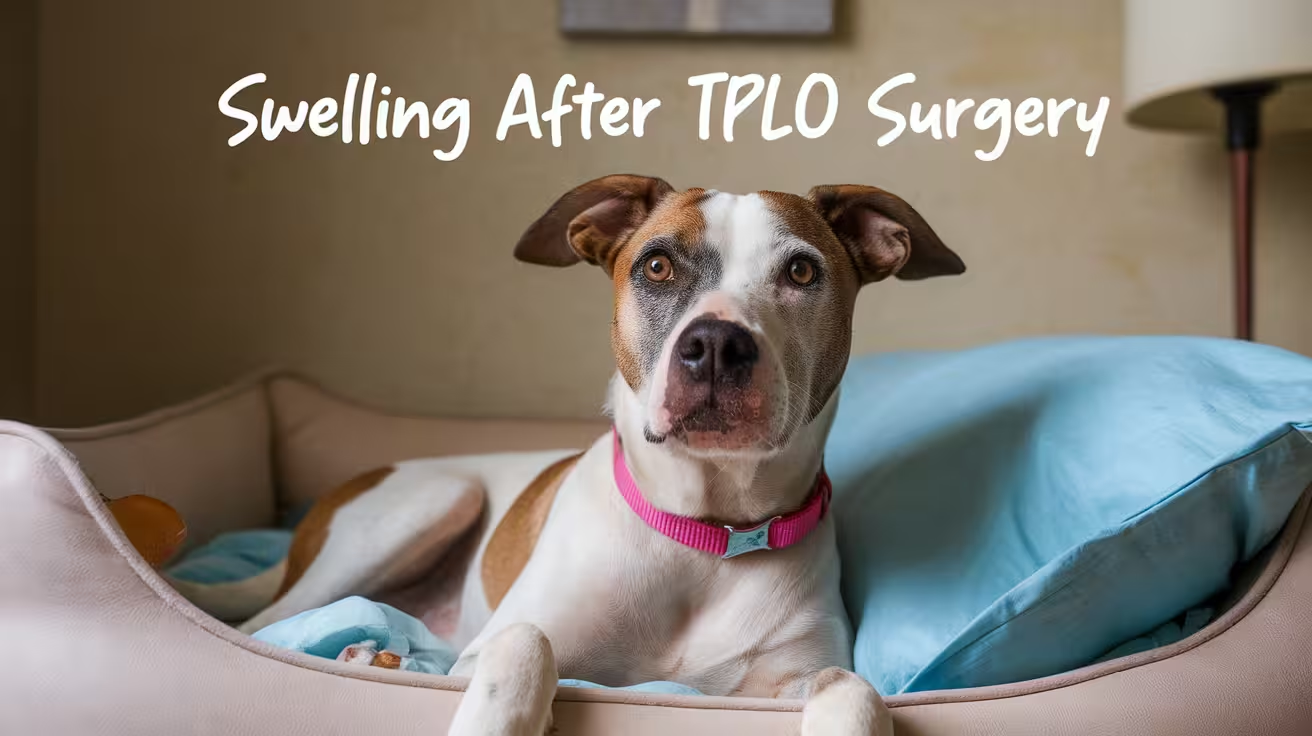
How Long Does Swelling Last After TPLO Surgery
Find out how long swelling lasts after TPLO surgery, what’s normal, and when to call your vet for possible infection or complications.
Post-surgical swelling after TPLO is normal, expected, and self-limiting when managed correctly. Most incision-area swelling peaks within the first 2 to 5 days and resolves by 2 weeks.
Swelling that does not follow this trajectory -- that is not declining, or that appears new after initial improvement -- is the key indicator that requires veterinary attention.
Quick answer: Normal TPLO swelling peaks at days 2 to 5 and resolves within 1 to 2 weeks with cold therapy and rest. Ankle swelling from gravity-dependent fluid migration appears at days 3 to 5. Swelling increasing after day 5, or with warmth, redness, or discharge, warrants veterinary evaluation.
Key takeaways
- Normal TPLO swelling peaks at days 2 to 5: SustainableVet.org confirms mild incision swelling usually goes away within two weeks
- Ankle swelling is a normal gravity-dependent phenomenon: TPLO Info confirms ankle swelling typically appears at days 3 to 5; it is fluid migrating downward from the surgical site
- Cold therapy in the first 48 to 72 hours is the primary management tool: 10 to 15 minutes, 3 to 4 times daily, reduces swelling and pain
- Swelling worsening after day 5 or accompanied by warmth, redness, or discharge indicates infection, seroma, or hematoma; contact your vet within 24 hours
- Mild swelling can persist for weeks at a low level in larger dogs and those with poor activity restriction compliance; trajectory matters more than absolute level
- Nighttime swelling is common and normal: dogs move less at rest, allowing fluid to settle; this should improve by morning or after repositioning
Normal swelling: timeline and characteristics
Days 1 to 3: acute post-surgical swelling
Swelling begins within hours of surgery and results from:
- Surgical tissue trauma (incision through skin, subcutaneous tissue, and fascia)
- Bone cutting at the osteotomy site
- Inflammatory response to the metal plate and screws
- Fluid accumulating in the disrupted tissue spaces
This early swelling is diffuse, soft, and warm to the touch. It is the expected cellular response to surgery.
Days 2 to 5: peak swelling
Swelling typically peaks between days 2 and 5. The dog's leg may look noticeably larger at this stage, and some extension of swelling down the lower leg toward the ankle is normal.
Vetplayas confirms: swelling typically peaks within the first few days after surgery but should gradually subside over time.
Days 3 to 5: ankle swelling appears
A distinct swelling often appears at the ankle (tarsus) between days 3 and 5, sometimes alarming owners who notice it away from the surgical site. This is entirely normal.
TPLO Info confirms: it is completely normal for swelling to develop around the ankle approximately 3 to 5 days following surgery on the TPLO leg.
This swelling can be massaged and iced if it occurs and will resolve over a few days.
TPLO Austin confirms this finding identically. The mechanism is gravity-dependent migration of tissue fluid from the surgical site through the fascial planes of the lower leg.
Days 5 to 14: progressive resolution
From day 5 onward, swelling should consistently decrease with each daily inspection. Cold therapy, rest, and anti-inflammatory medication all contribute to this resolution.
SustainableVet.org confirms: mild swelling around the incision site usually goes away within two weeks. The trajectory must be consistently improving.
Beyond 2 weeks: residual low-level swelling
Some dogs retain mild soft swelling around the lower leg beyond 2 weeks, particularly larger dogs with greater tissue volume and dogs who have been less compliant with activity restriction.
This is usually minor and does not indicate a problem if:
- The swelling is soft and not warm
- There is no discharge or redness
- The dog is bearing weight and improving in lameness
Cold therapy: the primary management tool
Cold therapy is the evidence-based first-line intervention for post-surgical swelling.
Protocol:
- Wrap an ice pack or bag of frozen peas in a thin cloth or towel
- Apply to the incision and plate site for 10 to 15 minutes
- Repeat 3 to 4 times daily
- Begin on day 1 post-surgery
- Continue for the first 48 to 72 hours (the acute inflammatory phase)
SustainableVet.org confirms: cold therapy, like applying an ice pack wrapped in a towel for 10 to 15 minutes several times a day during the first 72 hours, helps reduce inflammation.
After the initial period, warm compresses can be used to promote circulation.
Never apply ice directly to the skin or incision -- frostbite and wound damage can result. Remove the pack immediately if the skin appears pale or very cold.
For the ankle specifically, TPLO Info confirms: ankle swelling can be massaged and iced. Gentle proximal-to-distal massage (toward the toes) applied after icing helps lymphatic drainage.
Concerning swelling: signs requiring veterinary contact
Swelling that is not declining after day 5
Normal swelling is consistently declining from day 5 onward. Swelling that is the same or larger than on day 3, measured at day 7, is not normal.
New swelling after apparent resolution
If swelling had reduced and then reappears -- particularly at the plate site rather than the incision -- this suggests a developing seroma, hematoma, or early infection.
SustainableVet.org confirms: you should be concerned if swelling increases after the first week or is accompanied by heat, redness, oozing, or a bad odor.
Warmth, firmness, redness, or discharge alongside swelling
These features distinguish infection from normal surgical edema. Normal edema is diffuse, soft, not dramatically warm, and has no discharge. Infection produces focal warmth, firmness, redness spreading beyond the incision, and discharge.
Swelling at the plate site (not the incision) weeks after surgery
This can indicate an implant-associated infection with seroma or early osteomyelitis. Requires radiographic assessment and deep sampling.
Seroma: a specific type of post-surgical swelling
A seroma is a localized collection of clear serous fluid under the skin, forming when tissue spaces fill with tissue fluid that has not been reabsorbed.
Seromas after TPLO are common and are distinct from infection.
Signs of seroma:
- A soft, fluctuant (fluid-filled) swelling at or near the incision
- Typically appears 1 to 3 weeks post-surgery
- Fluid is clear or pale yellow when aspirated
- No warmth, redness, or discharge from the incision itself
Most seromas resolve without treatment. Your vet will assess whether aspiration or monitoring is appropriate.
For the fluid buildup guide, see fluid buildup after TPLO surgery in dogs. For the ankle swelling guide, see ankle swelling after TPLO surgery in dogs.
For the infection signs guide, see TPLO plate infection signs and treatment. For the bruising guide, see bruising after TPLO surgery in dogs.
Frequently asked questions
Is it normal for the whole leg to swell after TPLO?
Yes, in the early days. Diffuse swelling of the lower leg, extending from the surgical site toward the ankle, is normal in the first 1 to 2 weeks.
Gravity and the inflammatory response both contribute. This resolves as the inflammatory process settles and the dog begins controlled weight bearing.
My dog's leg looks huge at day 3. Is that too much?
Day 3 is within the normal peak swelling period.
Unless the swelling is dramatically asymmetric compared to the other leg, is very hot, or is producing discharge, observe and continue cold therapy as directed.
If you are concerned, contact your vet to describe the swelling -- they can advise whether in-person assessment is needed.
Should I massage the swollen leg?
Gentle lymphatic massage (soft strokes toward the body, from the ankle upward) after icing can help reduce distal swelling.
Do not massage directly over the incision or plate site, and do not massage aggressively. Ask your vet or rehabilitation therapist to demonstrate the correct technique.
My dog's swelling is going up and down -- bigger in the evening, smaller in the morning. Is that normal?
Yes. SustainableVet.org confirms that mild nighttime swelling occurs because dogs move less while resting, allowing fluid to settle. Morning improvement after repositioning and movement is normal.
The concern is when the morning maximum is larger than the previous day's morning maximum -- a consistently worsening trend.
When does warm therapy replace cold therapy?
Cold therapy is most beneficial in the first 48 to 72 hours (the acute inflammatory phase). After 72 hours, warm compresses promote circulation and may help reabsorb residual fluid.
The transition is typically around days 3 to 5. Never apply warmth to an incision that looks infected or discharging -- this can worsen infection.
Resources
- TPLO Info. TPLO Recovery FAQ. tploinfo.com
- SustainableVet. Post-Surgery Recovery After TPLO in Dogs. sustainablevet.org
- TPLO Austin. TPLO Incision Care After Surgery. tploaustin.com
- VCA Animal Hospitals. Tibial Plateau Leveling Osteotomy (TPLO) in Dogs. vcahospitals.com

Ankle Swelling After TPLO Surgery in Dogs
Learn about causes, symptoms, and treatment of ankle swelling after TPLO surgery in dogs to ensure proper recovery and care.
Many owners are surprised to find their dog's ankle swollen after TPLO surgery especially when the surgery was performed on the knee, which is well above the ankle.
This gravity-dependent swelling is one of the most common post-TPLO findings, and in most cases it is a completely normal part of recovery.
Knowing what causes it, when it is expected, and when it becomes a reason to call your vet puts you in a much better position during recovery.
Quick answer: Ankle swelling 3 to 5 days post-TPLO is normal — gravity pools post-surgical fluid at the ankle. Resolves in 1 to 2 weeks with rest and cold packing. Call your vet if swelling is hot, fast-growing, or discharging.
Key takeaways
- Ankle swelling at 3 to 5 days post-TPLO is normal: fluid from the knee surgical site tracks down the leg; TPLO Info confirms this is routine
- Gravity pulls fluid to the ankle: dogs do not elevate the leg during recovery, so post-surgical fluid migrates downward
- Normal ankle swelling is mild, soft, and non-painful: not hot, red, rapidly growing, or producing any discharge
- Cold packing and gentle massage help resolve ankle swelling: they reduce inflammation and encourage fluid movement
- Excessive activity worsens ankle swelling: running, jumping, or sustained weight-bearing beyond short leash walks increases fluid accumulation
- Infection is the main abnormal cause: infected swelling is warm, painful, and accompanied by fever or lethargy
Why does ankle swelling happen after TPLO?
TPLO surgery is performed at the proximal tibia just below the knee. However, the inflammatory response and fluid production that result from surgery are not confined to the exact surgical site.
Gravity-dependent fluid migration: post-surgical serum and inflammatory fluid produced at the knee level migrate downward along tissue planes. Because dogs do not elevate their legs during recovery unlike a human keeping a leg raised on a pillow this fluid pools in the lower leg and ankle region.
TPLO Info confirms ankle swelling at 3 to 5 days post-TPLO is completely normal and recommends massage and icing if this occurs.
Lymphatic disruption: the surgery disrupts local lymphatic vessels that normally drain fluid from the lower leg. Until these pathways regenerate or compensate, fluid accumulation in the lower leg is common.
Reduced movement: when a dog is resting with the leg dependent (hanging down), fluid accumulates. Brief controlled leash walks stimulate the lymphatic pump and muscle contractions that help move fluid back up the leg.
Normal ankle swelling: what to expect
Normal post-TPLO ankle swelling typically:
- Appears at day 3 to 5 post-surgery
- Is soft and pitting (you can press on it and it indents temporarily)
- Is not warm to the touch
- Does not produce any discharge
- Does not cause significant additional pain beyond the expected post-operative discomfort
- Gradually reduces over 1 to 2 weeks with rest and activity restriction
VCA Animal Hospitals notes that mild to moderate swelling is expected after TPLO surgery as the body responds to tissue trauma and the healing process begins.
Abnormal ankle swelling: warning signs
Contact your veterinarian if you observe:
- Swelling that is rapidly increasing especially in the first 1 to 2 weeks
- Warmth or heat in the swollen area beyond mild
- Redness or skin discoloration around the ankle or lower leg
- Discharge or pus from the surgical incision or surrounding skin
- Your dog refusing to bear any weight on the leg
- Fever, lethargy, or loss of appetite alongside the swelling
- Swelling that is growing rather than shrinking after the first week
These signs suggest infection, hematoma, or a complication beyond normal gravity-dependent fluid pooling.
How to manage ankle swelling at home
Cold packing: apply a cold pack (frozen peas wrapped in a thin towel) to the ankle for 10 to 15 minutes, 2 to 3 times daily. Cold reduces local inflammation and provides mild pain relief. Always wrap the cold pack never apply ice directly to skin.
Gentle massage: TPLO Info recommends gentle massage if ankle swelling develops. Using a light hand, massage from the ankle upward toward the knee to encourage fluid to move back toward the body. Do not massage the surgical incision site itself.
Activity restriction: the most important intervention. Every unnecessary step the dog takes increases fluid production and worsens swelling. Strict confinement with leash-only bathroom walks is essential for the first 6 to 8 weeks.
Short controlled leash walks: paradoxically, very short leash walks (5 to 10 minutes) are better than complete immobility. Gentle controlled movement stimulates the lymphatic pump and helps clear fluid more effectively than prolonged rest. Do not allow the dog to run, jump, or play.
Timeline: when should ankle swelling resolve?
Most normal ankle swelling resolves within 1 to 2 weeks of surgery when activity restriction is maintained.
Vetplayas notes that swelling is a common response to surgical intervention and typically improves as healing progresses.
Persistent ankle swelling beyond 2 to 3 weeks, or swelling that worsens rather than improves, warrants a veterinary recheck.
This may indicate a seroma has formed in the lower leg, or that the dog is more active than recommended.
For the full fluid buildup and seroma guide, see fluid buildup after TPLO surgery in dogs.
For the full swelling timeline and duration guide, see how long does swelling last after TPLO surgery. For the complete complications overview, see 15 common complications after TPLO surgery in dogs.
For the incision infection guide, see TPLO incision infection symptoms and prevention.
Frequently asked questions
Is ankle swelling after TPLO always from the surgery?
In the first 1 to 3 weeks post-surgery, yes ankle swelling almost always relates directly to the procedure.
Rarely, a dog might develop an unrelated issue (insect sting, foreign body, contact dermatitis) but the timing overwhelmingly points to post-surgical fluid migration in most cases.
Should I wrap my dog's ankle if it's swollen after TPLO?
Only if your vet specifically recommends it. Improper bandaging can cut off circulation or cause pressure sores.
If you are concerned about the ankle swelling, contact your vet before applying any bandage or wrap at home.
My dog's ankle is swollen but the knee looks fine. Is that normal?
Yes. The surgical site at the knee may look relatively normal while the ankle is more visibly swollen because gravity pulls fluid downward.
This pattern is completely consistent with normal post-TPLO fluid migration and is not a sign that something is wrong at the ankle itself.
Can I use a compression sock on my dog's ankle?
Not without veterinary guidance. Human compression garments are not designed for canine anatomy and can cause pressure injury, especially around the hock joint.
If compression is indicated, your vet will apply an appropriate veterinary bandage.
When should I take my dog back to the vet for ankle swelling?
If the swelling appears within the first 1 to 2 weeks and is mild, soft, and not causing distress monitor at home with cold packing and massage.
If it is growing, warm, accompanied by redness or discharge, or if your dog is in significant pain, contact your vet promptly rather than waiting for a scheduled recheck.
Resources
- TPLO Info. Recovery FAQs. tploinfo.com
- VCA Animal Hospitals. Tibial Plateau Leveling Osteotomy (TPLO) in Dogs. vcahospitals.com
- Vetplayas. Understanding Swelling After TPLO Surgery. vetplayas.com
- Midwest Veterinary Specialists. Post-Operative Care Following TPLO. midwestveterinaryspecialists.com
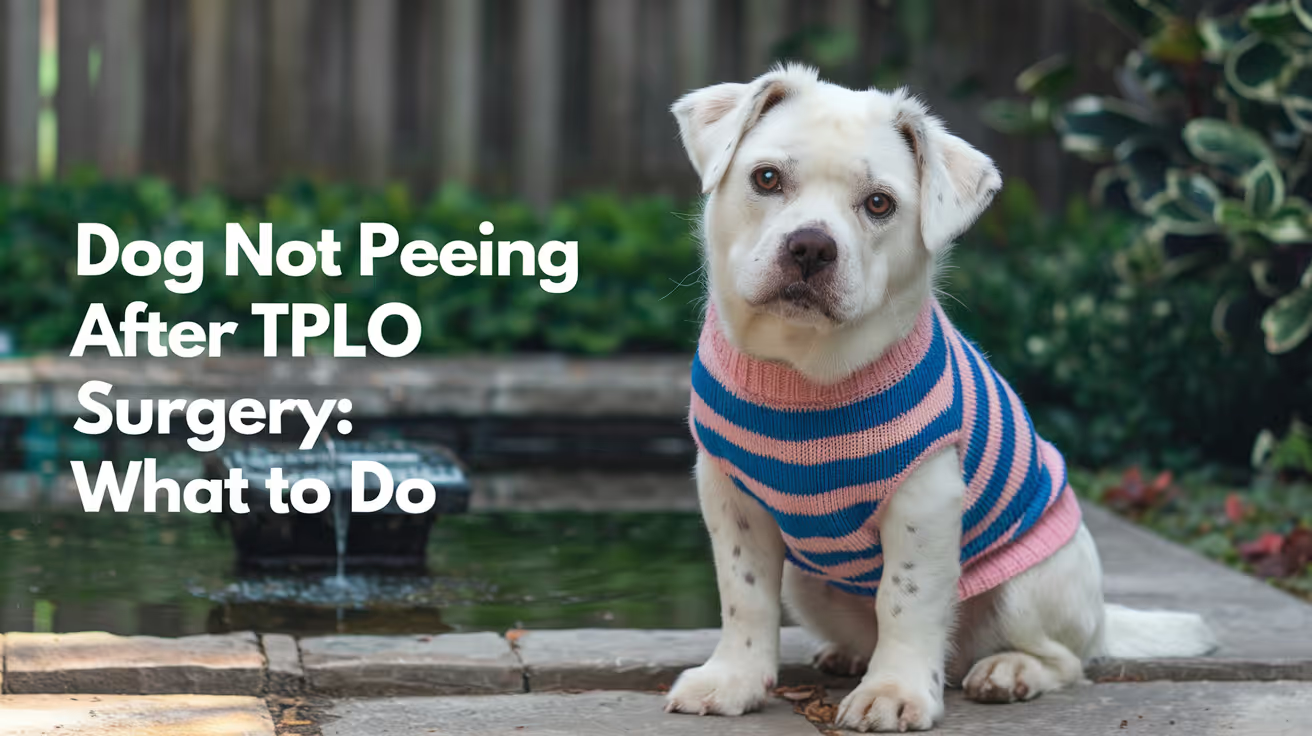
Dog Not Peeing After TPLO Surgery: Causes & Care
Learn why your dog may not pee after TPLO surgery and how to manage this common post-op issue safely and effectively.
It is common to notice changes in a dog's urination pattern in the first 24 to 48 hours after TPLO surgery.
Most of these changes are temporary and related to the effects of anesthesia, pain medications, and reduced mobility.
However, not urinating at all for more than 12 to 24 hours is a clinical concern that requires prompt veterinary contact.
Quick answer: Reduced urination in the first 12 to 24 hours after TPLO is usually caused by anesthesia effects, opioid medications, pain, or stress. Contact your vet immediately if your dog has not urinated within 12 hours post-surgery, or if you observe straining, vocalization, or abdominal distension.
Key takeaways
- Reduced urination in the first 12 to 24 hours is normal: anesthesia suppresses bladder awareness and opioids reduce the sensation of fullness
- Contact your vet if no urination occurs within 12 hours post-surgery: this is the critical threshold, per published veterinary guidance do not wait
- Straining, vocalizing, or abdominal swelling requires same-day veterinary evaluation: these signs suggest urinary retention requiring catheterization
- Opioid pain medications are the most common pharmacological cause: they reduce bladder filling sensation and sphincter tone in some dogs
- Surgical catheterization during the procedure may temporarily affect urination for 12 to 24 hours after catheter removal
- Increased water intake without urination is particularly concerning: it suggests the dog is producing urine but cannot eliminate it a potential retention emergency
Why dogs may not urinate normally after TPLO
Anesthesia effects
General anesthesia suppresses the entire nervous system, including the neural pathways that signal bladder fullness and initiate voiding.
As anesthetic agents clear over the first 12 to 24 hours, normal bladder signaling gradually returns.
Most dogs produce less urine during anesthesia because of reduced blood pressure and fluid redistribution.
When fluid therapy resumes and hydration normalizes after surgery, urine production increases but the dog must also have recovered enough neurological function to void normally.
Opioid pain medications
Opioid analgesics (hydromorphone, morphine, buprenorphine) prescribed after TPLO affect urination in two main ways.
They reduce the perception of bladder fullness, so the dog does not signal readiness to urinate as promptly as usual.
In some dogs they also increase urethral sphincter tone, making voiding more difficult.
JustAnswer veterinary consultation confirms: opioids can cause urinary retention by relaxing or altering bladder muscles, making it hard for the dog to pee.
This effect is temporary and typically resolves as opioid dosing decreases over the first 48 to 72 hours.
Pain and reluctance to posture
Urination requires the dog to posture squatting or lifting a leg both of which require hindlimb use and core stability that are painful in the first days after TPLO.
A dog that finds posturing too painful may suppress the urge to urinate or produce only small amounts.
Providing a non-slip surface, a low slung outdoor space (not steps or slopes), and supporting the dog with a belly sling during outdoor trips reduces posturing pain and encourages normal urination.
Surgical catheterization
A urinary catheter is often placed during TPLO surgery to drain the bladder, keep the surgical field dry, and prevent accidents during the procedure.
After catheter removal, some dogs take 12 to 24 hours to resume normal voiding patterns as the urethra recovers from catheter placement and the bladder regains normal tone.
Stress and unfamiliar environment
Dogs in pain, in an unfamiliar post-surgical environment, and wearing an E-collar may suppress urination due to stress.
Stress-related urinary suppression is temporary and usually resolves as the dog settles into the home recovery environment.
Normal urination expectations after TPLO
Most dogs urinate at least once within 6 to 12 hours of returning home from surgery. By 24 hours, most dogs have urinated multiple times.
The SustainableVet.org dog-not-peeing guide confirms: if your dog does not pee within 24 hours post-surgery, contact your veterinarian immediately to rule out complications.
The published veterinary guidance for emergency contact is: no urination within 12 hours post-surgery contact your vet.
Signs that require immediate veterinary contact
Contact your veterinarian same-day or go to an emergency clinic if you observe:
No urination at all for 12 or more hours after surgery: this is the key threshold do not wait to see if it resolves
Straining or crying during urination attempts: the dog is trying to urinate but cannot produce a stream classic urinary retention sign
Abdominal distension: the belly feels full or tense; this suggests a distended bladder (urinary retention emergency)
Drinking water but producing no urine: urine is being produced but cannot be eliminated urgent
Vomiting or lethargy alongside no urination: systemic signs accompanying urinary retention indicate a more serious emergency
Urinary retention: what happens and how it is treated
Urinary retention means the bladder cannot empty. The bladder fills progressively and becomes painful, distended, and eventually at risk of rupture if unrelieved. Prolonged retention also causes back-pressure on the kidneys.
Treatment depends on the cause:
- Catheterization: gentle placement of a urinary catheter to drain the bladder provides immediate relief and allows the bladder to recover normal tone
- Pain management adjustment: if opioid-induced retention is suspected, the analgesic protocol may be modified
- Bethanechol: a parasympathomimetic drug that stimulates bladder contraction; sometimes used in dogs with neurogenic urinary retention
- Urinalysis and culture: if infection is suspected alongside retention
Home care to encourage urination
- Scheduled outdoor trips every 2 to 4 hours for the first 24 to 48 hours
- Non-slip surface outdoors pain and weakness increase slipping risk
- Gentle belly-sling support to reduce posturing pain (fold a large towel under the belly and lift slightly)
- Quiet, calm outdoor environment stressed dogs suppress urination
- Adequate pain control contact your vet if your dog is vocalizing or reluctant to move; these are signs pain medication is insufficient
- Monitor and record each urination: time, approximate volume, any straining or discomfort
For the related incontinence guide (opposite problem), see dog incontinence after TPLO surgery: causes and care. For the post-surgical pain guide, see dog whining after TPLO surgery: causes and care.
For the full recovery guide, see what to expect after TPLO surgery in dogs. For the monitoring guide during early recovery, see post-operative care mistakes increasing TPLO infection risk.
Frequently asked questions
How long after TPLO surgery should my dog urinate?
Most dogs urinate within 6 to 12 hours of returning home from surgery. Contact your veterinarian if no urination has occurred within 12 hours.
Do not wait for the 24-hour mark if the dog is straining, vocalizing, or appears uncomfortable.
My dog is drinking water but not peeing at all. Is this an emergency?
Yes. A dog that is drinking and producing urine but cannot eliminate it (retention) needs same-day veterinary evaluation. A distended bladder is painful and can rupture.
Do not manage this at home contact your vet immediately.
Can opioid pain medications cause urinary retention?
Yes. Opioids are a recognized cause of urinary retention in both humans and dogs.
If your dog was urinating normally before surgery and stops after receiving opioid medications, this is likely a contributing factor.
Contact your vet the analgesic protocol may be modified without eliminating pain management.
What does a catheter placement during surgery do to urination afterward?
Urinary catheters are placed during TPLO to drain the bladder and keep the surgical field dry.
After catheter removal, some dogs take 12 to 24 hours to resume normal voiding as the urethra recovers.
This is expected and not a cause for alarm, as long as the dog urinates within the normal timeframe.
Is it safe to give my dog extra water if they're not peeing?
Normal hydration is essential and should be maintained. Do not restrict water.
However, if the dog is drinking normally and still not producing urine, this increases the urgency of veterinary contact rather than reducing it.
Resources
- VCA Animal Hospitals. Tibial Plateau Leveling Osteotomy (TPLO) in Dogs. vcahospitals.com
- TPLO Info. Recovery FAQs. tploinfo.com
- PetMD. Urinary Retention in Dogs. petmd.com
- Midwest Veterinary Specialists. Post-Operative Care Following TPLO. midwestveterinaryspecialists.com
TPLO Plate Size Chart Explained
Detailed guide on TPLO plate size chart, helping pet owners understand implant options for canine knee surgery.
Before performing TPLO surgery, the veterinary surgeon selects the appropriate bone plate from a range of sizes specific to the implant system being used.
The plate size chart is the reference tool that guides this selection.
Choosing the correct plate is as important as the surgical technique itself an undersized plate risks mechanical failure, and an oversized plate may not fit the tibial anatomy correctly.
Quick answer: The TPLO plate size chart matches body weight and tibial bone dimensions to the appropriate implant. Arthrex plates range from 2.0 mm to 4.5 mm; Synthes covers a similar range. Tibial width is measured on preoperative radiographs and used alongside body weight to select the plate and screw configuration.
Key takeaways
- The plate size chart is a preoperative planning tool that matches body weight and bone dimensions to the appropriate implant
- Arthrex offers TPLO plates from 2.0 mm to 4.5 mm: the small sizes are purpose-designed for small breed anatomy, not scaled-down large plates
- Tibial width is measured on preoperative radiographs: a primary determinant of plate selection alongside body weight
- Plate selection is system-specific: Arthrex plates require Arthrex instruments and screws; Synthes requires Synthes-specific tools
- The plate is single-use sterile: a new plate must be available if a different size is needed intraoperatively
- Correct plate selection directly affects outcomes: undersized plates risk fatigue fracture; oversized plates cause soft tissue irritation
What the plate size chart does
The TPLO plate size chart is a lookup reference similar in function to the rotation chart and weight chart that are part of the Arthrex and Synthes TPLO planning systems.
It takes known inputs (primarily body weight and tibial dimensions measured on radiographs) and outputs the recommended plate size from the manufacturer's product range.
SustainableVet.org explains: a TPLO plate size chart is a reference guide used by veterinary surgeons to select the appropriate implant size for stabilizing the tibia after TPLO surgery.
Plates come in various lengths and hole numbers to fit different dog breeds and bone sizes.
The chart removes the guesswork from a decision that significantly affects the mechanical performance of the repair.
A plate that is correctly sized distributes load evenly across all screw holes and lies flush against the cortical bone surface, minimizing stress risers and soft tissue irritation.
Key variables in plate size selection
Body weight
Body weight is the primary initial filter. Heavier dogs generate higher joint forces and require larger, stiffer plates to withstand the loads applied during weight-bearing and normal activity.
General size categories used across Arthrex and Synthes product lines:
- Small breed (under 10 to 15 kg): 2.0 mm or 2.4 mm plates
- Medium breed (15 to 30 kg): 3.5 mm plates
- Large breed (30 to 50 kg): 3.5 mm or 4.5 mm plates
- Giant breed (over 50 kg): 4.5 mm plates; locking systems particularly important
These ranges are approximate and surgeon-dependent. The specific manufacturer chart values take precedence over general categories.
Tibial width and bone dimensions
The plate must span the osteotomy site with at least 2 screws proximal and 2 screws distal to the cut for adequate fixation.
The tibial width at the planned osteotomy level measured in millimeters on a mediolateral radiograph determines which plate length and screw configuration provides sufficient purchase without overhanging the bone margins.
Number of screw holes
Plates are available with different numbers of holes (typically 4, 5, or 6 holes for standard sizes).
More holes provide more screw fixation points, which is important in larger dogs or those expected to be highly active during recovery.
SustainableVet.org notes: plates come in various lengths and hole numbers to fit different dog breeds and bone sizes, allowing surgeons to select the configuration that best matches each individual patient's anatomy.
Arthrex TPLO plate system
Arthrex produces the most widely used TPLO locking plate system in the United States. The Arthrex TPLO Locking Plate System is designed with specific anatomical features to facilitate consistent plate placement.
From Arthrex Vet Systems documentation: the 2.0 mm and 2.4 mm TPLO locking plates are not simply shrunken versions of larger TPLO plates.
The smaller plates were purpose-designed for small breed bone anatomy.
Small dogs have proportionally different tibial geometry, and scaling down a large plate does not optimize screw angle or load distribution.
Arthrex's 4.5 mm plate incorporates a caudal tilt designed for improved screw purchase in the proximal tibial segment, with a proximal screw trajectory directed to avoid the osteotomy line.
This is an important design feature: screws that inadvertently cross the osteotomy reduce fixation quality and risk creating a stress concentration at the cut.
The Arthrex system includes an InternalBrace ligament augmentation option for dogs with severe stifle instability. This knotless lateral stabilization technique is not part of standard TPLO.
For the Arthrex plate overview, see Arthrex TPLO plate overview and use. For the Synthes plate overview, see Synthes TPLO plate overview and use.
How the plate size chart integrates with other planning tools
The plate size chart is used in concert with two other charts in the preoperative planning sequence:
Rotation chart: determines how many degrees the tibial segment must be rotated to achieve the target postoperative TPA of approximately 5 degrees. This is completed using the preoperative TPA measurement from radiographs.
Weight chart: guides post-operative weight-bearing expectations during rehabilitation.
All three charts together form the complete preoperative planning and post-operative monitoring framework. For the rotation chart, see Arthrex TPLO rotation chart explained.
For the weight chart, see Arthrex TPLO weight chart explained.
Why correct plate size matters
Mechanical adequacy: the plate must be strong enough to withstand the bending forces applied across the osteotomy during recovery typically equivalent to body weight or more during brief dynamic loading events (jumping down from a bed despite restrictions). An undersized plate risks fatigue fracture if the osteotomy takes longer to heal than expected.
Biological fit: the plate must lie flush against the bone surface. A plate that sits proud causes soft tissue irritation and can lead to the implant-associated pain and lameness that eventually requires plate removal.
Screw purchase quality: screws that are too short for the bone depth, or too long and penetrating the far cortex inappropriately, compromise fixation quality. Plate size selection is linked to the specific screw lengths that are compatible with each plate variant.
Frequently asked questions
Can the surgeon change the plate size during surgery?
Yes. If the preoperatively planned plate size does not fit correctly once the osteotomy is made and the bone is positioned, the surgeon may open a different plate size.
This is why surgical teams keep a range of plate sizes available in the sterile field or immediately accessible.
The plate is a single-use sterile item it cannot be resterilized if opened and unused.
Are Arthrex and Synthes plates interchangeable?
No. Each manufacturer's plates require that manufacturer's specific screws, instruments, and jigs.
Using Synthes screws in an Arthrex plate (or vice versa) risks stripped screw heads, incorrect screw purchase geometry, and compromised fixation. The systems are entirely separate.
How does the surgeon know which plate to order before surgery?
The surgeon measures the tibial width and records body weight at the preoperative planning appointment.
Based on these measurements and the manufacturer's size chart, a specific plate and screw set is ordered or identified from the implant inventory before surgery.
Is a larger plate always better for a big dog?
Not necessarily.
The plate must fit the tibial anatomy. A plate longer than the available cortical surface overhangs the bone, creating soft tissue irritation and stress concentration at the plate ends.
The goal is the smallest plate that provides adequate mechanical fixation for the dog's body weight and expected activity level.
What happens if the wrong plate size is used?
An undersized plate risks fatigue fracture under repetitive loading. An oversized plate may not conform to the bone surface, reducing screw fixation quality and potentially causing soft tissue irritation.
Plate failure or malposition requiring revision is a recognized complication of poor implant selection.
Resources
- Arthrex Vet Systems. TPLO Locking Plate System. arthrexvetsystems.com
- Arthrex Vet Systems. 4.5 mm TPLO Plates and Screws. arthrexvetsystems.com
- PMC. Influence of Fixation Systems on Complications After TPLO in Dogs Greater Than 45 kg. ncbi.nlm.nih.gov
- VCA Animal Hospitals. Tibial Plateau Leveling Osteotomy (TPLO) in Dogs. vcahospitals.com
What Causes Cruciate Ligament Tears in Dogs?
Learn what causes cruciate ligament tears in dogs, including risk factors, symptoms, and prevention tips for your pet’s joint health.
CCL rupture in dogs is not the same injury as ACL rupture in humans.
In humans, the anterior cruciate ligament typically tears during sudden trauma a pivoting fall on a ski slope, a tackle on a football field.
In dogs, the same ligament almost always fails through slow, progressive degeneration that began months or years before the day the dog comes in lame.
Understanding why the canine CCL fails and which dogs are most at risk is essential for prevention strategies and for recognizing early warning signs.
Quick answer: The canine CCL fails through progressive degeneration, not sudden trauma. Key risk factors are breed, obesity, poor fitness, tibial slope, and genetics. At least 50% of dogs that rupture one CCL will rupture the other within 1 to 2 years.
Key takeaways
- CCL rupture results from degeneration, not trauma: ACVS confirms slow, progressive degeneration rather than acute injury to a healthy ligament
- Obesity is the most modifiable risk factor: excess weight increases compressive and shear forces on the CCL with every step
- High-risk breeds include Labrador, Rottweiler, Newfoundland, Mastiff, and Akita: genetic inheritance has been demonstrated in Newfoundlands and Labradors
- Partial tears almost always progress to complete rupture: ACVS confirms this and notes progression is the rule, not the exception
- At least 50% of dogs rupture the opposite CCL within 1 to 2 years of the first rupture
- Neuter status increases CCL risk: spayed and neutered dogs show higher rates in multiple studies
Why dog CCL disease differs from human ACL injury
Colorado State University: "In humans, trauma (such as skiing, football, or soccer injuries) is the most common reason for injury of the ACL.
This 'traumatic' rupture can happen in dogs but is quite rare."
CSU: "Most commonly, CCLD is caused by a combination of many factors, including aging of the ligament (degeneration), obesity, poor physical condition, conformation, and breed."
In humans, a healthy ACL tears from a single high-energy event. In dogs, the ligament is already weakened before it ruptures.
The moment of obvious lameness is the endpoint of a months-long degenerative process.
ACVS: ligament rupture is "the result of subtle, slow degeneration that has been taking place over a period of time rather than the result of sudden trauma to an otherwise healthy ligament."
Fitzpatrick Referrals: "In the vast majority of dogs, the CrCL ruptures as a result of long-term degeneration, whereby the fibres weaken and fray over time, losing their structure and function."
The main causes and risk factors
Degeneration (aging and immune-mediated)
The underlying degenerative process in CCL disease involves progressive breakdown of collagen fibers within the ligament.
PMC (Cranial Cruciate Ligament Rupture Review): "The structural weakening of this joint due to the progressive degeneration of the ligament is the most accredited etiopathogenetic hypothesis."
The degeneration appears to involve both mechanical fatigue and immune-mediated inflammatory processes within the joint.
Synovitis (joint inflammation) often precedes complete rupture and may be detected during veterinary examination before full failure occurs.
Breed and genetics
ACVS: "Certain dog breeds are known to have a higher incidence: Rottweiler, Newfoundland, Staffordshire Terrier, Mastiff, Akita, Saint Bernard, Chesapeake Bay Retriever, and Labrador Retriever."
ACVS: "A genetic mode of inheritance has been shown for Newfoundlands and Labrador Retrievers."
Fitzpatrick Referrals: "Genetic factors are likely very important, with certain breeds being predisposed including Labradors, Rottweilers, Boxers, West Highland White Terriers, and Newfoundlands."
Breeds with low CCL disease incidence include Greyhounds, Dachshunds, Basset Hounds, and Old English Sheepdogs.
Fitzpatrick: "Supporting evidence for a genetic cause was obtained by assessment of family lines and the knowledge that many animals rupture both knees relatively early in life."
Obesity
ACVS: "Poor physical body condition and excessive body weight are risk factors for the development of CrCLD. Both of these factors can be influenced by pet owners."
PMC: "A predisposing factor is obesity, in which the concentrations of circulating inflammatory mediators increase, such as the concentrations of pro-inflammatory adipokines released from adipose tissue, which may contribute to degenerative phenomena."
Obesity matters in two ways: it increases the mechanical load on the CCL with every step, and it elevates systemic inflammation, which accelerates ligament degeneration.
A dog 10% overweight places significantly more stress on both stifle joints with every stride.
Tibial plateau angle (conformation)
The tibial plateau is the top surface of the tibia. In dogs, it slopes caudally. During weight-bearing, this slope creates a cranial shear force on the tibia that the CCL normally resists.
Fitzpatrick: "Increased tibial plateau angle (backwards slope at the top of the tibia) may play a role" in CCL disease.
Dogs with steeper tibial plateau angles experience greater cranial thrust with each step, increasing CCL load.
This is why TPLO and CBLO surgery (which reduce the tibial plateau angle) neutralize the instability rather than replacing the torn ligament.
Neuter status
Multiple studies have found that spayed and neutered dogs have higher rates of CCL disease than intact dogs. The relationship is stronger in some breeds than others.
Proposed mechanisms include the loss of sex hormones that influence joint development and ligament maturation, longer bone growth periods in dogs neutered before skeletal maturity, and altered body composition.
Contralateral (opposite knee) risk
NCBi (Radiographic Risk Factors study): "Among dogs presented with unilateral CCL rupture, a large proportion will develop contralateral CCL rupture within 12 to 24 months of initial diagnosis.
This risk is in the range of 22 to 54% at 6 to 17 months of diagnosis."
CSU: "At least half of the dogs that have a cruciate ligament problem in one knee will likely, at some future time, develop a similar problem in the other knee."
This bilateral risk reflects the systemic nature of CCL degeneration both ligaments are affected by the same genetic, hormonal, and conformation factors.
Partial tears: the warning stage
The CCL typically does not rupture all at once. Partial tears are common and produce intermittent hind limb lameness that owners sometimes attribute to a sprain.
CSU: "Partial tearing of the CCL is common in dogs and frequently precedes complete rupture."
ACVS: "Partial tearing of the CCL is common in dogs and almost always progresses to a full tear over time."
A dog with a partial CCL tear that receives cage rest and returns to activity will almost always eventually progress to complete rupture.
Surgical intervention at the partial tear stage can be considered for active dogs, though evidence on whether it prevents eventual complete rupture is limited.
Signs of CCL disease
- Hind limb lameness, especially after exercise
- Sudden onset of non-weight-bearing on a back leg
- Stiffness when getting up, especially after rest
- Muscle atrophy on the affected hind limb
- Thickening on the inside of the knee joint (medial buttress)
- Positive cranial drawer test or tibial compression test on orthopedic examination
Can CCL tears be prevented?
Risk cannot be eliminated in predisposed breeds, but it can be reduced.
ACVS: "Consistent physical conditioning with regular activity and close monitoring of food intake to maintain a lean body mass is advisable."
Evidence-based prevention strategies:
- Maintain healthy body weight (most impactful modifiable factor)
- Consistent, regular exercise rather than intermittent intense activity
- Avoid sudden load increases (the "weekend warrior" pattern)
- Discuss neutering timing with your vet, particularly in high-risk breeds
For the surgical treatment of CCL rupture, see CBLO surgery in dogs: cost, recovery, and success rate. For the surgery vs. conservative management decision, see canine cruciate injuries: surgery vs. conservative management.
For meniscal injury that often accompanies CCL tears, see torn meniscus surgery cost in dogs. For when CCL disease requires specialist referral, see when to refer for orthopedic surgery.
Frequently asked questions
My dog tore its CCL running in the yard. Wasn't that traumatic?
The event may have looked sudden, but the ligament was almost certainly already degenerated.
ACVS: the rupture is "the result of subtle, slow degeneration... rather than sudden trauma to an otherwise healthy ligament." The yard run was the last straw, not the cause.
Which dog breeds are at highest risk for CCL tears?
ACVS identifies Rottweilers, Newfoundlands, Staffordshire Terriers, Mastiffs, Akitas, Saint Bernards, Chesapeake Bay Retrievers, and Labrador Retrievers as high-incidence breeds. Fitzpatrick Referrals adds Boxers and West Highland White Terriers.
Does obesity really make that much difference?
Yes. Obesity increases both mechanical load on the CCL and systemic inflammation via adipokines from fat tissue.
It is the most modifiable risk factor maintaining healthy body weight is the single most impactful thing an owner can do for CCL disease prevention.
My dog had surgery on one knee. How long before the other goes?
NCBi data: the risk of contralateral CCL rupture is 22 to 54% within 6 to 17 months of the first diagnosis. Monitoring the other knee closely after the first diagnosis is important.
Maintaining lean body weight and avoiding abrupt increases in activity are the main protective strategies.
Can a dog with a partial CCL tear be managed without surgery?
Conservative management (rest, weight loss, physical therapy) may be attempted for partial tears, particularly in small dogs. But ACVS states partial tears "almost always progress to a full tear over time."
Discuss with an orthopedic specialist whether surgery at the partial tear stage is appropriate for your dog.
What is the difference between CCL and ACL?
CCL (cranial cruciate ligament) is the correct term in dogs; ACL (anterior cruciate ligament) is the human equivalent. They are anatomically similar structures that stabilize the knee joint.
The key clinical difference: in humans, ACL tears are usually traumatic; in dogs, CCL tears are almost always degenerative.
Resources
- ACVS. Cranial Cruciate Ligament Disease. acvs.org
- CSU Veterinary Health System. Canine Cruciate Ligament Injury. vetmedbiosci.colostate.edu
- Fitzpatrick Referrals. Cruciate Ligament Disease or Injury. fitzpatrickreferrals.co.uk
- NCBi PMC. Radiographic Risk Factors for Contralateral Rupture in Dogs with Unilateral CCL Rupture. ncbi.nlm.nih.gov
- PMC. Cranial Cruciate Ligament Rupture in Dogs: Review on Biomechanics, Etiopathogenetic Factors and Rehabilitation. ncbi.nlm.nih.gov
Preparing for Your Dog’s TPLO Surgery
Discover simple, stress-free ways to prepare your dog for TPLO surgery. Practical tips for a safe procedure and smooth recovery at home
The better prepared you are before your dog's TPLO surgery, the smoother the procedure and the early recovery will be.
Preparation covers two distinct areas: medical preparation managed with your vet in the days and weeks before surgery, and home preparation completed before your dog comes home.
Both matter and both require specific actions.
Quick answer: Key TPLO surgery preparation steps: complete pre-surgical bloodwork; adjust or discontinue medications as directed; fast the dog 8 to 12 hours before surgery; set up the crate, non-slip mats, and e-collar before surgery day; fill prescriptions in advance; brief all household members.
Key takeaways
- Pre-surgical bloodwork is standard: a CBC and blood chemistry panel confirm the dog can safely handle anesthesia; senior dogs or those with health conditions may need additional testing
- Fasting is non-negotiable: dogs are fasted the night before surgery to prevent anesthetic complications; typically 8 to 12 hours; follow your vet's specific instructions
- Some medications must be stopped before surgery: NSAIDs, certain supplements, and other drugs can increase bleeding or interfere with anesthesia; discuss all medications with your vet at least 1 week before
- The recovery space must be ready before the dog comes home: have the crate, non-slip mats, and supplies in place before surgery day
- Post-surgical medications must be filled before surgery day: NSAID prescriptions and gabapentin should be ready when the dog arrives home
- Household members including children need briefing: educate children about activity restrictions before surgery so they do not inadvertently excite or disturb the recovering dog
Medical preparation: weeks before surgery
Pre-surgical health assessment
Your vet or the surgical team will schedule a pre-surgical examination. This typically includes:
Physical examination: auscultation (heart and lungs), body weight assessment (obesity increases anesthetic and surgical risk), orthopedic examination of the affected limb, and general health screening.
Pre-surgical bloodwork: SustainableVet.org confirms that pre-surgery blood tests usually include a complete blood count and blood chemistry panel to check for anemia, kidney or liver problems, and signs of infection; these tests confirm organs can safely handle anesthesia and healing.
Additional testing for senior or compromised dogs: dogs over 7 to 8 years, those with known health conditions, or those with abnormal screening results may need urinalysis, chest radiographs (to assess cardiac and pulmonary health), or electrocardiography. Cainhoy Vet confirms: for senior pets or those with underlying conditions, additional diagnostics such as X-rays or ECGs may be recommended.
Weight management before surgery
If your dog is overweight, weight reduction before TPLO reduces surgical and anesthetic risk. Midvalley Animal Clinic confirms: increased weight exerts more stress on implants and is an additional hurdle to recovery.
If your vet identifies obesity as a concern, follow their dietary guidance in the weeks leading up to surgery.
Medication review and adjustment
At the pre-surgical consultation, provide a complete list of all medications, supplements, and herbal products the dog is currently taking.
SustainableVet.org confirms: some medications, such as NSAIDs or steroids, may need to be paused before the procedure.
Typical medication guidance:
- NSAIDs (carprofen, meloxicam, aspirin, ibuprofen): typically stopped 5 to 7 days before surgery to reduce bleeding risk
- Steroids (prednisone, prednisolone): typically stopped 5 to 14 days before surgery
- Fish oil and some supplements: may be stopped 1 week before surgery
- Gabapentin and opioids: usually continued as directed
Never stop a prescribed medication without explicit vet instruction.
Pre-surgical bathing
Virginia Vet Centers confirms: your vet may recommend bathing before surgery if you wish, since post-surgical wound care restricts bathing for 10 to 14 days.
Give a bath 1 to 2 days before surgery -- close enough to reduce skin bacteria counts while allowing full drying.
Fasting instructions: the night before surgery
Fasting prevents regurgitation and aspiration of stomach contents under anesthesia -- a potentially fatal complication.
Highlands Vet Hospital confirms: most dogs should stop eating 8 to 12 hours before surgery; always follow your vet's specific instructions.
Standard guidance:
- No food from approximately 10 PM the night before a morning surgery
- Water: rules vary by facility; many allow water until midnight or 6 hours before surgery; follow your vet's specific instructions
- Medications on the morning of surgery: ask your vet specifically which medications (if any) can be given with a very small amount of food or water on the surgery morning
Home preparation: before surgery day
Setting up the recovery space
SustainableVet.org confirms: before your dog comes home, prepare a safe, quiet recovery space with a crate or small room, soft bedding, good airflow, and away from stairs or slippery floors.
Recovery space checklist:
- Crate (sized correctly: stand, turn, lie; not pace) or X-pen in place
- Non-slip mats or yoga mats covering all hard flooring in the recovery area
- Soft, washable bedding inside the crate
- Water bowl accessible at ground level
- Food bowl accessible at ground level
- Baby gates blocking stairs, kitchen, and any rooms the dog should not access
- Furniture blocked or inaccessible to prevent jumping
TPLO Info confirms: you can invest in a gate or large crate to limit movement; educate children in the household as much as possible about the pet's surgery ahead of time.
Supplies to have ready before surgery
Essential:
- E-collar (typically provided by the surgical facility, but confirm in advance)
- Ice pack or bag of frozen peas (cold therapy for the first 3 to 5 days)
- Sling or towel harness for helping the dog rise and walk (for large dogs)
- Leash (4 to 6 foot, not retractable) for all outdoor trips
Nice to have:
- Food puzzle or lick mat (for mental stimulation during confinement)
- Frozen Kong treats prepared and in freezer
- Dog ramp or steps for the car (to load and unload without jumping)
Maplewood Vet confirms: having the right supplies ready before surgery day can help reduce stress and ensure your pet's transition home is as comfortable as possible.
Medication pickup
Prescriptions for post-surgical pain management (NSAIDs, gabapentin) are typically sent to a pharmacy before surgery or dispensed at discharge.
Confirm with your surgical team whether prescriptions need to be filled before surgery day -- this prevents a scramble on discharge day when the dog is in pain and waiting.
Surgery day: what to bring and expect
What to bring:
- Your dog (fasted, no food since the designated cutoff)
- Prior medical records if visiting a new facility (vaccination records, prior bloodwork, medication list)
- The e-collar if provided in advance
- Your contact phone number -- the team will call you during and after surgery
What to expect:
- Drop-off: typically early morning; the dog is admitted, weighed, examined, and IV catheter placed
- Surgery duration: typically 1.5 to 2 hours for TPLO
- Post-surgical hospitalization: most dogs stay overnight; some facilities discharge same day
- Discharge call: your vet will call to update you on how surgery went before discharge
Virginia Vet Centers confirms: most dogs stay at the hospital overnight after TPLO surgery; the veterinary team will provide detailed discharge instructions explaining medications, activity restrictions, wound care, and rehabilitation.
Discharge: what to review before leaving the hospital
At discharge, review:
- Medication schedule (when, how, with or without food)
- Wound care instructions (what to look for, how to manage)
- Activity restrictions (what is and is not allowed)
- Signs that require a call to the vet
- Schedule of follow-up appointments (2-week recheck, 6-week radiograph)
For the full recovery guide, see what to expect after TPLO surgery in dogs. For confinement setup, see how to confine your dog after TPLO surgery.
For keeping your dog calm, see how to keep a dog calm after TPLO surgery. For infection prevention, see how can TPLO infections be prevented post-operatively?.
Frequently asked questions
What happens if my dog ate something before surgery?
Call your surgical team immediately. Even a small amount of food can increase anesthetic risk. In most cases the surgery will be rescheduled. Do not wait until surgery day to inform them.
Can I give my dog medications the morning of surgery?
Ask your vet specifically about each medication. Some (like thyroid medications) should be given; others (like NSAIDs) should not. Never assume -- confirm before surgery day.
How do I transport my dog home from surgery?
Line the car with clean towels or a mat. Bring a helper if possible -- one person drives, one sits with the dog.
For large dogs, use a sling or lifting harness to assist getting in and out of the car. Do not let the dog jump in or out of the vehicle.
How long after surgery before I can leave my dog alone?
The first 24 to 48 hours are the highest-risk period. If possible, arrange for someone to be with the dog for the first day and night at home.
After 48 hours, crated dogs can be left alone for reasonable durations (up to 4 to 6 hours). Never leave the dog unsupervised without confinement.
Do I need to prepare other pets in the household?
Keep other pets separated from the recovering dog for at least the first 2 weeks. Excited greetings from other dogs can cause the TPLO dog to jump or spin.
Have a plan for where other pets will be confined when the recovering dog is out of the crate.
Resources
- SustainableVet. Preparing for Your Dog's TPLO Surgery. sustainablevet.org
- TPLO Info. Preparing for Your Dog's TPLO Surgery. tploinfo.com
- Virginia Veterinary Centers. What Dog Owners Should Know About TPLO Surgery. virginiaveterinarycenters.com
- Maplewood Vet. What to Buy Before TPLO Surgery for Your Dog. maplewood.vet
Tightrope vs TPLO Surgery: Which Is Right for Your Dog?
Compare Tightrope and TPLO surgeries to find the best option for your dog's cruciate ligament injury treatment.
When a dog tears its cranial cruciate ligament (CCL), the two most commonly discussed surgical options in the US are TPLO (Tibial Plateau Leveling Osteotomy) and the Tightrope procedure.
Both have strong clinical support. The right choice depends on the dog's size, activity level, the surgeon's experience, and the clinical details of the injury.
Quick answer: TPLO and Tightrope achieve similar outcomes: 93.1% and 92.7% functional restoration respectively at over 1 year. Tightrope has shorter surgery time and lower reported complications. TPLO provides more durable stability for large, active dogs. Most orthopedic surgeons recommend TPLO for dogs over 30 to 40 lbs.
Key takeaways
- Both procedures achieve comparable outcomes: 93.1% good function for TPLO vs 92.7% for Tightrope at over 1 year
- Tightrope has shorter surgery and anesthesia times and a lower complication rate than TPLO in comparative studies
- TPLO provides more durable long-term stability for large, active dogs because it changes joint mechanics, not a synthetic material
- Tightrope uses bone tunnels to anchor a synthetic fiber-tape; it is distinct from extracapsular repair despite both being suture-based
- TPLO costs more: $3,000 to $6,000 vs $1,500 to $3,500 for Tightrope depending on location and surgeon type
- Neither procedure is designated superior by the ACVS: choice depends on dog size, activity level, surgeon expertise, and clinical factors
How each procedure works
TPLO (Tibial Plateau Leveling Osteotomy)
TPLO changes the mechanics of the stifle joint by rotating the tibial plateau the top surface of the tibia to a flatter angle.
This eliminates the need for a functioning CCL to resist the cranial thrust that occurs during weight-bearing. The osteotomy is held in place with a bone plate and screws.
TPLO does not replace the torn ligament. Instead, it renders the ligament biomechanically unnecessary by altering joint geometry.
The stability it provides does not depend on any synthetic material that could fail over time.
Tightrope procedure
Tightrope uses a strong synthetic fiber-tape (FiberTape) passed through bone tunnels drilled in the femur and tibia to mimic the function of the torn CCL.
Unlike extracapsular repair (lateral suture), which anchors to bone surfaces, Tightrope anchors through the bone, allowing more accurate anatomic placement.
Dispomed notes that the Tightrope method uses a suture placed into the bone, allowing more accurate placement than standard extracapsular repair. It is a minimally invasive procedure performed through small incisions.
Success rates and clinical evidence
Functional outcomes
A comparative study reviewing TPLO (n=65), Tightrope (n=79), and TTA (n=18) found:
- TPLO: 93.1% good function at over 1 year
- Tightrope: 92.7% good function at over 1 year
- TTA: 89.2% good function (with significantly higher major complications than the other two)
Sunnyside Veterinary Clinic's review of the 2010 comparative study found no difference between Tightrope and TPLO at 6 months for OA progression or client-evaluated function.
Tightrope had shorter anesthesia and surgery times and a lower complication rate.
Complication rates
The same study showed TTA had significantly higher major complication rates than both TPLO and Tightrope. TPLO had higher major complications and meniscal tear rates than Tightrope in the study population.
However, these findings vary across studies, and TPLO has a much larger body of evidence accumulated over 25+ years.
The overall TPLO complication rate across the literature ranges from 14 to 34%, with most complications being minor.
Key differences: head-to-head comparison
Which dogs is each procedure best for?
TPLO is typically recommended for:
- Dogs over 30 to 40 lbs especially large and giant breeds
- Highly active dogs (working dogs, sport dogs, hunting dogs)
- Dogs where long-term mechanical durability is the priority
- Cases where a board-certified orthopedic surgeon is performing the procedure
Most orthopedic surgeons at US veterinary specialty hospitals recommend TPLO as the first-choice procedure for large-breed dogs.
The ACVS lists TPLO as the most commonly recommended procedure for CCL rupture in medium-to-large dogs.
Tightrope is often chosen for:
- Small to medium dogs (under 30 to 40 lbs)
- Dogs in which a shorter procedure and anesthesia time is clinically important
- Cases where cost is a significant factor
- General practice surgeons experienced in the technique
PetMD notes that Tightrope CCL repair involves bone tunnels in both tibia and femur with a strong fiber-tape suture a safe and effective option for many CCL cases.
Cost comparison
TPLO typically costs $3,000 to $6,000 per leg at specialist centres in the US. Tightrope is generally $1,500 to $3,500, with some practices charging as low as $1,500 for smaller dogs.
The lower cost of Tightrope may make it accessible when TPLO is financially out of reach, particularly for dogs where the functional difference between the two procedures is likely to be small.
For the TPLO surgical alternatives comparison, see alternatives to TPLO surgery for dogs. For the complete guide to TPLO pros and cons, see TPLO surgery pros and cons for dogs.
Frequently asked questions
Is Tightrope as good as TPLO for dogs?
For small and medium dogs, the outcomes are comparable. A published comparative study found no significant difference in 6-month outcomes between Tightrope and TPLO.
For large, highly active dogs, most specialists prefer TPLO because of its superior long-term mechanical stability and larger evidence base.
Can a large dog have Tightrope surgery instead of TPLO?
Technically yes, but most board-certified orthopedic surgeons advise against Tightrope for dogs over 30 to 40 lbs.
Concerns center on long-term stability under the high joint forces generated by large, active dogs.
How much cheaper is Tightrope than TPLO?
Typically $1,000 to $3,000 less per leg. Tightrope is generally $1,500 to $3,500 compared to $3,000 to $6,000 for TPLO. The cost difference is meaningful, especially for bilateral cases.
Does Tightrope have fewer complications than TPLO?
Some comparative studies show a lower complication rate for Tightrope than TPLO in the same study population.
However, TPLO has a much larger evidence base, making complication rate comparisons difficult to interpret definitively. Both are considered safe procedures when performed by experienced surgeons.
How quickly does a dog recover from Tightrope compared to TPLO?
Tightrope recovery is generally faster: 6 to 10 weeks of restricted activity compared to 8 to 12 weeks for TPLO.
Since Tightrope does not involve a bone osteotomy, there is no bone healing phase to wait for before increasing activity.
Resources
- Sunnyside Veterinary Clinic. Tightrope Studies. sunnysidevetclinic.com
- Dog Knee Injury. Dog Knee Surgery Success Rates for TPLO, Tightrope and More. dogkneeinjury.com
- Dispomed. TPLO Surgery in Dogs: Success Rates and Alternatives. dispomed.com
- PetMD. Dog ACL (CCL) Surgery: Cost and Recovery Timeline. petmd.com
- ACVS. Cranial Cruciate Ligament Disease. acvs.org

Post-Surgery Recovery After TPLO in Dogs
Guide to post-TPLO surgery recovery for dogs, focusing on aftercare, exercise, and managing swelling to help your pet heal successfully
TPLO recovery is a structured, staged process. The surgery corrects the mechanical cause of CCL instability, but the bone, soft tissue, and muscle need weeks to months to rebuild around that correction.
Understanding what is required at each stage -- and what signs require prompt veterinary contact -- is as important as the surgery itself.
Quick answer: Post-TPLO recovery requires 8 to 12 weeks of structured activity restriction for bone healing, followed by progressive rehabilitation. Key milestones: 2-week incision recheck; 6-week radiographic assessment; 12-week final radiograph and activity clearance. Warning signs requiring same-day contact: sudden non-weight bearing, spreading redness or discharge, fever, or worsening lameness.
Key takeaways
- The first 2 weeks are the most critical: the osteotomy has no mechanical strength; jumping, running, or slipping can displace the plate; crate rest with bathroom leash walks only is non-negotiable
- Most dogs begin toe-touching within 24 to 48 hours of surgery: early weight bearing maintains muscle mass and stimulates bone healing; it does not indicate readiness for more activity
- Cold therapy for the first 3 to 5 days significantly reduces swelling and pain: 10 to 15 minutes of wrapped ice pack applied 3 to 4 times daily is the most effective owner-administered early intervention
- The 6-week radiograph is the gate for activity increase: bone healing cannot be confirmed clinically; radiographic assessment is the only reliable confirmation of osteotomy progression
- Full muscle recovery takes 4 to 6 months: bone healing at 12 weeks and full functional recovery are different endpoints
- Reducing food intake by approximately 30% during recovery prevents weight gain that stresses the healing osteotomy; activity restriction rapidly leads to weight gain without dietary adjustment
Immediate post-operative period: the first 24 to 48 hours
Coming home
Most dogs are discharged 24 to 48 hours after TPLO, though same-day discharge protocols exist at some facilities.
The dog will be sedated, disoriented from anesthesia, and may have bandaging on the surgical leg. Expect:
- Grogginess and disorientation for 12 to 24 hours from anesthesia
- Some whining or restlessness (often anesthesia effect, not pain)
- Refusal to bear weight or toe-touching only
- Mild to moderate swelling around the incision, peaking at days 2 to 5
Setting up the recovery space
Before the dog arrives home, have in place:
- A correctly sized crate in the main living area
- Non-slip mats or yoga mats over all hard flooring
- Soft, washable bedding in the crate
- Water and food at floor level
- Baby gates blocking stairs
- Medications filled and ready
Medications: first day priorities
Give prescribed medications on the schedule provided at discharge. NSAIDs (meloxicam, carprofen) require food. Gabapentin causes sedation -- this is expected and helps with pain and anxiety in the first days.
Never skip doses or give extra without veterinary guidance.
Week-by-week recovery overview
Weeks 1 to 2: incision healing phase
Activity: crate rest except for bathroom leash walks. Maximum 5-minute walks, 3 to 5 times daily. No stairs, no furniture, no running, no off-leash time.
E-collar: must be worn at all times except supervised eating. One licking episode can introduce S. pseudintermedius from the oral cavity directly into the incision.
Cold therapy: wrap an ice pack in a thin cloth; apply to the incision for 10 to 15 minutes; 3 to 4 times daily; begin day 1 and continue through days 3 to 5.
Incision inspection: check the incision daily at a consistent time. Normal healing: redness fading from day 5, no discharge after day 3, clean approximated wound edges. Concerning: spreading redness, cloudy or malodorous discharge, wound dehiscence.
Weight management: Medcovet recommends reducing food intake by approximately 30% during the restriction period to prevent weight gain from inactivity.
2-week recheck: incision assessment, suture or staple removal if healing is confirmed, pain management review, early mobility assessment.
Weeks 3 to 6: progressive walking phase
Activity: leash walk duration increases -- by up to 5 minutes per week from the week 2 baseline. No off-leash, no running, no stairs without guidance.
Passive range-of-motion exercises: if the vet has approved, begin gentle flexion and extension of the stifle. 5 to 10 repetitions, 2 to 3 times daily. Prevents stiffness during the bone healing period.
Weight bearing: most dogs should be consistently bearing weight on the operated leg by weeks 3 to 4. Three-legged walking during activity is still common but should be decreasing.
Diet: maintain the reduced caloric intake until the vet clears increased activity.
Weeks 6 to 8: radiographic checkpoint
6-week radiograph: the single most important post-operative checkpoint. Images confirm whether the osteotomy is healing as expected. If healing is progressing, activity is increased. If healing is delayed, restrictions continue and the underlying cause is investigated.
After radiographic confirmation:
- Leash walks increase to 15 to 20 minutes
- Physiotherapy begins
- Controlled hill walking and balance work may begin
SustainableVet.org confirms: after the initial weeks of rest, swelling should decrease; gradual increase in leash walking should follow; physical therapy options include hydrotherapy, balance training, laser therapy, and massage.
Weeks 8 to 12: consolidation
10 to 12 week radiograph: confirms bone union. After radiographic confirmation of healing, activity restrictions are progressively lifted.
Return to activity: activity is reintroduced progressively over the following 4 to 6 weeks. No sudden full return to prior activity level.
Managing common post-operative issues
Swelling
Expected: peaks at days 2 to 5, resolves by 2 weeks. Ankle swelling from gravity-dependent fluid migration is normal at days 3 to 5.
Concerning: swelling that is not reducing after day 5, or that reappears after initial resolution.
Management: cold therapy in the first 3 to 5 days; elevation where possible; contact vet if swelling is not following the expected trajectory.
Pain and restlessness
Normal pain is controlled by the prescribed medication regimen and should consistently decrease over the first 2 weeks.
Uncontrolled pain (unable to settle, continuous crying, refusing all weight bearing beyond day 3) requires a vet call -- medication adjustment or a complication evaluation is needed.
Incision care
Do not clean the incision daily unless specifically instructed by your vet. Daily inspection is required; daily cleaning is not. If cleaning is needed, use only the vet-approved solution.
Constipation
Opioid pain medications commonly cause constipation in the first days. Discuss this with your vet at discharge -- they may recommend a stool softener if constipation becomes a concern.
Warning signs that require same-day veterinary contact
- Sudden complete non-weight bearing after a period of partial bearing
- Spreading redness beyond the incision margins
- Cloudy, yellow, green, or malodorous discharge from the incision
- Wound edges separating
- Fever (rectal temperature above 39.5 C / 103.1 F)
- Lameness worsening after a period of improvement (trajectory reversal)
- New swelling at the plate site (not the incision) after the second week
- Any systemic sign (lethargy, inappetence, fever) accompanying local wound changes
For the full recovery timeline overview, see what to expect after TPLO surgery in dogs. For confinement setup, see how to confine your dog after TPLO surgery.
For infection prevention, see TPLO incision infection: symptoms and prevention. For physical therapy timing, see when to start physical therapy after TPLO surgery.
Frequently asked questions
My dog is not using the leg at all 5 days after surgery. Is this normal?
Some dogs refuse to bear weight for the full first 2 weeks -- this is within the normal range.
If the dog was bearing some weight at days 2 to 3 and has now stopped completely, or shows signs of severe pain, contact your vet to rule out a complication.
Persistent non-weight bearing beyond 2 weeks warrants assessment.
When can my dog go back to sleeping in our bed?
Not during the restriction period. Jumping off the bed -- even once -- generates the same plate-failure risk as running.
The dog must sleep in the crate or on a floor-level dog bed for the full restriction period.
My dog is constantly trying to lick the incision. What can I do?
Ensure the e-collar is the correct size -- most dogs can reach their hind legs with a collar that is too small.
Try a longer cone or a recovery suit (medical pet shirt) as a supplement. Ask your vet about trazodone or gabapentin for anxiety driving the licking behavior.
Do not remove the e-collar to give the dog a break unless you are directly supervising and can prevent licking.
Can I give my dog human joint supplements during recovery?
Some human supplements (fish oil at appropriate doses) are safe. Others contain xylitol or other ingredients toxic to dogs. Never give a human supplement without explicit vet approval.
Veterinary-formulated joint supplements are the safer choice.
How do I know when recovery is complete?
Recovery is complete when: (a) the 12-week radiograph confirms bone union, (b) the vet clears full activity, and (c) the operated leg has regained near-symmetrical muscle mass (4 to 6 months).
Bone healing at 12 weeks is the legal clearance; full muscle recovery is the functional completion of recovery.
Resources
- SustainableVet. Post-Surgery Recovery After TPLO in Dogs. sustainablevet.org
- Medcovet. Essential Guide to Dog Recovery TPLO Surgery. medcovet.com
- TPLO Info. What to Expect After Your Dog's TPLO Surgery. tploinfo.com
- VCA Animal Hospitals. TPLO. vcahospitals.com

