

Non-Surgical Alternatives to TPLO Surgery for Dogs
Explore non-surgical alternatives to TPLO surgery for dogs, including therapy options, benefits, and when they are suitable.

This article is for informational purposes only and is not a substitute for professional veterinary advice. Every case is unique, so always consult your veterinarian for guidance specific to your pet.
This content is intended for veterinary professionals for educational purposes. It does not replace clinical judgment or tailored advice. Always rely on your training, expertise, and the specific context of your patients.
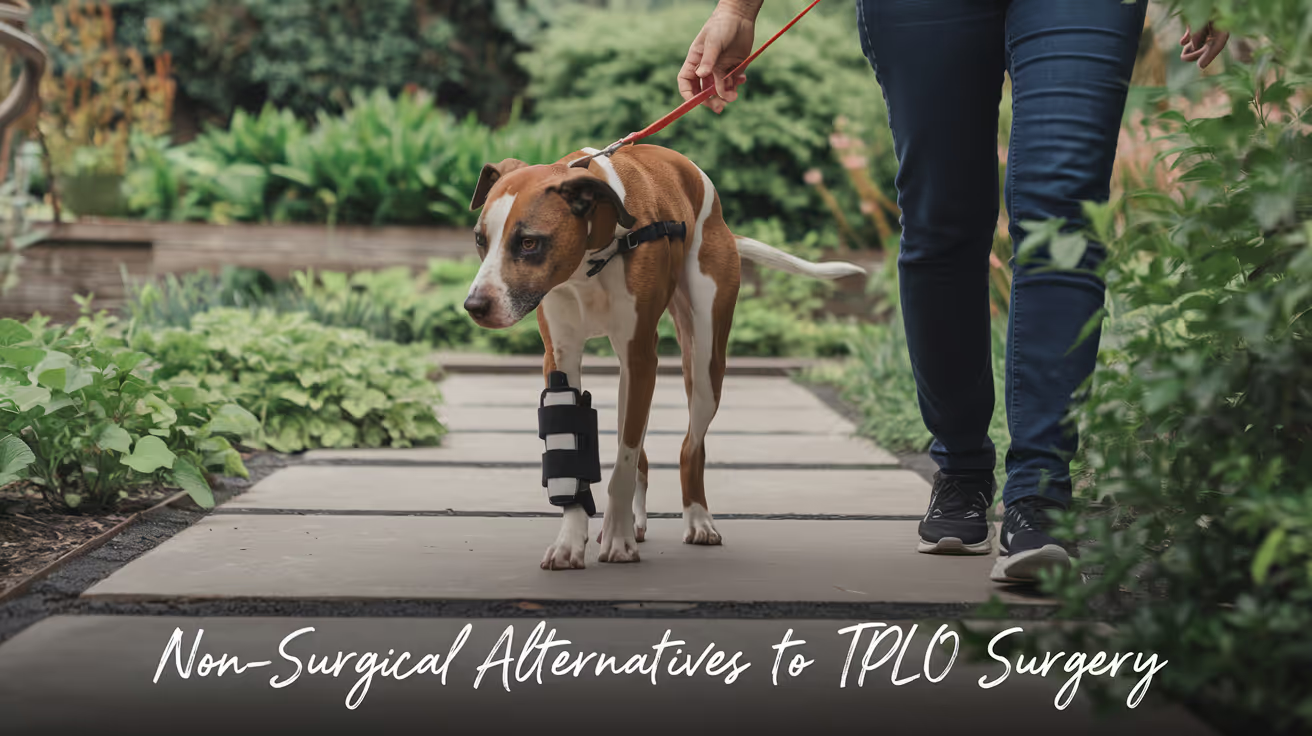
When your dog suffers from a torn cranial cruciate ligament (CCL), you might worry about the need for TPLO surgery. TPLO, or tibial plateau leveling osteotomy, is a common surgical procedure to stabilize the knee joint. However, not every dog is an ideal candidate for surgery, and some owners seek non-surgical options.
This article explains the main non-surgical alternatives to TPLO surgery for dogs. You will learn about physical therapy, weight management, braces, and medications that can help manage your dog's condition without surgery.
What are the main non-surgical treatments for CCL injuries in dogs?
Non-surgical treatments aim to reduce pain, improve joint stability, and maintain mobility. These treatments are often recommended for dogs with mild to moderate ligament tears or those who cannot undergo surgery due to age or health issues.
Choosing the right treatment depends on your dog's size, activity level, and severity of the injury.
- Physical therapy benefits: Physical therapy helps strengthen muscles around the knee, improving joint support and reducing pain for better mobility.
- Weight management importance: Maintaining a healthy weight reduces stress on the knee joint, slowing arthritis progression and improving comfort.
- Knee braces role: Custom knee braces stabilize the joint externally, limiting abnormal movement and providing pain relief during activity.
- Medications use: Anti-inflammatory drugs and pain relievers reduce swelling and discomfort, improving your dog's quality of life.
Combining these treatments often provides the best results for managing CCL injuries without surgery.
How effective is physical therapy compared to TPLO surgery?
Physical therapy focuses on muscle strengthening, joint flexibility, and pain management. It can improve your dog's function but may not fully stabilize the knee like surgery does.
Therapy is more effective in dogs with partial ligament tears or those with low activity demands.
- Muscle strengthening impact: Stronger muscles support the knee, reducing instability and helping your dog move more comfortably.
- Range of motion exercises: These exercises prevent stiffness and maintain joint flexibility, which is crucial for long-term mobility.
- Pain management techniques: Modalities like cold laser therapy and hydrotherapy reduce inflammation and promote healing.
- Limitations of therapy: Physical therapy cannot repair the ligament or fully prevent joint instability in severe tears.
Physical therapy can be a valuable part of recovery but may not replace TPLO surgery for all dogs.
When should a dog wear a knee brace instead of having surgery?
Knee braces provide external support to the injured joint. They are often used in dogs who cannot tolerate surgery or while waiting for surgery.
Braces can improve comfort and function but require proper fitting and regular monitoring.
- Suitable candidates: Small to medium dogs with partial tears or older dogs with health risks benefit most from braces.
- Bracing goals: The brace limits abnormal joint movement, reducing pain and preventing further injury.
- Fitting and adjustment: A custom brace fitted by a veterinary professional ensures comfort and effectiveness.
- Care and monitoring: Regular checks prevent skin irritation and ensure the brace remains supportive during activity.
While braces help manage symptoms, they do not heal the ligament and are often part of a broader treatment plan.
What role do medications play in managing CCL injuries without surgery?
Medications help control pain and inflammation associated with ligament injuries. They improve your dog's comfort and ability to participate in therapy.
Medications are usually combined with other treatments for best results.
- NSAIDs use: Non-steroidal anti-inflammatory drugs reduce joint swelling and pain, improving mobility.
- Pain relievers: Additional analgesics may be prescribed for severe discomfort or during flare-ups.
- Supplements benefits: Joint supplements like glucosamine and chondroitin support cartilage health and may slow arthritis progression.
- Medication risks: Long-term use requires veterinary supervision to avoid side effects like stomach upset or kidney issues.
Medications are an important part of non-surgical management but do not replace mechanical joint stabilization.
Can weight management alone improve a dog's CCL injury?
Excess weight increases stress on the knee joint, worsening pain and arthritis. Managing your dog's weight can significantly improve symptoms.
Weight control is essential whether your dog undergoes surgery or not.
- Reducing joint stress: Less body weight means less pressure on the injured ligament and joint surfaces.
- Improving mobility: A leaner dog moves more easily and participates better in therapy or exercise.
- Diet planning: A balanced, calorie-controlled diet helps achieve and maintain ideal weight safely.
- Regular monitoring: Frequent weight checks ensure your dog stays within a healthy range to protect joints.
Weight management is a cornerstone of non-surgical care and improves overall health.
What are the risks and limitations of non-surgical treatment for CCL tears?
While non-surgical options can help many dogs, they have limitations. Not all dogs will regain full function without surgery.
Understanding these risks helps you make informed decisions with your veterinarian.
- Incomplete joint stabilization: Non-surgical methods do not repair the ligament, so instability may persist.
- Progression of arthritis: Without surgery, joint wear may worsen over time, causing chronic pain.
- Activity restrictions: Dogs may need limited exercise to prevent further injury during healing.
- Variable outcomes: Success depends on injury severity, dog size, and owner compliance with treatment plans.
Discuss your dog's specific case with your vet to weigh the benefits and risks of non-surgical care.
Conclusion
Non-surgical alternatives to TPLO surgery for dogs include physical therapy, knee braces, medications, and weight management. These options can reduce pain and improve mobility, especially for dogs with mild injuries or those who cannot have surgery.
However, non-surgical treatments have limitations and may not fully stabilize the knee joint. Working closely with your veterinarian will help you choose the best approach for your dog's health and lifestyle.
FAQs
Can small dogs recover from CCL tears without surgery?
Yes, small dogs with partial tears often respond well to non-surgical treatments like physical therapy and braces, but close monitoring is essential to prevent worsening.
How long does it take to see improvement with non-surgical care?
Improvement usually begins within weeks of starting therapy and weight management, but full benefits may take several months depending on the dog's condition.
Are knee braces uncomfortable for dogs?
Properly fitted braces are generally comfortable, but dogs may need time to adjust. Regular checks prevent skin irritation and ensure proper fit.
Can supplements replace medications for pain relief?
Supplements support joint health but do not provide immediate pain relief like medications. They are best used alongside prescribed drugs.
Is non-surgical treatment cheaper than TPLO surgery?
Non-surgical care often costs less upfront but may require ongoing therapy and medications. Surgery has higher initial costs but may offer faster recovery.

Get a Free Poster
Enhance your workspace with a high-quality radiographs reference poster, designed for veterinary professionals. This free physical poster will be shipped directly to you—just fill out the form to request your copy.






Taking Great TPLO Radiographs
Click Below to Watch Live Video Demos


We'll send you a Free Wall Poster with all the steps
Step #1
Getting Ready
Ensuring a clean surgical field starts with proper skin preparation. This video demonstrates the best practices for:
- Shaving the patient – Achieving a close, even shave while minimizing skin irritation
- The Dirty Scrub – The initial skin prep step to remove surface debris and reduce bacterial load before the sterile scrub.
Following these techniques helps reduce infection risk and improve surgical outcomes. Watch the video to see how it’s done effectively!


Step #2
Reduce Your Risks
Many surgeons are shocked to find out that their patients are not protected from biofilms and resistant bacteria when they use saline and post-op antibiotics.
That’s Where Simini Comes In.
Why leave these risks and unmanaged? Just apply Simini Protect Lavage for one minute. Biofilms and resistant bacteria can be removed, and you can reduce two significant sources of infection.
Step #3
Take the Course
Preventing surgical infections is critical for patient safety and successful outcomes. This course covers:
- Aseptic techniques – Best practices to maintain a sterile field.
- Skin prep & draping – Proper methods to minimize contamination.
- Antibiotic stewardship – When and how to use perioperative antibiotics effectively.
Stay up to date with the latest evidence-based protocols. Click the link to start learning and earn CE credits!

Things to know
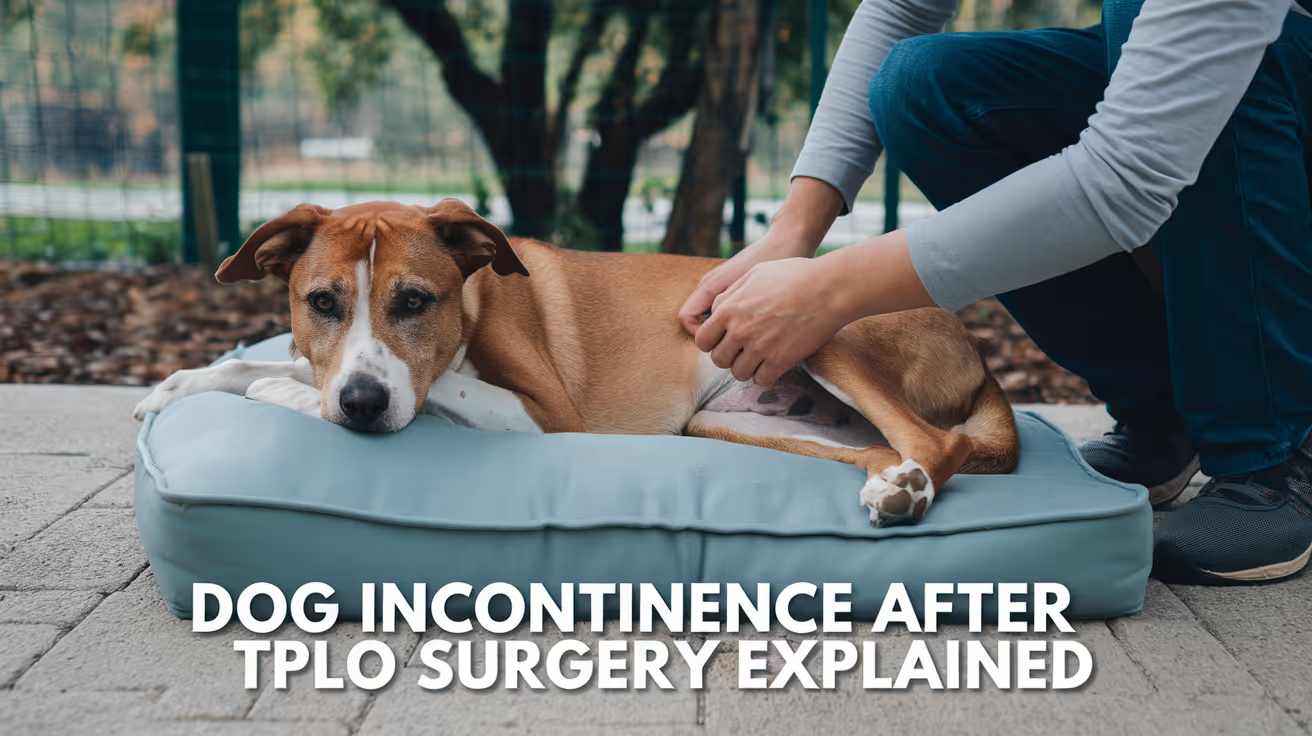
Dog Incontinence After TPLO Surgery: Causes & Care
Learn about dog incontinence after TPLO surgery, its causes, treatment options, and recovery tips for your pet’s comfort and health.
Urinary incontinence after TPLO surgery is not a common complication, but it does occur and is understandably alarming for owners.
In most cases it is a temporary consequence of anesthesia, pain medication, stress, or reduced mobility not a sign of a serious surgical problem.
Knowing the causes, the timeline, and when to call your vet helps you respond appropriately.
Quick answer: Incontinence after TPLO is usually temporary from anesthesia, pain medications, reduced mobility, or stress. Most cases resolve within days to weeks. Call your vet if it persists beyond 2 to 4 weeks or comes with bloody urine or fever.
Key takeaways
- Immediate post-TPLO incontinence is most often from anesthesia or nerve irritation: both are temporary and resolve within days to weeks
- Opioid pain medications cause urinary retention or reduced bladder awareness in some dogs this resolves as medications are tapered
- Postoperative swelling may temporarily irritate nerves involved in bladder control; this resolves with swelling
- Reduced mobility is a practical contributor: a confined, painful dog may not signal in time or reach the door quickly
- Stress after major surgery can cause accidents in previously house-trained dogs; this is behavioral, not neurological
- Genuine nerve damage from TPLO is rare: incontinence persisting beyond 6 weeks warrants neurological evaluation
Why dogs may become incontinent after TPLO surgery
Anesthesia effects
General anesthesia temporarily suppresses normal nerve function throughout the body, including the neural pathways that control bladder filling awareness and sphincter tone.
As anesthetic drugs are metabolized over the 12 to 24 hours after surgery, some dogs have reduced bladder control.
This is the most common cause of immediate post-surgical incontinence. It resolves as anesthesia fully clears, typically within 24 to 48 hours.
Nausea, disorientation, and general sedation from anesthesia also mean the dog may not signal clearly when they need to go outside.
Scheduled outdoor bathroom trips every 2 to 4 hours in the first 24 to 48 hours post-surgery help manage this.
Opioid and sedative medications
Opioid pain medications commonly prescribed after TPLO affect bladder control in two ways: they reduce awareness of bladder fullness, and in some dogs cause urinary retention.
Both effects resolve as medications are tapered in the days following surgery.
Retention and incontinence are opposite problems retention is not urinating at all, while incontinence is involuntary urination but both can occur at different times as different medications have their effects.
As pain medications are tapered in the days after surgery, these effects resolve for most dogs.
Postoperative swelling and nerve irritation
The proximal tibia is surrounded by neurovascular structures. Postoperative swelling around the surgical site may temporarily compress or irritate nerves that travel to the bladder and urethra.
This is more likely in the first week after surgery when swelling is at its peak.
This type of incontinence improves as swelling resolves and typically does not indicate permanent nerve damage.
Reduced mobility
A dog recovering from TPLO is confined, in pain, and may not reach the door quickly enough when the bladder signals urgency.
This is a practical mobility problem, not a neurological one.
Frequent scheduled outdoor trips every 2 to 4 hours in the first week reduce accidents significantly. Waterproof mattress covers and washable bedding help manage the recovery period hygienically.
Stress and behavioral response
Major surgery is a significant stressor. Pain, an unfamiliar environment, an E-collar, restricted movement, and disrupted routine can cause previously house-trained dogs to have accidents unrelated to neurological dysfunction.
This type of incontinence typically resolves as the dog settles into a recovery routine at home, usually within 1 to 2 weeks.
Pre-existing urinary conditions
Dogs with pre-existing urinary sphincter mechanism incompetence (common in middle-aged spayed females), bladder infections, or weak bladder control may show worsened incontinence after surgery.
Anesthesia, medications, and reduced mobility all unmask or worsen underlying conditions.
If your dog was occasionally leaking urine before surgery, report this to your vet during the pre-surgical assessment so appropriate management can be planned for the recovery period.
Types of post-TPLO incontinence by timing
Immediate (within 24 to 48 hours): almost always anesthesia effects or opioid medication. Expected and self-limiting.
Early post-operative (days 3 to 14): medication effects, swelling-related nerve irritation, mobility limitation, or stress. Usually self-limiting with appropriate management.
Delayed onset (weeks 2 to 6): may indicate a developing urinary tract infection (UTI), which can occur after catheterization during surgery or from reduced immune response. A urinalysis is warranted if incontinence appears or worsens after initial improvement.
Chronic (beyond 6 weeks): uncommon. If incontinence persists beyond 6 weeks without improvement, veterinary evaluation for nerve damage or underlying urinary tract disease is appropriate.
Home management during recovery
- Scheduled outdoor bathroom trips every 2 to 4 hours for the first 1 to 2 weeks
- Waterproof mattress protectors and washable bedding in the recovery area
- Non-slip surfaces to reduce the effort required to stand and move toward the door
- Monitor urine color and odor cloudy, bloody, or foul-smelling urine suggests UTI
- Keep the genital area clean to prevent skin irritation from urine contact
- Use a belly band (for males) or absorbent dog diapers if incontinence is significant
When to contact your veterinarian
Call your vet if:
- The dog cannot urinate at all for more than 12 to 24 hours after surgery
- Urine is bloody, cloudy, or has a strong unusual odor (UTI signs)
- Incontinence is accompanied by straining, crying during urination, or frequent squatting without producing urine
- Incontinence worsens after initial improvement
- The dog has persistent incontinence beyond 2 to 4 weeks without any improvement
- Incontinence is combined with significant worsening lameness or systemic signs
For the not-peeing guide that covers urinary retention after TPLO, see dog not peeing after TPLO surgery: causes and care.
For the full TPLO complications reference, see 15 common complications after TPLO surgery in dogs.
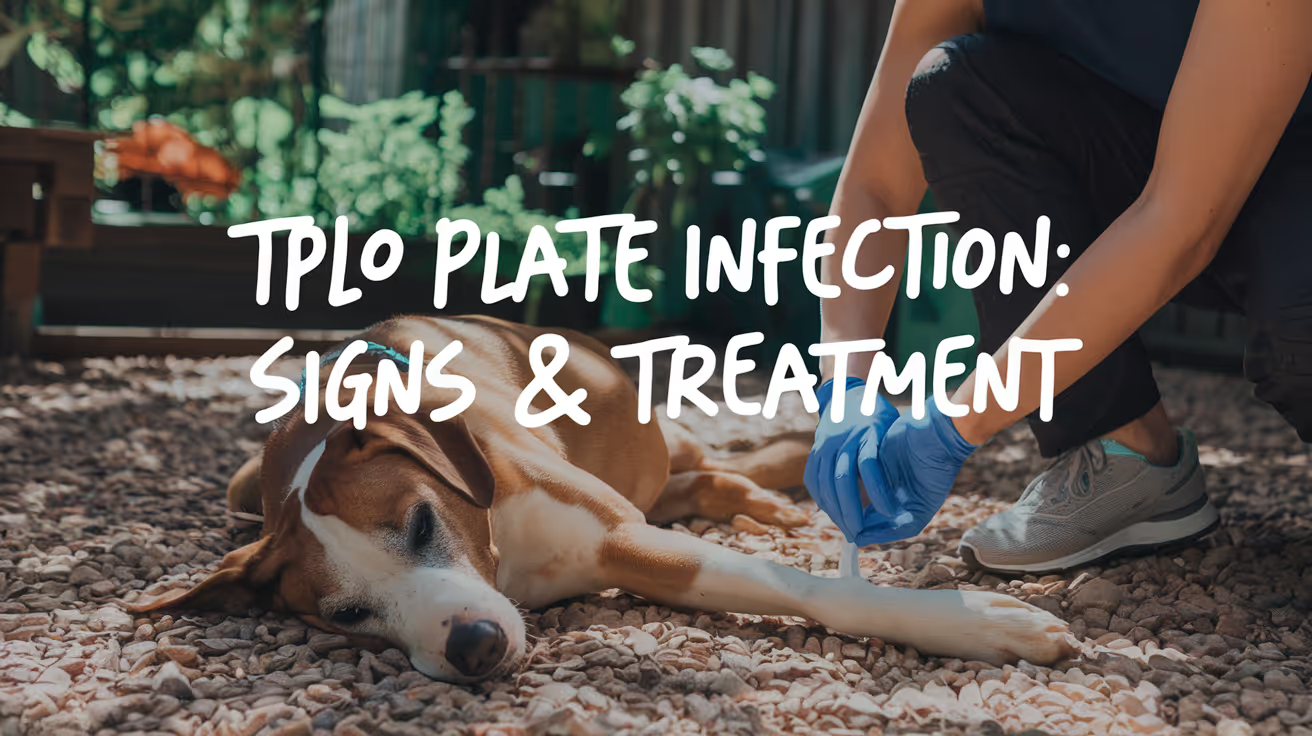
For TPLO plate infection signs that may be contributing to systemic effects, see TPLO plate infection signs and treatment.
For post-op whining that may relate to the same pain driving accidents, see dog whining after TPLO surgery: causes and care.
Frequently asked questions
Is incontinence normal after TPLO surgery?
Temporary incontinence particularly in the first 24 to 48 hours is a recognized post-surgical finding related to anesthesia and opioid pain medications.
It is not an expected routine outcome, but it is not rare. If it resolves within a few days, it was almost certainly anesthesia-related.
Could my dog have nerve damage from TPLO surgery?
True nerve damage causing persistent incontinence from TPLO is rare. TPLO is performed at the proximal tibia, which is some distance from the pelvic nerves controlling bladder function.
Temporary nerve irritation from swelling is much more common than actual nerve injury and resolves as swelling subsides.
My dog was continent before TPLO and is now leaking at night. Why?
Nighttime leaking specifically is typical of urinary sphincter mechanism incompetence (USMI) a condition where the urethral sphincter relaxes during sleep or rest.
If this is new after surgery, anesthesia and opioid medications may have temporarily worsened underlying borderline sphincter function.
If it continues beyond 2 to 3 weeks, a vet visit for urinalysis and discussion of phenylpropanolamine (PPA) or other treatment is appropriate.
How do I know if my dog has a UTI after TPLO?
Signs of UTI include: cloudy or bloody urine, strong or unusual odor, frequent small amounts of urination, straining to urinate, and licking at the genital area more than normal.
Some dogs with UTI also show lethargy and decreased appetite. Urinalysis and culture confirm the diagnosis.
Should I limit my dog's water intake to reduce accidents?
No. Do not restrict water. Hydration is important for recovery and kidney function. Restricting water can concentrate the urine and increase UTI risk.
Instead, manage accidents through scheduled outdoor trips and waterproof bedding.
Resources
- VCA Animal Hospitals. Tibial Plateau Leveling Osteotomy (TPLO) in Dogs. vcahospitals.com
- ACVS. Cranial Cruciate Ligament Disease. acvs.org
- PetMD. Urinary Incontinence in Dogs. petmd.com
- Midwest Veterinary Specialists. Post-Operative Care Following TPLO. midwestveterinaryspecialists.com
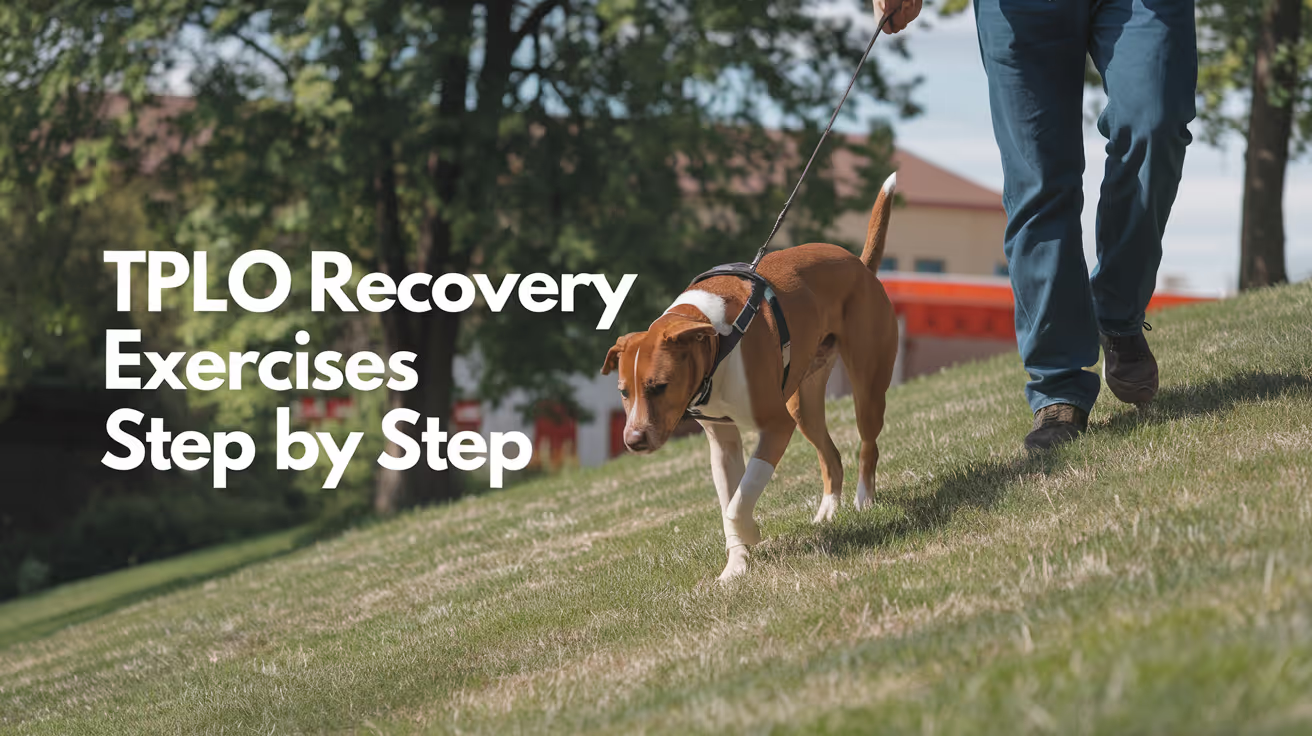
TPLO Recovery Exercises for Dogs
Learn effective TPLO recovery exercises for dogs to ensure safe healing and regain mobility after surgery.
TPLO recovery exercises for dogs are essential to help your pet regain strength and mobility after surgery. Tibial Plateau Leveling Osteotomy (TPLO) is a common procedure to repair cruciate ligament injuries, but proper rehabilitation is key to success.
This article explains the best exercises for dogs recovering from TPLO surgery. You will learn safe ways to support your dog's healing, improve joint function, and avoid complications during recovery.
What is TPLO surgery and why is recovery important?
TPLO surgery stabilizes a dog's knee joint after a torn cranial cruciate ligament. The procedure changes the angle of the tibia to reduce stress on the ligament. Recovery is critical because the joint needs time to heal and regain normal function.
Without proper recovery exercises, dogs may develop stiffness, muscle loss, or abnormal gait. Controlled rehabilitation helps restore strength and prevents long-term problems.
- TPLO purpose: TPLO surgery corrects knee instability caused by ligament tears, allowing dogs to walk and run without pain.
- Healing time: Bone healing after TPLO usually takes 8 to 12 weeks, during which exercises must be carefully managed.
- Muscle maintenance: Recovery exercises prevent muscle wasting and improve joint support for better mobility.
- Preventing stiffness: Gentle movement reduces joint stiffness and promotes healthy cartilage and ligament healing.
Following a structured exercise plan after TPLO surgery is essential for your dog's full recovery and long-term joint health.
When can I start TPLO recovery exercises for my dog?
Starting recovery exercises depends on your veterinarian's advice and your dog's healing progress. Typically, gentle exercises begin within a few days after surgery, progressing gradually over weeks.
Early movement helps reduce swelling and maintain circulation, but high-impact activities must be avoided until the bone fully heals.
- Initial rest period: Dogs usually require strict rest for the first 1 to 2 weeks to allow initial bone healing.
- Vet approval: Always consult your vet before starting any exercise to ensure it is safe for your dog's stage of recovery.
- Gradual progression: Exercises increase in intensity and duration over 8 to 12 weeks based on healing and pain levels.
- Signs to watch: Stop exercises if your dog shows limping, swelling, or pain, and contact your vet immediately.
Following a vet-approved timeline for exercises ensures your dog recovers safely and avoids setbacks.
What are the best passive TPLO recovery exercises for dogs?
Passive exercises involve moving your dog's leg without active muscle use. These help maintain joint flexibility and reduce stiffness early in recovery.
They are safe to perform soon after surgery and do not stress the healing bone or ligament.
- Range of motion: Gently bend and straighten the knee joint within a pain-free range to keep it flexible.
- Massage therapy: Light massage around the surgical site improves circulation and reduces swelling.
- Cold therapy: Applying cold packs after passive exercises reduces inflammation and discomfort.
- Leg lifts: Carefully lift and lower the leg to encourage gentle movement without weight bearing.
These passive exercises prepare your dog for more active rehabilitation phases while protecting the surgical repair.
Which active exercises help dogs regain strength after TPLO?
Active exercises require your dog to use muscles and support weight on the operated leg. These are introduced gradually to rebuild strength and coordination.
They improve muscle tone, joint stability, and overall limb function as healing progresses.
- Leash walking: Short, controlled walks on a leash encourage weight bearing and muscle use without overexertion.
- Sit-to-stand: Encouraging your dog to sit and stand repeatedly strengthens thigh muscles supporting the knee.
- Balance exercises: Using a wobble board or soft surface challenges your dog's balance and joint control.
- Controlled stairs: Slowly climbing and descending stairs helps improve joint range and muscle power.
Active exercises should be supervised and adjusted based on your dog's comfort and recovery stage.
How can hydrotherapy support TPLO recovery in dogs?
Hydrotherapy uses water to provide low-impact exercise that supports healing after TPLO surgery. The buoyancy reduces joint stress while allowing muscle strengthening.
This therapy is often recommended by vets and rehabilitation specialists to speed recovery and improve outcomes.
- Water treadmill: Walking on a submerged treadmill helps build strength with less pain and swelling.
- Swimming sessions: Swimming provides full-body exercise without weight bearing on the knee joint.
- Hydro massage: Water jets can massage muscles and reduce stiffness around the surgical area.
- Temperature control: Warm water improves circulation and relaxes muscles during therapy.
Hydrotherapy is a safe and effective way to enhance recovery when combined with other rehabilitation exercises.
What precautions should I take during TPLO recovery exercises?
Safety is critical when performing recovery exercises after TPLO surgery. Incorrect or excessive activity can cause pain, swelling, or damage to the surgical repair.
Following guidelines and monitoring your dog closely helps prevent complications and ensures steady progress.
- Follow vet instructions: Always adhere to your veterinarian's exercise plan and timelines for safe recovery.
- Monitor pain signs: Watch for limping, whining, or reluctance to move, which indicate discomfort or injury.
- Limit off-leash activity: Avoid running, jumping, or rough play until fully healed to protect the knee joint.
- Use supportive devices: Consider braces or slings if recommended to assist mobility and reduce strain.
Taking these precautions helps your dog heal efficiently and return to normal activity safely.
How long does full TPLO recovery take with exercises?
Full recovery from TPLO surgery usually takes 3 to 6 months with proper rehabilitation exercises. The timeline varies depending on the dog's age, size, and overall health.
Consistent exercise and veterinary follow-up are essential to achieve the best outcome and prevent future injuries.
- Bone healing: The bone typically heals within 8 to 12 weeks, allowing gradual increase in exercise intensity.
- Muscle rebuilding: Muscle strength improves over several months with regular active exercises.
- Joint function: Full joint mobility and stability may take up to 6 months to restore completely.
- Long-term care: Maintaining a healthy weight and regular low-impact exercise helps prevent re-injury after recovery.
Patience and commitment to the exercise plan are key to your dog's successful TPLO recovery and long-term mobility.
Conclusion
TPLO recovery exercises for dogs are vital to help your pet heal safely and regain full function after surgery. Starting with passive movements and progressing to active exercises supports bone healing and muscle strength.
Consult your veterinarian regularly and follow a structured rehabilitation plan to ensure the best outcome. With proper care and patience, your dog can enjoy a healthy, active life after TPLO surgery.
FAQs
How soon after TPLO surgery can my dog start walking?
Most dogs begin short, controlled leash walks within 1 to 2 weeks after surgery, depending on veterinary advice and healing progress.
Can I do TPLO recovery exercises at home?
Yes, many passive and active exercises can be safely done at home following your vet's instructions and supervision.
Is hydrotherapy necessary for TPLO recovery?
Hydrotherapy is not mandatory but highly beneficial for low-impact strengthening and faster recovery when available.
What signs mean I should stop exercises and call my vet?
Stop exercises if your dog shows increased limping, swelling, pain, or reluctance to move and contact your veterinarian promptly.
How long do I need to restrict my dog's activity after TPLO?
Activity restriction usually lasts 8 to 12 weeks, gradually easing as bone healing progresses and exercises increase.
What Causes Cruciate Ligament Tears in Dogs?
Learn what causes cruciate ligament tears in dogs, including risk factors, symptoms, and prevention tips for your pet’s joint health.
CCL rupture in dogs is not the same injury as ACL rupture in humans.
In humans, the anterior cruciate ligament typically tears during sudden trauma a pivoting fall on a ski slope, a tackle on a football field.
In dogs, the same ligament almost always fails through slow, progressive degeneration that began months or years before the day the dog comes in lame.
Understanding why the canine CCL fails and which dogs are most at risk is essential for prevention strategies and for recognizing early warning signs.
Quick answer: The canine CCL fails through progressive degeneration, not sudden trauma. Key risk factors are breed, obesity, poor fitness, tibial slope, and genetics. At least 50% of dogs that rupture one CCL will rupture the other within 1 to 2 years.
Key takeaways
- CCL rupture results from degeneration, not trauma: ACVS confirms slow, progressive degeneration rather than acute injury to a healthy ligament
- Obesity is the most modifiable risk factor: excess weight increases compressive and shear forces on the CCL with every step
- High-risk breeds include Labrador, Rottweiler, Newfoundland, Mastiff, and Akita: genetic inheritance has been demonstrated in Newfoundlands and Labradors
- Partial tears almost always progress to complete rupture: ACVS confirms this and notes progression is the rule, not the exception
- At least 50% of dogs rupture the opposite CCL within 1 to 2 years of the first rupture
- Neuter status increases CCL risk: spayed and neutered dogs show higher rates in multiple studies
Why dog CCL disease differs from human ACL injury
Colorado State University: "In humans, trauma (such as skiing, football, or soccer injuries) is the most common reason for injury of the ACL.
This 'traumatic' rupture can happen in dogs but is quite rare."
CSU: "Most commonly, CCLD is caused by a combination of many factors, including aging of the ligament (degeneration), obesity, poor physical condition, conformation, and breed."
In humans, a healthy ACL tears from a single high-energy event. In dogs, the ligament is already weakened before it ruptures.
The moment of obvious lameness is the endpoint of a months-long degenerative process.
ACVS: ligament rupture is "the result of subtle, slow degeneration that has been taking place over a period of time rather than the result of sudden trauma to an otherwise healthy ligament."
Fitzpatrick Referrals: "In the vast majority of dogs, the CrCL ruptures as a result of long-term degeneration, whereby the fibres weaken and fray over time, losing their structure and function."
The main causes and risk factors
Degeneration (aging and immune-mediated)
The underlying degenerative process in CCL disease involves progressive breakdown of collagen fibers within the ligament.
PMC (Cranial Cruciate Ligament Rupture Review): "The structural weakening of this joint due to the progressive degeneration of the ligament is the most accredited etiopathogenetic hypothesis."
The degeneration appears to involve both mechanical fatigue and immune-mediated inflammatory processes within the joint.
Synovitis (joint inflammation) often precedes complete rupture and may be detected during veterinary examination before full failure occurs.
Breed and genetics
ACVS: "Certain dog breeds are known to have a higher incidence: Rottweiler, Newfoundland, Staffordshire Terrier, Mastiff, Akita, Saint Bernard, Chesapeake Bay Retriever, and Labrador Retriever."
ACVS: "A genetic mode of inheritance has been shown for Newfoundlands and Labrador Retrievers."
Fitzpatrick Referrals: "Genetic factors are likely very important, with certain breeds being predisposed including Labradors, Rottweilers, Boxers, West Highland White Terriers, and Newfoundlands."
Breeds with low CCL disease incidence include Greyhounds, Dachshunds, Basset Hounds, and Old English Sheepdogs.
Fitzpatrick: "Supporting evidence for a genetic cause was obtained by assessment of family lines and the knowledge that many animals rupture both knees relatively early in life."
Obesity
ACVS: "Poor physical body condition and excessive body weight are risk factors for the development of CrCLD. Both of these factors can be influenced by pet owners."
PMC: "A predisposing factor is obesity, in which the concentrations of circulating inflammatory mediators increase, such as the concentrations of pro-inflammatory adipokines released from adipose tissue, which may contribute to degenerative phenomena."
Obesity matters in two ways: it increases the mechanical load on the CCL with every step, and it elevates systemic inflammation, which accelerates ligament degeneration.
A dog 10% overweight places significantly more stress on both stifle joints with every stride.
Tibial plateau angle (conformation)
The tibial plateau is the top surface of the tibia. In dogs, it slopes caudally. During weight-bearing, this slope creates a cranial shear force on the tibia that the CCL normally resists.
Fitzpatrick: "Increased tibial plateau angle (backwards slope at the top of the tibia) may play a role" in CCL disease.
Dogs with steeper tibial plateau angles experience greater cranial thrust with each step, increasing CCL load.
This is why TPLO and CBLO surgery (which reduce the tibial plateau angle) neutralize the instability rather than replacing the torn ligament.
Neuter status
Multiple studies have found that spayed and neutered dogs have higher rates of CCL disease than intact dogs. The relationship is stronger in some breeds than others.
Proposed mechanisms include the loss of sex hormones that influence joint development and ligament maturation, longer bone growth periods in dogs neutered before skeletal maturity, and altered body composition.
Contralateral (opposite knee) risk
NCBi (Radiographic Risk Factors study): "Among dogs presented with unilateral CCL rupture, a large proportion will develop contralateral CCL rupture within 12 to 24 months of initial diagnosis.
This risk is in the range of 22 to 54% at 6 to 17 months of diagnosis."
CSU: "At least half of the dogs that have a cruciate ligament problem in one knee will likely, at some future time, develop a similar problem in the other knee."
This bilateral risk reflects the systemic nature of CCL degeneration both ligaments are affected by the same genetic, hormonal, and conformation factors.
Partial tears: the warning stage
The CCL typically does not rupture all at once. Partial tears are common and produce intermittent hind limb lameness that owners sometimes attribute to a sprain.
CSU: "Partial tearing of the CCL is common in dogs and frequently precedes complete rupture."
ACVS: "Partial tearing of the CCL is common in dogs and almost always progresses to a full tear over time."
A dog with a partial CCL tear that receives cage rest and returns to activity will almost always eventually progress to complete rupture.
Surgical intervention at the partial tear stage can be considered for active dogs, though evidence on whether it prevents eventual complete rupture is limited.
Signs of CCL disease
- Hind limb lameness, especially after exercise
- Sudden onset of non-weight-bearing on a back leg
- Stiffness when getting up, especially after rest
- Muscle atrophy on the affected hind limb
- Thickening on the inside of the knee joint (medial buttress)
- Positive cranial drawer test or tibial compression test on orthopedic examination
Can CCL tears be prevented?
Risk cannot be eliminated in predisposed breeds, but it can be reduced.
ACVS: "Consistent physical conditioning with regular activity and close monitoring of food intake to maintain a lean body mass is advisable."
Evidence-based prevention strategies:
- Maintain healthy body weight (most impactful modifiable factor)
- Consistent, regular exercise rather than intermittent intense activity
- Avoid sudden load increases (the "weekend warrior" pattern)
- Discuss neutering timing with your vet, particularly in high-risk breeds
For the surgical treatment of CCL rupture, see CBLO surgery in dogs: cost, recovery, and success rate. For the surgery vs. conservative management decision, see canine cruciate injuries: surgery vs. conservative management.
For meniscal injury that often accompanies CCL tears, see torn meniscus surgery cost in dogs. For when CCL disease requires specialist referral, see when to refer for orthopedic surgery.
Frequently asked questions
My dog tore its CCL running in the yard. Wasn't that traumatic?
The event may have looked sudden, but the ligament was almost certainly already degenerated.
ACVS: the rupture is "the result of subtle, slow degeneration... rather than sudden trauma to an otherwise healthy ligament." The yard run was the last straw, not the cause.
Which dog breeds are at highest risk for CCL tears?
ACVS identifies Rottweilers, Newfoundlands, Staffordshire Terriers, Mastiffs, Akitas, Saint Bernards, Chesapeake Bay Retrievers, and Labrador Retrievers as high-incidence breeds. Fitzpatrick Referrals adds Boxers and West Highland White Terriers.
Does obesity really make that much difference?
Yes. Obesity increases both mechanical load on the CCL and systemic inflammation via adipokines from fat tissue.
It is the most modifiable risk factor maintaining healthy body weight is the single most impactful thing an owner can do for CCL disease prevention.
My dog had surgery on one knee. How long before the other goes?
NCBi data: the risk of contralateral CCL rupture is 22 to 54% within 6 to 17 months of the first diagnosis. Monitoring the other knee closely after the first diagnosis is important.
Maintaining lean body weight and avoiding abrupt increases in activity are the main protective strategies.
Can a dog with a partial CCL tear be managed without surgery?
Conservative management (rest, weight loss, physical therapy) may be attempted for partial tears, particularly in small dogs. But ACVS states partial tears "almost always progress to a full tear over time."
Discuss with an orthopedic specialist whether surgery at the partial tear stage is appropriate for your dog.
What is the difference between CCL and ACL?
CCL (cranial cruciate ligament) is the correct term in dogs; ACL (anterior cruciate ligament) is the human equivalent. They are anatomically similar structures that stabilize the knee joint.
The key clinical difference: in humans, ACL tears are usually traumatic; in dogs, CCL tears are almost always degenerative.
Resources
- ACVS. Cranial Cruciate Ligament Disease. acvs.org
- CSU Veterinary Health System. Canine Cruciate Ligament Injury. vetmedbiosci.colostate.edu
- Fitzpatrick Referrals. Cruciate Ligament Disease or Injury. fitzpatrickreferrals.co.uk
- NCBi PMC. Radiographic Risk Factors for Contralateral Rupture in Dogs with Unilateral CCL Rupture. ncbi.nlm.nih.gov
- PMC. Cranial Cruciate Ligament Rupture in Dogs: Review on Biomechanics, Etiopathogenetic Factors and Rehabilitation. ncbi.nlm.nih.gov

PROM Exercises for Dogs After TPLO Surgery
Learn safe and effective PROM exercises for dogs after TPLO surgery to aid recovery and improve joint mobility.
PROM passive range of motion is one of the first rehabilitation exercises prescribed after TPLO surgery in dogs.
It prevents joint stiffness, reduces scar tissue formation, and keeps the stifle flexible during the weeks when your dog cannot yet bear full weight on the operated leg.
Done correctly, it is safe, gentle, and straightforward. Done incorrectly, it risks disrupting the healing osteotomy.
Quick answer: Start PROM 2 to 5 days post-TPLO. Dog on their side, operated leg up — flex and extend the stifle gently for 10 reps, 3 times daily. Never force the joint. Ice for 5 to 10 minutes after each session.
Key takeaways
- PROM begins 2 to 5 days after TPLO: starting too early stresses the healing osteotomy; follow your surgeon's timeline
- Correct position: dog on their side, operated leg up; support the leg above and below the stifle with both hands
- 10 repetitions, 3 times daily: the standard protocol recommended by Veterinary Specialty Center and Midwest Veterinary Specialists
- Never force the joint: move only within the pain-free range; stop if your dog vocalizes, flinches, or tenses
- Follow PROM with a cold pack: 5 to 10 minutes of icing after each session reduces post-exercise swelling
- Discontinue PROM around weeks 6 to 8 when your dog approaches near-full range of motion
What is PROM and why does it matter after TPLO?
Passive range of motion means you move your dog's leg through its natural range of motion your dog's muscles are completely relaxed.
This is different from active exercises where the dog uses their own muscles.
After TPLO surgery, the stifle joint is swollen, painful, and protected by surrounding muscles that naturally tighten to guard the injury.
Without gentle movement, this guarding leads to stiffness, scar tissue adhesion, and reduced joint flexibility that can persist long after the bone has healed.
Midwest Veterinary Specialists explains that for the first two weeks after TPLO, the main rehabilitation goals are to decrease pain and maintain range of motion in the stifle joint.
PROM is one of the primary tools for achieving this in the early phase.
PROM also improves local circulation to the healing tissues, reduces swelling, and maintains the nerve pathways that control normal limb movement all of which support faster recovery.
When to start PROM after TPLO
Most surgeons prescribe PROM beginning 2 to 5 days after surgery. TPLO Info recommends starting passive range of motion exercises and icing as early-phase rehabilitation cornerstones in the first two weeks.
Veterinary Specialty Center's post-TPLO protocol specifies PROM starting in the early post-operative period with 10 slow repetitions 3 times daily, followed by an ice pack.
Do not begin earlier than your surgeon advises. The osteotomy site needs initial stability before mechanical stress is introduced. Your surgeon's discharge instructions take priority over general guidelines.
How to perform PROM: step-by-step
Setup
Position your dog lying on a comfortable, non-slip surface a yoga mat or folded blanket works well. The operated leg should be facing up.
If your dog is uncomfortable lying on their side, some surgeons allow PROM with the dog standing, though lying down is generally more controlled.
Hand position
Place one hand above the stifle (on the thigh) and your other hand below the stifle (around the lower leg/hock area).
This two-hand support prevents any rotation or twisting of the joint during movement.
Edmonton West Animal Hospital advises supporting the leg with one hand to prevent twisting, using the other to gently bend and straighten the leg.
The movement
Flex the stifle by gently bringing the lower leg toward the body (bending the knee), then extend it back to a neutral position.
The motion should be smooth, slow, and continuous a gentle bicycle-pedaling motion as described by Veterinary Specialty Center.
Move only to the point where you feel natural resistance. The goal is to maintain and gradually improve range not to force progress.
Each cycle (one flex and one extension) counts as one repetition.
Repetitions and frequency
- 10 repetitions per session
- 3 sessions per day
- Space sessions throughout the day: morning, afternoon, and evening
TPLO Info confirms PROM can be performed three times daily for 10 to 15 repetitions each.
After each session
Apply a cold pack (frozen peas wrapped in a thin towel work well) over the stifle for 5 to 10 minutes after PROM.
Veterinary Specialty Center specifies icing after PROM for 5 to 10 minutes, 3 times daily for at least the first 3 days.
Cold therapy reduces the local inflammation that gentle exercise naturally produces, keeping the joint comfortable between sessions.
Warm packs before PROM (weeks 2 onward)
After the first 5 days, Midwest Veterinary Specialists recommends applying warm packs before PROM sessions to relax the tissues and increase blood flow.
Warming before exercise improves the flexibility of the surrounding muscles and makes the movement more comfortable for your dog.
Apply a warm (not hot) damp towel or heat pack for 5 minutes before beginning. Do not apply heat in the first 5 days when active inflammation is at its peak.
What NOT to do during PROM
- Do not push past the point of resistance forcing the joint can damage healing tissue
- Do not perform PROM if your dog is acutely distressed or in significant pain
- Do not skip the cold pack afterward this step reduces unnecessary post-exercise swelling
- Do not perform PROM with the dog standing in the first 2 weeks unless specifically instructed
- Do not increase repetitions or speed without veterinary guidance
When to stop PROM
PROM is discontinued when your dog achieves near-full range of motion typically around weeks 6 to 8. At this point, your dog transitions to active weight-bearing exercises that build muscle strength.
Veterinary Specialty Center's protocol specifies discontinuing PROM sometime during the 3- to 6-week phase when achieving almost full range of motion, transitioning to slow leash walks and sit-to-stand exercises.
For the full range of motion exercise progression that follows PROM, see TPLO range of motion exercises for dogs.
For the broader rehabilitation program that PROM fits into, see TPLO rehab exercises for dogs. For the physical therapy timeline, see when to start physical therapy after TPLO surgery.
Frequently asked questions
How do I know if I'm doing PROM correctly?
Your dog should remain relaxed throughout. A correctly performed PROM session produces no tensing, flinching, or vocalization.
If your dog stiffens or reacts, you have either gone too far in range or are moving too quickly. Slow down and reduce the range.
Ask your vet or rehabilitation therapist to demonstrate the technique at the first post-op recheck.
My dog won't stay still for PROM. What should I do?
This is common, especially in the first few days when the dog is in pain and confused. Keep sessions short, use a calm voice, and try high-value treats to hold attention.
Some dogs respond better to PROM immediately after a short leash walk when they are slightly tired.
If your dog is too distressed to cooperate, contact your surgeon adequate pain management is essential for PROM compliance.
Can PROM hurt my dog's TPLO repair?
When performed correctly within the pain-free range of motion, PROM does not stress the osteotomy.
The forces generated during gentle passive flexion and extension are far below what would disrupt the fixation plate.
The key safeguard is never forcing the joint stay within comfortable range and stop if resistance is met.
Should I do PROM on the other (unaffected) legs too?
Yes. Post-TPLO Info notes that PROM can also be performed on the other three limbs, as they compensate for the injured leg and are under increased load during recovery.
Gentle range of motion work on all limbs supports overall flexibility and comfort.
What happens if I miss PROM sessions?
Occasional missed sessions are not catastrophic, but consistency matters. Regular PROM prevents the progressive stiffening and scar tissue formation that makes rehabilitation harder as weeks pass.
Aim to complete all three daily sessions, and communicate with your surgeon if you are struggling to keep up with the protocol.
Resources
- Veterinary Specialty Center. TPLO Aftercare for Pets. vetspecialty.com
- Midwest Veterinary Specialists. Post-Operative Care and Rehabilitation Following TPLO. midwestveterinaryspecialists.com
- TPLO Info. Rehab for Dogs After TPLO Surgery. tploinfo.com
- Edmonton West Animal Hospital. TPLO Rehabilitation Guide. vetinedmonton.com
- PMC. Effects of Underwater Treadmill Programme on Canine Joint Range of Motion. ncbi.nlm.nih.gov

13 Signs Your Dog May Need TPLO Surgery
Is your dog limping or slowing down? Discover 13 early signs that may indicate your dog needs TPLO surgery for a torn cruciate ligament
CCL (cranial cruciate ligament) rupture is one of the most common orthopedic injuries in dogs.
Canine CCL rupture often develops gradually through progressive degeneration. Early signs are subtle and easy to dismiss as aging or a minor sprain.
Recognizing the signs early improves outcomes because partial tears can progress to complete ruptures if not addressed.
Quick answer: Common signs a dog may need TPLO surgery: persistent rear limb limping, stiffness after rest, toe-touching gait, sitting with one rear leg extended (positive sit test), stifle swelling and warmth, and sudden non-weight bearing. A drawer test and radiographs confirm CCL rupture.
Key takeaways
- Hind limb lameness is the most common presenting sign: any dog with a persistent rear leg limp warrants veterinary evaluation; CCL rupture is the most common orthopedic cause
- The classic sitting posture change is highly specific: a dog now sitting with one rear leg extended to the side rather than tucked under is compensating for stifle pain (positive sit test)
- Intermittent lameness that comes and goes may indicate a partial tear: partial tears progress to complete ruptures in most dogs without treatment
- Stiffness after rest or sleep is a common early sign: the dog seems fine after moving around but is stiff when first rising
- Non-weight bearing or acute severe lameness after activity indicates a complete CCL rupture; the dog holds the leg entirely off the ground
- Both stifles are at risk: 30 to 40% of dogs develop CCL rupture in both knees over time; monitor the opposite side in any dog with known CCL disease
The 13 signs
1. Hind limb limping after exercise
The dog walks normally at rest but limps noticeably after running, playing, or climbing stairs. The limping may resolve after 10 to 30 minutes of rest.
This pattern suggests the joint can handle low-level loading but is symptomatic under increased mechanical stress.
SustainableVet.org confirms: occasional limping may come and go, especially after exercise or long walks; some days may seem better than others, but this inconsistency is a sign of joint problems.
2. Toe-touching gait (barely bearing weight)
The dog walks with most weight on three legs, barely resting the toes of the affected rear limb on the ground.
The toe touches down for stability and ground contact but carries almost no weight.
SustainableVet.org confirms: the dog may lightly place just the toes of the affected leg on the ground without putting full weight on it; this is a common sign of knee pain.
Coldwater Online confirms: sitting with the leg kicked out to the side is a classic signal.
3. Sitting with one rear leg extended to the side (positive sit test)
A dog with stifle pain cannot comfortably flex the knee to a normal sitting position. Instead, the affected leg extends out to the side while the dog sits.
This is reproducible and highly suggestive of stifle pathology.
AESC confirms: dogs with CCL tears often sit with one leg stuck out to the side rather than tucked normally.
4. Stiffness after rest or sleep
The dog gets up from sleeping or lying and is noticeably stiff and lame for the first few minutes. After moving around, the stiffness resolves.
This is the classic pattern of joint inflammation: fluid redistribution during rest causes stiffness that is mobilized by movement.
Coldwater Online confirms: stiffness after rest, especially in the morning or after a nap, is a classic early signal.
5. Reluctance to go up or down stairs
Climbing stairs requires repetitive stifle flexion and load bearing. A dog with a partial or complete CCL tear shows hesitation or refusal to use stairs, often pausing at the base or top.
6. Reluctance to jump into the car or onto furniture
Loading into the car from the ground requires a pushing-off motion from the rear legs with sudden stifle extension. Dogs with CCL pain become reluctant to perform this movement.
7. Muscle atrophy of the rear leg
The quadriceps and hamstring muscles of the affected leg visibly reduce in size compared to the opposite leg. This occurs because the dog guards the painful limb and reduces loading over time.
Noticeable asymmetry in thigh circumference is a sign of chronic or progressive CCL disease.
8. Swelling at the stifle joint
The stifle (knee) joint becomes palpably enlarged.
The medial compartment (inside of the knee) often shows a visible soft tissue swelling called a medial buttress -- fibrous tissue that develops in response to chronic joint instability.
The joint may feel warm compared to the opposite stifle.
MetLife Pet Insurance confirms: the stifle area may appear swollen or feel warm to the touch.
9. Audible popping or clicking from the knee
Meniscal damage accompanies CCL rupture in approximately 40 to 60% of chronic cases.
When the unstable tibia slides across the femoral condyles, it may crush or tear the meniscus, producing an audible clicking or popping sound.
AESC confirms: popping noises as the knee joint moves may be heard and are a sign of possible meniscal involvement.
10. Sudden complete non-weight bearing after activity
The dog was running, playing, or jumping, then suddenly cried out and completely stopped using the rear leg. This acute presentation indicates a sudden complete CCL rupture.
Unlike gradual partial tears, complete acute ruptures are painful and dramatic at onset.
Sandringham Vet confirms: most dogs with a CCL tear will avoid putting weight on the affected leg; difficulty standing up or sitting from a resting position is common after complete rupture.
11. Chronic intermittent lameness with improvement then worsening
The dog limps, seems to improve, then worsens again. This cyclical pattern often reflects a partial tear progressing with activity then settling with rest.
Without treatment, partial tears progress to complete ruptures in most dogs.
12. Both rear legs showing signs simultaneously
Some dogs present with bilateral CCL disease -- both stifles partially or completely ruptured.
These dogs show a characteristic bunny-hopping gait (using both rear legs together rather than alternating) or severe difficulty rising.
Midvalley Animal Clinic notes 30 to 40% of patients will develop CCL rupture in both knees over time.
13. Hindquarters weakness or instability during activity
The dog's rear end seems weak or gives way during turning, running, or on uneven terrain. This reflects dynamic instability of the stifle under load rather than pain at rest.
How the diagnosis is confirmed
Signs alone are not sufficient for definitive diagnosis. Veterinary confirmation requires:
Physical examination tests
Tibial thrust test: the vet applies cranial-directed force to the hock while stabilizing the femur. In a CCL-deficient stifle, the tibia slides forward under this force.
Drawer test: with the dog sedated or relaxed, the vet grasps the femur and tibia and attempts to slide them in opposite directions. Forward movement of the tibia relative to the femur (cranial drawer) confirms CCL rupture.
Chewy confirms: your veterinarian will check for tibial thrust -- abnormal sliding of femur and tibia. A positive drawer test confirms CCL rupture is very likely.
Radiographs
X-rays assess joint fluid accumulation (which causes fat pad displacement on the lateral view -- the "fat pad sign"), early arthritis changes, and tibial plateau angle (TPA) measurement for surgical planning.
Radiographs do not directly image the CCL but confirm the secondary changes of CCL disease.
Arthroscopy or arthrotomy
At the time of surgery, the surgeon directly inspects the CCL and menisci. This provides the definitive diagnosis and allows concurrent meniscal treatment.
For the TPLO surgery overview, see what causes TPLO surgery to be needed in dogs. For alternatives, see alternatives to TPLO surgery for dogs.
For TPLO vs lateral suture, see lateral suture vs TPLO for dogs. For surgery preparation, see preparing for your dog's TPLO surgery.
Frequently asked questions
Can a dog with a CCL tear recover without surgery?
Partial tears in very small dogs (under 10 to 15 kg) sometimes stabilize with strict rest and conservative management.
For most dogs, particularly those over 15 to 20 kg, conservative management does not restore normal joint stability and the lameness persists or worsens.
Complete ruptures in any dog over about 15 kg typically require surgery for full functional recovery.
How quickly does a CCL tear progress if untreated?
A partial tear typically progresses to a complete rupture within weeks to months if activity is not restricted. Arthritis develops progressively from the moment the joint becomes unstable.
Early treatment reduces arthritis progression and improves long-term outcomes.
My dog limped once and then seemed fine. Should I go to the vet?
Yes, if the limp was in a rear leg and involved guarding or reduced weight bearing. A single episode of rear limb lameness lasting more than a few minutes warrants evaluation.
Early CCL tears can produce episodic lameness that resolves with rest -- evaluation while the dog appears normal can still reveal joint instability or effusion on examination.
Does the dog need sedation for the drawer test?
Sedation often improves accuracy. A dog in pain or a large, tense dog may resist examination sufficiently to produce a false-negative drawer test.
Sedation allows full relaxation and more reliable assessment of drawer and tibial thrust.
Which breeds are most at risk for CCL rupture?
Dispomed confirms high-risk breeds include Rottweilers, Newfoundlands, Staffordshire Terriers, Mastiffs, Akitas, Saint Bernards, Labrador Retrievers, and Chesapeake Bay Retrievers. Neutered dogs are at higher risk than intact dogs of the same breed.
Obesity and poor physical condition also increase risk.
Resources
- SustainableVet. 13 Signs Your Dog May Need TPLO Surgery. sustainablevet.org
- AESC Parker. TPLO Surgery in Dogs: Frequently Asked Questions. aescparker.com
- MetLife Pet Insurance. TPLO Surgery for Dogs. metlifepetinsurance.com
- ACVS. Cranial Cruciate Ligament Disease. acvs.org
What to Expect After TPLO Surgery in Dogs
Learn what to expect after TPLO surgery, including pain, swelling, healing time, and care tips for your dog’s smooth recovery.
TPLO recovery is a structured 8 to 12 week process. The surgery takes 1.5 to 2 hours; the recovery takes months.
Understanding what is normal at each stage allows owners to support recovery confidently, recognize complications early, and avoid mistakes that extend recovery or cause setbacks.
Quick answer: After TPLO surgery, expect 8 to 12 weeks of graduated activity restriction. Weeks 1 to 2: crate rest, short walks, e-collar on. Weeks 3 to 8: progressive walks and range-of-motion exercises. Weeks 8 to 12: confirm bone healing and resume normal activity. Full muscle recovery takes 6 months.
Key takeaways
- The 8 to 12 week bone healing period is non-negotiable: the plate holds the osteotomy until new bone consolidates; premature high-impact activity before radiographic healing can cause plate failure
- Weeks 1 and 2 are highest-risk for infection and wound complications: the incision is healing; activity and wound management must be strictly controlled
- Most dogs begin partial weight bearing within the first few days: early weight bearing maintains muscle mass and supports bone healing per TPLO Info
- The 2-week recheck, 6-week radiograph, and 12-week radiograph are essential milestones: each has a specific purpose; missing them risks missing early complications
- Full muscle recovery takes up to 6 months after bone healing is confirmed; bone union and functional recovery are not the same endpoint
- The e-collar must stay on for 10 to 14 days without exception: licking is the leading owner-controlled cause of TPLO surgical site infection
Immediately after surgery: days 1 to 3
Coming home
Dogs are typically discharged 24 to 48 hours after TPLO surgery, or sometimes the same day at facilities with same-day discharge protocols.
The dog will be sedated, disoriented from anesthesia, and may have bandaging on the surgical leg.
Expect:
- Groggy, disoriented behavior for 12 to 24 hours from anesthesia
- Some whining or restlessness (normal -- from anesthesia, not necessarily pain)
- Refusal to bear weight on the operated leg
- Mild to moderate swelling around the incision, peaking at days 2 to 3
Pain management
Give prescribed medications on the exact schedule provided. Typical medications include NSAIDs (meloxicam, carprofen, or similar) and gabapentin. Give NSAIDs with food to reduce gastric irritation.
TPLO Info confirms: dogs may experience slight discomfort from surgical inflammation in the days following surgery; this should be managed with appropriate pain medications given on schedule.
Confinement
Strict crate rest or confinement in a small, non-slippery room. No stairs, no jumping, no access to furniture. Leash walks outdoors for bathroom purposes only, 3 to 5 minutes, multiple times daily.
Weeks 1 to 2: incision healing phase
This is the highest-risk period for wound complications and infection.
Incision care:
- E-collar must be on at all times except supervised eating and drinking
- Keep the incision dry -- no baths, no wet grass walks
- Inspect the incision daily for spreading redness, cloudy or malodorous discharge, or wound dehiscence
- Normal: a small amount of clear serum discharge in the first 2 to 3 days; mild redness at the incision line fading from day 5 onward
- Abnormal: spreading redness, cloudy discharge, increasing warmth, or wound edges separating -- contact your vet immediately
Activity:
- Leash walks only, 5 minutes maximum, multiple times daily
- No running, jumping, stairs, or playing with other pets
- No unsupervised time without the e-collar
Weight bearing:
- Many dogs begin toe-touching within the first few days
- Some dogs refuse weight bearing for the full two weeks -- this is also normal
- Encouraging gentle, slow walking on a leash helps maintain muscle mass
2-week recheck:SustainableVet.org confirms: the 2-week visit confirms incision healing, removes sutures or staples if healing is complete, and reviews pain management and early mobility status.
Weeks 3 to 6: progressive walking phase
The incision is closed; the focus shifts to controlled progressive activity increase and gentle range of motion.
Activity:
- Increase leash walk duration gradually -- TPLO Info recommends increasing by up to 5 minutes per week from the week 2 baseline
- No off-leash activity, no running, no jumping, no stairs without a ramp
- No playing with other pets
Range-of-motion exercises:
- Passive range-of-motion (PROM) exercises can begin in most dogs at weeks 2 to 4 if the vet approves
- Gentle flexion and extension of the stifle for 5 to 10 repetitions, 2 to 3 times daily
- Supports joint flexibility and prevents stiffness during the bone healing period
Weight bearing:
- By weeks 3 to 4, most dogs are consistently bearing weight on the operated leg
- Occasional toe-touching or three-legged walking during activity is still normal
What to watch for:
- Lameness that worsens after a period of improvement (trajectory reversal)
- New swelling at the plate site, separate from the healed incision
- Any discharge from the healed wound area
Weeks 6 to 8: early consolidation phase
6-week radiograph (critical milestone):SustainableVet.org confirms: the 6-week visit includes follow-up radiographs to evaluate bone alignment and early plate stability; if healing looks good, limited physical therapy or short walks may begin.
If the radiograph shows good progression of bone healing, activity is increased. If healing is delayed, restrictions continue with a re-radiograph at 8 weeks.
Activity (if healing is confirmed):
- Leash walks increasing to 15 to 20 minutes twice daily
- Rehabilitation exercises as directed
- Hydrotherapy (if available) is an excellent low-impact option for muscle building
Weeks 8 to 12: bone consolidation and return to activity
Follow-up radiograph at 8 to 10 weeks:Medcovet confirms: a follow-up radiograph is commonly performed at weeks 8 to 10 to assess bone healing; if healing is good, the vet may approve a gradual increase in activity.
12-week visit (major milestone):SustainableVet.org confirms: the 12-week visit includes final radiographs to confirm bone fusion and plate integrity; the vet may lift most activity restrictions at this stage.
Activity (if healing confirmed at 12 weeks):
- Progressive return to normal activity
- Running, jumping, and play can gradually resume over weeks 12 to 16
- Supervised play and controlled activity continue until full muscle recovery
Animal Outpatient Surgery confirms: full muscle recovery takes up to 6 months to restore full strength and coordination in the operated leg.
Medications and supplements
NSAIDs: given for 2 to 4 weeks post-surgery or as directed. Never exceed the prescribed dose; never use human NSAIDs (ibuprofen, aspirin) -- they are toxic to dogs.
Gabapentin: helps with pain and anxiety in the early recovery period; typically tapered off after 2 to 4 weeks.
Joint supplements: glucosamine and omega-3 fatty acids are commonly recommended for long-term joint health. Starting them at surgery is reasonable; discuss with your vet.
Signs requiring immediate veterinary contact
At any stage of recovery, contact your vet immediately if you see:
- Spreading redness or warmth at the incision or plate site
- Cloudy, yellow, green, or malodorous discharge from the wound
- Wound edges separating
- Severe worsening of lameness
- Fever, lethargy, or loss of appetite beyond the first 2 to 3 days
- Any draining tract opening near the surgical site
For the week-by-week rehabilitation exercises guide, see TPLO recovery exercises for dogs. For the infection prevention guide, see how can TPLO infections be prevented post-operatively?.
For the PROM exercises guide, see PROM exercises for dogs after TPLO surgery. For the earliest infection signs, see earliest signs of TPLO infection.
Frequently asked questions
When will my dog be back to normal after TPLO?
Bone healing is typically confirmed by radiograph at 8 to 12 weeks. Most activity restrictions are lifted at the 12-week mark.
Full muscle recovery and functional normalization takes up to 6 months from surgery.
TPLO has a high success rate (more than 90%) and most dogs return to their pre-injury activity level after full recovery.
My dog is not using the leg at all after surgery. Is that normal?
Some dogs refuse to bear weight for the full first 2 weeks. This is within normal range.
If the dog was bearing some weight and has now stopped completely after day 5, contact your vet to rule out a complication.
PROM exercises and gentle encouraged walking help prompt early weight bearing.
Can my dog go up stairs during recovery?
Not during weeks 1 to 6. Stairs generate impact and torsion on the healing osteotomy. Carry small dogs over stairs or use a ramp.
Larger dogs may need a sling or harness to assist navigating a small number of essential steps.
When can my dog swim or do hydrotherapy?
Hydrotherapy (underwater treadmill or controlled pool swimming) typically begins after incision healing is confirmed at 2 weeks. Check with your vet.
Swimming in open water (lakes, rivers) is not appropriate until the vet explicitly clears the dog, typically after the 12-week radiograph.
When should I be concerned about my dog's pain during recovery?
Increasing pain after initial improvement -- the dog more lame or more distressed today than yesterday -- is the key warning sign. Normal recovery pain decreases progressively.
Worsening pain warrants veterinary assessment to rule out infection, implant complication, or late meniscal injury.
Resources
- TPLO Info. What to Expect After Your Dog's TPLO Surgery. tploinfo.com
- Animal Outpatient Surgery. What to Expect After Your Dog's TPLO Surgery. animaloutpatientsurgery.com
- Medcovet. Essential Guide to Dog Recovery TPLO Surgery. medcovet.com
- VCA Animal Hospitals. Tibial Plateau Leveling Osteotomy (TPLO) in Dogs. vcahospitals.com

13 Long-Term Effects of TPLO Surgery on Dogs
Discover the 13 long-term effects of TPLO surgery in dogs, including benefits, risks, and care tips for optimal recovery and joint health
TPLO produces predominantly positive long-term effects in most dogs, but it also produces a predictable set of changes that owners should understand and manage proactively.
Most of these effects are manageable with appropriate care. Knowing what to expect prevents owners from being surprised by normal post-TPLO findings and helps them recognize when a change requires veterinary attention.
Quick answer: The 13 key long-term effects of TPLO surgery: improved joint stability, progressive osteoarthritis, muscle atrophy, morning stiffness, cold weather sensitivity, scar tissue formation, patellar tendon thickening, permanent implant in situ, contralateral CCL rupture risk, late implant complications, behavioral changes from chronic pain, weight management challenges, and long-term monitoring requirements.
Key takeaways
- Improved joint stability is the intended and most common long-term effect: for 90 to 95% of dogs, TPLO eliminates CCL-related instability and restores near-normal function
- Progressive osteoarthritis develops in all CCL-affected stifles regardless of surgical technique: TPLO slows OA progression but does not stop it; long-term OA management is a universal requirement
- Muscle atrophy is common in the operated leg throughout recovery; the thigh may remain visibly smaller than the contralateral side for months if rehabilitation is inadequate
- Contralateral CCL rupture risk is high: SustainableVet.org confirms up to a 50% chance of tearing the opposite CCL within a few years; the same degenerative process affects both stifles
- The TPLO plate and screws are permanent in the vast majority of cases: removal is only performed when complications arise; routine plate removal is not standard practice
- Weight management is the most impactful long-term owner-controlled variable: excess weight accelerates OA progression; maintaining ideal body condition is the primary long-term prevention strategy
The 13 long-term effects
1. Improved joint stability and mobility
The primary intended effect. The osteotomy and plate fixation permanently change the tibial plateau geometry, eliminating the cranial tibial thrust that caused instability.
For 90 to 95% of dogs, this produces lasting functional improvement: return to normal gait, ability to run and play, and freedom from the pain of unstable joint loading.
SustainableVet.org confirms: over 90% of dogs regain full limb function within a year; with proper care, many dogs remain active for 8 to 10 years after surgery.
2. Progressive osteoarthritis
The most universal long-term challenge. CCL disease initiates an arthritis process in the stifle that continues regardless of surgical outcome.
TPLO reduces the rate of progression and the severity of clinical signs compared to other treatment options, but OA continues.
Clinical signs of progressing OA emerge gradually over months and years: stiffness after rest, reluctance to run, difficulty climbing, and behavioral changes associated with chronic low-grade pain.
Management: weight management, omega-3 fatty acids, glucosamine and chondroitin, NSAIDs for flares, hydrotherapy, physiotherapy.
3. Muscle atrophy and asymmetry
The operated leg loses muscle mass rapidly during the restriction period and slowly rebuilds during rehabilitation. Full recovery of muscle symmetry takes 4 to 6 months in most dogs.
In some dogs -- particularly those with inadequate rehabilitation or ongoing joint pain -- visible thigh circumference asymmetry persists long-term.
Vetplayas confirms: due to reduced use during recovery and altered movement patterns post-surgery, muscles around the operated leg may weaken and shrink.
4. Morning stiffness
Morning stiffness -- the dog rises from sleep stiffly and walks awkwardly for the first few minutes before loosening up -- is one of the most common long-term effects of post-TPLO OA.
It typically develops months to years after surgery and gradually worsens as the dog ages.
This stiffness should not be confused with acute lameness. It consistently improves within 5 to 10 minutes of movement.
If it does not improve, or if the dog refuses to bear weight on waking, contact your vet.
5. Cold weather sensitivity
Dogs with OA in the operated stifle commonly show increased stiffness and lameness during cold weather or when barometric pressure changes.
This reflects the sensitivity of arthritic joints to temperature and pressure changes -- the same phenomenon seen in human arthritis.
Management: NSAIDs or joint supplements maintained year-round; warming the dog's sleeping area; a brief gentle walk before expecting full function in cold conditions.
6. Scar tissue formation
The surgical dissection and bone healing produce scar tissue in and around the stifle. This fibrous tissue generally has a beneficial stabilizing effect, contributing to long-term joint stability.
In some dogs, however, periarticular fibrosis restricts range of motion and causes stiffness that persists long after bone healing is complete.
Regular low-impact exercise and physiotherapy help maintain range of motion and prevent excessive fibrous tissue restriction.
7. Patellar tendon thickening
Fibrous thickening of the patellar tendon is a recognized long-term change after TPLO. It is typically subclinical -- detected on palpation at follow-up examinations but not producing clinical lameness.
In a small number of dogs, it contributes to reduced range of motion.
8. Permanent implant in situ
The TPLO plate and screws are designed to remain in place for life. In the vast majority of dogs, the implant is never removed and causes no long-term problems.
SustainableVet.org confirms: these implants are meant to stay in place permanently. In rare cases, some dogs may develop infections around the implant or experience loosening of the hardware over time.
The plate is palpable under the skin on the medial tibial surface. This is normal and not a complication.
9. Contralateral CCL rupture
The degenerative process that caused one CCL to rupture typically affects both stifles.
SustainableVet.org confirms dogs have up to a 50% chance of tearing the CCL in the opposite knee within a few years.
RCVS confirms approximately 50% of dogs develop CCL disease in the other hind limb.
This is not a complication of TPLO -- it is the natural history of bilateral CCL disease.
Monitoring the contralateral stifle for early signs of instability, effusion, or lameness is appropriate in all TPLO dogs.
10. Late implant-associated complications
Implant-related complications -- loosening, late infection from hematogenous seeding, or implant irritation -- can occur years after the original surgery. These are uncommon but recognized long-term effects.
Signs: new lameness focused at the plate site, warmth or swelling over the plate, a new draining tract in previously healed skin. Any of these warrants prompt veterinary assessment.
11. Behavioral changes
Chronic joint pain from progressive OA, late meniscal injury, or implant irritation can produce subtle behavioral changes: reduced engagement in play, reluctance to walk, increased irritability, or reduced stair use.
These changes are often attributed to aging but may reflect treatable pain.
Annual or semi-annual pain assessments, including use of validated canine pain scales (Canine Brief Pain Inventory, Helsinki Chronic Pain Index), help detect behavioral pain signs before they become severe.
12. Weight management challenges
Activity restriction during recovery predisposes many dogs to weight gain. Excess weight gained during the 8 to 12 week restriction period is then carried on the healing joint for the following months.
Long-term obesity accelerates OA progression and is the most modifiable risk factor for long-term joint health.
Medcovet confirms: because activity is restricted, veterinary teams may recommend reducing food intake by about 30% during recovery to prevent weight gain and extra strain on the knee joint.
13. Long-term monitoring and supplement requirements
TPLO dogs benefit from long-term monitoring (every 6 to 12 months after full recovery) to assess:
- Arthritis progression radiographically and clinically
- Body condition score and weight
- Contralateral stifle stability
- Implant integrity (radiographs every 1 to 2 years in some protocols)
Joint supplements (omega-3 fatty acids at anti-inflammatory doses; glucosamine and chondroitin) and ongoing weight management are the primary preventive interventions for the long-term joint changes that TPLO does not prevent.
For the long-term outcomes guide, see long-term outcomes of TPLO surgery. For arthritis management, see arthritis after TPLO surgery in dogs.
For the signs that require attention, see signs of TPLO failure in dogs. For the failure rate overview, see TPLO failure rate in dogs.
Frequently asked questions
Will my dog develop arthritis even if the TPLO was successful?
Yes. All CCL-affected stifles develop progressive osteoarthritis regardless of surgical technique or outcome.
TPLO reduces the rate of progression and the severity of clinical signs compared to non-surgical management and lateral suture repair.
The goal of TPLO is not to prevent OA but to minimize it while restoring function.
How long will the TPLO plate last?
The plate is designed to be permanent. Published long-term follow-up data at 6.8 years shows 90.4% of dogs with good to excellent results -- with the plate in place.
Plate complications requiring removal occur in 3.5 to 7.5% of cases.
My dog had TPLO 2 years ago and is now limping. Is this related to the surgery?
Possibly. Two-year post-TPLO lameness most commonly results from progressive OA, late meniscal tear, late implant-associated infection (hematogenous seeding), or contralateral CCL disease.
A veterinary examination and radiographs of both stifles will identify the cause and guide treatment.
Does the opposite leg always need TPLO as well?
Not necessarily and not always at the same time. RCVS confirms approximately 50% of dogs develop CCL disease in the opposite hind limb.
When and whether the second stifle requires surgery depends on whether the second CCL has ruptured or become significantly unstable. Annual monitoring of the contralateral stifle is appropriate.
Can TPLO dogs still live active lives long-term?
Yes. Most do. SustainableVet.org confirms that with proper care, many dogs remain active for 8 to 10 years after surgery.
The keys are weight management, regular low-impact exercise, joint supplements, and addressing pain or complications promptly.
Resources
- SustainableVet. 13 Long-Term Effects of TPLO Surgery on Dogs. sustainablevet.org
- RCVS Canine Cruciate Registry. Tibial Plateau Levelling Osteotomy. rcvsknowledge.org
- TPLO Info. TPLO Literature and Studies. tploinfo.com
- SustainableVet. Long-Term Outcomes of TPLO Surgery. sustainablevet.org
TPLO Plate Size Chart Explained
Detailed guide on TPLO plate size chart, helping pet owners understand implant options for canine knee surgery.
Before performing TPLO surgery, the veterinary surgeon selects the appropriate bone plate from a range of sizes specific to the implant system being used.
The plate size chart is the reference tool that guides this selection.
Choosing the correct plate is as important as the surgical technique itself an undersized plate risks mechanical failure, and an oversized plate may not fit the tibial anatomy correctly.
Quick answer: The TPLO plate size chart matches body weight and tibial bone dimensions to the appropriate implant. Arthrex plates range from 2.0 mm to 4.5 mm; Synthes covers a similar range. Tibial width is measured on preoperative radiographs and used alongside body weight to select the plate and screw configuration.
Key takeaways
- The plate size chart is a preoperative planning tool that matches body weight and bone dimensions to the appropriate implant
- Arthrex offers TPLO plates from 2.0 mm to 4.5 mm: the small sizes are purpose-designed for small breed anatomy, not scaled-down large plates
- Tibial width is measured on preoperative radiographs: a primary determinant of plate selection alongside body weight
- Plate selection is system-specific: Arthrex plates require Arthrex instruments and screws; Synthes requires Synthes-specific tools
- The plate is single-use sterile: a new plate must be available if a different size is needed intraoperatively
- Correct plate selection directly affects outcomes: undersized plates risk fatigue fracture; oversized plates cause soft tissue irritation
What the plate size chart does
The TPLO plate size chart is a lookup reference similar in function to the rotation chart and weight chart that are part of the Arthrex and Synthes TPLO planning systems.
It takes known inputs (primarily body weight and tibial dimensions measured on radiographs) and outputs the recommended plate size from the manufacturer's product range.
SustainableVet.org explains: a TPLO plate size chart is a reference guide used by veterinary surgeons to select the appropriate implant size for stabilizing the tibia after TPLO surgery.
Plates come in various lengths and hole numbers to fit different dog breeds and bone sizes.
The chart removes the guesswork from a decision that significantly affects the mechanical performance of the repair.
A plate that is correctly sized distributes load evenly across all screw holes and lies flush against the cortical bone surface, minimizing stress risers and soft tissue irritation.
Key variables in plate size selection
Body weight
Body weight is the primary initial filter. Heavier dogs generate higher joint forces and require larger, stiffer plates to withstand the loads applied during weight-bearing and normal activity.
General size categories used across Arthrex and Synthes product lines:
- Small breed (under 10 to 15 kg): 2.0 mm or 2.4 mm plates
- Medium breed (15 to 30 kg): 3.5 mm plates
- Large breed (30 to 50 kg): 3.5 mm or 4.5 mm plates
- Giant breed (over 50 kg): 4.5 mm plates; locking systems particularly important
These ranges are approximate and surgeon-dependent. The specific manufacturer chart values take precedence over general categories.
Tibial width and bone dimensions
The plate must span the osteotomy site with at least 2 screws proximal and 2 screws distal to the cut for adequate fixation.
The tibial width at the planned osteotomy level measured in millimeters on a mediolateral radiograph determines which plate length and screw configuration provides sufficient purchase without overhanging the bone margins.
Number of screw holes
Plates are available with different numbers of holes (typically 4, 5, or 6 holes for standard sizes).
More holes provide more screw fixation points, which is important in larger dogs or those expected to be highly active during recovery.
SustainableVet.org notes: plates come in various lengths and hole numbers to fit different dog breeds and bone sizes, allowing surgeons to select the configuration that best matches each individual patient's anatomy.
Arthrex TPLO plate system
Arthrex produces the most widely used TPLO locking plate system in the United States. The Arthrex TPLO Locking Plate System is designed with specific anatomical features to facilitate consistent plate placement.
From Arthrex Vet Systems documentation: the 2.0 mm and 2.4 mm TPLO locking plates are not simply shrunken versions of larger TPLO plates.
The smaller plates were purpose-designed for small breed bone anatomy.
Small dogs have proportionally different tibial geometry, and scaling down a large plate does not optimize screw angle or load distribution.
Arthrex's 4.5 mm plate incorporates a caudal tilt designed for improved screw purchase in the proximal tibial segment, with a proximal screw trajectory directed to avoid the osteotomy line.
This is an important design feature: screws that inadvertently cross the osteotomy reduce fixation quality and risk creating a stress concentration at the cut.
The Arthrex system includes an InternalBrace ligament augmentation option for dogs with severe stifle instability. This knotless lateral stabilization technique is not part of standard TPLO.
For the Arthrex plate overview, see Arthrex TPLO plate overview and use. For the Synthes plate overview, see Synthes TPLO plate overview and use.
How the plate size chart integrates with other planning tools
The plate size chart is used in concert with two other charts in the preoperative planning sequence:
Rotation chart: determines how many degrees the tibial segment must be rotated to achieve the target postoperative TPA of approximately 5 degrees. This is completed using the preoperative TPA measurement from radiographs.
Weight chart: guides post-operative weight-bearing expectations during rehabilitation.
All three charts together form the complete preoperative planning and post-operative monitoring framework. For the rotation chart, see Arthrex TPLO rotation chart explained.
For the weight chart, see Arthrex TPLO weight chart explained.
Why correct plate size matters
Mechanical adequacy: the plate must be strong enough to withstand the bending forces applied across the osteotomy during recovery typically equivalent to body weight or more during brief dynamic loading events (jumping down from a bed despite restrictions). An undersized plate risks fatigue fracture if the osteotomy takes longer to heal than expected.
Biological fit: the plate must lie flush against the bone surface. A plate that sits proud causes soft tissue irritation and can lead to the implant-associated pain and lameness that eventually requires plate removal.
Screw purchase quality: screws that are too short for the bone depth, or too long and penetrating the far cortex inappropriately, compromise fixation quality. Plate size selection is linked to the specific screw lengths that are compatible with each plate variant.
Frequently asked questions
Can the surgeon change the plate size during surgery?
Yes. If the preoperatively planned plate size does not fit correctly once the osteotomy is made and the bone is positioned, the surgeon may open a different plate size.
This is why surgical teams keep a range of plate sizes available in the sterile field or immediately accessible.
The plate is a single-use sterile item it cannot be resterilized if opened and unused.
Are Arthrex and Synthes plates interchangeable?
No. Each manufacturer's plates require that manufacturer's specific screws, instruments, and jigs.
Using Synthes screws in an Arthrex plate (or vice versa) risks stripped screw heads, incorrect screw purchase geometry, and compromised fixation. The systems are entirely separate.
How does the surgeon know which plate to order before surgery?
The surgeon measures the tibial width and records body weight at the preoperative planning appointment.
Based on these measurements and the manufacturer's size chart, a specific plate and screw set is ordered or identified from the implant inventory before surgery.
Is a larger plate always better for a big dog?
Not necessarily.
The plate must fit the tibial anatomy. A plate longer than the available cortical surface overhangs the bone, creating soft tissue irritation and stress concentration at the plate ends.
The goal is the smallest plate that provides adequate mechanical fixation for the dog's body weight and expected activity level.
What happens if the wrong plate size is used?
An undersized plate risks fatigue fracture under repetitive loading. An oversized plate may not conform to the bone surface, reducing screw fixation quality and potentially causing soft tissue irritation.
Plate failure or malposition requiring revision is a recognized complication of poor implant selection.
Resources
- Arthrex Vet Systems. TPLO Locking Plate System. arthrexvetsystems.com
- Arthrex Vet Systems. 4.5 mm TPLO Plates and Screws. arthrexvetsystems.com
- PMC. Influence of Fixation Systems on Complications After TPLO in Dogs Greater Than 45 kg. ncbi.nlm.nih.gov
- VCA Animal Hospitals. Tibial Plateau Leveling Osteotomy (TPLO) in Dogs. vcahospitals.com

TPLO Plate Rejection Symptoms in Dogs
Learn to recognize TPLO plate rejection symptoms in dogs, including signs, causes, and treatment options for better recovery.
TPLO plate rejection is one of the less common but more serious complications that can follow tibial plateau leveling osteotomy surgery.
The term "rejection" is sometimes used loosely distinguishing between true immune-mediated rejection, infection, and implant loosening matters because the treatment differs significantly for each.
Quick answer: True TPLO plate rejection is rare — implants are highly biocompatible. It produces persistent swelling, heat, pain over the plate, and sometimes a draining tract. Infection produces identical symptoms. Contact your vet if lameness worsens or discharge appears weeks to months after surgery.
Key takeaways
- True immune-mediated plate rejection is rare: TPLO plates are made from highly biocompatible titanium or stainless steel
- Symptoms overlap significantly with infection: pain, swelling, heat, and discharge occur in both; bacterial culture distinguishes them
- Infection is the most common implant complication: TPLO infection rates range from 0.8 to 14.3%; true rejection is a small subset
- Signs typically appear weeks to months after surgery: worsening lameness after initial improvement is the classic red flag
- A draining tract (fistula) over the plate is a hallmark sign of implant-associated infection or rejection
- True rejection requires plate removal: once the osteotomy heals (at least 12 weeks), the plate is removed; bone heals without it
What is TPLO plate rejection?
The TPLO plate and screws are made from medical-grade titanium or stainless steel.
These materials are designed to be biologically inert the body should recognize them as neutral foreign material and wall them off without reaction.
Laguna Hills Animal Hospital explains that in some cases, the TPLO plate is rejected by the dog's body because it is perceived as a foreign object.
True immune-mediated rejection occurs when the immune system mounts an inflammatory response against the implant material itself. This is distinct from:
- Periprosthetic infection: bacteria colonize the implant surface and cause chronic infection around the plate; this is far more common than true rejection
- Mechanical failure: the plate bends, breaks, or screws loosen due to excessive force; this is a structural problem, not an immune reaction
- Normal post-surgical inflammation: expected in the first 2 to 3 weeks; should be improving, not worsening
In clinical practice, the distinction between true rejection and low-grade infection is often made by bacterial culture of the fluid or tissue at the site.
True aseptic rejection produces inflammation without bacterial growth; periprosthetic infection produces the same symptoms with positive cultures.
Symptoms of TPLO plate rejection
Dog Discoveries' veterinary reference describes plate rejection as: the knee becomes inflamed and sore around the plate, the dog feels constant pain and irritation, and the dog gets worse rather than better.
Signs of trouble are generally seen weeks to months after surgery rather than in the immediate post-operative period.
Key symptoms to monitor:
Worsening or persistent lameness: a dog that was improving and then regresses, or one whose lameness fails to improve beyond the expected baseline, is showing a key red flag. This is distinct from the expected early post-TPLO lameness that should be progressively improving week by week.
Localized swelling over the plate: visible or palpable swelling directly over the plate site (proximal medial tibia) that does not resolve with rest and is not reducing over time.
Warmth and heat at the surgical site: warmth beyond the first 2 to 3 post-operative weeks suggests ongoing inflammation.
Draining tract (fistula): a small hole in the skin near the surgical site that produces persistent clear, bloody, or purulent discharge. This is a hallmark of implant-associated complications either infection or reaction. Vet Playas confirms persistent drainage or discharge, especially with a foul odor, may indicate infection or plate rejection.
Pain on palpation: the dog reacts to direct pressure over the plate site.
Failure to heal: the dog is not progressing as expected at radiographic rechecks; osteotomy bridging is delayed or absent.
How plate rejection is diagnosed
Clinical examination: systematic palpation of the plate site, assessment of lameness grade, and comparison to expected recovery trajectory.
Radiographs: assess osteotomy healing, implant position, screw integrity, and periimplant bone quality. Periprosthetic bone loss suggests infection or chronic reaction.
Culture and sensitivity: fluid or tissue from the surgical site is cultured to determine whether bacteria are present and which antibiotics are effective. Culture-negative inflammation supports true rejection; culture-positive results confirm infection.
Blood work: elevated inflammatory markers (C-reactive protein, white blood cell count) confirm systemic involvement.
Treatment
For infection (most common implant complication)
Culture-directed antibiotic therapy is initiated. If the osteotomy is not yet healed, the plate must remain in place removing the plate before the osteotomy heals causes the bone segments to lose support.
Targeted antibiotics and local wound management may control infection until healing is sufficient.
If the infection does not resolve with antibiotics, surgical debridement or implant removal (if the bone has healed) may be required.
For the full infection management guide, see TPLO plate infection signs and treatment.
For true aseptic rejection
Plate removal is the definitive treatment. Laguna Hills Animal Hospital confirms that the bone plate must remain in place for at least 12 weeks to allow the bone to heal.
Once healing is confirmed radiographically typically at 10 to 12 weeks the plate can be safely removed.
The bone does not require the plate long-term; it is a scaffold to hold the osteotomy while it heals.
When to contact your veterinarian
Contact your vet if:
- Lameness worsens or plateaus instead of progressively improving
- You notice new swelling, heat, or discharge at the surgical site weeks after surgery
- A draining tract appears at or near the incision
- Your dog shows signs of pain at the plate site on palpation
- Radiographs at rechecks show unexpected findings around the plate or screws
For the implant failure guide, see TPLO implant failure signs and causes. For the plate removal recovery guide, see TPLO plate removal recovery guide.
For the full complications reference, see 15 common complications after TPLO surgery in dogs. For the plate infection article with antibiotic treatment details, see TPLO plate infection signs and treatment.
For when the plate needs to come out due to infection, see when does a TPLO implant need to be removed due to infection.
Frequently asked questions
How common is TPLO plate rejection in dogs?
True immune-mediated rejection is uncommon. TPLO plates are manufactured from highly biocompatible titanium or stainless steel.
The more common implant complication is infection (0.8 to 14.3% of TPLO cases depending on the study), which produces similar symptoms to rejection.
Metal allergy or true rejection accounts for a small subset of these cases.
How do I know if it's plate rejection or infection?
The symptoms overlap significantly. Bacterial culture of fluid from the site distinguishes them: culture-positive means infection; culture-negative inflammation in the right clinical context suggests true rejection.
Both require veterinary evaluation do not attempt to manage either at home.
Can the plate stay in if my dog is rejecting it?
No. If true rejection is diagnosed and the plate is causing ongoing inflammation, it must be removed once the osteotomy has healed sufficiently.
Most dogs do not require the plate after 10 to 12 weeks once the bone has consolidated. Plate removal is a less complex procedure than the original TPLO.
Will my dog need another surgery if the plate is rejected?
Plate removal surgery is typically required if true rejection is confirmed and the osteotomy has healed. This is less invasive than the original TPLO.
In most cases the dog recovers well after plate removal, and long-term outcomes are good.
Can rejection be prevented?
Pre-surgical screening for metal sensitivities can help select the best implant material. Strict aseptic technique during surgery minimizes infection that can mimic rejection.
Activity restriction during recovery reduces mechanical stress on the implant that increases complication risk.
Resources
- Dog Discoveries. Signs of TPLO Plate Rejection in Dogs. dogdiscoveries.com
- Vetplayas. Unveiling TPLO Plate Rejection Symptoms. vetplayas.com
- Laguna Hills Animal Hospital. TPLO Surgery Complications. lhah.com
- ACVS. Cranial Cruciate Ligament Disease. acvs.org
TPLO Surgery Pros and Cons for Dogs
Explore the pros and cons of TPLO surgery for dogs with cruciate ligament injuries to make informed decisions about your pet's care.
TPLO surgery tibial plateau leveling osteotomy is the most commonly recommended surgical treatment for cranial cruciate ligament (CCL) rupture in dogs in the United States.
For the right dog, it reliably restores function. For some dogs, the cost, recovery demands, and surgical risks may outweigh the benefits.
Understanding both sides helps you make an informed decision with your veterinarian.
Quick answer: TPLO surgery achieves 93% functional success and durable mechanical stability. Cons include $3,000 to $6,000+ cost per leg, 10 to 16 weeks of strict recovery, a 14 to 34% complication rate, and a 30 to 50% chance the other knee eventually ruptures.
Key takeaways
- 93% of dogs regain good limb function after TPLO, based on a 2013 clinical outcomes study
- TPLO is the gold standard for medium-to-large breed dogs: ACVS recommends it as first choice for CCL rupture in dogs over 60 lbs
- Overall complication rate is 14 to 34%: fewer than 10% of cases require a second surgery
- Infection occurs in approximately 6% of cases and is the most common serious post-TPLO complication
- Recovery takes 10 to 16 weeks of strict rest, the most demanding aspect of TPLO for most families
- Cost ranges from $3,000 to $6,000+ per leg one of the most significant disadvantages for many dog owners
What is TPLO surgery?
TPLO surgery addresses CCL rupture by changing the mechanics of the stifle (knee) joint rather than replacing the torn ligament.
The surgeon makes a curved cut in the top of the tibia and rotates the bone segment to flatten the tibial plateau angle, typically to around 5 degrees.
This eliminates the forward sliding force that the CCL normally resists, allowing the dog to bear weight without a functioning ligament.
According to the American College of Veterinary Surgeons (ACVS), TPLO is currently the most commonly recommended procedure for CCL rupture in large and active dogs.
To understand the full surgical process, see what is TPLO surgery in dogs.
Pros of TPLO surgery
High success rate
A 2013 clinical study published in veterinary literature found that TPLO patients achieved a 93% restoration of limb function at one year post-surgery.
This is consistently among the highest success rates of any CCL repair technique.
Vetamac reports that TPLO has higher success rates and lower complication rates compared to extracapsular repair (lateral suture) in medium and large breed dogs.
Most dogs return to running, playing, and normal daily activity with minimal long-term limitations.
Durable mechanical stability
TPLO works by fundamentally changing joint mechanics not by substituting a suture for the torn ligament.
This means the stability it provides does not depend on the integrity of a synthetic material that can loosen over time.
Extracapsular repair relies on periarticular fibrosis to maintain long-term stability after the suture eventually loosens.
TPLO does not have this limitation, making it more reliable in active dogs where joint forces are higher.
Slower arthritis progression
Osteoarthritis will develop in any stifle affected by CCL disease, regardless of treatment.
However, restoring joint stability through TPLO slows the rate of cartilage loss and reduces the severity of arthritis compared to untreated or inadequately stabilized joints.
VCA Animal Hospitals notes that TPLO offers better long-term stability and faster recovery than conservative management.
This makes it the preferred choice for many veterinarians treating CCL injuries in active dogs.
Earlier return to function
Dogs typically begin bearing weight within days of TPLO surgery. Most are walking on the operated leg within the first week and show progressive improvement through weeks 6 to 12.
This earlier functional return benefits active working dogs and reduces muscle atrophy during recovery.
Cons of TPLO surgery
High cost
TPLO surgery costs $3,000 to $6,000 per leg at specialist centres in the US, and higher in major metropolitan areas. Bilateral cases (both knees) can reach $8,000 to $12,000 total.
Additional costs include preoperative diagnostics, post-operative pain medication, follow-up radiographs, and rehabilitation therapy. This is one of the most significant barriers for many families.
Long, demanding recovery
Recovery after TPLO requires 10 to 16 weeks of strict activity restriction. Dogs must be confined, leashed at all times outdoors, and prevented from running, jumping, or using stairs.
For active dogs and their owners this is one of the hardest aspects of TPLO.
The bone takes at least eight weeks to heal. Premature activity is one of the leading causes of post-surgical complications and implant failure.
See 10 essential TPLO recovery tips for pet owners for the full recovery guide.
Complication risk
Vetamac reports that complication rates following TPLO surgery range from 14 to 34%, with fewer than 10% requiring a second surgery. The most frequent complications include:
- Surgical site infection: approximately 6% of cases
- Implant loosening or failure: less common but can require plate removal
- Late meniscal tear: occurs in 2 to 4% of cases after surgery
- Seroma or hematoma: fluid accumulation under the incision
- Tibial crest fracture: rare but serious
For the complete list, see 15 common complications after TPLO surgery in dogs. For the overall failure rate, see TPLO failure rate in dogs explained.
Not appropriate for all dogs
TPLO is not the best option for every dog. Very small dogs (under 15 to 20 lbs) often achieve equivalent outcomes with extracapsular repair at significantly lower cost and complexity.
Dogs with serious concurrent medical conditions significant cardiac, renal, or hepatic disease may be higher anesthetic risks than the procedure warrants.
Most surgeons consider TPLO the optimal choice for young, active, large-breed dogs. For older dogs, the decision involves more nuance. See TPLO surgery for older dogs for the full discussion.
30 to 50% risk of the other knee rupturing
One of the most important facts owners often learn after surgery: 30 to 50% of dogs that rupture one CCL will eventually rupture the other.
This is not a failure of TPLO both ligaments degenerate simultaneously. However, it means many families face a second surgery within 1 to 2 years.
TPLO pros and cons: summary table
For the full comparison of surgical alternatives, see alternatives to TPLO surgery for dogs. For long-term outcomes data, see long-term outcomes of TPLO surgery.
Frequently asked questions
Is TPLO surgery worth the cost?
For active, medium-to-large breed dogs with complete CCL rupture, the evidence strongly supports TPLO as worth the investment.
A 93% functional success rate and durable mechanical stability justify the cost for most families. For very small or elderly dogs, alternatives may offer equivalent outcomes at lower cost and surgical risk.
What is the biggest downside of TPLO surgery?
Most owners cite the 10 to 16 week activity restriction as the hardest part more challenging in practice than anticipated. Cost is the second most common concern.
From a medical standpoint, the 14 to 34% complication rate is the main clinical disadvantage, though most complications are manageable without a second surgery.
Can a dog live a normal life after TPLO?
Yes. The ACVS notes that the majority of dogs return to full activity including running and playing.
Long-term management may include joint supplements, weight management, and monitoring for arthritis but the vast majority of dogs live active, comfortable lives after successful TPLO recovery.
How does TPLO compare to extracapsular repair?
TPLO has higher success rates in medium and large breed dogs and provides more reliable long-term stability.
Extracapsular repair (lateral suture) is less expensive and less invasive but is generally not recommended for dogs over 30 lbs due to higher long-term failure rates in larger, more active patients.
What happens if TPLO surgery is not done?
Without surgical stabilization, CCL rupture causes progressive joint instability, ongoing meniscal damage, pain, and rapid osteoarthritis progression. In large dogs, conservative management produces significantly worse long-term outcomes than surgery.
Small dogs under 15 lbs sometimes achieve acceptable function without surgery, but even in them, surgery typically produces better results.
Resources
- ACVS. Cranial Cruciate Ligament Disease. acvs.org
- Vetamac. TPLO Surgery for Dogs: Success Rates and Alternative Options. vetamac.com
- Animal Outpatient Surgery. Is TPLO Surgery Worth It? animaloutpatientsurgery.com
- VCA Animal Hospitals. Tibial Plateau Leveling Osteotomy (TPLO) in Dogs. vcahospitals.com
DeAngelis vs TPLO Surgery for Dogs
Compare DeAngelis and TPLO surgery for dogs, exploring benefits, risks, recovery, and costs to help pet owners choose the best treatment.
DeAngelis surgery also called lateral suture, extracapsular repair, or ELSS (extracapsular lateral suture stabilization) is one of the oldest and most widely performed CCL repair techniques.
TPLO is the most commonly recommended procedure by the ACVS for dogs over 60 lbs.
Decades of research strongly favor TPLO for larger, more active dogs while supporting extracapsular repair as a cost-effective option for smaller dogs.
Quick answer: TPLO produces superior outcomes in medium and large breed dogs: better limb loading at 8 weeks, higher 1-year function, and slower arthritis progression. DeAngelis surgery is effective for small dogs under 15 to 20 lbs and costs $800 to $1,500 vs $3,000 to $6,000 for TPLO.
Key takeaways
- TPLO produces superior outcomes at 8 weeks and 1 year in size-matched studies: more symmetric loading, higher vertical force, higher owner satisfaction
- DeAngelis surgery is effective in small dogs under 15 to 20 lbs: success rates above 90% reported; significantly worse in larger dogs
- Extracapsular repair relies on periarticular fibrosis for stability; the suture eventually stretches or fails in larger dogs
- DeAngelis surgery costs significantly less: $800 to $1,500 vs $3,000 to $6,000 for TPLO
- Arthritis progression is faster after extracapsular repair than TPLO in multiple studies; TPLO slows OA more effectively
- 10 to 20% of extracapsular repair dogs will require additional treatment for lameness during their lifetime per Today's Veterinary Practice
How each procedure works
DeAngelis surgery (lateral suture / extracapsular repair)
DeAngelis surgery uses a heavy monofilament nylon suture (or, in the TightRope variation, a fiber-tape through bone tunnels) placed outside the joint to mimic the function of the torn CCL.
The suture runs from the lateral fabella behind the femur around to the tibial crest, restraining the cranial drawer movement that occurs with CCL loss.
The suture is not a permanent replacement.
DVM360 confirms that extracapsular stabilization relies on periarticular fibrosis for long-term stability the suture eventually stretches or fails, and joint stability depends on scar tissue formed around the joint during recovery.
DeAngelis surgery does not require bone cutting, specialized equipment, or the steep learning curve associated with TPLO. It is technically accessible to general practice surgeons with appropriate training.
TPLO (Tibial Plateau Leveling Osteotomy)
TPLO addresses CCL rupture by changing joint geometry rotating the tibial plateau so the stifle is mechanically stable without any functioning CCL.
The stability provided by TPLO is bone-based and does not depend on scar tissue or suture integrity over time.
TPLO requires specialized equipment, a radiolucent table, intraoperative radiographs, and surgeon training in the procedure. It is primarily performed at specialty hospitals and by board-certified orthopedic surgeons.
What the clinical evidence shows
Short-term outcomes
DVM360's evidence review found TPLO dogs bear more weight sooner; extracapsular repair dogs hold the leg up for 1 to 2 weeks.
A force plate gait study (ECR n=23, TPLO n=15) found more symmetric limb loading at 8 weeks in TPLO patients compared to extracapsular repair patients at both walk and trot.
Long-term outcomes
Today's Veterinary Practice's evidence-based review reports:
- A randomized blinded clinical trial of 80 dogs found TPLO resulted in higher peak vertical force and higher owner satisfaction at 1 year post-surgery compared to lateral fabellar suture stabilization
- A more recent study showed TPLO outcomes were always better than lateral suture outcomes at any time point up to 1 year
DVM360 notes one early study found no difference at 2 years, but more recent studies consistently show TPLO outperforming extracapsular repair.
Arthritis progression
Today's Veterinary Practice confirms that extracapsular stabilization may result in increased progression of radiographic osteoarthritis compared to TPLO.
Restoring joint mechanics (TPLO) slows cartilage degradation more effectively than temporary stabilization with subsequent fibrosis (extracapsular repair).
Long-term failure
Today's Veterinary Practice reports that 10 to 20% of dogs with extracapsular stabilization will require treatment or reoperation for lameness during their lifetimes, sometimes years after original surgery.
This rate is higher than the expected rate of reoperation-requiring complications after TPLO.
Head-to-head comparison
Which dogs are best suited to each?
DeAngelis surgery is appropriate for:
- Small dogs under 15 to 20 lbs with CCL rupture
- Dogs with significant health conditions making a longer anesthetic or more invasive procedure higher risk
- Cases where cost is the primary determining factor
- Older, less active dogs with lower functional demands
TPLO is recommended for:
- Dogs over 30 lbs, especially active and large breeds
- Dogs where long-term joint function and minimal OA progression are the goals
- Working dogs, sport dogs, or highly active pets
- Dogs with steep tibial plateau angles that make extracapsular repair less reliable
For the full surgical alternatives overview, see alternatives to TPLO surgery for dogs. For the TPLO pros and cons, see TPLO surgery pros and cons for dogs.
For the lateral suture detailed comparison, see lateral suture vs TPLO: what's the difference?.
Frequently asked questions
Is DeAngelis surgery as good as TPLO?
For small dogs under 15 to 20 lbs, DeAngelis surgery can be as effective as TPLO.
For medium and large breed dogs, the evidence clearly favors TPLO: better short-term function, better 1-year outcomes, slower arthritis progression, and lower long-term reoperation rates.
How much less does DeAngelis surgery cost than TPLO?
Typically $2,000 to $4,500 less per leg. DeAngelis surgery costs approximately $800 to $1,500 at general practices vs $3,000 to $6,000 for TPLO at specialist centres.
For bilateral cases (both knees), the cost difference is doubled.
Does DeAngelis surgery fail more often than TPLO?
In large dogs, yes. The suture stretches and fails in larger, more active patients because the periarticular fibrosis cannot compensate for the higher joint forces.
Today's Veterinary Practice estimates 10 to 20% of extracapsular repair dogs will need further treatment for lameness during their lifetime.
Can my large dog have DeAngelis surgery instead of TPLO?
Technically yes, but the evidence does not support it as the primary recommendation for dogs over 30 lbs.
DVM360 confirms it is possible that larger dogs treated with lateral suture technique may have significantly worse outcomes than those treated with TPLO.
If DeAngelis surgery fails, can TPLO be done afterward?
Yes. TPLO is a standard revision option when extracapsular repair fails or when the dog develops ongoing instability and lameness.
Discuss this with a board-certified orthopedic surgeon if your dog's original repair has not produced adequate results.
Resources
- DVM360. Cranial Cruciate Ligament Repair: One Size Does NOT Fit All. dvm360.com
- Today's Veterinary Practice. Canine Cranial Cruciate Disease: An Evidence-Based Look at Current Treatment Modalities. todaysveterinarypractice.com
- DVM360. Journal Scan: Ruptured CCL Surgery: TPLO vs Extracapsular Repair. dvm360.com
- Walkerville Vet. Cruciate Surgery: TPLO, TTA, MMP, DeAngelis. walkervillevet.com.au
- ACVS. Cranial Cruciate Ligament Disease. acvs.org

Common Myths About TPLO Surgery Explained
Discover the truth about TPLO surgery for dogs as we debunk common myths and provide evidence-based insights for informed pet care decisions
TPLO is the most commonly performed surgery for CCL rupture in dogs and the most commonly misunderstood.
Misconceptions about TPLO cause unnecessary hesitation, lead some owners to choose inferior alternatives, and create unrealistic expectations about recovery.
This guide addresses the 10 most common myths directly -- with evidence-based clarification for each.
Quick answer: The most persistent TPLO myths: that dogs can manage without surgery, that TPLO is only for large breeds, that recovery takes a few weeks, that the plate must be removed after healing, and that TPLO prevents arthritis. All are false. TPLO has a 90 to 95% success rate.
Key takeaways
- Myth: "My dog can heal without surgery": dog knee anatomy differs fundamentally from human; without surgery, severe OA, meniscal tearing, and chronic lameness are expected in most dogs over 15 kg
- Myth: "TPLO is only for large dogs": SustainableVet.org confirms TPLO is just as effective for small and toy breeds; the biomechanical correction is appropriate regardless of size
- Myth: "Recovery only takes a few weeks": bone healing takes 8 to 12 weeks; full muscle recovery takes 4 to 6 months; 8 to 12 weeks is the minimum restriction period
- Myth: "The plate needs to be removed after healing": the TPLO plate is designed to be permanent; removal is only performed when complications arise
- Myth: "TPLO prevents arthritis": all CCL-affected stifles develop progressive OA regardless of surgical technique; TPLO reduces OA progression but does not prevent it
- Myth: "Dogs are in severe pain after TPLO": SustainableVet.org confirms this is a misconception; modern multi-modal pain management controls post-surgical pain effectively
Myth 1: "My dog can heal without surgery"
The truth: dogs and humans have fundamentally different knee anatomy. In humans, the flat tibial plateau and strong surrounding musculature allow some CCL tears to be managed conservatively with physical therapy and bracing. In dogs, the tibial plateau slopes steeply downward, generating a cranial shear force that the absent CCL cannot resist. Without surgical correction of this force, the joint remains mechanically unstable with every weight-bearing step.
TPLO Info confirms: dogs and humans respond very differently to CCL tears. Without surgery, severe OA can develop, meniscal tearing can occur, and other side effects may be present.
Conservative management (strict rest, weight management, joint supplements, physical therapy) can provide temporary improvement, particularly in small dogs and partial tears.
For most dogs over 15 kg with complete CCL rupture, conservative management does not restore normal joint stability, and progressive lameness, OA, and joint deterioration are the expected outcome.
Who can be managed conservatively?
- Very small dogs (under 10 to 15 kg) with partial tears and low activity levels
- Dogs with significant comorbidities where anesthetic risk outweighs surgical benefit
- Owners who decline surgery after being fully informed of expected outcomes
For all other dogs -- medium and large breeds, young dogs, active dogs, complete ruptures -- surgery produces substantially better outcomes than conservative management.
Myth 2: "TPLO is only for large dogs"
The truth: TPLO was originally developed for large and giant breeds because they were the most severely affected by CCL disease and the most poorly served by lateral suture stabilization. But TPLO corrects the underlying biomechanical problem (excessive tibial plateau angle) in any dog, regardless of size.
SustainableVet.org confirms: TPLO was initially developed for large dogs due to biomechanical challenges, but has been found just as effective for small and toy breeds.
For small dogs, both TPLO and lateral suture stabilization can achieve good outcomes.
The decision for a small dog should be based on the dog's TPA, activity level, and individual assessment -- not a blanket assumption that TPLO is unnecessary.
Myth 3: "TPLO recovery only takes a few weeks"
The truth: bone healing takes 8 to 12 weeks. This is the period of activity restriction. But bone healing and functional recovery are not the same thing. Full muscle rebuilding and joint function restoration takes 4 to 6 months from surgery.
Canada Vet Express confirms: recovery is gradual; most dogs begin walking within a few days and return to normal activity within 3 to 4 months with proper care.
The 8 to 12 week bone healing timeline means:
- Activity restrictions are in place for 8 to 12 weeks minimum
- Radiographic confirmation of healing is required before restrictions are lifted
- Progressive return to full activity follows the radiographic clearance
After restrictions are lifted, the operated leg continues to rebuild strength and coordination for months. For sport dogs and working dogs, the return-to-sport protocol extends to 7 to 9 months from surgery.
Myth 4: "The TPLO plate needs to be removed after the bone heals"
The truth: the plate is designed to remain in place permanently. It does not need to be removed when the osteotomy heals. Routine plate removal is not standard practice in veterinary orthopedics.
SustainableVet.org confirms: these implants are meant to stay in place permanently, but in rare cases they can cause problems; removal is only performed when complications arise.
When plate removal is performed:
- Deep implant-associated infection requiring source removal
- Implant failure (breakage, loosening causing instability)
- Persistent implant irritation producing clinical lameness specifically attributable to the plate
In the vast majority of dogs, the plate is never removed. It remains in place for life with no adverse effects.
Myth 5: "TPLO prevents arthritis"
The truth: TPLO reduces and slows arthritis progression. It does not prevent it. All CCL-affected stifles develop progressive OA regardless of surgical technique or outcome.
SustainableVet.org confirms: mild arthritis is expected even in successful cases.
Published long-term data (TPLO Info, citing long-term retrospective studies) confirms moderate but significant OA progression in all TPLO cohorts with follow-up extending to 6.8 years.
TPLO produces substantially less OA progression than TTA or lateral suture stabilization, but OA progression is universal.
The appropriate expectation: TPLO minimizes OA development and clinical impact. Long-term management (weight management, exercise modification, joint supplements, and periodic NSAID use for flares) is required in all TPLO dogs.
Myth 6: "Dogs are in severe pain after TPLO"
The truth: modern veterinary anesthesia and pain management protocols produce well-controlled post-operative pain in TPLO dogs. Dogs typically begin bearing some weight within 24 to 48 hours. Pain that is not controlled is a clinical problem requiring medication adjustment -- not an expected feature of TPLO recovery.
SustainableVet.org confirms: it is a misconception that dogs experience severe pain after TPLO surgery; modern multi-modal pain management controls post-surgical pain effectively.
Post-operative pain management typically includes: NSAIDs (carprofen, meloxicam), gabapentin, opioids during hospitalization, local anesthetic nerve blocks at surgery.
Dogs in adequate pain control rest comfortably, bear some weight within days, and show appetite by day 3.
Uncontrolled post-operative pain (dog cannot settle, crying, refuses all weight bearing beyond day 3) indicates a need for pain medication adjustment -- contact your vet rather than accepting it as inevitable.
Myth 7: "TPLO is too risky for most dogs"
The truth: TPLO has a 90 to 95% success rate. The complication rate across all studies is 10 to 34%, but the vast majority of complications are minor (superficial infection, seroma, mild swelling). Serious complications requiring revision surgery occur in fewer than 10% of cases.
Dispomed confirms: overall complication rates are 14 to 34%, but a second surgery is required in less than 10% of cases.
No surgery is without risk.
But for a dog with a torn CCL, the risk of TPLO is substantially lower than the certainty of progressive joint deterioration, pain, and reduced quality of life without surgical treatment.
Myth 8: "TPLO is only for show dogs or working dogs"
The truth: TPLO is appropriate for any dog with CCL rupture that will benefit from restored joint stability -- including middle-aged household pets with no competitive goals.
SustainableVet.org confirms: some pet owners mistakenly believe that TPLO surgery is only for show dogs or high-performance athletes; this is not true; TPLO benefits any dog with CCL disease.
The goal of TPLO is freedom from joint pain and restored ability to perform normal daily activities -- walking, playing, using stairs, sitting and rising comfortably.
These are benefits for every dog, not just sport dogs.
Myth 9: "All dogs with CCL tears need TPLO immediately"
The truth: TPLO is not always an emergency. The timing of surgery should be guided by the veterinary assessment. Partial tears in small dogs may be monitored with conservative management. Dogs with significant concurrent illness may benefit from medical optimization before surgery. The appropriate goal is surgical timing that optimizes anesthetic risk and surgical conditions, not surgical urgency at any cost.
SustainableVet.org confirms: while TPLO surgery is the best treatment for CCL tears, it isn't necessary for every case; for mild or partial tears in less active dogs, alternatives can be effective.
However, in dogs with complete rupture, particularly larger breeds, delay generally produces worse outcomes as OA progresses and the meniscus is exposed to ongoing mechanical insult from the unstable joint.
Myth 10: "If TPLO fails, the dog will never recover"
The truth: most TPLO complications are treatable. Superficial infections resolve with antibiotics. Late meniscal tears are treated with partial meniscectomy. Implant failures can be revised. Osteomyelitis, the most challenging complication, requires prolonged treatment but is often successfully managed.
SustainableVet.org confirms: revision TPLO surgery can be performed if the initial procedure fails; this may involve removing or replacing implants, repositioning the tibial cut, or addressing infections.
The critical factor in outcome from a complication is early detection and prompt treatment. Most complications that are identified and treated early resolve without long-term sequelae.
For the full TPLO overview, see what is TPLO surgery in dogs?. For the success rate data, see TPLO failure rate in dogs. For recovery, see what to expect after TPLO surgery.
For alternatives, see alternatives to TPLO surgery for dogs.
Frequently asked questions
Is TPLO actually the best treatment for CCL rupture?
For most dogs over 15 to 20 kg, TPLO is the most evidence-supported surgical option, producing the highest rates of long-term function and owner satisfaction in the published literature.
For small dogs, lateral suture stabilization achieves comparable results at lower cost. The choice depends on the individual dog's size, activity level, TPA, and health status.
Can I wait and see how my dog does without surgery?
You can choose conservative management.
The expected outcome in most dogs over 15 kg with complete CCL rupture who do not have surgery is progressive lameness, rapidly advancing OA, ongoing meniscal damage, and reduced quality of life.
Early surgical intervention consistently produces better long-term outcomes than delayed or non-surgical management.
Is the recovery really as strict as described?
Yes. The restriction protocol exists because the plate holds the osteotomy until new bone consolidates -- a process that takes 8 to 12 weeks regardless of how well the dog appears.
A single running or jumping episode before healing is confirmed can displace the plate and require revision surgery.
Will my dog be the same dog after TPLO?
Most owners report their dog is effectively the same dog -- or better than before the CCL rupture -- within 6 to 12 months of surgery.
The 90 to 95% success rate reflects a high proportion of dogs returning to their previous activity level.
Some dogs develop mild age-related stiffness years later as OA progresses, but this is manageable with appropriate care.
Does TPLO cure the CCL problem permanently?
TPLO permanently corrects the biomechanical cause of CCL-related instability in the operated stifle. It does not repair or replace the CCL -- it makes the CCL unnecessary.
It does not prevent CCL disease in the contralateral stifle.
Resources
- SustainableVet. Common Myths About TPLO Surgery Explained. sustainablevet.org
- TPLO Info. 5 Misconceptions About TPLO Surgery. tploinfo.com
- Dispomed. TPLO Surgery in Dogs: Success Rates and Alternatives. dispomed.com
- ACVS. Cranial Cruciate Ligament Disease. acvs.org

