

TPLO Surgery Cost in Edinburgh
Explore TPLO surgery cost in Edinburgh, ranging from $3,500 to $6,500. Factors like surgeon skill, dog size, and rehab affect pricing.

This article is for informational purposes only and is not a substitute for professional veterinary advice. Every case is unique, so always consult your veterinarian for guidance specific to your pet.
This content is intended for veterinary professionals for educational purposes. It does not replace clinical judgment or tailored advice. Always rely on your training, expertise, and the specific context of your patients.
TPLO surgery is a specialized procedure to repair a torn cranial cruciate ligament (CCL) in dogs. This surgery stabilizes the knee joint, helping dogs regain mobility and reduce pain. Understanding the cost of TPLO surgery is crucial for pet owners planning their dog's treatment.
Costs vary significantly based on location, surgeon experience, diagnostic tests, dog size, implants used, and rehabilitation needs. In Edinburgh, this article covers typical price ranges, what costs include and exclude, key cost drivers, and tips for pet owners to manage expenses effectively.
Typical TPLO Surgery Cost in Edinburgh
Pricing for TPLO surgery in Edinburgh varies by veterinary clinic, surgeon expertise, and the size of the dog. Different clinics offer a range of prices based on their services and technology.
- Low estimate in Edinburgh — Some clinics offer TPLO surgery starting around $3,500. These lower prices may reflect less experienced surgeons, fewer included services, or older implant technology. While more affordable, owners should consider potential compromises in care quality or follow-up support.
- Average cost range in Edinburgh — Most pet owners pay between $4,500 and $5,500 for TPLO surgery. This range typically includes surgery by experienced veterinarians, standard implants, and basic post-operative care. It represents a balance between quality and affordability.
- High-end TPLO specialists in Edinburgh — Premium clinics with board-certified surgeons and advanced surgical equipment may charge $6,000 or more. These facilities often provide comprehensive care packages, including advanced diagnostics, titanium implants, and extensive rehabilitation services.
What the Cost Usually Covers
The TPLO surgery package generally includes several key components essential for a successful procedure and recovery. Understanding these helps owners know what they are paying for.
- Surgery itself — The core of the cost is the surgical procedure to reshape the tibia and stabilize the knee. This requires specialized skills, precise equipment, and time, justifying a significant portion of the price.
- Anaesthesia + monitoring — Safe anaesthesia and continuous monitoring during surgery are critical. This ensures the dog remains pain-free and stable, requiring trained staff and specialized equipment.
- Implants/plates — Stainless steel or titanium plates and screws are used to secure the bone. Titanium implants are more expensive but offer better biocompatibility and durability, influencing overall cost.
- Post-op care and follow-up exams — Initial recovery care, including pain management and follow-up visits to monitor healing, is usually included. These visits help detect complications early and ensure proper recovery.
What Might Not Be Included
Some costs related to TPLO surgery are often overlooked by owners when budgeting. These additional expenses can increase the total amount significantly.
- Pre-surgical diagnostics — X-rays, blood tests, and other diagnostics before surgery may be billed separately. These tests are essential to assess the dog's health and plan the surgery safely.
- Post-surgical rehab therapy — Physical therapy or hydrotherapy to aid recovery is usually not included in the surgery cost. These sessions improve mobility and reduce recovery time but add to expenses.
- Medications beyond standard pain control — Additional medications for infection or inflammation may be necessary and are often extra. These costs vary depending on the dog's response to surgery.
- Additional cost if both legs need surgery — If the dog requires TPLO on both knees, costs roughly double. Some clinics offer discounts for bilateral procedures, but owners should confirm this upfront.
Key Cost Drivers in Edinburgh
Even within Edinburgh, TPLO surgery prices can vary widely due to several factors. Understanding these helps owners anticipate and manage costs.
- Dog size/weight — Larger dogs require bigger implants and longer surgery times, increasing costs. Smaller dogs usually incur lower expenses due to simpler procedures.
- General vet vs board-certified surgeon — Board-certified surgeons have advanced training and often charge more for their expertise. General veterinarians may offer lower prices but with varying experience levels.
- City living costs + overhead in Edinburgh — Higher rent, staff salaries, and equipment costs in Edinburgh contribute to overall surgery pricing. Clinics in prime locations may charge more to cover these expenses.
- Implant brand and surgical technology used — Premium implant brands and modern surgical tools increase costs but may improve outcomes. Clinics using outdated technology might offer lower prices but with potential risks.
- Complication or infection risk — Dogs with complicating health issues or infections may require additional care, increasing total costs. Preventive measures and early detection help minimize these expenses.
Tips for Pet Owners in Edinburgh
Careful financial planning and informed decisions can help pet owners manage TPLO surgery costs effectively in Edinburgh.
- Ask for a detailed itemised estimate — Request a full breakdown of all expected costs to avoid surprises. This helps understand what is included and what may be extra.
- Clarify if quote is for one leg or both — Confirm whether the price covers surgery on one knee or both. This prevents unexpected doubling of expenses if both legs need repair.
- Explore pet insurance or financing options — Investigate insurance plans that cover TPLO surgery or financing programs offered by clinics. These can ease the financial burden significantly.
- Compare multiple clinics and ask about success rates — Obtain quotes from several Edinburgh clinics and inquire about surgeon experience and outcomes. This ensures the best value and care quality.
- Ask about rehab or physiotherapy packages — Some clinics offer bundled rehab services at discounted rates. Early physical therapy improves recovery and may reduce long-term costs. For more on recovery, see TPLO recovery tips.
Conclusion
TPLO surgery is a significant financial commitment for dog owners in Edinburgh. Costs vary widely depending on clinic, surgeon, and dog-specific factors. Planning ahead and understanding pricing details helps avoid unexpected expenses.
Comparing quotes and confirming what is included before choosing a clinic ensures the best care for your dog at a fair price. Thoughtful preparation supports a smoother surgery and recovery experience.
Frequently Asked Questions
How much does TPLO surgery cost in Edinburgh?
TPLO surgery in Edinburgh typically ranges from $3,500 to $6,500. The price depends on factors like the clinic, surgeon expertise, dog size, and included services. Most owners pay around $4,500 to $5,500 for standard care.
Is TPLO worth the cost for dogs with CCL tears?
Yes, TPLO surgery is often worth the cost as it provides better joint stability and faster recovery than alternative treatments. It helps dogs regain mobility and reduces arthritis risk long-term.
Can pet insurance cover TPLO surgery in Edinburgh?
Many pet insurance plans cover TPLO surgery, but coverage varies. Owners should check policy details and pre-authorization requirements. Learn more about pet insurance and TPLO coverage.
How do I know if a TPLO quote is reasonable?
A reasonable TPLO quote includes detailed costs for surgery, implants, anesthesia, and follow-up care. Comparing multiple estimates and checking surgeon credentials helps ensure fair pricing and quality care.

Get a Free Poster
Enhance your workspace with a high-quality radiographs reference poster, designed for veterinary professionals. This free physical poster will be shipped directly to you—just fill out the form to request your copy.






Taking Great TPLO Radiographs
Click Below to Watch Live Video Demos


We'll send you a Free Wall Poster with all the steps
Step #1
Getting Ready
Ensuring a clean surgical field starts with proper skin preparation. This video demonstrates the best practices for:
- Shaving the patient – Achieving a close, even shave while minimizing skin irritation
- The Dirty Scrub – The initial skin prep step to remove surface debris and reduce bacterial load before the sterile scrub.
Following these techniques helps reduce infection risk and improve surgical outcomes. Watch the video to see how it’s done effectively!


Step #2
Reduce Your Risks
Many surgeons are shocked to find out that their patients are not protected from biofilms and resistant bacteria when they use saline and post-op antibiotics.
That’s Where Simini Comes In.
Why leave these risks and unmanaged? Just apply Simini Protect Lavage for one minute. Biofilms and resistant bacteria can be removed, and you can reduce two significant sources of infection.
Step #3
Take the Course
Preventing surgical infections is critical for patient safety and successful outcomes. This course covers:
- Aseptic techniques – Best practices to maintain a sterile field.
- Skin prep & draping – Proper methods to minimize contamination.
- Antibiotic stewardship – When and how to use perioperative antibiotics effectively.
Stay up to date with the latest evidence-based protocols. Click the link to start learning and earn CE credits!

Things to know
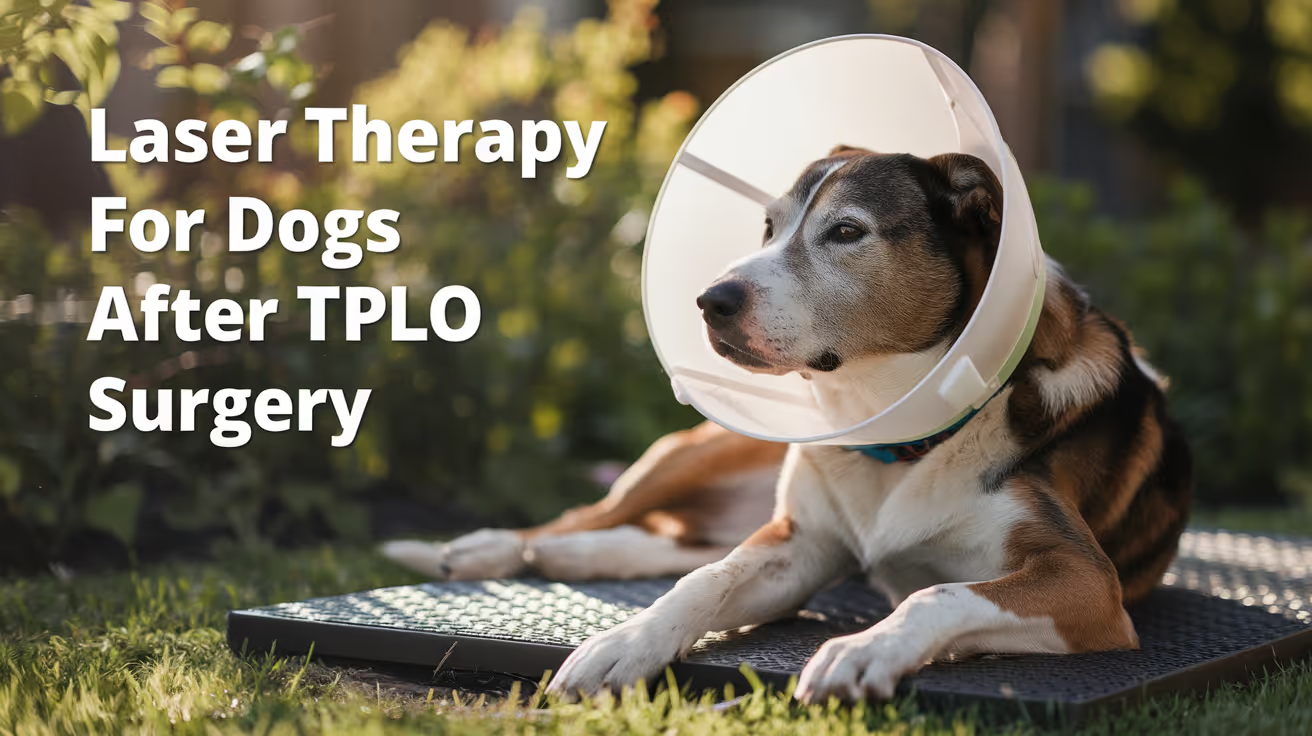
Laser Therapy for Dogs After TPLO Surgery
Learn how laser therapy helps dogs recover faster and with less pain after TPLO surgery for cruciate ligament repair.
Laser therapy also called photobiomodulation (PBMT) or low-level laser therapy (LLLT) is one of the most commonly offered adjunct treatments during TPLO recovery. Many specialist and rehabilitation centres include it routinely.
But the evidence for its benefits is more nuanced than the marketing suggests, and owners deserve an honest picture of what it does and does not reliably achieve.
Quick answer: Laser therapy after TPLO uses specific light wavelengths to reduce inflammation and support tissue healing. Evidence for early pain reduction is moderately supported; evidence for improved radiographic bone healing is weak. It is a safe adjunct but should not replace rehabilitation exercises, pain medication, or activity restriction.
Key takeaways
- Laser therapy reduces postoperative inflammation and may improve gait scores: a TPLO study found better hindlimb function at 8 weeks in treated dogs
- Evidence for improving radiographic bone healing is weak: three controlled studies found no statistically significant difference in healing time
- The 2024 AVMA randomized trial found no significant difference in CRP, weight bearing, pain scores, or SSI rates between PBMT and sham groups
- Sessions typically begin within the first few days of surgery and continue through the rehabilitation phase
- Laser therapy is safe with few contraindications: avoid eyes and active tumour sites; safe over the TPLO incision once closed
- It works best as part of a multimodal plan: exercise therapy and pain medication carry stronger evidence than laser alone
What laser therapy does
Laser therapy for dogs, also known as photobiomodulation, involves using specific wavelengths of light to penetrate tissues and promote cellular regeneration and healing. The laser light stimulates the production of ATP (adenosine triphosphate), enhancing cell repair and growth, reducing inflammation, and increasing blood circulation.
Photobiomodulation therapy has been shown to decrease inflammation, and increase analgesia, vascularization, and tissue healing after musculoskeletal injury or surgery.
The mechanism is photochemical: light energy at specific wavelengths (typically 630 to 980 nm) is absorbed by mitochondria.
This increases ATP production, modulates reactive oxygen species, and influences gene expression related to inflammation and healing.
The effects are local confined to the tissue depth the light reaches.
For post-TPLO use, the targets are: the surgical incision, the osteotomy site in the proximal tibia, and the surrounding periarticular soft tissues.
What the clinical evidence shows
Pain and function
Research following TPLO surgery showed that dogs receiving LLLT had better hindlimb function and gait scores at 8 weeks compared to controls. This is especially valuable in orthopedic recovery, where early weight-bearing can prevent muscle atrophy and joint stiffness.
In a controlled veterinary study, dogs with surgical incisions treated with laser therapy exhibited significantly less inflammatory cell infiltration and tissue necrosis within the first week post-op compared to untreated controls.
The 2024 randomized trial
54 client-owned dogs with CCL rupture undergoing unilateral TPLO surgery were enrolled. The study population was randomly assigned to either a treatment group receiving PBMT (24 dogs) or a control group (30 dogs). PBMT was performed immediately after induction, and at 6 hours, 24 hours, 48 hours, and 8 weeks postoperatively. Evaluation of CRP, pain scores, evidence of SSI, and percentage weight bearing were assessed at all time points.
The trial found the therapy showed promise but no statistically significant difference between groups on any primary outcome measure.
Bone healing
Three studies compared LLLT to a control and concluded that LLLT treatment did not make a significant difference in improving radiographic bone healing. The studies collectively provide weak evidence for this outcome.
This is an important distinction: laser therapy may support soft tissue healing, pain, and early function but it does not appear to accelerate the osteotomy healing visible on radiographs.
When to start and how often
Laser therapy uses focused light energy on the surgical site to support healing.
Most rehabilitation programmes begin laser therapy within the first 1 to 3 days after TPLO surgery, often at the surgical centre before discharge or at the first rehabilitation visit.
Typical post-TPLO laser protocol:
- Frequency: 3 to 5 sessions per week in the first 2 to 3 weeks
- Frequency: 1 to 2 sessions per week from weeks 3 to 8
- Session duration: 5 to 15 minutes depending on the laser system and dosing protocol
- Total sessions: typically 6 to 12 in the first 8-week recovery phase
The protocol varies by laser system, power output, and the individual patient's response.
Realistic expectations
Laser therapy is a useful adjunct in TPLO recovery. It is not a substitute for the treatments with stronger evidence: pain medication, activity restriction, and structured rehabilitation exercises.
Laser therapy could be particularly helpful for dogs with weight-bearing and gait issues while recovering from TPLO surgery after a cruciate injury.
Dogs with significant early swelling, wound sensitivity, or slow initial weight-bearing progress may benefit most. Dogs recovering well with standard multimodal analgesia and rehabilitation may show less measurable difference.
For the bone healing timeline that laser therapy supports during recovery, see TPLO bone healing time in dogs explained.
For the full recovery plan that laser therapy fits into, see 10 essential TPLO recovery tips for pet owners.
For the physical therapy that is the primary evidence-based adjunct, see when to start physical therapy after TPLO surgery.
For swelling management in the recovery period, see how long does swelling last after TPLO surgery.
Frequently asked questions
Is laser therapy safe over the TPLO incision?
Yes, once the incision is closed. Laser therapy is safe over sutured incisions and can be applied at the surgical site from the first post-operative day in most protocols.
Avoid direct application over open wounds or actively infected tissue.
How many laser sessions does a dog need after TPLO?
Typically 6 to 12 sessions across the first 8 weeks.
Start at 3 to 5 sessions per week for the first 2 to 3 weeks, tapering to 1 to 2 per week through the rehabilitation phase.
The exact protocol depends on the laser system and rehabilitation plan.
Does laser therapy replace pain medication after TPLO?
No. Laser therapy is an adjunct to pharmaceutical pain management, not a replacement. Post-TPLO pain management requires NSAIDs, and often gabapentin or other analgesics.
Laser therapy may reduce the pain burden and support earlier mobility but does not provide sufficient analgesia on its own.
Can I do laser therapy at home with a consumer device?
Consumer-grade red light therapy devices exist but operate at lower power densities than veterinary therapeutic lasers. The clinical evidence discussed in this article relates to veterinary-grade PBMT devices.
Home devices may offer some benefit but cannot replicate the dosing of professional equipment. Discuss with your rehabilitation veterinarian before purchasing.
Will laser therapy prevent my dog from needing more medication?
Possibly. If laser therapy reduces post-operative inflammation and pain, some dogs may need lower doses of pain medication or taper off sooner.
This should be guided by your veterinarian based on your dog's individual recovery trajectory.
Resources
- AVMA Journal. Photobiomodulation Therapy in Dogs Undergoing TPLO After Cranial Cruciate Ligament Rupture. avmajournals.avma.org
- Veterinary Evidence. Does LLLT Improve Radiographic Healing for Dogs with CCL Rupture Undergoing TPLO Surgery? veterinaryevidence.org
- AKC. Laser Therapy For Dogs: Uses, Side Effects, and Alternatives. akc.org
- Erchonia. Laser Therapy for Post-Surgical Recovery in Pets. erchonia.com
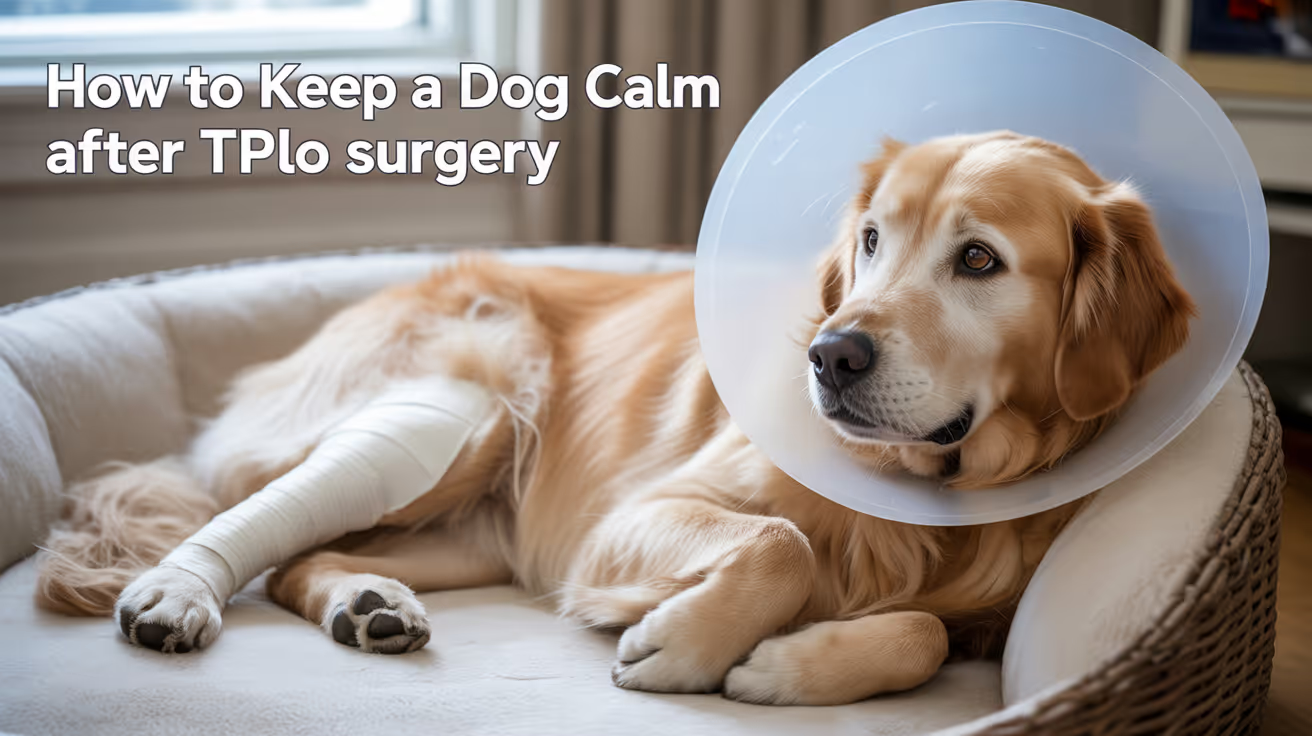
How to Keep a Dog Calm After TPLO Surgery
Learn how to keep your dog calm after TPLO surgery using rest, crate training, and soothing techniques for safe, stress-free recovery.
Keeping a dog calm during TPLO recovery is one of the hardest parts of the process -- and one of the most important.
A dog that feels physically capable of running at week 3 is not biologically ready to run at week 3. The osteotomy has not consolidated. The plate can fail.
Activity restriction is not optional.
Quick answer: Most effective strategies for keeping a dog calm after TPLO surgery: crate confinement during unsupervised periods, food puzzles and scent games, consistent pain management, a quiet low-stimulus environment, and trazodone or gabapentin for highly anxious dogs. Keep a leash on the dog indoors.
Key takeaways
- Crate confinement is the foundation of activity control: large enough to stand and turn but not pace; prevents the spontaneous running, jumping, and spinning that cause plate failure
- Mental stimulation substitutes for physical activity: food puzzles, lick mats, frozen Kongs, and scent games provide neural reward without physical impact
- Pain management compliance directly affects calmness: uncontrolled pain causes restlessness; giving NSAIDs and gabapentin on schedule keeps the dog comfortable enough to rest
- The environment must be actively managed: loud TV, visitors, and other pets cause arousal and movement; a quiet, predictable low-stimulus space reduces arousal
- Trazodone and gabapentin can be prescribed for highly anxious dogs: VetSurgInfo confirms trazodone is inexpensive, safe, and effective for anxiety and sedation during TPLO recovery
- Always use a leash indoors during early recovery: a dog that slips or startles can displace the plate; a house leash gives the owner control at all times
The crate: foundation of confinement
A crate is the safest confinement tool for TPLO recovery.
It limits the movements that risk plate failure -- spontaneous jumping, running to the door, sudden pivoting -- and gives the dog a defined, safe space.
Crate selection:
- Large enough for the dog to stand, turn, and lie down comfortably
- Not so large the dog can pace or run inside
- Soft bedding on non-slip material
- Location in the household main area, not isolated -- isolation increases anxiety
SustainableVet.org confirms: use a crate, pen, or small room with non-slip flooring. Crates prevent jumping, running, and twisting. Choose a crate large enough to stand and turn.
Exercise pen alternative: for dogs that do not tolerate crates, an exercise pen (X-pen) provides a larger confined space while still restricting free movement. Place the X-pen in the main living area so the dog is not isolated.
Small room alternative: a bathroom, laundry room, or small bedroom with a baby gate can work. Remove furniture the dog could jump on.
Mental stimulation: the most underused tool
A dog confined physically but not cognitively engaged becomes frustrated, which leads to escape attempts and activity that risks the repair.
Mental stimulation provides the same dopamine reward as physical activity with zero mechanical risk.
Effective mental stimulation options:
Food puzzles and slow feeders: scatter meals in a puzzle feeder or across a lick mat instead of in a bowl. A meal that takes 15 minutes to eat provides significant cognitive engagement.
Frozen Kongs: stuff with wet food, peanut butter (xylitol-free), or kibble soaked in broth; freeze for several hours. A frozen Kong can occupy a dog for 20 to 30 minutes.
Sniff games: hide small treats in a folded towel, a muffin tin covered with tennis balls, or a scatter across the crate bedding. Sniffing is cognitively tiring -- it is physiologically equivalent to sustained physical exercise in terms of neural engagement.
Chew toys: long-duration chews (bully sticks, raw bones appropriate for the dog's size, frozen chicken necks) keep the dog occupied without movement.
Animal Outpatient Surgery confirms: soft music, white noise, or pheromone diffusers create a serene atmosphere. Mental engagement through food puzzles and scent games reduces frustration from limited mobility.
Environmental management
The dog's immediate environment directly controls arousal level.
Reduce auditory stimuli: loud TV, doorbell sounds, and street noise cause the dog to alert and attempt to move. White noise machines or calm background music reduce stimulus peaks.
Manage household traffic: visitors who excite the dog, children who rough-house nearby, and other pets that want to interact all cause arousal. Limit access to the dog during early recovery.
Manage other pets: other dogs and cats approaching the recovering dog cause arousal and can trigger sudden jumping or running. Keep them separated during the early weeks, particularly unsupervised.
Non-slip flooring: rugs and yoga mats in the dog's movement area prevent slipping, which generates uncontrolled leg movements that can stress the plate.
Laveen Vet Center confirms: set up a quiet, confined area free from loud noises, active children, and other pets. White noise or soft music helps create a serene atmosphere.
Pain management and its role in calmness
An undertreated dog is a restless dog. Pain creates the exact behaviors -- panting, pacing, inability to settle, licking the leg -- that also indicate anxiety.
Distinguishing pain from anxiety is important because the response is different.
Pain management checklist:
- Give NSAIDs and gabapentin on the exact schedule prescribed, not as needed
- Never skip doses because the dog appears comfortable -- the medication is maintaining that comfort
- Give medications approximately 30 minutes before walks (TPLO home recovery protocols recommend this timing)
- Contact your vet if the dog cannot settle despite correct medication administration
VetSurgInfo confirms: gabapentin provides both analgesia and sedation; the sedating effect facilitates recovery and rest, particularly in the first 7 days.
Prescribed calming medications
For dogs with high anxiety, separation anxiety, or an inability to settle despite environmental and mental stimulation management, veterinary-prescribed medications are appropriate and safe.
Trazodone: a serotonin modulator used off-label in dogs for anxiety and sedation. VetSurgInfo confirms: dogs do very well on trazodone for anxiety and sedation during TPLO recovery; it is inexpensive and can facilitate recovery, rest, and calm during vet visits.
Gabapentin: the analgesic side effect of sleepiness helps with calmness in addition to pain control.
Alprazolam or other benzodiazepines: may be appropriate for situational anxiety (specific triggers like thunder).
SustainableVet.org confirms: vets can prescribe mild sedatives or calming medications for dogs who remain overly anxious; these drugs are safe when dosed correctly and can prevent harmful overactivity.
Never give human anxiety medications to dogs. Never use human supplements without vet approval -- some contain xylitol or other ingredients toxic to dogs.
Owner behavior and management
Owners unintentionally promote activity.
Do not excitedly greet the dog: excited greetings cause the dog to jump and spin. Calm, quiet greetings reduce arousal.
Leash the dog indoors: a house leash (a short, light leash attached to the collar) gives the owner control when the dog is out of the crate. If the dog startles or tries to move suddenly, the leash prevents uncontrolled movement.
Maintain a predictable routine: dogs are routine-oriented. Predictable meal times, bathroom walk times, and crate times reduce anticipatory anxiety. Variation creates excitement; routine creates calm.
Keep visits short: sitting with the dog is good. Prolonged exciting interaction is not. Brief, calm contact several times daily is better than one long exciting session.
For the recovery timeline, see what to expect after TPLO surgery in dogs. For infection prevention, see post-operative care mistakes that increase TPLO infection risk.
For swelling management, see fluid buildup after TPLO surgery in dogs. For exercise, see TPLO recovery exercises for dogs.
Frequently asked questions
My dog screams and cries in the crate for hours. What do I do?
Contact your vet. Sustained, intense crate distress may indicate: inadequate pain control (the dog is in pain, not just anxious), genuine severe separation anxiety, or insufficient mental stimulation.
Ask about trazodone or gabapentin for anxiety management. Do not give up on crate confinement -- the alternative is uncontrolled movement that risks the repair.
Is it okay to let my dog out of the crate to sit with me on the sofa?
Only if the dog is on a leash and cannot jump. Allow the dog to lie next to you on the floor or on a low dog bed beside you.
Do not allow the dog onto the sofa -- falling or jumping off generates the same plate-failure risk as running.
My dog seems much better at 3 weeks. Can I relax the restrictions?
No. Clinical improvement does not mean bone healing is complete. The osteotomy is not confirmed healed until radiographs at 8 to 12 weeks.
Plate failure typically happens when owners relax restrictions based on the dog appearing well. Maintain full restrictions until vet clearance.
What is the best medication for a high-energy dog that can't settle?
Trazodone is the most commonly prescribed agent for activity restriction in TPLO dogs. It is effective, safe, inexpensive, and can be used for the full restriction period.
Discuss with your vet at or before surgery -- it is easier to start early than to address a crisis at week 2.
Can I take my dog to visit friends or family during recovery?
Very limited visits in controlled, quiet environments where the dog is leashed and confined.
No visits to households with other active dogs, children who will excite the dog, or any environment where the dog cannot be kept calm. Unfamiliar environments increase anxiety and exploration behavior.
Resources
- SustainableVet. How to Keep a Dog Calm After TPLO Surgery. sustainablevet.org
- VetSurgInfo. TPLO Recovery Tips. vetsurginfo.com
- Animal Outpatient Surgery. How to Keep a Dog Calm After TPLO Surgery. animaloutpatientsurgery.com
- Laveen Vet Center. How to Keep a Dog Calm After TPLO Surgery. laveenvetcenter.com
Dog Not Peeing After TPLO Surgery: Causes & Care
Learn why your dog may not pee after TPLO surgery and how to manage this common post-op issue safely and effectively.
It is common to notice changes in a dog's urination pattern in the first 24 to 48 hours after TPLO surgery.
Most of these changes are temporary and related to the effects of anesthesia, pain medications, and reduced mobility.
However, not urinating at all for more than 12 to 24 hours is a clinical concern that requires prompt veterinary contact.
Quick answer: Reduced urination in the first 12 to 24 hours after TPLO is usually caused by anesthesia effects, opioid medications, pain, or stress. Contact your vet immediately if your dog has not urinated within 12 hours post-surgery, or if you observe straining, vocalization, or abdominal distension.
Key takeaways
- Reduced urination in the first 12 to 24 hours is normal: anesthesia suppresses bladder awareness and opioids reduce the sensation of fullness
- Contact your vet if no urination occurs within 12 hours post-surgery: this is the critical threshold, per published veterinary guidance do not wait
- Straining, vocalizing, or abdominal swelling requires same-day veterinary evaluation: these signs suggest urinary retention requiring catheterization
- Opioid pain medications are the most common pharmacological cause: they reduce bladder filling sensation and sphincter tone in some dogs
- Surgical catheterization during the procedure may temporarily affect urination for 12 to 24 hours after catheter removal
- Increased water intake without urination is particularly concerning: it suggests the dog is producing urine but cannot eliminate it a potential retention emergency
Why dogs may not urinate normally after TPLO
Anesthesia effects
General anesthesia suppresses the entire nervous system, including the neural pathways that signal bladder fullness and initiate voiding.
As anesthetic agents clear over the first 12 to 24 hours, normal bladder signaling gradually returns.
Most dogs produce less urine during anesthesia because of reduced blood pressure and fluid redistribution.
When fluid therapy resumes and hydration normalizes after surgery, urine production increases but the dog must also have recovered enough neurological function to void normally.
Opioid pain medications
Opioid analgesics (hydromorphone, morphine, buprenorphine) prescribed after TPLO affect urination in two main ways.
They reduce the perception of bladder fullness, so the dog does not signal readiness to urinate as promptly as usual.
In some dogs they also increase urethral sphincter tone, making voiding more difficult.
JustAnswer veterinary consultation confirms: opioids can cause urinary retention by relaxing or altering bladder muscles, making it hard for the dog to pee.
This effect is temporary and typically resolves as opioid dosing decreases over the first 48 to 72 hours.
Pain and reluctance to posture
Urination requires the dog to posture squatting or lifting a leg both of which require hindlimb use and core stability that are painful in the first days after TPLO.
A dog that finds posturing too painful may suppress the urge to urinate or produce only small amounts.
Providing a non-slip surface, a low slung outdoor space (not steps or slopes), and supporting the dog with a belly sling during outdoor trips reduces posturing pain and encourages normal urination.
Surgical catheterization
A urinary catheter is often placed during TPLO surgery to drain the bladder, keep the surgical field dry, and prevent accidents during the procedure.
After catheter removal, some dogs take 12 to 24 hours to resume normal voiding patterns as the urethra recovers from catheter placement and the bladder regains normal tone.
Stress and unfamiliar environment
Dogs in pain, in an unfamiliar post-surgical environment, and wearing an E-collar may suppress urination due to stress.
Stress-related urinary suppression is temporary and usually resolves as the dog settles into the home recovery environment.
Normal urination expectations after TPLO
Most dogs urinate at least once within 6 to 12 hours of returning home from surgery. By 24 hours, most dogs have urinated multiple times.
The SustainableVet.org dog-not-peeing guide confirms: if your dog does not pee within 24 hours post-surgery, contact your veterinarian immediately to rule out complications.
The published veterinary guidance for emergency contact is: no urination within 12 hours post-surgery contact your vet.
Signs that require immediate veterinary contact
Contact your veterinarian same-day or go to an emergency clinic if you observe:
No urination at all for 12 or more hours after surgery: this is the key threshold do not wait to see if it resolves
Straining or crying during urination attempts: the dog is trying to urinate but cannot produce a stream classic urinary retention sign
Abdominal distension: the belly feels full or tense; this suggests a distended bladder (urinary retention emergency)
Drinking water but producing no urine: urine is being produced but cannot be eliminated urgent
Vomiting or lethargy alongside no urination: systemic signs accompanying urinary retention indicate a more serious emergency
Urinary retention: what happens and how it is treated
Urinary retention means the bladder cannot empty. The bladder fills progressively and becomes painful, distended, and eventually at risk of rupture if unrelieved. Prolonged retention also causes back-pressure on the kidneys.
Treatment depends on the cause:
- Catheterization: gentle placement of a urinary catheter to drain the bladder provides immediate relief and allows the bladder to recover normal tone
- Pain management adjustment: if opioid-induced retention is suspected, the analgesic protocol may be modified
- Bethanechol: a parasympathomimetic drug that stimulates bladder contraction; sometimes used in dogs with neurogenic urinary retention
- Urinalysis and culture: if infection is suspected alongside retention
Home care to encourage urination
- Scheduled outdoor trips every 2 to 4 hours for the first 24 to 48 hours
- Non-slip surface outdoors pain and weakness increase slipping risk
- Gentle belly-sling support to reduce posturing pain (fold a large towel under the belly and lift slightly)
- Quiet, calm outdoor environment stressed dogs suppress urination
- Adequate pain control contact your vet if your dog is vocalizing or reluctant to move; these are signs pain medication is insufficient
- Monitor and record each urination: time, approximate volume, any straining or discomfort
For the related incontinence guide (opposite problem), see dog incontinence after TPLO surgery: causes and care. For the post-surgical pain guide, see dog whining after TPLO surgery: causes and care.
For the full recovery guide, see what to expect after TPLO surgery in dogs. For the monitoring guide during early recovery, see post-operative care mistakes increasing TPLO infection risk.
Frequently asked questions
How long after TPLO surgery should my dog urinate?
Most dogs urinate within 6 to 12 hours of returning home from surgery. Contact your veterinarian if no urination has occurred within 12 hours.
Do not wait for the 24-hour mark if the dog is straining, vocalizing, or appears uncomfortable.
My dog is drinking water but not peeing at all. Is this an emergency?
Yes. A dog that is drinking and producing urine but cannot eliminate it (retention) needs same-day veterinary evaluation. A distended bladder is painful and can rupture.
Do not manage this at home contact your vet immediately.
Can opioid pain medications cause urinary retention?
Yes. Opioids are a recognized cause of urinary retention in both humans and dogs.
If your dog was urinating normally before surgery and stops after receiving opioid medications, this is likely a contributing factor.
Contact your vet the analgesic protocol may be modified without eliminating pain management.
What does a catheter placement during surgery do to urination afterward?
Urinary catheters are placed during TPLO to drain the bladder and keep the surgical field dry.
After catheter removal, some dogs take 12 to 24 hours to resume normal voiding as the urethra recovers.
This is expected and not a cause for alarm, as long as the dog urinates within the normal timeframe.
Is it safe to give my dog extra water if they're not peeing?
Normal hydration is essential and should be maintained. Do not restrict water.
However, if the dog is drinking normally and still not producing urine, this increases the urgency of veterinary contact rather than reducing it.
Resources
- VCA Animal Hospitals. Tibial Plateau Leveling Osteotomy (TPLO) in Dogs. vcahospitals.com
- TPLO Info. Recovery FAQs. tploinfo.com
- PetMD. Urinary Retention in Dogs. petmd.com
- Midwest Veterinary Specialists. Post-Operative Care Following TPLO. midwestveterinaryspecialists.com
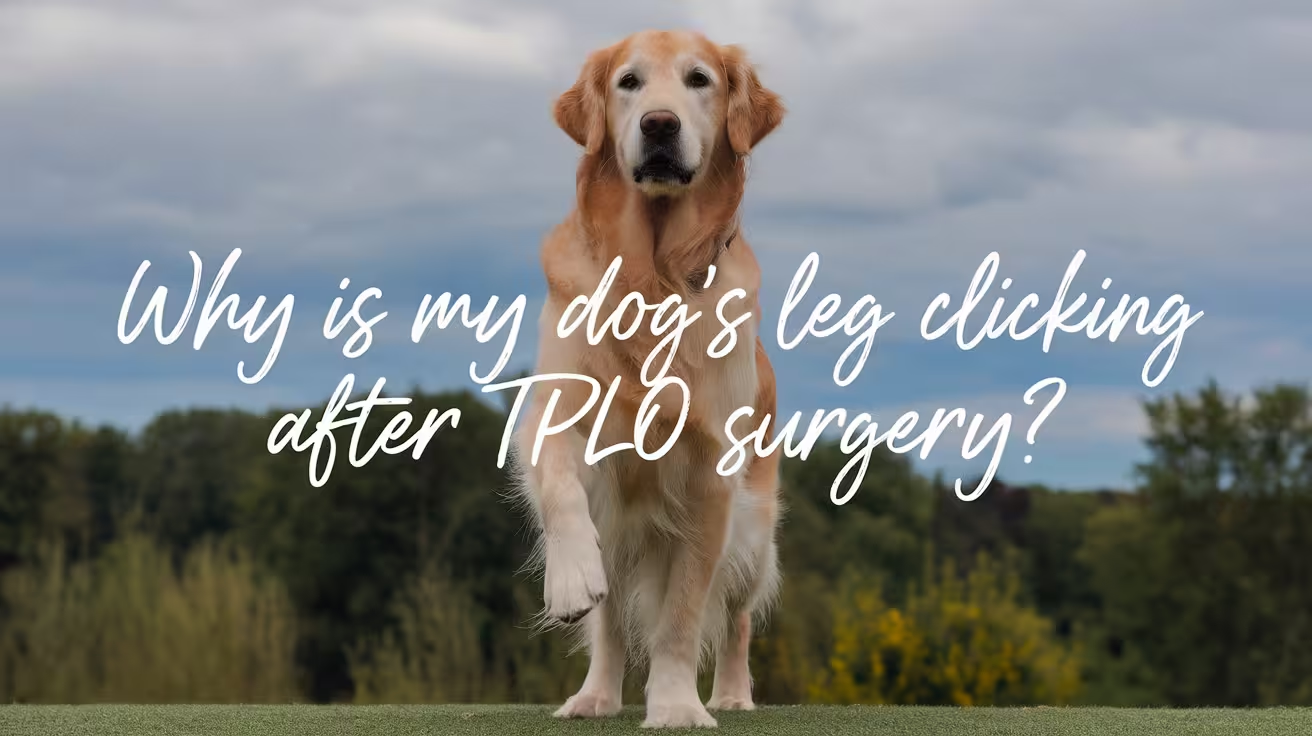
Why Is My Dog's Leg Clicking After TPLO Surgery?
Wondering why your dog’s leg is clicking after TPLO surgery? Learn common causes, when to worry, and what to expect during recovery
A clicking or popping sound from the stifle after TPLO surgery is a common observation that owners report, especially during the first weeks of recovery.
It is not automatically a sign of a problem.
The clinical significance depends on what accompanies the click: is the dog bearing weight and recovering normally, or is clicking associated with lameness, pain, or a trajectory reversal?
Quick answer: Post-TPLO clicking most often reflects normal joint adjustment, soft tissue movement, or cavitation. The most clinically important cause is a meniscal tear, producing a meniscal click with pain and returning lameness. Clicking without lameness or pain in early recovery is usually benign.
Key takeaways
- Most post-TPLO clicking is benign: the click typically comes from joint adjustment to new mechanics; the dog usually feels fine even when a sound is present
- The meniscal click is the clinically significant type: dogs with meniscal tears exhibit a meniscal click accompanied by lameness and pain
- Clicking with lameness or pain warrants prompt veterinary evaluation: clicking with swelling, limping, or avoiding the leg could signal instability, implant issues, or a torn meniscus
- Clicking that is isolated, early in recovery, and not associated with lameness is usually normal and improves as healing progresses
- Late-onset clicking in a previously normal recovery is more concerning than early clicking; it suggests a new event such as meniscal tear or implant loosening
- Implant loosening is a rare but serious cause of clicking: abnormal joint mechanics from loosened screws or plate produce clicking accompanied by pain and radiographic changes
What causes clicking after TPLO surgery
Normal joint adjustment
After TPLO, the tibial plateau is repositioned to a new angle. The soft tissues, tendons, and joint capsule require weeks to adapt to this new geometry.
During this adaptation period, movement can produce audible sounds as structures slide over each other or snap slightly over new contours.
TPLO Info confirms: after CCL repair, the joints adjust to new motion. The click comes from the knees. The dog usually feels fine even when a sound is present.
Soft tissue movement over the implant
The TPLO plate sits against the medial tibial surface. Tendons and fascial layers that previously moved over the normal tibial contour now move over a plate with a different profile.
This can produce audible snapping or clicking sounds during flexion and extension, particularly in the first weeks before soft tissue accommodation occurs.
Gas bubble release (cavitation)
Joint capsule distension from post-surgical effusion can trap gas in the joint space. Movement releases this gas in small pops -- the same mechanism as knuckle cracking in humans.
This is painless and harmless.
Meniscal click (most significant cause)
The medial meniscus is vulnerable to injury in CCL disease. At the time of TPLO, the surgeon assesses the meniscus and removes damaged tissue.
However, meniscal injury can occur after TPLO -- either from previously undetected damage that progresses, or from new injury in a joint that has not yet fully stabilized.
Laguna Woods Vets confirms: dogs with meniscal tears frequently exhibit a meniscal click. If damage is noted during TPLO, the meniscus is removed. If not removed, it may tear later.
SustainableVet.org confirms: symptoms of meniscal damage include clicking when the dog moves, lameness, reluctance to use the affected leg, and discomfort when bending the knee.
The meniscal click is distinguished from benign clicking by:
- Accompanying lameness (often a sudden return of limping after initial improvement)
- Pain when the stifle is manipulated on examination
- Worsening trajectory rather than improvement
Implant-related clicking (uncommon)
Plate or screw loosening generates abnormal tibial motion during weight bearing, which can produce clicking.
This is uncommon in an uncomplicated TPLO but more likely if the dog has been overactive during recovery.
Signs include pain localized to the plate site and radiographic evidence of implant migration or peri-implant bone changes.
SustainableVet.org confirms: implant failure is rare but serious; plates or screws can loosen or break if the dog is too active early, leading to discomfort and joint noises.
Normal vs. concerning clicking: a practical guide
Likely normal (benign):
- Clicking present from the first days after surgery
- No lameness associated with the click
- Dog is bearing weight and improving week by week
- Click is quiet and intermittent
- Dog does not react (wince, pull back, vocalize) when the stifle is manipulated
Warrants veterinary evaluation:
- Clicking that appears new after a period of recovery without clicking
- Clicking accompanied by lameness or reluctance to bear weight
- Dog flinches or vocalizes when the stifle is flexed
- Clicking that is getting louder or more frequent over time
- Lameness that had been improving and then reverses
SustainableVet.org confirms: contact your vet if the clicking sound is persistent or getting worse over time; a mild clicking early in recovery is normal but it should improve as healing progresses.
Meniscal tear after TPLO: what happens next
If a meniscal tear is suspected or confirmed, management depends on severity.
Mild cases: pain management with NSAIDs, joint supplements, and controlled exercise restriction. The meniscus may stabilize with conservative management if the tear is small and the joint is otherwise stable.
Cases with ongoing pain or lameness: partial meniscectomy (surgical removal of the torn portion of the meniscus) is required. This is a second surgical procedure requiring general anesthesia and a repeat recovery period.
SustainableVet.org confirms: if a meniscal tear causes ongoing pain and instability, surgery is often needed; this may involve a partial meniscectomy.
Larger dogs and clicking
Larger dogs are more likely to produce audible joint sounds during recovery. Greater body mass means greater joint loading forces, which amplify soft tissue and implant movement sounds.
SustainableVet.org confirms: larger dogs are more likely to make joint sounds during recovery; their extra weight puts more pressure on the healing leg, which can make clicking more noticeable.
This does not mean clicking in large dogs is more likely to be pathological -- only that it is more audible when it occurs.
When to contact your vet about clicking
Contact your vet promptly (same day or within 24 hours) if:
- Clicking is accompanied by lameness or non-weight bearing
- A dog that was improving begins to worsen (trajectory reversal)
- The click is producing a visible pain response
- The click appears late in recovery (after weeks of silent healing)
Contact at your next scheduled appointment (can wait):
- Intermittent clicking early in recovery without lameness
- Click that is quieter week by week
- Dog is bearing full weight and improving in function
For the full TPLO complications guide, see common complications after TPLO surgery. For the toe-tapping guide, see dog toe tapping after TPLO surgery.
For the lameness guide, see lameness after TPLO surgery in dogs. For the leg shaking guide, see dog leg shaking after TPLO surgery.
Frequently asked questions
My dog's knee has been clicking for 3 weeks but she is not limping at all. Should I be worried?
Three weeks of clicking with no lameness and a normal, improving recovery trajectory is most likely benign joint adjustment. Monitor for lameness, pain on stifle palpation, or worsening of the click.
Mention it at your next scheduled vet appointment -- this is not an emergency call.
My dog's leg clicked once loudly while getting up, and then she held the leg up. What do I do?
Contact your vet the same day. A sudden loud click followed by acute lameness may indicate a meniscal injury event. This presentation warrants veterinary examination and likely radiographs.
Can clicking after TPLO get better on its own?
Yes -- benign mechanical clicking from joint adjustment and soft tissue accommodation typically resolves or reduces significantly over the first 4 to 8 weeks.
A meniscal click does not resolve without treatment of the meniscal tear.
Does clicking mean the plate is failing?
Not typically. Implant failure clicking is accompanied by pain and worsening lameness. Benign clicking in a comfortable, normally-recovering dog does not indicate implant failure.
Radiographs at the scheduled 6-week and 12-week appointments assess implant integrity.
My dog clicks on every step. Is that different from occasional clicking?
Consistent clicking on every step, particularly if it has a regular, reproducible pattern during weight bearing, is more likely to have a structural cause (meniscal click) than intermittent clicking.
Mention this to your vet and assess whether lameness is present.
Resources
- TPLO Info. Why Is My Dog's Leg Clicking After TPLO Surgery? tploinfo.com
- SustainableVet. Why Is My Dog's Leg Clicking After TPLO Surgery? sustainablevet.org
- Laguna Woods Vets (LHAH). TPLO Surgery Complications. lhah.com
- ACVS. Cranial Cruciate Ligament Disease. acvs.org

Long-Term Outcomes of TPLO Surgery
Explore the long-term outcomes of TPLO surgery, its effectiveness, potential risks, and benefits for maintaining canine mobility and quality of life
TPLO produces excellent long-term outcomes for most dogs with CCL rupture.
The published evidence covers follow-up periods from 1 year to 6.8 years post-surgery and consistently shows high rates of functional recovery alongside moderate but ongoing arthritis progression.
Understanding what the data shows helps owners set realistic expectations about what TPLO achieves and what ongoing management is required.
Quick answer: Published long-term TPLO outcomes: 90 to 95% of dogs regain complete or near-complete limb function; good to excellent results in 90.4% of patients at up to 6.8 years; 93% owner satisfaction at 12 months (RCVS). Arthritis progresses moderately in all CCL-affected stifles but TPLO produces less progression than TTA.
Key takeaways
- 90 to 95% of dogs regain complete or near-complete limb function: RCVS Canine Cruciate Registry confirms this range; 93% owner satisfaction at 12 months
- Good to excellent results in 90.4% of patients up to 6.8 years post-surgery: TPLO Info cites this long-term retrospective study, one of the longest published TPLO follow-up datasets
- Arthritis progresses in all CCL-affected joints regardless of surgical technique: TPLO slows progression compared to TTA and lateral suture but does not stop it
- TPLO produces better long-term outcomes than TTA in comparative studies: OA progressed more after TTA; TPLO dogs had less pain, better walking, less morning stiffness, and better quality of life at 3+ years per the 94-dog study
- TPLO produces better owner satisfaction than lateral suture: 93% vs. 75% for lateral fabellar suture per TPLO Info; kinematic gait analysis also favored TPLO
- Meniscal management at the time of TPLO affects long-term outcomes: dogs with partial meniscectomy had higher rates of excellent long-term results and less OA progression per TPLO Info
Functional outcomes: what the data shows
At 1 year post-surgery
A 2013 comparative study of TPLO vs. TTA found TPLO patients achieved 93% restoration of limb function at 1 year, as assessed by objective force plate analysis.
This is the most frequently cited 1-year outcome figure.
RCVS Canine Cruciate Registry confirms: 90 to 95% of dogs regain complete or near-complete function; 93% of owners report satisfaction at 12 months.
At 2 years post-surgery
A PMC long-term functional outcome study found that most dogs with CCL repair -- regardless of technique -- showed improvement in limb function at 2 years compared to pre-operative status.
Objective gait analysis at 2 years showed that the operated leg approached the contralateral leg in force plate measurements.
At 3+ years post-surgery
The comparative TPLO vs. TTA study with follow-up at 3+ years provides the clearest long-term comparative data:
- OA progressed more in TTA than in TPLO dogs
- TPLO dogs scored better on the Canine Brief Pain Inventory across all domains (average pain, walking interference, morning stiffness, jumping, climbing)
- TPLO dogs scored better on the Canine Orthopedic Index (quality of life)
- The study concluded TPLO provides better long-term radiographic and functional outcome than TTA
At up to 6.8 years post-surgery
TPLO Info cites a long-term retrospective study with follow-up extending to 6.8 years: good to excellent results were obtained in 90.4% of patients at this timeframe.
This is the longest published follow-up in a TPLO outcome dataset and confirms that the 90%+ functional recovery rate is durable over years rather than only at 12 months.
Arthritis: the universal long-term consideration
All dogs with CCL disease develop progressive osteoarthritis in the affected stifle. This is true regardless of whether surgical or conservative management is chosen.
TPLO reduces the rate of arthritis progression and the severity of clinical signs compared to lateral suture stabilization and TTA, but arthritis progression continues.
TPLO Info confirms: in the long term, there was a moderate but significant progression of OA following TPLO.
SustainableVet.org confirms: while TPLO stabilizes the knee and slows down arthritis progression, it does not completely eliminate the risk; mild arthritis is expected, even in successful cases.
Managing long-term arthritis after TPLO
Weight management: every additional kilogram of body weight increases stifle joint loading. Maintaining lean body condition is the single most impactful owner-controlled variable for arthritis management.
Joint supplements: glucosamine, chondroitin, and omega-3 fatty acids (fish oil) are commonly recommended and have evidence supporting modest benefit for joint health and comfort.
Low-impact exercise: regular, controlled exercise (walking, swimming, hydrotherapy) maintains muscle mass and joint lubrication without the impact forces of running and jumping. Consistent low-impact exercise is more beneficial than sporadic high-intensity sessions.
NSAIDs for flares: carprofen, meloxicam, or other veterinary NSAIDs are used for periods of increased arthritis pain. Long-term NSAID use requires periodic monitoring of renal and hepatic function.
Rehabilitation: an ongoing physiotherapy relationship with a certified canine rehabilitation practitioner helps maintain muscle mass and joint mobility as the dog ages.
Factors that affect long-term outcomes
Age at surgery: younger dogs typically achieve better long-term function than older dogs. Older dogs heal more slowly and have a higher baseline level of arthritis-related joint change before surgery.
Body weight: heavier dogs show more arthritis progression and more persistent lameness than lighter dogs at equivalent follow-up periods.
Meniscal management: TPLO Info confirms partial meniscectomy (when a meniscal tear is present) is associated with significantly higher rates of excellent long-term results and less OA progression compared to meniscal release or leaving the meniscus intact when abnormal.
Surgical timing: earlier intervention (before severe arthritis develops) produces better long-term outcomes. Dogs treated early in the disease process have less existing joint damage at the time of surgery.
Rehabilitation compliance: dogs that complete structured rehabilitation programs and achieve good muscle mass restoration have better long-term function than those managed with restricted activity alone.
Bilateral CCL disease: TPLO Info confirms OA progresses more in dogs with bilateral stifle surgery than unilateral. This may reflect the more severe underlying degenerative process in these dogs.
TPLO vs. lateral suture: long-term comparison
TPLO Info confirms owner satisfaction of 93% for TPLO vs. 75% for lateral fabellar suture; kinematic gait analysis also favored TPLO outcomes.
This comparison is most relevant for medium-sized dogs where both procedures are technically appropriate. For large dogs over 35 to 40 kg, TPLO consistently outperforms lateral suture in long-term outcomes.
For small dogs under 15 kg, lateral suture achieves comparable results at substantially lower cost.
TPLO vs. TTA: long-term comparison
SustainableVet.org confirms: when comparing TTA to TPLO, research suggests similar long-term arthritis outcomes in some studies, but TPLO patients usually recover faster and regain function sooner.
The 3+ year follow-up comparative study is the most comprehensive published comparison and clearly favors TPLO in both OA progression and functional/quality-of-life outcomes.
For the TPLO overview, see what is TPLO surgery in dogs?. For the long-term effects list, see 13 long-term effects of TPLO surgery on dogs.
For surgery comparisons, see TPLO vs CBLO vs TTA: a guide to cruciate surgery options. For arthritis management, see arthritis after TPLO surgery in dogs.
Frequently asked questions
Will my dog be completely normal after TPLO?
Most dogs return to their pre-injury activity level after full recovery.
RCVS and multiple studies confirm 90 to 95% regain complete or near-complete function.
"Completely normal" is achievable for most dogs, with the caveat that some mild arthritis develops over time in virtually all cases.
Dogs may show stiffness on cold days or after long rest periods as they age.
Does TPLO stop arthritis?
No -- it reduces and slows arthritis progression compared to conservative management and other surgical techniques, but does not stop it. All CCL-affected stifles develop progressive OA.
The goal of TPLO is to stabilize the joint and minimize the rate of arthritis development, not eliminate it.
How long does the TPLO plate last?
The plate is designed to be permanent.
Good to excellent results at 6.8 years (the longest published TPLO follow-up) with the plate in place demonstrates the durability of the implant in the overwhelming majority of cases.
Plate complications requiring removal occur in 3.5 to 7.5% of cases.
Is my dog at risk for the CCL on the other side?
Yes. RCVS confirms approximately 50% of dogs will develop CCL disease in the other hind limb.
This is not a consequence of TPLO -- it reflects the degenerative nature of CCL disease that typically affects both stifles. Monitoring the contralateral stifle is appropriate in all TPLO dogs.
Does the long-term outcome depend on the surgeon's experience?
Yes, to some degree. Surgeons with more TPLO experience have lower complication rates (including SSI and delayed union), and complications are associated with worse long-term outcomes.
Using a board-certified surgeon or an experienced general practitioner with dedicated TPLO training reduces risk. The published SSI studies confirm surgeon experience as an independent risk factor for post-TPLO complications.
Resources
- TPLO Info. TPLO Literature and Studies. tploinfo.com
- RCVS Canine Cruciate Registry. Tibial Plateau Levelling Osteotomy (TPLO). rcvsknowledge.org
- PMC. Long-Term Functional Outcome After Surgical Repair of Cranial Cruciate Ligament Disease in Dogs. ncbi.nlm.nih.gov
- SustainableVet. Long-Term Outcomes of TPLO Surgery. sustainablevet.org
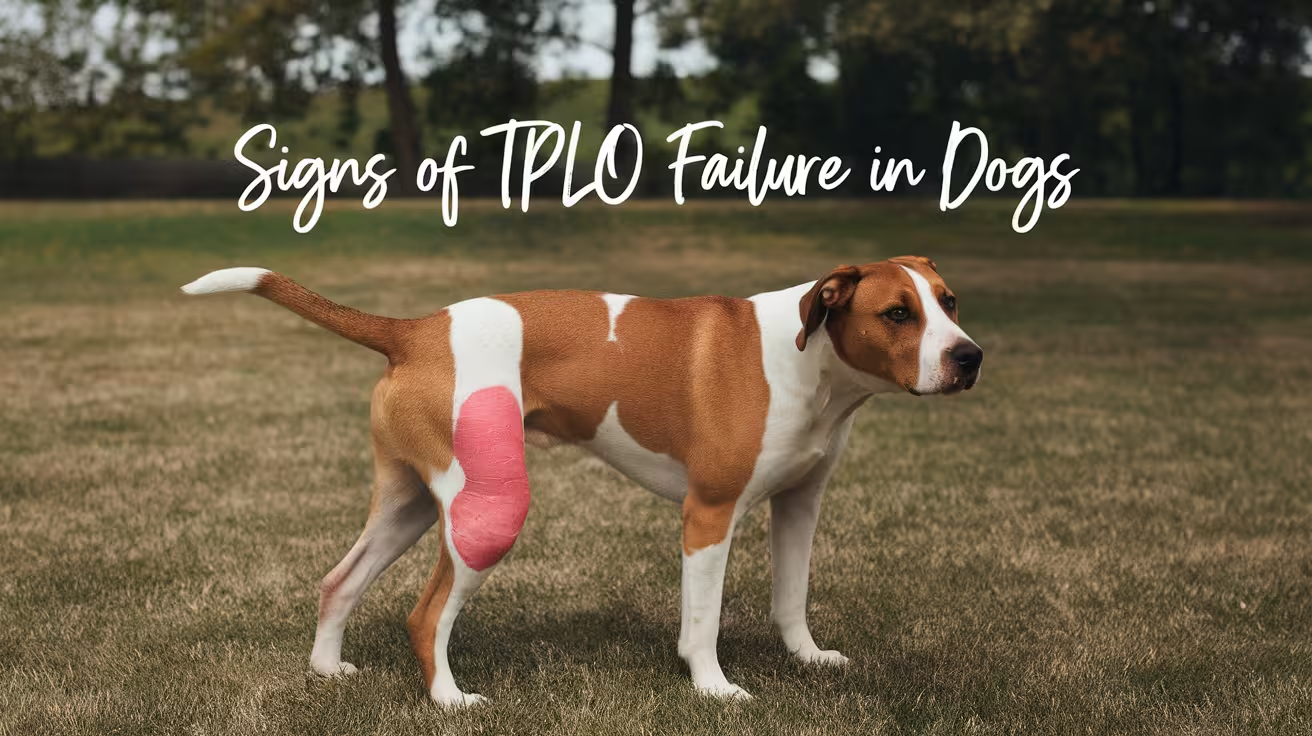
Signs of TPLO Failure in Dogs & When to See a Vet
Learn the key symptoms of TPLO failure in dogs, from limping to implant issues. Spot warning signs early and know when to seek veterinary care
TPLO failure is not a single event -- it is a spectrum of complications that can occur at different stages of recovery. Some signs are emergencies requiring same-day veterinary contact.
Others are patterns that require evaluation at the next scheduled appointment.
Understanding which signs fall into which category -- and what each sign most likely indicates -- allows owners to respond appropriately rather than either ignoring a serious complication or panicking unnecessarily.
Quick answer: Key signs of TPLO failure: persistent or worsening lameness beyond the expected trajectory; sudden acute non-weight bearing; swelling, warmth, or discharge at the plate site; clicking or popping with pain; and radiographic changes at follow-up. Call your vet the same day for sudden acute lameness, spreading infection signs, or systemic illness.
Key takeaways
- The key diagnostic principle is trajectory: normal TPLO recovery shows steady week-over-week improvement; any reversal -- worsening lameness, new swelling, returning pain -- signals a problem
- Persistent lameness beyond expected recovery is the most common sign of TPLO failure: continued limping or inability to bear weight beyond the expected level weeks after surgery is the hallmark symptom
- Sudden acute non-weight bearing after improvement is a same-day emergency call: causes include plate failure, tibial fracture, late meniscal tear, or acute infection; radiographs are required urgently
- Swelling at the plate site weeks after surgery indicates deep implant infection: this is distinct from normal post-surgical swelling and represents a late-developing implant-associated SSI
- Clicking or popping with pain or lameness indicates meniscal injury: isolated early clicking without lameness is usually benign; clicking with pain or worsening lameness indicates meniscal tear
- Radiographic confirmation is required to diagnose most causes of TPLO failure: X-rays confirm the specific mechanism and guide management
The recovery trajectory principle
The single most useful concept for identifying TPLO failure is trajectory.
Recovery from TPLO is not linear -- there are good days and less good days -- but the overall trend over weeks should be consistently improving.
Normal trajectory: each week, the dog uses the leg a little more freely, lameness is slightly less obvious, weight bearing is more consistent.
Abnormal trajectory: lameness worsens after a period of improvement; the dog is using the leg less at week 4 than at week 2; the dog that was consistently toe-touching now holds the leg entirely off the ground.
Trajectory reversal is the key signal. Single-day fluctuations can occur with activity and weather. Week-over-week regression cannot be dismissed.
Signs of TPLO failure: by type
1. Persistent or progressive lameness
What it means: the dog is limping beyond the expected level for the stage of recovery. At 4 weeks, some lameness is expected. At 8 weeks, most dogs should be consistently bearing significant weight. At 12 weeks, most are nearly normal.
Differential: implant loosening, delayed bone healing, non-union, deep infection, late meniscal tear, progressive arthritis.
When to call: if lameness has not improved for 2 or more weeks at any stage, or has worsened compared to the previous week -- contact your vet for evaluation before the next scheduled appointment.
SustainableVet.org confirms: persistent lameness is the hallmark symptom of TPLO failure; continued limping or inability to bear weight weeks after surgery may indicate failure.
2. Sudden acute non-weight bearing
What it means: the dog was bearing weight adequately and suddenly stops using the leg entirely. This is a distinct clinical event, not a gradual worsening.
Differential: acute plate failure (plate bending or screw pullout), acute tibial tuberosity fracture, acute late meniscal tear, acute hematogenous implant infection.
When to call: same-day emergency veterinary contact. Radiographs are required urgently to determine the cause.
SustainableVet.org confirms: a failed TPLO often presents as persistent pain, joint instability, swelling, or difficulty bearing weight; dogs may show progressive lameness or reluctance to move.
3. Swelling at the plate site (not the incision)
What it means: a distinct swelling appearing over the medial tibial surface at the plate location, separate from and later than the normal post-surgical incision swelling. This is a late-developing sign, often appearing weeks to months after surgery.
Differential: deep implant-associated infection (SSI-D) with abscess formation; rarely, a non-infectious reaction to the implant material.
When to call: same-day if accompanied by warmth, redness, or discharge. Within 24 hours if soft and non-painful but new and increasing.
4. Wound discharge or draining tract
What it means: a draining tract opening near (but not necessarily at) the original incision, often appearing weeks or months after surgery in a wound that appeared fully healed. This is a classic sign of deep implant-associated infection with sinus tract formation.
When to call: same-day. Do not wait.
5. Clicking or popping with pain or lameness
What it means: a meniscal click -- the torn meniscal flap being displaced by the femoral condyle during movement. Distinguished from benign joint adjustment clicking by the presence of pain on stifle manipulation and lameness.
Differential: late meniscal tear (2 to 22% incidence after TPLO).
When to call: same-day if acute lameness accompanies the click. Within 24 to 48 hours for new clicking with mild lameness.
See the dedicated meniscal tear article for full detail on diagnosis and treatment.
6. Radiographic findings at follow-up imaging
What it means: the 6-week and 12-week radiographs may show: peri-implant radiolucent halos (implant loosening or infection), widened osteotomy gap without callus formation (delayed union or non-union), plate migration from original position, screw in joint space, or cortical erosion (osteomyelitis).
When to call: your vet interprets these radiographs and will advise on urgency. Do not wait for the next scheduled appointment if the vet identifies a significant radiographic abnormality.
7. Systemic signs of infection
What it means: fever (rectal temperature above 39.5 C / 103.1 F), lethargy, reduced appetite, or behavioral changes. These indicate the infection has systemic involvement.
When to call: same-day emergency contact. Systemic infection from an implant site is a serious condition.
What is not TPLO failure
Not every deviation from ideal recovery represents failure.
Normal: gradual lameness that is slowly improving week over week.
Normal: mild swelling at the incision that peaks at days 2 to 5 and resolves.
Normal: mild stiffness in the morning that improves with movement.
Normal: intermittent toe-touching or three-legged walking during high-activity periods in the first 4 weeks.
Normal: a dog that is more lame on a day after increased activity compared to a day of rest.
The distinguishing feature is trajectory and pattern. Gradual improvement with day-to-day variation is normal. Reversal of the improvement trend is not.
Revision TPLO: when failure requires re-operation
SustainableVet.org confirms: revision TPLO may involve removing or replacing implants, repositioning the tibial cut, or addressing infections; revision surgery is more complex and requires strict post-op care.
The specific revision approach depends on the cause:
- Implant failure without infection: plate replacement or addition of a fixation device
- Non-union: bone grafting, implant revision, and extended restriction
- Deep infection with healed osteotomy: plate removal, surgical debridement, prolonged antibiotics
- Osteomyelitis: plate removal, debridement, 4 to 6 months of culture-directed antibiotics
For the complication list, see 15 common complications after TPLO surgery. For the implant failure guide, see TPLO implant failure signs and causes.
For the infection guide, see TPLO plate infection signs and treatment. For the meniscal tear guide, see dog meniscus tear after TPLO surgery.
Frequently asked questions
My dog is limping at week 6 but the 6-week radiograph was normal. Is this TPLO failure?
Not necessarily.
Normal radiographs at 6 weeks with persistent lameness suggests the issue is soft-tissue rather than bone or implant related -- meniscal injury, muscle atrophy, scar tissue, or rehabilitation lagging behind bone healing.
Discuss with your vet: physiotherapy and pain management are typically the next step for this presentation.
What happens if TPLO failure is not recognized early?
Delayed recognition of implant infection leads to establishment of deeper infection and biofilm, requiring more complex treatment. Delayed recognition of non-union leads to fibrous union or permanent instability.
Delayed recognition of meniscal tear allows progressive joint damage. Early action is consistently associated with better outcomes across all causes of TPLO failure.
Is TPLO failure common?
Overall TPLO complication rates are 10 to 34%, but most complications are minor (superficial infection, seroma). Serious failure requiring revision surgery is uncommon.
The 2013 study confirmed 93% limb function restoration at 1 year -- meaning the vast majority of TPLO dogs recover successfully.
Can TPLO failure happen years after surgery?
Yes. Late implant-associated infection (hematogenous seeding from dental disease, UTI, or skin infection) can occur years after surgery. The hallmark is sudden lameness regression in a dog with previously normal function.
Any unexplained lameness in a TPLO dog warrants radiographic assessment.
Should I ask for radiographs at every sign of lameness?
Not necessarily for every minor fluctuation.
Radiographs are indicated for: sudden acute lameness, lameness that has not improved for 2 or more weeks, new swelling at the plate site, a draining tract, or any systemic sign of infection.
Your vet will advise on imaging timing based on clinical presentation.
Resources
- SustainableVet. TPLO Failure Symptoms. sustainablevet.org
- Clinician's Brief. Common Tibial Plateau-Leveling Osteotomy Complications. cliniciansbrief.com
- SustainableVet. TPLO Failure Rate in Dogs. sustainablevet.org
- ACVS. Cranial Cruciate Ligament Disease. acvs.org
DeAngelis vs TPLO Surgery for Dogs
Compare DeAngelis and TPLO surgery for dogs, exploring benefits, risks, recovery, and costs to help pet owners choose the best treatment.
DeAngelis surgery also called lateral suture, extracapsular repair, or ELSS (extracapsular lateral suture stabilization) is one of the oldest and most widely performed CCL repair techniques.
TPLO is the most commonly recommended procedure by the ACVS for dogs over 60 lbs.
Decades of research strongly favor TPLO for larger, more active dogs while supporting extracapsular repair as a cost-effective option for smaller dogs.
Quick answer: TPLO produces superior outcomes in medium and large breed dogs: better limb loading at 8 weeks, higher 1-year function, and slower arthritis progression. DeAngelis surgery is effective for small dogs under 15 to 20 lbs and costs $800 to $1,500 vs $3,000 to $6,000 for TPLO.
Key takeaways
- TPLO produces superior outcomes at 8 weeks and 1 year in size-matched studies: more symmetric loading, higher vertical force, higher owner satisfaction
- DeAngelis surgery is effective in small dogs under 15 to 20 lbs: success rates above 90% reported; significantly worse in larger dogs
- Extracapsular repair relies on periarticular fibrosis for stability; the suture eventually stretches or fails in larger dogs
- DeAngelis surgery costs significantly less: $800 to $1,500 vs $3,000 to $6,000 for TPLO
- Arthritis progression is faster after extracapsular repair than TPLO in multiple studies; TPLO slows OA more effectively
- 10 to 20% of extracapsular repair dogs will require additional treatment for lameness during their lifetime per Today's Veterinary Practice
How each procedure works
DeAngelis surgery (lateral suture / extracapsular repair)
DeAngelis surgery uses a heavy monofilament nylon suture (or, in the TightRope variation, a fiber-tape through bone tunnels) placed outside the joint to mimic the function of the torn CCL.
The suture runs from the lateral fabella behind the femur around to the tibial crest, restraining the cranial drawer movement that occurs with CCL loss.
The suture is not a permanent replacement.
DVM360 confirms that extracapsular stabilization relies on periarticular fibrosis for long-term stability the suture eventually stretches or fails, and joint stability depends on scar tissue formed around the joint during recovery.
DeAngelis surgery does not require bone cutting, specialized equipment, or the steep learning curve associated with TPLO. It is technically accessible to general practice surgeons with appropriate training.
TPLO (Tibial Plateau Leveling Osteotomy)
TPLO addresses CCL rupture by changing joint geometry rotating the tibial plateau so the stifle is mechanically stable without any functioning CCL.
The stability provided by TPLO is bone-based and does not depend on scar tissue or suture integrity over time.
TPLO requires specialized equipment, a radiolucent table, intraoperative radiographs, and surgeon training in the procedure. It is primarily performed at specialty hospitals and by board-certified orthopedic surgeons.
What the clinical evidence shows
Short-term outcomes
DVM360's evidence review found TPLO dogs bear more weight sooner; extracapsular repair dogs hold the leg up for 1 to 2 weeks.
A force plate gait study (ECR n=23, TPLO n=15) found more symmetric limb loading at 8 weeks in TPLO patients compared to extracapsular repair patients at both walk and trot.
Long-term outcomes
Today's Veterinary Practice's evidence-based review reports:
- A randomized blinded clinical trial of 80 dogs found TPLO resulted in higher peak vertical force and higher owner satisfaction at 1 year post-surgery compared to lateral fabellar suture stabilization
- A more recent study showed TPLO outcomes were always better than lateral suture outcomes at any time point up to 1 year
DVM360 notes one early study found no difference at 2 years, but more recent studies consistently show TPLO outperforming extracapsular repair.
Arthritis progression
Today's Veterinary Practice confirms that extracapsular stabilization may result in increased progression of radiographic osteoarthritis compared to TPLO.
Restoring joint mechanics (TPLO) slows cartilage degradation more effectively than temporary stabilization with subsequent fibrosis (extracapsular repair).
Long-term failure
Today's Veterinary Practice reports that 10 to 20% of dogs with extracapsular stabilization will require treatment or reoperation for lameness during their lifetimes, sometimes years after original surgery.
This rate is higher than the expected rate of reoperation-requiring complications after TPLO.
Head-to-head comparison
Which dogs are best suited to each?
DeAngelis surgery is appropriate for:
- Small dogs under 15 to 20 lbs with CCL rupture
- Dogs with significant health conditions making a longer anesthetic or more invasive procedure higher risk
- Cases where cost is the primary determining factor
- Older, less active dogs with lower functional demands
TPLO is recommended for:
- Dogs over 30 lbs, especially active and large breeds
- Dogs where long-term joint function and minimal OA progression are the goals
- Working dogs, sport dogs, or highly active pets
- Dogs with steep tibial plateau angles that make extracapsular repair less reliable
For the full surgical alternatives overview, see alternatives to TPLO surgery for dogs. For the TPLO pros and cons, see TPLO surgery pros and cons for dogs.
For the lateral suture detailed comparison, see lateral suture vs TPLO: what's the difference?.
Frequently asked questions
Is DeAngelis surgery as good as TPLO?
For small dogs under 15 to 20 lbs, DeAngelis surgery can be as effective as TPLO.
For medium and large breed dogs, the evidence clearly favors TPLO: better short-term function, better 1-year outcomes, slower arthritis progression, and lower long-term reoperation rates.
How much less does DeAngelis surgery cost than TPLO?
Typically $2,000 to $4,500 less per leg. DeAngelis surgery costs approximately $800 to $1,500 at general practices vs $3,000 to $6,000 for TPLO at specialist centres.
For bilateral cases (both knees), the cost difference is doubled.
Does DeAngelis surgery fail more often than TPLO?
In large dogs, yes. The suture stretches and fails in larger, more active patients because the periarticular fibrosis cannot compensate for the higher joint forces.
Today's Veterinary Practice estimates 10 to 20% of extracapsular repair dogs will need further treatment for lameness during their lifetime.
Can my large dog have DeAngelis surgery instead of TPLO?
Technically yes, but the evidence does not support it as the primary recommendation for dogs over 30 lbs.
DVM360 confirms it is possible that larger dogs treated with lateral suture technique may have significantly worse outcomes than those treated with TPLO.
If DeAngelis surgery fails, can TPLO be done afterward?
Yes. TPLO is a standard revision option when extracapsular repair fails or when the dog develops ongoing instability and lameness.
Discuss this with a board-certified orthopedic surgeon if your dog's original repair has not produced adequate results.
Resources
- DVM360. Cranial Cruciate Ligament Repair: One Size Does NOT Fit All. dvm360.com
- Today's Veterinary Practice. Canine Cranial Cruciate Disease: An Evidence-Based Look at Current Treatment Modalities. todaysveterinarypractice.com
- DVM360. Journal Scan: Ruptured CCL Surgery: TPLO vs Extracapsular Repair. dvm360.com
- Walkerville Vet. Cruciate Surgery: TPLO, TTA, MMP, DeAngelis. walkervillevet.com.au
- ACVS. Cranial Cruciate Ligament Disease. acvs.org
Arthrex TPLO Weight Chart Explained
Understand the Arthrex TPLO weight chart and how it guides post-op care for dogs after TPLO surgery.
After TPLO surgery, one of the most important questions owners and rehabilitation teams ask is: how much weight should my dog be putting on the operated leg right now?
The Arthrex TPLO weight chart provides a structured, week-by-week answer to that question, giving both surgeons and owners a shared reference point for tracking recovery progress.
Quick answer: The Arthrex TPLO weight chart tracks the percentage of body weight a dog bears on the operated leg at each recovery stage — from 0 to 10% in the first weeks to 100% by 8 to 12 weeks post-surgery.
Key takeaways
- The weight chart tracks weight-bearing percentage at each stage, from 0 to 10% in weeks 1 to 2 to 100% by weeks 8 to 12
- It is a rehabilitation monitoring tool, not a surgical planning tool: the rotation chart governs intraoperative correction; this tracks recovery
- Progression must be gradual: advancing too fast risks implant failure; too slow leads to atrophy and stiffness
- The chart integrates with clinical examination: 8-week radiographs, gait assessment, and muscle mass evaluation are considered alongside chart milestones
- Individual dogs vary: the chart provides population-level benchmarks; your surgeon's instructions take precedence
- The chart is used alongside the plate size and rotation charts: together they form the Arthrex TPLO system framework
What the weight chart is and what it is not
The Arthrex TPLO weight chart is a post-operative rehabilitation tool.
It shows recommended weight-bearing percentages at specific time points after surgery a reference guide that helps veterinarians, rehabilitation therapists, and owners track whether a dog's recovery is progressing appropriately.
It is not the same as the rotation chart (which guides intraoperative tibial rotation) or the plate size chart (which guides implant selection before surgery).
These three charts together form the Arthrex TPLO planning and monitoring system.
For the rotation chart guide, see Arthrex TPLO rotation chart explained. For the plate overview, see Arthrex TPLO plate overview and use.
Understanding the weight-bearing percentages
The chart uses percentage of body weight as its unit of measurement.
This is a more useful measure than time alone because it relates directly to the mechanical load placed on the healing osteotomy and implant.
0 to 10% weight-bearing (weeks 1 to 2): toe-touching and minimal contact only. The dog is not actively loading the leg during this phase. Bathroom trips on leash are permitted, but no sustained weight-bearing.
10 to 30% (weeks 2 to 4): the dog begins placing meaningful weight on the leg during slow leash walks. This corresponds to the short 5 to 10 minute leash walks prescribed at this stage. The healing osteotomy is starting to consolidate but is not yet ready for full load.
30 to 60% (weeks 4 to 8): progressive loading during longer walks, sit-to-stand exercises, and early rehabilitation activities. Most dogs are visibly improving in gait symmetry during this phase.
60 to 100% (weeks 8 to 12): full weight-bearing is approached and typically achieved after the radiographic recheck at week 8 confirms adequate osteotomy healing. Activity levels increase under veterinary guidance.
How to use the chart in practice
As a clinical benchmark
Surgeons use the weight chart to assess whether a dog is progressing as expected at each recheck visit.
A dog that is well below the expected weight-bearing percentage for their stage may have inadequate pain control, implant complications, or infection.
A dog exceeding the expected percentage may be at risk of mechanical overload if the bone has not yet consolidated enough to tolerate the load.
As an owner reference
Owners are not expected to measure exact weight-bearing percentages at home this requires force plate analysis or pressure-sensitive walkway equipment.
The chart provides a conceptual framework: early recovery shows only toe-touching; by weeks 4 to 6, the dog places meaningful weight during walks; by weeks 10 to 12, gait symmetry improves steadily.
What affects weight-bearing progress
Bone healing rate: younger dogs and smaller breeds typically consolidate the osteotomy faster than older or giant breed dogs.
Pain control: inadequate analgesia is the most common cause of delayed weight-bearing. A dog in pain will protect the operated leg regardless of how well the surgery went. Contact your surgeon if your dog is significantly below expected weight-bearing benchmarks.
Muscle atrophy: dogs that enter surgery with significant muscle atrophy from prolonged pre-surgical lameness progress more slowly and benefit most from structured rehabilitation.
Body weight: heavier dogs place more absolute load on the healing osteotomy at any given percentage. This is one reason weight management is emphasized throughout the TPLO recovery period.
Rehabilitation: dogs receiving structured rehabilitation (PROM, sit-to-stand, hydrotherapy) consistently achieve better weight-bearing progression than those managed with rest alone.
When the chart says one thing and your dog does another
The weight chart represents population-level expectations. Individual dogs routinely deviate from the expected timeline for reasons that are often identifiable and manageable.
If your dog is significantly under-progressing: contact your surgeon to rule out infection, implant problems, or inadequate pain management before assuming slow healing.
If your dog appears to be weight-bearing well ahead of schedule: this does not mean the osteotomy is healed faster than expected.
Radiographic confirmation at week 8 is still required regardless of how the dog looks clinically. Apparent early function does not mean the bone has consolidated enough to withstand full unrestricted activity.
For the full weight-bearing recovery timeline guide, see how soon can a dog walk after TPLO surgery.
For the rotation chart that is used alongside the weight chart in the Arthrex system, see Arthrex TPLO rotation chart explained.
For the plate size chart used in conjunction with both, see TPLO plate size chart explained.
Frequently asked questions
Is the Arthrex TPLO weight chart the same as a standard recovery timeline?
Not exactly. A recovery timeline tells you what activities to do and avoid at each stage.
The weight chart specifically tracks how much weight the dog is placing on the operated leg at each stage, expressed as a percentage of body weight.
The two are related but provide different information.
Can I measure my dog's weight-bearing at home?
Not precisely. Force plate and pressure-sensitive walkway systems that measure actual weight distribution require specialist veterinary equipment.
At home, you can observe whether the dog is toe-touching, placing the foot flat, and walking with increasing symmetry which approximates the chart's progression categories without exact percentages.
What if my dog refuses to use the leg at all two weeks after TPLO?
Non-weight-bearing at two weeks is a warning sign. TPLO Austin confirms that if your pet is not bearing weight within two weeks of surgery, contact your veterinarian.
The most common causes are inadequate pain control, infection, or implant positioning concerns all of which are addressable if caught early.
Do all TPLO surgeons use the Arthrex weight chart?
No. The Arthrex system is one of the two major TPLO implant systems in the US (alongside Synthes). Surgeons using Synthes implants use Synthes-specific planning tools.
Some surgeons use individualized rehabilitation protocols rather than system-specific charts. The underlying recovery milestones are similar regardless of which chart or system is used.
What happens at the 8-week recheck in terms of weight-bearing?
At the 8-week recheck, radiographs assess osteotomy healing. If healing is adequate, the surgeon approves increased activity typically 20 to 30 minute leash walks and the beginning of return-to-normal activity.
The weight chart at this point expects the dog to be approaching or achieving 100% weight-bearing on the operated leg.
Resources
- Arthrex Veterinary. TPLO Surgical Technique. arthrex.com
- VCA Animal Hospitals. Tibial Plateau Leveling Osteotomy (TPLO) in Dogs. vcahospitals.com
- TPLO Austin. Step 6: TPLO Surgery Recovery. tploaustin.com
- ACVS. Cranial Cruciate Ligament Disease. acvs.org
Long-Term Outcomes of TPLO Surgery
Explore the long-term outcomes of TPLO surgery, its effectiveness, potential risks, and benefits for maintaining canine mobility and quality of life
TPLO produces excellent long-term outcomes for most dogs with CCL rupture.
The published evidence covers follow-up periods from 1 year to 6.8 years post-surgery and consistently shows high rates of functional recovery alongside moderate but ongoing arthritis progression.
Understanding what the data shows helps owners set realistic expectations about what TPLO achieves and what ongoing management is required.
Quick answer: Published long-term TPLO outcomes: 90 to 95% of dogs regain complete or near-complete limb function; good to excellent results in 90.4% of patients at up to 6.8 years; 93% owner satisfaction at 12 months (RCVS). Arthritis progresses moderately in all CCL-affected stifles but TPLO produces less progression than TTA.
Key takeaways
- 90 to 95% of dogs regain complete or near-complete limb function: RCVS Canine Cruciate Registry confirms this range; 93% owner satisfaction at 12 months
- Good to excellent results in 90.4% of patients up to 6.8 years post-surgery: TPLO Info cites this long-term retrospective study, one of the longest published TPLO follow-up datasets
- Arthritis progresses in all CCL-affected joints regardless of surgical technique: TPLO slows progression compared to TTA and lateral suture but does not stop it
- TPLO produces better long-term outcomes than TTA in comparative studies: OA progressed more after TTA; TPLO dogs had less pain, better walking, less morning stiffness, and better quality of life at 3+ years per the 94-dog study
- TPLO produces better owner satisfaction than lateral suture: 93% vs. 75% for lateral fabellar suture per TPLO Info; kinematic gait analysis also favored TPLO
- Meniscal management at the time of TPLO affects long-term outcomes: dogs with partial meniscectomy had higher rates of excellent long-term results and less OA progression per TPLO Info
Functional outcomes: what the data shows
At 1 year post-surgery
A 2013 comparative study of TPLO vs. TTA found TPLO patients achieved 93% restoration of limb function at 1 year, as assessed by objective force plate analysis.
This is the most frequently cited 1-year outcome figure.
RCVS Canine Cruciate Registry confirms: 90 to 95% of dogs regain complete or near-complete function; 93% of owners report satisfaction at 12 months.
At 2 years post-surgery
A PMC long-term functional outcome study found that most dogs with CCL repair -- regardless of technique -- showed improvement in limb function at 2 years compared to pre-operative status.
Objective gait analysis at 2 years showed that the operated leg approached the contralateral leg in force plate measurements.
At 3+ years post-surgery
The comparative TPLO vs. TTA study with follow-up at 3+ years provides the clearest long-term comparative data:
- OA progressed more in TTA than in TPLO dogs
- TPLO dogs scored better on the Canine Brief Pain Inventory across all domains (average pain, walking interference, morning stiffness, jumping, climbing)
- TPLO dogs scored better on the Canine Orthopedic Index (quality of life)
- The study concluded TPLO provides better long-term radiographic and functional outcome than TTA
At up to 6.8 years post-surgery
TPLO Info cites a long-term retrospective study with follow-up extending to 6.8 years: good to excellent results were obtained in 90.4% of patients at this timeframe.
This is the longest published follow-up in a TPLO outcome dataset and confirms that the 90%+ functional recovery rate is durable over years rather than only at 12 months.
Arthritis: the universal long-term consideration
All dogs with CCL disease develop progressive osteoarthritis in the affected stifle. This is true regardless of whether surgical or conservative management is chosen.
TPLO reduces the rate of arthritis progression and the severity of clinical signs compared to lateral suture stabilization and TTA, but arthritis progression continues.
TPLO Info confirms: in the long term, there was a moderate but significant progression of OA following TPLO.
SustainableVet.org confirms: while TPLO stabilizes the knee and slows down arthritis progression, it does not completely eliminate the risk; mild arthritis is expected, even in successful cases.
Managing long-term arthritis after TPLO
Weight management: every additional kilogram of body weight increases stifle joint loading. Maintaining lean body condition is the single most impactful owner-controlled variable for arthritis management.
Joint supplements: glucosamine, chondroitin, and omega-3 fatty acids (fish oil) are commonly recommended and have evidence supporting modest benefit for joint health and comfort.
Low-impact exercise: regular, controlled exercise (walking, swimming, hydrotherapy) maintains muscle mass and joint lubrication without the impact forces of running and jumping. Consistent low-impact exercise is more beneficial than sporadic high-intensity sessions.
NSAIDs for flares: carprofen, meloxicam, or other veterinary NSAIDs are used for periods of increased arthritis pain. Long-term NSAID use requires periodic monitoring of renal and hepatic function.
Rehabilitation: an ongoing physiotherapy relationship with a certified canine rehabilitation practitioner helps maintain muscle mass and joint mobility as the dog ages.
Factors that affect long-term outcomes
Age at surgery: younger dogs typically achieve better long-term function than older dogs. Older dogs heal more slowly and have a higher baseline level of arthritis-related joint change before surgery.
Body weight: heavier dogs show more arthritis progression and more persistent lameness than lighter dogs at equivalent follow-up periods.
Meniscal management: TPLO Info confirms partial meniscectomy (when a meniscal tear is present) is associated with significantly higher rates of excellent long-term results and less OA progression compared to meniscal release or leaving the meniscus intact when abnormal.
Surgical timing: earlier intervention (before severe arthritis develops) produces better long-term outcomes. Dogs treated early in the disease process have less existing joint damage at the time of surgery.
Rehabilitation compliance: dogs that complete structured rehabilitation programs and achieve good muscle mass restoration have better long-term function than those managed with restricted activity alone.
Bilateral CCL disease: TPLO Info confirms OA progresses more in dogs with bilateral stifle surgery than unilateral. This may reflect the more severe underlying degenerative process in these dogs.
TPLO vs. lateral suture: long-term comparison
TPLO Info confirms owner satisfaction of 93% for TPLO vs. 75% for lateral fabellar suture; kinematic gait analysis also favored TPLO outcomes.
This comparison is most relevant for medium-sized dogs where both procedures are technically appropriate. For large dogs over 35 to 40 kg, TPLO consistently outperforms lateral suture in long-term outcomes.
For small dogs under 15 kg, lateral suture achieves comparable results at substantially lower cost.
TPLO vs. TTA: long-term comparison
SustainableVet.org confirms: when comparing TTA to TPLO, research suggests similar long-term arthritis outcomes in some studies, but TPLO patients usually recover faster and regain function sooner.
The 3+ year follow-up comparative study is the most comprehensive published comparison and clearly favors TPLO in both OA progression and functional/quality-of-life outcomes.
For the TPLO overview, see what is TPLO surgery in dogs?. For the long-term effects list, see 13 long-term effects of TPLO surgery on dogs.
For surgery comparisons, see TPLO vs CBLO vs TTA: a guide to cruciate surgery options. For arthritis management, see arthritis after TPLO surgery in dogs.
Frequently asked questions
Will my dog be completely normal after TPLO?
Most dogs return to their pre-injury activity level after full recovery.
RCVS and multiple studies confirm 90 to 95% regain complete or near-complete function.
"Completely normal" is achievable for most dogs, with the caveat that some mild arthritis develops over time in virtually all cases.
Dogs may show stiffness on cold days or after long rest periods as they age.
Does TPLO stop arthritis?
No -- it reduces and slows arthritis progression compared to conservative management and other surgical techniques, but does not stop it. All CCL-affected stifles develop progressive OA.
The goal of TPLO is to stabilize the joint and minimize the rate of arthritis development, not eliminate it.
How long does the TPLO plate last?
The plate is designed to be permanent.
Good to excellent results at 6.8 years (the longest published TPLO follow-up) with the plate in place demonstrates the durability of the implant in the overwhelming majority of cases.
Plate complications requiring removal occur in 3.5 to 7.5% of cases.
Is my dog at risk for the CCL on the other side?
Yes. RCVS confirms approximately 50% of dogs will develop CCL disease in the other hind limb.
This is not a consequence of TPLO -- it reflects the degenerative nature of CCL disease that typically affects both stifles. Monitoring the contralateral stifle is appropriate in all TPLO dogs.
Does the long-term outcome depend on the surgeon's experience?
Yes, to some degree. Surgeons with more TPLO experience have lower complication rates (including SSI and delayed union), and complications are associated with worse long-term outcomes.
Using a board-certified surgeon or an experienced general practitioner with dedicated TPLO training reduces risk. The published SSI studies confirm surgeon experience as an independent risk factor for post-TPLO complications.
Resources
- TPLO Info. TPLO Literature and Studies. tploinfo.com
- RCVS Canine Cruciate Registry. Tibial Plateau Levelling Osteotomy (TPLO). rcvsknowledge.org
- PMC. Long-Term Functional Outcome After Surgical Repair of Cranial Cruciate Ligament Disease in Dogs. ncbi.nlm.nih.gov
- SustainableVet. Long-Term Outcomes of TPLO Surgery. sustainablevet.org
Dog Toe Tapping After TPLO Surgery Explained
Learn why your dog may tap toes after TPLO surgery, what it means, and how to support recovery with expert veterinary advice.
After your dog undergoes TPLO surgery, you might notice unusual behaviors like toe tapping. This can be worrying if you do not understand why it happens or what it means for your dog's recovery. Toe tapping after TPLO surgery is a common sign that your dog is adjusting to changes in limb use and nerve sensation.
This article explains what causes toe tapping after TPLO surgery, how to recognize normal versus concerning signs, and what steps you can take to help your dog heal properly. You will learn about the healing process, pain management, and when to contact your veterinarian for further care.
Why does my dog tap toes after TPLO surgery?
Toe tapping after TPLO surgery often results from nerve irritation or changes in limb sensation. The surgery alters the knee joint mechanics, which can temporarily affect how your dog feels and moves the leg. This tapping is usually a sign your dog is testing the limb and regaining control.
Understanding the cause helps you differentiate normal recovery behavior from signs of complications.
- Nerve sensitivity: Surgery can irritate nerves around the knee, causing your dog to tap toes as a response to altered sensations or mild discomfort.
- Muscle weakness: After TPLO, muscles supporting the leg may be weak, leading to unsteady foot placement and toe tapping during weight shifting.
- Proprioception changes: The dog's sense of limb position may be temporarily impaired, causing tapping as the brain relearns limb control.
- Habitual behavior: Some dogs develop toe tapping as a habit during the recovery phase when adjusting to new limb mechanics.
Most toe tapping is a normal part of the healing process and improves as nerve function and muscle strength return.
How long does toe tapping last after TPLO surgery?
The duration of toe tapping varies depending on the individual dog and the extent of surgery. Typically, toe tapping decreases as healing progresses over weeks to months. Monitoring your dog's behavior helps track recovery.
Knowing the expected timeline can ease your concerns and guide you when to seek veterinary advice.
- Early recovery phase: Toe tapping is most common in the first 2 to 4 weeks post-surgery when nerves and muscles are healing.
- Mid recovery phase: Between 4 to 8 weeks, tapping should reduce as strength and sensation improve with physical therapy.
- Late recovery phase: After 8 weeks, toe tapping usually disappears, indicating good nerve and muscle recovery.
- Persistent tapping: If toe tapping continues beyond 3 months, it may signal complications requiring veterinary evaluation.
Regular follow-ups with your vet ensure your dog's recovery stays on track and toe tapping resolves appropriately.
Is toe tapping after TPLO surgery painful for my dog?
Toe tapping itself is not usually painful but may indicate mild discomfort or nerve irritation. Your dog might tap toes to relieve sensations or test limb stability. Proper pain management during recovery minimizes discomfort and promotes healing.
Recognizing pain signs helps you provide better care and communicate effectively with your veterinarian.
- Mild discomfort: Nerve healing can cause tingling or mild pain, leading to toe tapping as a coping mechanism.
- Pain signs: Excessive licking, whining, or limping along with tapping may indicate pain needing treatment.
- Pain control: Use prescribed pain medications and follow your vet’s instructions to keep your dog comfortable.
- Physical therapy: Gentle exercises improve circulation and reduce nerve irritation, lessening discomfort and tapping.
Always report increased pain or unusual behaviors to your veterinarian for timely intervention.
What should I do if my dog taps toes after TPLO surgery?
If your dog taps toes after TPLO surgery, observe the behavior and support recovery with proper care. Most toe tapping is normal, but you should ensure your dog rests adequately and follows rehabilitation protocols.
Taking the right steps helps your dog regain normal limb function safely and comfortably.
- Monitor behavior: Keep a daily log of toe tapping frequency and any other signs like swelling or limping to share with your vet.
- Follow rehab plan: Adhere to prescribed physical therapy and controlled exercise to strengthen muscles and improve coordination.
- Manage pain: Administer pain medications as directed and watch for signs of discomfort requiring vet attention.
- Protect limb: Prevent jumping or running that could stress the healing knee and worsen symptoms.
Consult your veterinarian if toe tapping worsens or is accompanied by other concerning signs to ensure proper healing.
When should I worry about toe tapping after TPLO surgery?
While toe tapping is often normal, some signs indicate complications requiring veterinary care. Recognizing these signs early prevents worsening problems and supports your dog’s recovery.
Knowing when to seek help ensures your dog receives timely treatment for any issues.
- Increased tapping intensity: Sudden or worsening toe tapping may signal nerve damage or pain needing evaluation.
- Swelling or redness: Signs of infection or inflammation around the surgical site require immediate veterinary attention.
- Persistent limping: If your dog avoids putting weight on the leg for more than a few days, it may indicate complications.
- Behavior changes: Excessive licking, biting at the leg, or signs of distress suggest pain or nerve problems needing assessment.
Contact your veterinarian promptly if you notice these signs to prevent long-term damage.
How can physical therapy help with toe tapping after TPLO surgery?
Physical therapy plays a key role in reducing toe tapping by improving muscle strength, coordination, and nerve function. Tailored exercises help your dog regain normal limb use and reduce abnormal movements.
Incorporating therapy into recovery accelerates healing and enhances your dog’s quality of life.
- Strength building: Targeted exercises increase muscle tone around the knee, stabilizing the joint and reducing tapping.
- Proprioception training: Activities that improve limb position sense help your dog control foot placement better.
- Pain reduction: Gentle massage and stretching relieve nerve irritation contributing to tapping behavior.
- Improved mobility: Controlled movement prevents stiffness and encourages normal gait patterns during recovery.
Work with a veterinary rehabilitation specialist to design a safe and effective therapy plan for your dog.
Conclusion
Toe tapping after TPLO surgery is a common behavior linked to nerve healing, muscle weakness, and changes in limb sensation. It usually decreases over weeks as your dog recovers strength and coordination. Understanding this helps you support your dog’s healing process with patience and proper care.
Always monitor your dog’s behavior closely and follow your veterinarian’s advice on pain management and physical therapy. Promptly report any worsening signs to ensure your dog heals safely and returns to normal activity.
FAQs
Is toe tapping normal after TPLO surgery?
Yes, toe tapping is a normal sign of nerve and muscle recovery after TPLO surgery. It usually improves within a few weeks as your dog regains limb control.
Can toe tapping mean my dog is in pain?
Toe tapping itself is not usually painful but may indicate mild discomfort or nerve irritation. Watch for other pain signs and consult your vet if concerned.
How long should I expect toe tapping to last?
Toe tapping typically lasts 2 to 8 weeks post-surgery and should decrease as your dog heals. Persistent tapping beyond 3 months needs veterinary evaluation.
What can I do to help reduce toe tapping?
Follow your vet’s rehab plan, manage pain with medications, and provide gentle physical therapy to improve strength and nerve function.
When should I contact my veterinarian about toe tapping?
Contact your vet if toe tapping worsens, is accompanied by swelling, persistent limping, or signs of pain to rule out complications.

13 Long-Term Effects of TPLO Surgery on Dogs
Discover the 13 long-term effects of TPLO surgery in dogs, including benefits, risks, and care tips for optimal recovery and joint health
TPLO produces predominantly positive long-term effects in most dogs, but it also produces a predictable set of changes that owners should understand and manage proactively.
Most of these effects are manageable with appropriate care. Knowing what to expect prevents owners from being surprised by normal post-TPLO findings and helps them recognize when a change requires veterinary attention.
Quick answer: The 13 key long-term effects of TPLO surgery: improved joint stability, progressive osteoarthritis, muscle atrophy, morning stiffness, cold weather sensitivity, scar tissue formation, patellar tendon thickening, permanent implant in situ, contralateral CCL rupture risk, late implant complications, behavioral changes from chronic pain, weight management challenges, and long-term monitoring requirements.
Key takeaways
- Improved joint stability is the intended and most common long-term effect: for 90 to 95% of dogs, TPLO eliminates CCL-related instability and restores near-normal function
- Progressive osteoarthritis develops in all CCL-affected stifles regardless of surgical technique: TPLO slows OA progression but does not stop it; long-term OA management is a universal requirement
- Muscle atrophy is common in the operated leg throughout recovery; the thigh may remain visibly smaller than the contralateral side for months if rehabilitation is inadequate
- Contralateral CCL rupture risk is high: SustainableVet.org confirms up to a 50% chance of tearing the opposite CCL within a few years; the same degenerative process affects both stifles
- The TPLO plate and screws are permanent in the vast majority of cases: removal is only performed when complications arise; routine plate removal is not standard practice
- Weight management is the most impactful long-term owner-controlled variable: excess weight accelerates OA progression; maintaining ideal body condition is the primary long-term prevention strategy
The 13 long-term effects
1. Improved joint stability and mobility
The primary intended effect. The osteotomy and plate fixation permanently change the tibial plateau geometry, eliminating the cranial tibial thrust that caused instability.
For 90 to 95% of dogs, this produces lasting functional improvement: return to normal gait, ability to run and play, and freedom from the pain of unstable joint loading.
SustainableVet.org confirms: over 90% of dogs regain full limb function within a year; with proper care, many dogs remain active for 8 to 10 years after surgery.
2. Progressive osteoarthritis
The most universal long-term challenge. CCL disease initiates an arthritis process in the stifle that continues regardless of surgical outcome.
TPLO reduces the rate of progression and the severity of clinical signs compared to other treatment options, but OA continues.
Clinical signs of progressing OA emerge gradually over months and years: stiffness after rest, reluctance to run, difficulty climbing, and behavioral changes associated with chronic low-grade pain.
Management: weight management, omega-3 fatty acids, glucosamine and chondroitin, NSAIDs for flares, hydrotherapy, physiotherapy.
3. Muscle atrophy and asymmetry
The operated leg loses muscle mass rapidly during the restriction period and slowly rebuilds during rehabilitation. Full recovery of muscle symmetry takes 4 to 6 months in most dogs.
In some dogs -- particularly those with inadequate rehabilitation or ongoing joint pain -- visible thigh circumference asymmetry persists long-term.
Vetplayas confirms: due to reduced use during recovery and altered movement patterns post-surgery, muscles around the operated leg may weaken and shrink.
4. Morning stiffness
Morning stiffness -- the dog rises from sleep stiffly and walks awkwardly for the first few minutes before loosening up -- is one of the most common long-term effects of post-TPLO OA.
It typically develops months to years after surgery and gradually worsens as the dog ages.
This stiffness should not be confused with acute lameness. It consistently improves within 5 to 10 minutes of movement.
If it does not improve, or if the dog refuses to bear weight on waking, contact your vet.
5. Cold weather sensitivity
Dogs with OA in the operated stifle commonly show increased stiffness and lameness during cold weather or when barometric pressure changes.
This reflects the sensitivity of arthritic joints to temperature and pressure changes -- the same phenomenon seen in human arthritis.
Management: NSAIDs or joint supplements maintained year-round; warming the dog's sleeping area; a brief gentle walk before expecting full function in cold conditions.
6. Scar tissue formation
The surgical dissection and bone healing produce scar tissue in and around the stifle. This fibrous tissue generally has a beneficial stabilizing effect, contributing to long-term joint stability.
In some dogs, however, periarticular fibrosis restricts range of motion and causes stiffness that persists long after bone healing is complete.
Regular low-impact exercise and physiotherapy help maintain range of motion and prevent excessive fibrous tissue restriction.
7. Patellar tendon thickening
Fibrous thickening of the patellar tendon is a recognized long-term change after TPLO. It is typically subclinical -- detected on palpation at follow-up examinations but not producing clinical lameness.
In a small number of dogs, it contributes to reduced range of motion.
8. Permanent implant in situ
The TPLO plate and screws are designed to remain in place for life. In the vast majority of dogs, the implant is never removed and causes no long-term problems.
SustainableVet.org confirms: these implants are meant to stay in place permanently. In rare cases, some dogs may develop infections around the implant or experience loosening of the hardware over time.
The plate is palpable under the skin on the medial tibial surface. This is normal and not a complication.
9. Contralateral CCL rupture
The degenerative process that caused one CCL to rupture typically affects both stifles.
SustainableVet.org confirms dogs have up to a 50% chance of tearing the CCL in the opposite knee within a few years.
RCVS confirms approximately 50% of dogs develop CCL disease in the other hind limb.
This is not a complication of TPLO -- it is the natural history of bilateral CCL disease.
Monitoring the contralateral stifle for early signs of instability, effusion, or lameness is appropriate in all TPLO dogs.
10. Late implant-associated complications
Implant-related complications -- loosening, late infection from hematogenous seeding, or implant irritation -- can occur years after the original surgery. These are uncommon but recognized long-term effects.
Signs: new lameness focused at the plate site, warmth or swelling over the plate, a new draining tract in previously healed skin. Any of these warrants prompt veterinary assessment.
11. Behavioral changes
Chronic joint pain from progressive OA, late meniscal injury, or implant irritation can produce subtle behavioral changes: reduced engagement in play, reluctance to walk, increased irritability, or reduced stair use.
These changes are often attributed to aging but may reflect treatable pain.
Annual or semi-annual pain assessments, including use of validated canine pain scales (Canine Brief Pain Inventory, Helsinki Chronic Pain Index), help detect behavioral pain signs before they become severe.
12. Weight management challenges
Activity restriction during recovery predisposes many dogs to weight gain. Excess weight gained during the 8 to 12 week restriction period is then carried on the healing joint for the following months.
Long-term obesity accelerates OA progression and is the most modifiable risk factor for long-term joint health.
Medcovet confirms: because activity is restricted, veterinary teams may recommend reducing food intake by about 30% during recovery to prevent weight gain and extra strain on the knee joint.
13. Long-term monitoring and supplement requirements
TPLO dogs benefit from long-term monitoring (every 6 to 12 months after full recovery) to assess:
- Arthritis progression radiographically and clinically
- Body condition score and weight
- Contralateral stifle stability
- Implant integrity (radiographs every 1 to 2 years in some protocols)
Joint supplements (omega-3 fatty acids at anti-inflammatory doses; glucosamine and chondroitin) and ongoing weight management are the primary preventive interventions for the long-term joint changes that TPLO does not prevent.
For the long-term outcomes guide, see long-term outcomes of TPLO surgery. For arthritis management, see arthritis after TPLO surgery in dogs.
For the signs that require attention, see signs of TPLO failure in dogs. For the failure rate overview, see TPLO failure rate in dogs.
Frequently asked questions
Will my dog develop arthritis even if the TPLO was successful?
Yes. All CCL-affected stifles develop progressive osteoarthritis regardless of surgical technique or outcome.
TPLO reduces the rate of progression and the severity of clinical signs compared to non-surgical management and lateral suture repair.
The goal of TPLO is not to prevent OA but to minimize it while restoring function.
How long will the TPLO plate last?
The plate is designed to be permanent. Published long-term follow-up data at 6.8 years shows 90.4% of dogs with good to excellent results -- with the plate in place.
Plate complications requiring removal occur in 3.5 to 7.5% of cases.
My dog had TPLO 2 years ago and is now limping. Is this related to the surgery?
Possibly. Two-year post-TPLO lameness most commonly results from progressive OA, late meniscal tear, late implant-associated infection (hematogenous seeding), or contralateral CCL disease.
A veterinary examination and radiographs of both stifles will identify the cause and guide treatment.
Does the opposite leg always need TPLO as well?
Not necessarily and not always at the same time. RCVS confirms approximately 50% of dogs develop CCL disease in the opposite hind limb.
When and whether the second stifle requires surgery depends on whether the second CCL has ruptured or become significantly unstable. Annual monitoring of the contralateral stifle is appropriate.
Can TPLO dogs still live active lives long-term?
Yes. Most do. SustainableVet.org confirms that with proper care, many dogs remain active for 8 to 10 years after surgery.
The keys are weight management, regular low-impact exercise, joint supplements, and addressing pain or complications promptly.
Resources
- SustainableVet. 13 Long-Term Effects of TPLO Surgery on Dogs. sustainablevet.org
- RCVS Canine Cruciate Registry. Tibial Plateau Levelling Osteotomy. rcvsknowledge.org
- TPLO Info. TPLO Literature and Studies. tploinfo.com
- SustainableVet. Long-Term Outcomes of TPLO Surgery. sustainablevet.org
15 Common Complications After TPLO Surgery in Dogs
Worried about TPLO surgery complications? Discover 15 common risks, from infection to implant failure, learn how to prevent and manage them effectively
TPLO has a high overall success rate, but complications do occur. The published overall complication rate ranges from 10 to 34%, with most complications being minor and manageable.
Knowing what to watch for -- and when a sign requires a same-day call vs. a mention at the next scheduled appointment -- allows owners to respond appropriately.
Quick answer: The 15 most common post-TPLO complications: surgical site infection, seroma, implant loosening or failure, osteomyelitis, late meniscal tear, tibial tuberosity fracture, delayed bone healing, persistent lameness, non-union, intra-articular screw placement, nerve damage, patellar tendon thickening, patellar luxation, progressive osteoarthritis, and contralateral CCL rupture. Most are minor and manageable.
Key takeaways
- The overall complication rate is 10 to 34%: most complications are minor (swelling, mild infection); serious complications such as implant failure or osteomyelitis are less common
- SSI is the most frequent single complication: reported in 2.9% to 17.3% of TPLO procedures; most are superficial and treatable with antibiotics if caught early
- Late meniscal tear occurs in 1.8% to 10.5% of cases where the meniscus was normal at surgery; it presents as sudden lameness return with meniscal click
- Tibial tuberosity fracture is reported in 1 to 9% of TPLO cases: incorrect positioning and oversized saw blades are the main risk factors
- Implant-associated infection occurred in 3.4% and osteomyelitis in 0.6% across numerous studies; osteomyelitis requires strong antibiotics for 4 to 6 months and sometimes plate removal
- Contralateral CCL rupture is a significant long-term risk: 30 to 40% of dogs develop rupture of the opposite CCL; owners should monitor the opposite stifle
Early complications (weeks 0 to 8)
1. Surgical site infection (SSI)
The most common complication. SSI ranges from superficial incisional infection (treatable with oral antibiotics and wound care) to deep implant-associated infection requiring plate removal.
Signs: redness spreading beyond the incision, warmth, swelling, cloudy or malodorous discharge.
Incidence: 2.9% to 17.3% per published literature; the PMC 769-TPLO study (769 procedures) found 8.5%.
Management: culture-directed antibiotics for superficial infections; surgical debridement and sometimes plate removal for deep implant infections.
2. Seroma
A localized collection of clear serous fluid under the skin near the incision, typically appearing 1 to 3 weeks post-surgery.
Signs: soft, fluctuant swelling at or near the incision; no warmth or redness; clear fluid if aspirated.
Incidence: common; most resolve without treatment.
Management: monitoring; aspiration if large or causing discomfort; bandaging in some cases.
3. Acute lameness from overactivity
The dog is over-active during the restriction period and bears too much load on the plate before the osteotomy heals.
Signs: sudden worsening of lameness after a period of improvement; may indicate implant stress or early failure.
Management: strict crate rest; radiographic assessment to rule out implant displacement.
4. Wound dehiscence
The incision edges separate before fully healing. More common in dogs that lick the incision despite an e-collar that fits incorrectly.
Signs: open wound edges, sometimes with tissue visible.
Management: cleaning and re-closure in most cases; e-collar compliance review.
Mid-term complications (weeks 4 to 16)
5. Delayed bone healing
The osteotomy is not showing expected consolidation on radiographs at the 6 to 8 week checkpoint.
Signs: radiographic evidence of widening osteotomy gap or absence of callus formation; may or may not produce clinical signs.
Risk factors: infection, excessive activity, poor bone quality (older dogs, large breeds), NSAIDs at high doses for extended periods.
Management: extended activity restriction; investigate for underlying infection; nutritional support.
6. Tibial tuberosity fracture
A fracture of the tibial tuberosity (the prominence where the patellar tendon attaches) caused by the osteotomy saw blade coming too close to this structure.
Incidence: 1 to 9% per Laguna Woods Vets; higher in dogs with high TPA, high body weight, and large TPA change.
Signs: acute severe lameness; radiographic evidence of fracture.
Management: surgical repair or conservative management depending on displacement.
7. Late meniscal tear
A meniscal tear occurring after TPLO in a meniscus that appeared normal at surgery. See the dedicated meniscal tear article for full detail.
Incidence: 1.8% to 10.5% of cases with normal meniscus at TPLO (Dog Discoveries).
Signs: sudden lameness regression; meniscal click on movement; pain on stifle manipulation.
Management: partial meniscectomy.
8. Implant loosening or failure
The plate or screws shift, bend, or break -- typically from premature overactivity before the osteotomy heals.
Signs: sudden severe lameness; pain at plate site; radiographic evidence of screw loosening, plate migration, or osteotomy displacement.
Management: revision surgery in most cases of significant displacement.
Long-term complications (months 3 and beyond)
9. Osteomyelitis
Bone infection extending from a superficial SSI or introduced via hematogenous seeding. Difficult to treat.
Incidence: 0.6% per Dog Discoveries citing multiple studies.
Signs: persistent lameness; draining tract; radiographic bone destruction, periosteal reaction, or sequestrum.
Management: Laguna Woods Vets confirms osteomyelitis requires strong antibiotics for 4 to 6 months; a wound culture aids antibiotic selection; plate removal is often required.
10. Non-union
The osteotomy fails to heal, resulting in permanent instability at the cut site.
Risk factors: infection, inadequate fixation, excessive motion, poor blood supply.
Signs: persistent lameness; radiographic evidence of osteotomy gap persisting beyond 16 weeks with no bridging callus.
Management: revision surgery, bone grafting, and often implant revision.
11. Intra-articular screw placement
A screw tip violates the joint space, causing joint damage and persistent pain. Best identified on the postoperative radiograph.
Signs: ongoing lameness; pain on stifle range of motion; radiographic evidence of screw in joint space.
Management: removal of the offending screw.
12. Persistent lameness without identifiable cause
Some dogs have persistent mild lameness despite uncomplicated bone healing and no identifiable complication. This may reflect residual arthritis progression, muscle atrophy, or subclinical meniscal issues.
Management: rehabilitation, joint supplements, and management of secondary osteoarthritis.
13. Patellar tendon thickening
Fibrous thickening of the patellar tendon develops in some TPLO dogs over time. This is typically not clinically significant.
Signs: palpable thickening of the patellar tendon on examination; usually incidental finding.
Management: generally none required; physiotherapy in some cases.
14. Patellar luxation
Medial patellar luxation can develop or worsen after TPLO, particularly if the plate is contoured in a way that affects patellar tracking.
Signs: intermittent lameness, popping of the patella medially on examination.
Management: surgical correction (trochleoplasty and tibial crest transposition) in symptomatic cases.
15. Progressive osteoarthritis
All dogs with CCL disease develop some arthritis progression regardless of surgical technique. TPLO slows but does not stop this process.
Signs: gradual stiffness, lameness that is worse after rest, reduced activity tolerance.
Management: joint supplements (omega-3 fatty acids, glucosamine), weight management, NSAIDs for flares, hydrotherapy.
Contralateral CCL rupture: a special consideration
Contralateral CCL rupture is not a complication of TPLO but deserves mention.
Midvalley Animal Clinic confirms it is very common (30 to 40% of patients) for both knees to develop this ligament injury.
Owners of dogs that have had unilateral TPLO should monitor the opposite stifle for early signs.
For the infection guide, see TPLO plate infection signs and treatment. For the meniscal tear guide, see dog meniscus tear after TPLO surgery.
For the failure rate overview, see TPLO failure rate in dogs. For the implant failure signs, see TPLO implant failure signs and causes.
Frequently asked questions
What is the most common serious complication after TPLO?
Deep implant-associated infection requiring plate removal is the most common serious complication, with an implant removal rate of 3.5 to 7.5% of procedures (ResearchGate).
Osteomyelitis (0.6%) and tibial tuberosity fracture (1 to 9%) are other serious but less common complications.
Is a 10 to 34% complication rate high for an orthopedic surgery?
The range is real but the majority of complications are minor -- a seroma, mild superficial infection treated with antibiotics, or a brief period of increased lameness.
Serious complications requiring revision surgery are significantly less common. TPLO's overall success rate (93% limb function restoration at 1 year per a 2013 study) reflects that most dogs recover well.
Can complications be prevented?
Most can be reduced in risk but not eliminated.
Owner-controlled risk reduction: e-collar compliance, strict activity restriction for 8 to 12 weeks, daily incision inspection, and attending all scheduled vet appointments.
What happens if my dog develops two complications simultaneously?
This is uncommon but does occur (for example, SSI leading to delayed bone healing). Management is coordinated by your surgical team based on the severity and interaction of the complications.
Contact your vet immediately for any concern.
Should I be worried every time my dog limps?
A degree of lameness is expected throughout the recovery period. The key signal is trajectory: steadily improving lameness is expected; suddenly worsening or reversed lameness is not.
Monitor for any sudden changes and contact your vet for trajectory reversals.
Resources
- PMC. Surgical Site Infection After 769 TPLOs. pmc.ncbi.nlm.nih.gov
- Laguna Woods Vets. TPLO Surgery Complications. lhah.com
- Dog Discoveries. TPLO Failure and Complications in Dogs. dogdiscoveries.com
- Clinician's Brief. Common Tibial Plateau-Leveling Osteotomy Complications. cliniciansbrief.com

