

Protecting
Pets, People & Planet
Join a group of veterinarians leveraging the latest technologies to deliver excellent care to their patients while being a responsible and positive force for their local and global communities.
100% secure. We do not share your information


Recent Articles
Why Is My Dog's Foot Swollen?
Discover why your dog's foot is swollen, common causes, treatments, and when to see a vet for proper care.
A swollen dog foot is one of the most common reasons owners call their vet. It can be as simple as a bee sting or as serious as a deep infection or bone tumor. The location, speed of onset, and other symptoms all help narrow down the cause.
This guide covers every common cause, how to assess severity at home, and the exact signs that mean your dog needs same-day care.
Quick answer: A swollen dog foot usually has a local cause: injury, insect sting, foreign object, or infection. Warm, increasing, or discharging swelling needs same-day vet care. Multiple swollen paws suggest allergies.
Key takeaways
- Single-paw swelling almost always has a local cause: injury, sting, foreign body, or infection
- Interdigital furunculosis (infected hair follicle cysts between toes) is among the most misidentified causes of recurring paw swelling
- Foreign objects like foxtails and glass splinters can migrate deep into tissue if left untreated
- Pododermatitis is the clinical term for inflamed paw skin; allergies are the most common underlying driver
- Swelling spreading up the leg or paired with face or neck swelling is an emergency requiring immediate care
- Most mild swelling from a sting or minor sprain improves within 24 to 48 hours with rest and monitoring
How to assess your dog's swollen foot before calling the vet
Before looking up causes, do a quick home assessment. This takes two minutes and tells you how urgent the situation is.
Step 1: Which paw?One paw = likely local cause. All four paws = likely allergic or systemic.
Step 2: Feel for heat.Warm or hot tissue means active inflammation or infection.
Step 3: Look between every toe.Redness, swelling between the digits, or visible nodules between the toes points to interdigital furunculosis or a foreign body.
Step 4: Check the pads.Burns appear as red, blistered, or peeling pad tissue. Cuts and punctures are often visible on the pad surface.
Step 5: Look at each nail.A broken nail or swollen nail bed causes localized pain and swelling at the toe tip.
VCA Animal Hospitals: "A deeper infection, like an abscess, will appear as a warm, soft to mildly firm swelling under the skin."
8 common causes of a swollen foot in dogs
1. Injury or trauma
Sprains, cuts, fractured toes, torn nails, and pad burns are the most frequent causes of sudden single-paw swelling. Dogs running on rough, hot, or icy terrain are especially prone.
PetMD notes that pad burns are particularly common in summer: check the pads after any walk on hot pavement. If your palm cannot hold against the pavement for five seconds, it is too hot for your dog's feet.
Signs: sudden lameness after activity, localized swelling, visible wound or bruising.
2. Foreign object
Thorns, glass, foxtails, and grass awns lodge between the toes or penetrate the pad. The body mounts an inflammatory response around the object, causing swelling that worsens over days.
SpectrumCare: "Foxtails and grass awns can lodge between the toes or in the pad and trigger pain, swelling, and infection."
Foxtails are particularly dangerous because they are barbed and can migrate deeper into tissue over days, eventually requiring surgical removal. If you cannot see and safely remove the object, do not probe. See a vet.
3. Insect sting or bite
Bees, wasps, fire ants, and spiders cause rapid single-paw swelling that appears within minutes of the sting. The paw may look puffy and your dog may lick or hold it up.
Dyer Animal Clinic advises watching for anaphylaxis signs: hives, difficulty breathing, excessive swelling spreading beyond the paw. These require emergency care immediately.
Localized sting swelling that stays in the paw and is not worsening can be monitored at home for 24 to 48 hours.
4. Infection: bacterial and fungal
Bacterial or fungal infections enter through cuts, puncture wounds, or damaged skin. Infected paws are typically warm, red, swollen, and often have an odor or discharge. VCA lists the visual signs: "Skin infections on the feet may result in red, moist lesions between the toes."
Pododermatitis (inflammation of the paw skin) is the umbrella clinical term. Common causes include:
- Secondary bacterial infection from chronic licking
- Yeast overgrowth in skin folds between toes
- Fungal infections (ringworm can affect paws)
- Demodectic mange (mite overgrowth)
Pododermatitis does not resolve without treatment. Antibiotics, antifungal medication, or both are typically required.
5. Interdigital furunculosis
This is one of the most commonly missed causes of recurring paw swelling. Interdigital furunculosis occurs when hair follicles between the toes become infected, forming painful reddish-purple nodules that may rupture and drain.
AKC notes that the condition is especially prevalent in short-coated, heavyset breeds: Bulldogs, Labrador Retrievers, and Chinese Shar-Pei are among the most commonly affected. Chronic licking due to allergies is a major driver.
Signs: swollen, painful nodules between the toes, draining tracts, recurrent swelling in the same location.
For how furuncles between the toes connect to abscess formation, see abscess as a cause of limb swelling.
6. Allergic reaction and pododermatitis
Environmental allergens (pollen, grass, lawn chemicals, road salt) and food allergies frequently cause paw inflammation. Dogs with allergies lick their feet chronically, creating secondary infection on top of the allergic reaction.
Wakefield Pet Vet: "Allergic reactions typically cause itching, redness, and sometimes blistering between the toes or on paw pads."
Allergic paw swelling usually affects multiple paws. It tends to recur seasonally or after contact with the trigger substance. Dogs with seasonal allergies often have their worst paw symptoms in spring and fall.
7. Bursitis
Bursae are small fluid-filled sacs that cushion joints. Repeated pressure on bony prominences, especially the elbow and hock, can cause bursitis. Affected joints may appear as soft, fluctuant swellings near a joint.
For how bursitis specifically produces foot and joint swelling, see bursitis as a common cause of foot swelling.
8. Cysts, tumors, and nail bed disease
Cysts, mast cell tumors, and subungual (under-nail) tumors can all present as localized swelling on or near the foot. Petcube notes that toenail tumors are more prevalent in large black-coated breeds such as Standard Poodles, Gordon Setters, and Schnauzers.
A lump that is growing, firm, or pigmented should always be evaluated by a vet rather than monitored at home.
For an overview of lumps that cause swelling on the legs, see lumps that can cause swelling.
Severity triage: what to do right now
Home care for mild cases
For minor swelling without infection signs:
- Keep the dog calm and limit walking
- Soak the paw in warm (not hot) water with Epsom salts for 10 minutes. PetMD recommends this as an excellent short-term measure regardless of cause.
- Gently clean any visible wound with mild soap and warm water
- Apply a cool damp cloth for 10 to 15 minutes to reduce swelling from sprains or stings
- Do not apply antibiotic ointments without vet guidance some formulations are toxic to dogs if licked
For pressure-related paw and leg swelling in dogs that rest in one position for extended periods, see pressure-related swelling in dogs.
Frequently asked questions
How do I treat my dog's swollen paw at home?
For mild swelling with no wound or discharge, rest the dog and soak the paw in warm Epsom salt water for 10 minutes. Check carefully for a foreign object or insect stinger. Do not use human antibiotic creams without vet guidance. If swelling has not reduced within 24 to 48 hours or is getting worse, contact your vet.
When should I be worried about my dog's swollen paw?
Be concerned immediately if the swelling is warm, increasing, or has discharge or odor. Call the vet the same day if your dog refuses to bear weight, if the swelling is spreading up the leg, or if there is any sign of an allergic reaction such as facial swelling or breathing difficulty.
What can I give my dog for a swollen paw?
Do not give human pain medications (ibuprofen, acetaminophen, aspirin) to dogs; many are toxic. For minor swelling, warm Epsom salt soaks are safe and effective for short-term relief. Your vet can prescribe appropriate anti-inflammatory medication if needed after examining the paw.
My dog's foot was normal this morning and is swollen now. What happened?
Sudden single-paw swelling most often means an insect sting, a foreign object picked up during activity, or a minor sprain. Check each toe carefully for a stinger, thorn, or visible wound. If swelling is mild and localized, monitor for 24 hours. If increasing or painful, call the vet the same day.
Can swelling in a dog's foot go away on its own?
Minor swelling from a bee sting or small sprain typically resolves within 24 to 48 hours with rest. Infections, foreign objects, interdigital furunculosis, and bursitis do not resolve without treatment. If swelling has not improved within 48 hours, veterinary assessment is needed.
My dog's foot smells bad and is swollen. Is that serious?
Yes. Odor from a swollen paw strongly indicates infection. A foul smell means bacteria are actively present. Common sources include interdigital furunculosis, a nail bed infection, or an abscess. This requires prompt veterinary treatment and should not be left to resolve on its own.
Resources
- PetMD. Dogs Swollen Paws: Causes and Treatments. petmd.com
- VCA Animal Hospitals. First Aid for Limping Dogs. vcahospitals.com
- AKC. Pododermatitis on Dog Paw: Causes, Symptoms and Treatment. akc.org
- SpectrumCare. Paw Swelling in Dogs. spectrumcare.pet
- Dyer Animal Clinic. Reasons Your Dog's Paw is Swollen. dyeranimalclinic.com
Laser Therapy for Dogs After TPLO Surgery
Learn how laser therapy helps dogs recover faster and with less pain after TPLO surgery for cruciate ligament repair.
Laser therapy also called photobiomodulation (PBMT) or low-level laser therapy (LLLT) is one of the most commonly offered adjunct treatments during TPLO recovery. Many specialist and rehabilitation centres include it routinely.
But the evidence for its benefits is more nuanced than the marketing suggests, and owners deserve an honest picture of what it does and does not reliably achieve.
Quick answer: Laser therapy after TPLO uses specific light wavelengths to reduce inflammation and support tissue healing. Evidence for early pain reduction is moderately supported; evidence for improved radiographic bone healing is weak. It is a safe adjunct but should not replace rehabilitation exercises, pain medication, or activity restriction.
Key takeaways
- Laser therapy reduces postoperative inflammation and may improve gait scores: a TPLO study found better hindlimb function at 8 weeks in treated dogs
- Evidence for improving radiographic bone healing is weak: three controlled studies found no statistically significant difference in healing time
- The 2024 AVMA randomized trial found no significant difference in CRP, weight bearing, pain scores, or SSI rates between PBMT and sham groups
- Sessions typically begin within the first few days of surgery and continue through the rehabilitation phase
- Laser therapy is safe with few contraindications: avoid eyes and active tumour sites; safe over the TPLO incision once closed
- It works best as part of a multimodal plan: exercise therapy and pain medication carry stronger evidence than laser alone
What laser therapy does
Laser therapy for dogs, also known as photobiomodulation, involves using specific wavelengths of light to penetrate tissues and promote cellular regeneration and healing. The laser light stimulates the production of ATP (adenosine triphosphate), enhancing cell repair and growth, reducing inflammation, and increasing blood circulation.
Photobiomodulation therapy has been shown to decrease inflammation, and increase analgesia, vascularization, and tissue healing after musculoskeletal injury or surgery.
The mechanism is photochemical: light energy at specific wavelengths (typically 630 to 980 nm) is absorbed by mitochondria.
This increases ATP production, modulates reactive oxygen species, and influences gene expression related to inflammation and healing.
The effects are local confined to the tissue depth the light reaches.
For post-TPLO use, the targets are: the surgical incision, the osteotomy site in the proximal tibia, and the surrounding periarticular soft tissues.
What the clinical evidence shows
Pain and function
Research following TPLO surgery showed that dogs receiving LLLT had better hindlimb function and gait scores at 8 weeks compared to controls. This is especially valuable in orthopedic recovery, where early weight-bearing can prevent muscle atrophy and joint stiffness.
In a controlled veterinary study, dogs with surgical incisions treated with laser therapy exhibited significantly less inflammatory cell infiltration and tissue necrosis within the first week post-op compared to untreated controls.
The 2024 randomized trial
54 client-owned dogs with CCL rupture undergoing unilateral TPLO surgery were enrolled. The study population was randomly assigned to either a treatment group receiving PBMT (24 dogs) or a control group (30 dogs). PBMT was performed immediately after induction, and at 6 hours, 24 hours, 48 hours, and 8 weeks postoperatively. Evaluation of CRP, pain scores, evidence of SSI, and percentage weight bearing were assessed at all time points.
The trial found the therapy showed promise but no statistically significant difference between groups on any primary outcome measure.
Bone healing
Three studies compared LLLT to a control and concluded that LLLT treatment did not make a significant difference in improving radiographic bone healing. The studies collectively provide weak evidence for this outcome.
This is an important distinction: laser therapy may support soft tissue healing, pain, and early function but it does not appear to accelerate the osteotomy healing visible on radiographs.
When to start and how often
Laser therapy uses focused light energy on the surgical site to support healing.
Most rehabilitation programmes begin laser therapy within the first 1 to 3 days after TPLO surgery, often at the surgical centre before discharge or at the first rehabilitation visit.
Typical post-TPLO laser protocol:
- Frequency: 3 to 5 sessions per week in the first 2 to 3 weeks
- Frequency: 1 to 2 sessions per week from weeks 3 to 8
- Session duration: 5 to 15 minutes depending on the laser system and dosing protocol
- Total sessions: typically 6 to 12 in the first 8-week recovery phase
The protocol varies by laser system, power output, and the individual patient's response.
Realistic expectations
Laser therapy is a useful adjunct in TPLO recovery. It is not a substitute for the treatments with stronger evidence: pain medication, activity restriction, and structured rehabilitation exercises.
Laser therapy could be particularly helpful for dogs with weight-bearing and gait issues while recovering from TPLO surgery after a cruciate injury.
Dogs with significant early swelling, wound sensitivity, or slow initial weight-bearing progress may benefit most. Dogs recovering well with standard multimodal analgesia and rehabilitation may show less measurable difference.
For the bone healing timeline that laser therapy supports during recovery, see TPLO bone healing time in dogs explained.
For the full recovery plan that laser therapy fits into, see 10 essential TPLO recovery tips for pet owners.
For the physical therapy that is the primary evidence-based adjunct, see when to start physical therapy after TPLO surgery.
For swelling management in the recovery period, see how long does swelling last after TPLO surgery.
Frequently asked questions
Is laser therapy safe over the TPLO incision?
Yes, once the incision is closed. Laser therapy is safe over sutured incisions and can be applied at the surgical site from the first post-operative day in most protocols.
Avoid direct application over open wounds or actively infected tissue.
How many laser sessions does a dog need after TPLO?
Typically 6 to 12 sessions across the first 8 weeks.
Start at 3 to 5 sessions per week for the first 2 to 3 weeks, tapering to 1 to 2 per week through the rehabilitation phase.
The exact protocol depends on the laser system and rehabilitation plan.
Does laser therapy replace pain medication after TPLO?
No. Laser therapy is an adjunct to pharmaceutical pain management, not a replacement. Post-TPLO pain management requires NSAIDs, and often gabapentin or other analgesics.
Laser therapy may reduce the pain burden and support earlier mobility but does not provide sufficient analgesia on its own.
Can I do laser therapy at home with a consumer device?
Consumer-grade red light therapy devices exist but operate at lower power densities than veterinary therapeutic lasers. The clinical evidence discussed in this article relates to veterinary-grade PBMT devices.
Home devices may offer some benefit but cannot replicate the dosing of professional equipment. Discuss with your rehabilitation veterinarian before purchasing.
Will laser therapy prevent my dog from needing more medication?
Possibly. If laser therapy reduces post-operative inflammation and pain, some dogs may need lower doses of pain medication or taper off sooner.
This should be guided by your veterinarian based on your dog's individual recovery trajectory.
Resources
- AVMA Journal. Photobiomodulation Therapy in Dogs Undergoing TPLO After Cranial Cruciate Ligament Rupture. avmajournals.avma.org
- Veterinary Evidence. Does LLLT Improve Radiographic Healing for Dogs with CCL Rupture Undergoing TPLO Surgery? veterinaryevidence.org
- AKC. Laser Therapy For Dogs: Uses, Side Effects, and Alternatives. akc.org
- Erchonia. Laser Therapy for Post-Surgical Recovery in Pets. erchonia.com
All Articles
What to Expect After TPLO Surgery in Dogs
Learn what to expect after TPLO surgery, including pain, swelling, healing time, and care tips for your dog’s smooth recovery.
TPLO recovery is a structured 8 to 12 week process. The surgery takes 1.5 to 2 hours; the recovery takes months.
Understanding what is normal at each stage allows owners to support recovery confidently, recognize complications early, and avoid mistakes that extend recovery or cause setbacks.
Quick answer: After TPLO surgery, expect 8 to 12 weeks of graduated activity restriction. Weeks 1 to 2: crate rest, short walks, e-collar on. Weeks 3 to 8: progressive walks and range-of-motion exercises. Weeks 8 to 12: confirm bone healing and resume normal activity. Full muscle recovery takes 6 months.
Key takeaways
- The 8 to 12 week bone healing period is non-negotiable: the plate holds the osteotomy until new bone consolidates; premature high-impact activity before radiographic healing can cause plate failure
- Weeks 1 and 2 are highest-risk for infection and wound complications: the incision is healing; activity and wound management must be strictly controlled
- Most dogs begin partial weight bearing within the first few days: early weight bearing maintains muscle mass and supports bone healing per TPLO Info
- The 2-week recheck, 6-week radiograph, and 12-week radiograph are essential milestones: each has a specific purpose; missing them risks missing early complications
- Full muscle recovery takes up to 6 months after bone healing is confirmed; bone union and functional recovery are not the same endpoint
- The e-collar must stay on for 10 to 14 days without exception: licking is the leading owner-controlled cause of TPLO surgical site infection
Immediately after surgery: days 1 to 3
Coming home
Dogs are typically discharged 24 to 48 hours after TPLO surgery, or sometimes the same day at facilities with same-day discharge protocols.
The dog will be sedated, disoriented from anesthesia, and may have bandaging on the surgical leg.
Expect:
- Groggy, disoriented behavior for 12 to 24 hours from anesthesia
- Some whining or restlessness (normal -- from anesthesia, not necessarily pain)
- Refusal to bear weight on the operated leg
- Mild to moderate swelling around the incision, peaking at days 2 to 3
Pain management
Give prescribed medications on the exact schedule provided. Typical medications include NSAIDs (meloxicam, carprofen, or similar) and gabapentin. Give NSAIDs with food to reduce gastric irritation.
TPLO Info confirms: dogs may experience slight discomfort from surgical inflammation in the days following surgery; this should be managed with appropriate pain medications given on schedule.
Confinement
Strict crate rest or confinement in a small, non-slippery room. No stairs, no jumping, no access to furniture. Leash walks outdoors for bathroom purposes only, 3 to 5 minutes, multiple times daily.
Weeks 1 to 2: incision healing phase
This is the highest-risk period for wound complications and infection.
Incision care:
- E-collar must be on at all times except supervised eating and drinking
- Keep the incision dry -- no baths, no wet grass walks
- Inspect the incision daily for spreading redness, cloudy or malodorous discharge, or wound dehiscence
- Normal: a small amount of clear serum discharge in the first 2 to 3 days; mild redness at the incision line fading from day 5 onward
- Abnormal: spreading redness, cloudy discharge, increasing warmth, or wound edges separating -- contact your vet immediately
Activity:
- Leash walks only, 5 minutes maximum, multiple times daily
- No running, jumping, stairs, or playing with other pets
- No unsupervised time without the e-collar
Weight bearing:
- Many dogs begin toe-touching within the first few days
- Some dogs refuse weight bearing for the full two weeks -- this is also normal
- Encouraging gentle, slow walking on a leash helps maintain muscle mass
2-week recheck:SustainableVet.org confirms: the 2-week visit confirms incision healing, removes sutures or staples if healing is complete, and reviews pain management and early mobility status.
Weeks 3 to 6: progressive walking phase
The incision is closed; the focus shifts to controlled progressive activity increase and gentle range of motion.
Activity:
- Increase leash walk duration gradually -- TPLO Info recommends increasing by up to 5 minutes per week from the week 2 baseline
- No off-leash activity, no running, no jumping, no stairs without a ramp
- No playing with other pets
Range-of-motion exercises:
- Passive range-of-motion (PROM) exercises can begin in most dogs at weeks 2 to 4 if the vet approves
- Gentle flexion and extension of the stifle for 5 to 10 repetitions, 2 to 3 times daily
- Supports joint flexibility and prevents stiffness during the bone healing period
Weight bearing:
- By weeks 3 to 4, most dogs are consistently bearing weight on the operated leg
- Occasional toe-touching or three-legged walking during activity is still normal
What to watch for:
- Lameness that worsens after a period of improvement (trajectory reversal)
- New swelling at the plate site, separate from the healed incision
- Any discharge from the healed wound area
Weeks 6 to 8: early consolidation phase
6-week radiograph (critical milestone):SustainableVet.org confirms: the 6-week visit includes follow-up radiographs to evaluate bone alignment and early plate stability; if healing looks good, limited physical therapy or short walks may begin.
If the radiograph shows good progression of bone healing, activity is increased. If healing is delayed, restrictions continue with a re-radiograph at 8 weeks.
Activity (if healing is confirmed):
- Leash walks increasing to 15 to 20 minutes twice daily
- Rehabilitation exercises as directed
- Hydrotherapy (if available) is an excellent low-impact option for muscle building
Weeks 8 to 12: bone consolidation and return to activity
Follow-up radiograph at 8 to 10 weeks:Medcovet confirms: a follow-up radiograph is commonly performed at weeks 8 to 10 to assess bone healing; if healing is good, the vet may approve a gradual increase in activity.
12-week visit (major milestone):SustainableVet.org confirms: the 12-week visit includes final radiographs to confirm bone fusion and plate integrity; the vet may lift most activity restrictions at this stage.
Activity (if healing confirmed at 12 weeks):
- Progressive return to normal activity
- Running, jumping, and play can gradually resume over weeks 12 to 16
- Supervised play and controlled activity continue until full muscle recovery
Animal Outpatient Surgery confirms: full muscle recovery takes up to 6 months to restore full strength and coordination in the operated leg.
Medications and supplements
NSAIDs: given for 2 to 4 weeks post-surgery or as directed. Never exceed the prescribed dose; never use human NSAIDs (ibuprofen, aspirin) -- they are toxic to dogs.
Gabapentin: helps with pain and anxiety in the early recovery period; typically tapered off after 2 to 4 weeks.
Joint supplements: glucosamine and omega-3 fatty acids are commonly recommended for long-term joint health. Starting them at surgery is reasonable; discuss with your vet.
Signs requiring immediate veterinary contact
At any stage of recovery, contact your vet immediately if you see:
- Spreading redness or warmth at the incision or plate site
- Cloudy, yellow, green, or malodorous discharge from the wound
- Wound edges separating
- Severe worsening of lameness
- Fever, lethargy, or loss of appetite beyond the first 2 to 3 days
- Any draining tract opening near the surgical site
For the week-by-week rehabilitation exercises guide, see TPLO recovery exercises for dogs. For the infection prevention guide, see how can TPLO infections be prevented post-operatively?.
For the PROM exercises guide, see PROM exercises for dogs after TPLO surgery. For the earliest infection signs, see earliest signs of TPLO infection.
Frequently asked questions
When will my dog be back to normal after TPLO?
Bone healing is typically confirmed by radiograph at 8 to 12 weeks. Most activity restrictions are lifted at the 12-week mark.
Full muscle recovery and functional normalization takes up to 6 months from surgery.
TPLO has a high success rate (more than 90%) and most dogs return to their pre-injury activity level after full recovery.
My dog is not using the leg at all after surgery. Is that normal?
Some dogs refuse to bear weight for the full first 2 weeks. This is within normal range.
If the dog was bearing some weight and has now stopped completely after day 5, contact your vet to rule out a complication.
PROM exercises and gentle encouraged walking help prompt early weight bearing.
Can my dog go up stairs during recovery?
Not during weeks 1 to 6. Stairs generate impact and torsion on the healing osteotomy. Carry small dogs over stairs or use a ramp.
Larger dogs may need a sling or harness to assist navigating a small number of essential steps.
When can my dog swim or do hydrotherapy?
Hydrotherapy (underwater treadmill or controlled pool swimming) typically begins after incision healing is confirmed at 2 weeks. Check with your vet.
Swimming in open water (lakes, rivers) is not appropriate until the vet explicitly clears the dog, typically after the 12-week radiograph.
When should I be concerned about my dog's pain during recovery?
Increasing pain after initial improvement -- the dog more lame or more distressed today than yesterday -- is the key warning sign. Normal recovery pain decreases progressively.
Worsening pain warrants veterinary assessment to rule out infection, implant complication, or late meniscal injury.
Resources
- TPLO Info. What to Expect After Your Dog's TPLO Surgery. tploinfo.com
- Animal Outpatient Surgery. What to Expect After Your Dog's TPLO Surgery. animaloutpatientsurgery.com
- Medcovet. Essential Guide to Dog Recovery TPLO Surgery. medcovet.com
- VCA Animal Hospitals. Tibial Plateau Leveling Osteotomy (TPLO) in Dogs. vcahospitals.com
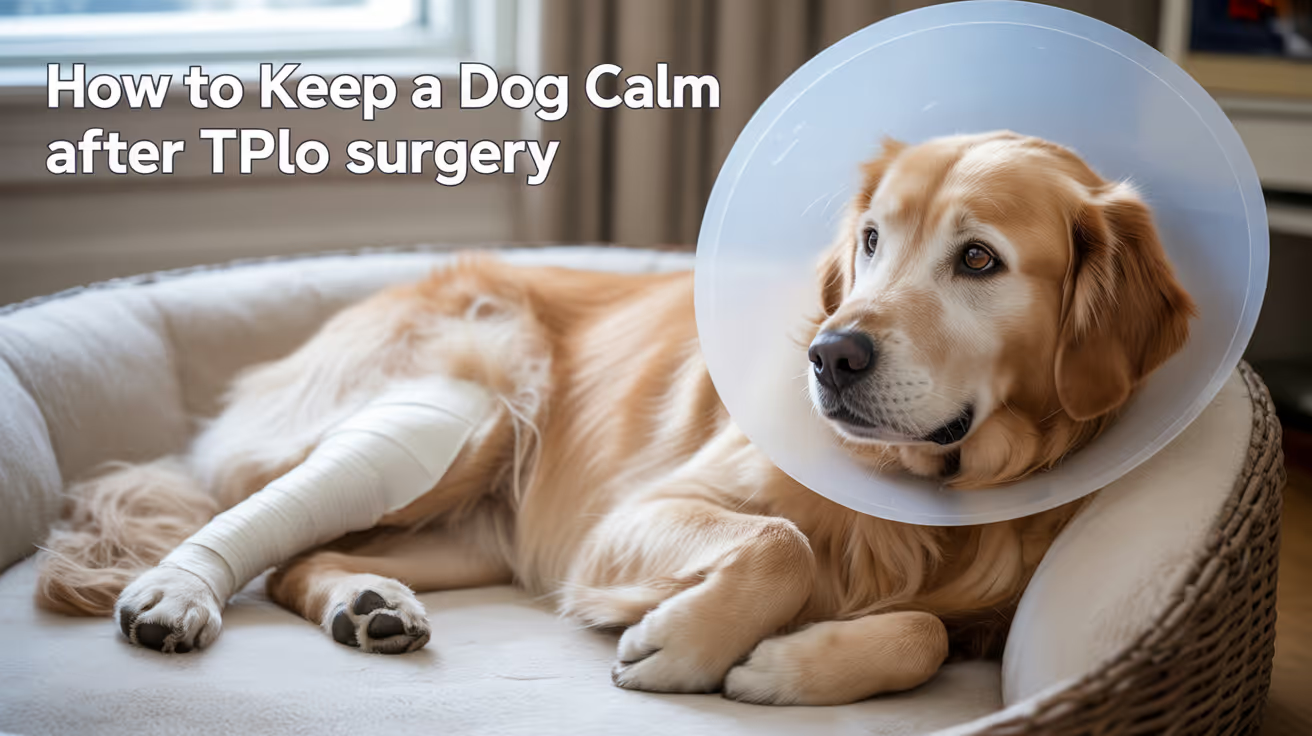
How to Keep a Dog Calm After TPLO Surgery
Learn how to keep your dog calm after TPLO surgery using rest, crate training, and soothing techniques for safe, stress-free recovery.
Keeping a dog calm during TPLO recovery is one of the hardest parts of the process -- and one of the most important.
A dog that feels physically capable of running at week 3 is not biologically ready to run at week 3. The osteotomy has not consolidated. The plate can fail.
Activity restriction is not optional.
Quick answer: Most effective strategies for keeping a dog calm after TPLO surgery: crate confinement during unsupervised periods, food puzzles and scent games, consistent pain management, a quiet low-stimulus environment, and trazodone or gabapentin for highly anxious dogs. Keep a leash on the dog indoors.
Key takeaways
- Crate confinement is the foundation of activity control: large enough to stand and turn but not pace; prevents the spontaneous running, jumping, and spinning that cause plate failure
- Mental stimulation substitutes for physical activity: food puzzles, lick mats, frozen Kongs, and scent games provide neural reward without physical impact
- Pain management compliance directly affects calmness: uncontrolled pain causes restlessness; giving NSAIDs and gabapentin on schedule keeps the dog comfortable enough to rest
- The environment must be actively managed: loud TV, visitors, and other pets cause arousal and movement; a quiet, predictable low-stimulus space reduces arousal
- Trazodone and gabapentin can be prescribed for highly anxious dogs: VetSurgInfo confirms trazodone is inexpensive, safe, and effective for anxiety and sedation during TPLO recovery
- Always use a leash indoors during early recovery: a dog that slips or startles can displace the plate; a house leash gives the owner control at all times
The crate: foundation of confinement
A crate is the safest confinement tool for TPLO recovery.
It limits the movements that risk plate failure -- spontaneous jumping, running to the door, sudden pivoting -- and gives the dog a defined, safe space.
Crate selection:
- Large enough for the dog to stand, turn, and lie down comfortably
- Not so large the dog can pace or run inside
- Soft bedding on non-slip material
- Location in the household main area, not isolated -- isolation increases anxiety
SustainableVet.org confirms: use a crate, pen, or small room with non-slip flooring. Crates prevent jumping, running, and twisting. Choose a crate large enough to stand and turn.
Exercise pen alternative: for dogs that do not tolerate crates, an exercise pen (X-pen) provides a larger confined space while still restricting free movement. Place the X-pen in the main living area so the dog is not isolated.
Small room alternative: a bathroom, laundry room, or small bedroom with a baby gate can work. Remove furniture the dog could jump on.
Mental stimulation: the most underused tool
A dog confined physically but not cognitively engaged becomes frustrated, which leads to escape attempts and activity that risks the repair.
Mental stimulation provides the same dopamine reward as physical activity with zero mechanical risk.
Effective mental stimulation options:
Food puzzles and slow feeders: scatter meals in a puzzle feeder or across a lick mat instead of in a bowl. A meal that takes 15 minutes to eat provides significant cognitive engagement.
Frozen Kongs: stuff with wet food, peanut butter (xylitol-free), or kibble soaked in broth; freeze for several hours. A frozen Kong can occupy a dog for 20 to 30 minutes.
Sniff games: hide small treats in a folded towel, a muffin tin covered with tennis balls, or a scatter across the crate bedding. Sniffing is cognitively tiring -- it is physiologically equivalent to sustained physical exercise in terms of neural engagement.
Chew toys: long-duration chews (bully sticks, raw bones appropriate for the dog's size, frozen chicken necks) keep the dog occupied without movement.
Animal Outpatient Surgery confirms: soft music, white noise, or pheromone diffusers create a serene atmosphere. Mental engagement through food puzzles and scent games reduces frustration from limited mobility.
Environmental management
The dog's immediate environment directly controls arousal level.
Reduce auditory stimuli: loud TV, doorbell sounds, and street noise cause the dog to alert and attempt to move. White noise machines or calm background music reduce stimulus peaks.
Manage household traffic: visitors who excite the dog, children who rough-house nearby, and other pets that want to interact all cause arousal. Limit access to the dog during early recovery.
Manage other pets: other dogs and cats approaching the recovering dog cause arousal and can trigger sudden jumping or running. Keep them separated during the early weeks, particularly unsupervised.
Non-slip flooring: rugs and yoga mats in the dog's movement area prevent slipping, which generates uncontrolled leg movements that can stress the plate.
Laveen Vet Center confirms: set up a quiet, confined area free from loud noises, active children, and other pets. White noise or soft music helps create a serene atmosphere.
Pain management and its role in calmness
An undertreated dog is a restless dog. Pain creates the exact behaviors -- panting, pacing, inability to settle, licking the leg -- that also indicate anxiety.
Distinguishing pain from anxiety is important because the response is different.
Pain management checklist:
- Give NSAIDs and gabapentin on the exact schedule prescribed, not as needed
- Never skip doses because the dog appears comfortable -- the medication is maintaining that comfort
- Give medications approximately 30 minutes before walks (TPLO home recovery protocols recommend this timing)
- Contact your vet if the dog cannot settle despite correct medication administration
VetSurgInfo confirms: gabapentin provides both analgesia and sedation; the sedating effect facilitates recovery and rest, particularly in the first 7 days.
Prescribed calming medications
For dogs with high anxiety, separation anxiety, or an inability to settle despite environmental and mental stimulation management, veterinary-prescribed medications are appropriate and safe.
Trazodone: a serotonin modulator used off-label in dogs for anxiety and sedation. VetSurgInfo confirms: dogs do very well on trazodone for anxiety and sedation during TPLO recovery; it is inexpensive and can facilitate recovery, rest, and calm during vet visits.
Gabapentin: the analgesic side effect of sleepiness helps with calmness in addition to pain control.
Alprazolam or other benzodiazepines: may be appropriate for situational anxiety (specific triggers like thunder).
SustainableVet.org confirms: vets can prescribe mild sedatives or calming medications for dogs who remain overly anxious; these drugs are safe when dosed correctly and can prevent harmful overactivity.
Never give human anxiety medications to dogs. Never use human supplements without vet approval -- some contain xylitol or other ingredients toxic to dogs.
Owner behavior and management
Owners unintentionally promote activity.
Do not excitedly greet the dog: excited greetings cause the dog to jump and spin. Calm, quiet greetings reduce arousal.
Leash the dog indoors: a house leash (a short, light leash attached to the collar) gives the owner control when the dog is out of the crate. If the dog startles or tries to move suddenly, the leash prevents uncontrolled movement.
Maintain a predictable routine: dogs are routine-oriented. Predictable meal times, bathroom walk times, and crate times reduce anticipatory anxiety. Variation creates excitement; routine creates calm.
Keep visits short: sitting with the dog is good. Prolonged exciting interaction is not. Brief, calm contact several times daily is better than one long exciting session.
For the recovery timeline, see what to expect after TPLO surgery in dogs. For infection prevention, see post-operative care mistakes that increase TPLO infection risk.
For swelling management, see fluid buildup after TPLO surgery in dogs. For exercise, see TPLO recovery exercises for dogs.
Frequently asked questions
My dog screams and cries in the crate for hours. What do I do?
Contact your vet. Sustained, intense crate distress may indicate: inadequate pain control (the dog is in pain, not just anxious), genuine severe separation anxiety, or insufficient mental stimulation.
Ask about trazodone or gabapentin for anxiety management. Do not give up on crate confinement -- the alternative is uncontrolled movement that risks the repair.
Is it okay to let my dog out of the crate to sit with me on the sofa?
Only if the dog is on a leash and cannot jump. Allow the dog to lie next to you on the floor or on a low dog bed beside you.
Do not allow the dog onto the sofa -- falling or jumping off generates the same plate-failure risk as running.
My dog seems much better at 3 weeks. Can I relax the restrictions?
No. Clinical improvement does not mean bone healing is complete. The osteotomy is not confirmed healed until radiographs at 8 to 12 weeks.
Plate failure typically happens when owners relax restrictions based on the dog appearing well. Maintain full restrictions until vet clearance.
What is the best medication for a high-energy dog that can't settle?
Trazodone is the most commonly prescribed agent for activity restriction in TPLO dogs. It is effective, safe, inexpensive, and can be used for the full restriction period.
Discuss with your vet at or before surgery -- it is easier to start early than to address a crisis at week 2.
Can I take my dog to visit friends or family during recovery?
Very limited visits in controlled, quiet environments where the dog is leashed and confined.
No visits to households with other active dogs, children who will excite the dog, or any environment where the dog cannot be kept calm. Unfamiliar environments increase anxiety and exploration behavior.
Resources
- SustainableVet. How to Keep a Dog Calm After TPLO Surgery. sustainablevet.org
- VetSurgInfo. TPLO Recovery Tips. vetsurginfo.com
- Animal Outpatient Surgery. How to Keep a Dog Calm After TPLO Surgery. animaloutpatientsurgery.com
- Laveen Vet Center. How to Keep a Dog Calm After TPLO Surgery. laveenvetcenter.com
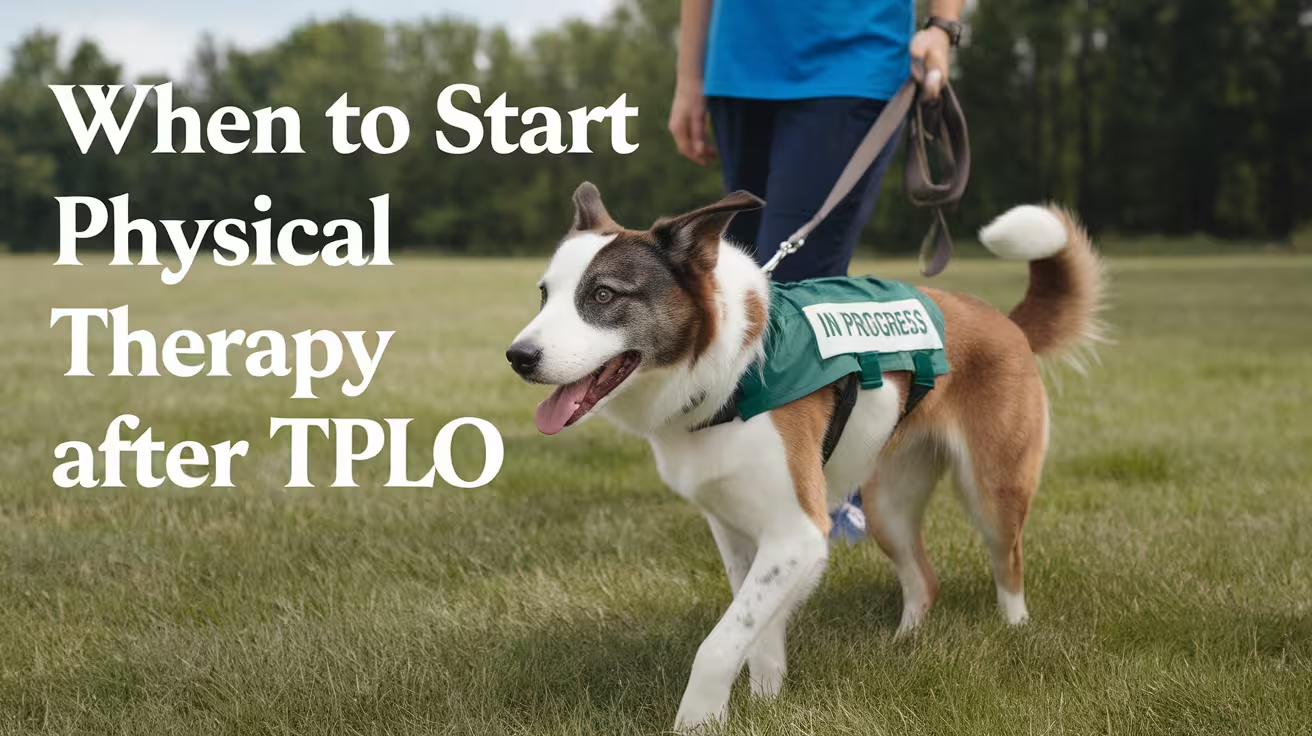
When to Start Physical Therapy After TPLO Surgery
Learn when to start physical therapy after TPLO surgery, which exercises help recovery, and how to avoid early-stage complications.
Physical therapy after TPLO begins on day one -- not after the bone heals. The question is not whether to start, but which type is appropriate at each stage.
Early rehabilitation is about pain management and encouraging weight bearing. Later rehabilitation is about restoring muscle mass, range of motion, and functional strength.
The timing for each phase is defined by healing biology, not by how the dog appears to feel.
Quick answer: Physical therapy begins on day 1 with leash walks and cold therapy. Passive range-of-motion exercises start at days 3 to 5. Hydrotherapy begins at weeks 2 to 3. Strengthening increases from weeks 4 to 8. Plans complete by weeks 8 to 12; full recovery takes 4 to 6 months after TPLO surgery.
Key takeaways
- Leash walking begins within 24 hours of surgery: TPLO Info confirms short 5-minute walks multiple times daily from day 1; early weight bearing maintains muscle mass and bone healing
- Passive range-of-motion exercises start at days 3 to 5: gentle manual flexion and extension of the stifle maintains joint mobility during restricted activity
- Hydrotherapy can begin around weeks 2 to 3 after incision healing is confirmed; underwater treadmill provides resistance and buoyancy simultaneously
- Professional rehabilitation offers advantages over at-home protocols: certified therapists provide therapeutic laser, TENS, underwater treadmill, and individualized monitoring
- Strengthening exercises begin around weeks 3 to 4 when the dog consistently bears weight; cavaletti poles, weight-shifting, and balance work rebuild lost muscle
- Free running and high-impact activities resume only after radiographic bone healing confirmation at weeks 8 to 12; earlier return risks osteotomy failure
Phase 1: immediate post-surgical period (days 1 to 14)
What begins immediately
Leash walking: begins within 24 hours of surgery. TPLO Info confirms short 5-minute leash walks multiple times daily from day one. These walks are bathroom trips only in the first week -- not exercise walks. The goal is to maintain the neural stimulus for weight bearing and to prevent the complete disuse that leads to rapid muscle atrophy.
Veterinary Partner VIN confirms: Phase 1 begins immediately after surgery; slow, controlled leash walks 3 to 4 times daily for 5 to 10 minutes are the primary activity.
Cold therapy (icing): ice applied to the incision site for 10 to 15 minutes after each walk during the first 3 to 5 days. TPLO Info recommends icing the incision directly for the first 3 to 5 days post-surgery. Cold therapy reduces local inflammation and pain, making the dog more comfortable and more likely to bear weight.
Edmonton Veterinary TPLO protocol confirms: time physical therapy exercises approximately 30 minutes after pain medications are given so the dog is most comfortable during exercise.
Passive range-of-motion exercises (days 3 to 5)
PROM exercises are gentle manual flexion and extension of the stifle joint. SustainableVet.org confirms: gentle passive exercises usually start within 3 to 5 days post-surgery.
How to perform PROM:
- Hold the thigh and lower leg, not the joint itself
- Slowly flex the stifle toward the chest (as far as comfortable without resistance)
- Slowly extend the stifle toward straight
- 5 to 10 repetitions, 2 to 3 times daily
- Never force the range -- stop at the point of resistance or discomfort
PROM maintains joint cartilage health, prevents fibrous tissue formation in the joint, and maintains range of motion during the period when the dog is resting.
Phase 2: early rehabilitation (weeks 2 to 4)
What begins at the 2-week recheck
The 2-week recheck confirms incision healing and reviews early recovery. If healing is proceeding normally, Phase 2 activities begin.
Increased leash walk duration: TPLO Info recommends increasing walk duration by up to 5 minutes per week from the 2-week baseline. Vetplayas confirms: by week 2, controlled leash walks should be extended to promote muscle strength and flexibility.
Hydrotherapy: SustainableVet.org and the Vetplayas recovery guide both confirm hydrotherapy can begin around week 2 to 3, once the incision is healed. Underwater treadmill therapy provides three simultaneous benefits:
- Buoyancy reduces joint loading while still requiring weight bearing
- Water resistance builds muscle without impact
- Warmth promotes circulation and reduces stiffness
Professional hydrotherapy (certified facility with underwater treadmill) is preferable to open-water swimming in the early phase -- controlled depth and therapist supervision improve safety.
Balance training (from week 3 to 4): TPLO Info confirms that once the dog is consistently bearing weight on the operated leg (typically around weeks 3 to 4), weight-shifting exercises can begin. Stand the dog on a non-slip surface and gently push the hindquarters from side to side -- the dog responds by shifting weight to maintain balance, which activates the hip stabilizers.
Phase 3: progressive strengthening (weeks 4 to 8)
Core strengthening and higher-level exercises
Veterinary Partner VIN confirms: Phase 2 (which overlaps with what most owners call weeks 3 to 8) involves core strengthening once sufficient basic strength is achieved.
Activities that begin in weeks 4 to 8 (vet-directed):
- Cavaletti poles: slow stepping over low poles placed on the ground; encourages deliberate limb placement and hip flexion
- Hill walking: gentle inclines on a leash (begin by week 6 in most protocols)
- Sit-to-stand exercises: transitions from sitting to standing strengthen hip extensors
- Balance board or wobble board exercises: builds proprioception and stabilizer strength
WM-Referrals TPLO physiotherapy protocol confirms: start hydrotherapy, cavaletti poles, and balance board work at week 6; progress to 30 to 40 minute walks by this phase.
6-week radiograph checkpoint: activity level in Phase 3 is calibrated against radiographic findings at the 6-week visit. If bone healing is progressing well, activities increase as above. If healing is delayed, Phase 3 activities are deferred.
Phase 4: return to function (weeks 8 to 12 and beyond)
Radiographic confirmation at 8 to 12 weeks
SustainableVet.org confirms: most structured plans complete within 8 to 12 weeks. By 4 to 6 months, most dogs regain full mobility including running and playing.
After the 12-week radiograph confirms bone healing:
- Progressive jogging on leash
- Longer off-leash exploration in controlled environments
- Return to normal activity for most dogs
- Athletes and working dogs continue structured rehab for 4 to 6 months
Professional rehabilitation vs. at-home protocols
When professional rehab is recommended
TPLO Info confirms: ideally every dog would follow up with a rehabilitation therapist so a doctor can develop an individualized protocol. Professional rehabilitation is particularly beneficial when:
- The dog is slow to bear weight
- Significant muscle atrophy is present at the 6-week recheck
- The dog is a working dog, sports dog, or agility competitor
- Progress has stalled at any phase of recovery
What professionals offer
Certified canine rehabilitation therapists (CCRPs) provide:
- Therapeutic laser (reduces inflammation, promotes tissue healing)
- Transcutaneous electrical nerve stimulation (TENS) for pain management
- Controlled underwater treadmill protocols
- Individualized exercise prescription based on daily assessment
- Early detection of complications (inappropriate gait patterns, asymmetric muscle development)
At-home protocols
At-home rehabilitation following the vet's guidelines is appropriate for most dogs.
The core elements -- short leash walks, PROM exercises, cold therapy, gradual activity increase, and balance work -- are all achievable at home with proper instruction.
For the recovery timeline overview, see what to expect after TPLO surgery in dogs. For PROM exercises specifically, see PROM exercises for dogs after TPLO surgery.
For range-of-motion exercises, see TPLO range-of-motion exercises for dogs. For rehab exercise detail, see TPLO rehab exercises for dogs.
Frequently asked questions
Can physical therapy start before the incision heals?
Yes -- the early elements (leash walking, cold therapy, and PROM exercises) begin before the incision is fully healed, typically from day 1 to 5 onward.
Hydrotherapy and balance work require incision healing confirmation, typically at the 2-week recheck.
Is professional physical therapy necessary for TPLO recovery?
Not strictly necessary for all dogs, but beneficial for those recovering slowly, those with significant muscle atrophy, and working or sport dogs. At-home protocols following vet instructions are appropriate for most dogs.
Professional rehab adds precision and advanced modalities.
How often should my dog have hydrotherapy sessions?
Typically 1 to 3 times per week during the active rehabilitation phase (weeks 2 to 8). Frequency depends on the dog's response, transportation constraints, and cost.
Each session's therapeutic benefit persists for several days, so daily hydrotherapy is not required.
What if my dog refuses to use the leg despite physical therapy?
Persistent non-weight-bearing beyond 3 to 4 weeks warrants veterinary investigation. Possible causes include inadequate pain control, implant complication, late meniscal tear, or infection.
Physical therapy cannot proceed normally until the underlying cause of non-weight-bearing is addressed.
Can I use a swimming pool at home for hydrotherapy?
Only with vet guidance and with the dog supervised at all times. Open water swimming is less controlled than an underwater treadmill.
Risks include the dog launching themselves off the pool edge (impact on landing), inability to control depth, and water contamination of the incision if not fully healed.
Resources
- TPLO Info. Rehabilitation After TPLO Surgery. tploinfo.com
- Veterinary Partner VIN. Physical Rehabilitation of Dogs Following TPLO. veterinarypartner.vin.com
- SustainableVet. TPLO Rehab Exercises for Dogs. sustainablevet.org
- WM Referrals. Post-operative Rehabilitation After TPLO. wm-referrals.com
How Long Does Swelling Last After TPLO Surgery
Find out how long swelling lasts after TPLO surgery, what’s normal, and when to call your vet for possible infection or complications.
Post-surgical swelling after TPLO is normal, expected, and self-limiting when managed correctly. Most incision-area swelling peaks within the first 2 to 5 days and resolves by 2 weeks.
Swelling that does not follow this trajectory -- that is not declining, or that appears new after initial improvement -- is the key indicator that requires veterinary attention.
Quick answer: Normal TPLO swelling peaks at days 2 to 5 and resolves within 1 to 2 weeks with cold therapy and rest. Ankle swelling from gravity-dependent fluid migration appears at days 3 to 5. Swelling increasing after day 5, or with warmth, redness, or discharge, warrants veterinary evaluation.
Key takeaways
- Normal TPLO swelling peaks at days 2 to 5: SustainableVet.org confirms mild incision swelling usually goes away within two weeks
- Ankle swelling is a normal gravity-dependent phenomenon: TPLO Info confirms ankle swelling typically appears at days 3 to 5; it is fluid migrating downward from the surgical site
- Cold therapy in the first 48 to 72 hours is the primary management tool: 10 to 15 minutes, 3 to 4 times daily, reduces swelling and pain
- Swelling worsening after day 5 or accompanied by warmth, redness, or discharge indicates infection, seroma, or hematoma; contact your vet within 24 hours
- Mild swelling can persist for weeks at a low level in larger dogs and those with poor activity restriction compliance; trajectory matters more than absolute level
- Nighttime swelling is common and normal: dogs move less at rest, allowing fluid to settle; this should improve by morning or after repositioning
Normal swelling: timeline and characteristics
Days 1 to 3: acute post-surgical swelling
Swelling begins within hours of surgery and results from:
- Surgical tissue trauma (incision through skin, subcutaneous tissue, and fascia)
- Bone cutting at the osteotomy site
- Inflammatory response to the metal plate and screws
- Fluid accumulating in the disrupted tissue spaces
This early swelling is diffuse, soft, and warm to the touch. It is the expected cellular response to surgery.
Days 2 to 5: peak swelling
Swelling typically peaks between days 2 and 5. The dog's leg may look noticeably larger at this stage, and some extension of swelling down the lower leg toward the ankle is normal.
Vetplayas confirms: swelling typically peaks within the first few days after surgery but should gradually subside over time.
Days 3 to 5: ankle swelling appears
A distinct swelling often appears at the ankle (tarsus) between days 3 and 5, sometimes alarming owners who notice it away from the surgical site. This is entirely normal.
TPLO Info confirms: it is completely normal for swelling to develop around the ankle approximately 3 to 5 days following surgery on the TPLO leg.
This swelling can be massaged and iced if it occurs and will resolve over a few days.
TPLO Austin confirms this finding identically. The mechanism is gravity-dependent migration of tissue fluid from the surgical site through the fascial planes of the lower leg.
Days 5 to 14: progressive resolution
From day 5 onward, swelling should consistently decrease with each daily inspection. Cold therapy, rest, and anti-inflammatory medication all contribute to this resolution.
SustainableVet.org confirms: mild swelling around the incision site usually goes away within two weeks. The trajectory must be consistently improving.
Beyond 2 weeks: residual low-level swelling
Some dogs retain mild soft swelling around the lower leg beyond 2 weeks, particularly larger dogs with greater tissue volume and dogs who have been less compliant with activity restriction.
This is usually minor and does not indicate a problem if:
- The swelling is soft and not warm
- There is no discharge or redness
- The dog is bearing weight and improving in lameness
Cold therapy: the primary management tool
Cold therapy is the evidence-based first-line intervention for post-surgical swelling.
Protocol:
- Wrap an ice pack or bag of frozen peas in a thin cloth or towel
- Apply to the incision and plate site for 10 to 15 minutes
- Repeat 3 to 4 times daily
- Begin on day 1 post-surgery
- Continue for the first 48 to 72 hours (the acute inflammatory phase)
SustainableVet.org confirms: cold therapy, like applying an ice pack wrapped in a towel for 10 to 15 minutes several times a day during the first 72 hours, helps reduce inflammation.
After the initial period, warm compresses can be used to promote circulation.
Never apply ice directly to the skin or incision -- frostbite and wound damage can result. Remove the pack immediately if the skin appears pale or very cold.
For the ankle specifically, TPLO Info confirms: ankle swelling can be massaged and iced. Gentle proximal-to-distal massage (toward the toes) applied after icing helps lymphatic drainage.
Concerning swelling: signs requiring veterinary contact
Swelling that is not declining after day 5
Normal swelling is consistently declining from day 5 onward. Swelling that is the same or larger than on day 3, measured at day 7, is not normal.
New swelling after apparent resolution
If swelling had reduced and then reappears -- particularly at the plate site rather than the incision -- this suggests a developing seroma, hematoma, or early infection.
SustainableVet.org confirms: you should be concerned if swelling increases after the first week or is accompanied by heat, redness, oozing, or a bad odor.
Warmth, firmness, redness, or discharge alongside swelling
These features distinguish infection from normal surgical edema. Normal edema is diffuse, soft, not dramatically warm, and has no discharge. Infection produces focal warmth, firmness, redness spreading beyond the incision, and discharge.
Swelling at the plate site (not the incision) weeks after surgery
This can indicate an implant-associated infection with seroma or early osteomyelitis. Requires radiographic assessment and deep sampling.
Seroma: a specific type of post-surgical swelling
A seroma is a localized collection of clear serous fluid under the skin, forming when tissue spaces fill with tissue fluid that has not been reabsorbed.
Seromas after TPLO are common and are distinct from infection.
Signs of seroma:
- A soft, fluctuant (fluid-filled) swelling at or near the incision
- Typically appears 1 to 3 weeks post-surgery
- Fluid is clear or pale yellow when aspirated
- No warmth, redness, or discharge from the incision itself
Most seromas resolve without treatment. Your vet will assess whether aspiration or monitoring is appropriate.
For the fluid buildup guide, see fluid buildup after TPLO surgery in dogs. For the ankle swelling guide, see ankle swelling after TPLO surgery in dogs.
For the infection signs guide, see TPLO plate infection signs and treatment. For the bruising guide, see bruising after TPLO surgery in dogs.
Frequently asked questions
Is it normal for the whole leg to swell after TPLO?
Yes, in the early days. Diffuse swelling of the lower leg, extending from the surgical site toward the ankle, is normal in the first 1 to 2 weeks.
Gravity and the inflammatory response both contribute. This resolves as the inflammatory process settles and the dog begins controlled weight bearing.
My dog's leg looks huge at day 3. Is that too much?
Day 3 is within the normal peak swelling period.
Unless the swelling is dramatically asymmetric compared to the other leg, is very hot, or is producing discharge, observe and continue cold therapy as directed.
If you are concerned, contact your vet to describe the swelling -- they can advise whether in-person assessment is needed.
Should I massage the swollen leg?
Gentle lymphatic massage (soft strokes toward the body, from the ankle upward) after icing can help reduce distal swelling.
Do not massage directly over the incision or plate site, and do not massage aggressively. Ask your vet or rehabilitation therapist to demonstrate the correct technique.
My dog's swelling is going up and down -- bigger in the evening, smaller in the morning. Is that normal?
Yes. SustainableVet.org confirms that mild nighttime swelling occurs because dogs move less while resting, allowing fluid to settle. Morning improvement after repositioning and movement is normal.
The concern is when the morning maximum is larger than the previous day's morning maximum -- a consistently worsening trend.
When does warm therapy replace cold therapy?
Cold therapy is most beneficial in the first 48 to 72 hours (the acute inflammatory phase). After 72 hours, warm compresses promote circulation and may help reabsorb residual fluid.
The transition is typically around days 3 to 5. Never apply warmth to an incision that looks infected or discharging -- this can worsen infection.
Resources
- TPLO Info. TPLO Recovery FAQ. tploinfo.com
- SustainableVet. Post-Surgery Recovery After TPLO in Dogs. sustainablevet.org
- TPLO Austin. TPLO Incision Care After Surgery. tploaustin.com
- VCA Animal Hospitals. Tibial Plateau Leveling Osteotomy (TPLO) in Dogs. vcahospitals.com

Does Pet Insurance Cover TPLO Surgery in Dogs?
Find out if pet insurance covers TPLO surgery, what affects eligibility, and how to get reimbursed for your dog’s treatment.
Understanding TPLO Surgery and Why It’s Needed
Tibial Plateau Leveling Osteotomy (TPLO) is a surgical procedure used to repair a torn cranial cruciate ligament (CCL) in dogs — a common injury that causes pain and hind limb instability. The surgery reshapes the tibia bone to restore stable joint movement without depending on the damaged ligament.
- Purpose of TPLO Surgery: Recommended for active or large-breed dogs where conservative treatments cannot restore function.
- Recovery Period: Most dogs need 8–12 weeks for bone healing, followed by controlled physical therapy for full recovery.
- Cost Overview: TPLO surgery is one of the more expensive orthopedic procedures, often ranging from $3,000 to $6,000 depending on clinic and location.
Understanding these basics sets the stage for evaluating insurance coverage options.
Average Cost of TPLO Surgery for Dogs
TPLO surgery is a complex orthopedic procedure, and its cost varies widely based on case difficulty, hospital standards, and regional pricing. Understanding the range helps owners plan financially before exploring insurance options.
- National Cost Range: In the U.S., TPLO surgery typically costs between $3,000 and $6,000 for a single leg. In some specialty hospitals or metropolitan areas, costs can exceed $7,000, especially for large breeds.
- Simple vs. Complex Cases: Minor ligament tears with minimal complications are less costly, while complex fractures, bilateral surgeries, or infections increase total expenses significantly.
- Influence of Dog Size: Larger dogs require stronger plates, longer anesthesia, and extended recovery monitoring, leading to higher bills.
- Hospital and Surgeon Type: Referral centers and board-certified surgeons charge more due to specialized equipment and experience.
- Follow-Up and Rehabilitation: Post-surgical care, including X-rays and physiotherapy, can add $500–$1,500.
Because of these high expenses, many pet owners consider insurance coverage essential to make TPLO surgery affordable without compromising care quality.
Does Pet Insurance Cover TPLO Surgery?
Most modern pet insurance plans do cover TPLO surgery, but eligibility depends on policy terms and your dog’s medical history. The key factor is whether the cruciate ligament injury is considered pre-existing.
- General Coverage Rule: If your dog’s CCL injury occurs after the waiting period and is not pre-existing, TPLO surgery is usually included under accident or illness coverage.
- Waiting Periods: Many insurers enforce a 6–12 month waiting period for cruciate ligament coverage to prevent claims on undiagnosed injuries.
- Plan Type Differences: Comprehensive plans with illness and injury coverage are most likely to include TPLO, while accident-only policies may exclude it.
- Common Exclusions: Some policies do not cover congenital joint disorders or prior CCL injuries in the opposite leg.
- Importance of Documentation: Detailed veterinary records proving the injury is new are often required for claim approval.
In most cases, TPLO is covered when the policy is active before the injury, making early insurance enrollment a smart preventive decision.
How Pre-Existing Conditions Affect TPLO Coverage
Pre-existing conditions are the most common reason pet insurance denies TPLO-related claims. Understanding what qualifies as “pre-existing” helps you protect your dog’s future eligibility.
- Definition of Pre-Existing Conditions: Any medical issue diagnosed or showing symptoms before policy activation or during the waiting period is considered pre-existing.
- Prior Cruciate Ligament Injuries: If your dog previously tore a CCL or ACL in either leg, many insurers exclude future coverage for both knees under a bilateral condition clause.
- Breed Predisposition: Large or active breeds prone to ligament tears may face stricter review before approval.
- Importance of Early Enrollment: Getting insurance while your dog is young and injury-free ensures eligibility for full cruciate coverage later in life.
- Proof of Clean Health Record: Regular vet visits and medical documentation help verify no pre-existing issues existed at policy start.
Early planning and transparent medical history are crucial for securing TPLO coverage when unexpected injuries occur.
What Pet Insurance Typically Covers for TPLO Surgery
When TPLO surgery is approved under your insurance, most plans cover a wide range of medical services related to diagnosis, treatment, and recovery. This support can significantly reduce financial stress.
- Diagnostic Imaging: X-rays, CT scans, or MRIs used to confirm ligament rupture are usually included in coverage.
- Surgery and Hospitalization: The main surgical procedure, anesthesia, and hospitalization costs are covered up to policy limits.
- Post-Surgery Medications: Pain relievers, antibiotics, and anti-inflammatories prescribed during recovery are typically reimbursable.
- Physical Therapy: Many plans include hydrotherapy or physiotherapy sessions for rehabilitation under extended recovery benefits.
- Follow-Up Visits and Complications: Recheck exams, wound care, or treatment of infections that occur after surgery are generally included within your policy’s time and cost caps.
Comprehensive coverage ensures your dog’s TPLO treatment is managed safely from diagnosis through recovery, minimizing both physical and financial strain.
What’s Not Covered by Pet Insurance for TPLO Surgery
Even though many pet insurance plans include TPLO coverage, certain conditions and costs fall outside standard policies. Knowing these exclusions helps prevent surprises during reimbursement.
- Pre-Existing Injuries: If your dog showed signs of a cruciate tear before enrollment or during the waiting period, TPLO surgery won’t be covered.
- Bilateral Exclusion Clauses: Some insurers exclude the second knee once one cruciate injury occurs, even if it happens years later.
- Preventive or Elective Procedures: Pre-surgical screenings, optional rehab sessions, or supplements are often excluded from reimbursement.
- Rehabilitation Limits: Physiotherapy or hydrotherapy may only be covered for a set number of weeks or up to a cost cap.
- Deductibles and Co-Pays: Owners are responsible for annual deductibles, coinsurance percentages, and any charges beyond policy limits.
- Waiting Period Restrictions: Claims made before the orthopedic waiting period ends are automatically denied.
Understanding these exclusions helps you plan better and choose insurance that aligns with your dog’s long-term orthopedic needs.
Best Pet Insurance Providers That Cover TPLO Surgery
Several leading pet insurance companies offer coverage for TPLO surgery, but each has unique rules for cruciate ligament injuries. Comparing policies ensures you find the best fit for your dog’s medical and financial needs.
- Healthy Paws: Covers TPLO if the injury occurs after enrollment and the waiting period. Offers unlimited annual payouts but no coverage for pre-existing conditions.
- Trupanion: Known for 90% reimbursement on eligible costs and direct vet payments, but has a 30-day waiting period for orthopedic claims.
- Embrace: Includes TPLO surgery under illness coverage, with the option to reduce or waive the orthopedic waiting period through a vet exam.
- Spot and Fetch: Both cover cruciate ligament injuries after the waiting period, with flexible reimbursement and deductible options.
- ASPCA Pet Health Insurance: Offers comprehensive coverage but applies a 14-day illness waiting period for orthopedic procedures.
Selecting a provider with transparent cruciate coverage and high reimbursement rates ensures better financial protection for major surgeries like TPLO.
How to File a TPLO Surgery Claim
Filing a TPLO surgery claim correctly helps speed up reimbursement and avoids processing delays. Most insurers require detailed veterinary documentation and itemized invoices.
- Collect Required Documents: Obtain a full medical report, diagnostic imaging results, itemized invoices, and proof of payment from your veterinarian.
- Submit Through the Portal: Most insurance providers allow online submissions through their official portals or mobile apps for faster review.
- Attach Medical History: Include your dog’s previous health records to confirm the cruciate injury isn’t pre-existing.
- Timeline for Reimbursement: Claims are typically processed within 10–15 business days, though some complex cases may take longer.
- Follow Up Promptly: Contact your insurer if documentation requests arise or delays occur. Keeping communication open prevents claim rejection.
- Save Copies: Always keep digital or printed copies of every document for future claims.
Timely, organized submission of records ensures smoother claim approval and quicker financial relief after TPLO surgery.
Tips for Choosing the Right Pet Insurance for Orthopedic Coverage
Choosing the right insurance plan can make a major difference in managing expensive orthopedic procedures like TPLO surgery. Understanding policy details beforehand prevents financial stress later.
- Avoid Bilateral Exclusions: Choose insurers that cover both knees even if one is previously injured. This is critical for breeds prone to cruciate tears.
- Check Waiting Periods: Some plans have 6–12 month orthopedic waiting periods. Early enrollment ensures coverage is active when needed.
- Customizable Reimbursement Options: Plans allowing flexible deductibles and payout percentages help control monthly premiums.
- Understand Policy Limits: Review annual and lifetime caps to ensure coverage remains adequate for long-term orthopedic care.
- Read Fine Print Carefully: Always confirm whether physical therapy, imaging, and post-surgical complications are included.
- Ask About Direct Payments: Some insurers pay veterinarians directly, saving you from covering full costs upfront.
Selecting a policy that combines comprehensive coverage with transparency ensures peace of mind when facing orthopedic surgeries like TPLO.
Conclusion
TPLO surgery is one of the costliest orthopedic procedures for dogs, making strong insurance coverage essential. While most insurers cover the operation for non-pre-existing injuries, exclusions and waiting periods can greatly affect eligibility.
- Coverage Essentials: Understand plan inclusions, orthopedic waiting times, and bilateral condition policies.
- Early Enrollment: Starting coverage before injuries occur ensures full eligibility for TPLO claims.
- Policy Comparison: Review reimbursement rates, deductibles, and annual caps to choose the best protection for your dog’s long-term health.
- Consultation: Discuss all coverage details with your insurer before scheduling surgery to avoid claim denial or hidden costs.
With the right pet insurance plan and proper timing, you can manage TPLO expenses confidently while securing the best surgical outcome for your dog.
FAQs
Will insurance cover both legs if both cruciate ligaments tear?
Most pet insurance plans cover both legs only if the policy doesn’t include a bilateral exclusion clause. Some insurers consider cruciate injuries as linked conditions, meaning if one leg tears before enrollment, the other may not be covered. Always confirm your insurer’s bilateral coverage terms in writing before surgery.
Can I get coverage if my dog already tore one ligament?
If your dog had a previous cruciate ligament injury before the policy began, most insurers will treat future TPLO claims as pre-existing and deny coverage. However, enrolling early or choosing a plan without bilateral exclusions ensures future injuries can still qualify for reimbursement.
How long is the waiting period for TPLO coverage?
Orthopedic waiting periods vary by provider, typically ranging from 6 to 12 months after policy activation. Some companies allow a vet exam waiver to shorten this period. Starting insurance early ensures your dog’s coverage is active before any ligament injury occurs.
What if my dog needs a second TPLO later?
If both legs require TPLO surgery and your policy includes bilateral coverage, the second operation is usually covered as long as it occurs after the waiting period. Keep consistent records and ensure premiums remain active to avoid claim rejection for the second procedure.
Which pet insurance companies cover TPLO the best?
Top-rated providers for TPLO coverage include Trupanion, Embrace, Healthy Paws, and Fetch. These plans typically offer 80–90% reimbursement on approved orthopedic claims with clear terms for cruciate ligament injuries. Always compare waiting periods, bilateral rules, and annual payout limits before finalizing your plan.
Female Dog Behavior Changes After Spaying
Learn how spaying affects female dog behavior, including mood, activity, and social changes, with tips to support recovery.
Spaying a female dog removes the hormones that drive certain behaviors. But it does not remove the dog.
That distinction matters more than most people realize. Some owners expect a dramatic personality transformation after spaying. Others worry their dog will become a different animal. Neither is accurate.
This guide covers what behavior changes are real and evidence-based, what the timeline looks like, what stays exactly the same, and what some research suggests about less expected changes.
Quick answer: Spaying typically reduces or eliminates heat cycle behaviors: roaming, restlessness, urine marking, and attraction of male dogs. It often stabilizes mood by removing hormonal cycling. Core personality, energy level, affection, and intelligence are not affected. Most behavioral changes, if they occur, appear gradually over two to six weeks as hormone levels settle.
Key takeaways
- Heat cycle behaviors are eliminated: Roaming, urine marking during heat, and male attraction cease after spaying.
- Mood often becomes more stable: Without hormonal cycling, many female dogs show fewer mood swings and less heat-related anxiety.
- Core personality does not change: Affection, playfulness, intelligence, and loyalty remain intact.
- Hormone-driven aggression often decreases: Aggression linked to protective instincts or heat cycle is frequently reduced.
- Behavioral changes are gradual: Most owners notice changes over two to six weeks, not immediately after surgery.
- Learned behaviors are not affected: A dog that has learned to bark, jump, or resource-guard will continue doing so after spaying. Training addresses these.
What drives behavior in female dogs before spaying
Female dogs experience cyclical hormonal changes driven by estrogen and progesterone. These hormones influence far more than reproduction.
They affect mood, energy levels, social behavior, and territorial responses. During heat cycles, which typically occur every six to eight months in adult dogs, these hormones surge and create predictable but often difficult behavioral patterns.
Spaying removes the ovaries, which are the primary source of estrogen and progesterone. The result is a more stable hormonal environment, free from the peaks and troughs of the reproductive cycle.
Behaviors that typically improve or disappear after spaying
Heat cycle behaviors
These are the most reliably reduced behaviors after spaying, because they are entirely driven by reproductive hormones.
- Roaming: Unspayed females in heat have a strong instinct to escape and find a mate. This can include fence climbing, door dashing, and persistent escape attempts. Spaying eliminates the hormonal drive behind this behavior.
- Urine marking during heat: Female dogs in heat urinate frequently in small amounts to signal their reproductive status to male dogs. This stops after spaying.
- Attracting male dogs: The pheromones produced during heat that draw intact male dogs from significant distances are no longer produced after spaying.
- Restlessness and vocalization during heat: The anxious pacing, whining, and elevated energy that accompany heat cycles are eliminated.
Mood stability
Without cyclical hormonal fluctuations, many spayed females show more consistent, predictable behavior day to day.
This does not mean every spayed dog becomes calmer. It means the extreme swings associated with the heat cycle are removed. A dog that was anxious or reactive before spaying due to hormonal factors may improve. A dog whose anxiety comes from environmental or learned causes will not.
False pregnancy behaviors
Some unspayed female dogs experience pseudopregnancy after a heat cycle. This involves nesting behavior, protecting inanimate objects as if they were puppies, milk production, and sometimes aggression when the "nest" is approached.
Spaying eliminates the hormonal cycle that triggers false pregnancies.
Some forms of aggression
Aggression linked to the heat cycle, including competition with other female dogs and protective behavior during false pregnancies, often decreases after spaying.
This is not a universal effect. Fear-based aggression, territorial aggression, and learned aggression are not hormone-driven and are not reliably reduced by spaying. If your dog has significant aggression concerns, talk to a veterinarian or certified behaviorist before assuming spaying will resolve them.
What does not change after spaying
This is where owner expectations most often need calibrating.
Core personality traits that remain unchanged:
- Affection and bonding with family members
- Playfulness and energy level (beyond hormone-driven behaviors)
- Intelligence and trainability
- Loyalty and protective instincts
- Sociability with people and other dogs
A dog that is goofy, snuggly, or highly energetic before spaying will still be those things after. A dog that is shy, sensitive, or independent will remain so.
Spaying removes the hormonal layer. Everything shaped by genetics, training, and early socialization stays.
Behaviors that are not improved by spaying
These are behaviors that owners sometimes expect spaying to fix, but which require training instead:
If a behavior appears on the left side of this table, spaying is not the solution. Consistent training, environmental management, and professional guidance address these.
Timeline: when do behavior changes appear?
Behavioral changes after spaying do not happen overnight. Hormones do not disappear immediately from the body after surgery.
Expected timeline:
- First two weeks: Recovery period. Any behavioral changes are primarily related to pain and anesthesia, not hormonal adjustment.
- Weeks two to six: Hormone levels decline as the body adjusts. Some owners begin noticing reduced heat-related behaviors.
- Two to three months: Most hormonal behavioral stabilization has occurred. This is when the clearest picture of post-spay behavior emerges.
Dogs spayed very close to a heat cycle may take longer to show behavioral changes because estrogen levels were elevated at the time of surgery.
Understanding behavioral changes in all dogs after spaying or neutering provides additional context for how these changes compare between males and females and what the research says about individual variation.
What research says about less expected changes
Most post-spay behavioral changes are positive. A small body of research, however, points to some behavioral outcomes that are worth being aware of.
Possible negative behavioral changes in some dogs:
- Increased fearfulness or anxiety: Some studies have found that spayed females show increased anxiety or fearfulness, particularly when spayed very early. This effect is more pronounced in certain breeds and appears to be related to the role of estrogen in regulating stress responses.
- Owner-directed aggression: A small subset of female dogs that showed aggression toward family members before spaying may show increased aggression after. This is thought to be related to the mild calming effect of estrogen being removed.
These outcomes are not common, but they are real and worth discussing with your vet, particularly if your dog has existing behavioral concerns. For a clear picture of whether spaying will calm your female dog specifically, that guide addresses the calming question with the nuance it deserves.
Does spaying affect energy levels?
This is one of the most common questions owners ask, and the answer is nuanced.
Spaying can cause a modest slowdown in metabolism because estrogen plays a role in metabolic regulation. A dog that is not having her food intake adjusted after spaying may gradually gain weight, and that weight gain can make her appear less energetic.
The surgery itself does not make dogs lazy. Appropriate diet adjustment and regular exercise maintain energy levels. Many highly active working and sport dogs are spayed and perform at the same level as intact females.
For a detailed breakdown of physical side effects that come alongside behavior changes, including the metabolic changes and how to manage them, that guide covers both dimensions together.
Behavior during the immediate recovery period
In the first two weeks after surgery, behavioral changes you observe are not permanent indicators of post-spay behavior.
Pain, anesthesia, activity restriction, and the stress of surgery all influence how your dog acts during recovery. Some dogs become clingy and seek more reassurance. Others become temporarily withdrawn. Some show irritability when touched near the incision.
All of these are normal post-surgical responses, not permanent changes.
Wait until your dog is fully healed and back to normal activity before drawing conclusions about her long-term behavioral profile.
Frequently asked questions
Will my female dog's personality change after spaying?
No. Core personality traits including affection, playfulness, and temperament are shaped by genetics and environment, not reproductive hormones. What may change are behaviors driven specifically by the heat cycle: roaming, urine marking during heat, false pregnancy behaviors, and some forms of hormonal aggression.
Will spaying make my female dog calmer?
Often, but not universally. Removing the hormonal cycling of heat periods stabilizes mood for many dogs. Dogs that were anxious or unpredictable specifically during heat cycles often show more consistent behavior after spaying. Dogs whose energy or anxiety has other causes will not necessarily become calmer.
How long does it take to see behavioral changes after spaying?
Most hormone-driven behavioral changes become apparent within two to six weeks as hormone levels decline post-surgery. Full behavioral stabilization typically takes two to three months. Dogs spayed during or close to a heat cycle may take longer.
Can spaying make a female dog more aggressive?
In most dogs, aggression linked to hormonal cycling decreases. In a small subset of dogs, particularly those with pre-existing fear-based or owner-directed aggression, spaying may have a less predictable effect. If aggression is a concern, discuss this with your vet before spaying. The calming effect of spaying explained covers the nuance of this question in detail.
Will spaying fix my dog's behavior problems?
Only if those problems are driven by reproductive hormones. Heat cycle roaming, urine marking during heat, and false pregnancy behaviors will be addressed. Learned behaviors, fear-based reactivity, separation anxiety, and resource guarding are not hormone-driven and require training.
How does spaying affect hormonal behavior over time?
Once the ovaries are removed, estrogen and progesterone levels drop and do not return. This permanently eliminates heat cycles and their associated behaviors. Over time, as hormone levels from before surgery gradually clear the system, previously hormone-driven behaviors fade. How long before hormone-driven behavior settles covers the hormonal timeline in detail, including how this applies to females after spaying.
The most accurate way to think about spaying and behavior: it removes one layer of influence over your dog's behavior, the hormonal layer. Everything underneath that layer, the personality, the training history, the breed tendencies, the early socialization, remains exactly as it was. For most female dogs, removing that hormonal layer is a net positive. For a few, the adjustment requires some patience. For all of them, the dog you loved before surgery is still the dog you have after.
Resources
The following sources were used as reference and background for this article:
- American Kennel Club. How Will Spaying Change My Dog? anasazivet.com
- ManyPets. Do Dogs Change After Being Neutered or Spayed? manypets.com
- Eascor Animal Hospital. Behavioral Effects of Spaying a Dog. eascoranimalhospital.com
- Bliss Animal Hospital. Do Dogs Change After Spay or Neuter? blissanimalhospital.com
- Kutzler, M.A. (2020). Possible Relationship between Long-Term Adverse Health Effects of Gonad-Removing Surgical Sterilization and Luteinizing Hormone in Dogs. Animals, 10(4), 599. ncbi.nlm.nih.gov
Dog Tumor Removal Cost: What Owners Should Know
Learn how much dog tumor removal costs, what affects the price, and how to plan for surgery, recovery, and vet care expenses.
Tumor removal costs in dogs vary more than almost any other surgical procedure from under $300 for a simple skin lump to over $10,000 when chemotherapy is required for aggressive cancer. Where your dog's case falls within that range depends on tumor type, location, size, grade, and whether a specialist is involved.
This guide gives you realistic 2026 price ranges by tumor type and a complete cost breakdown from pre-surgical diagnostics through post-surgical treatment.
Quick answer: Dog tumor removal costs $250 to $700 for simple fatty tumors and $500 to $2,100 for complex or malignant tumors. Routine total costs run $525 to $1,450. High-grade tumors requiring chemotherapy add $3,000 to $10,000+.
Key takeaways
- Simple lipoma removal costs $250 to $700 at a general practice including bloodwork and pathology
- Mast cell tumor removal costs $450 to $2,100 depending on location, grade, and margin complexity
- Soft tissue sarcoma removal often costs more due to wider margin requirements and higher specialist involvement
- Internal mass removal costs $1,500 to $4,000+ before any additional oncology treatment
- Chemotherapy adds $3,000 to $10,000+ for high-grade or metastatic tumors requiring systemic treatment
- VetReceipt real invoice data: median full-cost mass removal runs $525 to $1,450 for routine cases from 64 real vet bills
Cost by tumor type
Lipoma (benign fatty tumor)
Lipomas are the least expensive mass removal in dogs. They are soft, well-defined, and do not require wide margins because they are benign.
CareCredit: "The average cost of removing a simple lipoma on a dog ranges from $250 to $700."
Vety: "Dog lipoma removal costs $250 to $700 for a simple fatty tumor located directly below the skin or $1,000 to $1,800+ for a lipoma that is larger or is deeper in the body."
Most lipomas do not need to be removed monitoring is standard unless the lipoma is growing, causing discomfort, or in an anatomically problematic location. For full lipoma cost context, see lipoma removal cost in full.
Mast cell tumor (MCT)
MCTs require wide surgical margins, making them more expensive than benign mass removal at equivalent sizes.
Vety: "Costs range from $450 to $2,100 to remove a dog mammary tumor, eyelid tumor, or mast cell tumor, depending on the size and complexity."
For complete MCT-specific cost breakdown including staging, histopathology, chemotherapy, and insurance, see mast cell tumor removal cost.
Soft tissue sarcoma (STS)
STS requires even wider margins than MCT ideally 3 cm in all planes including depth. This makes STS removal more surgically challenging and expensive, particularly for tumors on the limbs.
PetMD cites a study of 75 dogs: even with attempted wide-margin removal, 15% of soft tissue sarcoma patients had local recurrence. Radiotherapy is often recommended adjuvantly, particularly for Grade II and III STS.
Internal tumors (abdominal, thoracic)
Internal mass removal requires abdominal or thoracic entry and carries greater anesthetic risk and longer surgery time than external masses.
Histiocytoma
Histiocytomas are benign, self-resolving tumors that typically do not require removal. When elected for removal (failure to self-resolve after 3 months, dog interfering with it), cost is at the lipoma range: $250 to $700.
Eyelid and oral tumors
These locations require ophthalmological or dental surgical expertise. Eyelid mass removal with H-plasty closure: $500 to $1,500. Oral mass removal (benign): $500 to $1,500. Oral melanoma (malignant): $1,500 to $3,000 for surgery plus staging.
Full cost breakdown: what you actually pay
VetReceipt (64 real invoices, 2026):
VetReceipt: "Based on 64 invoices in our database, the overall range is $525 to $1,450" for routine mass removal.
Staging costs (malignant tumors)
Additional oncology treatment
VetReceipt: "If malignant with incomplete margins: possible second surgery ($400 to $1,500) or radiation therapy ($5,000 to $10,000+). If metastatic cancer: oncology consultation ($200 to $500) plus chemotherapy ($3,000 to $10,000) or radiation."
What drives the cost
Tumor type
The single biggest cost driver is whether the tumor is benign or malignant, and if malignant, its grade. A Grade I MCT and a benign lipoma have similar surgery costs. A Grade III MCT requiring chemotherapy is an order of magnitude more expensive over the full treatment course.
Location
PetMD: "The cost of a tumor removal varies with size, location, invasiveness, and diagnostics. You can expect to pay anywhere from $250 to $1,800 or more."
Trunk masses are simplest. Limb, digital, facial, and perineal masses are harder: limited tissue for wide margins, more complex closures, higher specialist rates.
Size and depth
Vety: "Small tumors and those located close to the surface of the skin are the easiest and least costly to remove. Tumors that are highly vascular or located in areas that are more difficult to operate on cost much more to remove."
Larger tumors take more anesthesia time, create larger tissue defects, and require more complex wound closure.
Dog size
Larger dogs need more anesthetic agents, which scales with body weight. Anesthesia costs for a 50 kg dog are meaningfully higher than for a 5 kg dog.
General practice vs. specialist
Routine lipoma and small benign mass removal at a general practice is at the low end. Complex malignant tumors, difficult locations, or re-excisions at a board-certified veterinary surgeon's practice command higher fees. Specialist add: $500 to $1,500 on top of procedure costs.
Geographic location
Urban practices and coastal markets charge 20 to 40% more than rural and inland practices for identical procedures.
The cost of not acting early
PetMD: "A tumor that is small or seems inconsequential at the time of diagnosis can become larger or more invasive over time. Complete surgical removal is effective provided the entire mass is removed."
Small tumors cost less to remove, have simpler closures, and for malignant cases are more likely to achieve clean margins at anatomically difficult locations. A delay that allows an MCT to grow from 1 cm to 4 cm may convert a straightforward wide local excision into a specialist referral.
For the full surgical decision-making guide including when surgery is indicated, see when tumor removal is recommended. For how to prepare once surgery is scheduled, see how to prepare for tumor removal.
Frequently asked questions
How much does it cost to remove a fatty lump from a dog?
CareCredit: "$250 to $700 for a simple lipoma located directly below the skin." If the lipoma is larger, located between muscle layers (infiltrative), or in a difficult location (axilla, groin), cost increases to $1,000 to $1,800 or more. Add bloodwork ($75 to $200) and histopathology ($150 to $350) for a full picture.
Is tumor removal covered by pet insurance?
Most comprehensive pet insurance policies cover tumor removal if the tumor was not present or diagnosed before the policy's enrollment date. Vety notes: "pet insurance can significantly reduce the financial burden of tumor removal and related treatments." Read your policy carefully for exclusions around pre-existing conditions, bilateral conditions, and oncology benefit limits.
What is the cheapest way to get a dog's tumor removed?
Options to reduce cost: veterinary teaching hospitals charge significantly less than private practices while providing high-quality care. CareCredit and Scratchpay offer zero-interest veterinary financing for 6 to 12 months. Removing multiple masses in one anesthetic event shares the fixed costs. Removing a small malignant tumor early prevents the escalating costs of incomplete margins and re-treatment.
Do I need to pay for both FNA and histopathology?
These are different tests. FNA is a pre-surgical cell sample that identifies the likely type of mass and guides whether and how to operate. Histopathology is performed on the excised tissue after surgery to confirm the diagnosis, grade, and margin status. Both are typically needed for any mass that is not clearly benign on FNA. VetReceipt: "Always ask upfront whether biopsy is included in your estimate."
How long does tumor removal surgery take?
PetMD: "Simple lump removal may take approximately 1 hour; complex internal tumor surgeries can extend to several hours." Most simple skin mass removals are 30 to 60 minutes of surgical time. Total time from drop-off to pick-up is typically 4 to 8 hours including anesthesia induction, surgery, and initial recovery.
What happens if the tumor is not fully removed?
Incomplete excision means microscopic tumor cells remain at the surgical edges. The options are re-excision (removing additional tissue), radiation therapy targeting the area, or chemotherapy. VetReceipt: "If malignant with incomplete margins: possible second surgery ($400 to $1,500) or radiation therapy ($5,000 to $10,000+)." The approach depends on tumor type, grade, and whether re-excision is anatomically feasible.
Resources
- VetReceipt. Dog Tumor and Lump Removal Cost: 64 Real Vet Bills. vetreceipt.com
- Vety. How Much Does Dog Tumor Removal Cost? (2026). vety.com
- PetMD. Dog Tumor Removal: Cost and How Vets Remove Dog Tumors. petmd.com
- CareCredit. Dog Lipoma Removal Cost and Procedure Guide. carecredit.com
- Spot Pet Insurance. Dog Tumor Removal: Costs, Types and What to Expect. spotpet.com
Dog Lipoma Removal Cost: Full Price Breakdown
Find out how much dog lipoma removal costs, what factors affect pricing, and when surgery is medically necessary for your pet.
Most lipomas in dogs never need to be removed. The ones that do because they are growing, causing discomfort, or limiting mobility are among the most straightforward surgical procedures in veterinary medicine. But "straightforward" does not always mean cheap, especially if the lipoma is large, deep, or infiltrating muscle.
Here is what the surgery actually costs, what drives the price up, and how to decide when removal is worth it.
Quick answer: Simple dog lipoma removal costs $250 to $700 at a general practice. Infiltrative or deep lipomas cost $1,000 to $2,500+. Most lipomas do not need removal; monitoring is the default for stable, asymptomatic masses.
Key takeaways
- Simple lipoma removal costs $250 to $700 at a general practice, covering surgery itself
- Infiltrative lipoma removal costs $1,000 to $2,500+: these grow into muscle layers and require more complex dissection
- FNA confirmation before surgery costs $30 to $150: essential to confirm benign cytology before operating
- Monitoring, not removal, is the default for most lipomas; surgery is elected when the mass causes discomfort
- Pet insurance covers lipoma removal if the mass was not diagnosed before the policy enrolled, but pre-existing lipomas are excluded
- Removing a lipoma while small is simpler and cheaper; waiting until growth or infiltration increases complexity
What is a lipoma?
A lipoma is a benign fatty tumor that develops in the subcutaneous tissue beneath the skin. They are among the most common tumors found in middle-aged and senior dogs, particularly in overweight dogs and certain breeds including Labrador Retrievers, Weimaraners, and mixed breeds.
CareCredit: "While most lipomas are harmless and don't require treatment, some can grow large enough to cause discomfort, restrict movement or interfere with daily activities."
Lipomas do not metastasize (spread) and do not become malignant. MetLife Pet: "Even the malignant form of a lipoma, called a liposarcoma, tends to be less concerning than other types of tumors. They usually don't metastasize, making them relatively easy to find and remove." Liposarcomas are rare; most fatty lumps in dogs are entirely benign lipomas.
Important distinction infiltrative lipoma: a small subset of lipomas grows into muscle fascia and tissue layers rather than remaining superficially under the skin. These are called infiltrative lipomas. They are still benign but cannot be cleanly shelled out like a simple lipoma. Surgical removal is more complex and invasive, and they are more likely to recur.
When is removal medically necessary?
Most lipomas should be monitored, not removed. Monitoring means measuring the mass, photographing it, and rechecking with a vet every 6 to 12 months. Removal is elected when:
- The lipoma is restricting movement: large masses in the axilla (armpit), groin, or over a joint that interfere with normal gait
- The lipoma is causing pain or skin irritation: pressure sores forming under a heavy lipoma; skin breakdown over a very large mass
- The lipoma is growing rapidly: rate of growth more than 20% in 2 to 3 months suggests the mass should be investigated and likely removed
- The lipoma is in a location where it will become harder to remove later: axillary and inguinal lipomas enlarge into spaces that make surgery progressively more complex
- The diagnosis is uncertain: FNA of a fatty-looking mass that contains atypical cells warrants excision and histopathology
Hepper: "Lipomas won't go away without surgery, so there's a chance your dog could experience discomfort or more severe problems depending on the lipoma's size and location if it's not removed."
For the full framework on when benign masses need removal, see when benign masses need surgery.
Cost breakdown: what you actually pay
Diagnostic costs (before surgery)
Vety: "If the tumor is infiltrative, the vet may use an ultrasound, X-ray, or CT scan to get a better look at the lipoma."
Surgery costs
CareCredit: "The average cost of removing a simple lipoma on a dog ranges from $250 to $700. If your dog has an infiltrative lipoma, you may expect to pay $1,000 to $1,800."
SustainableVet: "Complex or Infiltrative Lipomas: When a lipoma extends into surrounding tissues or near organs, surgery may require advanced imaging and skilled surgical expertise, raising costs to $1,500 to $2,500 or more."
Post-surgical costs
Total cost ranges
For a simple lipoma in a healthy adult dog at a general practice: $525 to $1,200 including FNA, bloodwork, surgery, histopathology, and medications.
For an infiltrative or complex lipoma: $2,000 to $4,000+ including advanced imaging, specialist surgery, and pathology.
What drives the cost up
Size
Larger lipomas take longer to remove, create larger tissue defects requiring more complex closure, and leave more dead space that must be managed. A 10 cm lipoma on the flank is more expensive to remove than a 2 cm lipoma in the same location.
Location
Dogster: "The location of the lipoma will raise the price if the site is difficult to reach. For instance, if the lipoma has developed on an internal organ, the price will be much higher than if it had formed just below the skin."
Challenging locations include: axilla (armpit), inguinal region, between leg muscles, near the spine, and within the body cavity. Standard trunk locations are the most affordable.
Infiltrative vs. non-infiltrative
Non-infiltrative lipomas have a well-defined capsule and shell out cleanly from surrounding tissue quick, simple surgery. Infiltrative lipomas have finger-like projections into muscle that must be dissected out individually, significantly increasing surgery time and specialist involvement.
Dog size
Larger dogs need more anesthetic agents (dosed by body weight) and have physically larger incisions and closures. This modestly increases total cost.
Specialist vs. general practice
Routine simple lipomas are within any general practitioner's skill set. Large, deep, or infiltrative lipomas may require a board-certified veterinary surgeon adding $500 to $1,500 in specialist fees.
Pet insurance and lipomas
Vety: "Insurance only covers the treatment if the vet diagnosed the lipoma before you enrolled your dog in the policy. Pet insurance does not cover previously diagnosed lipomas because they're considered a pre-existing condition. In addition, if your dog previously had a lipoma before you purchased the insurance policy, most policies will not cover the cost of treatment for any future lipoma."
This means pet insurance is most valuable when enrolled before the dog develops its first lipoma. Once any lipoma is documented in the medical record, future lipomas may be excluded as bilateral conditions by some policies.
For the broader tumor removal cost context, see tumor removal cost across types. For the cost and recovery experience for mass removal, see cost and recovery for mass removal. For the complete guide to lump removal decisions, see complete lump removal guide.
Frequently asked questions
My dog has multiple lipomas. Does each one cost the same to remove?
Multiple lipomas removed in a single anesthetic event share the fixed costs consultation, bloodwork, anesthesia, and recovery so the marginal cost of each additional lipoma decreases. VetReceipt data: "The first mass drives most of the cost; each additional adds $100 to $500 in surgery time while sharing the anesthesia and recovery charges." Removing several stable lipomas at once during another planned anesthetic (dental cleaning, spay/neuter) is an efficient approach.
How do I know if my dog's lump is a lipoma and not something more serious?
FNA is the standard first step. A needle is inserted into the mass and cells are aspirated for microscopic examination lipoma cytology shows a characteristic pattern of fat cells that is immediately recognizable. Hepper notes that FNA costs $30 to $70 for basic testing. If FNA is inconclusive or shows atypical cells, excision with histopathology is the next step.
Can a lipoma be left alone forever?
Many lipomas are monitored for years without causing any problems. Lipomas do not become malignant and do not spread. The decision to monitor indefinitely is entirely reasonable for a stable, non-painful lipoma in a non-problematic location. The important caveat: monitoring requires actually monitoring regular size checks, photographs, and vet rechecks if anything changes.
My dog's lipoma has doubled in size in 2 months. Should I be worried?
Rapid growth in a previously stable lipoma warrants veterinary evaluation. While lipomas remain benign regardless of size, a rapidly growing mass should have its cytology reassessed to confirm it is still a lipoma and not a different tumor type. Rapid growth also makes the surgery more complex and expensive elective removal while still manageable is preferable to emergency removal of a very large mass.
Will removing a lipoma prevent new ones from forming?
No. Lipoma formation is influenced by age, body condition, and likely genetic factors. Removing one does not affect the dog's tendency to develop new ones. Dogs prone to lipomas often develop multiple masses over time; each is managed individually based on size, location, and whether it is causing problems.
What questions should I ask the vet before lipoma removal?
Ask: Is this confirmed as a lipoma by FNA? Is surgery medically indicated now, or can we monitor? Is this a simple or infiltrative lipoma, and how does that affect cost? Will histopathology be included in the estimate? What is the plan if pathology shows something unexpected? Getting answers to these questions clarifies whether surgery is the right call and prevents billing surprises.
Resources
- CareCredit. Dog Lipoma Removal Cost and Procedure Guide. carecredit.com
- Vety. How Much Does Dog Lipoma Removal Cost? (2026). vety.com
- Dogster. How Much Does Dog Lipoma Surgery Cost? 2026 Price Guide. dogster.com
- Hepper. What Is the Cost of Dog Lipoma Surgery? articles.hepper.com
- MetLife Pet Insurance. Dog Lipoma Removal and Costs. metlifepetinsurance.com

Side Effects of Spaying a Female Dog Explained
Learn the common and rare side effects of spaying a female dog, including weight gain, hormonal issues, and recovery risks.
Spaying is one of the most commonly performed veterinary procedures in the US. Most conversations about it focus on the benefits. The side effects get less attention.
That is worth correcting. Understanding what side effects are normal, which ones require monitoring, and which ones are breed and timing-dependent helps you make better decisions and know what to watch for after surgery.
This guide covers both the short-term effects that appear immediately after surgery and the long-term effects that develop over months or years.
Quick answer: Short-term side effects of spaying include temporary fatigue, reduced appetite, mild soreness, and incision swelling, all of which resolve within days. Long-term effects that affect some dogs include modest weight gain, urinary incontinence in larger breed females, and possible orthopedic risks in large breeds spayed early. Most long-term risks are manageable through appropriate timing, diet, and exercise.
Key takeaways
- Short-term side effects are mild and temporary: Fatigue, soreness, and reduced appetite typically resolve within 48 to 72 hours.
- Weight gain is the most common long-term side effect: Metabolism slows slightly after spaying; diet adjustment prevents it.
- Urinary incontinence affects a meaningful subset of spayed females: Estimated at 5 to 20%, with higher risk in larger breeds.
- Coat changes occur in some dogs: A softer, thicker coat (spay coat) can develop in certain breeds.
- Joint risks are breed and timing dependent: Large breed females spayed early face higher orthopedic risk; delayed spaying reduces this.
- Benefits outweigh risks for most dogs: Pyometra prevention, mammary cancer reduction, and eliminated heat cycles are significant health gains.
Short-term side effects (first 10 to 14 days)
These effects are directly related to the surgery and anesthesia. They are expected and resolve with time and proper care.
Fatigue and lethargy
Your dog will be groggy for the first 24 to 48 hours as anesthesia clears her system. Reduced energy for two to three days after surgery is completely normal.
Lethargy that persists beyond 48 hours, or a dog that is completely unresponsive, warrants a call to your vet.
Reduced appetite
Most female dogs show little interest in food the first evening after surgery. Appetite typically returns to normal by day two.
A dog still refusing food at 48 hours post-surgery needs veterinary evaluation.
Soreness and discomfort
Spaying involves abdominal surgery. Mild soreness at the incision site and general post-operative discomfort are expected.
Pain medication prescribed by your vet manages this effectively in most cases. Signs that pain is not being adequately controlled include:
- Panting or trembling without exertion
- Hunching the back or reluctance to lie down
- Whining or vocalizing when moving
- Persistent guarding of the belly
Incision swelling and redness
Mild swelling and pinkness at the incision site in the first three days are normal parts of the inflammatory healing response.
Swelling that increases after day three, discharge that is yellow or green, or any foul odor are not normal and require veterinary attention.
Nausea and vomiting
One or two episodes of vomiting the evening of surgery can be a normal response to anesthesia.
Vomiting that continues beyond 24 hours warrants a vet call.
Behavioral changes during recovery
Some dogs become clingy, withdrawn, or mildly irritable during the recovery period. This is related to pain and the stress of surgery, not permanent personality change.
For complete guidance on managing recovery safely, how to manage side effects during recovery covers every element of the post-operative window.
Long-term side effects
These are effects that develop over weeks, months, or years after spaying. They vary by individual dog, breed, and timing of surgery.
Weight gain
This is the most commonly observed long-term side effect and the one most within your control.
Spaying causes a modest reduction in metabolism because estrogen plays a role in regulating caloric burning. Dogs that continue eating the same amount after surgery tend to gradually gain weight.
The surgery does not cause obesity. Overfeeding does. A simple caloric adjustment of approximately 10 to 20% after spaying, combined with consistent exercise, prevents weight gain in most dogs.
Managing weight after spaying:
- Discuss post-spay caloric needs with your vet at the follow-up appointment
- Measure portions rather than free-feeding
- Maintain regular daily exercise
- Transition to a lower-calorie maintenance food if needed
Urinary incontinence
Urinary incontinence is one of the most underreported long-term side effects of spaying in female dogs.
Estrogen plays a role in maintaining the tone of the urethral sphincter. After spaying, estrogen levels drop permanently. In a subset of spayed females, the sphincter weakens enough to cause urine leakage, most commonly during sleep or rest.
Estimates of incidence range from 5% to 20% of spayed females, with the highest rates in females over 33 pounds. The condition is called hormone-responsive incontinence or spay-related incontinence.
It is manageable with medication in most cases and does not typically worsen dramatically over time. If you notice your spayed female leaving urine spots when she sleeps, mention it at your next vet visit.
For a comprehensive view of surgical risks versus expected side effects and how incontinence fits within the broader risk picture, that guide covers the full range.
Coat changes
Some breeds, particularly those with double coats such as Golden Retrievers, Labrador Retrievers, and similar breeds, develop what owners and groomers call a "spay coat" after spaying.
The coat may become softer, fluffier, and less well-defined than before surgery. This occurs because sex hormones influence coat texture in certain breeds.
Not all dogs are affected. The change is cosmetic and does not affect health.
Orthopedic risks in large breeds spayed early
Research from UC Davis and other institutions has established that large and giant breed females spayed before full skeletal maturity face elevated risk of certain joint disorders, including hip dysplasia and cranial cruciate ligament rupture.
Sex hormones signal growth plates to close at the appropriate time. Removing estrogen before the growth plates have closed can delay closure and affect long-term joint development and stability.
This risk is specific to large and giant breeds and is most significant when spaying occurs before 12 months of age. The same risk profile does not apply to small breed females.
Current guidelines recommend that large breed females be spayed between 5 and 15 months of age, with many veterinarians leaning toward the later end of that range. The specific recommendation varies by breed and individual health factors.
Some cancer associations in specific breeds
For certain large breeds, particularly Golden Retrievers and some other purebreds, early spaying has been associated in research with elevated rates of specific cancers including lymphoma and hemangiosarcoma.
These associations are breed-specific and do not apply universally. For the majority of female dogs, spaying reduces overall cancer risk by eliminating mammary tumors and uterine cancer.
The net cancer impact of spaying depends heavily on breed, timing, and individual risk profile.
Short-term vs. long-term side effects: at a glance
Side effects that are NOT caused by spaying
Several things are commonly attributed to spaying that are not actually caused by the procedure.
Does not cause:
- Permanent laziness or loss of energy (activity levels recover fully once healed)
- Personality changes (core temperament is not affected)
- All forms of aggression (hormone-related aggression may decrease; other types are not affected)
- Universal joint problems (this risk is specific to large breeds spayed before skeletal maturity)
Understanding behavior changes specific to female dogs after spaying helps clarify which changes are genuinely attributable to spaying and which are myths. For a broader view of behavioral changes in all dogs after spaying or neutering, including how male and female responses compare, that guide puts the female-specific picture in context.
When side effects warrant veterinary contact
Call your vet same day if:
- Lethargy continues beyond 48 hours
- Vomiting continues beyond 24 hours post-surgery
- Incision shows yellow or green discharge, increasing swelling, or foul odor
- Urination appears painful or your dog is straining to urinate
Long-term, discuss at your next regular appointment:
- Weight gain that is not responding to portion control
- Urine leakage during sleep (possible urinary incontinence)
- Coat changes that concern you
- Any signs of joint stiffness or pain in large breed dogs
For a detailed list of when side effects become warning signs that need prompt attention, understanding the difference between expected side effects and complications prevents both unnecessary worry and dangerous delays.
Frequently asked questions
Will my dog gain weight after being spayed?
Many dogs do gain weight if their diet is not adjusted, because spaying causes a modest metabolic slowdown. The weight gain itself is preventable with portion control and exercise. Talk to your vet at the follow-up appointment about whether a caloric adjustment is appropriate for your dog.
How long does soreness last after a spay?
Mild soreness typically peaks in the first two to three days and improves gradually through day five to seven. Some dogs show residual sensitivity at the incision site until the full 10 to 14 day healing window is complete. Pain medication prescribed by your vet manages this.
Can spaying cause urinary incontinence?
Yes, in some females. The condition is called hormone-responsive incontinence and is caused by the drop in estrogen after spaying, which affects urethral sphincter tone. It affects an estimated 5 to 20% of spayed females and is more common in larger breeds. It is manageable with medication in most cases.
Is a spay coat permanent?
The coat texture change that occurs in some double-coated breeds is generally long-lasting. However, it is purely cosmetic and does not affect your dog's health or comfort. Some owners find that regular grooming helps manage the texture change.
Are the long-term side effects serious enough to avoid spaying?
For the vast majority of dogs, no. The health benefits of spaying, including elimination of pyometra risk, significant reduction in mammary tumor risk, and elimination of heat cycle complications, substantially outweigh the side effects for most females. For large breed dogs, timing the surgery appropriately minimizes the orthopedic risks that represent the most significant long-term concern.
Side effects of spaying are real, and you should know about all of them. But understanding them in context makes the picture clearer: most short-term effects resolve within days, and most long-term effects are either manageable or timing-dependent. The side effect profile of spaying is well-understood, which is precisely what allows veterinarians and owners to plan around it effectively.
Resources
The following sources were used as reference and background for this article:
- American Veterinary Medical Association (AVMA). Spaying and Neutering. avma.org
- North Oatlands Animal Hospital. Common Side Effects of Spaying Your Dog Explained. noahvets.com
- PetsCare. Side Effects of Spaying a Female Dog: A Guide. petscare.com
- Kutzler, M.A. (2020). Possible Relationship between Long-Term Adverse Health Effects of Gonad-Removing Surgical Sterilization and Luteinizing Hormone in Dogs. Animals, 10(4), 599. ncbi.nlm.nih.gov
- Hart, B.L., Hart, L.A., Thigpen, A.P., Willits, N.H. (2020). Assisting Decision-Making on Age of Neutering for 35 Breeds of Dogs. Frontiers in Veterinary Science, 7: 388.
When Should You Consider Arthroscopy for Lameness in Dogs?
Learn when to consider arthroscopy for lameness in dogs. Discover key signs, conditions, and factors that show surgery may be the right choice
Lameness in a dog is common. Most cases resolve with rest, pain management, and time. But some don't, and some require a look inside the joint to understand what's actually happening.
Arthroscopy moves from something to consider to something to pursue when imaging leaves questions unanswered, when a specific condition is confirmed that arthroscopy treats well, or when conservative management has been tried and hasn't worked. For a full explanation of what arthroscopy is, see what arthroscopy is.
Quick answer: Consider arthroscopy when a dog has persistent joint lameness that doesn't fully respond to conservative management, when imaging suggests a condition that arthroscopy treats (OCD, elbow dysplasia, meniscal tear, shoulder instability), or when a definitive diagnosis requires direct joint visualization. Early treatment through arthroscopy before arthritis establishes produces the best long-term outcomes.
Key takeaways
- Persistent lameness not responding to conservative care is the primary clinical trigger.
- Specific diagnoses drive arthroscopy more than symptom severity: OCD, FMCP, UAP, meniscal tears.
- Early intervention is better: treating before arthritis develops produces better outcomes.
- Arthroscopy is both diagnostic and therapeutic in most cases; two procedures often become one.
- Large active breeds with elbow or shoulder lameness are the most common arthroscopy candidates.
- Hip dysplasia as a cause of lameness has different management than arthroscopic conditions.
When conservative management alone isn't enough
Most lameness in dogs starts with conservative management: rest, anti-inflammatory medication, and restricted activity. For mild soft tissue injuries and minor joint flare-ups, this often resolves the problem.
The signals that conservative management needs to be re-evaluated:
- Lameness persisting beyond 4 to 6 weeks despite appropriate rest and medication
- Lameness recurring after a period of apparent improvement
- Worsening rather than improving lameness on a conservative management protocol
- A dog whose lameness isn't explained by imaging (X-rays show nothing remarkable but the dog continues to limp)
- Bilateral joint involvement where the dog is lame on both front legs, suggesting a systemic developmental condition rather than a simple injury
For most dogs with persistent front leg lameness in large breeds, elbow dysplasia is a strong diagnostic consideration. For young large-breed dogs with shoulder lameness, OCD is common.
Conditions that indicate arthroscopy
Elbow dysplasia (FMCP, UAP, OCD of elbow)
Elbow dysplasia is the most common indication for arthroscopy in dogs. It typically presents as front leg lameness in young large-breed dogs, often starting at 5 to 9 months of age. Breeds commonly affected: Labrador Retrievers, Golden Retrievers, Rottweilers, Bernese Mountain Dogs, German Shepherds.
When to consider arthroscopy: A young large-breed dog with persistent front leg lameness, elbow pain on palpation, and imaging suggesting elbow dysplasia. CT scan before arthroscopy is increasingly standard, as it provides better visualization of the coronoid and cartilage than radiographs.
Why early intervention matters: Metropolitan Veterinary Associates: "Early detection and removal is ideal." Arthritis accumulates at the fragmented coronoid site over time. Treating before significant arthritis develops produces better long-term outcomes.
For how these conditions are addressed, see conditions arthroscopy addresses.
OCD of the shoulder, stifle, or tarsus
OCD (osteochondritis dissecans) is a developmental condition in which cartilage fails to ossify correctly, forming a loose flap. It presents as lameness in young growing dogs, typically 5 to 14 months.
When to consider arthroscopy: OCD confirmed or strongly suspected by imaging in a young dog with corresponding lameness. Shoulder OCD in particular benefits from early arthroscopic treatment.
Typical dog: young, large breed, front leg lameness, shoulder pain on range-of-motion testing. Radiograph or CT confirms the lesion.
Meniscal tears associated with cruciate disease
When a dog undergoes TPLO or other cruciate surgery, the meniscus is routinely assessed arthroscopically. Meniscal tears are also assessed in dogs who develop new stifle lameness weeks or months after cruciate surgery.
When to consider arthroscopy: A dog developing (or returning with) stifle lameness after cruciate surgery. The meniscus that was intact at the time of the original surgery may have subsequently torn.
Shoulder instability and biceps tendon pathology
Medial shoulder instability and biceps tendon disease typically present as shoulder lameness in middle-aged to older active dogs. Both are difficult to diagnose definitively on radiographs and CT.
When to consider arthroscopy: Persistent shoulder lameness in an active dog where imaging is inconclusive. Arthroscopy of the shoulder confirms soft tissue pathology invisible to other imaging and allows treatment in the same procedure.
When diagnostic arthroscopy is warranted
Sometimes the indication for arthroscopy isn't a specific confirmed diagnosis but an unexplained joint problem.
Situations where diagnostic arthroscopy is appropriate:
- Persistent joint lameness where radiographs and CT show nothing conclusive
- Suspected joint infection where fluid sampling is needed for culture
- Suspected inflammatory joint disease requiring synovial biopsy
- A dog with joint effusion (fluid in the joint) of unknown cause
VCA Animal Hospitals: "Ultimately, arthroscopy can be used as a superior diagnostic tool, as the inside of the joint can be seen by your veterinarian and an appropriate treatment plan can be made."
The advantage is that diagnostic arthroscopy can transition to therapeutic arthroscopy in the same anesthetic event if treatment is needed. Finding a fragmented coronoid or OCD lesion during diagnostic arthroscopy means it can be addressed immediately.
The role of timing: why earlier is usually better
For the conditions arthroscopy treats, earlier intervention before arthritis establishes consistently produces better long-term outcomes.
Why delay is costly for arthroscopic conditions:
- OCD: every day the cartilage flap remains, more underlying bone damage occurs. The longer the OCD goes untreated, the more extensive the defect and the worse the prognosis.
- FMCP: ongoing fragmentation and bone contact continues to damage the medial cartilage of the elbow with each step. Earlier removal means less cartilage damage to recover from.
- Shoulder instability: progressive ligament stretching worsens with time; earlier stabilization prevents further laxity.
The practical implication: if your dog has a suspected arthroscopic condition confirmed by imaging, discussion with a specialist about timing should happen promptly rather than after months of continued conservative management.
Signs in the dog that suggest arthroscopy should be considered
Clinical signs:
- Persistent lameness on one specific front or rear leg beyond 4 to 6 weeks
- Swelling of the joint on the lame leg
- Pain on palpation or range-of-motion testing of a specific joint
- Young large-breed dog with front leg lameness (elbow dysplasia suspect)
- Dog with cruciate repair who develops new lameness (late meniscal tear)
Imaging findings that suggest arthroscopy:
- Elbow dysplasia changes on radiograph or CT (subchondral bone lesion, joint effusion, osteophytes)
- OCD lesion confirmed on radiograph or CT
- Joint effusion without obvious cause on imaging
- Shoulder changes suggesting OCD or soft tissue pathology
Response to treatment:
- Lameness that has been managed conservatively for 4 to 6 weeks and remains significant
- Lameness that returns after periods of apparent improvement
- A dog on NSAIDs who is comfortable on medication but immediately lame without it (masking rather than resolving the problem)
For how hip dysplasia as a cause of lameness is managed differently, see hip dysplasia as a cause of lameness.
When arthroscopy may not be the right next step
Arthroscopy is not appropriate for all lame dogs:
- Soft tissue injuries (muscle strains, ligament sprains) that need rest, not surgery
- Bone fractures requiring open fixation
- Neurological conditions causing apparent lameness: intervertebral disc disease, degenerative myelopathy
- Arthritis-only cases where the cartilage loss is too advanced for debridement to help significantly; medical management or THR may be more appropriate
Your vet or specialist will differentiate these through physical examination, imaging, and sometimes advanced diagnostics.
For the cost considerations when deciding on arthroscopy, see cost to consider when deciding. For the full comparison between arthroscopy and open surgery as decision factors, see comparing arthroscopy to open surgery alternatives.
Frequently asked questions
My dog is limping on and off. Should I push for arthroscopy?
Intermittent lameness that fully resolves between episodes may not yet require arthroscopy. The first step is a full orthopedic examination with appropriate imaging to determine whether a structural problem (like OCD or FMCP) is the cause. If imaging supports a structural diagnosis, arthroscopy becomes relevant. If nothing structural is found, conservative management and monitoring are appropriate.
My vet says to wait and see. Is that always the right approach?
For mild, possibly self-resolving lameness, watching and waiting is appropriate. For lameness in a young large-breed dog with imaging changes suggesting elbow dysplasia or OCD, waiting has real costs: more arthritis accumulates, cartilage damage worsens, and outcomes decline. Ask your vet specifically whether the condition being monitored is one where waiting worsens the prognosis.
Should I see a specialist or can my vet perform arthroscopy?
Arthroscopy requires specialized equipment and specific training. Most general practitioners don't have the equipment or the case volume to produce specialist-level outcomes. For elbow dysplasia, shoulder OCD, and other common arthroscopic conditions, a referral to a board-certified veterinary surgeon with regular arthroscopy experience is strongly recommended.
The decision to consider arthroscopy comes from the intersection of a persistent or worsening joint problem, an imaging picture that points toward a condition arthroscopy addresses, and a dog who would benefit from the definitive diagnosis and treatment that a direct look inside the joint provides. For young large-breed dogs with elbow or shoulder lameness, getting to that conversation with a specialist sooner rather than later is often in the dog's best interest.
Resources
- VCA Animal Hospitals. Arthroscopy. vcahospitals.com
- BluePearl Pet Hospital. Arthroscopic Surgery. bluepearlvet.com
- Metropolitan Veterinary Associates. Arthroscopy in Canine Orthopedic Disease. metro-vet.com
Cost of Arthroscopy for Dog Joint Issues
Dog arthroscopy costs range from $1,500 to $10,000. Learn average prices, cost breakdown, and factors that affect surgery expenses for joint issues
Arthroscopy costs more upfront than many routine veterinary procedures. Understanding what drives the cost, what's typically included, and how to compare quotes accurately helps you plan for the real investment rather than just the headline number. For what arthroscopy involves, see what arthroscopy involves. For how arthroscopy and open surgery costs compare at the procedure level, see cost comparison with open surgery.
Quick answer: Arthroscopy in dogs typically costs $1,500 to $4,000 for most procedures, with complex or multi-joint cases reaching higher. WagWalking reports $1,500 to $4,000 as the standard range; SustainableVet's review notes $1,500 to $10,000 depending on complexity. The cost reflects specialized equipment, board-certified surgeon fees, and facility costs. Pre-surgical workup and post-operative care add $500 to $1,500.
Key takeaways
- Typical range: $1,500 to $4,000 for most single-joint arthroscopic procedures.
- OCD and shoulder procedures: $2,000 to $3,000 is commonly cited.
- Pre-surgical workup adds $300 to $600: bloodwork, imaging, consultation.
- Post-operative care adds $300 to $800: medications, recheck visits, physical therapy.
- Arthroscopy costs significantly less than open joint surgery for equivalent conditions when total recovery costs are included.
- Pet insurance can offset substantially if coverage was in place before the diagnosis.
What the cost range reflects
Specialized equipment
Arthroscopy requires purpose-built equipment: the arthroscope itself, a camera and imaging system, a light source, irrigation pumps, and a set of miniature surgical instruments specific to the joint being treated. This equipment costs tens of thousands of dollars and requires maintenance. Practices offering arthroscopy must recover these costs.
General practice vets don't carry this equipment. Arthroscopy is almost exclusively performed at veterinary referral hospitals and specialist centers, which carry higher baseline facility costs than general practices.
Board-certified surgeon fees
Arthroscopy requires specific training beyond general veterinary surgery. Board-certified veterinary surgeons (DACVS) who perform arthroscopy regularly produce better outcomes and fewer complications than those who perform it infrequently. Specialist fees are higher than general practice fees, reflecting additional years of training and certification.
Anesthesia and monitoring
General anesthesia with continuous monitoring (ECG, pulse oximetry, blood pressure, capnography) adds cost. Arthroscopy typically takes 30 to 90 minutes, which is shorter than open surgery but still requires a full anesthetic setup and monitoring team.
Cost by joint and condition
Costs vary by which joint is treated and what work is performed.
SustainableVet's review: "The cost of arthroscopy varies by joint and complexity. For OCD or shoulder injuries, costs may range from $2,000 to $3,000." WagWalking reports $1,500 to $4,000 as the standard range for arthroscopic surgery in dogs.
What's typically included in the quoted fee
Ask for an itemized estimate. Inclusions vary between practices.
Usually included:
- The arthroscopic procedure
- Anesthesia and monitoring
- Recovery room time until discharge
- Discharge medications (typically 7 to 14 days of NSAIDs)
- Initial post-operative recheck
Often not included:
- Pre-surgical bloodwork ($100 to $200)
- Pre-surgical radiographs or CT scan ($200 to $500)
- Specialist consultation fee ($100 to $200)
- Physical therapy or hydrotherapy sessions
- Additional rechecks beyond the initial visit
- Any revision procedure if a complication occurs
Always ask: "What is NOT included in this estimate?" before confirming. The difference between practices often comes down to what they include in the surgical package.
Factors that affect the cost
Geographic location
Specialist hospitals in major metropolitan areas and high cost-of-living regions charge substantially more than equivalent facilities in smaller markets. The same FMCP arthroscopy might cost $1,800 in a mid-sized Midwest city and $3,200 in San Francisco or New York.
The specific joint and condition
Diagnostic arthroscopy alone (camera only, no treatment) is less expensive than therapeutic arthroscopy (diagnosis plus treatment). More complex therapeutic work (extensive cartilage debridement, bilateral joint treatment, combined procedures) costs more.
Combined procedures
When arthroscopy is combined with open surgery in the same anesthetic event (for example, stifle arthroscopy for meniscal assessment plus TPLO for the cruciate), the total cost reflects both procedures but with some economy of scale for shared anesthesia.
Surgeon experience and institution type
Veterinary teaching hospitals at universities sometimes offer lower fees than private specialist practices, though availability and wait times vary. Prices at both settings tend to be higher than general practice.
Pre-surgical costs
Before arthroscopy proceeds, diagnostic workup is required:
CT scanning has become standard before elbow arthroscopy at many specialist centers because it provides better assessment of the coronoid and cartilage than radiographs alone. If CT is recommended, budget accordingly.
Total pre-surgical workup: approximately $300 to $1,000 depending on imaging required.
Post-operative care costs
Total post-operative care: approximately $300 to $800 for a standard uncomplicated recovery. Less than equivalent open surgery care because the recovery is shorter and less medication-intensive.
Arthroscopy cost vs. open surgery: the full comparison
Arthroscopy's higher upfront cost is partially offset by lower total treatment costs compared to equivalent open surgery:
For the conditions where arthroscopy is the preferred approach, see conditions that require arthroscopy.
Financial planning
Pet insurance
Pet insurance covers arthroscopy when the condition is not pre-existing at the time of policy purchase. For dogs not yet diagnosed with elbow dysplasia, OCD, or other arthroscopic conditions, insurance obtained before diagnosis is the strongest financial protection.
Check your policy for:
- Coverage of hereditary or developmental conditions
- Orthopedic procedure exclusions
- Annual and lifetime limits
- Waiting periods for orthopedic conditions (many policies have 6 to 12 month waiting periods)
Financing options
- CareCredit: widely accepted at specialty hospitals; 0% promotional periods available
- Scratchpay: veterinary-specific financing with flexible terms
- In-house payment plans: some practices offer installment arrangements
Getting an accurate estimate
Request an itemized written estimate before confirming. When comparing between practices, confirm both estimates include the same items (consultation, pre-surgical imaging, procedure, discharge medications, first recheck).
For when the cost is justified by the outcome, see when the cost is justified.
Frequently asked questions
Why does arthroscopy cost more than I expected?
The cost reflects specialized equipment that costs tens of thousands of dollars to purchase and maintain, board-certified surgeon fees, and a facility designed for advanced procedures. It's a specialist procedure at a specialist facility, and the pricing reflects that.
Is it worth paying for the better-equipped specialist?
For arthroscopic procedures, generally yes. The technique requires consistent practice to perform at the quality that produces good outcomes. A surgeon who performs elbow arthroscopy several times a week will produce better outcomes than one who performs it several times a year. The equipment quality also matters for image clarity and instrument precision.
Can I get arthroscopy done at a regular vet to save money?
Generally no. Standard general practice doesn't have the equipment. If a general practitioner offers arthroscopy, ask specifically how frequently they perform it and what outcomes they see. For common procedures like FMCP or shoulder OCD, a referral hospital with high case volume is the appropriate setting.
Arthroscopy's cost is real, and it's higher than some owners expect for a minimally invasive procedure. The cost reflects not the size of the incisions but the sophistication of the equipment and the training required to use it well. When it's the right procedure for the condition, it produces better outcomes than open surgery at a lower total treatment cost when the full recovery is factored in.
Resources
- WagWalking. Arthroscopic Surgery in Dogs. wagwalking.com
- Simon Vet Surgical. Preparing Your Dog for Arthritis Surgery. simonvetsurgical.com
- VCA Animal Hospitals. Arthroscopy. vcahospitals.com
Is Arthroscopy Painful for Dogs?
Arthroscopy in dogs causes less pain than open surgery. Learn how much discomfort to expect, recovery timeline, and pain management after the procedure
Pain is one of the first concerns owners raise when arthroscopy is recommended. The honest answer: during the procedure, your dog feels nothing. Afterward, there is some discomfort, and it's significantly less than open joint surgery. For a full explanation of what arthroscopy is and how it works, see what the procedure involves.
Understanding the pain experience, what to expect, and how it's managed helps you know what your dog is going through and what your role is in keeping them comfortable.
Quick answer: Dogs feel no pain during arthroscopy because they are under general anesthesia. Post-operative pain is mild to moderate for most dogs and is well-managed with NSAIDs and analgesics. Most dogs improve noticeably within 24 to 48 hours and begin weight-bearing within 1 to 2 days. Post-surgical pain from arthroscopy is significantly less than equivalent open joint surgery because the tissue disruption is far smaller.
Key takeaways
- No pain during the procedure: general anesthesia ensures complete unconsciousness.
- Mild to moderate post-operative soreness is expected for the first 24 to 48 hours.
- NSAIDs are the primary pain medication after arthroscopy; short opioid courses may supplement.
- Most dogs are noticeably more comfortable within 48 hours compared to pre-surgery chronic pain.
- Arthroscopy causes less post-surgical pain than open surgery for equivalent conditions.
- Stifle arthroscopy causes more soreness than elbow or shoulder, due to weight-bearing demands.
During the procedure: no pain
Dogs undergoing arthroscopy receive general anesthesia. This renders them fully unconscious and incapable of feeling pain throughout the procedure. Pre-anesthetic medications (sedation and often pre-emptive analgesia) are given before anesthesia induction.
In some cases, local anesthesia (intra-articular bupivacaine or similar) is injected into the joint at the conclusion of the procedure. This provides an additional layer of pain control that takes effect as the dog begins to wake up.
Fusion Veterinary Orthopedics: "Reduced pain is a key advantage of arthroscopy. Smaller incisions mean less pain for the pet during and after the procedure."
Post-operative pain: what to expect
The first 24 to 48 hours
Mild to moderate soreness at the operated joint is expected and normal in the first day or two. Sources of this pain include:
- The portal incisions: small but they do disrupt skin and the joint capsule
- The joint itself: the irrigation, instrument manipulation, and treatment create some inflammation
- Fluid pressure changes: the joint was distended with sterile fluid during the procedure; this can cause mild stiffness and aching as the fluid is absorbed
Most dogs show obvious soreness in the first 12 to 24 hours. By 24 to 48 hours, the trend should be clearly toward improvement.
Signs of expected post-operative pain:
- Limping on the operated leg
- Reluctance to bear full weight initially
- Mild restlessness or seeking comfortable positions
- Reduced activity and increased sleep
Days 3 to 7
Most dogs are noticeably more comfortable by day 3 to 5. Weight-bearing on the operated leg becomes more consistent. The trend of improvement should be clear.
For many dogs, particularly those who had chronic pre-surgical joint pain, the days following arthroscopy are actually more comfortable than the weeks before surgery, because the source of chronic pain (an OCD lesion, fragmented coronoid, loose fragment) has been removed.
How post-operative pain is managed
NSAIDs (anti-inflammatory medications)
NSAIDs are the primary post-arthroscopy pain medication. Carprofen, meloxicam, or grapiprant reduce joint inflammation and provide pain relief. These are typically prescribed for 7 to 14 days post-procedure.
Give NSAIDs with food to reduce GI effects. Don't skip doses even if your dog seems comfortable; consistent blood levels maintain effective pain control.
Gabapentin
Gabapentin is a nerve pain modulator that is sometimes added for the first 5 to 7 days post-procedure, particularly for stifle arthroscopy or when more significant intra-articular work was performed.
Short-course opioids
For more substantial arthroscopic procedures (extensive cartilage debridement, meniscal work), a 2 to 3 day supply of a mild opioid (tramadol, buprenorphine) may be sent home to cover the most acute phase.
Intra-articular analgesia
Local anesthetic injected into the joint at the conclusion of surgery provides several hours of additional pain relief as the dog wakes up. This reduces the severity of early post-operative pain.
Pain that varies by joint and procedure
Not all arthroscopy procedures produce the same pain level.
Elbow and shoulder arthroscopy: generally mild post-operative soreness. The elbow and shoulder are not primary weight-bearing joints during normal gait. Most dogs are comfortable within 48 to 72 hours.
Stifle arthroscopy: more soreness is expected, particularly when combined with meniscal work or performed alongside cruciate surgery. The stifle bears significant load with every step. Soreness may persist for 1 to 2 weeks at a mild level.
Extent of surgical work: a diagnostic arthroscopy with minimal treatment produces less pain than a therapeutic arthroscopy involving extensive cartilage debridement, bone work, or fragment removal.
Pre-existing arthritis: dogs with established joint disease before arthroscopy may have a slightly longer period of post-operative discomfort as the inflamed joint settles following the procedure.
Recognizing inadequate pain control
Signs that pain medication is not adequately controlling your dog's discomfort:
- Constant vocalization (whimpering, crying) beyond the first 12 to 24 hours
- Refusing to move or bear any weight on the operated leg by days 3 to 5
- Significant trembling or panting at rest
- Aggressive response when the operated area is touched (more than expected)
- Not eating by day 2 to 3
If these signs are present, contact your vet. Additional pain management options are available, and dogs don't need to suffer through inadequate control.
How arthroscopy pain compares to open surgery
This is where arthroscopy's advantage is most practical for owners.
Open joint surgery requires large incisions through skin, fascia, and muscle. Muscle retraction during surgery disrupts significant tissue mass. All these structures are inflamed post-operatively and must heal over weeks.
Arthroscopy uses 2 to 3 mm portals. Minimal muscle disruption occurs. The joint capsule is entered through tiny portals rather than a large incision.
The result: arthroscopy patients require less pain medication for a shorter duration than equivalent open surgery patients. Most arthroscopy dogs are comfortable and moving within 48 to 72 hours. Most open joint surgery dogs require several days of more intensive pain management before they begin comfortable weight-bearing.
WSAVA's evidence review confirms: "The advantages of minimally invasive arthroscopy compared to standard open arthrotomy are evident and proved clinically by reduced postoperative pain and accelerated recovery."
For the full comparison across recovery factors, see pain comparison with open surgery.
Long-term: is joint pain eliminated by arthroscopy?
Arthroscopy addresses the immediate source of joint pain (the OCD lesion, the fragmented coronoid, the loose fragment, the meniscal tear). Whether joint pain returns long-term depends on the degree of pre-existing arthritis.
- Dogs treated early, before significant arthritis: excellent long-term pain outcomes; many remain comfortable without long-term medication
- Dogs treated with established arthritis: arthroscopy reduces pain and slows progression but doesn't eliminate arthritis; long-term joint support medication (NSAIDs, Adequan, supplements) may still be appropriate
Metropolitan Veterinary Associates: "Many dogs will need periodic treatment with anti-inflammatories and/or joint injections for the remainder of their life, even after fragment removal."
For the full post-arthroscopy experience, see full arthroscopy experience. For how recovery duration relates to pain progression, see recovery timeline alongside pain management.
Frequently asked questions
My dog is crying after arthroscopy. Is that normal?
Some dogs vocalize while coming out of anesthesia, particularly as they become aware of the surgical site before pain medication has fully taken effect. This is usually brief. If vocalizing persists beyond the first few hours at home, or if your dog is crying at rest despite medication, contact your vet: the pain management protocol may need adjustment.
Can I give my dog human pain medication?
No. Ibuprofen, naproxen, and acetaminophen are toxic to dogs. Never give human pain medications to dogs, even in small amounts. Use only what your vet has prescribed.
When does pain from arthroscopy typically peak?
Pain is typically at its highest in the first 12 to 24 hours post-surgery. It should improve noticeably by day 2 to 3. If pain is increasing rather than decreasing by day 3, contact your vet.
The honest picture of arthroscopy pain: it exists, it's less than open surgery, and it's manageable with appropriate medication. For most dogs, the weeks of chronic pre-surgical pain that arthroscopy was intended to address were worse than the post-operative soreness. The recovery is measured in days of real discomfort, not weeks.
Resources
- Fusion Veterinary Orthopedics. Understanding Arthroscopy in Pets. fusionvetortho.com
- WSAVA 2010. Benefits and Limits of Arthroscopy. vin.com
- Metropolitan Veterinary Associates. Arthroscopy in Canine Orthopedic Disease. metro-vet.com

Sustainable Vet | Copyright ©2026 | All Rights Reserved

