

Pressure Necrosis in Dogs: Causes, Symptoms & Care
Learn about pressure necrosis in dogs, including causes, symptoms, and effective care to protect your pet's health.

This article is for informational purposes only and is not a substitute for professional veterinary advice. Every case is unique, so always consult your veterinarian for guidance specific to your pet.
This content is intended for veterinary professionals for educational purposes. It does not replace clinical judgment or tailored advice. Always rely on your training, expertise, and the specific context of your patients.

Pressure necrosis in dogs also called decubital ulcers or bedsores is the progressive death of skin and underlying tissue caused by sustained pressure cutting off blood supply. It follows the same biological mechanism as bedsores in bedridden humans, and it is a real and preventable risk for any dog that spends long periods lying in one position.
The condition is deceptive: it starts as a small area of hair loss and can advance to a deep open wound reaching muscle or bone within days. Recognizing it at Stage 1 is the goal.
Quick answer: Pressure necrosis occurs when sustained pressure on bony prominences like elbows and hips cuts off blood flow, killing tissue. It is most common in senior, immobile, or post-surgical dogs. Early signs are hair loss and redness.
Key takeaways
- Prolonged pressure on bony prominences blocks blood flow and causes tissue death from the inside out
- Senior, large-breed, paralyzed, and post-surgical dogs are at highest risk
- Common sites include the elbows, hips, hocks, and the outside of the knees
- Stage 1 (hair loss and redness) is the ideal intervention point; the wound has not yet opened
- Stage 3 and 4 wounds require surgical debridement and often systemic antibiotics
- Orthopedic foam bedding plus repositioning every 2 to 4 hours is the most effective prevention combination
What causes pressure necrosis in dogs
Walkin' Pets explains the mechanism clearly: "Decubital ulcers form when repeated pressure on an affected area constricts the blood vessels, decreasing the area's blood supply and as the skin is deprived of oxygen, it begins to die."
This process concentrates at bony prominences where bone is close to the skin surface with little muscle or fat as a buffer. In dogs, the most commonly affected sites are:
- Elbows the most frequent site, especially in large and giant breeds
- Lateral hips and hip bones
- Hocks (the ankle joint of the hind leg)
- Stifles (outer surface of the knee)
- Sides of the ribs in dogs that always lie on one side
The damage does not require continuous lying. Ortocanis notes that high pressure over a short period is as damaging as lower pressure sustained over longer periods. A heavy dog that drops onto a hard floor with force can create the same tissue trauma as extended immobility.
Which dogs are most at risk
Any dog can develop pressure necrosis if the conditions are right, but several factors increase risk substantially:
Senior dogs: muscle mass decreases with age, reducing the natural padding over bony prominences. Reduced mobility means longer uninterrupted periods in the same position.
Large and giant breeds: more body weight means greater compressive force at contact points. Dr. Buzby's ToeGrips notes that large breeds are disproportionately affected even when they are healthy and mobile.
Post-surgical patients: strict rest requirements, post-anesthesia sedation, and pain-related reluctance to move all increase time in one position.
Paralyzed or paraplegic dogs: no ability to self-reposition at all. These dogs require active owner repositioning to prevent pressure injury.
Obese dogs: higher body weight amplifies compressive force at every contact point.
Short-coated breeds: less coat means less cushioning between skin and hard surfaces.
For how callus formation at the same pressure sites relates to early pressure damage, see calluses as chronic pressure injuries.
The 4 stages of pressure necrosis
Stage 1: redness and hair loss
The skin over the bony prominence loses hair and becomes pink or red. The area may feel slightly warm but the skin surface is intact. There is no open wound.
What to do: act immediately. Add thick orthopedic padding under the affected area. Increase position changes to every 2 hours. Monitor the site daily. Stage 1 reverses with proper management.
Stage 2: surface skin breakdown
The skin partially breaks down. A shallow blister or open area appears. The wound is painful and the dog will likely lick or chew it, worsening the damage.
What to do: veterinary wound care is needed at this stage. Home management alone is not sufficient. The vet will clean the wound, assess for infection, and prescribe appropriate dressings and possibly antibiotics.
Stage 3: full-thickness wound
The sore extends through the full skin thickness into subcutaneous tissue. WagWalking: "Pressure sores can progress quickly, leading to deep wounds that cause the muscle and bone to become visible."
Infection is common at Stage 3. The wound has discharge and often a foul odor. Bacteria can include Staphylococcus, Pseudomonas, and Enterococcus species.
What to do: aggressive veterinary management including wound debridement, culture-guided antibiotics, and advanced wound dressings.
Stage 4: deep tissue involvement
The wound extends to muscle, tendon, or bone. This is a potentially life-threatening stage. Sepsis (systemic bacterial infection) becomes a risk when deep tissue infection spreads.
What to do: emergency veterinary care. Surgical debridement, hospitalization, IV antibiotics, and possibly reconstructive surgery are required.
Treatment by stage
For Stage 1 and 2 home wound care, clean the area gently with dilute chlorhexidine or mild antiseptic solution. Apply a non-adherent wound dressing and change it daily. Do not use hydrogen peroxide, which damages healing tissue. Keep the dog away from hard surfaces at all times until the wound has closed and resolved.
For how bed sores and pressure necrosis overlap and how prevention differs, see bed sores as a related pressure injury.
Prevention: what actually works
Orthopedic bedding
Thick memory foam or egg-crate foam beds distribute body weight more broadly, reducing peak pressure at bony points. The bedding must not fully compress under the dog's weight to be effective. Check the foam by pressing down firmly: if it bottoms out immediately, it offers little protection for a large dog.
Waterproof covers that can be washed frequently are important for dogs at risk of incontinence, which is common in paralyzed patients.
Repositioning schedule
Reposition an immobile dog every 2 to 4 hours, alternating which side bears weight. This mimics the natural unconscious repositioning healthy dogs do throughout the day.
Ortocanis: "This problem occurs mainly in immobile animals: quadriplegic or paraplegic dogs, elderly dogs or those with serious illnesses."
Daily inspection
Check every bony prominence daily. Run your hand over the elbows, hips, hocks, and knees. Hair loss is the first visible sign act at that point rather than waiting for skin breakdown.
Protective wraps and donut pads
Elbow pads and donut-shaped protective wraps can be placed over at-risk sites to prevent direct contact with hard surfaces. These are particularly useful for dogs that regularly rest on hard floors despite having soft bedding available.
For how swelling from pressure injuries can extend into the feet and legs, see swelling associated with pressure injuries.
Frequently asked questions
How do I know if my dog has a pressure sore starting?
The first sign is a patch of hair loss over a bony prominence such as the elbow or hip, sometimes with mild redness. The skin is still intact at this point. Run your hand along these sites daily in at-risk dogs. If you feel a bare or reddened area, increase padding and position changes immediately and monitor closely for any skin breakdown.
My dog is recovering from surgery and lying down constantly. How do I prevent pressure sores?
Reposition every 2 to 4 hours, alternating sides. Use thick orthopedic foam padding rather than thin blankets or bare floors. Check the elbows, hips, and hocks each time you reposition. Ask your vet at discharge whether there are specific at-risk sites based on your dog's size, breed, and surgical procedure.
The skin over my dog's elbow looks bare and red but is not open. Is this a pressure sore?
Yes, this is Stage 1 pressure necrosis. The tissue is under sustained pressure but has not yet broken down. This is exactly the time to act: add thick padding, protect from friction, and monitor daily. If the skin opens, see your vet within 24 to 48 hours.
Can pressure necrosis be fully healed?
Stage 1 and 2 lesions heal well with proper wound care and pressure relief. Stage 3 and 4 wounds can heal but often leave permanent scar tissue, and may involve months of treatment. Full wound closure at advanced stages is not always achievable and managing infection becomes the primary goal.
What is the best bedding to prevent pressure sores?
Thick memory foam or high-density egg-crate foam is most effective. The padding needs to be dense enough not to fully compress under the dog's full weight. Standard flat beds offer minimal protection for large dogs. Waterproof removable covers allow frequent washing, which reduces infection risk at the skin surface.
Can a pressure sore become life-threatening?
Yes. Stage 3 and 4 wounds can allow bacteria to spread from the wound into deeper tissues or the bloodstream, causing sepsis. A dog with a deep infected ulcer that is also lethargic, off food, or running a fever may be systemically ill and needs emergency veterinary care that day.
Resources
- Dr. Buzby's ToeGrips. Pressure Sores on Dogs: Treatment and Prevention. toegrips.com
- WagWalking. Pressure Sores in Dogs. wagwalking.com
- Walkin' Pets. Pressure Sores in Pets: Treatment and Prevention. walkinpets.com
- Ortocanis. Pressure Ulcers in Convalescent Dogs. ortocanis.com
- DogCancer.com. Bed Sores on Dogs: Preventing and Treating Pressure Sores. dogcancer.com

Get a Free Poster
Enhance your workspace with a high-quality radiographs reference poster, designed for veterinary professionals. This free physical poster will be shipped directly to you—just fill out the form to request your copy.






Taking Great TPLO Radiographs
Click Below to Watch Live Video Demos


We'll send you a Free Wall Poster with all the steps
Step #1
Getting Ready
Ensuring a clean surgical field starts with proper skin preparation. This video demonstrates the best practices for:
- Shaving the patient – Achieving a close, even shave while minimizing skin irritation
- The Dirty Scrub – The initial skin prep step to remove surface debris and reduce bacterial load before the sterile scrub.
Following these techniques helps reduce infection risk and improve surgical outcomes. Watch the video to see how it’s done effectively!


Step #2
Reduce Your Risks
Many surgeons are shocked to find out that their patients are not protected from biofilms and resistant bacteria when they use saline and post-op antibiotics.
That’s Where Simini Comes In.
Why leave these risks and unmanaged? Just apply Simini Protect Lavage for one minute. Biofilms and resistant bacteria can be removed, and you can reduce two significant sources of infection.
Step #3
Take the Course
Preventing surgical infections is critical for patient safety and successful outcomes. This course covers:
- Aseptic techniques – Best practices to maintain a sterile field.
- Skin prep & draping – Proper methods to minimize contamination.
- Antibiotic stewardship – When and how to use perioperative antibiotics effectively.
Stay up to date with the latest evidence-based protocols. Click the link to start learning and earn CE credits!

Things to know

Do Puppies Calm Down After Being Spayed?
Learn how spaying affects puppy behavior and whether puppies calm down after the procedure.
Spaying a puppy and expecting her to calm down afterward is one of the most common expectations owners bring to the vet. Sometimes it is accurate. Often it is not quite right.
Puppies behave the way they do for several reasons: genetics, breed characteristics, developmental stage, exercise needs, and yes, hormones. Spaying addresses only the hormonal piece.
Here is what the evidence actually says about whether spaying calms puppies down, when it applies, and when it does not.
Quick answer: Spaying can reduce hormone-driven behaviors in female puppies, but most puppy energy is not hormone-driven. The wild, excitable behavior typical of young dogs is largely developmental and will naturally settle as the puppy matures, with or without surgery. Spaying eliminates heat cycle behaviors but does not reprogram a puppy's underlying energy level or temperament.
Key takeaways
- Most puppy energy is developmental, not hormonal: High activity in puppies reflects youth and brain development, not reproductive hormones.
- Heat cycle behaviors are eliminated by spaying: Restlessness, roaming, and urine marking during heat stop permanently after spaying.
- Natural maturation also produces calming: Puppies typically settle between 18 months and 3 years regardless of spay status.
- Timing of spaying affects long-term behavioral outcomes: Research suggests very early spaying may increase fearfulness in some dogs.
- Training and exercise calm puppies more reliably than surgery: These remain the primary tools for managing puppy behavior.
- Full post-spay hormonal adjustment takes two to three months: Not days.
Why puppies are energetic in the first place
Before connecting spaying to calming, it is worth understanding why puppies behave the way they do.
Puppy behavior is driven by several overlapping factors:
- Developmental stage: Puppies are neurologically immature. Their brains are still forming connections, their impulse control is limited, and they are driven to explore, play, and interact constantly.
- Breed genetics: A Border Collie puppy's drive, a Labrador's enthusiasm, a Jack Russell's intensity: these are genetic. They are not hormonal.
- Exercise and stimulation needs: Puppies that are not adequately exercised and mentally engaged redirect that energy into chaos.
- Learning and socialization: Puppies are in a constant state of learning. Without clear guidance, they default to whatever feels interesting.
- Hormonal influences: A relatively small proportion of puppy behavior is directly driven by reproductive hormones, and this increases as the puppy approaches sexual maturity.
Spaying addresses only item 5. Items 1 through 4 are untouched by surgery.
What spaying actually removes in a female puppy
Spaying removes the ovaries, which are the primary source of estrogen and progesterone. The effects are specific.
What spaying eliminates:
- Heat cycles, which in female dogs typically begin around 5 to 6 months of age in small breeds and later in large breeds
- The behavioral disruption of heat: restlessness, urine marking to attract males, roaming, vocalization
- False pregnancy cycles if the puppy would have been prone to these
- Cyclical mood changes linked to the hormonal fluctuations of estrus
What spaying does not eliminate:
- Breed-driven energy and drive
- Developmental excitability and poor impulse control that comes with youth
- Learned behaviors from the puppy's environment and training history
- Anxiety or fearfulness that has non-hormonal causes
The natural calming process: maturation
Here is a piece of the puzzle that often gets overlooked in the conversation about spaying and calming.
Puppies naturally become calmer as they mature.
Most dogs reach a noticeably more settled behavioral baseline between 18 months and 3 years of age. This happens regardless of spay status. The neurological development that improves impulse control, the reduction of developmental chaos, and the establishment of routines all contribute to this natural calming process.
Many owners who spay a puppy and then notice she is calmer six months later attribute the change to the surgery. In many cases, maturation deserves significant credit.
This is not to dismiss the real effects of spaying. It is to provide accurate context so that owners do not overestimate surgery's role or underestimate the contribution of time, training, and maturation.
What research says about puppies and spaying
The behavioral research on early spaying and puppies is worth understanding before making timing decisions.
Established findings:
- Spaying before the first heat cycle eliminates heat-related behaviors and reduces mammary cancer risk significantly.
- Behavioral problems were reduced or eliminated in the majority of spayed females in studies, but this applies primarily to hormone-driven behaviors.
More cautionary findings:
- Multiple studies have found that dogs spayed at a very young age, particularly before six months, show higher rates of fearfulness and anxiety than dogs spayed later.
- A study of Vizslas found that the younger the dog at the time of spaying, the earlier the mean age of onset of a behavioral disorder.
- Research using the C-BARQ assessment tool found increased fearfulness and touch sensitivity in spayed dogs compared to intact females.
These findings do not mean spaying causes behavioral problems in all puppies. They mean that very early spaying carries a different behavioral risk profile than spaying after maturity, and this is worth discussing with your vet when deciding on timing.
For the broader picture of full overview of behavior changes after spaying, including how the research applies to different ages and sexes, that guide provides the complete context.
Breed differences: why some puppies stay energetic after spaying
Breed temperament and genetic drive are not hormonal. Surgery does not change them.
A working Border Collie will need two hours of physical and mental exercise daily after spaying, just as she did before. An Australian Shepherd's herding instinct will remain intact. A Jack Russell Terrier's prey drive and intensity will not be reduced by the removal of her ovaries.
High-drive breeds are that way because of generations of selective breeding for those traits. Those traits sit in genetics, not in the reproductive system.
What this means practically:
If you have a high-energy breed puppy and are hoping spaying will reduce her energy to more manageable levels, realign those expectations before surgery. The energy level will remain. What changes is the absence of heat cycles and their associated disruption.
The timeline: when do puppies settle after spaying?
Two separate timelines operate here, and distinguishing them is important.
Post-spay hormonal adjustment:
- Days 1 to 14: Recovery from surgery. Any behavioral changes reflect pain and anesthesia.
- Weeks 2 to 6: Estrogen and progesterone levels declining.
- Months 2 to 3: Hormonal stabilization complete.
Developmental maturation:
- 6 to 12 months: Peak puppy chaos in most breeds.
- 12 to 18 months: Gradual improvement in impulse control and ability to settle.
- 18 months to 3 years: Most dogs reach a noticeably more settled behavioral baseline.
The calming that owners observe after spaying a puppy is often a combination of both timelines working together. The hormonal adjustment contributes. Maturation contributes. Exercise and training contribute. It is rarely attributable to surgery alone.
For the developmental nuances specific to younger dogs, the guide on calming effects in adult dogs covers the broader behavioral picture across different life stages.
What actually calms a puppy down
Whether or not your puppy is spayed, these are the most reliable interventions for managing puppy behavior:
1. Adequate physical exercise
A puppy that has genuinely burned physical energy is a calmer puppy at rest. Exercise needs vary by breed but most puppies are under-exercised relative to their needs.
2. Mental stimulation
Puzzle feeders, sniff walks, training sessions, and enrichment activities tire puppies in a way that physical exercise alone does not. Mental fatigue produces genuine calm.
3. Sleep
Puppies need significantly more sleep than adult dogs, often 16 to 18 hours per day. Over-tired puppies become dysregulated and difficult. Enforced rest periods reduce chaos.
4. Consistent training
Teaching a puppy to settle on a mat, to wait before doors, to sit before meals: these habits build impulse control that transfers across contexts. Training is the most durable path to a calm puppy.
5. Routine
Predictable daily schedules reduce ambient anxiety and help puppies know what to expect, which supports more settled behavior.
Spaying can contribute by removing the hormonal disruption of heat cycles. But it is most effective as one part of this picture, not as a standalone solution.
Frequently asked questions
Will my puppy calm down after being spayed?
She may become calmer in specific ways: heat cycle behaviors will be eliminated, and the cyclical hormonal disruption of estrus will stop. Whether she becomes generally calmer depends on what is driving her behavior. Developmental energy and breed-specific drive are not affected by spaying. For the best age to spay a puppy and how timing affects both health and behavioral outcomes, that guide covers the evidence-based timing recommendations in detail.
My puppy is three months old and incredibly wild. Should I spay her now to calm her down?
Spaying a puppy that young is unlikely to calm her down because the energy she is displaying is developmental, not hormonal. Female puppies typically do not experience their first heat until 5 to 6 months of age at the earliest. Spaying before that will not eliminate hormonal behavior because it has not yet started. What will help is exercise, training, mental stimulation, and sleep.
How long after spaying will my puppy start to calm down?
If the calming effect is going to occur, behavioral changes related to hormone reduction appear over two to six weeks and stabilize by two to three months. Any calming that happens faster than this is likely related to recovery rest and routine, not hormonal adjustment.
My puppy was spayed and she is just as hyper as before. Why?
Because spaying removes the hormonal layer of behavior, not the developmental and breed-driven layers. If her energy and excitability are not heat-driven, spaying was never going to address them. Training, exercise, and maturation are the tools for this type of puppy behavior.
What should I expect during my puppy's recovery from spaying?
The 10 to 14 day recovery period requires activity restriction, E-collar use, and daily incision monitoring. For a complete day-by-day guide on what to expect during puppy recovery, including how puppy recovery specifically differs from adult dog recovery, that guide covers every element of the post-surgical window.
Puppies are not energetic because of estrogen. They are energetic because they are puppies. Spaying addresses the hormonal layer of behavior, which for a young dog has barely had time to develop before surgery. The wild, chaotic, wonderful energy of a puppy is developmental. It settles with time, training, exercise, and maturation. Spaying contributes by preventing heat cycles and the disruption they bring. The rest of the work is yours.
Resources
The following sources were used as reference and background for this article:
- American Kennel Club. How Will Spaying Change My Dog? anasazivet.com
- Stanley Coren, Psychology Today. Are There Behavior Changes When Dogs Are Spayed or Neutered? psychologytoday.com
- Rebarkable. Do Puppies Calm Down After Being Spayed? rebarkable.com
- American Veterinary Medical Association (AVMA). Spaying and Neutering. avma.org
- PubMed. Changes in the behavior of dogs after castration. pubmed.ncbi.nlm.nih.gov
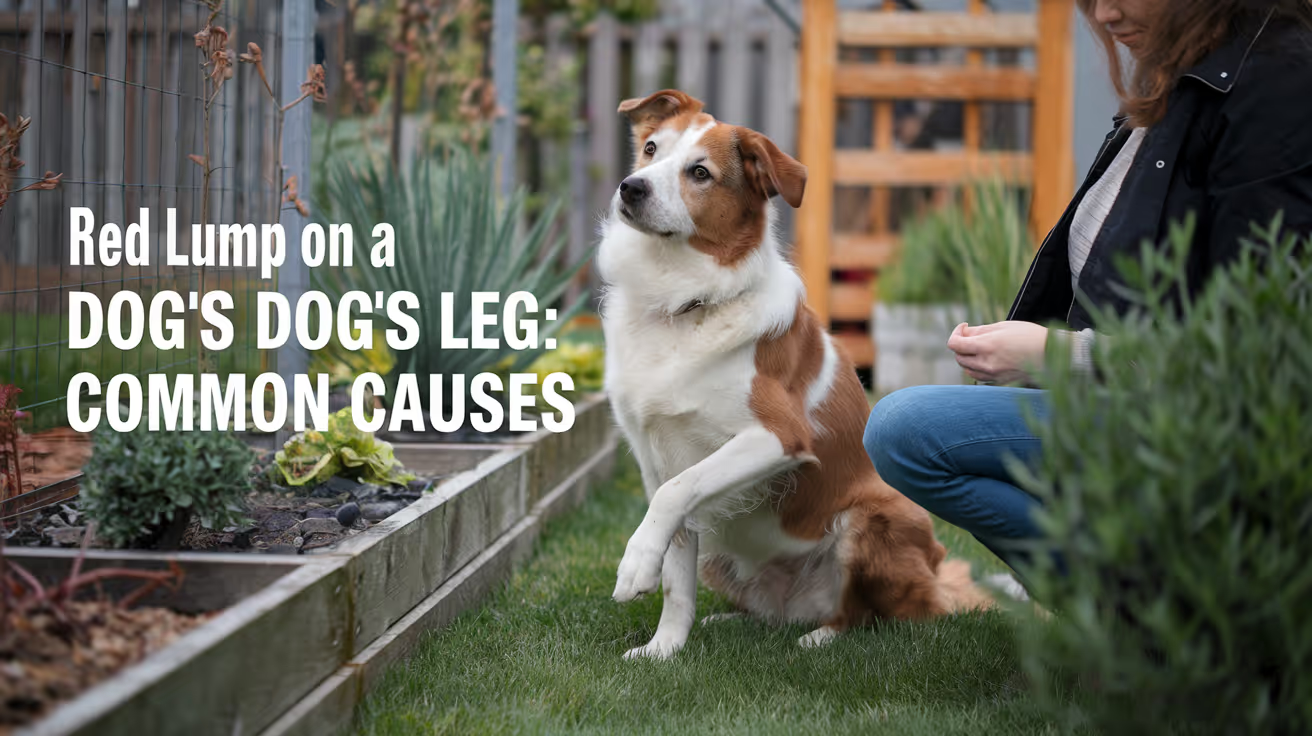
Red Lump on Dog's Leg: Common Causes Explained
Learn about common causes of a red lump on a dog's leg, symptoms, diagnosis, and treatment options to keep your pet healthy.
A red lump on a dog's leg is alarming to find, but the range of possible causes stretches from entirely harmless to requiring prompt surgery. The color alone does not tell you which one you are dealing with a bright red histiocytoma (benign, self-resolving) looks very similar to a low-grade mast cell tumor (potentially malignant). Only a vet examination and cell sampling provides a reliable answer.
This guide covers every common cause of red leg lumps in dogs, what distinguishes each one, and what the timeline to veterinary assessment should be.
Quick answer: Red leg lumps in dogs are most commonly histiocytomas (benign, self-resolving), abscesses (infected, warm, painful), or mast cell tumors (must always be tested). Any lump that grows rapidly, ulcerates, or persists over 4 weeks needs vet evaluation.
Key takeaways
- Histiocytomas are the most common red leg lump in young dogs: bright red, button-shaped, self-resolving within 2 to 3 months
- Mast cell tumors are the great imitators and the most common malignant skin tumor; always require testing
- Abscesses are infected pus pockets: warm, painful, often following a bite wound or puncture; always require veterinary treatment
- FNA (fine needle aspiration) is the standard first test for any unidentified leg lump; quick and usually definitive
- A lump that changes size rapidly is a mast cell tumor hallmark (histamine-driven) and needs urgent evaluation
- Most lumps found on routine vet checks are benign but cytology, not appearance, is the only reliable test
Why red lumps appear on a dog's leg specifically
The legs are among the most common sites for several specific tumor types and infections because:
- Legs have constant friction and impact from movement trauma creates entry points for bacteria and stresses existing skin
- Histiocytomas favor the head, ears, and limbs specifically (Merck Veterinary Manual)
- Mast cell tumors frequently occur on the limbs, particularly the upper thigh area
- Bite wounds and puncture injuries that cause abscesses are most common on the extremities
- Foreign body reactions (grass awns, splinters) typically affect feet and lower legs
Common causes of a red lump on a dog's leg
1. Histiocytoma
The most reassuring diagnosis for a red leg lump, particularly in a young dog. PetMD: "Sometimes referred to as button tumors in dogs, histiocytomas appear as single red bumps that are generally less than an inch wide. They most commonly grow on a dog's head, face, ears, or legs."
Key features:
- Bright red or pink, smooth, dome-shaped, hairless
- Usually under 2.5 cm (1 inch) wide
- Appears suddenly and grows quickly in the first few weeks then spontaneously regresses
- The dog is typically not bothered by it unless it becomes ulcerated from licking
Who gets them: primarily dogs under 3.5 years old. Merck: "English Bulldogs, Scottish Terriers, Greyhounds, Boxers, and Boston Terriers are most at risk." Labrador Retrievers, Staffordshire Terriers, and Dachshunds also have elevated incidence.
Why they resolve: VIN's Veterinary Partner explains the mechanism: "The histiocytoma is detected by the immune system, attacked and removed by T-lymphocytes. This process generates some inflammation and requires 2 to 3 months to complete."
Treatment: watchful waiting. The lesion should be monitored for 2 to 3 months. If it has not regressed, is growing, or the dog is bothering it, veterinary removal is appropriate.
The critical caveat: PetMD: "It is difficult to identify the type of skin mass simply by appearance, because mast cell tumors and histiocytomas may look similar. The only way to diagnose a skin mass in dogs is for a veterinarian to perform an FNA or a biopsy." Never assume a red lump is a histiocytoma without cytology.
2. Mast cell tumor (MCT)
The most important diagnosis to rule out for any new skin lump in a dog. Allan Veterinary Clinic: "Mast cell tumors are the most common form of skin cancer in dogs and are known among veterinarians as 'the great imitators' they can look like almost anything."
Key features:
- Highly variable appearance: firm or soft, raised or flat, ulcerated or smooth, red or skin-colored
- PetMD: "In some cases, mast cell tumors can also cause severe allergic (anaphylactic) reactions in dogs"
- The defining clinical feature: they change size. A lump that is visibly larger one week and smaller the next is strongly suggestive of MCT histamine release from mast cells causes local swelling
- Most common in middle-aged dogs; Boxers, Pugs, Boston Terriers at elevated risk
Where they appear: Merck notes that leg tumors "located near mucous membranes, feet, prepuce, or on the lower surface of the body are more likely to spread than mast cell tumors in other areas." Leg location therefore carries more prognostic significance than trunk location.
Diagnosis: fine needle aspiration mast cells have distinctive granular cytoplasm visible under microscopy. Staging (ultrasound, lymph node aspiration, blood work) follows for confirmed MCTs.
Treatment: surgical removal with wide margins; grade determines whether chemotherapy or radiation is needed.
For a broader guide on when cysts and tumors require surgical removal, see when red lumps need to be removed.
3. Abscess
An abscess is a pocket of pus formed when bacteria become walled off in tissue. On the leg, abscesses typically follow a bite wound, puncture injury, or embedded foreign object.
Allan Veterinary Clinic: "On the leg, abscesses can swell surprisingly quickly and become warm, tender, and visibly discolored. Unlike lipomas or cysts, abscesses are uncomfortable and always require veterinary treatment."
Key features:
- Warm, painful, fluctuant (soft and fluid-filled) swelling
- Red, discolored overlying skin
- Dog limps or guards the leg
- May rupture spontaneously and discharge pus
- Often follows a specific traumatic event (dog fight, outdoor activity)
Treatment: veterinary drainage, flushing, antibiotics, and pain management. Do not attempt to drain at home inadequate drainage leads to recurrence.
For the full abscess management guide including home care, see abscess as a cause of red lumps on the leg.
4. Infected or inflamed cyst
Sebaceous cysts and follicular cysts are normally benign and slow-growing. When they rupture or become infected, the overlying skin becomes red and the lump becomes warm and painful resembling an abscess.
Key features:
- History of a pre-existing lump at the site
- Sudden increase in redness and pain at a previously stable mass
- May discharge a thick, paste-like material
Treatment: veterinary assessment; antibiotics if infected; surgical removal if recurrent or growing.
5. Interdigital furunculosis
The reddish-purple swellings that form between the toes are technically a type of furuncle rather than a "lump on the leg," but owners frequently describe them as a red lump near the lower leg or paw.
Key features:
- Located in the webbing between toes
- Painful; dog licks obsessively
- May discharge blood or pus
- Driven by allergies or short-coat breed predisposition
6. Vaccine reaction / injection site sarcoma
A rare but important cause in dogs: a firm, growing lump at the site of a previous injection. Most vaccine-site lumps within 4 weeks of injection are benign inflammatory reactions. Lumps that are still present and growing 4 weeks post-injection, or that are larger than 2 cm, require biopsy.
Diagnostic triage: what to do based on what you see
When to call the vet same-day
- The lump has doubled in size within days
- It is ulcerated (open wound) or actively bleeding
- Your dog is limping or cannot use the affected leg
- The lump is hot and the dog seems systemically unwell (fever, not eating)
- You notice anaphylactic signs: facial swelling, difficulty breathing (rare MCT reaction)
For how benign and malignant diagnoses differ in terms of surgical recommendations, see whether a red lump is benign or malignant. For all the types of cysts and growths that can appear on a dog's leg, see cysts and tumors as causes of red lumps.
Frequently asked questions
My dog has a bright red lump on her leg that appeared overnight. Should I be worried?
A sudden red lump in a young dog is often a histiocytoma benign and self-resolving. However, mast cell tumors can also appear very suddenly. The only way to know which one you are dealing with is FNA cytology at a vet visit. Book an appointment within a week; same-day if the lump is growing rapidly, ulcerated, or the dog is lame.
Can a red lump on a dog's leg go away on its own?
Histiocytomas typically resolve completely within 2 to 3 months without treatment. Small infected cysts may resolve if the cyst ruptures and drains naturally, though antibiotic treatment is still prudent. Mast cell tumors and abscesses do not resolve without treatment. Never assume a lump will resolve without first confirming via FNA what type it is.
How do vets tell the difference between a histiocytoma and a mast cell tumor?
By fine needle aspiration (FNA). Histiocyte cells and mast cells look very different under a microscope. PetMD: "The only way to diagnose a skin mass in dogs is for a veterinarian to perform an FNA or a biopsy." Clinical appearance alone is not reliable even experienced veterinary dermatologists cannot reliably distinguish them without cytology.
Is a red lump on a dog's leg always cancer?
No. Most red lumps found on routine vet examinations are benign. Allan Veterinary Clinic: "The majority of lumps discovered during routine vet checks turn out to be benign." However, the only way to be confident is cytology not appearance or feel.
My dog's red leg lump keeps getting bigger and smaller. What does that mean?
This is the hallmark feature of mast cell tumors: histamine release from mast cells causes fluctuating local swelling. A lump that is noticeably different in size from one examination to the next larger with pressure or excitement, smaller at rest should be evaluated urgently as a potential MCT.
Can I squeeze or drain a red lump on my dog's leg at home?
No. Squeezing a cyst can rupture it internally, spreading inflammatory material into surrounding tissue and causing a severe reaction. Draining an abscess without proper technique leaves bacteria behind and leads to recurrence. Manipulating a mast cell tumor releases histamine and can trigger a local or systemic allergic reaction. All of these are better addressed with veterinary drainage and diagnosis.
Resources
- PetMD. Histiocytomas in Dogs. petmd.com
- PetMD. Mast Cell Tumor (Mastocytoma) in Dogs. petmd.com
- Merck Veterinary Manual. Tumors of the Skin in Dogs. merckvetmanual.com
- VIN Veterinary Partner. Histiocytoma is a Benign Skin Growth in Dogs. veterinarypartner.vin.com
- Allan Veterinary Clinic. Lump on Dog's Leg: Causes, Symptoms and When to Worry. allanveterinaryclinic.com

Types of Cysts and Tumors in Dogs
Explore the common types of cysts and tumors in dogs, their signs, diagnosis, and treatment options for better pet care.
Finding a lump on your dog is one of the most common reasons owners call their vet. Most lumps in dogs are benign but some are not, and it is not possible to reliably tell the difference by looking or feeling alone.
This guide covers every common type of cyst and tumor in dogs: what each one looks like, where it tends to appear, and which ones require prompt attention.
Quick answer: Dogs develop cysts (almost always benign) and tumors (benign or malignant). Common benign types include lipomas and sebaceous cysts. Mast cell tumors are the most common malignant skin tumor. All new lumps need vet assessment.
Key takeaways
- Cysts are almost always benign and consist of a sac filled with fluid, sebum, or cellular material
- Tumors can be benign or malignant; appearance and feel alone cannot reliably distinguish between them
- Lipomas are the most common benign tumor in dogs: soft, movable fatty lumps most often found in middle-aged to senior dogs
- Mast cell tumors are the most common malignant skin tumor in dogs, representing 11% of all canine skin cancers
- Fine needle aspiration (FNA) is the standard first diagnostic step for any unidentified lump it is quick, minimally invasive, and usually provides a definitive answer
- Any lump that grows rapidly, ulcerates, bleeds, or causes pain needs same-day veterinary evaluation
Cysts vs. tumors: the key distinction
A cyst is a sac-like structure with a defined wall, filled with liquid or semi-solid material. Dr. Buzby's ToeGrips explains the distinction clearly: cysts "are masses made up of a cavity that contains liquid or semi-solid material," while "tumors, whether benign or malignant, are comprised of solid tissue that forms from abnormal cell growth."
This matters for two reasons:
- Cysts are not cancerous and do not spread to other parts of the body
- Tumors vary widely a lipoma (benign fat tumor) behaves very differently from a mast cell tumor (potentially malignant)
The challenge: some malignant tumors feel soft and movable, while some benign cysts feel firm. Merck Veterinary Manual warns specifically about mast cell tumors: "These tumors vary greatly in size and rate of growth. They can mimic lipomas; therefore, visual signs alone cannot establish a diagnosis."
Common types of cysts in dogs
1. Sebaceous cysts
Formed when the opening of a sebaceous (oil) gland becomes blocked, trapping sebum inside. PetMD describes them as containing a thick material that releases "white, yellow, or brown" discharge when expressed.
- Appearance: raised bump, often with a whitish or bluish tint through the skin
- Location: anywhere on the body, but most common on the trunk, head, and limbs
- Size: usually small (under 1 cm) but can grow larger
- Behavior: slow-growing; may rupture and release pasty discharge; prone to secondary infection if ruptured
- Treatment: monitoring for small, stable cysts; surgical removal if infected, growing, or bothering the dog
- Important: Merck cautions against squeezing: "You should not attempt to remove the cysts by squeezing them because this can spread the cyst contents into the surrounding tissues."
2. Follicular cysts (epidermoid cysts)
Associated with hair follicles rather than sebaceous glands. PetMD: "Follicular cysts are large, benign bumps on the skin that grow up from the hair follicle. They may release a thick material that is white, yellow, or brown when you push on them."
- Appearance: firm, raised bump; contents are often dark, cheesy, or foul-smelling when expressed
- Location: anywhere, but legs and around the mouth are particularly common according to Bark & Whiskers
- Behavior: may become infected (folliculitis); can grow to several centimeters and become painful
- Treatment: monitoring if stable; surgical removal if growing, infected, or painful; will not regrow if fully removed
A specific subtype interdigital cysts forms between the toes. Dr. Buzby's ToeGrips explains: "These cysts develop between the toes and are often a consequence of allergies, obesity, or breed-related factors. The affected hair follicle becomes inflamed and may rupture."
3. True cysts (sweat gland cysts)
Form in the secretory lining of sweat glands, which continuously produces fluid the more fluid produced, the larger the cyst grows. True cysts are most common around the eyes and in the ear canals.
- Appearance: smooth, fluid-filled, usually bluish or translucent
- Location: eyelids, ear canals most commonly
- Behavior: slow-growing, almost always benign; can impair vision if near the eye
- Treatment: surgical removal or laser ablation if causing problems
4. Dermoid cysts
Congenital cysts that form when a piece of epidermis becomes trapped below the skin during fetal development. Merck notes they are "most commonly found in Boxers, Kerry Blue Terriers, and Rhodesian Ridgebacks. Most dermoid cysts are multiple and contain fully formed hair shafts."
- Appearance: firm, often contains hair
- Behavior: benign; can become infected
- Treatment: surgical removal is the definitive treatment
Common types of benign tumors in dogs
5. Lipoma (fatty tumor)
University of Illinois veterinary cytology department confirms: "Lipomas are a benign mesenchymal tumor and probably the most common benign tumor in dogs."
- Appearance: soft, round, movable under the skin; no overlying hair changes
- Location: trunk and upper limbs most common; can occur anywhere
- At-risk dogs: older and overweight dogs
- Behavior: slow-growing; most remain stable for years; do not spread or become malignant
- Treatment: monitoring is standard for most; surgical removal if the lipoma is in a location causing discomfort (over a joint, in the axilla, on the leg where it affects movement)
The exception is the infiltrative lipoma, which grows into surrounding muscle and fascia rather than displacing it. These require more aggressive surgical removal.
6. Histiocytoma
A benign skin tumor arising from immune (Langerhans) cells in the skin. PetMD describes them as tumors that "usually regress spontaneously over time without treatment."
- Appearance: small, round, firm, raised, often red ("button-like") on the surface; may ulcerate
- Location: most common on the head, ears, and limbs
- At-risk dogs: young dogs under 3 years; Boxers, Bulldogs, Dachshunds, Cocker Spaniels
- Behavior: hallmark feature is spontaneous regression within 1 to 3 months
- Treatment: monitoring most resolve without treatment; removal if the dog is bothering it or if it persists beyond 3 months
7. Skin tags (acrochordons)
Fleshy, pedunculated (on a stalk) growths that form where skin rubs together. Bark & Whiskers: "These are small, fleshy growths that often appear on areas where the skin rubs together, like the armpit or eyelids. They're usually harmless unless they get irritated."
- Treatment: none required unless causing irritation; simple surgical removal
8. Papillomas (warts)
Caused by the canine papillomavirus. Embrace Pet Insurance: "These are caused by a virus and are most often found in and around the mouth of young dogs."
- Appearance: cauliflower-like, pale, rough surface; clustered
- Location: mouth, lips, eyelids
- At-risk dogs: young dogs with immature immunity; immunosuppressed dogs
- Behavior: contagious between dogs; most resolve spontaneously within weeks to months
- Treatment: monitoring; antiviral treatment or surgical removal for persistent or symptomatic cases
Mast cell tumors: the most important malignant skin tumor
Mast cell tumors (MCTs) deserve special attention. The published consensus review in PMC confirms: "It is the most common malignant skin tumor in dogs, corresponding to 11% of skin cancer cases."
Why they are important:
- They are highly variable in appearance they can look like almost anything: a small firm nodule, a soft squishy mass, an ulcerated sore, or a wart
- They can change size rapidly (especially when stimulated by pressure or trauma), which is a characteristic feature called Darier's sign
- They release histamine and other chemicals, which can cause local redness and swelling
At-risk breeds: Merck Veterinary Manual identifies Boxers and Pugs (often multiple tumors), Rhodesian Ridgebacks, and Boston Terriers as especially prone.
High-risk locations: Merck: "Tumors located near mucous membranes, feet, prepuce, or on the lower surface of the body are more likely to spread than mast cell tumors in other areas."
Diagnosis: fine needle aspiration. Mast cells have a characteristic granular appearance under the microscope that is usually immediately identifiable.
Treatment: surgical removal with wide margins; grade determines whether additional treatment (chemotherapy, radiation) is needed.
For how to assess whether a lump should be removed, see how to tell which lumps need removal. For mast cell tumor removal cost specifically, see mast cell tumor as a common tumor type.
Other significant tumor types
Melanoma
Arises from pigment-producing cells. Bark & Whiskers notes that "some types can be aggressive." Oral melanomas (in the mouth) are significantly more aggressive than cutaneous (skin) melanomas. A dark, irregularly shaped growth on or around the mouth, on the nail bed, or on mucosal surfaces warrants prompt evaluation.
Perianal adenoma
PetMD: "Perianal adenomas are benign growths common in older, unneutered male dogs. They grow from oil glands near the anus but can also occur in similar glands along the abdomen, on the back, and near the tail." Neutering is both preventive and may cause regression of existing tumors.
How vets diagnose lumps: fine needle aspiration
FNA is the standard first step for any unidentified lump. A thin needle is inserted into the mass and cells are aspirated onto a slide for microscopic examination. University of Illinois veterinary cytology: this technique reliably distinguishes lipomas, cysts, mast cell tumors, and histiocytomas in most cases.
FNA is quick, minimally invasive, and can be done in a routine vet visit without anesthesia for most lumps. If FNA is inconclusive, a biopsy (removing a small tissue core) or surgical excision with histopathology provides a definitive diagnosis.
For when cysts and tumors require surgery based on diagnosis, see when cysts and tumors require surgery. For how red lumps on the leg relate to these growth types, see red lumps as a presenting sign of cysts or tumors.
When to call the vet immediately
Contact your vet the same day if a lump:
- Appeared suddenly and is growing fast
- Is ulcerated, bleeding, or has discharge
- Is warm and painful to the touch
- Changes size rapidly (getting larger then smaller mast cell feature)
- Is on a high-risk location: mouth, nail bed, foot pad, groin
- Causes your dog pain or changes their behavior
For cost context on tumor removal, see cost of removing tumors.
Frequently asked questions
Can I tell if a lump is cancerous by touching it?
No. Merck Veterinary Manual is explicit that mast cell tumors "can mimic lipomas; therefore, visual signs alone cannot establish a diagnosis." Soft, movable lumps can be malignant; firm, fixed lumps can be benign. Fine needle aspiration by a vet is the only reliable way to get an answer.
Should I wait and watch a new lump on my dog?
For lumps that are small, stable, and have been present without change for months, monitoring is reasonable. Any new lump should be evaluated by a vet within a few weeks of discovery not because every lump is dangerous, but because knowing what it is guides whether monitoring or action is appropriate.
How often do dogs get cancer?
Cancer is the leading cause of death in dogs over 10 years of age. However, many lumps found on dogs are benign. The probability of malignancy increases with age, rapid growth, ulceration, and location on or near mucous membranes.
What is fine needle aspiration and does it hurt?
FNA involves inserting a thin needle into the lump to collect a small sample of cells. Most dogs tolerate it without sedation and show little reaction. It takes a few seconds and provides very useful diagnostic information. It is much less invasive than a biopsy.
My dog has multiple lipomas. Is that a concern?
Multiple lipomas are common in older dogs, especially Labrador Retrievers and overweight dogs. Most are benign and can be monitored. Your vet will recommend FNA for any new or atypical lump in a dog with known lipomas to make sure a new growth is not a different tumor type that happens to look similar.
What is the difference between a cyst and an abscess?
Both are fluid-filled pockets but with different contents and causes. A cyst contains sebum, cellular debris, or glandular secretions and is usually not infected. An abscess contains pus the product of bacterial infection and is almost always painful, warm, and surrounded by inflamed tissue. Abscesses need antibiotic treatment; many cysts can simply be monitored.
Resources
- PetMD. Lumps, Bumps, and Cysts on Dogs. petmd.com
- Merck Veterinary Manual. Tumors of the Skin in Dogs. merckvetmanual.com
- Dr. Buzby's ToeGrips. Dog Cyst vs. Tumor: How Can You Tell? toegrips.com
- Embrace Pet Insurance. Dog Cyst vs Tumor: Understanding the Types. embracepetinsurance.com
- University of Illinois College of Veterinary Medicine. Cytology of Lumps and Bumps. vetmed.illinois.edu
Bed Sores on Dogs Causes Treatment and Prevention
Learn about bed sores on dogs, including causes, treatments, and prevention tips to keep your pet healthy and comfortable.
Bed sores in dogs also called pressure sores or decubitus ulcers develop when prolonged pressure on a bony area cuts off blood supply, causing the tissue to break down. They are the same condition as bedsores in hospitalized humans, and they are just as serious when they reach advanced stages.
The good news is that early-stage bed sores are very treatable at home. The bad news is that they can progress from a small red patch to a deep infected wound within days if not caught and addressed.
Quick answer: Bed sores form over bony prominences like elbows and hips when sustained pressure blocks blood flow. Most common in senior, large-breed, and immobile dogs. Early stages respond to soft bedding and repositioning; advanced stages need veterinary care.
Key takeaways
- Bed sores form over bony prominences: elbows, hips, hocks, stifles, and sides of the knees
- Four stages exist: from mild redness to deep infected wounds reaching muscle and bone
- Senior dogs, large breeds, and post-surgical dogs are at highest risk
- Stage 1 sores reverse with home management: soft bedding and repositioning every 2 to 4 hours
- Stage 3 and 4 sores need veterinary debridement and often systemic antibiotics
- Thick orthopedic foam bedding is the single most effective prevention measure for at-risk dogs
What causes bed sores in dogs?
Bed sores develop when the weight of a dog's body continuously presses a bony prominence against a hard surface. Walkin' Pets explains the mechanism: "Decubital ulcers form when repeated pressure on an affected area constricts the blood vessels, decreasing the area's blood supply and as the skin is deprived of oxygen, it begins to die."
Once the tissue starts to die, it creates a wound that bacteria readily colonize. This is why advanced bed sores are almost always infected.
The process requires two things to come together: sustained mechanical pressure and skin that is not being repositioned or protected. Any dog that lies in the same position for hours without shifting is at risk.
Additional factors that increase risk
Incontinent dogs: urine-soaked skin breaks down much faster under pressure. Walkin' Pets advises that "reducing skin moisture from urine is important to help prevent the bacterial growth and skin degradation that contribute to pressure sores."
Thin or underweight dogs: less muscle and fat over bony prominences means the bone contacts the surface with less cushioning.
Obese dogs: more body weight concentrates greater compressive force at each contact point.
Dogs on hard floors: concrete, hardwood, and tile dramatically increase the pressure at contact points compared to soft surfaces.
Which dogs get bed sores?
Dr. Buzby's ToeGrips identifies the most at-risk groups:
- Senior dogs: reduced muscle mass, reduced mobility, longer periods in one position
- Large and giant breed dogs: more body weight, greater force at bony contact points
- Post-surgical patients: strict rest requirements limit natural repositioning
- Paralyzed or paraplegic dogs: unable to shift position at all
- Dogs with arthritis: pain limits movement and encourages sustained resting in one position
- Short-coated breeds: less coat padding between skin and hard surfaces
DogCancer.com notes that bed sores can also be a concern for dogs in late-stage cancer, where weakness and pain significantly reduce their ability to reposition.
The 4 stages of bed sores
Recognizing the stage determines the treatment approach.
Stage 1: redness and intact skin
The skin over the bony prominence is red, warm, and may have some hair loss. The surface is not broken. This is the ideal intervention point.
What to do at home: add thick orthopedic padding under the affected area, increase repositioning to every 2 hours, and monitor the site twice daily. Most Stage 1 sores reverse completely with these measures.
Stage 2: shallow open wound
The skin has partially broken down. A shallow blister or open area appears. The surrounding tissue remains inflamed and warm.
WagWalking: "Stage 1 ulcers may improve with padding, regular repositioning of the dog, and a quality moisture-wicking dog bed. Vets may instruct pet parents to regularly apply moist dressings to open pressure sores."
What to do: contact your vet. Stage 2 requires wound cleaning, appropriate dressings, and assessment for infection. Antibiotics may be started if signs of infection are present.
Stage 3: full-thickness wound
The sore extends through the full skin thickness into subcutaneous tissue. VetMobile describes what you see: "The sore becomes deeper and it may extend into the underlying tissue, such as the muscle layer. Pus or discharge may be present. At this stage, the area is surrounded by dead or dying tissue."
What to do: veterinary care is required. Treatment involves debridement of dead tissue, wound culture, and systemic antibiotics based on culture results.
Stage 4: bone or muscle involvement
The wound extends to muscle, tendon, or bone. This is a serious and potentially life-threatening stage. Bacteria can enter the bloodstream from a Stage 4 wound, causing sepsis.
What to do: emergency veterinary care. Hospitalization, IV antibiotics, surgical debridement, and reconstructive surgery may be necessary.
Treatment by stage
Home wound care for Stage 1 and 2
For Stage 1 and early Stage 2 sores, clean the area daily with dilute chlorhexidine solution (not hydrogen peroxide, which damages healing tissue). Apply a non-adherent wound dressing and change it once or twice daily. Keep the area dry between dressing changes.
Puainta recommends: "Pressure Relief: Encourage the dog to change positions frequently. Soft Bedding: Provide cushioned surfaces to reduce pressure. Cleanliness: Keep the area clean and dry."
For incontinent dogs, clean and dry the skin after every urination. Use a waterproof mattress cover that can be washed daily. Sheepskin pads are effective at wicking moisture away from skin while providing cushioning.
For how bed sores relate to callus formation at the same pressure sites, see calluses from similar pressure points.
When to call the vet
Call your vet within 24 hours if:
- The wound is open, moist, or has any discharge
- The area is warm and the dog shows signs of pain when the area is touched
- The sore is growing despite home management
- Your dog is lethargic, off food, or running a fever
These signs suggest infection is establishing. Early antibiotic treatment is significantly more effective than treating advanced infection.
WagWalking notes: "Antibiotics may be necessary if the wound is infected or at risk of becoming infected. Antibiotics have minimal risks and a high success rate when used early on."
For how the progression of pressure necrosis connects to bed sore development, see pressure necrosis in severe bed sore cases.
Prevention
Orthopedic bedding
The most effective single intervention. Memory foam or high-density egg-crate foam distributes weight across a larger surface area, reducing peak pressure at bony contact points. Petful emphasizes that "you might be more likely to notice pressure sores in dogs if you have a large breed pup or a short-haired breed" both groups where bedding choice is critical.
The foam must not fully compress under the dog's full weight. Test by pressing firmly: if it bottoms out quickly, it is not thick enough. For large dogs, minimum 4 inches of high-density foam is recommended.
Repositioning schedule
Reposition immobile dogs every 2 to 4 hours, alternating which side bears weight. Walkin' Pets advises: "Try not to let the dog rest on the hip bone on one side for very long, reposition your pet every 2 to 3 hours."
If you are not home during the day, consider whether a pet sitter or midday check can provide repositioning support for a dog with high risk.
Daily inspection
Check every bony prominence every day. Run your hand along the elbows, hips, hocks, and knees. Hair loss is the first visible sign act at Stage 1, before any skin breakdown occurs.
Moisture management for incontinent dogs
Wet skin under pressure breaks down dramatically faster than dry skin. Change diapers and male wraps frequently. Use raised mesh beds for overnight rest in incontinent dogs urine drains through rather than pooling under the dog. Walkin' Pets recommends sheepskin pads specifically for their wicking properties.
For how swelling associated with bed sores can extend to the feet and lower legs, see swelling associated with pressure injuries.
Frequently asked questions
How do I know if my dog has a bed sore starting?
The first sign is a small patch of hair loss over a bony area, sometimes with mild redness and warmth. The skin is still intact. Run your hand over the elbows, hips, and hocks daily in at-risk dogs. Acting at this point before the skin opens is far easier than treating an open wound.
Can bed sores in dogs heal on their own?
Stage 1 sores can reverse with prompt management: improved bedding, repositioning, and keeping the area dry. Stage 2 and above rarely resolve without veterinary intervention. The wound environment actively promotes bacterial growth, which prevents natural healing without treatment.
How long does a bed sore take to heal in a dog?
Stage 1 sores managed early typically show improvement within 1 to 2 weeks with good home care. Stage 2 wounds typically heal in 3 to 6 weeks with consistent veterinary wound care. Stage 3 and 4 wounds may take months and may not fully close in all cases.
My senior dog keeps getting bed sores despite soft bedding. What else can I do?
Check whether the foam has compressed over time and needs replacing. Add protective wraps (elbow pads or hock wraps) over at-risk sites. Increase repositioning frequency to every 2 hours. Consult your vet about whether the dog's underlying mobility level has declined and whether additional pain management or physiotherapy could help. Nutritional support including protein and vitamin C promotes skin healing.
Are bed sores painful for dogs?
Stage 1 sores are usually not painful. Stage 2 onward becomes progressively more painful as the wound deepens and infection sets in. Dogs with painful bed sores may lick or bite at the area, avoid lying on that side, or show behavioral changes. Pain management from your vet is an important part of treatment from Stage 2 onward.
Can bed sores become life-threatening in dogs?
Yes. Stage 3 and 4 sores can allow bacteria to enter deeper tissues and the bloodstream, causing sepsis. A dog with an advanced bed sore that is also lethargic, not eating, or running a fever is potentially septic and needs emergency veterinary care the same day.
Resources
- Dr. Buzby's ToeGrips. Pressure Sores on Dogs: Treatment and Prevention. toegrips.com
- WagWalking. Pressure Sores in Dogs. wagwalking.com
- Walkin' Pets. Pressure Sores in Pets: Treatment and Prevention. walkinpets.com
- Petful. Pressure Sores on Dogs: What You Need to Know. petful.com
- DogCancer.com. Bed Sores on Dogs: Preventing and Treating Pressure Sores. dogcancer.com

Pros and Cons of Luxating Patella Surgery in Dogs
Explore the pros and cons of luxating patella surgery in dogs, including benefits, risks, recovery, and long-term outcomes.
Making a surgical decision for your dog is one of the harder things pet ownership asks of you. The stakes feel high, the information is complex, and the outcome is uncertain.
This guide gives you a clear, honest breakdown of what surgery for luxating patella genuinely offers and what it genuinely carries as risk, so you can make a decision based on the full picture rather than either the most optimistic or most alarming version of it.
The bottom line up front: For dogs with Grade 3 or 4 MPL, or Grade 2 with significant symptoms, the benefits of surgery substantially outweigh the risks for most dogs. For Grade 1 and mild Grade 2, conservative management is a reasonable path. The risks are real but manageable with a skilled surgeon and proper recovery. The biggest risk of surgery is usually lower than the long-term risk of leaving significant MPL untreated.
Key takeaways
- The primary benefit is structural correction: surgery fixes the cause, not just the symptoms.
- Arthritis risk is reduced but not eliminated by successful surgical correction.
- Complication rates range from 18 to 37% across published studies, most complications are minor.
- Overall success rate is approximately 90 to 93%, with "success" meaning acceptable or full return to function.
- Recurrence affects 5 to 21% of cases depending on grade; most recurrences are lower-grade.
- Recovery is 8 to 12 weeks of restricted activity: this is a genuine commitment for the owner.
- The cons of not treating are also real for higher-grade dogs: progressive arthritis, cruciate risk, declining quality of life.
The pros of luxating patella surgery
1. It fixes the structural problem
Conservative management manages symptoms. Surgery corrects anatomy. This is the central distinction.
Exercises, braces, and weight management reduce the mechanical load on the joint and build supporting muscle, but they don't change the shallow groove or misaligned bone that allows the kneecap to slip. Surgery does.
For Grade 3 and 4 dogs especially, this distinction determines whether the dog has a reasonable long-term quality of life. Conservative management cannot indefinitely hold back a Grade 3 joint from deteriorating.
2. Pain relief and improved mobility
The most immediately meaningful outcome for most owners: the dog stops skipping, stops limping, and begins using the leg normally again. For many dogs, the change from pre-surgery to 8 to 12 weeks post-surgery is dramatic.
Dogs that were reluctant to exercise, jump, or play often return to full normal activity levels. This is the outcome most owners describe when they reflect on the decision.
3. Reduced long-term arthritis risk
Every time the kneecap slips, it damages the cartilage lining the groove. Over time, this produces secondary arthritis that causes chronic, progressive pain independent of whether the kneecap is currently in position.
Surgical correction, by eliminating or substantially reducing luxation events, slows this cartilage damage. Dogs who have surgery before significant arthritis develops have meaningfully better long-term joint health than those who wait until secondary changes are established.
4. Reduced cruciate ligament risk
Long-standing MPL significantly increases the risk of cranial cruciate ligament (CCL) rupture. The altered mechanics from an unstable kneecap place abnormal stress on the cruciate ligament over time. CCL rupture is a separate, more serious injury requiring its own surgical repair.
Studies confirm that MPL and CCL disease coexist in approximately 25% of affected cases. Correcting the MPL earlier reduces the cumulative mechanical stress that contributes to this risk.
5. A one-time intervention rather than lifelong management
Successful surgery resolves the structural problem. Conservative management, by contrast, requires ongoing consistency in weight, exercise, and monitoring indefinitely. For owners who find this difficult to maintain, surgery may actually be the more practical long-term path.
The cons of luxating patella surgery
1. Complication rates are real and worth understanding
This is where honest information matters most.
Published complication rates for MPL surgery vary widely across studies:
- A 2019 UK study found complications in 37 of 100 surgeries in dogs under 20 kg
- A 2006 study found an 18% complication rate
- Other studies report complication rates between 22% and 51%
The variation reflects differences in how "complication" is defined (minor vs. major vs. catastrophic), the grades included, the surgical technique used, and follow-up duration.
Most complications are minor: seroma formation, suture reaction, temporary lameness, minor implant issues. Major complications (requiring revision surgery) occur in approximately 8 to 25% of cases depending on grade. Catastrophic complications (permanent impairment or limb loss) are rare.
The Dogs Naturally review notes that many veterinarians don't proactively discuss complication rates with owners. Ask specifically: "What complication rate do you see in your practice for this procedure at this grade?"
2. Recurrence
The kneecap can slip again after surgery. Recurrence rates range from 5 to 21%, with Grade 4 carrying the highest recurrence risk. Most recurrences produce a lower-grade luxation than the original, and many don't require revision surgery.
For more on what recurrence rates look like by grade, see surgery success rates to weigh.
3. Cost
MPL surgery costs $1,000 to $5,000 per knee. Bilateral cases roughly double this. Post-operative care adds $500 to $2,000 more. This is a significant financial commitment, and the cost alone is a legitimate factor in the decision.
For the full cost breakdown and financial planning options, see cost as a factor in the decision.
4. Recovery demands significant owner commitment
8 to 12 weeks of strict activity restriction is genuinely demanding. For the first two weeks, your dog needs crate rest, leash-only bathroom trips, and an E-collar at all times. The gradual return to activity over the following 6 to 10 weeks requires consistency, daily exercise management, and at least 2 to 3 vet rechecks.
Dogs don't understand why they can't run. Keeping an energetic dog at rest for two weeks requires real effort and logistics. This isn't a reason to avoid surgery if surgery is indicated, but it's a genuine consideration for timing.
5. Surgery doesn't guarantee zero arthritis
Correcting the structural problem slows arthritis development. It doesn't always prevent it entirely, particularly in dogs who already had secondary joint changes at the time of surgery, or those with higher-grade luxation.
Long-term joint care (weight management, joint-supportive supplements, appropriate exercise) remains appropriate even after successful surgery.
What the research actually says
The overall picture from published evidence:
- Overall success rate: Approximately 90 to 93% across grades. Total.vet (2025) cites the JAVMA Grade 4 study finding 93% overall success.
- Complication rate: 18 to 51% across studies, with most complications minor and most dogs achieving acceptable function regardless.
- Recurrence: 5 to 21% depending on grade and technique.
- Owner satisfaction: The ACVS reports over 90% of owners satisfied with outcomes following MPL surgery.
The complication statistics and the success statistics come from the same studies. A complication doesn't automatically mean a failure. Many dogs have minor complications and still achieve full recovery.
The cons of not operating for dogs who need surgery
An honest pros and cons article has to include the risks of the alternative for dogs who genuinely need surgery.
For Grade 3 and 4 dogs managed conservatively:
- Progressive arthritis develops as repeated luxation continues to damage cartilage. This arthritis is permanent and cumulative.
- Cruciate ligament risk rises with each passing month of altered joint mechanics.
- Muscle atrophy progresses as the dog uses the leg less.
- Surgical complexity increases as bone deformity worsens and secondary changes accumulate. Surgery done earlier is simpler than surgery done after years of damage.
- Quality of life declines as pain and limitation worsen.
For higher-grade dogs, the question isn't "surgery vs. no consequences." It's "surgery now vs. surgery later under more difficult conditions, or progressive decline."
For a detailed comparison of non-surgical alternatives, see non-surgical alternatives to consider.
For the comparison between bracing and surgery specifically, see braces vs surgery comparison.
The grade 2 decision: where the pros and cons are most balanced
For Grade 3 and 4, the pros of surgery clearly outweigh the cons for most dogs. For Grade 1, the cons of surgery outweigh the pros for most dogs. Grade 2 is where the balance is genuinely uncertain and individual.
For the specific decision framework for Grade 2 cases, see grade 2 specific decision guide.
Questions that help you weigh the decision for your specific dog
- What is my dog's grade, and what are the X-ray findings?
- How frequent and severe are the current symptoms?
- How likely is progression if we wait?
- What is the surgeon's personal complication rate for this procedure at this grade?
- What does recovery realistically involve given my work schedule and living situation?
- What happens to my dog's joint over the next 2 to 3 years if we manage conservatively?
- Is the cost manageable, and what financing options exist?
These questions won't give you a universal answer, but they'll give you the information specific to your dog's case.
For the full surgical decision framework, see when surgery is actually necessary.
For what post-surgery recovery involves, see what post-surgery recovery involves.
Frequently asked questions
Should I get a second opinion before deciding?
For any significant orthopedic surgery, a second opinion is entirely reasonable, particularly if the recommendation is for surgery and you have doubts, or if the grade is 2 and the recommendation surprises you. A board-certified veterinary surgeon's opinion (DACVS) is particularly valuable for complex cases.
Is surgery safer in younger dogs?
Generally yes. Younger dogs have less secondary joint damage at the time of surgery, heal faster, and adapt more readily. Older dogs carry higher anesthetic risk and may have more established arthritis, though surgery remains appropriate and beneficial for many older dogs with significant MPL.
How do I find a surgeon experienced in MPL correction?
Board-certified veterinary surgeons (DACVS) specialize in orthopedics and typically perform MPL surgery regularly. You can search the ACVS's online directory by location. General practitioners with MPL experience are also appropriate for straightforward Grade 2 cases in small breeds; ask about their specific experience with the procedure before proceeding.
The pros and cons of luxating patella surgery don't resolve into a clean answer. They resolve into: this is appropriate for this dog at this grade with these symptoms and this owner's capacity to support recovery. That's the real question. Get the grade, get the X-rays, understand the complication rates, and make the decision based on your dog's actual situation rather than a general rule.
Resources
- American College of Veterinary Surgeons. Patellar Luxations. acvs.org
- Total.vet. Luxating Patella in Dogs: Painful but Treatable. total.vet
- Bestie Paws Hospital. Luxating Patella Surgery for Dogs: Pros, Cons, and Expert Advice. bestiepaws.com
Can Dogs Get a Staph Infection?
Learn if dogs can get staph infections, their symptoms, causes, treatment, and prevention tips to keep your pet healthy.
Yes, dogs get staph infections, and they're among the most common skin problems seen in veterinary practice.
The bacteria responsible, primarily Staphylococcus pseudintermedius, are already present on healthy dogs. They live on the skin, in the mouth, nose, and gut without causing problems in most cases. Infection happens when the skin barrier breaks down or the immune system weakens, giving bacteria the opportunity to move from normal colonizer to active pathogen.
Quick answer: Yes, dogs get staph infections. Staphylococcus pseudintermedius is the most common cause in dogs and is found on the skin of roughly 50% of healthy dogs as normal flora. Infection typically occurs when the skin is damaged or immunity is compromised. Staph infections in dogs present as skin lesions, pustules, redness, and hair loss, and are treated with topical or systemic antibiotics depending on severity.
Key takeaways
- S. pseudintermedius is the primary staph species in dogs, not S. aureus (which is more common in humans).
- Staph is normal skin flora in about 50% of dogs and only causes infection under specific conditions.
- Skin barrier disruption is the most common trigger: allergies, wounds, and scratching allow bacteria in.
- Pyoderma (staph skin infection) is the most common form dogs develop, accounting for 92% of canine dermatitis.
- MRSP is the resistant form to watch for, particularly in dogs with prior antibiotic exposure.
- Transmission to humans is possible but uncommon with basic hygiene precautions.
Which staph bacteria affects dogs?
The primary staph species in dogs is Staphylococcus pseudintermedius. This is distinct from Staphylococcus aureus, which causes most human staph infections.
MedVet explains: "S. pseudintermedius is a bacterium commonly found on the skin, mouth, nose, or in the gastrointestinal tract of approximately 50% of dogs and cats. It typically causes no problems at all but can cause opportunistic infections."
The key word is opportunistic. This bacterium waits. When conditions shift in its favor, it becomes a pathogen.
Staphylococcus aureus can also affect dogs, though it's less common than in humans. Dogs can also harbor MRSA (methicillin-resistant S. aureus), but veterinarians are more concerned about MRSP (methicillin-resistant S. pseudintermedius) because it's more prevalent in canine infections.
For the full overview of staph infections in dogs including all affected body systems, see full overview of staph infections in dogs.
For the full breakdown of what staph aureus specifically is in dogs, see what staph aureus is specifically.
What triggers a staph infection in dogs?
Staph doesn't establish infection in healthy skin. Something has to compromise the barrier first.
Skin barrier disruption
The most common triggers are anything that breaks the skin or weakens its protective function:
- Allergies: atopic dermatitis causes chronic scratching and licking, creating micro-abrasions where bacteria enter
- Wounds and abrasions: even small cuts allow surface bacteria to penetrate
- Parasites: fleas and mites damage skin integrity and cause scratching-related trauma
- Moisture: skin folds and areas that stay wet create ideal bacterial growth conditions
Immune system compromise
Dogs with conditions that impair immune function are at higher risk:
- Hypothyroidism: reduces immune response and alters skin cell turnover
- Cushing's disease (hyperadrenocorticism): excess cortisol suppresses immune defenses
- Diabetes mellitus: impairs white blood cell function and healing
- Long-term corticosteroid use: similar effect to Cushing's, suppressing local immunity
Age and breed factors
Puppies have immature immune systems and are more susceptible to staph. Elderly dogs have declining immune function. Breeds with skin folds (Bulldogs, Shar-Peis, Basset Hounds) are at higher baseline risk because the warm, moist fold environment supports bacterial overgrowth.
What does a staph infection look like in dogs?
Staph infection in dogs most commonly presents as pyoderma, literally "pus in the skin." The clinical appearance varies by depth and severity.
Surface signs (superficial pyoderma):
- Small round pustules (pimple-like lesions)
- Redness and inflammation around hair follicles
- Circular crusted lesions with a clearing center ("epidermal collarettes")
- Hair loss in affected patches
- Itching and scratching
Deep infection signs:
- Nodules or boils beneath the skin surface
- Discharge from draining tracts
- Significant swelling and pain on palpation
- Fever and lethargy in severe cases
The AKC notes: "Dogs with allergies or diseases that weaken the immune system can develop infections in their skin, ears, and respiratory, reproductive, or urinary tracts."
Staph infections can affect the ears (otitis), urinary tract, and surgical wounds, not just the skin surface.
For how early-stage staph infections look and how they progress, see early signs of staph infection in dogs.
Diagnosis
Your vet will use one or more of these methods to confirm a staph infection:
Skin cytology: tape pressed to the skin collects surface cells and bacteria, then stained and examined under a microscope. Provides rapid results and can identify bacteria and inflammatory cells.
Culture and sensitivity: a swab from the lesion is cultured in a laboratory to identify the specific species and determine which antibiotics it is and isn't resistant to. Takes 5 to 7 days but is essential when MRSP is suspected or initial treatment fails.
Skin biopsy: used in severe or unusual presentations to examine deeper tissue changes.
Treatment
Treatment depends on whether the infection is superficial or deep and whether antibiotic resistance is a concern.
Topical treatment
Superficial staph infections often respond well to topical antibacterial therapy alone:
- Antibacterial shampoos: chlorhexidine-based or benzoyl peroxide shampoos used 2 to 3 times weekly
- Topical sprays or wipes: chlorhexidine applied directly to lesion areas
- Topical antibiotics: mupirocin or fusidic acid for localized infections
Topical treatment is preferred where possible because it avoids systemic antibiotic exposure and reduces resistance pressure.
Systemic antibiotics
More extensive or deep infections require oral antibiotics. The choice must be guided by culture and sensitivity results, particularly when MRSP is possible. Commonly used antibiotics (when sensitivity allows) include:
- Cefalexin (cephalexin)
- Clindamycin
- Doxycycline
- Trimethoprim-sulfamethoxazole
Course length: typically 3 to 6 weeks for superficial infections, longer for deep pyoderma or recurrent cases.
Addressing the underlying cause
Treating the staph infection without addressing what enabled it leads to recurrence. If allergies are the root cause, allergy management must be part of the plan. If hypothyroidism is present, thyroid supplementation is needed alongside antibiotic treatment.
Can staph spread from dogs to humans or other dogs?
Transmission is possible but uncommon with basic precautions. The AKC notes: "Staphylococcus pseudintermedius can be transferred from other dogs and even the people they live with. However, transmission between dogs and humans is uncommon."
Published case reports confirm that S. pseudintermedius can cause skin and soft tissue infections in humans who have close contact with infected dogs, typically through wound exposure or direct skin contact.
Practical hygiene during your dog's staph infection:
- Wash hands after handling the dog or their bedding
- Avoid direct contact between the dog's lesions and your broken skin or mucous membranes
- Wear gloves when applying topical treatments
- Limit face-to-face contact until the infection is resolved
For whether staph spreads between dogs in a household, see whether staph spreads between dogs. For how dogs contract staph infections specifically, see how dogs contract staph infections.
Frequently asked questions
My dog has a small patch of hair loss with some redness. Could that be staph?
Possibly. Circular patches of hair loss with redness and sometimes crusting are classic signs of superficial pyoderma. They can also be caused by ringworm or other conditions. A vet visit and skin cytology will clarify the cause. Don't treat with leftover human antibiotics: appropriate diagnosis matters, and human antibiotic formulations are not appropriate for dogs.
How long does staph treatment take in dogs?
Superficial staph pyoderma typically clears with 3 to 6 weeks of appropriate treatment. Deep pyoderma may require 6 to 12 weeks. Treatment should continue for at least one week beyond complete clinical resolution to prevent relapse. Stopping early is a common cause of recurrence.
Is MRSP the same as MRSA?
No. MRSP is methicillin-resistant Staphylococcus pseudintermedius, the dog-specific staph strain. MRSA is methicillin-resistant Staphylococcus aureus, more associated with humans. Both are drug-resistant staph bacteria, but they're different species. MRSP is the more clinically significant form in dogs because S. pseudintermedius is already the dominant staph species in canine infections.
Staph infections in dogs are common, treatable, and often preventable through management of the conditions that enable them. The bacteria are already there in most dogs. The question is always what allowed them to shift from harmless resident to active infection.
Resources
- MedVet. Methicillin-Resistant Staphylococcus Pseudintermedius (MRSP) in Dogs and Cats. medvet.com
- AKC. Staph Infections in Dogs: Signs, Symptoms, Treatments. akc.org
- Paw Origins. Understanding Staph Infections in Dogs. paworigins.com
Red Lump on Dog's Leg: Common Causes Explained
Learn about common causes of a red lump on a dog's leg, symptoms, diagnosis, and treatment options to keep your pet healthy.
A red lump on a dog's leg is alarming to find, but the range of possible causes stretches from entirely harmless to requiring prompt surgery. The color alone does not tell you which one you are dealing with a bright red histiocytoma (benign, self-resolving) looks very similar to a low-grade mast cell tumor (potentially malignant). Only a vet examination and cell sampling provides a reliable answer.
This guide covers every common cause of red leg lumps in dogs, what distinguishes each one, and what the timeline to veterinary assessment should be.
Quick answer: Red leg lumps in dogs are most commonly histiocytomas (benign, self-resolving), abscesses (infected, warm, painful), or mast cell tumors (must always be tested). Any lump that grows rapidly, ulcerates, or persists over 4 weeks needs vet evaluation.
Key takeaways
- Histiocytomas are the most common red leg lump in young dogs: bright red, button-shaped, self-resolving within 2 to 3 months
- Mast cell tumors are the great imitators and the most common malignant skin tumor; always require testing
- Abscesses are infected pus pockets: warm, painful, often following a bite wound or puncture; always require veterinary treatment
- FNA (fine needle aspiration) is the standard first test for any unidentified leg lump; quick and usually definitive
- A lump that changes size rapidly is a mast cell tumor hallmark (histamine-driven) and needs urgent evaluation
- Most lumps found on routine vet checks are benign but cytology, not appearance, is the only reliable test
Why red lumps appear on a dog's leg specifically
The legs are among the most common sites for several specific tumor types and infections because:
- Legs have constant friction and impact from movement trauma creates entry points for bacteria and stresses existing skin
- Histiocytomas favor the head, ears, and limbs specifically (Merck Veterinary Manual)
- Mast cell tumors frequently occur on the limbs, particularly the upper thigh area
- Bite wounds and puncture injuries that cause abscesses are most common on the extremities
- Foreign body reactions (grass awns, splinters) typically affect feet and lower legs
Common causes of a red lump on a dog's leg
1. Histiocytoma
The most reassuring diagnosis for a red leg lump, particularly in a young dog. PetMD: "Sometimes referred to as button tumors in dogs, histiocytomas appear as single red bumps that are generally less than an inch wide. They most commonly grow on a dog's head, face, ears, or legs."
Key features:
- Bright red or pink, smooth, dome-shaped, hairless
- Usually under 2.5 cm (1 inch) wide
- Appears suddenly and grows quickly in the first few weeks then spontaneously regresses
- The dog is typically not bothered by it unless it becomes ulcerated from licking
Who gets them: primarily dogs under 3.5 years old. Merck: "English Bulldogs, Scottish Terriers, Greyhounds, Boxers, and Boston Terriers are most at risk." Labrador Retrievers, Staffordshire Terriers, and Dachshunds also have elevated incidence.
Why they resolve: VIN's Veterinary Partner explains the mechanism: "The histiocytoma is detected by the immune system, attacked and removed by T-lymphocytes. This process generates some inflammation and requires 2 to 3 months to complete."
Treatment: watchful waiting. The lesion should be monitored for 2 to 3 months. If it has not regressed, is growing, or the dog is bothering it, veterinary removal is appropriate.
The critical caveat: PetMD: "It is difficult to identify the type of skin mass simply by appearance, because mast cell tumors and histiocytomas may look similar. The only way to diagnose a skin mass in dogs is for a veterinarian to perform an FNA or a biopsy." Never assume a red lump is a histiocytoma without cytology.
2. Mast cell tumor (MCT)
The most important diagnosis to rule out for any new skin lump in a dog. Allan Veterinary Clinic: "Mast cell tumors are the most common form of skin cancer in dogs and are known among veterinarians as 'the great imitators' they can look like almost anything."
Key features:
- Highly variable appearance: firm or soft, raised or flat, ulcerated or smooth, red or skin-colored
- PetMD: "In some cases, mast cell tumors can also cause severe allergic (anaphylactic) reactions in dogs"
- The defining clinical feature: they change size. A lump that is visibly larger one week and smaller the next is strongly suggestive of MCT histamine release from mast cells causes local swelling
- Most common in middle-aged dogs; Boxers, Pugs, Boston Terriers at elevated risk
Where they appear: Merck notes that leg tumors "located near mucous membranes, feet, prepuce, or on the lower surface of the body are more likely to spread than mast cell tumors in other areas." Leg location therefore carries more prognostic significance than trunk location.
Diagnosis: fine needle aspiration mast cells have distinctive granular cytoplasm visible under microscopy. Staging (ultrasound, lymph node aspiration, blood work) follows for confirmed MCTs.
Treatment: surgical removal with wide margins; grade determines whether chemotherapy or radiation is needed.
For a broader guide on when cysts and tumors require surgical removal, see when red lumps need to be removed.
3. Abscess
An abscess is a pocket of pus formed when bacteria become walled off in tissue. On the leg, abscesses typically follow a bite wound, puncture injury, or embedded foreign object.
Allan Veterinary Clinic: "On the leg, abscesses can swell surprisingly quickly and become warm, tender, and visibly discolored. Unlike lipomas or cysts, abscesses are uncomfortable and always require veterinary treatment."
Key features:
- Warm, painful, fluctuant (soft and fluid-filled) swelling
- Red, discolored overlying skin
- Dog limps or guards the leg
- May rupture spontaneously and discharge pus
- Often follows a specific traumatic event (dog fight, outdoor activity)
Treatment: veterinary drainage, flushing, antibiotics, and pain management. Do not attempt to drain at home inadequate drainage leads to recurrence.
For the full abscess management guide including home care, see abscess as a cause of red lumps on the leg.
4. Infected or inflamed cyst
Sebaceous cysts and follicular cysts are normally benign and slow-growing. When they rupture or become infected, the overlying skin becomes red and the lump becomes warm and painful resembling an abscess.
Key features:
- History of a pre-existing lump at the site
- Sudden increase in redness and pain at a previously stable mass
- May discharge a thick, paste-like material
Treatment: veterinary assessment; antibiotics if infected; surgical removal if recurrent or growing.
5. Interdigital furunculosis
The reddish-purple swellings that form between the toes are technically a type of furuncle rather than a "lump on the leg," but owners frequently describe them as a red lump near the lower leg or paw.
Key features:
- Located in the webbing between toes
- Painful; dog licks obsessively
- May discharge blood or pus
- Driven by allergies or short-coat breed predisposition
6. Vaccine reaction / injection site sarcoma
A rare but important cause in dogs: a firm, growing lump at the site of a previous injection. Most vaccine-site lumps within 4 weeks of injection are benign inflammatory reactions. Lumps that are still present and growing 4 weeks post-injection, or that are larger than 2 cm, require biopsy.
Diagnostic triage: what to do based on what you see
When to call the vet same-day
- The lump has doubled in size within days
- It is ulcerated (open wound) or actively bleeding
- Your dog is limping or cannot use the affected leg
- The lump is hot and the dog seems systemically unwell (fever, not eating)
- You notice anaphylactic signs: facial swelling, difficulty breathing (rare MCT reaction)
For how benign and malignant diagnoses differ in terms of surgical recommendations, see whether a red lump is benign or malignant. For all the types of cysts and growths that can appear on a dog's leg, see cysts and tumors as causes of red lumps.
Frequently asked questions
My dog has a bright red lump on her leg that appeared overnight. Should I be worried?
A sudden red lump in a young dog is often a histiocytoma benign and self-resolving. However, mast cell tumors can also appear very suddenly. The only way to know which one you are dealing with is FNA cytology at a vet visit. Book an appointment within a week; same-day if the lump is growing rapidly, ulcerated, or the dog is lame.
Can a red lump on a dog's leg go away on its own?
Histiocytomas typically resolve completely within 2 to 3 months without treatment. Small infected cysts may resolve if the cyst ruptures and drains naturally, though antibiotic treatment is still prudent. Mast cell tumors and abscesses do not resolve without treatment. Never assume a lump will resolve without first confirming via FNA what type it is.
How do vets tell the difference between a histiocytoma and a mast cell tumor?
By fine needle aspiration (FNA). Histiocyte cells and mast cells look very different under a microscope. PetMD: "The only way to diagnose a skin mass in dogs is for a veterinarian to perform an FNA or a biopsy." Clinical appearance alone is not reliable even experienced veterinary dermatologists cannot reliably distinguish them without cytology.
Is a red lump on a dog's leg always cancer?
No. Most red lumps found on routine vet examinations are benign. Allan Veterinary Clinic: "The majority of lumps discovered during routine vet checks turn out to be benign." However, the only way to be confident is cytology not appearance or feel.
My dog's red leg lump keeps getting bigger and smaller. What does that mean?
This is the hallmark feature of mast cell tumors: histamine release from mast cells causes fluctuating local swelling. A lump that is noticeably different in size from one examination to the next larger with pressure or excitement, smaller at rest should be evaluated urgently as a potential MCT.
Can I squeeze or drain a red lump on my dog's leg at home?
No. Squeezing a cyst can rupture it internally, spreading inflammatory material into surrounding tissue and causing a severe reaction. Draining an abscess without proper technique leaves bacteria behind and leads to recurrence. Manipulating a mast cell tumor releases histamine and can trigger a local or systemic allergic reaction. All of these are better addressed with veterinary drainage and diagnosis.
Resources
- PetMD. Histiocytomas in Dogs. petmd.com
- PetMD. Mast Cell Tumor (Mastocytoma) in Dogs. petmd.com
- Merck Veterinary Manual. Tumors of the Skin in Dogs. merckvetmanual.com
- VIN Veterinary Partner. Histiocytoma is a Benign Skin Growth in Dogs. veterinarypartner.vin.com
- Allan Veterinary Clinic. Lump on Dog's Leg: Causes, Symptoms and When to Worry. allanveterinaryclinic.com

Acrochordons and Plaque Lesions in Dogs
Learn about acrochordons and plaque lesions in dogs, their causes, symptoms, diagnosis, and treatment options for pet owners.
Acrochordons and plaque lesions are common skin conditions in dogs that can cause concern for pet owners. These growths often appear as small, soft bumps or raised plaques on the skin and can vary in size and number. Understanding what these lesions are and how they affect your dog is important for timely diagnosis and treatment.
This article explains the causes, signs, diagnosis, and treatment options for acrochordons and plaque lesions in dogs. You will learn how to recognize these skin changes and when to seek veterinary care to keep your dog comfortable and healthy.
What are acrochordons and plaque lesions in dogs?
Acrochordons, also known as skin tags, are benign skin growths that appear as small, soft, and often pedunculated bumps on a dog's skin. Plaque lesions are raised, flat-topped areas of thickened skin that may result from chronic irritation or inflammation.
Both types of lesions are usually non-cancerous but can sometimes indicate underlying health issues. Recognizing these lesions early helps in managing them effectively.
- Acrochordon characteristics: These are soft, flesh-colored or slightly pigmented skin tags that hang from the skin by a narrow stalk and are usually painless.
- Plaque lesion features: Plaques are flat or slightly raised, thickened areas of skin that can be scaly or crusty, often caused by chronic skin irritation.
- Common locations: Both lesions commonly appear on areas like the neck, chest, abdomen, and near the limbs where skin folds or friction occur.
- Benign nature: Most acrochordons and plaques are harmless but should be monitored for changes in size, color, or ulceration.
Understanding these lesions helps pet owners distinguish between harmless growths and those needing veterinary attention.
What causes acrochordons and plaque lesions in dogs?
The exact causes of acrochordons and plaque lesions in dogs are not always clear but often relate to skin irritation, genetics, or underlying diseases. Several factors can contribute to their development.
Knowing these causes can help in preventing or managing the lesions effectively.
- Chronic skin irritation: Repeated rubbing or friction on certain skin areas can lead to the formation of acrochordons and plaques over time.
- Genetic predisposition: Some dog breeds may be more prone to developing these skin lesions due to inherited skin characteristics.
- Hormonal influences: Hormonal imbalances, especially in older dogs, can promote the growth of skin tags and plaques.
- Underlying skin diseases: Conditions like allergies, infections, or autoimmune disorders can cause skin changes that result in plaque formation.
Identifying and addressing these causes is key to managing your dog's skin health and preventing lesion recurrence.
How can you recognize acrochordons and plaque lesions in your dog?
Recognizing these skin lesions early allows for prompt veterinary evaluation. Owners should regularly check their dog's skin for any new or changing growths.
Knowing the typical appearance and symptoms of acrochordons and plaques helps in distinguishing them from other skin problems.
- Appearance of acrochordons: Look for small, soft, skin-colored or slightly pigmented bumps that hang from the skin by a narrow stalk.
- Appearance of plaques: Identify raised, flat-topped, thickened skin areas that may be scaly, crusty, or discolored.
- Symptoms to watch: Most lesions are painless, but watch for itching, bleeding, or ulceration which require veterinary attention.
- Changes over time: Monitor any rapid growth, color changes, or ulceration as these may indicate complications.
Regular skin checks and noting any changes help in early detection and treatment of these lesions.
How are acrochordons and plaque lesions diagnosed in dogs?
Diagnosis involves a veterinary examination and may include additional tests to rule out other skin conditions or malignancies. Accurate diagnosis ensures appropriate treatment.
Your veterinarian will assess the lesions and may recommend diagnostic procedures based on the lesion's appearance and your dog's health history.
- Physical examination: The vet will visually and physically examine the lesions and surrounding skin for signs of infection or malignancy.
- Skin scrapings or cytology: Samples from the lesion may be taken to check for infections or abnormal cells under a microscope.
- Biopsy and histopathology: A small tissue sample may be surgically removed and analyzed to confirm the lesion type and rule out cancer.
- Blood tests: These may be done to check for underlying systemic diseases that could contribute to skin changes.
Proper diagnosis helps differentiate benign lesions from more serious conditions and guides treatment decisions.
What treatment options are available for acrochordons and plaque lesions in dogs?
Treatment depends on the lesion type, size, location, and whether it causes discomfort or complications. Many lesions do not require treatment unless problematic.
Your veterinarian will recommend the best approach based on your dog's specific condition and overall health.
- Surgical removal: Small acrochordons or plaques causing irritation can be removed surgically under local or general anesthesia.
- Cryotherapy: Freezing the lesion with liquid nitrogen can be effective for some skin tags and plaques.
- Topical treatments: Medicated creams or ointments may reduce inflammation or secondary infections associated with plaques.
- Monitoring without treatment: If lesions are benign and not causing issues, regular monitoring may be advised instead of immediate removal.
Choosing the right treatment minimizes discomfort and prevents lesion recurrence or complications.
How can you prevent acrochordons and plaque lesions in your dog?
While not all lesions can be prevented, certain measures can reduce the risk or severity of acrochordons and plaque lesions. Good skin care and health maintenance are essential.
Implementing preventive strategies helps keep your dog's skin healthy and reduces the chance of lesion development.
- Maintain skin hygiene: Regular grooming and cleaning reduce dirt and bacteria that can irritate the skin and cause lesions.
- Manage allergies: Controlling environmental or food allergies prevents chronic skin inflammation that leads to plaques.
- Reduce friction: Avoid tight collars or harnesses that cause rubbing and skin irritation in vulnerable areas.
- Regular veterinary check-ups: Routine exams help detect early skin changes and address underlying health issues promptly.
Consistent care and attention to your dog's skin condition support overall health and comfort.
What are the potential complications of untreated acrochordons and plaque lesions?
Although often benign, untreated lesions can sometimes lead to complications such as infection, discomfort, or rarely, malignant transformation. Understanding these risks helps in deciding when to seek treatment.
Monitoring and timely veterinary care reduce the chance of complications and improve your dog's quality of life.
- Secondary infections: Lesions that ulcerate or are scratched can become infected, causing pain and requiring antibiotics.
- Discomfort and itching: Large or irritated lesions may cause itching or discomfort, affecting your dog's behavior and wellbeing.
- Interference with movement: Lesions near joints or skin folds can restrict movement or cause irritation during activity.
- Rare malignancy: Though uncommon, some lesions may develop into cancer, making early diagnosis critical.
Prompt veterinary evaluation and treatment prevent these complications and ensure your dog remains healthy and comfortable.
Conclusion
Acrochordons and plaque lesions in dogs are common skin growths that are usually benign but require attention to avoid complications. Recognizing these lesions early and understanding their causes help you provide the best care for your dog.
Regular skin checks, good hygiene, and timely veterinary visits are essential to manage these conditions effectively. If you notice any new or changing skin lesions on your dog, consult your veterinarian for proper diagnosis and treatment to keep your pet healthy and comfortable.
What causes acrochordons in dogs?
Acrochordons in dogs are caused mainly by chronic skin irritation, genetics, and hormonal changes, often appearing in areas with skin folds or friction.
Are plaque lesions in dogs dangerous?
Most plaque lesions are benign but can cause discomfort or infection if untreated; rare cases may require veterinary evaluation to rule out malignancy.
How are skin tags removed from dogs?
Skin tags can be removed surgically or by cryotherapy under veterinary care, especially if they cause irritation or grow in size.
Can acrochordons turn into cancer in dogs?
Acrochordons are usually benign and rarely become cancerous, but any rapid changes in size or appearance should be checked by a vet.
How often should I check my dog’s skin for lesions?
It is recommended to check your dog's skin monthly for any new or changing lesions and consult a vet if you notice abnormalities.
Do Puppies Calm Down After Being Spayed?
Learn how spaying affects puppy behavior and whether puppies calm down after the procedure.
Spaying a puppy and expecting her to calm down afterward is one of the most common expectations owners bring to the vet. Sometimes it is accurate. Often it is not quite right.
Puppies behave the way they do for several reasons: genetics, breed characteristics, developmental stage, exercise needs, and yes, hormones. Spaying addresses only the hormonal piece.
Here is what the evidence actually says about whether spaying calms puppies down, when it applies, and when it does not.
Quick answer: Spaying can reduce hormone-driven behaviors in female puppies, but most puppy energy is not hormone-driven. The wild, excitable behavior typical of young dogs is largely developmental and will naturally settle as the puppy matures, with or without surgery. Spaying eliminates heat cycle behaviors but does not reprogram a puppy's underlying energy level or temperament.
Key takeaways
- Most puppy energy is developmental, not hormonal: High activity in puppies reflects youth and brain development, not reproductive hormones.
- Heat cycle behaviors are eliminated by spaying: Restlessness, roaming, and urine marking during heat stop permanently after spaying.
- Natural maturation also produces calming: Puppies typically settle between 18 months and 3 years regardless of spay status.
- Timing of spaying affects long-term behavioral outcomes: Research suggests very early spaying may increase fearfulness in some dogs.
- Training and exercise calm puppies more reliably than surgery: These remain the primary tools for managing puppy behavior.
- Full post-spay hormonal adjustment takes two to three months: Not days.
Why puppies are energetic in the first place
Before connecting spaying to calming, it is worth understanding why puppies behave the way they do.
Puppy behavior is driven by several overlapping factors:
- Developmental stage: Puppies are neurologically immature. Their brains are still forming connections, their impulse control is limited, and they are driven to explore, play, and interact constantly.
- Breed genetics: A Border Collie puppy's drive, a Labrador's enthusiasm, a Jack Russell's intensity: these are genetic. They are not hormonal.
- Exercise and stimulation needs: Puppies that are not adequately exercised and mentally engaged redirect that energy into chaos.
- Learning and socialization: Puppies are in a constant state of learning. Without clear guidance, they default to whatever feels interesting.
- Hormonal influences: A relatively small proportion of puppy behavior is directly driven by reproductive hormones, and this increases as the puppy approaches sexual maturity.
Spaying addresses only item 5. Items 1 through 4 are untouched by surgery.
What spaying actually removes in a female puppy
Spaying removes the ovaries, which are the primary source of estrogen and progesterone. The effects are specific.
What spaying eliminates:
- Heat cycles, which in female dogs typically begin around 5 to 6 months of age in small breeds and later in large breeds
- The behavioral disruption of heat: restlessness, urine marking to attract males, roaming, vocalization
- False pregnancy cycles if the puppy would have been prone to these
- Cyclical mood changes linked to the hormonal fluctuations of estrus
What spaying does not eliminate:
- Breed-driven energy and drive
- Developmental excitability and poor impulse control that comes with youth
- Learned behaviors from the puppy's environment and training history
- Anxiety or fearfulness that has non-hormonal causes
The natural calming process: maturation
Here is a piece of the puzzle that often gets overlooked in the conversation about spaying and calming.
Puppies naturally become calmer as they mature.
Most dogs reach a noticeably more settled behavioral baseline between 18 months and 3 years of age. This happens regardless of spay status. The neurological development that improves impulse control, the reduction of developmental chaos, and the establishment of routines all contribute to this natural calming process.
Many owners who spay a puppy and then notice she is calmer six months later attribute the change to the surgery. In many cases, maturation deserves significant credit.
This is not to dismiss the real effects of spaying. It is to provide accurate context so that owners do not overestimate surgery's role or underestimate the contribution of time, training, and maturation.
What research says about puppies and spaying
The behavioral research on early spaying and puppies is worth understanding before making timing decisions.
Established findings:
- Spaying before the first heat cycle eliminates heat-related behaviors and reduces mammary cancer risk significantly.
- Behavioral problems were reduced or eliminated in the majority of spayed females in studies, but this applies primarily to hormone-driven behaviors.
More cautionary findings:
- Multiple studies have found that dogs spayed at a very young age, particularly before six months, show higher rates of fearfulness and anxiety than dogs spayed later.
- A study of Vizslas found that the younger the dog at the time of spaying, the earlier the mean age of onset of a behavioral disorder.
- Research using the C-BARQ assessment tool found increased fearfulness and touch sensitivity in spayed dogs compared to intact females.
These findings do not mean spaying causes behavioral problems in all puppies. They mean that very early spaying carries a different behavioral risk profile than spaying after maturity, and this is worth discussing with your vet when deciding on timing.
For the broader picture of full overview of behavior changes after spaying, including how the research applies to different ages and sexes, that guide provides the complete context.
Breed differences: why some puppies stay energetic after spaying
Breed temperament and genetic drive are not hormonal. Surgery does not change them.
A working Border Collie will need two hours of physical and mental exercise daily after spaying, just as she did before. An Australian Shepherd's herding instinct will remain intact. A Jack Russell Terrier's prey drive and intensity will not be reduced by the removal of her ovaries.
High-drive breeds are that way because of generations of selective breeding for those traits. Those traits sit in genetics, not in the reproductive system.
What this means practically:
If you have a high-energy breed puppy and are hoping spaying will reduce her energy to more manageable levels, realign those expectations before surgery. The energy level will remain. What changes is the absence of heat cycles and their associated disruption.
The timeline: when do puppies settle after spaying?
Two separate timelines operate here, and distinguishing them is important.
Post-spay hormonal adjustment:
- Days 1 to 14: Recovery from surgery. Any behavioral changes reflect pain and anesthesia.
- Weeks 2 to 6: Estrogen and progesterone levels declining.
- Months 2 to 3: Hormonal stabilization complete.
Developmental maturation:
- 6 to 12 months: Peak puppy chaos in most breeds.
- 12 to 18 months: Gradual improvement in impulse control and ability to settle.
- 18 months to 3 years: Most dogs reach a noticeably more settled behavioral baseline.
The calming that owners observe after spaying a puppy is often a combination of both timelines working together. The hormonal adjustment contributes. Maturation contributes. Exercise and training contribute. It is rarely attributable to surgery alone.
For the developmental nuances specific to younger dogs, the guide on calming effects in adult dogs covers the broader behavioral picture across different life stages.
What actually calms a puppy down
Whether or not your puppy is spayed, these are the most reliable interventions for managing puppy behavior:
1. Adequate physical exercise
A puppy that has genuinely burned physical energy is a calmer puppy at rest. Exercise needs vary by breed but most puppies are under-exercised relative to their needs.
2. Mental stimulation
Puzzle feeders, sniff walks, training sessions, and enrichment activities tire puppies in a way that physical exercise alone does not. Mental fatigue produces genuine calm.
3. Sleep
Puppies need significantly more sleep than adult dogs, often 16 to 18 hours per day. Over-tired puppies become dysregulated and difficult. Enforced rest periods reduce chaos.
4. Consistent training
Teaching a puppy to settle on a mat, to wait before doors, to sit before meals: these habits build impulse control that transfers across contexts. Training is the most durable path to a calm puppy.
5. Routine
Predictable daily schedules reduce ambient anxiety and help puppies know what to expect, which supports more settled behavior.
Spaying can contribute by removing the hormonal disruption of heat cycles. But it is most effective as one part of this picture, not as a standalone solution.
Frequently asked questions
Will my puppy calm down after being spayed?
She may become calmer in specific ways: heat cycle behaviors will be eliminated, and the cyclical hormonal disruption of estrus will stop. Whether she becomes generally calmer depends on what is driving her behavior. Developmental energy and breed-specific drive are not affected by spaying. For the best age to spay a puppy and how timing affects both health and behavioral outcomes, that guide covers the evidence-based timing recommendations in detail.
My puppy is three months old and incredibly wild. Should I spay her now to calm her down?
Spaying a puppy that young is unlikely to calm her down because the energy she is displaying is developmental, not hormonal. Female puppies typically do not experience their first heat until 5 to 6 months of age at the earliest. Spaying before that will not eliminate hormonal behavior because it has not yet started. What will help is exercise, training, mental stimulation, and sleep.
How long after spaying will my puppy start to calm down?
If the calming effect is going to occur, behavioral changes related to hormone reduction appear over two to six weeks and stabilize by two to three months. Any calming that happens faster than this is likely related to recovery rest and routine, not hormonal adjustment.
My puppy was spayed and she is just as hyper as before. Why?
Because spaying removes the hormonal layer of behavior, not the developmental and breed-driven layers. If her energy and excitability are not heat-driven, spaying was never going to address them. Training, exercise, and maturation are the tools for this type of puppy behavior.
What should I expect during my puppy's recovery from spaying?
The 10 to 14 day recovery period requires activity restriction, E-collar use, and daily incision monitoring. For a complete day-by-day guide on what to expect during puppy recovery, including how puppy recovery specifically differs from adult dog recovery, that guide covers every element of the post-surgical window.
Puppies are not energetic because of estrogen. They are energetic because they are puppies. Spaying addresses the hormonal layer of behavior, which for a young dog has barely had time to develop before surgery. The wild, chaotic, wonderful energy of a puppy is developmental. It settles with time, training, exercise, and maturation. Spaying contributes by preventing heat cycles and the disruption they bring. The rest of the work is yours.
Resources
The following sources were used as reference and background for this article:
- American Kennel Club. How Will Spaying Change My Dog? anasazivet.com
- Stanley Coren, Psychology Today. Are There Behavior Changes When Dogs Are Spayed or Neutered? psychologytoday.com
- Rebarkable. Do Puppies Calm Down After Being Spayed? rebarkable.com
- American Veterinary Medical Association (AVMA). Spaying and Neutering. avma.org
- PubMed. Changes in the behavior of dogs after castration. pubmed.ncbi.nlm.nih.gov

Can a Staph Infection Kill a Dog?
Learn if a staph infection can kill a dog, its symptoms, treatment options, and prevention tips to keep your pet safe and healthy.
It's a fair question, and the honest answer is: yes, but rarely, and almost never when the infection is caught and treated early.
Most staph infections in dogs are confined to the skin, respond to appropriate treatment, and resolve without lasting consequences. The infections that become life-threatening share a common thread: they went untreated, spread deeper than the skin, or occurred in dogs whose immune systems couldn't mount an adequate defense.
Quick answer: Staph infections can be fatal in dogs, but this outcome is uncommon and typically requires multiple compounding factors: untreated or undertreated infection, bacterial entry into the bloodstream causing sepsis, and a compromised immune system. Skin-confined staph infections, including MRSP, are rarely life-threatening when correctly diagnosed and treated. The danger escalates significantly when treatment is delayed or the infection spreads systemically.
Key takeaways
- Fatal outcomes from staph are rare and almost always involve delayed treatment or systemic spread.
- Sepsis is the primary fatal mechanism: bacteria in the bloodstream trigger organ failure.
- MRSP is harder to treat but not inherently more deadly than antibiotic-susceptible staph.
- Immunocompromised dogs carry the highest fatal risk: Cushing's, diabetes, and FIV equivalents matter.
- Early-stage staph is almost never life-threatening: the window for safe treatment is wide.
- Emergency signs requiring immediate vet contact: fever, lethargy, collapse, or rapidly spreading infection.
When is staph infection dangerous?
The vast majority of canine staph infections are pyoderma: skin infections that are uncomfortable but not dangerous. They itch, cause hair loss and lesions, and require veterinary treatment, but they stay on or near the surface.
Danger escalates in specific, definable scenarios:
Systemic spread and sepsis
If bacteria move from the skin into deeper tissue and eventually the bloodstream, sepsis develops. Sepsis is a systemic inflammatory response to circulating bacteria that can cause organ failure and death if not treated aggressively with IV fluids, appropriate antibiotics, and supportive care.
The AKC confirms: "Severe infection can lead to sepsis and fatalities, and you don't want your pet to spread the infection to other dogs."
The pathway to sepsis from a skin staph infection requires either an unusually aggressive strain, a very large bacterial burden reaching a wound close to blood vessels, or an immune system unable to contain the spread. This is not the typical trajectory of a surface pyoderma.
Deep tissue infection
Deep pyoderma, cellulitis (infection spreading through the subcutaneous tissue), or infection of internal organs creates a more dangerous picture than superficial skin disease. These infections require systemic antibiotics, sometimes hospitalization, and more aggressive intervention.
Untreated infection progression
All clear Vet Dermatology states: "Skin infections are not usually life-threatening unless they are extremely severe and get into the bloodstream, which is very rare." But "very rare" refers to infections that receive appropriate care. Infections that go entirely untreated can escalate through the tissue layers over time.
The role of antibiotic resistance
MRSP (methicillin-resistant Staphylococcus pseudintermedius) is the resistant form of the most common canine staph bacterium. It raises legitimate concern, but the resistance refers to antibiotic treatment difficulty, not biological aggression.
All Clear Vet Dermatology is direct on this point: "MRSP is not any more deadly than regular dog staph. It's just harder to kill with antibiotics. If we can find the right antibiotic to use, there is just as good a chance we'll resolve their infection as with regular staph."
The clinical danger with MRSP is:
- Standard first-line antibiotics don't work
- Culture and sensitivity testing is required before effective treatment can begin
- Treatment takes longer and may require less commonly used antibiotics
- Delayed effective treatment gives the infection more time to progress
MRSP can cause serious outcomes if undertreated, not because the bacteria is inherently more virulent, but because treatment errors are more likely when resistance isn't identified.
For more on how resistance affects treatment options and prognosis, see resistant staph as the most dangerous form.
Which dogs face the highest risk?
Immunocompromised dogs
Dogs whose immune systems are suppressed or dysfunctional are at significantly greater risk of staph progressing to dangerous levels:
- Cushing's disease: excess cortisol chronically suppresses immune response
- Diabetes mellitus: impairs white blood cell function and wound healing
- Long-term corticosteroid use: mimics the immunosuppressive effect of Cushing's
- Dogs on chemotherapy: deliberately immunosuppressed for cancer treatment
- Elderly dogs: declining immune competence with age
In these dogs, what would be a contained skin infection in a healthy dog can spread more aggressively because the immune response that normally limits bacterial invasion is absent or impaired.
Dogs with delayed or absent treatment
Healthy dogs with untreated staph infections don't progress to sepsis on a predictable timeline, but chronic untreated deep infections increase the probability over time. The sooner appropriate treatment begins, the lower the risk at every stage.
Dogs where the initial infection is mismanaged
Using the wrong antibiotic (for example, a beta-lactam against MRSP) doesn't just fail to treat the infection: it can select for more resistant bacteria while giving the infection more time to deepen. Culture and sensitivity testing before committing to an antibiotic course is particularly important in dogs with prior antibiotic exposure or in regions where MRSP prevalence is high.
For what catching staph early looks like in practice, see catching staph early to prevent severe outcomes.
Emergency signs: when to act immediately
These signs indicate that a staph infection may be progressing beyond skin disease and requires same-day emergency veterinary attention:
- High fever (temperature above 39.5°C / 103.1°F)
- Extreme lethargy: the dog won't stand or is unresponsive
- Collapse or weakness in the legs
- Rapidly spreading redness, warmth, or swelling beyond the original wound margins
- Pus or discharge tracking along limbs or spreading across body surfaces
- Refusal to eat or drink for more than 24 hours combined with visible illness
A dog that is sick, not just uncomfortable, is the key distinction. Surface pyoderma causes itching and discomfort. Systemic infection causes illness.
Context: why the answer is "rarely"
It's worth reframing the question. Deaths from canine staph infection in otherwise healthy dogs receiving appropriate treatment are genuinely uncommon in veterinary practice. The infections that progress fatally typically share one or more of:
- Severe immune compromise making containment impossible
- Significant treatment delay allowing deep progression
- Inadequate treatment (wrong drug, wrong dose, or wrong duration)
- A concurrent serious illness reducing the dog's ability to fight infection
For dogs without these risk factors, staph is a serious problem that warrants prompt veterinary attention, not a death sentence.
For the overview of all staph infections in dogs including less severe presentations, see overview of staph infections in dogs. For whether your dog's specific situation suggests high risk, see whether dogs are susceptible to staph. For MRSA and MRSP as the potentially more serious resistant forms, see MRSA and MRSP as potentially fatal staph variants.
Frequently asked questions
My dog has a staph infection. Should I be worried they might die?
For a healthy dog receiving appropriate veterinary treatment, the risk of a fatal outcome from staph is very low. Skin staph infections treated correctly carry an excellent prognosis. Focus on starting the right treatment promptly, following through for the full course, and monitoring for signs of spread. Worry about outcomes is appropriate if your dog is immunocompromised, if treatment isn't working, or if your dog appears systemically ill rather than just uncomfortable.
Is MRSP more likely to kill a dog than regular staph?
Not inherently. MRSP is harder to treat because standard antibiotics don't work against it, but its virulence (capacity to cause harm) is comparable to antibiotic-susceptible staph. The danger with MRSP is treatment delay and treatment errors, not the bacteria itself being more aggressive. Culture and sensitivity testing resolves this by identifying which antibiotics actually work.
My dog was diagnosed with staph. How quickly should I start treatment?
As soon as possible. There's no advantage to waiting with a confirmed staph infection. The sooner appropriate treatment begins, the lower the infection burden the immune system must manage and the smaller the window for the infection to progress. Same-week treatment for a new diagnosis is appropriate.
Staph infections kill dogs when the conditions align against them: wrong treatment, resistant bacteria, compromised immunity, and time. Remove any of those factors, and the risk drops substantially. For most dogs with staph, the path forward is straightforward: correct diagnosis, right treatment, full course, and monitoring for signs of spread.
Resources
- AKC. Staph Infections in Dogs: What You Need to Know. akc.org
- All Clear Vet Dermatology. Resistant Staph Infections in Pets. allclearvetderm.com
- Paws & Claws Animal Hospital. MRSA in Dogs. pawsandclawsanimalhospital.com

Can Dogs Get Keloid Scars?
Learn if dogs can develop keloid scars, how to identify them, treatment options, and prevention tips for your pet's skin health.
Owners frequently notice a raised, thickened area near a healed wound or surgical incision and worry about keloid scarring. The answer is nuanced: true keloid scars as seen in humans are extremely rare in dogs, but dogs do form abnormal raised scars and scar-like growths that need veterinary attention for a different reason.
Understanding the distinction matters because some raised scars in dogs are not scars at all they are tumors that can mimic scar tissue.
Quick answer: True keloid scars are extremely rare in dogs. Dogs most commonly form hypertrophic scars (raised, within wound boundary). Any growing raised growth at a scar site needs vet evaluation; some are fibromas or fibrosarcomas, not true scars.
Key takeaways
- True keloid scars are extremely rare in dogs: very few cases documented in veterinary literature
- Dogs most commonly form hypertrophic scars: raised, firm scars that stay within the wound boundary
- Dog skin heals differently from human skin: collagen remodeling differences make keloid formation far less likely
- A raised growth near a scar site is not always a scar: granulomas, fibromas, and fibrosarcomas can mimic scar tissue
- Intralesional corticosteroids are used to treat hypertrophic scars in dogs when they are uncomfortable or growing
- Any growing raised growth at a wound or incision site warrants veterinary evaluation
What is a keloid scar?
In humans, keloid scars are an abnormal healing response where collagen production continues far beyond the wound boundary. Cuteness explains: "A keloid scar, also called a hypertrophic scar, is a thick, raised overgrowth of collagen tissue. They are often shiny and firm to the touch and may have a flesh-colored or dark brown pigment."
More precisely, veterinary and human dermatology literature distinguishes two types of abnormal scarring:
Hypertrophic scars: raised, firm, often red or pink scars that remain within the original wound boundary. They may be uncomfortable but do not invade surrounding tissue. They can improve spontaneously over time.
Keloid scars: raised scars that grow beyond the original wound boundary, extending into surrounding normal tissue. They do not regress spontaneously and tend to recur after removal. Far more common in humans than in dogs.
PetsVetCheck: "Keloids, which are rarer in dogs, are a more extreme form of scar tissue formation where the scar tissue extends beyond the boundaries of the original wound."
Why true keloids are rare in dogs
Dog skin heals through a fundamentally different biological process than human skin. SustainableVet notes: "Dog skin has different collagen remodeling, reducing the chance of keloid formation."
The key differences:
- Collagen organization: dog skin produces and organizes collagen in ways that are less prone to the dysregulated overproduction seen in human keloids
- Wound contraction: dogs rely more heavily on wound contraction (the skin literally pulling together) as a primary healing mechanism, rather than the collagen proliferation that dominates in humans
- Immune response: the inflammatory cascade that drives keloid formation in susceptible humans appears to play a less prominent role in canine wound healing
The Veterinary Dermatology journal (Avallone et al., 2011) published one of the few documented cases of hypertrophic scarring in a dog, noting that the histological findings were similar to hypertrophic scars in humans, and concluding: "Even if uncommon, hypertrophic scar should be included among the differential diagnoses of spindle cell tumours in dogs."
What dogs actually develop: the normal scar process
When a dog's skin is injured or sutured after surgery, the healing process follows predictable stages:
Days 1 to 5 (inflammatory phase): redness, swelling, warmth at the wound site. The body sends inflammatory cells to the area and begins collagen production.
Days 5 to 21 (proliferative phase): new collagen is deposited and the wound edges are pulled together. A slightly raised, pink scar forms.
Weeks 3 onward (remodeling phase): collagen fibers are reorganized and the scar gradually flattens, softens, and fades. This process continues for months.
Dial A Vet: "It's normal for a dog's surgical incision site to appear slightly raised or bumpy during the healing process. The skin contracts as it heals, which can create a little bumpiness."
Most post-surgical or post-wound scars in dogs follow this normal course. A slightly raised, firm scar 2 to 6 weeks after surgery is not a keloid it is normal healing.
When a raised scar needs veterinary attention
Not every raised growth near a wound is a healing scar. Cuteness identifies an important concern: "Keloid scars can also be potentially malignant (cancerous) tumors. Keloidal scarring can indicate tumors, known as keloidal fibromas or fibrosarcomas, that require surgical removal and monitoring."
Call your vet if a scar or raised growth at a wound site:
- Is still growing after 6 to 8 weeks (normal scars plateau and begin to flatten)
- Is growing beyond the original wound boundary into surrounding normal tissue
- Becomes painful or causes the dog to scratch, bite, or lick at it
- Changes surface appearance becomes ulcerated, bleeds, or develops a different texture
- Feels different from surrounding tissue (harder, rubbery, or attached to underlying structures)
- Was preceded by injection at that site (injection-site sarcomas are an important consideration at previous vaccination or injection sites)
For how raised lumps at wound or scar sites compare to cysts and tumors, see keloids vs other skin growths.
Diagnosis
When a raised growth at a wound site needs investigation, a vet will:
Fine needle aspiration (FNA): a sample of cells from the lesion is examined under a microscope. This distinguishes scar tissue from tumor cells in most cases.
Biopsy: if FNA is inconclusive or the growth has atypical features, a tissue core biopsy or surgical excision with histopathology provides a definitive diagnosis.
The Avallone et al. (2011) case in Veterinary Dermatology illustrates this: a dog presented with a raised growth that was histologically confirmed as a hypertrophic scar. On initial presentation, the differential diagnosis included spindle cell tumors a reminder that scar-like growths require pathological confirmation before assuming benignity.
Treatment options for abnormal canine scars
Monitoring
For hypertrophic scars that are not growing, not painful, and are showing signs of flattening over time, watchful waiting is appropriate. Most normal and hypertrophic scars in dogs improve without intervention over 3 to 12 months.
Intralesional corticosteroid injection
The Avallone et al. (2011) case documented successful treatment of a canine hypertrophic scar with intralesional methylprednisolone acetate. The lesion regressed within 10 days of injection, though it recurred after self-trauma, highlighting that preventing licking and scratching is a critical component of scar management.
Corticosteroids reduce collagen production and inflammatory activity in the scar, allowing it to soften and flatten.
Surgical removal
If a growth is confirmed as a scar-related fibroma or is causing significant discomfort, surgical excision is appropriate. Cuteness: "Keloidal fibromas or fibrosarcomas require surgical removal and monitoring." For true fibrosarcomas (malignant), wider margins and oncological follow-up are needed.
Laser therapy and topical treatments
PetsVetCheck notes that "treatments including laser therapy, special creams, and in some cases surgical procedures" are available to reduce scar appearance. These are adjuncts to primary treatment rather than first-line options.
Nutritional support
PetsVetCheck: "A diet rich in vitamins, minerals, and omega-3 fatty acids can promote wound healing and potentially reduce scar tissue formation." Omega-3 fatty acids (found in fish oil) are anti-inflammatory and may support healthier collagen remodeling during wound healing.
For how keloid-like growths on the legs appear alongside other types of lumps that may need removal, see whether keloid scars need removal. For the range of raised lumps that appear on dogs that can be mistaken for scars, see keloid scars as a cause of lumps.
Preventing poor wound healing and scar formation
- Treat wounds promptly: wounds that become infected or heal slowly are more likely to develop abnormal scar tissue
- Prevent self-trauma: E-collar use after surgery prevents licking that disrupts healing and may drive hypertrophic scar formation
- Follow post-surgical care instructions: proper wound cleaning, dressing changes, and activity restriction support smooth healing
- Nutrition: adequate protein intake supports collagen quality during wound healing
Frequently asked questions
My dog had surgery and the incision looks raised and bumpy. Is this a keloid?
Almost certainly not. A raised, slightly bumpy incision at 1 to 6 weeks post-surgery is normal healing. The skin contracts during repair, creating a firm ridge. This should progressively flatten over the following weeks and months. If the ridge continues to grow after 6 to 8 weeks or extends beyond the original incision line, contact your vet for assessment.
Can a keloid scar in a dog become cancerous?
True keloid scars themselves are not cancerous. However, some raised growths at wound sites that owners identify as keloids are actually fibromas or fibrosarcomas tumors that arise from fibroblast cells and can resemble scar tissue. Fibrosarcomas are malignant. This is why any growing, unusual, or persistent raised growth at a wound site should be evaluated by FNA or biopsy rather than assumed to be a benign scar.
Is there anything I can apply to my dog's scar to help it heal?
Vitamin E oil is sometimes suggested by owners, but evidence for its efficacy is mixed. Petroleum-based products (plain Vaseline) keep wound surfaces moist and may improve the cosmetic outcome of small scars. Do not apply any product to a wound that has not fully closed. For any raised, abnormal, or growing scar, consult a vet before applying anything some products can cause contact dermatitis or interfere with diagnosis.
Do certain dog breeds scar more than others?
Breed predisposition to abnormal scarring in dogs is not well characterized in veterinary literature, unlike in humans where dark-skinned individuals have higher keloid rates. The Avallone case was in a mixed-breed dog. Some large breed dogs (Great Danes are mentioned in some NF literature) may have different wound healing characteristics, but breed-specific keloid predisposition in dogs remains undocumented.
How long does it take for a dog's scar to fully heal?
The visible scar typically stops changing significantly by 3 to 6 months after the original wound, though remodeling continues for up to 12 months. Scars over joints or areas of high movement may take longer to mature. During this time, the scar should progressively flatten, soften, and fade from pink or red to white or skin-colored.
My dog keeps licking at a healed scar. Is that a problem?
Yes. Chronic licking at a scar causes repeated mechanical trauma that can drive abnormal collagen deposition and hypertrophic scar formation. The Avallone et al. case documented a recurrence specifically linked to "severe self-trauma." An E-collar should be used if your dog is repeatedly accessing a scar site. If the dog is licking because the area is itchy or uncomfortable, a vet visit is appropriate to assess the scar and potentially treat with intralesional corticosteroids.
Resources
- Cuteness. Keloid Scars In Dogs. cuteness.com
- Veterinary Dermatology. Hypertrophic Scar in a Dog: Histological and Clinical Features. (Avallone et al., 2011) onlinelibrary.wiley.com
- PetsVetCheck. Hypertrophic Scarring Following Skin Trauma in Dogs. petsvetcheck.de
- Dial A Vet. Can Dogs Get Keloids or Any Type of Scarring After Surgery? dialavet.com
Bed Sores on Dogs Causes Treatment and Prevention
Learn about bed sores on dogs, including causes, treatments, and prevention tips to keep your pet healthy and comfortable.
Bed sores in dogs also called pressure sores or decubitus ulcers develop when prolonged pressure on a bony area cuts off blood supply, causing the tissue to break down. They are the same condition as bedsores in hospitalized humans, and they are just as serious when they reach advanced stages.
The good news is that early-stage bed sores are very treatable at home. The bad news is that they can progress from a small red patch to a deep infected wound within days if not caught and addressed.
Quick answer: Bed sores form over bony prominences like elbows and hips when sustained pressure blocks blood flow. Most common in senior, large-breed, and immobile dogs. Early stages respond to soft bedding and repositioning; advanced stages need veterinary care.
Key takeaways
- Bed sores form over bony prominences: elbows, hips, hocks, stifles, and sides of the knees
- Four stages exist: from mild redness to deep infected wounds reaching muscle and bone
- Senior dogs, large breeds, and post-surgical dogs are at highest risk
- Stage 1 sores reverse with home management: soft bedding and repositioning every 2 to 4 hours
- Stage 3 and 4 sores need veterinary debridement and often systemic antibiotics
- Thick orthopedic foam bedding is the single most effective prevention measure for at-risk dogs
What causes bed sores in dogs?
Bed sores develop when the weight of a dog's body continuously presses a bony prominence against a hard surface. Walkin' Pets explains the mechanism: "Decubital ulcers form when repeated pressure on an affected area constricts the blood vessels, decreasing the area's blood supply and as the skin is deprived of oxygen, it begins to die."
Once the tissue starts to die, it creates a wound that bacteria readily colonize. This is why advanced bed sores are almost always infected.
The process requires two things to come together: sustained mechanical pressure and skin that is not being repositioned or protected. Any dog that lies in the same position for hours without shifting is at risk.
Additional factors that increase risk
Incontinent dogs: urine-soaked skin breaks down much faster under pressure. Walkin' Pets advises that "reducing skin moisture from urine is important to help prevent the bacterial growth and skin degradation that contribute to pressure sores."
Thin or underweight dogs: less muscle and fat over bony prominences means the bone contacts the surface with less cushioning.
Obese dogs: more body weight concentrates greater compressive force at each contact point.
Dogs on hard floors: concrete, hardwood, and tile dramatically increase the pressure at contact points compared to soft surfaces.
Which dogs get bed sores?
Dr. Buzby's ToeGrips identifies the most at-risk groups:
- Senior dogs: reduced muscle mass, reduced mobility, longer periods in one position
- Large and giant breed dogs: more body weight, greater force at bony contact points
- Post-surgical patients: strict rest requirements limit natural repositioning
- Paralyzed or paraplegic dogs: unable to shift position at all
- Dogs with arthritis: pain limits movement and encourages sustained resting in one position
- Short-coated breeds: less coat padding between skin and hard surfaces
DogCancer.com notes that bed sores can also be a concern for dogs in late-stage cancer, where weakness and pain significantly reduce their ability to reposition.
The 4 stages of bed sores
Recognizing the stage determines the treatment approach.
Stage 1: redness and intact skin
The skin over the bony prominence is red, warm, and may have some hair loss. The surface is not broken. This is the ideal intervention point.
What to do at home: add thick orthopedic padding under the affected area, increase repositioning to every 2 hours, and monitor the site twice daily. Most Stage 1 sores reverse completely with these measures.
Stage 2: shallow open wound
The skin has partially broken down. A shallow blister or open area appears. The surrounding tissue remains inflamed and warm.
WagWalking: "Stage 1 ulcers may improve with padding, regular repositioning of the dog, and a quality moisture-wicking dog bed. Vets may instruct pet parents to regularly apply moist dressings to open pressure sores."
What to do: contact your vet. Stage 2 requires wound cleaning, appropriate dressings, and assessment for infection. Antibiotics may be started if signs of infection are present.
Stage 3: full-thickness wound
The sore extends through the full skin thickness into subcutaneous tissue. VetMobile describes what you see: "The sore becomes deeper and it may extend into the underlying tissue, such as the muscle layer. Pus or discharge may be present. At this stage, the area is surrounded by dead or dying tissue."
What to do: veterinary care is required. Treatment involves debridement of dead tissue, wound culture, and systemic antibiotics based on culture results.
Stage 4: bone or muscle involvement
The wound extends to muscle, tendon, or bone. This is a serious and potentially life-threatening stage. Bacteria can enter the bloodstream from a Stage 4 wound, causing sepsis.
What to do: emergency veterinary care. Hospitalization, IV antibiotics, surgical debridement, and reconstructive surgery may be necessary.
Treatment by stage
Home wound care for Stage 1 and 2
For Stage 1 and early Stage 2 sores, clean the area daily with dilute chlorhexidine solution (not hydrogen peroxide, which damages healing tissue). Apply a non-adherent wound dressing and change it once or twice daily. Keep the area dry between dressing changes.
Puainta recommends: "Pressure Relief: Encourage the dog to change positions frequently. Soft Bedding: Provide cushioned surfaces to reduce pressure. Cleanliness: Keep the area clean and dry."
For incontinent dogs, clean and dry the skin after every urination. Use a waterproof mattress cover that can be washed daily. Sheepskin pads are effective at wicking moisture away from skin while providing cushioning.
For how bed sores relate to callus formation at the same pressure sites, see calluses from similar pressure points.
When to call the vet
Call your vet within 24 hours if:
- The wound is open, moist, or has any discharge
- The area is warm and the dog shows signs of pain when the area is touched
- The sore is growing despite home management
- Your dog is lethargic, off food, or running a fever
These signs suggest infection is establishing. Early antibiotic treatment is significantly more effective than treating advanced infection.
WagWalking notes: "Antibiotics may be necessary if the wound is infected or at risk of becoming infected. Antibiotics have minimal risks and a high success rate when used early on."
For how the progression of pressure necrosis connects to bed sore development, see pressure necrosis in severe bed sore cases.
Prevention
Orthopedic bedding
The most effective single intervention. Memory foam or high-density egg-crate foam distributes weight across a larger surface area, reducing peak pressure at bony contact points. Petful emphasizes that "you might be more likely to notice pressure sores in dogs if you have a large breed pup or a short-haired breed" both groups where bedding choice is critical.
The foam must not fully compress under the dog's full weight. Test by pressing firmly: if it bottoms out quickly, it is not thick enough. For large dogs, minimum 4 inches of high-density foam is recommended.
Repositioning schedule
Reposition immobile dogs every 2 to 4 hours, alternating which side bears weight. Walkin' Pets advises: "Try not to let the dog rest on the hip bone on one side for very long, reposition your pet every 2 to 3 hours."
If you are not home during the day, consider whether a pet sitter or midday check can provide repositioning support for a dog with high risk.
Daily inspection
Check every bony prominence every day. Run your hand along the elbows, hips, hocks, and knees. Hair loss is the first visible sign act at Stage 1, before any skin breakdown occurs.
Moisture management for incontinent dogs
Wet skin under pressure breaks down dramatically faster than dry skin. Change diapers and male wraps frequently. Use raised mesh beds for overnight rest in incontinent dogs urine drains through rather than pooling under the dog. Walkin' Pets recommends sheepskin pads specifically for their wicking properties.
For how swelling associated with bed sores can extend to the feet and lower legs, see swelling associated with pressure injuries.
Frequently asked questions
How do I know if my dog has a bed sore starting?
The first sign is a small patch of hair loss over a bony area, sometimes with mild redness and warmth. The skin is still intact. Run your hand over the elbows, hips, and hocks daily in at-risk dogs. Acting at this point before the skin opens is far easier than treating an open wound.
Can bed sores in dogs heal on their own?
Stage 1 sores can reverse with prompt management: improved bedding, repositioning, and keeping the area dry. Stage 2 and above rarely resolve without veterinary intervention. The wound environment actively promotes bacterial growth, which prevents natural healing without treatment.
How long does a bed sore take to heal in a dog?
Stage 1 sores managed early typically show improvement within 1 to 2 weeks with good home care. Stage 2 wounds typically heal in 3 to 6 weeks with consistent veterinary wound care. Stage 3 and 4 wounds may take months and may not fully close in all cases.
My senior dog keeps getting bed sores despite soft bedding. What else can I do?
Check whether the foam has compressed over time and needs replacing. Add protective wraps (elbow pads or hock wraps) over at-risk sites. Increase repositioning frequency to every 2 hours. Consult your vet about whether the dog's underlying mobility level has declined and whether additional pain management or physiotherapy could help. Nutritional support including protein and vitamin C promotes skin healing.
Are bed sores painful for dogs?
Stage 1 sores are usually not painful. Stage 2 onward becomes progressively more painful as the wound deepens and infection sets in. Dogs with painful bed sores may lick or bite at the area, avoid lying on that side, or show behavioral changes. Pain management from your vet is an important part of treatment from Stage 2 onward.
Can bed sores become life-threatening in dogs?
Yes. Stage 3 and 4 sores can allow bacteria to enter deeper tissues and the bloodstream, causing sepsis. A dog with an advanced bed sore that is also lethargic, not eating, or running a fever is potentially septic and needs emergency veterinary care the same day.
Resources
- Dr. Buzby's ToeGrips. Pressure Sores on Dogs: Treatment and Prevention. toegrips.com
- WagWalking. Pressure Sores in Dogs. wagwalking.com
- Walkin' Pets. Pressure Sores in Pets: Treatment and Prevention. walkinpets.com
- Petful. Pressure Sores on Dogs: What You Need to Know. petful.com
- DogCancer.com. Bed Sores on Dogs: Preventing and Treating Pressure Sores. dogcancer.com

