

Do Dogs Calm Down After Being Spayed?
Learn how dogs behave after being spayed and when to expect them to calm down post-surgery.

This article is for informational purposes only and is not a substitute for professional veterinary advice. Every case is unique, so always consult your veterinarian for guidance specific to your pet.
This content is intended for veterinary professionals for educational purposes. It does not replace clinical judgment or tailored advice. Always rely on your training, expertise, and the specific context of your patients.
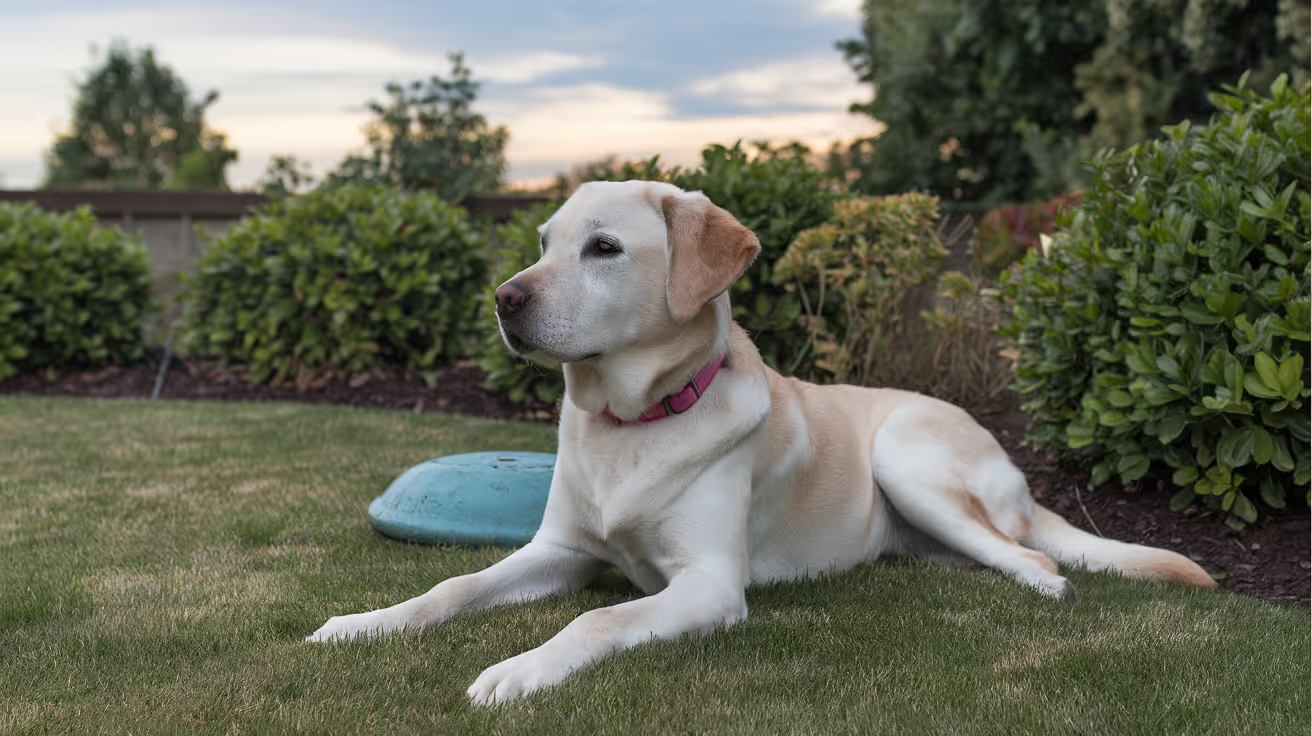
It is one of the most common reasons owners choose to spay their female dog. The expectation of a calmer, more settled companion afterward.
Sometimes that is exactly what happens. Sometimes it does not. And in a small subset of cases, anxiety or excitability actually increases.
Understanding why gives you a more accurate picture of what to expect, which makes the outcome less surprising in either direction.
Quick answer: Many dogs do become calmer after spaying, but the effect is specific to hormone-driven behaviors, not overall temperament. Dogs that were restless, anxious, or excitable due to heat cycles typically show significant improvement. Dogs whose energy or anxiety has non-hormonal causes will not reliably calm down. Most behavioral changes, if they occur, appear over two to three months.
Key takeaways
- The calming effect is real but specific: It applies to behaviors driven by reproductive hormones, not all behaviors.
- Heat cycle behaviors disappear: Restlessness, roaming, frequent urination, and cyclical mood shifts all stop after spaying.
- Core energy level and personality do not change: A high-energy dog will still be high-energy after spaying.
- Breed and individual temperament matter: Some breeds retain high energy regardless of hormone status.
- The timeline is weeks to months, not days: Hormone levels decline gradually, so behavioral changes are gradual too.
- A small subset of dogs show increased fearfulness: This is documented in research and worth knowing about before surgery.
What "calming down" actually means after spaying
When people say they want their dog to calm down, they usually mean one of two things:
- They want heat cycle behaviors to stop: the roaming, the restlessness, the vocalization, the constant male attention.
- They want a generally more settled dog overall.
Spaying reliably delivers the first. The second is less predictable.
This distinction is the core of the honest answer to this question.
What spaying removes: the hormonal layer
Spaying removes the ovaries, which are the primary source of estrogen and progesterone. These hormones regulate the reproductive cycle and influence behaviors tied to it.
During heat cycles, which typically occur every six to eight months in adult dogs, estrogen surges create a set of predictable behaviors:
- Restlessness and inability to settle
- Increased vocalization
- Frequent urination in small amounts to signal reproductive status
- Strong drive to escape and find a mate
- Attracting intact male dogs
- Cyclical irritability or anxiety
All of these stop after spaying. The hormonal trigger is permanently removed.
Which dogs calm down most noticeably after spaying
Dogs whose difficult behaviors are primarily or significantly driven by the reproductive cycle show the most consistent improvement after spaying.
Dogs most likely to become calmer:
- Female dogs that showed significant behavior changes during heat cycles, including restlessness, anxiety, and clinginess
- Dogs prone to false pregnancies, with associated nesting, object guarding, and protective behavior
- Dogs that attempted to escape or roam during heat periods
- Dogs whose cyclical mood swings were disruptive to daily life
For these dogs, spaying removes a recurring source of behavioral disruption. The result is often a more predictable, stable dog.
Which dogs may not calm down after spaying
Dogs whose energy level, excitability, or anxiety comes from sources other than reproductive hormones will not reliably settle after spaying.
Dogs less likely to show a calming effect:
- High-energy working or sport breeds where drive is genetic, not hormonal
- Dogs with established anxiety, fearfulness, or reactivity from non-hormonal causes
- Dogs with learned problematic behaviors from their history and environment
- Dogs whose excitability comes from insufficient exercise or mental stimulation
A Border Collie that is highly energetic before spaying will still be highly energetic after. A Labrador that pulls on the leash before spaying will still pull after. These behaviors are not driven by estrogen.
The timeline: when does calming happen?
Behavioral changes from spaying do not happen within days of surgery. The immediate post-surgery period reflects recovery from anesthesia and pain, not hormonal adjustment.
Realistic timeline:
Owners who expect a noticeably calmer dog within days of surgery are working with an inaccurate timeline. The changes are gradual and unfold over weeks to months.
What research says about calming after spaying
The evidence is genuinely mixed, which is worth knowing rather than glossing over.
Supporting the calming effect:
A study of 591 dogs found behavioral problems reduced or eliminated in 59% of spayed females. Heat cycle-related behaviors showed the most consistent improvement. Many owners of females that were particularly difficult during heat cycles report significant positive changes after spaying.
Complicating the picture:
Two large-scale studies using the Canine Behavioral Assessment and Research Questionnaire (C-BARQ) found that sterilization was associated with a roughly 31% increase in fearfulness and a 33% increase in touch sensitivity in some dogs. These findings apply to both males and females.
What does this mean in practice? For a meaningful subset of dogs, spaying does not produce a calmer animal. It may even produce a more anxious one, particularly in dogs that had pre-existing fearfulness or were sterilized at a young age.
This does not mean spaying is wrong for these dogs. It means the behavioral outcome cannot be guaranteed, and expectations should be calibrated accordingly.
For the full picture of all the behavior changes to expect after spaying, including the research on unexpected outcomes, that guide covers the complete behavioral landscape across both sexes.
Does calming depend on the dog's age at spaying?
Yes, and this is one of the most important variables.
Dogs spayed before their first heat cycle:
The hormonal disruption of heat cycles is never established. Many owners report these dogs are consistently more settled than intact females across their lifetime, without ever having the difficult heat cycle period.
Dogs spayed after several heat cycles:
The calming effect from eliminating heat cycles is still real and significant. However, any behaviors that have become habitual through repetition during heat cycles may persist longer or require training to address.
Dogs spayed very young (before 6 months):
Research suggests a higher association with fearfulness in dogs sterilized very early, before hormonal maturity. For whether this applies specifically to puppies, the guide on calming effects specific to female dogs addresses this age-specific question in detail. For the puppy-specific picture, the guide on whether puppies calm down after being spayed covers the developmental nuances unique to younger dogs.
When the expected calming does not happen
If your dog does not seem noticeably calmer after spaying, consider these factors before concluding the surgery did not work.
Check the timeline: Have two to three months passed since surgery? If not, the hormonal adjustment may still be in progress.
Identify the behavior source: Is the behavior you wanted to address actually hormone-driven? If it is not, spaying was never going to address it.
Consider habituation: Some behaviors that started as hormone-driven become habitual over time. The hormone is removed but the habit persists. Consistent training addresses habituated behavior.
Consider an underlying anxiety: If your dog became more fearful or anxious post-surgery, this is a documented outcome in some dogs. A veterinary behaviorist or your regular vet can help evaluate what is happening and what options exist.
Understanding the truth behind the calming effect myth, including why the expectation of calming is sometimes oversold, helps put the variable outcomes in context.
What actually makes dogs calmer long-term
Whether or not spaying produces a calming effect, these factors reliably influence how settled and manageable a dog is:
- Adequate physical exercise: A dog that is genuinely tired is a calmer dog. Exercise needs are determined by breed and individual temperament.
- Mental stimulation: Breed-appropriate mental work, puzzle feeders, training sessions, and enrichment activities reduce restless, problematic behavior.
- Consistent training: Clear, reinforced expectations give dogs a behavioral framework. This is the single most reliable path to a calmer dog.
- Routine and predictability: Dogs settle more easily in stable, predictable environments.
Spaying contributes one element to this picture. It is not a standalone solution.
Frequently asked questions
How long after being spayed will my dog calm down?
If the calming effect is going to occur, most hormone-driven behavioral changes become apparent within two to six weeks as hormone levels decline. Full stabilization typically takes two to three months. Dogs that are still showing challenging behaviors three to four months after surgery are unlikely to improve further from the hormonal change alone.
Will spaying make my high-energy dog less active?
Probably not significantly. Energy level in dogs is primarily determined by breed, genetics, and conditioning. Spaying can cause a modest metabolic slowdown, but it does not reduce drive or enthusiasm. A high-energy breed will still need the same amount of exercise after spaying.
My dog got more anxious after being spayed. Why?
Research has documented increased fearfulness in a subset of dogs after sterilization, associated with a roughly 31% increase in fearfulness in some studies. This appears to occur more often in dogs sterilized at a young age and in dogs with pre-existing anxiety. If your dog shows increased anxiety after spaying, speak to your vet. A referral to a certified veterinary behaviorist may be helpful.
Will spaying help with aggression?
It depends on the type of aggression. Aggression linked to the heat cycle, competition with other female dogs, or false pregnancy guarding often decreases. Fear-based aggression, learned aggression, and resource guarding are not hormone-driven and are not reliably improved by spaying. For whether lower testosterone calms dogs down in the male counterpart to this question, that guide covers the testosterone-behavior link specifically.
Does breed affect whether spaying calms a dog down?
Yes. Breed temperament significantly influences baseline energy and anxiety levels. High-drive working breeds such as Border Collies, Australian Shepherds, and Belgian Malinois have energy and drive that is genetic, not hormonal. Removing reproductive hormones does not change these fundamental breed characteristics. Whether your specific dog falls into a calmer range after spaying depends on what was driving any difficult behavior in the first place.
The calming effect of spaying is real for dogs whose difficult behaviors are hormone-driven. For those dogs, eliminating the heat cycle and its associated hormonal disruption produces a meaningfully more stable animal. For dogs whose energy or anxiety comes from other sources, spaying is still beneficial for health reasons but should not be expected to produce behavioral transformation. The most accurate prediction is not based on "spaying calms dogs" but on "removing a specific hormonal influence changes the behaviors that influence drives."
Resources
The following sources were used as reference and background for this article:
- Stanley Coren, Psychology Today. Are There Behavior Changes When Dogs Are Spayed or Neutered? psychologytoday.com
- PubMed. Changes in the behavior of dogs after castration. pubmed.ncbi.nlm.nih.gov
- ManyPets. Do Dogs Change After Being Neutered or Spayed? manypets.com
- American Veterinary Medical Association (AVMA). Spaying and Neutering. avma.org
- Houndsy. How Spaying Affects Dog Behavior. houndsy.com

Get a Free Poster
Enhance your workspace with a high-quality radiographs reference poster, designed for veterinary professionals. This free physical poster will be shipped directly to you—just fill out the form to request your copy.






Taking Great TPLO Radiographs
Click Below to Watch Live Video Demos


We'll send you a Free Wall Poster with all the steps
Step #1
Getting Ready
Ensuring a clean surgical field starts with proper skin preparation. This video demonstrates the best practices for:
- Shaving the patient – Achieving a close, even shave while minimizing skin irritation
- The Dirty Scrub – The initial skin prep step to remove surface debris and reduce bacterial load before the sterile scrub.
Following these techniques helps reduce infection risk and improve surgical outcomes. Watch the video to see how it’s done effectively!


Step #2
Reduce Your Risks
Many surgeons are shocked to find out that their patients are not protected from biofilms and resistant bacteria when they use saline and post-op antibiotics.
That’s Where Simini Comes In.
Why leave these risks and unmanaged? Just apply Simini Protect Lavage for one minute. Biofilms and resistant bacteria can be removed, and you can reduce two significant sources of infection.
Step #3
Take the Course
Preventing surgical infections is critical for patient safety and successful outcomes. This course covers:
- Aseptic techniques – Best practices to maintain a sterile field.
- Skin prep & draping – Proper methods to minimize contamination.
- Antibiotic stewardship – When and how to use perioperative antibiotics effectively.
Stay up to date with the latest evidence-based protocols. Click the link to start learning and earn CE credits!

Things to know
How Long After Neutering Is Testosterone Gone in Dogs
Learn how long testosterone stays in dogs after neutering and what to expect during recovery.
Neutering removes the testicles, which produce most of a dog's testosterone. But the hormone does not vanish from the bloodstream on surgery day.
Testosterone clears gradually as the body metabolizes what remains. Behavior follows the same curve. This is why owners who expect an immediate behavioral shift are often disappointed, and why patience in the weeks after surgery is not just advisable but necessary.
Here is the complete, evidence-based picture of the testosterone clearance timeline and what it means for your dog.
Quick answer: Testosterone levels begin declining within 24 to 72 hours of neutering. Significant reduction occurs within 2 to 3 weeks. Most testosterone is cleared from the bloodstream within 4 to 6 weeks. Full behavioral stabilization typically takes 2 to 3 months as the body and brain adjust to the new hormonal environment. Some habits shaped by testosterone may persist beyond this window and require training to address.
Key takeaways
- Testosterone production stops on surgery day: The testicles are removed, eliminating the primary production source immediately.
- Clearance from the bloodstream takes 4 to 6 weeks: Residual testosterone circulates and is metabolized gradually.
- Behavioral changes follow the hormonal decline: Most testosterone-driven behavioral improvements appear over 2 to 6 weeks.
- Full behavioral stabilization takes 2 to 3 months: Some behaviors fade slowly as hormone levels drop.
- Habits shaped by testosterone may persist: Learned behaviors continue regardless of hormone levels and require training.
- Fertility persists for up to 6 weeks: Residual sperm in the reproductive tract can still result in pregnancy.
What testosterone does in male dogs
Testosterone is produced primarily by the testicles. It drives a specific set of behaviors and physical characteristics in intact male dogs:
- Urine marking: The drive to mark territory with urine is heavily testosterone-dependent.
- Mounting behavior: Sexual and status-related mounting is driven by testosterone.
- Roaming: The drive to escape and find a mate is strongly testosterone-mediated.
- Inter-male aggression: Competition-based aggression with other intact males is often testosterone-linked.
- Dominance behaviors: Some dominant social behaviors decrease after neutering.
Beyond behavior, testosterone influences muscle mass, certain aspects of bone density, and the dog's general physical development.
The testosterone clearance timeline
Understanding this timeline is the most important practical takeaway from this article.
Hours 0 to 72: production stops, clearance begins
The testicles are removed during surgery. Testosterone production essentially stops at that moment.
However, the hormone that was already circulating in the bloodstream at the time of surgery does not disappear immediately. The body metabolizes and clears it through normal hormonal processing.
Within the first 24 to 72 hours, testosterone levels begin their decline. This is measurable but does not immediately translate into behavioral change.
Days 7 to 10: significant early reduction
By one to two weeks post-surgery, testosterone levels have dropped substantially from their pre-surgery baseline. Most of the actively circulating hormone is being metabolized.
This is still not the point at which behavioral changes are reliable. The hormonal environment is in transition, and the brain and behavior patterns are adjusting.
Weeks 4 to 6: functional clearance
By four to six weeks post-neutering, testosterone has reached very low or undetectable levels in most dogs. This is the point that veterinarians generally refer to when asked how long it takes for testosterone to "go away."
Some sources cite two weeks for functional clearance; others cite six weeks. The variation reflects individual differences in age, health, and metabolism. Younger dogs tend to clear residual testosterone faster.
Months 2 to 3: full behavioral stabilization
Even after testosterone levels have dropped to baseline, the brain and learned behavioral patterns continue adjusting to the new hormonal environment.
By two to three months post-neutering, most testosterone-driven behavioral changes have stabilized. This is the point at which you can accurately assess whether neutering has produced the behavioral improvements you were hoping for.
Timeline summary table
What behaviors improve as testosterone declines
These are the behaviors most reliably reduced as testosterone levels fall:
High likelihood of improvement:
- Urine marking indoors and outdoors
- Mounting behavior toward people, other dogs, or objects
- Roaming and escape attempts to seek females in heat
- Some forms of inter-male aggression driven by competition
Variable or uncertain improvement:
- Dominance-related behaviors that have become habitual
- Aggression toward familiar people (testosterone may contribute but is not the sole driver)
- General excitability (energy level is more breed and fitness-driven than hormonal)
Behaviors that will not improve:
- Fear-based aggression (not testosterone-driven)
- Separation anxiety (not testosterone-driven)
- Learned behaviors from training history (habits, regardless of their origin)
- Resource guarding (not testosterone-driven)
Why some behaviors persist after testosterone is gone
This is the part of the conversation that surprises many owners.
Some behaviors that appeared to be testosterone-driven become habitual through repetition. The neural pathways associated with the behavior have been reinforced many times, and they do not disappear when the hormonal fuel is removed.
A dog that has been marking territory for three years before neutering has established a behavioral habit. The testosterone-driven urge may be gone, but the habit of going to specific spots and marking may continue. This requires training to address, not just time.
The general rule: behaviors that have been performed repeatedly over time are more likely to persist after neutering than behaviors that are recent or infrequent.
For how testosterone decline affects dog behavior in the context of the full behavioral landscape after sterilization, that guide covers what the evidence says about which changes are most reliable. For the equivalent question in females, the guide on whether hormone changes calm female dogs walks through which female dogs see the calming effect and which do not.
The fertility window: keep intact females away
One important practical point that owners sometimes overlook: a neutered male can still get an unspayed female pregnant for up to six weeks after surgery.
Sperm are stored in the reproductive tract beyond the testicles, in the vas deferens and associated structures. These residual sperm remain viable for several weeks after the testicles are removed.
Keep your neutered male dog away from intact females for the full six weeks after surgery. This is not a precaution against unlikely events. It is a necessary management step.
Factors that affect how quickly testosterone clears
The 4 to 6 week timeline is a general guide. Individual variation exists.
Age: Younger dogs tend to metabolize and clear testosterone faster than older dogs. Their overall metabolic rate is higher.
Health status: Dogs with liver or kidney impairment may metabolize hormones more slowly.
Pre-surgery testosterone levels: A dog with very high testosterone levels before surgery may take longer to reach baseline.
Individual physiology: As with most biological processes, individual variation exists between dogs of the same age and breed.
None of these factors change the approach. Patience through the full two to three month window remains appropriate regardless.
How testosterone decline affects female dogs after spaying
While this article focuses on testosterone in male dogs, it is worth noting the parallel process in females.
Spaying removes the ovaries, which produce estrogen and progesterone. These hormones do not vanish on surgery day either. They decline over a similar 4 to 6 week clearance window, with behavioral stabilization taking two to three months.
The behavioral changes driven by the female hormonal cycle, including heat restlessness, roaming, false pregnancy behaviors, and cyclical mood shifts, follow the same general clearance curve as testosterone in males.
For how hormonal behavior changes in female dogs specifically, including which behaviors are most reliably reduced and over what timeline, that guide provides the female-specific detail.
Frequently asked questions
How long does it take for testosterone to fully disappear after neutering?
Most testosterone is cleared from the bloodstream within 4 to 6 weeks of neutering in healthy adult dogs. Behavioral stabilization, reflecting the brain's adjustment to the new hormonal environment, typically takes 2 to 3 months. Some habits may persist beyond this window and require training.
My dog was neutered two weeks ago and is still marking. Is something wrong?
No. Two weeks is within the normal clearance window. Testosterone is still declining. Most owners see improvements in marking behavior over 4 to 8 weeks. If marking continues at the same level beyond 3 months, it may have become a learned habit that requires training intervention.
Can my neutered dog still get a female pregnant?
Yes, for up to 6 weeks after surgery. Residual sperm in the reproductive tract remain viable after the testicles are removed. Keep your recently neutered male away from intact females for the full 6-week window.
Will my dog's behavior change immediately after neutering?
No. The first two weeks are recovery from surgery. Behavioral changes related to testosterone decline begin appearing in weeks 3 to 6, with full stabilization at 2 to 3 months. Expecting behavioral change within days of surgery leads to frustration and misattribution.
Does the age at neutering affect how quickly testosterone clears?
Somewhat. Younger dogs tend to metabolize hormones faster due to higher metabolic rates. However, the practical difference in clearance timeline is small compared to the individual variation between dogs. The 4 to 6 week clearance timeline remains a reasonable guide regardless of age. For whether lower testosterone calms dogs down and how the behavioral changes of testosterone decline manifest, that guide addresses the calming question across different dog types. For recovery timeline alongside hormonal changes, that guide places the hormonal adjustment within the broader post-surgical recovery picture.
Understanding the testosterone clearance timeline reframes the post-neutering period from a frustrating wait into an understandable process. The behavior changes are coming, but they follow the hormone. Give it four to six weeks for the hormonal shift and two to three months for the behavioral picture to stabilize. What you see at month three is an accurate reflection of what surgery has and has not changed.
Resources
The following sources were used as reference and background for this article:
- Small Dogs Heaven. Understanding the Timeline: How Long After Neutering a Dog is Testosterone Gone? smalldogsheaven.com
- The Beloved Dog. Your Dog's Testosterone: When It's Gone After Neutering. thebeloveddog.com
- Dog Hutt. How Long After Dog Neutering Is Testosterone Gone? doghutt.com
- Dogo App. How Long After Neutering Dog Is Testosterone Gone? dogo.app
- American Veterinary Medical Association (AVMA). Spaying and Neutering. avma.org
- Embrace Pet Insurance. Dog Neuter and Spay Recovery. embracepetinsurance.com

Puppy Neuter Recovery: What to Expect Day by Day
Learn what to expect day by day during your puppy's neuter recovery, including care tips and signs of complications.
Puppies bounce back from neutering faster than most pet owners expect. That is actually the tricky part.
A puppy that feels fine on day three is still healing internally. The faster energy return means more supervision is needed, not less. Young dogs do not understand that they need to rest, and they will not slow down on their own.
This guide walks you through what puppy neuter recovery actually looks like, day by day, and how it differs from adult dog recovery.
Quick answer: Most puppies recover fully within 10 to 14 days after neutering. They typically feel close to normal within two to three days, which makes activity restriction harder to enforce but no less important. The E-collar stays on the full 10 to 14 days. Supervision is especially critical for puppies because they are prone to overexerting before the incision has fully healed.
Key takeaways
- Puppies heal faster but need more supervision: Young dogs recover quickly but have less self-restraint and are more likely to reopen an incision through play.
- The 10 to 14 day rule still applies: Fast energy return does not mean fast healing. Activity must be restricted the full window.
- Neutering timing matters for puppies: For small breed puppies, six months is generally appropriate. For large breed puppies, your vet may recommend waiting longer.
- The E-collar is especially important for puppies: They are more likely to obsessively lick or chew a wound out of curiosity.
- Behavioral changes after neutering in puppies are gradual: Hormone-driven behaviors fade over weeks, not days.
- Watch for complications more frequently: Puppies may not show pain clearly, making daily incision checks even more important.
How puppy neuter recovery differs from adult dog recovery
Adult dogs and puppies go through the same surgical procedure and the same 10 to 14 day healing window. What differs is behavior during that window.
The incision heals at roughly the same pace in healthy puppies and adults. The difference is purely behavioral.
Day-by-day recovery guide
Day 1: surgery day
Your puppy comes home groggy, quiet, and possibly unsteady. This is normal anesthesia recovery.
What to do on day 1:
- Set up a clean, quiet recovery space away from other pets and children
- Put the E-collar on immediately and do not remove it
- Offer a small amount of water when you get home
- Offer half a normal meal two to three hours after returning home
- If your puppy vomits, remove food and water until morning
- Keep them indoors and on the floor, no jumping on furniture
The most important thing on day one is calm. Do not let visitors arrive. Do not let other pets near the incision. Keep noise and excitement low.
Day 2 to 3: the energy return
This is the most critical supervision window for puppies.
Energy comes back fast. Your puppy may seem almost back to normal. They will want to play, run, and interact with everything around them.
This is when most puppy neuter complications happen.
Keep activity strictly limited to short leash walks for bathroom breaks only. No playing with other dogs. No running in the yard. No jumping up on you or onto furniture.
Check the incision site morning and evening. A small amount of mild redness or slight puffiness is normal. Anything increasing, oozing, or smelling unusual warrants a vet call.
Days 4 to 7: still healing internally
The incision may look good. Your puppy may seem completely normal. The internal tissue is still healing.
The body's internal sutures need the full two-week window to gain strength. Even when the external skin looks closed, the deeper layers are still knitting together. Activity that stresses the incision at this stage can cause fluid accumulation, swelling, or wound breakdown.
Daily checklist for days 4 to 7:
- [ ] Cone on at all times
- [ ] Leash walks only, short and calm
- [ ] Incision check morning and evening
- [ ] No stairs if possible; carry small breed puppies
- [ ] No bathing, swimming, or getting the incision wet
- [ ] Keep other pets separated or supervised
Days 8 to 10: incision closing
By around day seven, the incision edges should be sealing visibly. Redness should be fading. Swelling should be largely resolved.
Your puppy will have a lot of energy by now. Stay firm on the activity restrictions. The cone stays on. For a clear visual reference of how the incision heals week by week, tracking the wound against a normal healing timeline helps you spot changes that might otherwise be easy to miss.
Some puppies develop mild itching at the incision site as healing progresses. This is normal and a sign that tissue is regenerating. The cone is what prevents that itch from becoming a wound.
Days 10 to 14: final healing and vet check
Most puppies are fully healed at the incision site by day 10 to 14. Your vet will confirm this at the follow-up appointment.
If your clinic uses dissolvable internal sutures (which most modern neuters do), there is nothing to remove. If external sutures were placed, they are typically removed at this visit.
Do not skip the follow-up. Internal healing continues beyond what is visible, and your vet can catch any subclinical issues that are not yet obvious at home.
Once cleared, you can gradually reintroduce normal activity. Start with longer leash walks before returning to off-leash play or dog park visits.
Puppy-specific care tips
Keeping a puppy calm during recovery
This is the hardest part of puppy neuter recovery for most owners.
Strategies that work:
- Crate training: If your puppy is already crate-trained, the crate is your best tool. It provides safe, calm containment without constant physical supervision.
- Food puzzles and chew toys: Mental stimulation without physical exertion. A stuffed Kong or lick mat can keep a puppy occupied for extended periods.
- Calm, low-stimulation interaction: Gentle petting and quiet company. Avoid rough play, tug of war, or anything that gets your puppy excited.
- Ask your vet about short-term calming support: For very high-energy breeds, some veterinarians prescribe mild sedatives for the first week of recovery. This is a legitimate option worth discussing.
Feeding a puppy after neutering
Puppies have higher metabolic needs than adults. Do not withhold food for extended periods.
Offer a small meal the evening of surgery. If they tolerate it without vomiting, return to normal puppy feeding the next day. Puppies who are not eating at all by 24 hours after surgery need a vet call.
Most puppies need to eat more frequently than adult dogs anyway. Maintain their regular feeding schedule throughout recovery, adjusting only if vomiting occurs.
The cone for puppies
Puppies are particularly prone to licking and chewing wounds out of curiosity, and they are more creative about getting around a cone that does not fit properly.
Check the cone fit carefully:
- The cone should extend at least two inches past your puppy's nose
- It should be snug but not tight enough to cause discomfort or chafing
- Check daily as puppies can lose or gain weight quickly
If your puppy absolutely cannot tolerate the hard plastic cone, a soft inflatable collar or a recovery suit are alternatives. The key is that they reliably prevent access to the incision.
Behavioral changes after neutering in puppies
Many owners neuter puppies specifically to reduce hormone-driven behaviors. It is worth setting realistic expectations about the timeline.
Testosterone does not disappear immediately after surgery. Hormone levels drop gradually over several weeks. Expect hormone-driven behaviors to fade over two to four weeks post-surgery, not overnight.
Behaviors that may decrease after neutering in male puppies:
- Urine marking
- Mounting behavior
- Roaming or escape attempts
- Some forms of same-sex aggression
Behaviors that are shaped by training and socialization, not hormones, will not change after neutering. A puppy that has learned to jump on people, bark at strangers, or resource-guard will still do those things. Training addresses learned behavior. Neutering addresses hormonal behavior.
For a full picture of behavior changes to expect in puppies after surgery, including what typically improves and what does not, knowing the realistic timeline prevents frustration during the recovery period.
When to call the vet
Puppies tend to mask pain and discomfort more than adult dogs. Stay especially vigilant with daily incision checks.
Call your vet if you notice:
- Yellow, green, or foul-smelling discharge from the incision
- Swelling that is increasing rather than decreasing after day three
- Persistent lethargy beyond 48 hours
- Refusal to eat for more than 24 hours
- Any wound opening or separation of incision edges
- Your puppy licking despite the cone (check the fit immediately)
For a complete guide on warning signs to watch for in puppies after surgery and which symptoms are emergencies versus same-day calls, having that reference during the recovery window prevents delayed action.
What about the right age to neuter a puppy?
Recovery differs based on the age at which surgery is performed.
Very young puppies (eight to twelve weeks) are sometimes neutered in shelter settings. These puppies heal quickly, but they are also at increased risk of anesthetic complications and require extra monitoring.
For most privately-owned puppies:
- Small breeds: Around six months is generally appropriate
- Medium breeds: Six to twelve months, depending on the individual
- Large breeds: Your vet may recommend waiting until 12 to 18 months to allow growth plate closure
For a detailed, breed-specific breakdown of the right age to neuter a puppy, the timing decision has meaningful long-term health implications for larger breeds especially.
The recovery process itself does not change much based on age, but puppies neutered very young may benefit from closer post-operative monitoring and more careful anesthetic management.
Frequently asked questions
How long does puppy neuter recovery take?
Most puppies are fully healed at the incision site within 10 to 14 days. They typically feel close to normal within two to three days, but internal healing requires the full two-week window. Activity must be restricted until your vet confirms the incision has healed at the follow-up appointment.
Do puppies recover faster than adult dogs from neutering?
They feel better faster, but the incision heals at roughly the same pace. The difference is behavioral, not biological. Puppies return to high energy levels quickly, which makes activity restriction harder to enforce and more important to maintain.
Can I remove the E-collar after a few days if my puppy seems fine?
No. The cone stays on for the full 10 to 14 days. Puppies are especially prone to licking wounds when bored or when the incision starts to itch during healing. A single licking episode can undo days of clean healing.
My puppy is bouncing off the walls on day three. Is this normal?
Yes, and it is the biggest challenge of puppy neuter recovery. Fast energy return is typical in young dogs. It does not mean they are healed. Strict activity restriction must continue regardless of how your puppy feels. For complete aftercare guidance on how to care for your dog during recovery, including specific strategies for keeping high-energy dogs calm, a structured plan makes the two weeks much more manageable.
When will my puppy calm down after being neutered?
Hormone-driven behaviors typically fade gradually over two to four weeks as testosterone levels decline. Some behaviors may take longer, especially if they have already become habitual through repetition. Neutering reduces hormonal behaviors, but training shapes all other behaviors.
Puppy neuter recovery is short but demands your full attention for two weeks. The puppies that sail through without complications are almost always the ones whose owners enforced the cone, the rest, and the leash walks without exception. Two weeks of discipline gives your puppy a lifetime of better health.
Resources
The following sources were used as reference and background for this article:
- PetMD. Dog Neuter Recovery: How to Care for Your Pup After Surgery. petmd.com
- Animal Humane Society. Spay/Neuter Post-Surgical Care and Recovery Instructions. animalhumanesociety.org
- Embrace Pet Insurance. Dog Neuter and Spay Recovery. embracepetinsurance.com
- Dogwood Animal Hospital. Speed Up Your Dog's Neuter Recovery: 10 Home Care Tips. dogwoodanimalhospital.com
- Bliss Animal Hospital. What to Expect After Your Dog's Spay or Neuter Surgery. blissanimalhospital.com
- ASPCA Spay-Neuter Alliance. After Surgery Instructions. aspca.org
Necrotizing Fasciitis in Dogs: Early Signs & Treatment
Learn about necrotizing fasciitis in dogs, including early signs, diagnosis, and effective treatment options to protect your pet's health.
Necrotizing fasciitis is one of the most serious bacterial infections a dog can develop. Commonly called flesh-eating disease, it destroys skin, fat, and the fascia that covers muscles at a speed that overwhelms normal medical treatment. Without emergency surgery, survival rates are near zero.
The challenge is that early signs look like any other skin infection redness, swelling, pain. By the time the hallmark purple-black skin discoloration appears, the infection has already advanced significantly.
Quick answer: Necrotizing fasciitis causes rapidly spreading swelling, pain disproportionate to wound size, and skin progressing from red to purple to black. Caused by Streptococcus canis. Requires emergency surgery; survival with surgery is 80 to 90%.
Key takeaways
- Necrotizing fasciitis is a life-threatening emergency: without immediate surgical debridement, it is nearly always fatal
- Pain disproportionate to wound size is the most important early warning sign of NF
- Skin color progression from red to purple to black indicates advancing tissue death
- Streptococcus canis is the most common causative organism: a normal skin commensal that turns lethal in specific conditions
- Do not use NSAIDs or fluoroquinolones: both can worsen outcomes in confirmed or suspected NF cases
- Survival with surgery is 80 to 90%: immediate surgical intervention changes the prognosis dramatically
What is necrotizing fasciitis?
Today's Veterinary Practice (case series, 4 dogs): "Necrotizing fasciitis is a rapidly progressive, life-threatening bacterial infection of the subcutaneous tissues, fascia, and occasionally skeletal muscle."
The word "necrotizing" means tissue-killing. The bacteria destroy tissue by two mechanisms:
- Direct toxin production: bacteria release enzymes and toxins that break down tissue proteins and cell membranes
- Vascular destruction: Kinship explains: "These bacteria release toxins that restrict blood flow to the area of the infection. Without a good blood supply, the tissues begin to die off, and the infection spreads more easily."
When blood supply is cut off, antibiotics in the bloodstream cannot reach the infected tissue in effective concentrations this is why surgery to physically remove the dead tissue is non-negotiable. Antibiotics alone cannot cure established necrotizing fasciitis.
What causes it?
Kinship: "The most commonly isolated bacterial species in these infections is β-hemolytic Streptococcus canis." This is a Group G Streptococcus species that normally lives on healthy dogs' skin and in their gastrointestinal tracts without causing problems.
Today's Veterinary Practice identifies additional causative organisms: Staphylococcus pseudintermedius, Staphylococcus aureus, Pasteurella multocida, Pseudomonas aeruginosa, Escherichia coli, and Serratia marcescens.
The critical point: these bacteria are part of normal canine microbiome. There is no way to pre-treat and eliminate them. NF is not caused by unusual contamination from the environment it is caused by a normally harmless organism behaving pathologically under specific conditions.
Predisposing factors (though often none are identified):
- Minor or blunt trauma
- Any skin wound, scratch, or puncture
- Immunocompromised states
Dr. Catherine Daniel (Central Island Veterinary Emergency Hospital): "Even if it gets under the skin by a wound, it doesn't always cause necrotizing fasciitis. It's still extremely rare."
Early signs: the critical window
The earliest signs of necrotizing fasciitis are indistinguishable from a straightforward local infection. This is what makes the condition so dangerous. Kinship: "The initial signs of flesh-eating disease share symptoms with most localized infections: regional pain, swelling, and redness."
The early warning signs that should prompt immediate emergency care:
1. Pain disproportionate to wound size
This is the most important early clinical clue. A small wound a scratch, a minor bite that causes extreme, intense pain far beyond what the wound size would suggest is a red flag for NF. The pain is internal, driven by fascia destruction, not proportional to the visible surface injury.
2. Rapidly spreading swelling
Today's Veterinary Practice: "The most common signs of NF are rapidly progressive swelling, lameness, and hemorrhagic skin pigmentation." Times Colonist (Dr. Daniel): "An early sign of necrotizing fasciitis is significant swelling or edemas a build up of fluid or protein under the skin. If you push on the swelling, an indent may be left behind."
Swelling that is spreading noticeably within hours not days is not typical of a simple skin infection.
3. Skin color change: red to purple to black
Kinship: "The severity of the condition becomes more obvious when a wide area of skin turns purplish or blackish." Today's Veterinary Practice describes the progression specifically: skin pigmentation that goes from red to purple to black indicates advancing tissue death (hemorrhagic infarction) beneath the skin.
Darkened skin around a wound is an emergency not a reason to "watch it."
4. The dog is systemically unwell
WSAVA (VIN): "Dogs present with fever, swelling, erythema, disproportionate pain on palpation, draining tracts and ulcers." Systemic illness (lethargy, fever, not eating) alongside a wound, especially one that does not look dramatically abnormal on the surface, should raise suspicion.
How NF progresses without treatment
Once bacteria gain entry to the fascial plane, they spread along that plane rapidly far faster than any visible skin change. The infection races through the connective tissue well ahead of the visible zone of skin damage. By the time large areas of skin turn black, the bacteria have already destroyed a much larger volume of tissue than is visible.
Today's Veterinary Practice: "Necrotizing fasciitis has a 100% mortality rate if surgical intervention is not rapidly instituted."
Diagnosis
Diagnosis is primarily clinical and requires emergency decision-making there is no time to wait for laboratory results before operating.
Physical examination: rapidly spreading swelling, disproportionate pain, skin color changes, and systemic illness in a dog with any wound.
Imaging: Kinship: "Imaging the area with radiographs or ultrasound may indicate that the infection is serious." Gas in the tissue on radiograph (gas gangrene) is a strongly confirmatory finding but is not always present.
Tissue biopsy and bacterial culture: Today's Veterinary Practice: "A veterinarian will make a definitive diagnosis with tissue biopsies and bacterial cultures taken from deep within the infected area, but those tests take days to return. Dogs with this condition often decline before the diagnosis is confirmed."
In practice: the clinical presentation of rapidly progressive swelling with skin color changes and systemic illness is sufficient to proceed directly to surgery without waiting for biopsy confirmation. Time is the critical variable.
Treatment
Immediate surgical debridement
The core of treatment. Today's Veterinary Practice: "The stark contrast in mortality rate with and without surgical intervention is compelling evidence for immediate surgical intervention."
Surgery involves radical removal of all dead and infected tissue, including apparently normal tissue at the margins (since bacteria have spread beyond the visible zone of damage). The wound is left open after debridement it cannot be closed because the infection continues to be active. Repeat surgical debridement may be required in subsequent days.
Intravenous antibiotics
WagWalking: "Initially, intravenous antibiotics (either clindamycin or amoxicillin-clavulanate) will be administered. Once the veterinarian has sensitivity testing results, the antibiotic may be changed."
WSAVA (VIN) adds a critical warning: "Do not use fluoroquinolones, as these have been associated with possibly engendering or enhancing the extreme toxicity of these Streptococcus strains." This is an important distinction from many other bacterial infections where fluoroquinolones are a first-line choice.
NSAIDs: contraindicated
WSAVA (VIN): "NSAIDs should also be avoided, as there is some evidence they may suppress neutrophil activity and mask clinical signs." This matters in practice: a dog presenting with pain that might be NF should not receive an NSAID before evaluation, as it could mask the disproportionate pain that is the primary early warning sign.
Supportive care
IV fluids, nutritional support, and intensive monitoring throughout hospitalization. Recovery requires days to weeks of inpatient care.
Wound management post-surgery
After debridement, the open wound requires aggressive ongoing management: frequent dressing changes, possible wound VAC therapy, and eventually skin grafts or flaps to close large tissue deficits.
For how deep skin infections like abscesses can serve as entry points for serious infections, see abscess as an entry point for severe infection. For how skin infection can progress from a furuncle to severe NF, see skin infection that can progress to necrotizing fasciitis. For how Pseudomonas is involved in severe wound infections, see Pseudomonas as a causative organism. For how Enterococcus contributes to severe wound infections, see Enterococcus as a causative organism.
Prognosis
Today's Veterinary Practice: "The most recent and extensive veterinary study suggests a survivability rate of 80 to 90% for dogs that receive a combination of surgery, antibiotic therapy, and supportive care."
This is encouraging for a condition with 100% mortality without surgery. However, survival requires early intervention. Dogs that present with advanced skin necrosis, systemic sepsis, or multi-organ involvement have significantly worse prognoses.
The Times Colonist documented a cluster of 6 affected dogs at one veterinary hospital, with at least 5 dying or being euthanized. All were described as presenting with rapidly fatal progression illustrating that even with aggressive care, timing is everything.
Prevention
There is no reliable way to prevent NF in individual dogs because the causative bacteria are part of the normal microbiome. What can reduce risk:
- Prompt wound treatment: clean and disinfect any bite wound, scratch, or puncture immediately
- Veterinary evaluation for wounds that seem disproportionately painful or swollen
- Monitor healing wounds closely: any wound that is not improving by 24 to 48 hours or is worsening should be rechecked
- Maintain immune health: immunocompromised dogs may be more susceptible
Frequently asked questions
How quickly does necrotizing fasciitis progress in dogs?
Extremely quickly hours to a day or two from initial signs to life-threatening tissue destruction. WSAVA notes dogs "present with fever, swelling, erythema, disproportionate pain on palpation, draining tracts and ulcers" a picture that can develop within a day of the initial wound. This speed is what makes the condition so dangerous: by the time owners recognize that something is seriously wrong, significant tissue damage has already occurred.
Can a dog recover from necrotizing fasciitis?
Yes, with early and aggressive surgery. Today's Veterinary Practice reports 80 to 90% survivability with combined surgery, antibiotics, and supportive care. The key word is "early." Dogs that receive surgery before extensive skin necrosis and systemic sepsis have a substantially better prognosis than those presenting at a late stage.
Is necrotizing fasciitis contagious from dog to dog or to humans?
It is not directly contagious in the traditional sense. WagWalking notes that transmission of the bacteria can occur through shared bowls, bedding, or contact between dogs, but the vast majority of dogs exposed to Streptococcus canis never develop NF. The disease requires specific host susceptibility conditions to establish itself. Dr. Daniel: "It's highly unlikely that a dog could pass the disease to a human, since it's caused by an animal-specific bacteria Group G streptococcus."
Why can't antibiotics alone treat necrotizing fasciitis?
Once bacteria have destroyed the blood supply to infected tissue, antibiotics delivered through the bloodstream cannot reach the bacteria in effective concentrations. The infected zone becomes avascular without blood flow, drugs cannot penetrate it. Only physical removal of the dead tissue (surgery) eliminates the bacterial reservoir. Antibiotics are essential to prevent spread and treat systemic infection, but they cannot substitute for surgery in established NF.
My dog has a painful wound that is spreading. How do I know if it's NF?
You cannot reliably distinguish early NF from a severe cellulitis or deep abscess at home. The key signals that should prompt emergency veterinary care (not a regular appointment) are: pain that seems far worse than the wound would suggest, swelling spreading significantly within hours, skin darkening to purple or black, or a dog that is systemically unwell alongside a skin problem. Err strongly on the side of emergency evaluation when these signs are present.
Can NF affect any part of the body?
Yes. While the limbs are commonly reported sites, NF can develop anywhere on the body where bacteria gain entry to the fascial plane. Generalized cutaneous vasculitis from severe infection can also affect the paw pads, distal tail, and pressure areas. The disease follows fascial planes, so it can spread in any direction from the entry point.
Resources
- Today's Veterinary Practice. Case Series: Necrotizing Fasciitis in 4 Dogs. todaysveterinarypractice.com
- Kinship. How to Keep Your Dog Safe From Flesh-Eating Bacteria. kinship.com
- WSAVA / VIN. Dermatology Disasters Necrotizing Fasciitis. vin.com
- WagWalking. Necrotizing Fasciitis in Dogs. wagwalking.com
- Times Colonist. Flesh-Eating Disease in Dogs Prompts Warning from Nanaimo Vet. timescolonist.com
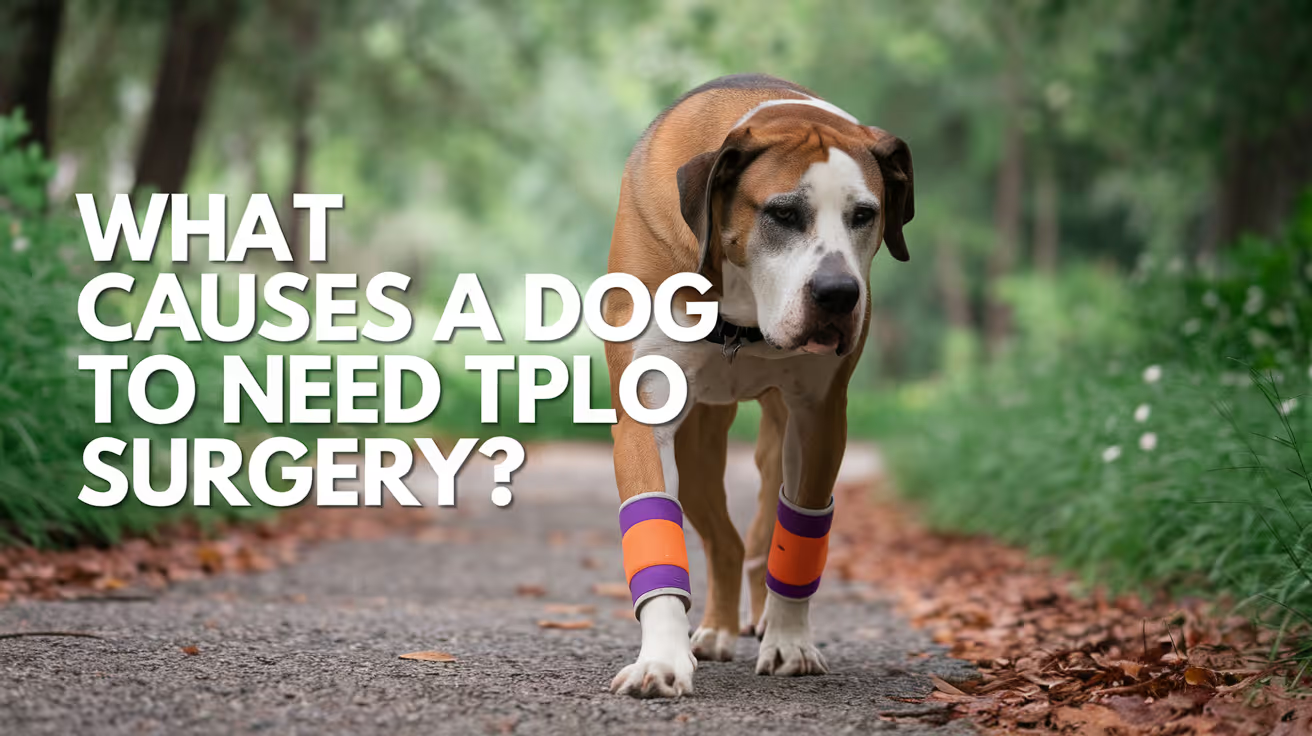
What Causes TPLO Surgery to Be Needed in Dogs
Learn what causes TPLO surgery to be needed in dogs, including common injuries and conditions leading to this important orthopedic procedure.
TPLO surgery is not performed because of a single moment of bad luck.
In the vast majority of cases, the cruciate ligament has been quietly degenerating for months or years before the day it finally fails.
Understanding what drives that degeneration and which dogs are most vulnerable is the first step toward recognizing early warning signs and making informed decisions about your dog's care.
Quick answer: TPLO is needed when a dog's CCL ruptures from progressive degeneration, causing stifle instability and lameness. Key risk factors are breed (Labs, Rottweilers, Mastiffs), obesity, steep tibial plateau angle, and neutering. CCL rupture costs US owners over $1 billion annually.
Key takeaways
- CCL rupture is the most common cause of hind limb lameness in dogs: over $1 billion spent annually in the US on treatment
- Most CCL ruptures result from degeneration, not trauma: sudden injury to a healthy ligament is rare in dogs
- Breed is the strongest single risk factor: Labs, Rottweilers, Mastiffs, and Newfoundlands most commonly affected
- Obesity significantly increases CCL rupture risk: excess weight increases mechanical load on the stifle and systemic inflammation
- Steep tibial plateau angle is a mechanical risk factor: extra CCL strain with every stride; TPLO corrects this directly
- Neutered dogs have higher CCL rupture rates than intact dogs across multiple studies, particularly in high-risk breeds
Why CCL rupture leads to TPLO
When the CCL ruptures, the stifle joint becomes unstable. With each step, the tibia slides forward under the femur a motion called cranial tibial thrust that normally the CCL prevents.
This sliding causes:
- Pain with every weight-bearing step
- Damage to the articular cartilage
- Progressive osteoarthritis
- Meniscal injury (the meniscus acts as a shock absorber and is frequently torn by the unstable joint)
Laguna Hills Animal Hospital explains that a dog with a torn CCL cannot walk normally, and the instability caused by the tear damages the bone and cartilage surrounding the joint.
TPLO surgery addresses this by rotating the tibial plateau to approximately 5 degrees a position at which cranial tibial thrust no longer occurs during normal weight-bearing.
The joint becomes stable without a functioning CCL.
The primary cause: CCL degeneration
The crucial distinction between canine CCL rupture and human ACL tears is the mechanism.
Virginia Veterinary Centers states directly: CCL rupture can result from activity-related trauma, but is most commonly caused by progressive degeneration of the ligament.
Laguna Hills Animal Hospital adds: unlike in humans, the CCL rarely ruptures from sudden trauma in an otherwise healthy ligament.
The degeneration process involves progressive deterioration of collagen fibers within the CCL weakening that begins long before any clinical signs appear.
By the time a dog presents lame, the CCL has typically been failing at a microscopic level for months.
The rupture event a step off a curb, a jump in the yard is the endpoint of this process, not the cause.
This degenerative process explains why partial tears almost always progress to full rupture.
NCBi (2014) confirms 22 to 54% of dogs rupture the other CCL within 6 to 17 months.
Risk factors for CCL rupture
Breed
Breed is the most powerful predictor of CCL rupture. MedVet lists Labs, Golden Retrievers, German Shepherds, Boxers, Pit Bulls, American Bulldogs, Mastiffs, Rottweilers, and Newfoundlands as most commonly affected.
Laguna Hills Animal Hospital confirms a genetic component has been established specifically in Newfoundlands and Labrador Retrievers.
The genetic risk likely involves inherited factors in ligament collagen quality, joint conformation, and inflammatory susceptibility.
Obesity
Excess body weight increases the compressive and shear forces on the CCL with every step.
Overweight dogs are at significantly higher risk of CCL rupture, and obesity is the most modifiable risk factor.
MetLife Pet Insurance identifies weight as a key contributing factor, noting that overweight dogs place additional stress on their joints, increasing rupture risk.
Maintaining a lean body condition score is one of the few actionable CCL prevention strategies available to owners.
Tibial plateau angle (TPA)
Dogs with a steeper-than-average tibial plateau angle experience higher cranial tibial thrust with each stride, increasing the load on the CCL throughout the dog's life.
MetLife Pet confirms that some dogs have a naturally steep tibial plateau angle, which puts extra strain on the CCL.
TPLO surgery addresses this directly by reducing the TPA to approximately 5 degrees it not only treats the rupture but corrects the underlying mechanical vulnerability.
Neutering
Multiple studies have found that neutered dogs both spayed females and castrated males have higher rates of CCL rupture than intact dogs.
PMC (agility risk factors study) lists neuter status as a previously identified risk factor alongside age, sex, breed, and body weight.
Proposed mechanisms include earlier closure of growth plates (affecting long bone development), changes in muscle mass distribution, and the absence of sex hormones that influence ligament maturation and quality.
Age
Older dogs have ligaments with more cumulative degeneration. The risk of CCL rupture increases with age, particularly in at-risk breeds.
Rancho Palos Verdes Vets lists age, obesity, poor conformation, breed, and lack of fitness as the main risk factors for CCL tears.
Physical conditioning
Poor physical fitness reduces the muscle mass that supports and offloads the stifle joint.
Well-conditioned muscles act as dynamic stabilizers; dogs with poor muscle mass rely more heavily on their passive stabilizers including the CCL increasing ligament load.
Clinical signs that TPLO is needed
When the CCL ruptures or significantly tears, dogs show:
- Sudden hind limb lameness often appearing after exercise or normal activity
- Toe-touching or non-weight-bearing on the affected leg
- Sitting with the leg extended to the side rather than folded under the body
- Stiffness after rest that may temporarily improve with movement
- Swelling or thickening around the stifle joint (medial buttress)
- Muscle atrophy of the affected thigh over time
- Positive cranial drawer sign or tibial compression test on examination
Rancho Palos Verdes Vets notes that sitting with one leg extended to the side is one of the most obvious signs that a CCL injury requiring evaluation is present.
For the full CCL causes article, see what causes cruciate ligament tears in dogs. For the TPLO surgery overview, see what is TPLO surgery in dogs?.
For the signs your dog needs TPLO, see 13 signs your dog may need TPLO surgery. For surgical alternatives, see alternatives to TPLO surgery for dogs.
For the long-term outcomes of TPLO, see long-term outcomes of TPLO surgery.
Frequently asked questions
Can a dog rupture its CCL just from running in the yard?
Yes but the run did not cause the rupture. In almost all cases, the ligament was already significantly degenerated before it failed.
The activity is the final stressor on an already compromised structure, not the cause. This is one of the most important things to understand about canine CCL disease.
What breeds are most likely to need TPLO surgery?
Labrador Retrievers, Golden Retrievers, Rottweilers, Boxers, Mastiffs, Newfoundlands, Staffordshire Terriers, and German Shepherds are most commonly affected. Genetic inheritance of CCL disease has been specifically confirmed in Labs and Newfoundlands.
Smaller breeds are less commonly affected and often managed with less invasive procedures when rupture does occur.
Does fixing the CCL prevent the other knee from tearing?
No. TPLO stabilizes the operated knee but does not prevent degeneration in the other knee, which is affected by the same systemic risk factors.
NCBi research shows 22 to 54% of dogs develop contralateral CCL rupture within 6 to 17 months. Weight management and controlled exercise are the main strategies for reducing the risk.
Can obesity cause CCL rupture?
Yes. Obesity increases joint load and systemic inflammation, both of which accelerate CCL degeneration. Weight management is the single most impactful lifestyle intervention for reducing CCL disease risk in predisposed breeds.
Is CCL rupture preventable?
Not entirely genetic factors are outside owner control. However, maintaining a lean body condition, providing consistent moderate exercise, and avoiding obesity are the most effective risk-reduction strategies.
Discuss the role of neutering timing with your veterinarian if you own a high-risk breed.
Resources
- Virginia Veterinary Centers. What Dog Owners Should Know About TPLO Surgery. virginiaveterinarycenters.com
- Laguna Hills Animal Hospital. Why Does My Dog Need TPLO Surgery? lhah.com
- MedVet. Dogs and Knee Surgery: Understanding TPLO Surgery. medvet.com
- MetLife Pet Insurance. TPLO Surgery for Dogs. metlifepetinsurance.com
- PMC. Radiographic Risk Factors for Contralateral Rupture in Dogs with Unilateral CCL Rupture. ncbi.nlm.nih.gov
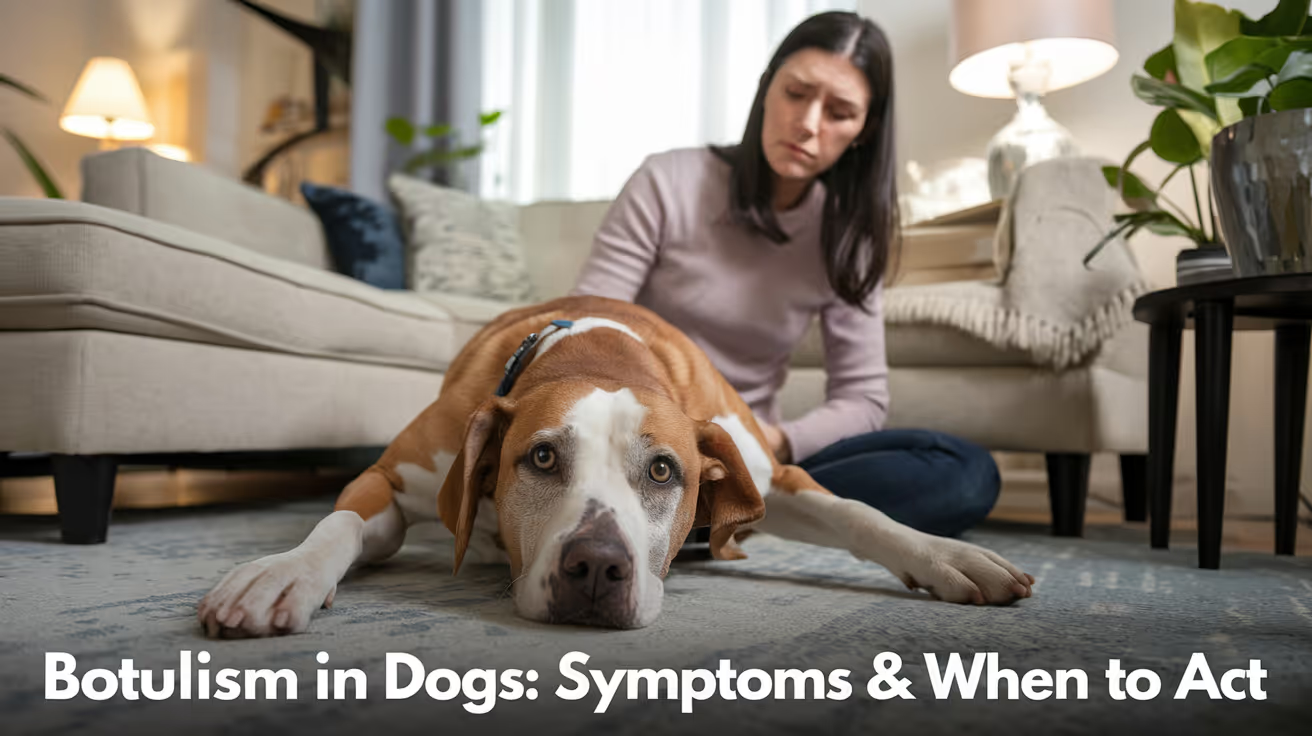
Botulism Symptoms in Dogs and When to Seek Help
Learn to recognize botulism symptoms in dogs and know when to seek urgent veterinary help to protect your pet's health.
Botulism is a rare but potentially fatal condition in dogs. It is not an infection it is a poisoning. The botulinum toxin produced by Clostridium botulinum bacteria blocks the nerve signals that control muscle movement, causing a progressive paralysis that can reach the breathing muscles.
Most dogs that develop botulism have eaten a dead animal or contaminated raw meat. The condition requires immediate veterinary attention the window for antitoxin treatment is narrow.
Quick answer: Botulism causes ascending paralysis in dogs, starting in the hind legs and progressing to breathing muscles. It is caused by ingesting botulinum toxin from decomposing carcasses or meat. Call your vet immediately.
Key takeaways
- Botulism is a poisoning, not a bacterial infection: the dog ingests preformed toxin, not live bacteria
- Symptoms begin 12 to 72 hours after ingestion and can be delayed up to 6 days
- Ascending paralysis is the hallmark: weakness starts in the hind legs and progresses forward to breathing muscles
- The dog remains mentally alert throughout, unlike many other neurological conditions
- Death can occur if the breathing muscles or heart are paralyzed
- Antitoxin is most effective before paralysis sets in early veterinary contact is essential
What is botulism in dogs?
Botulism is caused by the botulinum toxin, produced by the anaerobic bacterium Clostridium botulinum. VCA Animal Hospitals explains what happens after ingestion: "The botulinum toxin is then carried throughout the body, where it binds to nerve cells, resulting in paralysis."
The toxin works by blocking acetylcholine the neurotransmitter that triggers muscle contraction. Without acetylcholine signaling, muscles cannot contract. The result is flaccid (floppy) paralysis: muscles that are not stiff or spastic, but simply limp and non-functional.
Merck Veterinary Manual emphasizes that "botulism is a poisoning, not a true infection with bacteria." The bacteria themselves do not spread through the dog's body the damage is entirely from the preformed toxin that was ingested.
How do dogs get botulism?
The most common route is eating a contaminated carcass or spoiled meat. PetMD: "Dogs become affected by eating decomposing animal carcasses or spoiled vegetation where the bacterium grows."
Specific exposure scenarios include:
- Eating road kill or carrion found during walks (the most common cause)
- Consuming spoiled or improperly stored meat even cooked meat can harbor toxin if contaminated before cooking; AnimalWised notes that "even boiling doesn't necessarily destroy" the toxin once formed
- Access to garbage or compost containing decomposing organic material
- Rural and hunting dogs with access to wildlife carcasses are at higher risk
Botulism is most common in wild waterfowl and only rarely occurs in dogs. Merck Veterinary Manual notes: "Botulism is most common in wild water birds, like ducks, and only rarely occurs in dogs." This rarity is why many vets may not immediately consider it in the differential diagnosis.
Symptoms of botulism in dogs
VCA Animal Hospitals lists the clinical timeline: "Clinical signs of botulism typically develop 12 to 72 hours after ingesting contaminated meat, though the onset can be delayed up to six days."
Early symptoms (12 to 48 hours after ingestion)
- Vomiting (may occur very early as the toxin begins affecting the gut)
- Weakness in the hind legs the dog appears wobbly or reluctant to stand
- Difficulty rising from lying down
- Reduced muscle tone throughout
Progressive symptoms (as paralysis ascends)
- Ascending weakness: hind legs first, then forelimbs
- Difficulty swallowing (dysphagia) the dog may drool or be unable to eat or drink
- Changes in bark or voice (laryngeal muscle involvement)
- Vision problems (eye muscle weakness)
- Dropped jaw or facial droop
Vetster: "Symptoms of botulism generally develop within 24 to 48 hours after ingestion and include vomiting, difficulty swallowing, and progressive ascending motor paralysis that starts in the rear limbs."
Critical symptoms seek emergency care immediately
- Inability to breathe normally (labored breathing, open-mouth breathing)
- Complete inability to move
- Collapse
- Rapid heart rate
Merck Veterinary Manual: "Death can occur if breathing muscles or the heart is paralyzed."
The key distinguishing feature: the dog stays alert
A dog with botulism appears mentally aware throughout the paralysis. The toxin affects motor nerves (which control muscle movement) but not sensory perception or consciousness. WagWalking: "Should you notice that your dog appears alert but is unable to move, it is important to rush him to your veterinarian."
This alertness-with-paralysis combination is one of the strongest clinical clues pointing toward botulism rather than other neurological causes.
Conditions that look like botulism
The symptoms of botulism overlap significantly with several other conditions. Diagnosis is difficult and requires ruling out alternatives.
PetsVetCheck: "The diagnosis relies on the medical history and the exclusion of other causes, as specific tests are time-consuming and not always available."
How vets diagnose botulism
Diagnosis is primarily clinical based on the pattern of signs and the history of possible exposure.
History: the most important element. Has your dog had access to carcasses, garbage, or raw meat in the past 1 to 6 days?
Physical examination: assessing the pattern of weakness (ascending, flaccid), the level of alertness, and the presence of cranial nerve signs (swallowing, vision, jaw tone).
Toxin testing: blood, feces, vomit, and food samples can be tested for botulinum toxin. Vetster confirms this but notes that tests are time-consuming and not universally available treatment should not be delayed while waiting for results.
Rule-out testing: tick check (to rule out tick paralysis), chest X-ray (to assess respiratory function), bloodwork to rule out metabolic or endocrine causes.
Treatment
Antitoxin
Antitoxin binds and neutralizes circulating toxin that has not yet attached to nerve cells. VCA: "There is no vaccine available, although an antitoxin is available if the condition is identified before signs develop."
Important limitation: antitoxin only works on toxin still in circulation. Once the toxin has bound to nerve cells, it cannot be removed. This is why early diagnosis matters enormously.
Antibiotic warning: Vetster advises: "Contact a veterinarian before administering antibiotics as they can cause an increase in botulism toxin concentration, and some kinds of antibiotics can cause a worsening in neuromuscular function." Antibiotics that kill Clostridium in the gut can release additional toxin, worsening the condition.
Decontamination
If exposure is very recent and the dog is not yet showing signs, the vet may induce vomiting or administer activated charcoal or an enema to remove unabsorbed toxin from the digestive tract.
Supportive care
Once paralysis is established, treatment is primarily supportive:
- IV fluids to maintain hydration
- Assisted feeding soft or liquid diet; syringe feeding if swallowing is impaired
- Bladder management manual emptying if the dog cannot urinate independently
- Turning and repositioning every 2 to 4 hours to prevent bed sores in paralyzed dogs
- Respiratory support oxygen supplementation or mechanical ventilation if breathing muscles are compromised
- Prevention of aspiration pneumonia a major complication in dogs with swallowing difficulties
AnimalWised: "Dogs which have a more serious clinical picture will need help being moved. They may be given intravenous fluid to help their system work. If the dog fails to urinate on their own, the dog will have their bladder emptied manually."
Prognosis and recovery
Vetster: "With prompt and long-term, intensive nursing care, most paralyzed dogs recover within 1 to 3 weeks." The prognosis depends on two main factors: the dose of toxin ingested and the speed of treatment.
Dogs that receive antitoxin before significant paralysis develops have the best outcomes. Dogs with respiratory compromise have a significantly worse prognosis respiratory failure is the primary cause of death in severe cases.
Nerve regeneration after toxin binding is a natural process that occurs over weeks. The nerve terminals regrow and acetylcholine signaling is restored the dog essentially has to wait for the toxin's effects to dissipate as new nerve terminals form.
PetsVetCheck: "Long-term complications can include muscle weakness and, in some cases, permanent neurological deficits, depending on the duration and severity of the paralysis."
Prevention
- Prevent access to carcasses and carrion during walks, especially in rural or wildlife-rich areas
- Supervise dogs in areas with road kill or dead animals
- Store meat and food properly never feed dogs meat that has been improperly stored or smells off
- Keep dogs away from garbage, compost bins, and waste containing organic material
- Recall and leash train to prevent opportunistic scavenging
Frequently asked questions
My dog ate something dead on a walk. Should I go to the vet now?
Yes, contact your vet immediately. Eating a dead animal is the primary exposure route for botulism in dogs. Even if your dog shows no symptoms, your vet may recommend inducing vomiting or monitoring closely. Early decontamination before symptoms develop is significantly more effective than treatment after paralysis has begun.
What does botulism look like in dogs compared to a stroke?
A stroke typically affects one side of the body (head tilt, circling, one-sided weakness) and the dog may be disoriented or have altered consciousness. Botulism produces symmetric, ascending weakness with the dog remaining fully alert and mentally aware. A dog that cannot move but responds normally to voice and touch, and does not appear confused, is a stronger candidate for botulism than stroke.
Can humans get botulism from a dog that has it?
Botulism is not contagious it is a toxin poisoning, not a transmissible infection. You cannot get botulism from contact with an affected dog. However, if a shared food source caused the dog's illness, that same food could potentially affect humans. Identify and safely discard any suspected contaminated food.
How long does recovery from botulism take in dogs?
Most dogs that survive botulism and receive appropriate supportive care recover within 1 to 3 weeks. Recovery depends on regrowing the nerve terminals that the toxin has damaged this is a biological process that cannot be accelerated, only supported. Dogs with mild toxin exposure recover faster than those with severe paralysis.
Is there a vaccine for botulism in dogs?
No vaccine is currently available for dogs against botulism. Vaccines exist for livestock species in some countries, but canine botulism is rare enough that vaccination is not a standard recommendation. Prevention relies on limiting exposure to the toxin through management and supervision.
Why do vets say to avoid antibiotics with botulism?
Certain antibiotics (particularly aminoglycosides like gentamicin and neomycin) interfere with neuromuscular junction function and can worsen paralysis. Additionally, killing Clostridium bacteria in the gut can cause them to release additional stored toxin. If antibiotics are needed for a secondary complication (such as aspiration pneumonia), the vet will choose an antibiotic class that does not worsen neuromuscular function.
Resources
- VCA Animal Hospitals. Botulism in Dogs. vcahospitals.com
- PetMD. Botulism in Dogs. petmd.com
- Merck Veterinary Manual. Botulism in Dogs. merckvetmanual.com
- Vetster. Botulism (Clostridium Botulinum Toxin) in Dogs. vetster.com
- WagWalking. Botulism in Dogs. wagwalking.com
Can Dogs Get a Staph Infection?
Learn if dogs can get staph infections, their symptoms, causes, treatment, and prevention tips to keep your pet healthy.
Yes, dogs get staph infections, and they're among the most common skin problems seen in veterinary practice.
The bacteria responsible, primarily Staphylococcus pseudintermedius, are already present on healthy dogs. They live on the skin, in the mouth, nose, and gut without causing problems in most cases. Infection happens when the skin barrier breaks down or the immune system weakens, giving bacteria the opportunity to move from normal colonizer to active pathogen.
Quick answer: Yes, dogs get staph infections. Staphylococcus pseudintermedius is the most common cause in dogs and is found on the skin of roughly 50% of healthy dogs as normal flora. Infection typically occurs when the skin is damaged or immunity is compromised. Staph infections in dogs present as skin lesions, pustules, redness, and hair loss, and are treated with topical or systemic antibiotics depending on severity.
Key takeaways
- S. pseudintermedius is the primary staph species in dogs, not S. aureus (which is more common in humans).
- Staph is normal skin flora in about 50% of dogs and only causes infection under specific conditions.
- Skin barrier disruption is the most common trigger: allergies, wounds, and scratching allow bacteria in.
- Pyoderma (staph skin infection) is the most common form dogs develop, accounting for 92% of canine dermatitis.
- MRSP is the resistant form to watch for, particularly in dogs with prior antibiotic exposure.
- Transmission to humans is possible but uncommon with basic hygiene precautions.
Which staph bacteria affects dogs?
The primary staph species in dogs is Staphylococcus pseudintermedius. This is distinct from Staphylococcus aureus, which causes most human staph infections.
MedVet explains: "S. pseudintermedius is a bacterium commonly found on the skin, mouth, nose, or in the gastrointestinal tract of approximately 50% of dogs and cats. It typically causes no problems at all but can cause opportunistic infections."
The key word is opportunistic. This bacterium waits. When conditions shift in its favor, it becomes a pathogen.
Staphylococcus aureus can also affect dogs, though it's less common than in humans. Dogs can also harbor MRSA (methicillin-resistant S. aureus), but veterinarians are more concerned about MRSP (methicillin-resistant S. pseudintermedius) because it's more prevalent in canine infections.
For the full overview of staph infections in dogs including all affected body systems, see full overview of staph infections in dogs.
For the full breakdown of what staph aureus specifically is in dogs, see what staph aureus is specifically.
What triggers a staph infection in dogs?
Staph doesn't establish infection in healthy skin. Something has to compromise the barrier first.
Skin barrier disruption
The most common triggers are anything that breaks the skin or weakens its protective function:
- Allergies: atopic dermatitis causes chronic scratching and licking, creating micro-abrasions where bacteria enter
- Wounds and abrasions: even small cuts allow surface bacteria to penetrate
- Parasites: fleas and mites damage skin integrity and cause scratching-related trauma
- Moisture: skin folds and areas that stay wet create ideal bacterial growth conditions
Immune system compromise
Dogs with conditions that impair immune function are at higher risk:
- Hypothyroidism: reduces immune response and alters skin cell turnover
- Cushing's disease (hyperadrenocorticism): excess cortisol suppresses immune defenses
- Diabetes mellitus: impairs white blood cell function and healing
- Long-term corticosteroid use: similar effect to Cushing's, suppressing local immunity
Age and breed factors
Puppies have immature immune systems and are more susceptible to staph. Elderly dogs have declining immune function. Breeds with skin folds (Bulldogs, Shar-Peis, Basset Hounds) are at higher baseline risk because the warm, moist fold environment supports bacterial overgrowth.
What does a staph infection look like in dogs?
Staph infection in dogs most commonly presents as pyoderma, literally "pus in the skin." The clinical appearance varies by depth and severity.
Surface signs (superficial pyoderma):
- Small round pustules (pimple-like lesions)
- Redness and inflammation around hair follicles
- Circular crusted lesions with a clearing center ("epidermal collarettes")
- Hair loss in affected patches
- Itching and scratching
Deep infection signs:
- Nodules or boils beneath the skin surface
- Discharge from draining tracts
- Significant swelling and pain on palpation
- Fever and lethargy in severe cases
The AKC notes: "Dogs with allergies or diseases that weaken the immune system can develop infections in their skin, ears, and respiratory, reproductive, or urinary tracts."
Staph infections can affect the ears (otitis), urinary tract, and surgical wounds, not just the skin surface.
For how early-stage staph infections look and how they progress, see early signs of staph infection in dogs.
Diagnosis
Your vet will use one or more of these methods to confirm a staph infection:
Skin cytology: tape pressed to the skin collects surface cells and bacteria, then stained and examined under a microscope. Provides rapid results and can identify bacteria and inflammatory cells.
Culture and sensitivity: a swab from the lesion is cultured in a laboratory to identify the specific species and determine which antibiotics it is and isn't resistant to. Takes 5 to 7 days but is essential when MRSP is suspected or initial treatment fails.
Skin biopsy: used in severe or unusual presentations to examine deeper tissue changes.
Treatment
Treatment depends on whether the infection is superficial or deep and whether antibiotic resistance is a concern.
Topical treatment
Superficial staph infections often respond well to topical antibacterial therapy alone:
- Antibacterial shampoos: chlorhexidine-based or benzoyl peroxide shampoos used 2 to 3 times weekly
- Topical sprays or wipes: chlorhexidine applied directly to lesion areas
- Topical antibiotics: mupirocin or fusidic acid for localized infections
Topical treatment is preferred where possible because it avoids systemic antibiotic exposure and reduces resistance pressure.
Systemic antibiotics
More extensive or deep infections require oral antibiotics. The choice must be guided by culture and sensitivity results, particularly when MRSP is possible. Commonly used antibiotics (when sensitivity allows) include:
- Cefalexin (cephalexin)
- Clindamycin
- Doxycycline
- Trimethoprim-sulfamethoxazole
Course length: typically 3 to 6 weeks for superficial infections, longer for deep pyoderma or recurrent cases.
Addressing the underlying cause
Treating the staph infection without addressing what enabled it leads to recurrence. If allergies are the root cause, allergy management must be part of the plan. If hypothyroidism is present, thyroid supplementation is needed alongside antibiotic treatment.
Can staph spread from dogs to humans or other dogs?
Transmission is possible but uncommon with basic precautions. The AKC notes: "Staphylococcus pseudintermedius can be transferred from other dogs and even the people they live with. However, transmission between dogs and humans is uncommon."
Published case reports confirm that S. pseudintermedius can cause skin and soft tissue infections in humans who have close contact with infected dogs, typically through wound exposure or direct skin contact.
Practical hygiene during your dog's staph infection:
- Wash hands after handling the dog or their bedding
- Avoid direct contact between the dog's lesions and your broken skin or mucous membranes
- Wear gloves when applying topical treatments
- Limit face-to-face contact until the infection is resolved
For whether staph spreads between dogs in a household, see whether staph spreads between dogs. For how dogs contract staph infections specifically, see how dogs contract staph infections.
Frequently asked questions
My dog has a small patch of hair loss with some redness. Could that be staph?
Possibly. Circular patches of hair loss with redness and sometimes crusting are classic signs of superficial pyoderma. They can also be caused by ringworm or other conditions. A vet visit and skin cytology will clarify the cause. Don't treat with leftover human antibiotics: appropriate diagnosis matters, and human antibiotic formulations are not appropriate for dogs.
How long does staph treatment take in dogs?
Superficial staph pyoderma typically clears with 3 to 6 weeks of appropriate treatment. Deep pyoderma may require 6 to 12 weeks. Treatment should continue for at least one week beyond complete clinical resolution to prevent relapse. Stopping early is a common cause of recurrence.
Is MRSP the same as MRSA?
No. MRSP is methicillin-resistant Staphylococcus pseudintermedius, the dog-specific staph strain. MRSA is methicillin-resistant Staphylococcus aureus, more associated with humans. Both are drug-resistant staph bacteria, but they're different species. MRSP is the more clinically significant form in dogs because S. pseudintermedius is already the dominant staph species in canine infections.
Staph infections in dogs are common, treatable, and often preventable through management of the conditions that enable them. The bacteria are already there in most dogs. The question is always what allowed them to shift from harmless resident to active infection.
Resources
- MedVet. Methicillin-Resistant Staphylococcus Pseudintermedius (MRSP) in Dogs and Cats. medvet.com
- AKC. Staph Infections in Dogs: Signs, Symptoms, Treatments. akc.org
- Paw Origins. Understanding Staph Infections in Dogs. paworigins.com
Abscess on a Dog's Leg: Causes, Signs & Treatment
Learn about causes, signs, and treatment of abscess on a dog's leg to help your pet recover quickly and safely.
An abscess is a pocket of pus trapped beneath the skin. On a dog's leg, it feels like a warm, painful swelling that appeared relatively quickly often within 24 to 72 hours of a bite, scratch, or puncture. It is not going to resolve on its own, and it should not be drained at home.
The good news is that with proper veterinary treatment, most leg abscesses heal completely within 1 to 2 weeks.
Quick answer: A dog leg abscess is a pus-filled swelling from bacterial infection, usually after a bite or puncture. Signs are warmth, pain, and rapid swelling. Treatment needs veterinary drainage and antibiotics. Most heal within 1 to 2 weeks.
Key takeaways
- An abscess is a pus pocket formed when bacteria are walled off in tissue by a fibrous capsule
- Bite wounds are the most common cause of leg abscesses; puncture wounds seal over quickly while bacteria multiply inside
- Warmth, pain, and rapid swelling are the hallmarks; the dog may limp or guard the leg
- Never drain an abscess at home inadequate drainage leaves bacteria behind and causes recurrence
- Foreign objects (foxtails, splinters) must be identified and removed or the abscess will keep recurring
- Healing takes 1 to 2 weeks with appropriate treatment; more complex cases involving surgery take longer
What is an abscess and why does it form?
VCA Animal Hospitals: "Abscesses are firm or compressible, often painful swellings that contain pus. They can develop in many areas of the body. Abscesses are caused by the introduction of bacteria through wounds, injuries, or bloodborne in the case of an internal organ abscess."
When bacteria enter tissue through a puncture or bite wound, the body's immune system responds by sending white blood cells to fight the infection. Dead white blood cells, bacteria, and tissue debris accumulate to form pus. The body walls off this material with a fibrous capsule creating the abscess cavity. As pus accumulates, pressure builds, causing pain and swelling.
Zumalka: "A fibrous capsule forms as purulent material accumulates beneath the skin, leading to increased pressure and painful swelling."
The problem with puncture wounds specifically: the entry hole seals over quickly while bacteria are still inside, trapping them in a warm, nutrient-rich environment where they multiply unchecked.
Common causes of leg abscesses in dogs
Bite wounds from other animals
The most common cause. Dog bites and cat bites puncture deep into tissue while depositing bacteria from the attacker's mouth. Cat bites are especially prone to abscess formation because their needle-sharp teeth create very deep punctures that seal over the surface rapidly.
UrgentVet: "A dog leg abscess may appear after trauma, injury, or a bite wound. Swelling, warmth, and limping are common signs. Since legs are highly mobile, abscesses here can be particularly uncomfortable."
Vetster adds an important reminder: "Bite wound abscesses are a bigger concern in unvaccinated pets due to the risk for rabies exposure." If your dog was bitten by an unknown animal, contact your vet about rabies prophylaxis recommendations regardless of abscess management.
Foreign body: foxtails, splinters, grass awns
Foxtails and similar plant material embed in the skin and migrate inward. They cannot dissolve and the body cannot expel them so bacteria colonize the tract they create, forming an abscess. Dogster: "During spring and summer, foxtails or grass seeds attach themselves to anything and everything, commonly burrowing into the feet."
VCA: "If a foreign object caused the abscess, it is critical to remove it or the abscess will return."
Recurring abscesses at the same location on the lower leg or foot, especially after outdoor activity in tall grass, strongly suggest a retained foreign body.
Puncture wounds from sharp objects
Nails, thorns, wire, and other sharp objects create deep puncture wounds that close quickly at the surface. The depth of penetration and the bacteria introduced determine whether an abscess forms.
Infected wound or laceration
Any wound that is not properly cleaned and monitored can become infected and progress to abscess formation. Deep lacerations are more prone than superficial abrasions.
Signs of an abscess on a dog's leg
Early signs (first 24 to 48 hours after injury):
- Sudden localized swelling, often appearing within 1 to 2 days of an injury
- The area is warm to the touch compared to surrounding skin
- Mild to moderate pain when the area is touched the dog pulls away or vocalizes
- Limping or reluctance to bear full weight on the leg
Established abscess signs:
- The swelling becomes fluctuant (you can feel fluid movement when pressed gently)
- The overlying skin may be reddened or discolored
- The dog may be licking, chewing, or biting at the area constantly
- Discharge (pus) appears if the abscess ruptures spontaneously at the skin surface
Signs the infection is spreading call the vet urgently:
- Increasing swelling beyond the original site
- Red streaking up or down the leg from the abscess (indicates cellulitis or lymphangitis)
- Fever, lethargy, loss of appetite, or depression
- The dog cannot bear any weight on the leg
How vets diagnose a leg abscess
Most abscesses are diagnosed on physical examination: the characteristic warm, fluctuant, painful swelling in context of an injury history or wound is usually diagnostic.
Fine needle aspiration: the vet inserts a needle into the swelling and withdraws fluid. Confirmation of purulent (pus) material confirms abscess. The sample may be sent for culture to identify the bacteria and guide antibiotic selection especially important for recurring abscesses.
Imaging: X-ray or ultrasound may be used if a foreign body is suspected, or if the abscess is very deep and its extent is unclear.
For how abscesses relate to furuncles and other deep skin infections that can progress without treatment, see furuncles as a related deep skin infection. For how abscesses cause limb swelling, see abscesses causing limb swelling. For how red lumps from abscesses appear on the leg alongside other causes, see abscesses as a cause of red lumps.
Treatment
Step 1: Drainage
The abscess must be opened and the pus removed. VCA: "The key is to remove the pocket of pus, either surgically or by draining and flushing."
How the vet drains it:
- Sedation or local anesthesia to manage pain during the procedure
- A small incision is made at the most dependent (lowest) point of the abscess to allow complete drainage
- The pus is expressed and the cavity flushed thoroughly with sterile saline or dilute antiseptic solution
Urgent Vet Care: "Depending on the size and location, we may place a drain or leave the wound partially open to encourage continued drainage."
A drain (a piece of soft tubing or rubber) may be placed through the abscess cavity and left in place for 24 to 48 hours to prevent premature closure while drainage continues. This is common for large or deep abscesses.
Step 2: Foreign body removal
If imaging or inspection reveals a foreign object (foxtail, splinter, grass awn), it is removed at this step. VCA is explicit: "If a foreign object caused the abscess, it is critical to remove it or the abscess will return." The entire tract created by the migrating foreign body may need to be surgically explored.
Step 3: Antibiotics
VCA: "Antibiotic therapy is a critical component of successful abscess treatment. The antibiotic will be chosen based on the bacteria involved, and the length of treatment will depend upon both the bacteria and the location. It is important to give the antibiotics for the entire time they are prescribed."
Common first-line choices: amoxicillin-clavulanate, cephalexin, or trimethoprim-sulfamethoxazole. Duration is typically 7 to 14 days for simple abscesses; longer for recurrent or deep cases.
Step 4: Pain management
Abscesses are painful. NSAIDs (meloxicam, carprofen) are typically prescribed for the first several days of treatment. Dogtime: "After the abscess is drained, your dog may require antibiotics and pain relievers to manage discomfort, as well as to prevent the infection from spreading."
Home care after veterinary treatment
Dogster (Dr. vet): "While warm compresses can help reduce swelling, draining the abscess without medical support may cause more harm or leave infection behind."
What to do at home:
- Apply warm compresses to the site for 10 to 15 minutes, 2 to 3 times daily, to encourage drainage and reduce swelling
- Clean the wound gently with dilute chlorhexidine or saline as directed by your vet
- Keep the area dry between cleanings
- Apply an E-collar to prevent licking licking reintroduces bacteria and delays healing
- Give all antibiotics on schedule and complete the full course
- Monitor for signs of recurrence: returning swelling, increasing discharge, or worsening pain
Signs to return to the vet:
- The swelling is not decreasing after 48 to 72 hours of treatment
- New discharge appears at the site after it appeared to be healing
- Red streaking appears around the wound
- The dog develops fever, stops eating, or becomes lethargic
For how severe infection can progress beyond an abscess to necrotizing tissue infection, see severe infection progression from abscess.
Can you treat a dog leg abscess at home?
Dogster: "While there are some aspects of treatment that can be managed at home, a dog's abscess should always be assessed by a vet. They will be able to work out an appropriate treatment plan, including medications such as antibiotics, and show you what you need to be doing at home."
Home care (warm compresses, keeping the area clean, E-collar) supports recovery but does not replace veterinary drainage and antibiotics. Attempting to squeeze or lance an abscess at home:
- May not fully drain the cavity
- Risks introducing additional contamination
- Can rupture the fibrous capsule internally, spreading infection into surrounding tissue
Frequently asked questions
How quickly does a dog leg abscess develop?
Abscesses typically develop within 24 to 72 hours of the causative injury. Some develop more slowly, particularly if the bacteria are less aggressive or the immune system has partially contained the infection. Most owners notice the swelling appearing surprisingly quickly a leg that looked normal the day before the vet visit may have a significant abscess by the appointment.
Will a dog leg abscess burst on its own?
It may. When the skin overlying the abscess thins sufficiently from internal pressure, spontaneous rupture can occur, releasing pus. This temporarily relieves pressure but does not resolve the infection the abscess often reforms unless the cavity is properly flushed and antibiotics are given. Spontaneous rupture also creates an open wound that can be contaminated from the environment. Vet assessment remains necessary even after spontaneous rupture.
My dog had an abscess treated but it came back in the same spot. Why?
Recurrence at the same site almost always means either a foreign body was not found and removed, or the antibiotic course was not completed. Dogster: foxtails in particular migrate inward over time, seeding a new abscess along their path. X-ray or ultrasound evaluation for a retained foreign object is the appropriate next step for any recurring abscess at the same site.
Is a dog leg abscess contagious to other dogs or humans?
The bacteria inside an abscess can theoretically transfer through direct contact with wound discharge, but abscess formation itself is not contagious it requires a specific combination of bacteria being introduced through a wound in that individual animal. Standard hygiene precautions (wash hands after handling discharge) are appropriate when caring for an infected wound.
Can a dog leg abscess become life-threatening?
Yes, in severe or untreated cases. If bacteria spread from the abscess into surrounding tissue (cellulitis), into the lymphatic system, or into the bloodstream (sepsis), the situation becomes life-threatening. Vetster: "Complications may occur in immunosuppressed and unvaccinated dogs." A dog with an abscess that is systemically unwell lethargic, not eating, running a fever needs emergency veterinary care.
How do I know if my dog's leg swelling is an abscess or a tumor?
An abscess typically has a rapid onset (days), is warm and painful, and is associated with an injury or wound. A tumor develops over weeks to months, is usually not painful, and does not have a history of trauma. However, infected cysts and tumors can look similar to abscesses. Fine needle aspiration by a vet provides a definitive answer when the distinction is unclear.
Resources
- VCA Animal Hospitals. Abscesses in Dogs. vcahospitals.com
- Dogster. Can I Treat My Dog's Abscess at Home? Our Vet Explains. dogster.com
- Dogtime. Abscesses in Dogs: Symptoms, Causes and Treatments. dogtime.com
- Vetster. Skin Abscesses in Dogs. vetster.com
- UrgentVet. Dog Abscesses: Causes, Symptoms and How You Treat Them. urgentvet.com

Why Does My Dog Have Scabs on Her Back?
Learn why your dog has scabs on her back, common causes, treatments, and when to see a vet for proper care.
Scabs on a dog's back are one of the most common skin complaints owners bring to the vet. They are almost always a symptom of something else an underlying condition causing the skin to break down, get infected, or be damaged by scratching. The location, pattern, and associated symptoms help narrow down the cause significantly.
This guide covers every common reason dogs develop back scabs, what each one looks like, and when the situation calls for a vet visit.
Quick answer: Back scabs in dogs most commonly result from flea allergy, allergies, pyoderma, or mange. Location helps: tail-base scabs suggest fleas; circular crusty patches suggest ringworm; intense all-over itching suggests sarcoptic mange.
Key takeaways
- Flea allergy dermatitis is the top cause of back scabs; a few flea bites trigger intense scratching in sensitized dogs
- Pyoderma (bacterial skin infection) often develops as a secondary complication of allergies or parasites, not as the primary cause
- Sarcoptic mange causes intensely itchy scabs that spread rapidly and can transfer to humans; it is highly contagious
- Ringworm is fungal, not a worm: circular crusty patches with hair loss, diagnosed by UV lamp or culture
- Honey-colored crusts suggest bacterial infection; dark or black scabs indicate chronic irritation or yeast
- Spreading or worsening scabs with hair loss or behavior changes need veterinary evaluation within 48 hours
How scabs form
Scabs are the body's healing response to skin damage. When skin is broken by scratching, biting, infection, parasites, or autoimmune attack it bleeds or weeps fluid. That fluid dries and forms a crust (scab) as part of the normal repair process.
In dogs, scabs on the back almost always indicate the dog has been repeatedly traumatizing the skin by scratching, biting, or rubbing or that an infection or parasite is directly damaging the skin surface. Vetified: "Scabs form as part of the skin's natural healing process, but recurring or widespread crusting usually signals an underlying condition that needs treatment."
The appearance of the scab offers diagnostic clues: honey-colored (bacterial infection), dark and flaky (chronic irritation or yeast), crusty circular rings (ringworm), or widespread tiny scabs with extreme itching (sarcoptic mange).
8 causes of scabs on a dog's back
1. Flea allergy dermatitis (FAD)
The most common cause of scabs on the back, especially concentrated at the tail base, rump, and lower back. Dogster: "Fleas are the most common parasite that causes scabbing on your dog's back and around their tail base. Some dogs suffer from flea allergy dermatitis (FAD) and are allergic to flea saliva injected by the bites of fleas."
The key feature: the allergy is to flea saliva, not the bites themselves. A single flea bite on a sensitized dog causes intense itching far out of proportion to the number of fleas present. You may never find a flea on the dog.
Signs: scabs clustered at the tail base and lower back; hair loss in the same area; intense scratching; secondary bacterial skin infection.
Treatment: rigorous flea control (all pets in the household, the home environment, and year-round prevention); anti-itch medication (Apoquel, Cytopoint) during flare-ups; antibiotics for secondary infection.
2. Environmental allergies (atopic dermatitis)
Dogs with environmental allergies react to pollen, dust mites, mold, and other airborne allergens. Dogster identifies "pollen, molds, house dust mites and storage mites" as the most common allergens. The skin becomes itchy and inflamed, and the dog scratches or bites until scabs form.
Signs: seasonal or year-round itching; scabs on the back, belly, paws, and face; secondary bacterial or yeast infection; recurrence in the same seasons each year.
Treatment: anti-itch medications; allergen-specific immunotherapy; medicated shampoos; fatty acid supplementation to support the skin barrier.
3. Food allergies
Food allergy dermatitis causes similar skin symptoms to environmental allergies but typically occurs year-round. Common culprits: beef, chicken, dairy, wheat, egg. Dr. Alison Diesel of Texas A&M CVM: "Self-trauma to the skin can create wounds that can become secondarily infected."
Signs: non-seasonal, year-round itching; scabs on the back, belly, and ears; recurrent ear infections; may be accompanied by gastrointestinal signs (soft stool, vomiting).
Treatment: strict elimination diet trial (8 to 12 weeks on a novel protein or hydrolyzed protein diet); veterinary-supervised food challenge to confirm the allergen.
4. Bacterial skin infection (pyoderma)
Pyoderma often develops as a secondary complication of allergies or parasites but can be the primary cause of scabbing. Vetified: "Honey-colored" crusts are characteristic of bacterial infection.
Merck Veterinary Manual identifies Staphylococcus pseudintermedius as responsible for over 90% of canine pyoderma. The bacteria thrive when the skin barrier is damaged by scratching, moisture, or underlying disease.
Signs: raised red pustules that rupture into crusts; circular scabs (epidermal collarettes); musty odor; hair loss over the affected area.
Treatment: medicated antibacterial shampoo 2 to 3 times weekly; oral antibiotics for 3 to 8 weeks depending on infection depth; treatment of the underlying cause to prevent recurrence.
For how bacterial skin infections progress from pustules to scabs, see pustules that leave scabs.
5. Sarcoptic mange (scabies)
Caused by the mite Sarcoptes scabiei. Hepper: "These mites burrow deep into the skin causing irritation, inflammation, and thickening of the skin or scab formation. Lesions in dogs are typically seen around the face, ear, and neck area but they can also develop in the back."
Key distinguishing feature: sarcoptic mange causes extreme, unrelenting itchiness often described as among the most intensely itchy conditions in veterinary medicine. It is also highly contagious to other dogs and to humans.
Signs: intense scratching; scabs on the edges of the ears, elbows, and hocks; spreading to the back and trunk in severe infestations; skin thickening.
Treatment: anti-parasitic medications (isoxazolines such as Bravecto or NexGard; selamectin; ivermectin); all in-contact animals must be treated; environmental decontamination.
6. Demodectic mange
Caused by Demodex mites, which live in hair follicles. Unlike sarcoptic mange, demodex is not contagious and causes minimal itching. Wild Earth: "Hormonal imbalances: conditions that affect your dog's hormones can change how much oil their skin produces, leading to dryness or irritation."
Signs: patchy hair loss; scaly, reddened skin; secondary bacterial infection common; localized form (one or a few patches, common in young dogs) or generalized form (widespread, more serious).
Treatment: topical or oral isoxazolines; treat secondary bacterial infections; investigate for underlying immunosuppression in adult-onset generalized cases.
7. Ringworm (dermatophytosis)
Despite the name, ringworm is a fungal infection, not a worm. It is caused by Microsporum canis, Trichophyton mentagrophytes, or related fungi. Vetified: "The appearance of a scab whether honey-colored, dark, flaky, or thick can help your veterinarian narrow down the cause."
Signs: circular or irregularly shaped patches of hair loss with crusty, scaly edges; the classic ring shape is not always present in dogs; may affect anywhere on the body including the back.
Diagnosis: Wood's lamp (some strains fluoresce green), hair trichogram, fungal culture (definitive).
Treatment: topical antifungal shampoo (miconazole-chlorhexidine); oral antifungals (itraconazole, terbinafine) for widespread cases; decontamination of environment as ringworm spores survive in the environment for months. Note: ringworm is contagious to humans and other pets.
8. Hormonal disorders
Hypothyroidism and Cushing's disease alter skin physiology changing sebum production, immune function, and skin thickness. Wild Earth: "Hormonal imbalances: conditions like hypothyroidism and Cushing's disease can change how much oil their skin produces, leading to dryness or irritation." The result is a skin that is more prone to secondary infection and crusting.
Signs: symmetrical hair loss; thickened or darkened skin; recurrent skin infections; other systemic signs (weight gain in hypothyroidism; potbelly and increased thirst in Cushing's).
Treatment: hormone replacement for hypothyroidism (levothyroxine); medication to suppress cortisol production in Cushing's disease (trilostane or mitotane).
Triage table: what to do based on the signs
When to call the vet
Call your vet if:
- Scabs are spreading, increasing in number, or worsening over 48 hours
- Hair loss is occurring along with the scabs
- The dog is scratching intensely and losing sleep
- There is odor, discharge, or visible infection
- You suspect mange (highly contagious do not let affected dogs contact other pets or people before assessment)
- Scabs have been present for more than 2 weeks without improvement
For how impetigo causes pustules that scab over in puppies, see impetigo as a cause of scabs. For how vasculitis causes skin lesions that resemble scabs, see vasculitis as a cause of skin lesions.
Frequently asked questions
My dog has scabs but I can't find any fleas. Could it still be flea allergy?
Yes. Flea allergy dermatitis can produce significant scabbing from very few flea bites. Dogs with FAD groom themselves intensively and may remove fleas before you see them. The scab location tail base and lower back is the key clue. Vetified confirms: "Dogs can react to even a few flea bites that are no longer visible." Year-round flea prevention is both the diagnostic test and the treatment.
Can I treat my dog's back scabs at home?
For mild cases with no spreading, no hair loss, and a known cause (e.g., minor skin irritation after a bath or a small scratch), gentle cleaning with dilute chlorhexidine and preventing licking may be sufficient. For recurring, widespread, or infectious causes, home treatment without diagnosis treats symptoms while the underlying cause continues. A vet visit provides the correct diagnosis and targeted treatment.
Is ringworm dangerous?
Ringworm is not life-threatening in otherwise healthy dogs, but it is important because it is contagious to other pets and to humans. Children, elderly people, and immunocompromised individuals are particularly vulnerable. If ringworm is suspected, avoid close contact with the dog's skin and consult your vet promptly.
Could my dog's back scabs be cancer?
Some skin tumors ulcerate and form crusts that look like scabs. This is uncommon and is not the most likely explanation for back scabs in most dogs but it is a reason to have any persistent, non-healing scab evaluated. A vet can perform a fine needle aspirate or skin biopsy if there is any concern about a specific lesion.
What does a flea allergy scab look like vs. a ringworm scab?
Flea allergy scabs cluster at the tail base and are accompanied by intense itching. Ringworm scabs form in roughly circular patches anywhere on the body, often with a clearer center and scaly ring at the edges. Itching is usually mild with ringworm. A Wood's lamp and fungal culture distinguish them definitively.
How long does it take for back scabs to heal in dogs?
With correct treatment, superficial bacterial pyoderma scabs typically heal within 3 to 4 weeks of antibiotic treatment. Flea allergy scabs improve within 2 to 4 weeks of effective flea control. Ringworm takes 4 to 8 weeks of antifungal treatment. Mange resolves over 4 to 12 weeks depending on the type and treatment used. Without treatment, most causes do not resolve on their own.
Resources
- Dogster. Why Does My Dog Have Scabs on Their Back? 6 Vet-Verified Reasons. dogster.com
- Vetified. Scabs on Dogs: Types, Causes and Treatment Guide. vetified.co
- Wild Earth. Crusty Scabs on a Dog's Back: Causes, Treatment and Prevention. wildearth.com
- Hepper. My Dog Has Crusty Scabs on His Back: Vet-Verified Causes and Treatments. articles.hepper.com
- Top Dog Tips. 8 Causes and Solutions to Crusty Scabs on Dog's Back. topdogtips.com

Why Your Dog Won't Drink Water After Surgery
Learn why your dog won't drink water after surgery and how to help them recover safely with practical tips and expert advice.
After surgery, it is common for dogs to refuse water. This can worry any pet owner because hydration is vital for healing. Understanding why your dog won't drink water after surgery helps you support their recovery better.
This article explains the main reasons dogs avoid water post-surgery. You will learn what signs to watch for and how to encourage your dog to drink safely. Knowing these facts can prevent complications and keep your dog comfortable.
Why does my dog refuse water after surgery?
Dogs may refuse water after surgery due to pain, nausea, or medication effects. These factors can reduce their desire to drink and make swallowing uncomfortable.
It is important to identify the cause to provide proper care. Sometimes, refusal is temporary, but other times it signals a problem needing veterinary attention.
- Pain and discomfort: Surgical pain can make your dog reluctant to move or swallow, reducing their interest in drinking water during recovery.
- Nausea from anesthesia: Anesthesia can cause nausea or vomiting, which lowers your dog's urge to drink and may make water unappealing.
- Medication side effects: Some painkillers or antibiotics cause dry mouth or upset stomach, affecting your dog's willingness to drink water.
- Stress and anxiety: Being in a new environment or feeling unwell can cause stress, leading to decreased water intake after surgery.
Recognizing these reasons helps you monitor your dog closely and take steps to encourage hydration safely.
How can I encourage my dog to drink water after surgery?
Encouraging your dog to drink water after surgery requires patience and gentle methods. You want to avoid forcing water but still keep them hydrated.
Using appealing techniques can stimulate their interest and make drinking easier during recovery.
- Offer fresh water frequently: Change the water often to keep it fresh and appealing, which can encourage your dog to drink more willingly.
- Use a syringe or dropper: Gently offer small amounts of water with a syringe if your dog refuses to drink on their own, avoiding stress or choking.
- Add flavor to water: Mixing a little low-sodium broth or water from wet food can make water tastier and more inviting for your dog.
- Provide ice cubes or wet treats: Some dogs prefer licking ice cubes or moist treats, which helps increase fluid intake without forcing them to drink.
These methods can help maintain hydration while respecting your dog's comfort and recovery pace.
When should I worry if my dog won’t drink water after surgery?
Not drinking water for a short time after surgery can be normal. However, prolonged refusal may lead to dehydration and complications.
You should watch for warning signs that indicate your dog needs veterinary care promptly.
- Signs of dehydration: Dry gums, sunken eyes, and lethargy are signs your dog may be dehydrated and need immediate attention.
- Persistent vomiting or diarrhea: These symptoms can worsen dehydration and indicate underlying problems requiring treatment.
- Refusal to eat or drink beyond 24 hours: If your dog avoids all fluids and food for more than a day, it is a serious concern needing veterinary evaluation.
- Excessive panting or weakness: These signs may indicate pain, stress, or dehydration that needs prompt management.
If you notice any of these signs, contact your veterinarian immediately to prevent serious health issues.
What are the risks of dehydration after surgery in dogs?
Dehydration after surgery can slow healing and cause serious health problems. It affects blood flow, organ function, and overall recovery.
Understanding these risks helps you prioritize hydration and seek help if your dog refuses water.
- Delayed wound healing: Lack of fluids reduces blood flow, slowing tissue repair and increasing infection risk after surgery.
- Kidney damage: Dehydration stresses the kidneys, potentially causing acute injury or worsening existing kidney problems.
- Electrolyte imbalance: Fluids maintain electrolyte balance; dehydration can cause dangerous imbalances affecting heart and muscle function.
- Increased risk of complications: Dehydration can lead to weakness, shock, or other complications that prolong hospital stays and recovery time.
Keeping your dog hydrated supports faster healing and reduces the chance of these serious complications.
How does anesthesia affect my dog’s thirst after surgery?
Anesthesia impacts your dog's body in ways that reduce thirst and water intake temporarily. Understanding these effects helps you manage hydration better.
Most dogs regain normal thirst within 24 hours, but some may need extra encouragement.
- Dry mouth sensation: Anesthesia can cause dry mouth, making swallowing uncomfortable and reducing the desire to drink water.
- Slowed digestive system: Anesthesia slows gut movement, causing nausea or bloating that discourages drinking.
- Altered thirst signals: Anesthesia affects brain centers controlling thirst, temporarily lowering your dog's urge to drink.
- Temporary weakness: Post-anesthesia weakness can make your dog less active and less interested in drinking water.
Monitoring your dog closely after anesthesia and offering water gently can help them recover normal hydration habits.
What veterinary treatments help dogs drink water after surgery?
If your dog refuses water after surgery, veterinarians have treatments to support hydration and comfort. These treatments aim to prevent dehydration and promote healing.
Knowing these options prepares you to seek timely help if home care is insufficient.
- Intravenous fluids: IV fluids provide immediate hydration when your dog cannot drink, supporting vital organ function during recovery.
- Anti-nausea medications: These drugs reduce vomiting and nausea, making your dog more willing to drink water and eat.
- Pain management: Adjusting pain medications can reduce discomfort that prevents drinking and improve your dog's willingness to hydrate.
- Appetite stimulants: In some cases, vets may prescribe medications to encourage eating and drinking if your dog remains reluctant.
Veterinary intervention ensures your dog stays hydrated and comfortable, reducing risks during the critical post-surgery period.
Conclusion
Understanding why your dog won't drink water after surgery is key to supporting their recovery. Causes like pain, nausea, and medication effects often reduce thirst temporarily.
Using gentle encouragement methods and watching for warning signs helps keep your dog hydrated and safe. If refusal to drink persists, seek veterinary care promptly to prevent dehydration and complications.
FAQs
How long after surgery should my dog start drinking water?
Most dogs begin drinking water within 12 to 24 hours after surgery. If your dog refuses water beyond this period, contact your veterinarian for advice.
Can I give my dog ice chips instead of water after surgery?
Yes, offering ice chips can help increase fluid intake gently and may be more appealing to dogs reluctant to drink water directly.
Is it safe to add flavor to my dog’s water after surgery?
Adding low-sodium broth or water from wet food can make water tastier and encourage drinking, but avoid salty or sugary additives.
When should I call the vet if my dog won’t drink after surgery?
Call your vet if your dog refuses water for more than 24 hours or shows signs of dehydration, vomiting, or weakness after surgery.
Can dehydration after surgery cause serious health problems in dogs?
Yes, dehydration can delay healing, cause kidney damage, and lead to electrolyte imbalances, making it a serious concern after surgery.

Can a Staph Infection Kill a Dog?
Learn if a staph infection can kill a dog, its symptoms, treatment options, and prevention tips to keep your pet safe and healthy.
It's a fair question, and the honest answer is: yes, but rarely, and almost never when the infection is caught and treated early.
Most staph infections in dogs are confined to the skin, respond to appropriate treatment, and resolve without lasting consequences. The infections that become life-threatening share a common thread: they went untreated, spread deeper than the skin, or occurred in dogs whose immune systems couldn't mount an adequate defense.
Quick answer: Staph infections can be fatal in dogs, but this outcome is uncommon and typically requires multiple compounding factors: untreated or undertreated infection, bacterial entry into the bloodstream causing sepsis, and a compromised immune system. Skin-confined staph infections, including MRSP, are rarely life-threatening when correctly diagnosed and treated. The danger escalates significantly when treatment is delayed or the infection spreads systemically.
Key takeaways
- Fatal outcomes from staph are rare and almost always involve delayed treatment or systemic spread.
- Sepsis is the primary fatal mechanism: bacteria in the bloodstream trigger organ failure.
- MRSP is harder to treat but not inherently more deadly than antibiotic-susceptible staph.
- Immunocompromised dogs carry the highest fatal risk: Cushing's, diabetes, and FIV equivalents matter.
- Early-stage staph is almost never life-threatening: the window for safe treatment is wide.
- Emergency signs requiring immediate vet contact: fever, lethargy, collapse, or rapidly spreading infection.
When is staph infection dangerous?
The vast majority of canine staph infections are pyoderma: skin infections that are uncomfortable but not dangerous. They itch, cause hair loss and lesions, and require veterinary treatment, but they stay on or near the surface.
Danger escalates in specific, definable scenarios:
Systemic spread and sepsis
If bacteria move from the skin into deeper tissue and eventually the bloodstream, sepsis develops. Sepsis is a systemic inflammatory response to circulating bacteria that can cause organ failure and death if not treated aggressively with IV fluids, appropriate antibiotics, and supportive care.
The AKC confirms: "Severe infection can lead to sepsis and fatalities, and you don't want your pet to spread the infection to other dogs."
The pathway to sepsis from a skin staph infection requires either an unusually aggressive strain, a very large bacterial burden reaching a wound close to blood vessels, or an immune system unable to contain the spread. This is not the typical trajectory of a surface pyoderma.
Deep tissue infection
Deep pyoderma, cellulitis (infection spreading through the subcutaneous tissue), or infection of internal organs creates a more dangerous picture than superficial skin disease. These infections require systemic antibiotics, sometimes hospitalization, and more aggressive intervention.
Untreated infection progression
All clear Vet Dermatology states: "Skin infections are not usually life-threatening unless they are extremely severe and get into the bloodstream, which is very rare." But "very rare" refers to infections that receive appropriate care. Infections that go entirely untreated can escalate through the tissue layers over time.
The role of antibiotic resistance
MRSP (methicillin-resistant Staphylococcus pseudintermedius) is the resistant form of the most common canine staph bacterium. It raises legitimate concern, but the resistance refers to antibiotic treatment difficulty, not biological aggression.
All Clear Vet Dermatology is direct on this point: "MRSP is not any more deadly than regular dog staph. It's just harder to kill with antibiotics. If we can find the right antibiotic to use, there is just as good a chance we'll resolve their infection as with regular staph."
The clinical danger with MRSP is:
- Standard first-line antibiotics don't work
- Culture and sensitivity testing is required before effective treatment can begin
- Treatment takes longer and may require less commonly used antibiotics
- Delayed effective treatment gives the infection more time to progress
MRSP can cause serious outcomes if undertreated, not because the bacteria is inherently more virulent, but because treatment errors are more likely when resistance isn't identified.
For more on how resistance affects treatment options and prognosis, see resistant staph as the most dangerous form.
Which dogs face the highest risk?
Immunocompromised dogs
Dogs whose immune systems are suppressed or dysfunctional are at significantly greater risk of staph progressing to dangerous levels:
- Cushing's disease: excess cortisol chronically suppresses immune response
- Diabetes mellitus: impairs white blood cell function and wound healing
- Long-term corticosteroid use: mimics the immunosuppressive effect of Cushing's
- Dogs on chemotherapy: deliberately immunosuppressed for cancer treatment
- Elderly dogs: declining immune competence with age
In these dogs, what would be a contained skin infection in a healthy dog can spread more aggressively because the immune response that normally limits bacterial invasion is absent or impaired.
Dogs with delayed or absent treatment
Healthy dogs with untreated staph infections don't progress to sepsis on a predictable timeline, but chronic untreated deep infections increase the probability over time. The sooner appropriate treatment begins, the lower the risk at every stage.
Dogs where the initial infection is mismanaged
Using the wrong antibiotic (for example, a beta-lactam against MRSP) doesn't just fail to treat the infection: it can select for more resistant bacteria while giving the infection more time to deepen. Culture and sensitivity testing before committing to an antibiotic course is particularly important in dogs with prior antibiotic exposure or in regions where MRSP prevalence is high.
For what catching staph early looks like in practice, see catching staph early to prevent severe outcomes.
Emergency signs: when to act immediately
These signs indicate that a staph infection may be progressing beyond skin disease and requires same-day emergency veterinary attention:
- High fever (temperature above 39.5°C / 103.1°F)
- Extreme lethargy: the dog won't stand or is unresponsive
- Collapse or weakness in the legs
- Rapidly spreading redness, warmth, or swelling beyond the original wound margins
- Pus or discharge tracking along limbs or spreading across body surfaces
- Refusal to eat or drink for more than 24 hours combined with visible illness
A dog that is sick, not just uncomfortable, is the key distinction. Surface pyoderma causes itching and discomfort. Systemic infection causes illness.
Context: why the answer is "rarely"
It's worth reframing the question. Deaths from canine staph infection in otherwise healthy dogs receiving appropriate treatment are genuinely uncommon in veterinary practice. The infections that progress fatally typically share one or more of:
- Severe immune compromise making containment impossible
- Significant treatment delay allowing deep progression
- Inadequate treatment (wrong drug, wrong dose, or wrong duration)
- A concurrent serious illness reducing the dog's ability to fight infection
For dogs without these risk factors, staph is a serious problem that warrants prompt veterinary attention, not a death sentence.
For the overview of all staph infections in dogs including less severe presentations, see overview of staph infections in dogs. For whether your dog's specific situation suggests high risk, see whether dogs are susceptible to staph. For MRSA and MRSP as the potentially more serious resistant forms, see MRSA and MRSP as potentially fatal staph variants.
Frequently asked questions
My dog has a staph infection. Should I be worried they might die?
For a healthy dog receiving appropriate veterinary treatment, the risk of a fatal outcome from staph is very low. Skin staph infections treated correctly carry an excellent prognosis. Focus on starting the right treatment promptly, following through for the full course, and monitoring for signs of spread. Worry about outcomes is appropriate if your dog is immunocompromised, if treatment isn't working, or if your dog appears systemically ill rather than just uncomfortable.
Is MRSP more likely to kill a dog than regular staph?
Not inherently. MRSP is harder to treat because standard antibiotics don't work against it, but its virulence (capacity to cause harm) is comparable to antibiotic-susceptible staph. The danger with MRSP is treatment delay and treatment errors, not the bacteria itself being more aggressive. Culture and sensitivity testing resolves this by identifying which antibiotics actually work.
My dog was diagnosed with staph. How quickly should I start treatment?
As soon as possible. There's no advantage to waiting with a confirmed staph infection. The sooner appropriate treatment begins, the lower the infection burden the immune system must manage and the smaller the window for the infection to progress. Same-week treatment for a new diagnosis is appropriate.
Staph infections kill dogs when the conditions align against them: wrong treatment, resistant bacteria, compromised immunity, and time. Remove any of those factors, and the risk drops substantially. For most dogs with staph, the path forward is straightforward: correct diagnosis, right treatment, full course, and monitoring for signs of spread.
Resources
- AKC. Staph Infections in Dogs: What You Need to Know. akc.org
- All Clear Vet Dermatology. Resistant Staph Infections in Pets. allclearvetderm.com
- Paws & Claws Animal Hospital. MRSA in Dogs. pawsandclawsanimalhospital.com
Pustules in Dogs Causes and Treatment
Learn about pustules in dogs, their causes, symptoms, and effective treatments to keep your pet healthy and comfortable.
A pustule is a small, pus-filled bump on the skin. In dogs, pustules are one of the most common signs of a bacterial skin infection collectively called pyoderma. They look like pimples: red and raised, with a white or yellow pus-filled center.
Pustules vary widely in severity. Some are superficial and clear with topical treatment. Others signal a deep infection that needs oral antibiotics for weeks, or an underlying disease that must be found and treated to prevent recurrence.
Quick answer: Pustules in dogs are almost always caused by pyoderma (bacterial skin infection), most commonly Staphylococcus pseudintermedius. They appear as red pus-filled bumps on the belly or around hair follicles. Treatment ranges from medicated shampoo to oral antibiotics.
Key takeaways
- Staphylococcus pseudintermedius causes over 90% of canine pyoderma and pustule formation
- Three depth levels exist: surface pyoderma, superficial bacterial folliculitis, and deep pyoderma, each needing different treatment
- Pustules that rupture leave circular crusts called epidermal collarettes, a hallmark sign vets look for
- Allergies, parasites, and hormonal disorders are the most common underlying causes of recurring pustules
- Skin cytology (examining cells from a pustule under a microscope) is the first and most useful diagnostic step
- Full antibiotic courses are essential: stopping treatment early is the most common reason pyoderma returns
What causes pustules in dogs?
The primary cause: bacterial infection (pyoderma)
PetMD confirms that the most common bacterial cause is "Staphylococcus pseudintermedius, which is responsible for more than 90 percent of cases. This type of bacteria normally inhabits the skin, but it can increase in number and cause problems when the skin barrier is damaged or unhealthy."
Other bacteria involved less commonly include Staphylococcus schleiferi, Staphylococcus aureus, E. coli, Pseudomonas, Streptococci, and Proteus. In most cases, these are secondary invaders that take advantage of already-damaged skin.
Why does the skin become infected?
Healthy dry dog skin is highly resistant to bacterial overgrowth. Merck Veterinary Manual explains: "Any skin disease that changes the normally dry, desert-like environment to a more humid environment can cause overcolonization of the skin with bacteria."
Common triggers that damage the skin barrier and allow infection:
- Allergies (environmental allergens, food, contact irritants): the most common trigger; chronic scratching and licking disrupts skin integrity
- External parasites (fleas, mites, mange): bite wounds and inflammatory reactions create entry points
- Hormonal disorders (hypothyroidism, Cushing's disease, diabetes): alter skin physiology and immune response
- Keratinization disorders: abnormal keratin production creates conditions for bacterial overgrowth
- Poor grooming or dirty environments: increased moisture and bacterial load on the skin surface
- Physical trauma: cuts, wounds, or abrasions that open the skin to bacterial colonization
The three types of canine pyoderma
Understanding which type your dog has determines the treatment approach.
1. Surface pyoderma
The infection involves only the very outermost skin layer (stratum corneum). It does not penetrate into hair follicles or deeper tissue.
Examples: puppy impetigo (belly pustules in puppies), skin fold pyoderma (in facial folds, lip folds, tail folds), hot spots (acute moist dermatitis).
Signs: redness, pustules, and crusting on hairless or folded skin areas.
Treatment: topical therapy alone is usually sufficient medicated wipes, chlorhexidine spray, or topical antibiotic.
2. Superficial bacterial folliculitis (SBF)
The infection involves the epidermis and the upper portion of hair follicles. VCA Animal Hospitals describes the visual result: "In short-haired breeds, the coat may appear to protrude or stick up in areas, mimicking hives, or it may appear moth-eaten because of patchy hair loss."
Signs: pustules and papules around hair follicles, circular crusts called epidermal collarettes, hair loss in a patchy pattern, itching. Dr. Buzby's ToeGrips lists the full spectrum: "papules, pustules, collarettes, crusts, and erythema of the armpits and groin."
Treatment: topical therapy plus oral antibiotics in most cases; minimum 3 to 4 weeks of treatment.
3. Deep pyoderma
The infection penetrates into the dermis (deep skin layer) and may cause furunculosis rupture of hair follicles releasing bacteria and keratin into surrounding tissue. This is the most serious form.
Signs: painful, thickened skin; draining tracts; crusts over larger areas; foul odor; systemic signs in severe cases (lethargy, fever).
WebMD Pets: "Deep pyoderma will appear as pain at the infected site, crusting, a bad smell, and oozing of pus and blood."
Treatment: prolonged oral antibiotics (often 6 to 8 weeks or more), guided by culture and sensitivity results; treatment of the underlying cause is essential.
For how pustule-causing infections can progress into deep abscesses, see furuncles as a severe progression of pustules.
What pustules look like at each stage
VCA Animal Hospitals: "The most common clinical signs associated with pyoderma are papules or pustules that form on the skin. These lesions often look similar to pimples in humans. They are most often red and raised, with a white pus-filled center."
How vets diagnose the cause of pustules
A vet will usually start with a physical examination and skin cytology. Further tests are ordered if the infection is severe, recurrent, or unresponsive to initial treatment.
Skin cytology: a glass slide is pressed against a pustule or ruptured lesion and examined under a microscope. Dr. Buzby's ToeGrips explains: "Seeing inflammatory cells and bacteria makes a pyoderma likely. And bacteria identified inside of cells is a slam-dunk for a diagnosis."
Culture and sensitivity: a swab is taken from inside a pustule or lesion and sent to a lab. This identifies the exact bacterial species and which antibiotics will and will not work. Essential for recurrent or non-responsive infections.
Skin scraping: rules out mites (demodex, sarcoptes) which can cause secondary bacterial infections.
Wood's lamp: rules out ringworm (dermatophytosis), which can mimic superficial pyoderma.
Bloodwork: thyroid panel, cortisol testing, or full chemistry panel to screen for hormonal disorders in adult dogs with recurring pustules.
Treatment
Topical treatment
Medicated shampoos containing chlorhexidine (2 to 4%) or benzoyl peroxide are the foundation of topical pyoderma management. Used 2 to 3 times per week, they reduce bacterial load on the skin surface and support antibiotic treatment.
Topical sprays, wipes, and creams are useful for localized lesions. Chlorhexidine solution applied directly to pustule-bearing areas between baths is effective for surface pyoderma.
Oral antibiotics
Required for superficial bacterial folliculitis and all deep pyoderma. Common choices include:
- Cephalexin (first-line for most uncomplicated cases)
- Amoxicillin-clavulanate
- Trimethoprim-sulfamethoxazole
- Clindamycin
Treatment duration matters enormously. Merck Veterinary Manual is explicit: "Even though your dog may seem better after only a few days or a week, it is still very important for you to continue the prescribed treatment program for the full length of time. The bacteria causing pyoderma can still be present and ready to multiply again if the complete course of medication is not given."
Minimum durations: 3 to 4 weeks for superficial folliculitis; 6 to 8 weeks or longer for deep pyoderma. The infection should be resolved for at least 7 days before stopping antibiotics.
Treating the underlying cause
Merck Veterinary Manual identifies the most common reasons pyoderma recurs: "failure to treat underlying causes, use of glucocorticoid drugs, and inappropriate treatment with prescribed antibiotic medications."
If your dog has recurring pustules, the vet will investigate for allergies, parasites, or hormonal disease. Controlling the underlying cause is the only way to prevent recurrence.
For how impetigo specifically presents as pustules in puppies on the belly and groin, see impetigo as a pustule-causing condition.
Home care during treatment
- Give all medications on schedule and complete the full course
- Bathe with the prescribed medicated shampoo 2 to 3 times per week leave it on for 10 minutes before rinsing
- Keep the affected skin dry between baths; moisture encourages bacterial regrowth
- Prevent licking with an E-collar if your dog is bothering the lesions
- Wash bedding weekly to reduce environmental bacterial load
- Do not squeeze or pop pustules this spreads bacteria and may cause scarring
For how skin conditions that cause scabs relate to the pustule cycle, see skin conditions that cause scabs and pustules.
Frequently asked questions
Are pustules in dogs contagious to humans or other pets?
Most canine pyoderma is caused by Staphylococcus pseudintermedius, which does not routinely infect healthy humans. However, Staphylococcus aureus can occasionally transfer between species, including to immunocompromised people. As a precaution, wash hands after handling a dog with active pustules and keep other pets separated if the infection is extensive.
How long does it take for pustules to clear up?
With appropriate antibiotic treatment, pustules typically begin to dry and resolve within 7 to 14 days. However, treatment must continue for the full prescribed course (minimum 3 to 4 weeks for superficial infections) even after the skin looks normal. Stopping early is the most common cause of recurrence.
My dog keeps getting pustules even after treatment. Why?
Recurring pustules almost always indicate an unidentified or untreated underlying cause. Allergies are the most common culprit the chronic itching and skin damage from allergies continuously set up conditions for bacterial infection. Inadequate antibiotic duration and bacterial resistance are other causes. Ask your vet to investigate for allergies, mites, or hormonal disorders if your dog's pustules keep returning.
Can I use human acne products on my dog's pustules?
No. Products containing benzoyl peroxide at human concentrations, salicylic acid, retinoids, or alcohol can irritate or damage dog skin. Veterinary formulations of benzoyl peroxide shampoo (at lower concentrations designed for dog skin) are appropriate. Use only products your vet recommends.
What is an epidermal collarette and should I be concerned about it?
An epidermal collarette is a circular scale or crust ring left behind when a pustule ruptures. It is not itself a sign of active infection but indicates that a pustule was recently present. Your vet will note collarettes during examination as evidence of pyoderma. They typically resolve as the skin heals during treatment.
When should pustules in a dog be treated as an emergency?
Most pyoderma is not an emergency. Seek same-day care if your dog has rapidly spreading skin lesions, swelling, signs of pain, fever, lethargy, or is not eating. These signs suggest deep infection or a systemic response. Also contact your vet urgently if the skin appears dark, necrotic, or has a foul odor signs that deep tissue may be involved.
Resources
- PetMD. Pyoderma in Dogs. petmd.com
- VCA Animal Hospitals. Pyoderma in Dogs. vcahospitals.com
- Merck Veterinary Manual. Pyoderma in Dogs. merckvetmanual.com
- Dr. Buzby's ToeGrips. Pyoderma in Dogs: Signs, Diagnosis, and Treatment. toegrips.com
- WebMD Pets. What Is Pyoderma in Dogs? webmd.com

Pros and Cons of Luxating Patella Surgery in Dogs
Explore the pros and cons of luxating patella surgery in dogs, including benefits, risks, recovery, and long-term outcomes.
Making a surgical decision for your dog is one of the harder things pet ownership asks of you. The stakes feel high, the information is complex, and the outcome is uncertain.
This guide gives you a clear, honest breakdown of what surgery for luxating patella genuinely offers and what it genuinely carries as risk, so you can make a decision based on the full picture rather than either the most optimistic or most alarming version of it.
The bottom line up front: For dogs with Grade 3 or 4 MPL, or Grade 2 with significant symptoms, the benefits of surgery substantially outweigh the risks for most dogs. For Grade 1 and mild Grade 2, conservative management is a reasonable path. The risks are real but manageable with a skilled surgeon and proper recovery. The biggest risk of surgery is usually lower than the long-term risk of leaving significant MPL untreated.
Key takeaways
- The primary benefit is structural correction: surgery fixes the cause, not just the symptoms.
- Arthritis risk is reduced but not eliminated by successful surgical correction.
- Complication rates range from 18 to 37% across published studies, most complications are minor.
- Overall success rate is approximately 90 to 93%, with "success" meaning acceptable or full return to function.
- Recurrence affects 5 to 21% of cases depending on grade; most recurrences are lower-grade.
- Recovery is 8 to 12 weeks of restricted activity: this is a genuine commitment for the owner.
- The cons of not treating are also real for higher-grade dogs: progressive arthritis, cruciate risk, declining quality of life.
The pros of luxating patella surgery
1. It fixes the structural problem
Conservative management manages symptoms. Surgery corrects anatomy. This is the central distinction.
Exercises, braces, and weight management reduce the mechanical load on the joint and build supporting muscle, but they don't change the shallow groove or misaligned bone that allows the kneecap to slip. Surgery does.
For Grade 3 and 4 dogs especially, this distinction determines whether the dog has a reasonable long-term quality of life. Conservative management cannot indefinitely hold back a Grade 3 joint from deteriorating.
2. Pain relief and improved mobility
The most immediately meaningful outcome for most owners: the dog stops skipping, stops limping, and begins using the leg normally again. For many dogs, the change from pre-surgery to 8 to 12 weeks post-surgery is dramatic.
Dogs that were reluctant to exercise, jump, or play often return to full normal activity levels. This is the outcome most owners describe when they reflect on the decision.
3. Reduced long-term arthritis risk
Every time the kneecap slips, it damages the cartilage lining the groove. Over time, this produces secondary arthritis that causes chronic, progressive pain independent of whether the kneecap is currently in position.
Surgical correction, by eliminating or substantially reducing luxation events, slows this cartilage damage. Dogs who have surgery before significant arthritis develops have meaningfully better long-term joint health than those who wait until secondary changes are established.
4. Reduced cruciate ligament risk
Long-standing MPL significantly increases the risk of cranial cruciate ligament (CCL) rupture. The altered mechanics from an unstable kneecap place abnormal stress on the cruciate ligament over time. CCL rupture is a separate, more serious injury requiring its own surgical repair.
Studies confirm that MPL and CCL disease coexist in approximately 25% of affected cases. Correcting the MPL earlier reduces the cumulative mechanical stress that contributes to this risk.
5. A one-time intervention rather than lifelong management
Successful surgery resolves the structural problem. Conservative management, by contrast, requires ongoing consistency in weight, exercise, and monitoring indefinitely. For owners who find this difficult to maintain, surgery may actually be the more practical long-term path.
The cons of luxating patella surgery
1. Complication rates are real and worth understanding
This is where honest information matters most.
Published complication rates for MPL surgery vary widely across studies:
- A 2019 UK study found complications in 37 of 100 surgeries in dogs under 20 kg
- A 2006 study found an 18% complication rate
- Other studies report complication rates between 22% and 51%
The variation reflects differences in how "complication" is defined (minor vs. major vs. catastrophic), the grades included, the surgical technique used, and follow-up duration.
Most complications are minor: seroma formation, suture reaction, temporary lameness, minor implant issues. Major complications (requiring revision surgery) occur in approximately 8 to 25% of cases depending on grade. Catastrophic complications (permanent impairment or limb loss) are rare.
The Dogs Naturally review notes that many veterinarians don't proactively discuss complication rates with owners. Ask specifically: "What complication rate do you see in your practice for this procedure at this grade?"
2. Recurrence
The kneecap can slip again after surgery. Recurrence rates range from 5 to 21%, with Grade 4 carrying the highest recurrence risk. Most recurrences produce a lower-grade luxation than the original, and many don't require revision surgery.
For more on what recurrence rates look like by grade, see surgery success rates to weigh.
3. Cost
MPL surgery costs $1,000 to $5,000 per knee. Bilateral cases roughly double this. Post-operative care adds $500 to $2,000 more. This is a significant financial commitment, and the cost alone is a legitimate factor in the decision.
For the full cost breakdown and financial planning options, see cost as a factor in the decision.
4. Recovery demands significant owner commitment
8 to 12 weeks of strict activity restriction is genuinely demanding. For the first two weeks, your dog needs crate rest, leash-only bathroom trips, and an E-collar at all times. The gradual return to activity over the following 6 to 10 weeks requires consistency, daily exercise management, and at least 2 to 3 vet rechecks.
Dogs don't understand why they can't run. Keeping an energetic dog at rest for two weeks requires real effort and logistics. This isn't a reason to avoid surgery if surgery is indicated, but it's a genuine consideration for timing.
5. Surgery doesn't guarantee zero arthritis
Correcting the structural problem slows arthritis development. It doesn't always prevent it entirely, particularly in dogs who already had secondary joint changes at the time of surgery, or those with higher-grade luxation.
Long-term joint care (weight management, joint-supportive supplements, appropriate exercise) remains appropriate even after successful surgery.
What the research actually says
The overall picture from published evidence:
- Overall success rate: Approximately 90 to 93% across grades. Total.vet (2025) cites the JAVMA Grade 4 study finding 93% overall success.
- Complication rate: 18 to 51% across studies, with most complications minor and most dogs achieving acceptable function regardless.
- Recurrence: 5 to 21% depending on grade and technique.
- Owner satisfaction: The ACVS reports over 90% of owners satisfied with outcomes following MPL surgery.
The complication statistics and the success statistics come from the same studies. A complication doesn't automatically mean a failure. Many dogs have minor complications and still achieve full recovery.
The cons of not operating for dogs who need surgery
An honest pros and cons article has to include the risks of the alternative for dogs who genuinely need surgery.
For Grade 3 and 4 dogs managed conservatively:
- Progressive arthritis develops as repeated luxation continues to damage cartilage. This arthritis is permanent and cumulative.
- Cruciate ligament risk rises with each passing month of altered joint mechanics.
- Muscle atrophy progresses as the dog uses the leg less.
- Surgical complexity increases as bone deformity worsens and secondary changes accumulate. Surgery done earlier is simpler than surgery done after years of damage.
- Quality of life declines as pain and limitation worsen.
For higher-grade dogs, the question isn't "surgery vs. no consequences." It's "surgery now vs. surgery later under more difficult conditions, or progressive decline."
For a detailed comparison of non-surgical alternatives, see non-surgical alternatives to consider.
For the comparison between bracing and surgery specifically, see braces vs surgery comparison.
The grade 2 decision: where the pros and cons are most balanced
For Grade 3 and 4, the pros of surgery clearly outweigh the cons for most dogs. For Grade 1, the cons of surgery outweigh the pros for most dogs. Grade 2 is where the balance is genuinely uncertain and individual.
For the specific decision framework for Grade 2 cases, see grade 2 specific decision guide.
Questions that help you weigh the decision for your specific dog
- What is my dog's grade, and what are the X-ray findings?
- How frequent and severe are the current symptoms?
- How likely is progression if we wait?
- What is the surgeon's personal complication rate for this procedure at this grade?
- What does recovery realistically involve given my work schedule and living situation?
- What happens to my dog's joint over the next 2 to 3 years if we manage conservatively?
- Is the cost manageable, and what financing options exist?
These questions won't give you a universal answer, but they'll give you the information specific to your dog's case.
For the full surgical decision framework, see when surgery is actually necessary.
For what post-surgery recovery involves, see what post-surgery recovery involves.
Frequently asked questions
Should I get a second opinion before deciding?
For any significant orthopedic surgery, a second opinion is entirely reasonable, particularly if the recommendation is for surgery and you have doubts, or if the grade is 2 and the recommendation surprises you. A board-certified veterinary surgeon's opinion (DACVS) is particularly valuable for complex cases.
Is surgery safer in younger dogs?
Generally yes. Younger dogs have less secondary joint damage at the time of surgery, heal faster, and adapt more readily. Older dogs carry higher anesthetic risk and may have more established arthritis, though surgery remains appropriate and beneficial for many older dogs with significant MPL.
How do I find a surgeon experienced in MPL correction?
Board-certified veterinary surgeons (DACVS) specialize in orthopedics and typically perform MPL surgery regularly. You can search the ACVS's online directory by location. General practitioners with MPL experience are also appropriate for straightforward Grade 2 cases in small breeds; ask about their specific experience with the procedure before proceeding.
The pros and cons of luxating patella surgery don't resolve into a clean answer. They resolve into: this is appropriate for this dog at this grade with these symptoms and this owner's capacity to support recovery. That's the real question. Get the grade, get the X-rays, understand the complication rates, and make the decision based on your dog's actual situation rather than a general rule.
Resources
- American College of Veterinary Surgeons. Patellar Luxations. acvs.org
- Total.vet. Luxating Patella in Dogs: Painful but Treatable. total.vet
- Bestie Paws Hospital. Luxating Patella Surgery for Dogs: Pros, Cons, and Expert Advice. bestiepaws.com

