

TPLO Surgery Cost in Atlanta
Explore TPLO surgery cost in Atlanta, ranging from $3,500 to $6,500. Factors like surgeon skill, dog size, and rehab affect pricing.

This article is for informational purposes only and is not a substitute for professional veterinary advice. Every case is unique, so always consult your veterinarian for guidance specific to your pet.
This content is intended for veterinary professionals for educational purposes. It does not replace clinical judgment or tailored advice. Always rely on your training, expertise, and the specific context of your patients.
TPLO surgery is a specialized procedure to repair a torn cranial cruciate ligament (CCL) in dogs. This surgery stabilizes the knee joint, improving mobility and reducing pain. Understanding the cost is crucial for pet owners planning this treatment.
Costs vary widely based on location, surgeon experience, diagnostic tests, dog size, implants, and rehabilitation needs. In Atlanta, we will cover typical price ranges, what is included or excluded, key cost drivers, and tips for owners.
Typical TPLO Surgery Cost in Atlanta
Pricing for TPLO surgery in Atlanta varies depending on the clinic, surgeon expertise, and your dog's size. These factors influence the overall cost significantly.
- Low estimate in Atlanta — Some clinics offer TPLO surgery starting around $3,500. These lower prices may reflect less experienced surgeons or fewer included services. While affordable, owners should verify what is covered and ensure quality care to avoid complications.
- Average cost range in Atlanta — Most pet owners pay between $4,500 and $5,500 for TPLO surgery. This range typically includes surgery, anesthesia, implants, and basic post-op care. It represents a balance of quality and affordability common in the city.
- High-end TPLO specialists in Atlanta — Premium clinics with board-certified surgeons and advanced surgical technology may charge $6,000 or more. These facilities often provide comprehensive care, including detailed diagnostics and extensive rehabilitation options.
What the Cost Usually Covers
TPLO surgery packages generally include several key components essential for a successful outcome. Understanding these helps owners know what to expect.
- Surgery itself — The procedure involves cutting and rotating the tibia to stabilize the knee. This complex surgery requires specialized skills and equipment, contributing to its cost.
- Anaesthesia + monitoring — General anesthesia is necessary for pain-free surgery. Continuous monitoring ensures your dog’s safety during the procedure, adding to the overall expense.
- Implants/plates — Stainless steel or titanium plates and screws are used to hold the bone in place. Titanium implants tend to be more expensive but offer better durability and lower rejection risk.
- Post-op care and follow-up exams — Follow-up visits to check healing and remove sutures are typically included. These visits are vital to monitor recovery and prevent complications.
What Might Not Be Included
Some costs are often overlooked by pet owners but can significantly add to the total expense of TPLO surgery.
- Pre-surgical diagnostics — X-rays, blood tests, and other diagnostics before surgery may not be included. These tests are essential to assess your dog’s overall health and surgical suitability.
- Post-surgical rehab therapy — Physical therapy or hydrotherapy to aid recovery is usually extra. These services improve mobility and reduce recovery time but increase costs.
- Medications beyond standard pain control — Additional medications for infection or inflammation may be needed after surgery, adding to expenses.
- Additional cost if both legs need surgery — If your dog requires TPLO on both knees, expect roughly double the cost, though some clinics offer package discounts.
Key Cost Drivers in Atlanta
Even within Atlanta, TPLO surgery prices vary due to several important factors. Understanding these can help you plan better financially.
- Dog size/weight — Larger dogs require bigger implants and longer surgery time, increasing costs. Smaller dogs generally cost less to treat.
- General vet vs board-certified surgeon — Board-certified surgeons charge more due to advanced training and expertise, often resulting in better outcomes.
- City living costs + overhead in Atlanta — Clinics in high-rent or affluent neighborhoods may have higher fees to cover overhead expenses.
- Implant brand and surgical technology used — Premium implant brands and modern surgical tools raise costs but can improve success rates and recovery.
- Complication or infection risk — If complications arise, additional treatments and longer care increase the total cost significantly.
Tips for Pet Owners in Atlanta
Careful financial planning and research can help you manage TPLO surgery costs effectively in Atlanta.
- Ask for a detailed itemised estimate — Request a full breakdown of all expected costs to avoid surprises. This helps you understand what you are paying for and compare clinics.
- Clarify if quote is for one leg or both — Some dogs need surgery on both knees. Confirm if the estimate covers one or both legs to budget correctly.
- Explore pet insurance or financing options — Many insurers cover TPLO surgery. Financing plans or credit options can also help spread out payments.
- Compare multiple clinics and ask about success rates — Don’t settle for the first quote. Research different surgeons’ experience and outcomes to ensure quality care.
- Ask about rehab or physiotherapy packages — Some clinics offer bundled rehab services at a discount. These packages can improve recovery and reduce long-term costs.
Conclusion
TPLO surgery is a significant financial commitment for dog owners in Atlanta. Costs vary widely based on clinic, surgeon, and dog-specific factors. Planning ahead and understanding pricing details can prevent unexpected expenses.
Always compare quotes carefully and confirm what is included before choosing a clinic. This approach helps ensure your dog receives the best care at a fair price.
Frequently Asked Questions
How much does TPLO surgery cost in Atlanta?
TPLO surgery in Atlanta typically costs between $3,500 and $6,500. Prices depend on the clinic, surgeon expertise, dog size, and included services. Most owners pay around $4,500 to $5,500 for a standard procedure.
Is TPLO worth the cost for dogs with CCL tears?
Yes, TPLO surgery is often worth the cost as it stabilizes the knee, reduces pain, and improves mobility. It can prevent arthritis progression and enhance your dog’s quality of life long-term.
Can pet insurance cover TPLO surgery in Atlanta?
Many pet insurance plans cover TPLO surgery, but coverage varies. It’s important to check your policy details and pre-authorization requirements to understand benefits and out-of-pocket costs.
How do I know if a TPLO quote is reasonable?
A reasonable TPLO quote includes surgery, anesthesia, implants, and follow-up care. Comparing multiple estimates and checking surgeon credentials helps ensure fair pricing and quality care.

Get a Free Poster
Enhance your workspace with a high-quality radiographs reference poster, designed for veterinary professionals. This free physical poster will be shipped directly to you—just fill out the form to request your copy.






Taking Great TPLO Radiographs
Click Below to Watch Live Video Demos


We'll send you a Free Wall Poster with all the steps
Step #1
Getting Ready
Ensuring a clean surgical field starts with proper skin preparation. This video demonstrates the best practices for:
- Shaving the patient – Achieving a close, even shave while minimizing skin irritation
- The Dirty Scrub – The initial skin prep step to remove surface debris and reduce bacterial load before the sterile scrub.
Following these techniques helps reduce infection risk and improve surgical outcomes. Watch the video to see how it’s done effectively!


Step #2
Reduce Your Risks
Many surgeons are shocked to find out that their patients are not protected from biofilms and resistant bacteria when they use saline and post-op antibiotics.
That’s Where Simini Comes In.
Why leave these risks and unmanaged? Just apply Simini Protect Lavage for one minute. Biofilms and resistant bacteria can be removed, and you can reduce two significant sources of infection.
Step #3
Take the Course
Preventing surgical infections is critical for patient safety and successful outcomes. This course covers:
- Aseptic techniques – Best practices to maintain a sterile field.
- Skin prep & draping – Proper methods to minimize contamination.
- Antibiotic stewardship – When and how to use perioperative antibiotics effectively.
Stay up to date with the latest evidence-based protocols. Click the link to start learning and earn CE credits!

Things to know

Post-Surgery Recovery After TPLO in Dogs
Guide to post-TPLO surgery recovery for dogs, focusing on aftercare, exercise, and managing swelling to help your pet heal successfully
TPLO recovery is a structured, staged process. The surgery corrects the mechanical cause of CCL instability, but the bone, soft tissue, and muscle need weeks to months to rebuild around that correction.
Understanding what is required at each stage -- and what signs require prompt veterinary contact -- is as important as the surgery itself.
Quick answer: Post-TPLO recovery requires 8 to 12 weeks of structured activity restriction for bone healing, followed by progressive rehabilitation. Key milestones: 2-week incision recheck; 6-week radiographic assessment; 12-week final radiograph and activity clearance. Warning signs requiring same-day contact: sudden non-weight bearing, spreading redness or discharge, fever, or worsening lameness.
Key takeaways
- The first 2 weeks are the most critical: the osteotomy has no mechanical strength; jumping, running, or slipping can displace the plate; crate rest with bathroom leash walks only is non-negotiable
- Most dogs begin toe-touching within 24 to 48 hours of surgery: early weight bearing maintains muscle mass and stimulates bone healing; it does not indicate readiness for more activity
- Cold therapy for the first 3 to 5 days significantly reduces swelling and pain: 10 to 15 minutes of wrapped ice pack applied 3 to 4 times daily is the most effective owner-administered early intervention
- The 6-week radiograph is the gate for activity increase: bone healing cannot be confirmed clinically; radiographic assessment is the only reliable confirmation of osteotomy progression
- Full muscle recovery takes 4 to 6 months: bone healing at 12 weeks and full functional recovery are different endpoints
- Reducing food intake by approximately 30% during recovery prevents weight gain that stresses the healing osteotomy; activity restriction rapidly leads to weight gain without dietary adjustment
Immediate post-operative period: the first 24 to 48 hours
Coming home
Most dogs are discharged 24 to 48 hours after TPLO, though same-day discharge protocols exist at some facilities.
The dog will be sedated, disoriented from anesthesia, and may have bandaging on the surgical leg. Expect:
- Grogginess and disorientation for 12 to 24 hours from anesthesia
- Some whining or restlessness (often anesthesia effect, not pain)
- Refusal to bear weight or toe-touching only
- Mild to moderate swelling around the incision, peaking at days 2 to 5
Setting up the recovery space
Before the dog arrives home, have in place:
- A correctly sized crate in the main living area
- Non-slip mats or yoga mats over all hard flooring
- Soft, washable bedding in the crate
- Water and food at floor level
- Baby gates blocking stairs
- Medications filled and ready
Medications: first day priorities
Give prescribed medications on the schedule provided at discharge. NSAIDs (meloxicam, carprofen) require food. Gabapentin causes sedation -- this is expected and helps with pain and anxiety in the first days.
Never skip doses or give extra without veterinary guidance.
Week-by-week recovery overview
Weeks 1 to 2: incision healing phase
Activity: crate rest except for bathroom leash walks. Maximum 5-minute walks, 3 to 5 times daily. No stairs, no furniture, no running, no off-leash time.
E-collar: must be worn at all times except supervised eating. One licking episode can introduce S. pseudintermedius from the oral cavity directly into the incision.
Cold therapy: wrap an ice pack in a thin cloth; apply to the incision for 10 to 15 minutes; 3 to 4 times daily; begin day 1 and continue through days 3 to 5.
Incision inspection: check the incision daily at a consistent time. Normal healing: redness fading from day 5, no discharge after day 3, clean approximated wound edges. Concerning: spreading redness, cloudy or malodorous discharge, wound dehiscence.
Weight management: Medcovet recommends reducing food intake by approximately 30% during the restriction period to prevent weight gain from inactivity.
2-week recheck: incision assessment, suture or staple removal if healing is confirmed, pain management review, early mobility assessment.
Weeks 3 to 6: progressive walking phase
Activity: leash walk duration increases -- by up to 5 minutes per week from the week 2 baseline. No off-leash, no running, no stairs without guidance.
Passive range-of-motion exercises: if the vet has approved, begin gentle flexion and extension of the stifle. 5 to 10 repetitions, 2 to 3 times daily. Prevents stiffness during the bone healing period.
Weight bearing: most dogs should be consistently bearing weight on the operated leg by weeks 3 to 4. Three-legged walking during activity is still common but should be decreasing.
Diet: maintain the reduced caloric intake until the vet clears increased activity.
Weeks 6 to 8: radiographic checkpoint
6-week radiograph: the single most important post-operative checkpoint. Images confirm whether the osteotomy is healing as expected. If healing is progressing, activity is increased. If healing is delayed, restrictions continue and the underlying cause is investigated.
After radiographic confirmation:
- Leash walks increase to 15 to 20 minutes
- Physiotherapy begins
- Controlled hill walking and balance work may begin
SustainableVet.org confirms: after the initial weeks of rest, swelling should decrease; gradual increase in leash walking should follow; physical therapy options include hydrotherapy, balance training, laser therapy, and massage.
Weeks 8 to 12: consolidation
10 to 12 week radiograph: confirms bone union. After radiographic confirmation of healing, activity restrictions are progressively lifted.
Return to activity: activity is reintroduced progressively over the following 4 to 6 weeks. No sudden full return to prior activity level.
Managing common post-operative issues
Swelling
Expected: peaks at days 2 to 5, resolves by 2 weeks. Ankle swelling from gravity-dependent fluid migration is normal at days 3 to 5.
Concerning: swelling that is not reducing after day 5, or that reappears after initial resolution.
Management: cold therapy in the first 3 to 5 days; elevation where possible; contact vet if swelling is not following the expected trajectory.
Pain and restlessness
Normal pain is controlled by the prescribed medication regimen and should consistently decrease over the first 2 weeks.
Uncontrolled pain (unable to settle, continuous crying, refusing all weight bearing beyond day 3) requires a vet call -- medication adjustment or a complication evaluation is needed.
Incision care
Do not clean the incision daily unless specifically instructed by your vet. Daily inspection is required; daily cleaning is not. If cleaning is needed, use only the vet-approved solution.
Constipation
Opioid pain medications commonly cause constipation in the first days. Discuss this with your vet at discharge -- they may recommend a stool softener if constipation becomes a concern.
Warning signs that require same-day veterinary contact
- Sudden complete non-weight bearing after a period of partial bearing
- Spreading redness beyond the incision margins
- Cloudy, yellow, green, or malodorous discharge from the incision
- Wound edges separating
- Fever (rectal temperature above 39.5 C / 103.1 F)
- Lameness worsening after a period of improvement (trajectory reversal)
- New swelling at the plate site (not the incision) after the second week
- Any systemic sign (lethargy, inappetence, fever) accompanying local wound changes
For the full recovery timeline overview, see what to expect after TPLO surgery in dogs. For confinement setup, see how to confine your dog after TPLO surgery.
For infection prevention, see TPLO incision infection: symptoms and prevention. For physical therapy timing, see when to start physical therapy after TPLO surgery.
Frequently asked questions
My dog is not using the leg at all 5 days after surgery. Is this normal?
Some dogs refuse to bear weight for the full first 2 weeks -- this is within the normal range.
If the dog was bearing some weight at days 2 to 3 and has now stopped completely, or shows signs of severe pain, contact your vet to rule out a complication.
Persistent non-weight bearing beyond 2 weeks warrants assessment.
When can my dog go back to sleeping in our bed?
Not during the restriction period. Jumping off the bed -- even once -- generates the same plate-failure risk as running.
The dog must sleep in the crate or on a floor-level dog bed for the full restriction period.
My dog is constantly trying to lick the incision. What can I do?
Ensure the e-collar is the correct size -- most dogs can reach their hind legs with a collar that is too small.
Try a longer cone or a recovery suit (medical pet shirt) as a supplement. Ask your vet about trazodone or gabapentin for anxiety driving the licking behavior.
Do not remove the e-collar to give the dog a break unless you are directly supervising and can prevent licking.
Can I give my dog human joint supplements during recovery?
Some human supplements (fish oil at appropriate doses) are safe. Others contain xylitol or other ingredients toxic to dogs. Never give a human supplement without explicit vet approval.
Veterinary-formulated joint supplements are the safer choice.
How do I know when recovery is complete?
Recovery is complete when: (a) the 12-week radiograph confirms bone union, (b) the vet clears full activity, and (c) the operated leg has regained near-symmetrical muscle mass (4 to 6 months).
Bone healing at 12 weeks is the legal clearance; full muscle recovery is the functional completion of recovery.
Resources
- SustainableVet. Post-Surgery Recovery After TPLO in Dogs. sustainablevet.org
- Medcovet. Essential Guide to Dog Recovery TPLO Surgery. medcovet.com
- TPLO Info. What to Expect After Your Dog's TPLO Surgery. tploinfo.com
- VCA Animal Hospitals. TPLO. vcahospitals.com
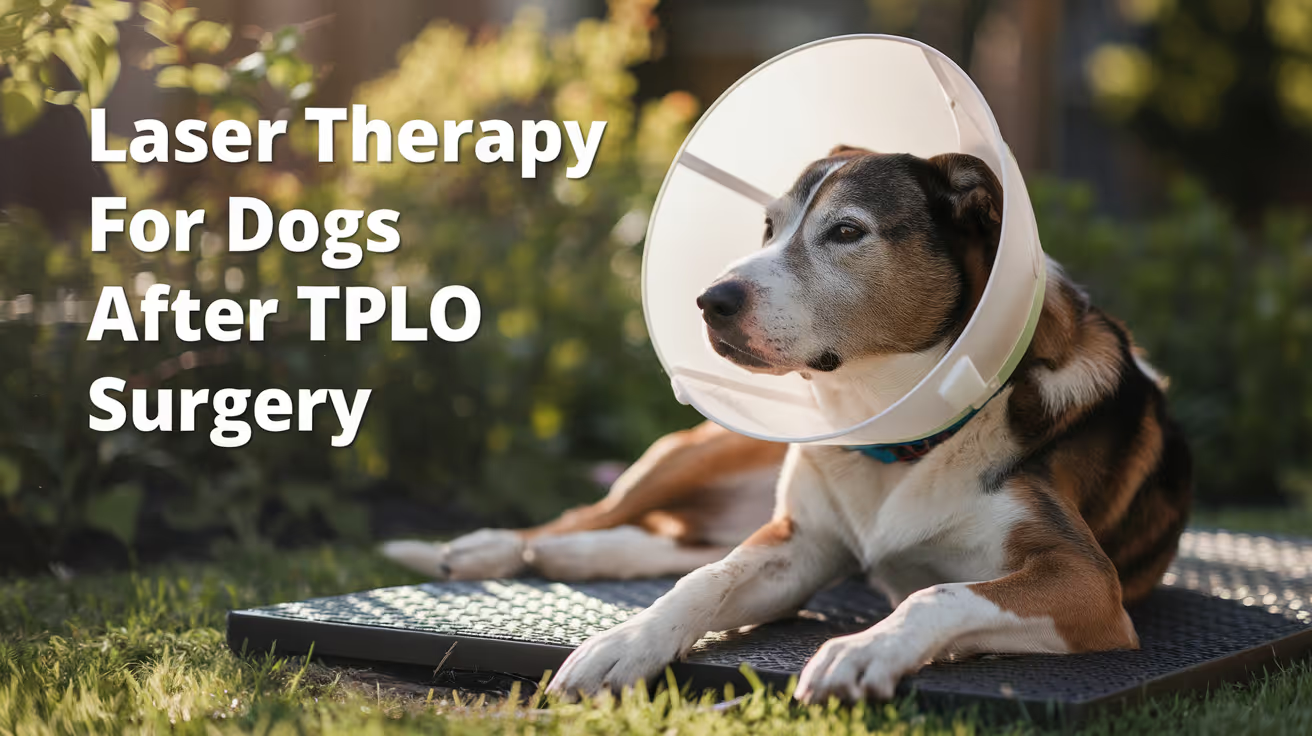
Laser Therapy for Dogs After TPLO Surgery
Learn how laser therapy helps dogs recover faster and with less pain after TPLO surgery for cruciate ligament repair.
Laser therapy also called photobiomodulation (PBMT) or low-level laser therapy (LLLT) is one of the most commonly offered adjunct treatments during TPLO recovery. Many specialist and rehabilitation centres include it routinely.
But the evidence for its benefits is more nuanced than the marketing suggests, and owners deserve an honest picture of what it does and does not reliably achieve.
Quick answer: Laser therapy after TPLO uses specific light wavelengths to reduce inflammation and support tissue healing. Evidence for early pain reduction is moderately supported; evidence for improved radiographic bone healing is weak. It is a safe adjunct but should not replace rehabilitation exercises, pain medication, or activity restriction.
Key takeaways
- Laser therapy reduces postoperative inflammation and may improve gait scores: a TPLO study found better hindlimb function at 8 weeks in treated dogs
- Evidence for improving radiographic bone healing is weak: three controlled studies found no statistically significant difference in healing time
- The 2024 AVMA randomized trial found no significant difference in CRP, weight bearing, pain scores, or SSI rates between PBMT and sham groups
- Sessions typically begin within the first few days of surgery and continue through the rehabilitation phase
- Laser therapy is safe with few contraindications: avoid eyes and active tumour sites; safe over the TPLO incision once closed
- It works best as part of a multimodal plan: exercise therapy and pain medication carry stronger evidence than laser alone
What laser therapy does
Laser therapy for dogs, also known as photobiomodulation, involves using specific wavelengths of light to penetrate tissues and promote cellular regeneration and healing. The laser light stimulates the production of ATP (adenosine triphosphate), enhancing cell repair and growth, reducing inflammation, and increasing blood circulation.
Photobiomodulation therapy has been shown to decrease inflammation, and increase analgesia, vascularization, and tissue healing after musculoskeletal injury or surgery.
The mechanism is photochemical: light energy at specific wavelengths (typically 630 to 980 nm) is absorbed by mitochondria.
This increases ATP production, modulates reactive oxygen species, and influences gene expression related to inflammation and healing.
The effects are local confined to the tissue depth the light reaches.
For post-TPLO use, the targets are: the surgical incision, the osteotomy site in the proximal tibia, and the surrounding periarticular soft tissues.
What the clinical evidence shows
Pain and function
Research following TPLO surgery showed that dogs receiving LLLT had better hindlimb function and gait scores at 8 weeks compared to controls. This is especially valuable in orthopedic recovery, where early weight-bearing can prevent muscle atrophy and joint stiffness.
In a controlled veterinary study, dogs with surgical incisions treated with laser therapy exhibited significantly less inflammatory cell infiltration and tissue necrosis within the first week post-op compared to untreated controls.
The 2024 randomized trial
54 client-owned dogs with CCL rupture undergoing unilateral TPLO surgery were enrolled. The study population was randomly assigned to either a treatment group receiving PBMT (24 dogs) or a control group (30 dogs). PBMT was performed immediately after induction, and at 6 hours, 24 hours, 48 hours, and 8 weeks postoperatively. Evaluation of CRP, pain scores, evidence of SSI, and percentage weight bearing were assessed at all time points.
The trial found the therapy showed promise but no statistically significant difference between groups on any primary outcome measure.
Bone healing
Three studies compared LLLT to a control and concluded that LLLT treatment did not make a significant difference in improving radiographic bone healing. The studies collectively provide weak evidence for this outcome.
This is an important distinction: laser therapy may support soft tissue healing, pain, and early function but it does not appear to accelerate the osteotomy healing visible on radiographs.
When to start and how often
Laser therapy uses focused light energy on the surgical site to support healing.
Most rehabilitation programmes begin laser therapy within the first 1 to 3 days after TPLO surgery, often at the surgical centre before discharge or at the first rehabilitation visit.
Typical post-TPLO laser protocol:
- Frequency: 3 to 5 sessions per week in the first 2 to 3 weeks
- Frequency: 1 to 2 sessions per week from weeks 3 to 8
- Session duration: 5 to 15 minutes depending on the laser system and dosing protocol
- Total sessions: typically 6 to 12 in the first 8-week recovery phase
The protocol varies by laser system, power output, and the individual patient's response.
Realistic expectations
Laser therapy is a useful adjunct in TPLO recovery. It is not a substitute for the treatments with stronger evidence: pain medication, activity restriction, and structured rehabilitation exercises.
Laser therapy could be particularly helpful for dogs with weight-bearing and gait issues while recovering from TPLO surgery after a cruciate injury.
Dogs with significant early swelling, wound sensitivity, or slow initial weight-bearing progress may benefit most. Dogs recovering well with standard multimodal analgesia and rehabilitation may show less measurable difference.
For the bone healing timeline that laser therapy supports during recovery, see TPLO bone healing time in dogs explained.
For the full recovery plan that laser therapy fits into, see 10 essential TPLO recovery tips for pet owners.
For the physical therapy that is the primary evidence-based adjunct, see when to start physical therapy after TPLO surgery.
For swelling management in the recovery period, see how long does swelling last after TPLO surgery.
Frequently asked questions
Is laser therapy safe over the TPLO incision?
Yes, once the incision is closed. Laser therapy is safe over sutured incisions and can be applied at the surgical site from the first post-operative day in most protocols.
Avoid direct application over open wounds or actively infected tissue.
How many laser sessions does a dog need after TPLO?
Typically 6 to 12 sessions across the first 8 weeks.
Start at 3 to 5 sessions per week for the first 2 to 3 weeks, tapering to 1 to 2 per week through the rehabilitation phase.
The exact protocol depends on the laser system and rehabilitation plan.
Does laser therapy replace pain medication after TPLO?
No. Laser therapy is an adjunct to pharmaceutical pain management, not a replacement. Post-TPLO pain management requires NSAIDs, and often gabapentin or other analgesics.
Laser therapy may reduce the pain burden and support earlier mobility but does not provide sufficient analgesia on its own.
Can I do laser therapy at home with a consumer device?
Consumer-grade red light therapy devices exist but operate at lower power densities than veterinary therapeutic lasers. The clinical evidence discussed in this article relates to veterinary-grade PBMT devices.
Home devices may offer some benefit but cannot replicate the dosing of professional equipment. Discuss with your rehabilitation veterinarian before purchasing.
Will laser therapy prevent my dog from needing more medication?
Possibly. If laser therapy reduces post-operative inflammation and pain, some dogs may need lower doses of pain medication or taper off sooner.
This should be guided by your veterinarian based on your dog's individual recovery trajectory.
Resources
- AVMA Journal. Photobiomodulation Therapy in Dogs Undergoing TPLO After Cranial Cruciate Ligament Rupture. avmajournals.avma.org
- Veterinary Evidence. Does LLLT Improve Radiographic Healing for Dogs with CCL Rupture Undergoing TPLO Surgery? veterinaryevidence.org
- AKC. Laser Therapy For Dogs: Uses, Side Effects, and Alternatives. akc.org
- Erchonia. Laser Therapy for Post-Surgical Recovery in Pets. erchonia.com
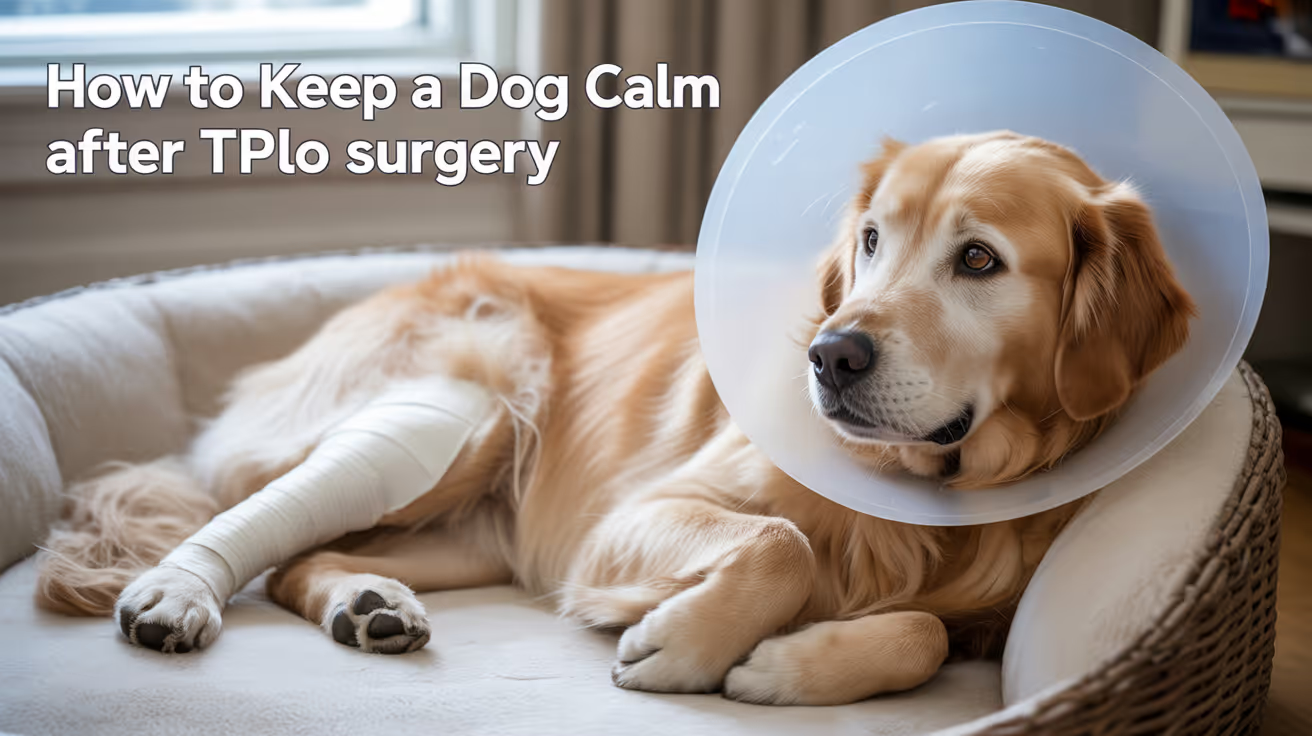
How to Keep a Dog Calm After TPLO Surgery
Learn how to keep your dog calm after TPLO surgery using rest, crate training, and soothing techniques for safe, stress-free recovery.
Keeping a dog calm during TPLO recovery is one of the hardest parts of the process -- and one of the most important.
A dog that feels physically capable of running at week 3 is not biologically ready to run at week 3. The osteotomy has not consolidated. The plate can fail.
Activity restriction is not optional.
Quick answer: Most effective strategies for keeping a dog calm after TPLO surgery: crate confinement during unsupervised periods, food puzzles and scent games, consistent pain management, a quiet low-stimulus environment, and trazodone or gabapentin for highly anxious dogs. Keep a leash on the dog indoors.
Key takeaways
- Crate confinement is the foundation of activity control: large enough to stand and turn but not pace; prevents the spontaneous running, jumping, and spinning that cause plate failure
- Mental stimulation substitutes for physical activity: food puzzles, lick mats, frozen Kongs, and scent games provide neural reward without physical impact
- Pain management compliance directly affects calmness: uncontrolled pain causes restlessness; giving NSAIDs and gabapentin on schedule keeps the dog comfortable enough to rest
- The environment must be actively managed: loud TV, visitors, and other pets cause arousal and movement; a quiet, predictable low-stimulus space reduces arousal
- Trazodone and gabapentin can be prescribed for highly anxious dogs: VetSurgInfo confirms trazodone is inexpensive, safe, and effective for anxiety and sedation during TPLO recovery
- Always use a leash indoors during early recovery: a dog that slips or startles can displace the plate; a house leash gives the owner control at all times
The crate: foundation of confinement
A crate is the safest confinement tool for TPLO recovery.
It limits the movements that risk plate failure -- spontaneous jumping, running to the door, sudden pivoting -- and gives the dog a defined, safe space.
Crate selection:
- Large enough for the dog to stand, turn, and lie down comfortably
- Not so large the dog can pace or run inside
- Soft bedding on non-slip material
- Location in the household main area, not isolated -- isolation increases anxiety
SustainableVet.org confirms: use a crate, pen, or small room with non-slip flooring. Crates prevent jumping, running, and twisting. Choose a crate large enough to stand and turn.
Exercise pen alternative: for dogs that do not tolerate crates, an exercise pen (X-pen) provides a larger confined space while still restricting free movement. Place the X-pen in the main living area so the dog is not isolated.
Small room alternative: a bathroom, laundry room, or small bedroom with a baby gate can work. Remove furniture the dog could jump on.
Mental stimulation: the most underused tool
A dog confined physically but not cognitively engaged becomes frustrated, which leads to escape attempts and activity that risks the repair.
Mental stimulation provides the same dopamine reward as physical activity with zero mechanical risk.
Effective mental stimulation options:
Food puzzles and slow feeders: scatter meals in a puzzle feeder or across a lick mat instead of in a bowl. A meal that takes 15 minutes to eat provides significant cognitive engagement.
Frozen Kongs: stuff with wet food, peanut butter (xylitol-free), or kibble soaked in broth; freeze for several hours. A frozen Kong can occupy a dog for 20 to 30 minutes.
Sniff games: hide small treats in a folded towel, a muffin tin covered with tennis balls, or a scatter across the crate bedding. Sniffing is cognitively tiring -- it is physiologically equivalent to sustained physical exercise in terms of neural engagement.
Chew toys: long-duration chews (bully sticks, raw bones appropriate for the dog's size, frozen chicken necks) keep the dog occupied without movement.
Animal Outpatient Surgery confirms: soft music, white noise, or pheromone diffusers create a serene atmosphere. Mental engagement through food puzzles and scent games reduces frustration from limited mobility.
Environmental management
The dog's immediate environment directly controls arousal level.
Reduce auditory stimuli: loud TV, doorbell sounds, and street noise cause the dog to alert and attempt to move. White noise machines or calm background music reduce stimulus peaks.
Manage household traffic: visitors who excite the dog, children who rough-house nearby, and other pets that want to interact all cause arousal. Limit access to the dog during early recovery.
Manage other pets: other dogs and cats approaching the recovering dog cause arousal and can trigger sudden jumping or running. Keep them separated during the early weeks, particularly unsupervised.
Non-slip flooring: rugs and yoga mats in the dog's movement area prevent slipping, which generates uncontrolled leg movements that can stress the plate.
Laveen Vet Center confirms: set up a quiet, confined area free from loud noises, active children, and other pets. White noise or soft music helps create a serene atmosphere.
Pain management and its role in calmness
An undertreated dog is a restless dog. Pain creates the exact behaviors -- panting, pacing, inability to settle, licking the leg -- that also indicate anxiety.
Distinguishing pain from anxiety is important because the response is different.
Pain management checklist:
- Give NSAIDs and gabapentin on the exact schedule prescribed, not as needed
- Never skip doses because the dog appears comfortable -- the medication is maintaining that comfort
- Give medications approximately 30 minutes before walks (TPLO home recovery protocols recommend this timing)
- Contact your vet if the dog cannot settle despite correct medication administration
VetSurgInfo confirms: gabapentin provides both analgesia and sedation; the sedating effect facilitates recovery and rest, particularly in the first 7 days.
Prescribed calming medications
For dogs with high anxiety, separation anxiety, or an inability to settle despite environmental and mental stimulation management, veterinary-prescribed medications are appropriate and safe.
Trazodone: a serotonin modulator used off-label in dogs for anxiety and sedation. VetSurgInfo confirms: dogs do very well on trazodone for anxiety and sedation during TPLO recovery; it is inexpensive and can facilitate recovery, rest, and calm during vet visits.
Gabapentin: the analgesic side effect of sleepiness helps with calmness in addition to pain control.
Alprazolam or other benzodiazepines: may be appropriate for situational anxiety (specific triggers like thunder).
SustainableVet.org confirms: vets can prescribe mild sedatives or calming medications for dogs who remain overly anxious; these drugs are safe when dosed correctly and can prevent harmful overactivity.
Never give human anxiety medications to dogs. Never use human supplements without vet approval -- some contain xylitol or other ingredients toxic to dogs.
Owner behavior and management
Owners unintentionally promote activity.
Do not excitedly greet the dog: excited greetings cause the dog to jump and spin. Calm, quiet greetings reduce arousal.
Leash the dog indoors: a house leash (a short, light leash attached to the collar) gives the owner control when the dog is out of the crate. If the dog startles or tries to move suddenly, the leash prevents uncontrolled movement.
Maintain a predictable routine: dogs are routine-oriented. Predictable meal times, bathroom walk times, and crate times reduce anticipatory anxiety. Variation creates excitement; routine creates calm.
Keep visits short: sitting with the dog is good. Prolonged exciting interaction is not. Brief, calm contact several times daily is better than one long exciting session.
For the recovery timeline, see what to expect after TPLO surgery in dogs. For infection prevention, see post-operative care mistakes that increase TPLO infection risk.
For swelling management, see fluid buildup after TPLO surgery in dogs. For exercise, see TPLO recovery exercises for dogs.
Frequently asked questions
My dog screams and cries in the crate for hours. What do I do?
Contact your vet. Sustained, intense crate distress may indicate: inadequate pain control (the dog is in pain, not just anxious), genuine severe separation anxiety, or insufficient mental stimulation.
Ask about trazodone or gabapentin for anxiety management. Do not give up on crate confinement -- the alternative is uncontrolled movement that risks the repair.
Is it okay to let my dog out of the crate to sit with me on the sofa?
Only if the dog is on a leash and cannot jump. Allow the dog to lie next to you on the floor or on a low dog bed beside you.
Do not allow the dog onto the sofa -- falling or jumping off generates the same plate-failure risk as running.
My dog seems much better at 3 weeks. Can I relax the restrictions?
No. Clinical improvement does not mean bone healing is complete. The osteotomy is not confirmed healed until radiographs at 8 to 12 weeks.
Plate failure typically happens when owners relax restrictions based on the dog appearing well. Maintain full restrictions until vet clearance.
What is the best medication for a high-energy dog that can't settle?
Trazodone is the most commonly prescribed agent for activity restriction in TPLO dogs. It is effective, safe, inexpensive, and can be used for the full restriction period.
Discuss with your vet at or before surgery -- it is easier to start early than to address a crisis at week 2.
Can I take my dog to visit friends or family during recovery?
Very limited visits in controlled, quiet environments where the dog is leashed and confined.
No visits to households with other active dogs, children who will excite the dog, or any environment where the dog cannot be kept calm. Unfamiliar environments increase anxiety and exploration behavior.
Resources
- SustainableVet. How to Keep a Dog Calm After TPLO Surgery. sustainablevet.org
- VetSurgInfo. TPLO Recovery Tips. vetsurginfo.com
- Animal Outpatient Surgery. How to Keep a Dog Calm After TPLO Surgery. animaloutpatientsurgery.com
- Laveen Vet Center. How to Keep a Dog Calm After TPLO Surgery. laveenvetcenter.com
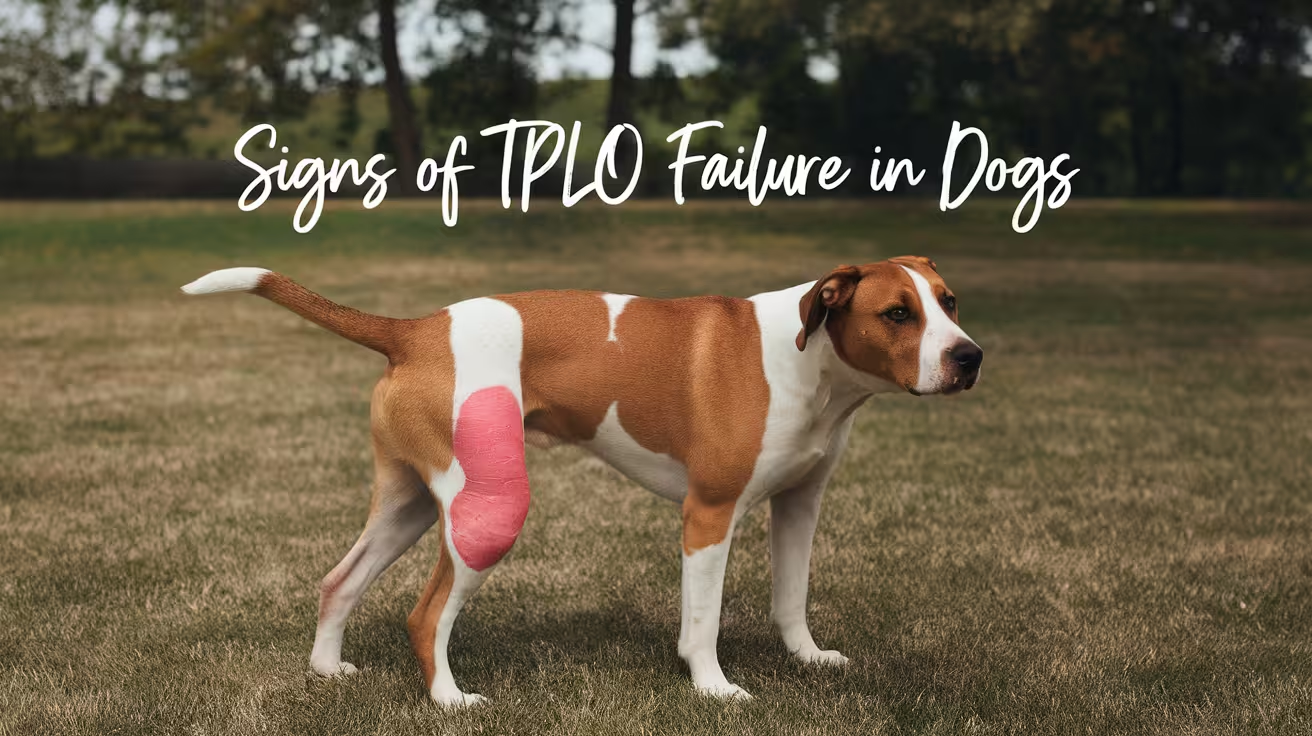
Signs of TPLO Failure in Dogs & When to See a Vet
Learn the key symptoms of TPLO failure in dogs, from limping to implant issues. Spot warning signs early and know when to seek veterinary care
TPLO failure is not a single event -- it is a spectrum of complications that can occur at different stages of recovery. Some signs are emergencies requiring same-day veterinary contact.
Others are patterns that require evaluation at the next scheduled appointment.
Understanding which signs fall into which category -- and what each sign most likely indicates -- allows owners to respond appropriately rather than either ignoring a serious complication or panicking unnecessarily.
Quick answer: Key signs of TPLO failure: persistent or worsening lameness beyond the expected trajectory; sudden acute non-weight bearing; swelling, warmth, or discharge at the plate site; clicking or popping with pain; and radiographic changes at follow-up. Call your vet the same day for sudden acute lameness, spreading infection signs, or systemic illness.
Key takeaways
- The key diagnostic principle is trajectory: normal TPLO recovery shows steady week-over-week improvement; any reversal -- worsening lameness, new swelling, returning pain -- signals a problem
- Persistent lameness beyond expected recovery is the most common sign of TPLO failure: continued limping or inability to bear weight beyond the expected level weeks after surgery is the hallmark symptom
- Sudden acute non-weight bearing after improvement is a same-day emergency call: causes include plate failure, tibial fracture, late meniscal tear, or acute infection; radiographs are required urgently
- Swelling at the plate site weeks after surgery indicates deep implant infection: this is distinct from normal post-surgical swelling and represents a late-developing implant-associated SSI
- Clicking or popping with pain or lameness indicates meniscal injury: isolated early clicking without lameness is usually benign; clicking with pain or worsening lameness indicates meniscal tear
- Radiographic confirmation is required to diagnose most causes of TPLO failure: X-rays confirm the specific mechanism and guide management
The recovery trajectory principle
The single most useful concept for identifying TPLO failure is trajectory.
Recovery from TPLO is not linear -- there are good days and less good days -- but the overall trend over weeks should be consistently improving.
Normal trajectory: each week, the dog uses the leg a little more freely, lameness is slightly less obvious, weight bearing is more consistent.
Abnormal trajectory: lameness worsens after a period of improvement; the dog is using the leg less at week 4 than at week 2; the dog that was consistently toe-touching now holds the leg entirely off the ground.
Trajectory reversal is the key signal. Single-day fluctuations can occur with activity and weather. Week-over-week regression cannot be dismissed.
Signs of TPLO failure: by type
1. Persistent or progressive lameness
What it means: the dog is limping beyond the expected level for the stage of recovery. At 4 weeks, some lameness is expected. At 8 weeks, most dogs should be consistently bearing significant weight. At 12 weeks, most are nearly normal.
Differential: implant loosening, delayed bone healing, non-union, deep infection, late meniscal tear, progressive arthritis.
When to call: if lameness has not improved for 2 or more weeks at any stage, or has worsened compared to the previous week -- contact your vet for evaluation before the next scheduled appointment.
SustainableVet.org confirms: persistent lameness is the hallmark symptom of TPLO failure; continued limping or inability to bear weight weeks after surgery may indicate failure.
2. Sudden acute non-weight bearing
What it means: the dog was bearing weight adequately and suddenly stops using the leg entirely. This is a distinct clinical event, not a gradual worsening.
Differential: acute plate failure (plate bending or screw pullout), acute tibial tuberosity fracture, acute late meniscal tear, acute hematogenous implant infection.
When to call: same-day emergency veterinary contact. Radiographs are required urgently to determine the cause.
SustainableVet.org confirms: a failed TPLO often presents as persistent pain, joint instability, swelling, or difficulty bearing weight; dogs may show progressive lameness or reluctance to move.
3. Swelling at the plate site (not the incision)
What it means: a distinct swelling appearing over the medial tibial surface at the plate location, separate from and later than the normal post-surgical incision swelling. This is a late-developing sign, often appearing weeks to months after surgery.
Differential: deep implant-associated infection (SSI-D) with abscess formation; rarely, a non-infectious reaction to the implant material.
When to call: same-day if accompanied by warmth, redness, or discharge. Within 24 hours if soft and non-painful but new and increasing.
4. Wound discharge or draining tract
What it means: a draining tract opening near (but not necessarily at) the original incision, often appearing weeks or months after surgery in a wound that appeared fully healed. This is a classic sign of deep implant-associated infection with sinus tract formation.
When to call: same-day. Do not wait.
5. Clicking or popping with pain or lameness
What it means: a meniscal click -- the torn meniscal flap being displaced by the femoral condyle during movement. Distinguished from benign joint adjustment clicking by the presence of pain on stifle manipulation and lameness.
Differential: late meniscal tear (2 to 22% incidence after TPLO).
When to call: same-day if acute lameness accompanies the click. Within 24 to 48 hours for new clicking with mild lameness.
See the dedicated meniscal tear article for full detail on diagnosis and treatment.
6. Radiographic findings at follow-up imaging
What it means: the 6-week and 12-week radiographs may show: peri-implant radiolucent halos (implant loosening or infection), widened osteotomy gap without callus formation (delayed union or non-union), plate migration from original position, screw in joint space, or cortical erosion (osteomyelitis).
When to call: your vet interprets these radiographs and will advise on urgency. Do not wait for the next scheduled appointment if the vet identifies a significant radiographic abnormality.
7. Systemic signs of infection
What it means: fever (rectal temperature above 39.5 C / 103.1 F), lethargy, reduced appetite, or behavioral changes. These indicate the infection has systemic involvement.
When to call: same-day emergency contact. Systemic infection from an implant site is a serious condition.
What is not TPLO failure
Not every deviation from ideal recovery represents failure.
Normal: gradual lameness that is slowly improving week over week.
Normal: mild swelling at the incision that peaks at days 2 to 5 and resolves.
Normal: mild stiffness in the morning that improves with movement.
Normal: intermittent toe-touching or three-legged walking during high-activity periods in the first 4 weeks.
Normal: a dog that is more lame on a day after increased activity compared to a day of rest.
The distinguishing feature is trajectory and pattern. Gradual improvement with day-to-day variation is normal. Reversal of the improvement trend is not.
Revision TPLO: when failure requires re-operation
SustainableVet.org confirms: revision TPLO may involve removing or replacing implants, repositioning the tibial cut, or addressing infections; revision surgery is more complex and requires strict post-op care.
The specific revision approach depends on the cause:
- Implant failure without infection: plate replacement or addition of a fixation device
- Non-union: bone grafting, implant revision, and extended restriction
- Deep infection with healed osteotomy: plate removal, surgical debridement, prolonged antibiotics
- Osteomyelitis: plate removal, debridement, 4 to 6 months of culture-directed antibiotics
For the complication list, see 15 common complications after TPLO surgery. For the implant failure guide, see TPLO implant failure signs and causes.
For the infection guide, see TPLO plate infection signs and treatment. For the meniscal tear guide, see dog meniscus tear after TPLO surgery.
Frequently asked questions
My dog is limping at week 6 but the 6-week radiograph was normal. Is this TPLO failure?
Not necessarily.
Normal radiographs at 6 weeks with persistent lameness suggests the issue is soft-tissue rather than bone or implant related -- meniscal injury, muscle atrophy, scar tissue, or rehabilitation lagging behind bone healing.
Discuss with your vet: physiotherapy and pain management are typically the next step for this presentation.
What happens if TPLO failure is not recognized early?
Delayed recognition of implant infection leads to establishment of deeper infection and biofilm, requiring more complex treatment. Delayed recognition of non-union leads to fibrous union or permanent instability.
Delayed recognition of meniscal tear allows progressive joint damage. Early action is consistently associated with better outcomes across all causes of TPLO failure.
Is TPLO failure common?
Overall TPLO complication rates are 10 to 34%, but most complications are minor (superficial infection, seroma). Serious failure requiring revision surgery is uncommon.
The 2013 study confirmed 93% limb function restoration at 1 year -- meaning the vast majority of TPLO dogs recover successfully.
Can TPLO failure happen years after surgery?
Yes. Late implant-associated infection (hematogenous seeding from dental disease, UTI, or skin infection) can occur years after surgery. The hallmark is sudden lameness regression in a dog with previously normal function.
Any unexplained lameness in a TPLO dog warrants radiographic assessment.
Should I ask for radiographs at every sign of lameness?
Not necessarily for every minor fluctuation.
Radiographs are indicated for: sudden acute lameness, lameness that has not improved for 2 or more weeks, new swelling at the plate site, a draining tract, or any systemic sign of infection.
Your vet will advise on imaging timing based on clinical presentation.
Resources
- SustainableVet. TPLO Failure Symptoms. sustainablevet.org
- Clinician's Brief. Common Tibial Plateau-Leveling Osteotomy Complications. cliniciansbrief.com
- SustainableVet. TPLO Failure Rate in Dogs. sustainablevet.org
- ACVS. Cranial Cruciate Ligament Disease. acvs.org
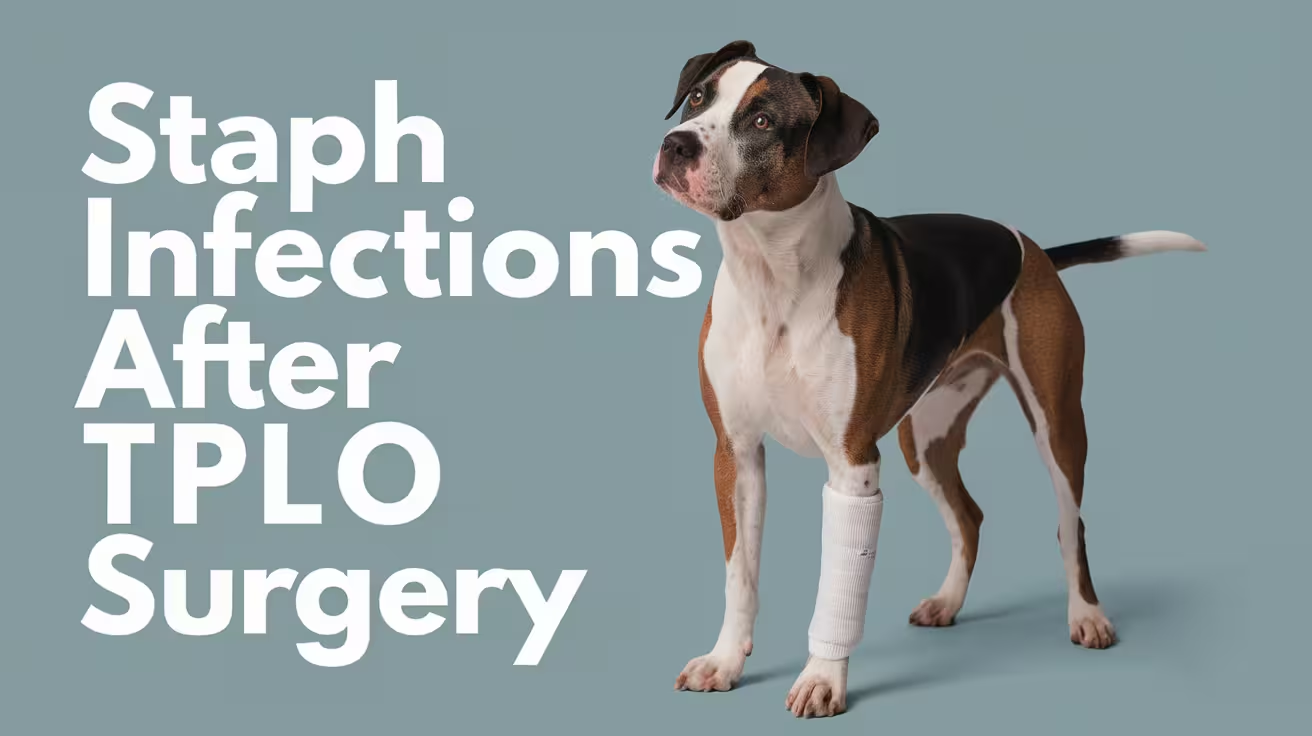
Staph Infection After TPLO Surgery: Signs & Risks
Staph infections after TPLO surgery can cause serious issues. Learn how to spot early symptoms, treat infections, and prevent complications
Staphylococcus species are the most common cause of surgical site infections (SSI) after TPLO surgery in dogs.
The primary culprit is Staphylococcus pseudintermedius -- a bacterium that normally lives on the skin, nares, and perianal area of healthy dogs.
Understanding why this organism is so prevalent, how it produces infection, and what makes methicillin-resistant strains particularly challenging is essential for owners of TPLO dogs and the veterinary professionals treating them.
Quick answer: S. pseudintermedius is the most common cause of post-TPLO infection. MRSP accounted for 28% of infections in a 659-TPLO study. Signs include redness, swelling, warmth, and discharge -- or only lameness regression and plate-site swelling for deep implant infections. Culture and sensitivity testing is required; empirical treatment risks selecting for further resistance.
Key takeaways
- S. pseudintermedius is the most frequently identified pathogen in TPLO infections: a normal skin commensal in dogs; the PMC 769-TPLO study identified it in 37 of 65 SSI cases
- MRSP accounted for 28% of infections in a 659-TPLO study: a high proportion of resistant organisms in a single surgical population; MRSP does not respond to many first-line antibiotics
- Biofilm formation on the TPLO plate makes staph infections difficult to treat: once established on the metal plate, bacteria are protected from antibiotics; deep implant infections often require plate removal
- Signs of staph infection range from visible wound changes to none: superficial infections produce redness, warmth, and discharge; implant infections may show only lameness regression and plate-site swelling
- Diagnosis requires bacterial culture and sensitivity testing: MRSP cannot be diagnosed visually; empirical antibiotic treatment without culture risks selecting for further resistance
- Pre-operative MRSP carriage significantly increases SSI risk: preoperative MRSP colonization is an independent risk factor; dogs with known carriage require enhanced perioperative protocol
Why S. pseudintermedius is so prevalent in TPLO SSI
It is a normal resident of dog skin
S. pseudintermedius colonizes the skin, nares, and perianal area of most dogs as part of their normal flora. It is present on the surgical preparation area even after antiseptic skin preparation.
The preparation reduces the bacterial load but does not sterilize the skin.
SustainableVet.org confirms: S. pseudintermedius is naturally found on a dog's skin; in healthy dogs it rarely causes issues, but after TPLO surgery it can infect the surgical incision and implants.
The TPLO plate provides a preferred colonization surface
Metal implants dramatically lower the minimum infective dose -- the number of bacteria required to establish infection. On a plate surface, S. pseudintermedius can form biofilm with far fewer organisms than required to infect soft tissue alone.
SustainableVet.org confirms: TPLO surgeries are particularly prone to infection because of the metal implants, which provide a surface for bacteria to stick to and form biofilms.
Licking introduces oral cavity organisms to the incision
The oral cavity of dogs is also colonized with S. pseudintermedius. When a dog licks the incision, it introduces additional bacteria directly to the wound.
This is the most common mechanism of avoidable post-TPLO SSI.
ResearchGate MRSA TPLO case report confirms: the dog licked the surgical site, causing dehiscence, and MRSA was detected from the purulent discharge. This underscores the critical importance of e-collar compliance.
MRSP: the resistant strain that complicates treatment
MRSP (methicillin-resistant Staphylococcus pseudintermedius) is resistant to beta-lactam antibiotics via the mecA gene -- the same mechanism as MRSA in humans. Cephalexin, amoxicillin-clavulanate, and most penicillins are ineffective.
Why MRSP is a particular challenge in TPLO
Most perioperative antibiotic protocols use cefazolin (a cephalosporin). MRSP is resistant to cephalosporins by definition.
If a dog unknowingly colonized with MRSP receives cefazolin prophylaxis, the MRSP is not suppressed. If it reaches the plate, it establishes infection against which standard first-line antibiotics are ineffective.
SustainableVet.org confirms: MRSP has developed resistance to many commonly used antibiotics, making infections harder to treat and increasing the risk of complications.
MRSP incidence in TPLO infections
ResearchGate TPLO MRSA/MRSP study (659 TPLO procedures, SSI rate 11%): MRSP accounted for 20 of 71 infections (28%). This is a high proportion of resistant organisms in a post-surgical population.
Antibiotic options for MRSP
First-line options for susceptible S. pseudintermedius (cephalexin, amoxicillin-clavulanate) do not work for MRSP. Culture and sensitivity testing is required to identify effective agents. Common options based on sensitivity results include:
- Chloramphenicol: effective against many MRSP; requires bone marrow monitoring
- Clindamycin: effective if sensitivity confirmed; not all MRSP strains
- Doxycycline: bacteriostatic; used for some superficial MRSP infections
- Rifampin (rifampicin): excellent biofilm penetration; always combined with another agent to prevent resistance; used for implant-associated MRSP
- Vancomycin: last resort; the MRSA TPLO case report describes a rifampin-vancomycin combination resolving MRSA infection that persisted despite implant removal and vancomycin alone
SustainableVet.org confirms: one of the biggest challenges in treating staph infections after TPLO is the presence of multidrug-resistant bacteria, particularly MRSP; this strain has developed resistance to many commonly used antibiotics.
Signs of post-TPLO staph infection
Superficial incisional infection (SSI-S)
- Redness spreading beyond the incision line (after day 5)
- Warmth at the incision site increasing rather than decreasing
- Swelling that is not resolving or is increasing
- Discharge: cloudy, yellow, green, or malodorous from the incision
- Wound edges that are not healing or are separating
Deep implant-associated infection (SSI-D)
- New or worsening lameness after a period of improvement
- Swelling over the plate site (not necessarily at the incision)
- Warmth specifically at the plate site on palpation
- A draining tract opening near but not at the incision (typically weeks to months post-surgery)
- No discharge from the original incision despite significant clinical signs
SustainableVet.org confirms: signs of infection include redness, swelling, warmth around the incision, pus-like discharge, an unpleasant odor, and increased pain or tenderness.
Diagnosis
Wound swab culture: taken from discharge at the incision or from the draining tract. Provides the organism identification and sensitivity profile.
Deep tissue culture: more accurate than wound swabs because it avoids surface contamination. Obtained at surgery (arthrotomy or plate removal).
Plate surface culture: the most sensitive diagnostic for implant-associated infection. Obtained when the plate is removed.
Imaging: radiographs assess peri-implant bone changes (radiolucent halos, periosteal reaction); advanced imaging (CT) may be used for complex deep infections.
The PMC 769-TPLO study confirmed: bacterial culture was positive in 72% of samples submitted when SSI was first suspected.
Treatment
Superficial infection: culture-directed oral antibiotics for 2 to 4 weeks; wound cleaning; e-collar compliance to prevent licking; local wound care.
Deep implant-associated infection: surgical debridement (lavage and debridement of the plate site); culture; culture-directed antibiotics for 4 to 8 weeks; plate retention if the osteotomy is not yet healed (with the understanding that complete resolution may require later plate removal); plate removal once the osteotomy has healed.
MRSP-specific: culture results guide antibiotic selection. Rifampin combinations are used for biofilm-associated implant infections. Veterinary infectious disease consultation is appropriate for complex MRSP cases.
For the infection prevention guide, see how can TPLO infections be prevented post-operatively?. For MRSP specifically, see can MRSP or MRSA occur after TPLO surgery?.
For the SSI rate data, see how common are infections after TPLO surgery?. For the antibiotic guide, see antibiotics commonly used for TPLO infections.
Frequently asked questions
My dog had a culture and it came back as S. pseudintermedius. Is that MRSP?
Not necessarily. S. pseudintermedius can be methicillin-susceptible (MSSP) or methicillin-resistant (MRSP). The sensitivity panel on the culture report will indicate whether the organism is susceptible to cephalexin and other beta-lactam antibiotics.
If susceptible, it is MSSP and responds to standard first-line drugs. If resistant to cephalosporins, it is MRSP and requires second-line agents.
Can I prevent staph infection after TPLO?
Licking prevention (e-collar compliance for 10 to 14 days) is the single most impactful owner-controlled prevention measure. Licking is the most common avoidable cause of post-TPLO SSI.
Wound dryness, clean bedding, limited environmental contamination, and daily wound inspection are additional preventive measures.
My dog finished the antibiotic course but the discharge came back. What does that mean?
Recurrence after antibiotic completion most commonly indicates biofilm-associated implant infection that was suppressed but not eradicated by antibiotics. Plate removal is likely needed for definitive resolution.
Contact your vet immediately -- do not wait to see if it resolves again.
Can my dog spread MRSP to other dogs or people?
MRSP is primarily a veterinary pathogen. It is less commonly transmitted to humans than MRSA, but zoonotic transmission has been documented.
Standard hygiene measures (hand washing after wound care, gloves for wound dressing changes, avoiding face contact with the infected wound) are appropriate precautions during treatment.
How long does it take to clear a deep staph infection after TPLO?
Deep implant-associated infections typically require 4 to 8 weeks of culture-directed antibiotics plus plate removal once the osteotomy is healed.
MRSP infections that involve biofilm and require rifampin combinations may take 3 to 6 months of total treatment. Osteomyelitis extends this further.
Long courses are necessary because biofilm-associated bacteria are protected from antibiotics and resistant populations can regrow when treatment stops.
Resources
- PMC. Surgical Site Infection After 769 TPLOs. pmc.ncbi.nlm.nih.gov
- ResearchGate. Treatment of MRSA Infection Following TPLO in a Dog. researchgate.net
- SustainableVet. Staph Infection After TPLO Surgery. sustainablevet.org
- SustainableVet. Is Staph the Most Common Infection After TPLO Surgery? sustainablevet.org
TPLO Plate Removal Recovery Guide
Learn about TPLO plate removal recovery, including healing time, care tips, risks, and what to expect after surgery.
The TPLO plate is designed to stay in permanently. TPLO Info confirms that implants are designed to stay in for life they only need to be removed if a problem develops.
When plate removal is necessary, it is generally a less complex procedure than the original TPLO, and most dogs recover well.
Understanding when removal is needed, what recovery involves, and what to watch for helps owners navigate this phase confidently.
Quick answer: TPLO plate removal is performed when the plate causes infection, chronic pain, or implant failure. Recovery takes 6 to 12 weeks: 2 weeks for wound healing, 6 to 8 weeks for bone remodeling at the screw holes. Activity restriction for at least 6 weeks is required.
Key takeaways
- The TPLO plate does not routinely need to be removed: designed for permanent placement; removal is only indicated when it causes a problem
- The three main reasons for plate removal are: infection, chronic implant-associated pain causing ongoing lameness, and implant failure requiring revision
- Removal is only safe after the osteotomy has healed: typically 6 to 12 months post-TPLO once radiographs confirm bone union
- Recovery after plate removal takes 6 to 12 weeks: 2 weeks for wound healing; 6 to 8 weeks for bone remodeling
- Screw holes take 6 to 8 weeks to remodel: cortical defects temporarily weaken the bone; activity restriction prevents fracture
- Most dogs improve significantly after plate removal: implant irritation-related lameness typically resolves within weeks of removal
When is TPLO plate removal necessary?
Infection involving the implant (most common indication)
Bacterial biofilm colonizing the implant surface is the most common reason for plate removal.
Implant-associated infections often fail to resolve with antibiotics alone because bacteria form protective biofilms on the metal surface that antibiotics cannot penetrate adequately.
Once the osteotomy has healed typically at 6 to 12 months post-TPLO the plate can be safely removed, the bone is debrided, and the infection treated without the implant present.
Veterinary Orthopaedic and Mobility Center (VOMC) confirms that infection is the most common reason for implant removal.
For the full infection guide, see TPLO plate infection signs and treatment and when does a TPLO implant need to be removed due to infection.
Implant-associated pain without infection
Some dogs develop chronic lameness caused by the plate irritating surrounding soft tissues rather than infection.
The plate may irritate the periosteum, cause a local inflammatory reaction to the metal, or become symptomatic once the dog returns to activity.
TPLO Austin confirms: in rare instances, patients may simply be uncomfortable with the presence of the plate. In these cases, removal of the plate after bone healing will typically resolve the lameness.
Implant failure
If the plate bends, breaks, or screws loosen or fail, structural revision may be required.
Depending on the degree of bone healing at the time of failure, revision may involve plate removal and replacement, or removal alone once healing is sufficient.
TPLO Austin notes this is a very rare complication (under 1%) when activity restriction protocols are followed.
When is plate removal safe?
Plate removal requires confirmed radiographic bone healing the osteotomy must be fully bridged before the plate is removed.
The plate is the only structure holding the osteotomy in place; removing it before healing is complete risks the bone segments displacing.
Sustainablevet.org confirms: the plate can be removed once the bone is fully healed, typically 6 to 12 months after the operation.
SustainableVet's clinical guide for post-removal recovery confirms: removing hardware too early or in cases with incomplete healing increases the risk of delayed union or fracture. Careful radiographic assessment before surgery is essential.
The plate removal procedure
Plate removal is performed under general anesthesia. The original incision is reopened, the plate and screws are removed, and the wound is closed.
The procedure is significantly shorter and simpler than the original TPLO there is no bone cutting or rotation involved.
Vetplayas explains that the procedure involves removing the metal plate and screws from the tibia, with the wound closed in layers after removal.
If the indication was infection, the bone surface around the screw holes is debrided and the area flushed thoroughly. Bacterial culture is obtained to guide antibiotic selection.
Recovery timeline after TPLO plate removal
Weeks 1 to 2: wound healing
The incision heals similarly to the original TPLO incision. Pain management with NSAIDs and, in many cases, gabapentin is prescribed. The dog is confined and leash-walked only. Cold packing reduces post-surgical swelling.
SustainableVet's recovery guide confirms: the first 2 weeks focus on wound healing and pain management after surgery.
Weeks 2 to 8: bone remodeling
The primary recovery challenge after plate removal is the screw holes left in the tibia. These cortical defects temporarily reduce bone strength at those sites.
The bone requires 6 to 8 weeks to remodel and fill in these defects before normal activity loads can be tolerated.
SustainableVet's clinical guide confirms: bone typically requires 6 to 8 weeks post-plate removal to regain sufficient strength; high-impact activities must be limited during this critical period to prevent fracture.
Activity restrictions during recovery
- Leash walks only for the first 6 weeks minimum
- No running, jumping, stairs, or off-leash activity
- Rehabilitation exercises (PROM, sit-to-stand, controlled leash walks) as prescribed
- 8-week radiographs typically required to confirm screw hole remodeling before return to normal activity
Weeks 8 to 12: return to activity
If radiographs at week 8 confirm adequate bone remodeling, the surgeon approves progressive return to normal activity. Most dogs return to full activity by 10 to 12 weeks post-removal.
Complications of plate removal
Infection: the surgical site can develop a new infection during the removal procedure. Strict aseptic technique and sometimes antibiotic prophylaxis reduce this risk.
Fracture through screw holes: the cortical defects from screw removal temporarily weaken the bone. Activity restriction during the remodeling phase is essential to prevent fracture through these sites.
Delayed union: rare, but can occur if the bone at the surgical site is already compromised by chronic infection.
Incomplete resolution: if implant irritation was the indication and lameness persists after removal, additional investigation (nerve involvement, joint pathology) is warranted.
For related guides, see TPLO plate rejection symptoms in dogs, can a dog heal normally after TPLO plate removal, and TPLO implant loosening causes and treatment.
For the cost of plate removal, see TPLO plate removal cost.
Frequently asked questions
Does every TPLO dog eventually need the plate removed?
No. Most dogs retain the plate for life without problems. TPLO Info confirms that implants are designed to stay in place permanently.
Plate removal is only performed when there is a clinical indication: infection, persistent lameness from implant irritation, or implant failure.
How long does it take to recover from plate removal?
Generally 6 to 12 weeks, depending on the indication and the individual dog. Infection cases may take longer because bone debridement and antibiotic treatment add complexity.
Straightforward irritation-related removals with no infection typically have the shorter end of this timeline.
Is plate removal surgery serious?
It is a general anesthetic procedure and carries the standard risks of any surgical intervention, but it is significantly simpler than the original TPLO.
The main specific risk is fracture through the screw holes if activity restriction is not followed. Most dogs do well with appropriate post-operative care.
Can the plate be removed too early?
Yes, and this is dangerous. Removing the plate before the osteotomy has fully healed causes the bone segments to lose their only structural support, potentially leading to displacement or fracture.
Radiographic confirmation of bone healing is mandatory before plate removal is scheduled.
Will my dog need another round of rehabilitation after plate removal?
Typically a milder version, yes controlled leash walks, PROM if stiffness is present, and gradual return to activity over 6 to 12 weeks.
Dogs that had ongoing lameness from implant irritation often improve quickly once the plate is removed, but the bone still requires the restricted activity period regardless of how well the dog feels.
Resources
- TPLO Info. Step 6: TPLO Surgery Recovery Process. tploinfo.com
- TPLO Austin. Step 6: TPLO Surgery Recovery. tploaustin.com
- Vetplayas. Ensuring a Successful TPLO Plate Removal Recovery. vetplayas.com
- VOMC. TPLO Veterinary Orthopaedic and Mobility Center. vomcvet.com
- VCA Animal Hospitals. Tibial Plateau Leveling Osteotomy (TPLO) in Dogs. vcahospitals.com
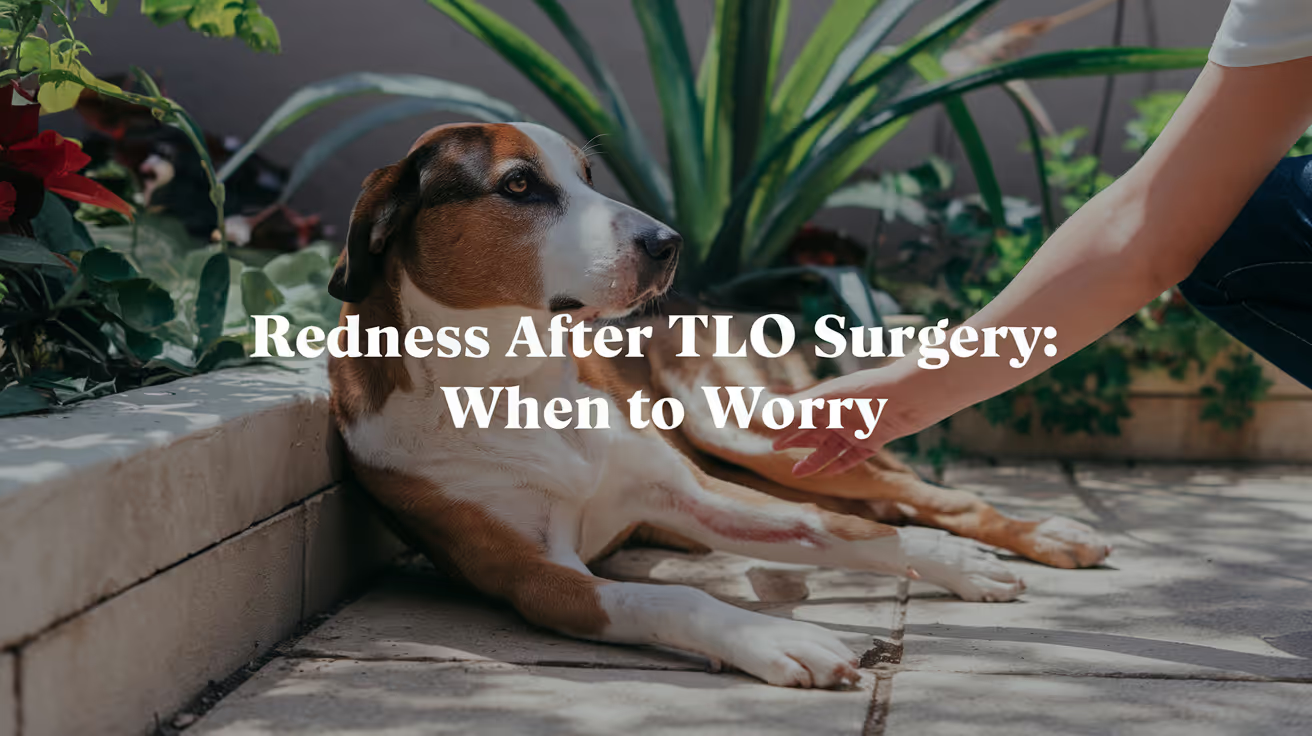
Redness After TPLO Surgery in Dogs: Causes & Care
Learn why redness occurs after TPLO surgery in dogs, how to recognize normal healing versus complications, and when to seek veterinary care.
Some redness around a TPLO incision is a completely normal part of healing.
The skin and underlying tissues respond to any surgical trauma with an inflammatory response redness is one of the visible signs of that response.
The question is always: is this normal healing redness, or is this infection?
Quick answer: Mild redness at the TPLO incision is normal for 2 to 3 days, fading over 1 to 2 weeks. Call your vet if redness spreads, is warm, produces discharge, worsens after day 3, or your dog develops fever.
Key takeaways
- Mild redness at the incision is normal for 2 to 3 days post-surgery: it should be fading by day 3 to 5
- Normal redness is localized to the incision line: redness spreading outward from the wound edge is not normal
- Infection redness is spreading, warm, and accompanied by discharge: these features together require veterinary evaluation
- Suture reaction redness is localized and itchy: the pattern is different from infection and typically resolves after suture removal
- Licking is the most preventable wound complication: saliva introduces bacteria; the E-collar must stay on until suture removal
- Redness after week 2 warrants veterinary evaluation: new redness after day 14 suggests a complication
Normal redness after TPLO surgery
The inflammatory phase of wound healing is the body's first response to surgical trauma. Blood flow increases to the wound, bringing immune cells and clotting factors.
This increased blood flow makes the skin appear pink or faintly red. This is expected and necessary for healing.
SustainableVet.org confirms: normal redness after TPLO surgery is usually mild and limited to the incision area. It should improve daily as the wound heals.
Characteristics of normal healing redness:
- Confined to the immediate edges of the incision not spreading outward
- Mild pale pink to light red, not deep red or purple
- Decreasing over time improving from day 3 onward
- Not warm to the touch (normal healing generates mild local warmth, but not the significant heat of infection)
- No discharge from the wound other than possibly a small amount of serum in the first 24 to 48 hours
- The dog is not bothered by gentle examination of the area
The redness typically peaks at 48 to 72 hours post-surgery and should be noticeably fading by the end of the first week.
Abnormal redness: signs of infection
Infection redness is different from normal healing redness in several characteristic ways:
Spreading: the redness extends outward from the incision margin into the surrounding skin. This cellulitis pattern spreading red discoloration in surrounding tissue is a sign that bacteria are spreading through the tissue planes.
Warmth: the infected area feels significantly warmer than surrounding skin or the opposite leg. Infection drives significant local heat through the inflammatory cytokine response.
Discharge: infected wounds produce discharge that may be clear-to-yellow early, progressing to yellow-green, cloudy, or frankly purulent. Foul odor is a hallmark of anaerobic bacterial involvement.
Worsening, not improving: normal redness fades. Infected redness intensifies. If redness is worse at day 5 than at day 2, infection is strongly suspected.
Systemic signs: fever (rectal temperature above 102.5 F), lethargy, loss of appetite, and reluctance to bear weight alongside redness suggest the infection is causing systemic effects.
SustainableVet.org confirms: infection risk includes bacteria entering the incision, causing redness that worsens along with discharge or odor.
The TPLO incision infection guide confirms: infection risk occurs in approximately 3 to 10% of TPLO cases. Signs of infection include redness, swelling, warmth, discharge, and delayed healing.
Other causes of post-TPLO redness
Suture or staple reaction
Some dogs develop a local inflammatory reaction to the suture material more commonly with older suture types or in dogs with sensitive skin.
This produces redness specifically along the suture line, often with mild swelling and sometimes itching (prompting the dog to lick or chew at the site).
It is localized, does not produce the spreading pattern of infection, and typically resolves after suture removal.
Contact dermatitis
Redness from a reaction to bandage material, antiseptic solution applied to the wound, or topical medications can mimic early infection. The pattern follows the contact area rather than the wound edge.
Seroma formation
A seroma that presses against the overlying skin may cause mild skin discoloration and the appearance of redness over the fluid-filled swelling. The area is soft, fluctuant, and typically not warm.
For the full seroma guide, see seroma in dogs after TPLO surgery.
What to do if you notice redness
First 3 days: normal range
Monitor daily. Take a photograph to track progression. Ensure the E-collar is on at all times. Check that no discharge or spreading is occurring.
Days 3 to 10: should be improving
If redness is not clearly fading by day 5 to 7, contact your veterinarian.
Photograph the wound to share with the vet by phone or telehealth before deciding whether an in-person visit is needed.
Do not apply any topical products to the wound without veterinary guidance antiseptics can delay healing and worsen skin reaction.
After day 10: any new or persistent redness needs evaluation
By day 10 to 14, most surgical incisions are well into the proliferative healing phase.
Persistent redness at this stage, or new-onset redness that was not present before, warrants a veterinary appointment rather than home monitoring.
Incision care during recovery
- Keep the incision dry: no bathing, no swimming, no wet grass
- E-collar on at all times until sutures are removed (typically day 10 to 14)
- Check the wound twice daily: look at it, do not touch it unless instructed
- No ointments or antiseptics unless specifically prescribed
- Contact your vet before applying anything to the wound
For the incision infection guide with full symptom detail, see TPLO incision infection symptoms and prevention. For the full complications reference, see 15 common complications after TPLO surgery in dogs.
For the seroma guide (fluid that can cause discoloration), see seroma in dogs after TPLO surgery. For the full TPLO recovery guide, see what to expect after TPLO surgery in dogs.
Frequently asked questions
How do I know if my dog's incision redness is normal?
Normal redness is mild, pink, confined directly to the wound edges, and fading by day 3 to 5.
Abnormal redness is spreading outward from the incision, deepening in color, warm to the touch, or accompanied by discharge or odor. If you are unsure, photograph the wound and contact your veterinarian.
My dog's incision looks red and my dog keeps licking it. What should I do?
Replace or refit the E-collar immediately if the dog has been reaching the wound. Even a few minutes of licking introduces bacteria.
Examine the wound for any discharge, spreading redness, or wound breakdown. If you see any of these, contact your vet the same day.
If the wound looks intact, continue monitoring closely with the E-collar secured.
Can redness appear weeks after surgery?
Yes. Late-onset redness appearing 2 to 6 weeks post-surgery often signals a developing infection rather than normal healing.
Common causes include low-grade suture infection, developing seroma, or a bacterial infection that has been slowly progressing. Any new redness appearing after the initial 2-week healing phase warrants veterinary evaluation.
Is red skin around the TPLO staples normal?
A small amount of mild pinkness immediately at the staple insertion points is normal.
Spreading redness between staple sites, significant swelling along the staple line, or discharge from staple holes is not normal and requires veterinary evaluation before the scheduled staple removal visit.
What happens if redness from infection is left untreated?
Superficial infections can progress to deeper tissue infections, then to implant-associated infections and osteomyelitis.
Laguna Hills Animal Hospital confirms that even superficial soft tissue infections have been shown to progress to implant infections and bone infections when not treated promptly and appropriately.
Resources
- SustainableVet. TPLO Incision Infection Symptoms and Prevention. sustainablevet.org
- Dial A Vet. Redness and Swelling Around TPLO Incision. dialavet.com
- Laguna Hills Animal Hospital. TPLO Surgery Complications. lhah.com
- VCA Animal Hospitals. Tibial Plateau Leveling Osteotomy (TPLO) in Dogs. vcahospitals.com
Dog Whining After TPLO Surgery: Causes and Care
Learn why your dog may whine after TPLO surgery, what it means, and how to help your pet recover comfortably and safely.
After your dog undergoes TPLO surgery, you might notice whining behavior that can worry you. Dog whining after TPLO surgery is common and can signal pain, discomfort, or anxiety during recovery. Understanding why your dog whines helps you provide better care and support during this critical healing phase.
This article explains the main reasons dogs whine after TPLO surgery, how to recognize when it is normal or concerning, and what steps you can take to ease your dog's discomfort. You will learn practical tips for managing pain, preventing complications, and promoting a smooth recovery.
Why is my dog whining after TPLO surgery?
Whining after TPLO surgery usually relates to pain or discomfort from the operation. Dogs cannot tell us how they feel, so whining is one way they express distress. It can also be a sign of anxiety or frustration due to restricted movement during recovery.
Recognizing the cause of whining helps you respond appropriately to your dog's needs and avoid unnecessary stress or complications.
- Postoperative pain: Pain from the surgical site is the most common reason for whining and usually peaks in the first few days after surgery.
- Restricted mobility: Limited ability to move or walk can cause frustration and whining as your dog adjusts to the recovery process.
- Anxiety or stress: Changes in routine, confinement, and discomfort can make your dog anxious, leading to vocalization like whining.
- Need for attention: Your dog may whine to seek comfort, reassurance, or physical contact from you during recovery.
Understanding these causes allows you to provide better comfort and care to your dog after TPLO surgery.
How can I tell if my dog’s whining is normal or a sign of a problem?
Not all whining after TPLO surgery is cause for alarm. Normal whining is usually mild and occurs during movement or when your dog is settling down. However, excessive or persistent whining may indicate complications or uncontrolled pain.
Knowing the difference helps you decide when to contact your veterinarian for advice or intervention.
- Normal whining: Occurs intermittently, especially when your dog tries to move or change position, and decreases over time.
- Signs of severe pain: Loud, continuous whining combined with limping, restlessness, or refusal to bear weight may signal uncontrolled pain.
- Signs of infection: Whining with swelling, redness, discharge, or foul odor at the surgical site requires immediate veterinary attention.
- Behavioral changes: Excessive whining with aggression, lethargy, or loss of appetite may indicate complications or distress.
Monitoring your dog closely and noting changes in whining patterns helps ensure timely care and prevents worsening conditions.
What pain management options are available after TPLO surgery?
Effective pain control is essential to reduce whining and promote healing after TPLO surgery. Your veterinarian will prescribe medications and suggest supportive measures to keep your dog comfortable.
Following the prescribed pain management plan closely improves your dog's recovery experience and reduces stress for both of you.
- Prescription painkillers: Non-steroidal anti-inflammatory drugs (NSAIDs) or opioids are commonly used to control postoperative pain safely.
- Cold therapy: Applying cold packs to the surgical area can reduce swelling and numb pain during the first 48 hours after surgery.
- Physical support: Using slings or harnesses helps your dog move without putting full weight on the operated leg, reducing pain during walking.
- Environmental comfort: Providing a quiet, soft resting area minimizes discomfort and encourages rest, which reduces whining.
Always follow your veterinarian's instructions on medication dosage and duration to avoid side effects or complications.
How should I care for my dog’s surgical site to reduce discomfort?
Proper wound care after TPLO surgery helps prevent infection and reduces pain that can cause whining. Keeping the surgical site clean and protected is vital during recovery.
Regular inspection and gentle care promote healing and comfort for your dog.
- Keep the incision dry: Avoid bathing or allowing water on the surgical site until your vet confirms it is safe to do so.
- Prevent licking or chewing: Use an Elizabethan collar or protective clothing to stop your dog from irritating the wound.
- Check for signs of infection: Look for redness, swelling, discharge, or foul smell and report concerns to your vet promptly.
- Follow dressing instructions: Change bandages as directed by your veterinarian to maintain cleanliness and support healing.
Consistent care of the surgical site reduces pain and helps your dog feel more comfortable during recovery.
What activity restrictions should I follow to help my dog heal?
Limiting your dog's activity after TPLO surgery is crucial to prevent injury and reduce pain that causes whining. Controlled movement supports proper healing and avoids complications.
Understanding and enforcing these restrictions ensures your dog recovers safely and comfortably.
- Strict confinement: Keep your dog in a small area or crate to limit running, jumping, or climbing for at least 6 to 8 weeks post-surgery.
- Leash walks only: Allow short, slow leash walks for bathroom breaks, avoiding off-leash activity or rough surfaces.
- Avoid stairs: Prevent stair climbing to reduce strain on the healing leg and minimize pain.
- Gradual reintroduction: Follow your veterinarian’s guidance to slowly increase activity as healing progresses, monitoring for any signs of discomfort.
Adhering to activity restrictions helps reduce whining caused by pain or injury during recovery.
When should I contact my veterinarian about my dog’s whining?
Knowing when to seek veterinary help is important if your dog’s whining signals a problem after TPLO surgery. Prompt attention can prevent complications and improve outcomes.
Being proactive about your dog’s symptoms ensures timely care and peace of mind.
- Persistent severe whining: If your dog whines continuously and shows signs of severe pain or distress, contact your vet immediately.
- Signs of infection: Whining accompanied by swelling, redness, discharge, or fever requires urgent veterinary evaluation.
- Changes in mobility: Sudden inability to bear weight or worsening lameness with whining should be assessed by a professional.
- Behavioral or appetite changes: Excessive whining with lethargy, aggression, or loss of appetite may indicate complications needing veterinary care.
Timely communication with your veterinarian helps ensure your dog’s recovery stays on track and reduces unnecessary suffering.
Conclusion
Dog whining after TPLO surgery is a common way your pet expresses pain, discomfort, or anxiety during recovery. Understanding the reasons behind the whining helps you provide better care and comfort to your dog.
By managing pain effectively, caring for the surgical site, restricting activity, and monitoring for complications, you can support your dog's healing and reduce distress. Always consult your veterinarian if you are concerned about your dog's whining or recovery progress.
FAQs
How long does whining usually last after TPLO surgery?
Whining typically decreases within the first two weeks as pain and discomfort lessen. Persistent or worsening whining beyond this period should be evaluated by a veterinarian.
Can I give my dog over-the-counter pain medication for TPLO recovery?
Do not give over-the-counter pain medications without veterinary approval, as some can be toxic to dogs or interfere with prescribed treatments.
Is it normal for my dog to whine at night after TPLO surgery?
Yes, dogs may whine at night due to discomfort or anxiety. Providing a comfortable, quiet space and following pain management helps reduce nighttime whining.
How can I comfort my dog when it whines after surgery?
Offer gentle petting, speak softly, and stay close to reassure your dog. Avoid excessive stimulation that may increase anxiety or pain.
When can my dog start physical therapy after TPLO surgery?
Physical therapy usually begins 1 to 2 weeks post-surgery, depending on healing progress. Follow your veterinarian’s recommendations for timing and exercises.
What to Expect After TPLO Surgery in Dogs
Learn what to expect after TPLO surgery, including pain, swelling, healing time, and care tips for your dog’s smooth recovery.
TPLO recovery is a structured 8 to 12 week process. The surgery takes 1.5 to 2 hours; the recovery takes months.
Understanding what is normal at each stage allows owners to support recovery confidently, recognize complications early, and avoid mistakes that extend recovery or cause setbacks.
Quick answer: After TPLO surgery, expect 8 to 12 weeks of graduated activity restriction. Weeks 1 to 2: crate rest, short walks, e-collar on. Weeks 3 to 8: progressive walks and range-of-motion exercises. Weeks 8 to 12: confirm bone healing and resume normal activity. Full muscle recovery takes 6 months.
Key takeaways
- The 8 to 12 week bone healing period is non-negotiable: the plate holds the osteotomy until new bone consolidates; premature high-impact activity before radiographic healing can cause plate failure
- Weeks 1 and 2 are highest-risk for infection and wound complications: the incision is healing; activity and wound management must be strictly controlled
- Most dogs begin partial weight bearing within the first few days: early weight bearing maintains muscle mass and supports bone healing per TPLO Info
- The 2-week recheck, 6-week radiograph, and 12-week radiograph are essential milestones: each has a specific purpose; missing them risks missing early complications
- Full muscle recovery takes up to 6 months after bone healing is confirmed; bone union and functional recovery are not the same endpoint
- The e-collar must stay on for 10 to 14 days without exception: licking is the leading owner-controlled cause of TPLO surgical site infection
Immediately after surgery: days 1 to 3
Coming home
Dogs are typically discharged 24 to 48 hours after TPLO surgery, or sometimes the same day at facilities with same-day discharge protocols.
The dog will be sedated, disoriented from anesthesia, and may have bandaging on the surgical leg.
Expect:
- Groggy, disoriented behavior for 12 to 24 hours from anesthesia
- Some whining or restlessness (normal -- from anesthesia, not necessarily pain)
- Refusal to bear weight on the operated leg
- Mild to moderate swelling around the incision, peaking at days 2 to 3
Pain management
Give prescribed medications on the exact schedule provided. Typical medications include NSAIDs (meloxicam, carprofen, or similar) and gabapentin. Give NSAIDs with food to reduce gastric irritation.
TPLO Info confirms: dogs may experience slight discomfort from surgical inflammation in the days following surgery; this should be managed with appropriate pain medications given on schedule.
Confinement
Strict crate rest or confinement in a small, non-slippery room. No stairs, no jumping, no access to furniture. Leash walks outdoors for bathroom purposes only, 3 to 5 minutes, multiple times daily.
Weeks 1 to 2: incision healing phase
This is the highest-risk period for wound complications and infection.
Incision care:
- E-collar must be on at all times except supervised eating and drinking
- Keep the incision dry -- no baths, no wet grass walks
- Inspect the incision daily for spreading redness, cloudy or malodorous discharge, or wound dehiscence
- Normal: a small amount of clear serum discharge in the first 2 to 3 days; mild redness at the incision line fading from day 5 onward
- Abnormal: spreading redness, cloudy discharge, increasing warmth, or wound edges separating -- contact your vet immediately
Activity:
- Leash walks only, 5 minutes maximum, multiple times daily
- No running, jumping, stairs, or playing with other pets
- No unsupervised time without the e-collar
Weight bearing:
- Many dogs begin toe-touching within the first few days
- Some dogs refuse weight bearing for the full two weeks -- this is also normal
- Encouraging gentle, slow walking on a leash helps maintain muscle mass
2-week recheck:SustainableVet.org confirms: the 2-week visit confirms incision healing, removes sutures or staples if healing is complete, and reviews pain management and early mobility status.
Weeks 3 to 6: progressive walking phase
The incision is closed; the focus shifts to controlled progressive activity increase and gentle range of motion.
Activity:
- Increase leash walk duration gradually -- TPLO Info recommends increasing by up to 5 minutes per week from the week 2 baseline
- No off-leash activity, no running, no jumping, no stairs without a ramp
- No playing with other pets
Range-of-motion exercises:
- Passive range-of-motion (PROM) exercises can begin in most dogs at weeks 2 to 4 if the vet approves
- Gentle flexion and extension of the stifle for 5 to 10 repetitions, 2 to 3 times daily
- Supports joint flexibility and prevents stiffness during the bone healing period
Weight bearing:
- By weeks 3 to 4, most dogs are consistently bearing weight on the operated leg
- Occasional toe-touching or three-legged walking during activity is still normal
What to watch for:
- Lameness that worsens after a period of improvement (trajectory reversal)
- New swelling at the plate site, separate from the healed incision
- Any discharge from the healed wound area
Weeks 6 to 8: early consolidation phase
6-week radiograph (critical milestone):SustainableVet.org confirms: the 6-week visit includes follow-up radiographs to evaluate bone alignment and early plate stability; if healing looks good, limited physical therapy or short walks may begin.
If the radiograph shows good progression of bone healing, activity is increased. If healing is delayed, restrictions continue with a re-radiograph at 8 weeks.
Activity (if healing is confirmed):
- Leash walks increasing to 15 to 20 minutes twice daily
- Rehabilitation exercises as directed
- Hydrotherapy (if available) is an excellent low-impact option for muscle building
Weeks 8 to 12: bone consolidation and return to activity
Follow-up radiograph at 8 to 10 weeks:Medcovet confirms: a follow-up radiograph is commonly performed at weeks 8 to 10 to assess bone healing; if healing is good, the vet may approve a gradual increase in activity.
12-week visit (major milestone):SustainableVet.org confirms: the 12-week visit includes final radiographs to confirm bone fusion and plate integrity; the vet may lift most activity restrictions at this stage.
Activity (if healing confirmed at 12 weeks):
- Progressive return to normal activity
- Running, jumping, and play can gradually resume over weeks 12 to 16
- Supervised play and controlled activity continue until full muscle recovery
Animal Outpatient Surgery confirms: full muscle recovery takes up to 6 months to restore full strength and coordination in the operated leg.
Medications and supplements
NSAIDs: given for 2 to 4 weeks post-surgery or as directed. Never exceed the prescribed dose; never use human NSAIDs (ibuprofen, aspirin) -- they are toxic to dogs.
Gabapentin: helps with pain and anxiety in the early recovery period; typically tapered off after 2 to 4 weeks.
Joint supplements: glucosamine and omega-3 fatty acids are commonly recommended for long-term joint health. Starting them at surgery is reasonable; discuss with your vet.
Signs requiring immediate veterinary contact
At any stage of recovery, contact your vet immediately if you see:
- Spreading redness or warmth at the incision or plate site
- Cloudy, yellow, green, or malodorous discharge from the wound
- Wound edges separating
- Severe worsening of lameness
- Fever, lethargy, or loss of appetite beyond the first 2 to 3 days
- Any draining tract opening near the surgical site
For the week-by-week rehabilitation exercises guide, see TPLO recovery exercises for dogs. For the infection prevention guide, see how can TPLO infections be prevented post-operatively?.
For the PROM exercises guide, see PROM exercises for dogs after TPLO surgery. For the earliest infection signs, see earliest signs of TPLO infection.
Frequently asked questions
When will my dog be back to normal after TPLO?
Bone healing is typically confirmed by radiograph at 8 to 12 weeks. Most activity restrictions are lifted at the 12-week mark.
Full muscle recovery and functional normalization takes up to 6 months from surgery.
TPLO has a high success rate (more than 90%) and most dogs return to their pre-injury activity level after full recovery.
My dog is not using the leg at all after surgery. Is that normal?
Some dogs refuse to bear weight for the full first 2 weeks. This is within normal range.
If the dog was bearing some weight and has now stopped completely after day 5, contact your vet to rule out a complication.
PROM exercises and gentle encouraged walking help prompt early weight bearing.
Can my dog go up stairs during recovery?
Not during weeks 1 to 6. Stairs generate impact and torsion on the healing osteotomy. Carry small dogs over stairs or use a ramp.
Larger dogs may need a sling or harness to assist navigating a small number of essential steps.
When can my dog swim or do hydrotherapy?
Hydrotherapy (underwater treadmill or controlled pool swimming) typically begins after incision healing is confirmed at 2 weeks. Check with your vet.
Swimming in open water (lakes, rivers) is not appropriate until the vet explicitly clears the dog, typically after the 12-week radiograph.
When should I be concerned about my dog's pain during recovery?
Increasing pain after initial improvement -- the dog more lame or more distressed today than yesterday -- is the key warning sign. Normal recovery pain decreases progressively.
Worsening pain warrants veterinary assessment to rule out infection, implant complication, or late meniscal injury.
Resources
- TPLO Info. What to Expect After Your Dog's TPLO Surgery. tploinfo.com
- Animal Outpatient Surgery. What to Expect After Your Dog's TPLO Surgery. animaloutpatientsurgery.com
- Medcovet. Essential Guide to Dog Recovery TPLO Surgery. medcovet.com
- VCA Animal Hospitals. Tibial Plateau Leveling Osteotomy (TPLO) in Dogs. vcahospitals.com
TPLO Plate Size Chart Explained
Detailed guide on TPLO plate size chart, helping pet owners understand implant options for canine knee surgery.
Before performing TPLO surgery, the veterinary surgeon selects the appropriate bone plate from a range of sizes specific to the implant system being used.
The plate size chart is the reference tool that guides this selection.
Choosing the correct plate is as important as the surgical technique itself an undersized plate risks mechanical failure, and an oversized plate may not fit the tibial anatomy correctly.
Quick answer: The TPLO plate size chart matches body weight and tibial bone dimensions to the appropriate implant. Arthrex plates range from 2.0 mm to 4.5 mm; Synthes covers a similar range. Tibial width is measured on preoperative radiographs and used alongside body weight to select the plate and screw configuration.
Key takeaways
- The plate size chart is a preoperative planning tool that matches body weight and bone dimensions to the appropriate implant
- Arthrex offers TPLO plates from 2.0 mm to 4.5 mm: the small sizes are purpose-designed for small breed anatomy, not scaled-down large plates
- Tibial width is measured on preoperative radiographs: a primary determinant of plate selection alongside body weight
- Plate selection is system-specific: Arthrex plates require Arthrex instruments and screws; Synthes requires Synthes-specific tools
- The plate is single-use sterile: a new plate must be available if a different size is needed intraoperatively
- Correct plate selection directly affects outcomes: undersized plates risk fatigue fracture; oversized plates cause soft tissue irritation
What the plate size chart does
The TPLO plate size chart is a lookup reference similar in function to the rotation chart and weight chart that are part of the Arthrex and Synthes TPLO planning systems.
It takes known inputs (primarily body weight and tibial dimensions measured on radiographs) and outputs the recommended plate size from the manufacturer's product range.
SustainableVet.org explains: a TPLO plate size chart is a reference guide used by veterinary surgeons to select the appropriate implant size for stabilizing the tibia after TPLO surgery.
Plates come in various lengths and hole numbers to fit different dog breeds and bone sizes.
The chart removes the guesswork from a decision that significantly affects the mechanical performance of the repair.
A plate that is correctly sized distributes load evenly across all screw holes and lies flush against the cortical bone surface, minimizing stress risers and soft tissue irritation.
Key variables in plate size selection
Body weight
Body weight is the primary initial filter. Heavier dogs generate higher joint forces and require larger, stiffer plates to withstand the loads applied during weight-bearing and normal activity.
General size categories used across Arthrex and Synthes product lines:
- Small breed (under 10 to 15 kg): 2.0 mm or 2.4 mm plates
- Medium breed (15 to 30 kg): 3.5 mm plates
- Large breed (30 to 50 kg): 3.5 mm or 4.5 mm plates
- Giant breed (over 50 kg): 4.5 mm plates; locking systems particularly important
These ranges are approximate and surgeon-dependent. The specific manufacturer chart values take precedence over general categories.
Tibial width and bone dimensions
The plate must span the osteotomy site with at least 2 screws proximal and 2 screws distal to the cut for adequate fixation.
The tibial width at the planned osteotomy level measured in millimeters on a mediolateral radiograph determines which plate length and screw configuration provides sufficient purchase without overhanging the bone margins.
Number of screw holes
Plates are available with different numbers of holes (typically 4, 5, or 6 holes for standard sizes).
More holes provide more screw fixation points, which is important in larger dogs or those expected to be highly active during recovery.
SustainableVet.org notes: plates come in various lengths and hole numbers to fit different dog breeds and bone sizes, allowing surgeons to select the configuration that best matches each individual patient's anatomy.
Arthrex TPLO plate system
Arthrex produces the most widely used TPLO locking plate system in the United States. The Arthrex TPLO Locking Plate System is designed with specific anatomical features to facilitate consistent plate placement.
From Arthrex Vet Systems documentation: the 2.0 mm and 2.4 mm TPLO locking plates are not simply shrunken versions of larger TPLO plates.
The smaller plates were purpose-designed for small breed bone anatomy.
Small dogs have proportionally different tibial geometry, and scaling down a large plate does not optimize screw angle or load distribution.
Arthrex's 4.5 mm plate incorporates a caudal tilt designed for improved screw purchase in the proximal tibial segment, with a proximal screw trajectory directed to avoid the osteotomy line.
This is an important design feature: screws that inadvertently cross the osteotomy reduce fixation quality and risk creating a stress concentration at the cut.
The Arthrex system includes an InternalBrace ligament augmentation option for dogs with severe stifle instability. This knotless lateral stabilization technique is not part of standard TPLO.
For the Arthrex plate overview, see Arthrex TPLO plate overview and use. For the Synthes plate overview, see Synthes TPLO plate overview and use.
How the plate size chart integrates with other planning tools
The plate size chart is used in concert with two other charts in the preoperative planning sequence:
Rotation chart: determines how many degrees the tibial segment must be rotated to achieve the target postoperative TPA of approximately 5 degrees. This is completed using the preoperative TPA measurement from radiographs.
Weight chart: guides post-operative weight-bearing expectations during rehabilitation.
All three charts together form the complete preoperative planning and post-operative monitoring framework. For the rotation chart, see Arthrex TPLO rotation chart explained.
For the weight chart, see Arthrex TPLO weight chart explained.
Why correct plate size matters
Mechanical adequacy: the plate must be strong enough to withstand the bending forces applied across the osteotomy during recovery typically equivalent to body weight or more during brief dynamic loading events (jumping down from a bed despite restrictions). An undersized plate risks fatigue fracture if the osteotomy takes longer to heal than expected.
Biological fit: the plate must lie flush against the bone surface. A plate that sits proud causes soft tissue irritation and can lead to the implant-associated pain and lameness that eventually requires plate removal.
Screw purchase quality: screws that are too short for the bone depth, or too long and penetrating the far cortex inappropriately, compromise fixation quality. Plate size selection is linked to the specific screw lengths that are compatible with each plate variant.
Frequently asked questions
Can the surgeon change the plate size during surgery?
Yes. If the preoperatively planned plate size does not fit correctly once the osteotomy is made and the bone is positioned, the surgeon may open a different plate size.
This is why surgical teams keep a range of plate sizes available in the sterile field or immediately accessible.
The plate is a single-use sterile item it cannot be resterilized if opened and unused.
Are Arthrex and Synthes plates interchangeable?
No. Each manufacturer's plates require that manufacturer's specific screws, instruments, and jigs.
Using Synthes screws in an Arthrex plate (or vice versa) risks stripped screw heads, incorrect screw purchase geometry, and compromised fixation. The systems are entirely separate.
How does the surgeon know which plate to order before surgery?
The surgeon measures the tibial width and records body weight at the preoperative planning appointment.
Based on these measurements and the manufacturer's size chart, a specific plate and screw set is ordered or identified from the implant inventory before surgery.
Is a larger plate always better for a big dog?
Not necessarily.
The plate must fit the tibial anatomy. A plate longer than the available cortical surface overhangs the bone, creating soft tissue irritation and stress concentration at the plate ends.
The goal is the smallest plate that provides adequate mechanical fixation for the dog's body weight and expected activity level.
What happens if the wrong plate size is used?
An undersized plate risks fatigue fracture under repetitive loading. An oversized plate may not conform to the bone surface, reducing screw fixation quality and potentially causing soft tissue irritation.
Plate failure or malposition requiring revision is a recognized complication of poor implant selection.
Resources
- Arthrex Vet Systems. TPLO Locking Plate System. arthrexvetsystems.com
- Arthrex Vet Systems. 4.5 mm TPLO Plates and Screws. arthrexvetsystems.com
- PMC. Influence of Fixation Systems on Complications After TPLO in Dogs Greater Than 45 kg. ncbi.nlm.nih.gov
- VCA Animal Hospitals. Tibial Plateau Leveling Osteotomy (TPLO) in Dogs. vcahospitals.com
Alternatives to TPLO Surgery for Dogs
Explore safe and effective alternatives to TPLO surgery for dogs with knee injuries, including treatments, benefits, and recovery options.
TPLO is the most commonly recommended surgical procedure for CCL rupture in medium and large breed dogs, but it is not the only option and it is not always the right option.
Some dogs are better served by a different surgical technique; others by non-surgical management. Understanding the full menu of alternatives helps owners have more informed conversations with their veterinarians.
Quick answer: Surgical alternatives to TPLO include TTA, extracapsular repair, Tightrope, MMP, and CBLO — most achieving 90 to 93% good function in the right patient. Non-surgical options produce variable outcomes and are not recommended for complete CCL rupture in large dogs.
Key takeaways
- Surgical alternatives achieve comparable outcomes in the right patient: TTA and Tightrope show 90 to 93% good function at one year
- Extracapsular repair is appropriate for dogs under 15 to 35 lbs: above 90% success in small dogs; significantly worse in larger breeds
- Conservative management is not recommended for large dogs with complete CCL rupture: outcomes are worse; appropriate only for comorbidities or small partial tears
- Knee braces do not have strong evidence of restoring joint stability; current studies show no significant benefit per Vetamac
- MMP and CBLO are newer alternatives with growing evidence: MMP uses a titanium wedge; CBLO uses a different osteotomy geometry
- The best alternative to TPLO is determined by dog size, activity level, surgeon training, and individual clinical factors not by owner preference alone
Surgical alternatives
TTA (Tibial Tuberosity Advancement)
TTA advances the tibial tuberosity cranially to change the angle of the patellar tendon relative to the tibial plateau.
This achieves mechanical neutralization of cranial tibial thrust through a different geometric approach than TPLO.
TTA is appropriate for large breed dogs, similar to TPLO. Studies show comparable outcomes at one year.
DVM360 notes that TTA recovery may be faster in the early post-operative period than TPLO, though TPLO tends to show better objective outcomes in size-matched longer-term comparisons.
For the full TTA vs TPLO comparison, see TPLO, CBLO, and TTA: a guide to cruciate surgery options.
Extracapsular repair (DeAngelis/lateral suture/ELSS)
Extracapsular repair uses a heavy suture outside the joint to stabilize the stifle.
It is the oldest and most widely available CCL repair technique and is appropriate for small dogs under 15 to 35 lbs.
Simon Veterinary Surgical confirms extracapsular repair achieves excellent results in appropriately sized patients (typically under 50 lbs), with many dogs living full, active lives.
In larger, more active dogs, the suture eventually stretches or fails, and outcomes are consistently inferior to TPLO.
Today's Veterinary Practice confirms TPLO produces higher peak vertical force and higher owner satisfaction at one year compared to extracapsular repair in size-matched dogs.
For the full comparison, see DeAngelis vs TPLO surgery for dogs.
Tightrope procedure
Tightrope uses a synthetic fiber-tape passed through bone tunnels in the femur and tibia to stabilize the stifle.
It is more anatomically positioned than extracapsular repair and achieves comparable outcomes to TPLO at 6 months in published comparative studies.
Tightrope is appropriate for small to medium dogs and as a less expensive alternative to TPLO. Dr.
Buzby's rehabilitation veterinary guide lists Tightrope among the established surgical options alongside TPLO, TTA, ELSS, and CBLO.
For the full comparison, see Tightrope vs TPLO surgery for dogs.
Modified Maquet Procedure (MMP)
MMP is an evolution of TTA that uses a porous titanium foam wedge instead of a cage to advance the tibial tuberosity.
It is less invasive and faster than TPLO, with comparable 6-month outcomes in the primary randomized study.
MMP is appropriate for medium and large breed dogs in the hands of surgeons trained in the technique.
For the full comparison, see Modified Maquet Procedure vs TPLO surgery.
CBLO (CORA-Based Leveling Osteotomy)
CBLO is a newer osteotomy technique that applies a different geometric principle to achieve tibial plateau leveling.
Rather than a radial osteotomy (as in TPLO), CBLO uses the CORA (center of rotation of angulation) to guide a wedge osteotomy.
Published success rates of 85 to 95% good function have been reported.
CBLO is an emerging alternative with growing evidence. For the full comparison, see CORA-based leveling osteotomy vs TPLO in dogs.
Zlig
Zlig is a synthetic implant placed inside the joint to replace the function of the CCL.
It is a less commonly discussed alternative with limited long-term veterinary evidence compared to the established osteotomy techniques.
For the full comparison, see Zlig vs TPLO: which surgery is better for dogs?.
Non-surgical alternatives
Conservative management
Conservative management refers to non-surgical approaches: strict rest and activity restriction, physical therapy and rehabilitation, weight management, NSAIDs for pain and inflammation control, and joint supplements.
Vetamac confirms: the main non-surgical treatments for CCL rupture include restricting activity, promoting weight loss, and physical therapy.
NSAIDs help manage pain and inflammation, although lameness persists as long as joint instability remains.
Simon Veterinary Surgical's guide notes: non-surgical outcomes are described as achieving "pasture soundness" comfortable for daily activities but the dog may not return to high-impact sports.
Consistency with physical therapy and weight management is the biggest predictor of good conservative outcomes.
When conservative management is appropriate:
- Dogs with serious concurrent medical conditions that make anesthesia high-risk
- Small dogs (under 10 to 15 lbs) with partial CCL tears
- As a temporary bridge to surgery when surgery is delayed
- Dogs whose owners cannot afford surgical options
When conservative management is not appropriate:
- Complete CCL rupture in dogs over 15 to 20 lbs lameness persists, arthritis progresses faster, and meniscal injury risk remains
- Active working dogs or dogs with high functional demands
For the full non-surgical guide, see non-surgical alternatives to TPLO surgery for dogs.
Orthopedic knee braces
Custom orthopedic braces provide external support to the stifle. They are sometimes used in dogs that cannot undergo surgery or during the waiting period before surgery.
Vetamac notes directly: current studies do not show significant benefits from orthopedic braces for CCL rupture.
They may improve comfort for some dogs but do not restore joint stability or prevent ongoing meniscal damage and arthritis progression. They are not a reliable substitute for surgical stabilization.
Regenerative medicine
Platelet-rich plasma (PRP) and stem cell therapy are emerging adjuncts.
Evidence for repairing a ruptured CCL is limited. These approaches may reduce inflammation but cannot restore the structural integrity that surgery provides.
Choosing between alternatives
For the lateral suture detailed comparison, see lateral suture vs TPLO: what's the difference?. For the full surgical options guide, see TPLO, CBLO, and TTA: a guide to cruciate surgery options.
Frequently asked questions
What is the best alternative to TPLO for a large dog?
TTA and MMP produce comparable outcomes to TPLO in large breed dogs and are appropriate alternatives.
Tightrope is less commonly recommended for very large dogs due to concerns about long-term stability at high joint forces.
The best choice depends on the individual dog, the surgeon's training and preference, and the specific clinical findings.
Can small dogs avoid surgery altogether?
Sometimes. Small dogs under 10 to 15 lbs with partial CCL tears sometimes achieve acceptable function with conservative management. However, surgery produces better outcomes even in small dogs.
If conservative management is chosen, strict weight management and physical therapy are essential.
Is a knee brace a good alternative to surgery?
Not as a primary treatment for complete CCL rupture. Braces may provide comfort and are sometimes used as a temporary measure or for dogs that truly cannot undergo surgery.
Vetamac confirms that current evidence does not support braces as an effective alternative to surgical stabilization.
How do I know which surgery is right for my dog?
A board-certified orthopedic surgeon (ACVS diplomate) is the most qualified person to advise on surgical selection for your specific dog.
Factors include body weight, tibial plateau angle, activity level, surgeon experience, and cost. General practitioners often refer to specialists for this decision.
Can a dog have a different surgery if the first one fails?
Yes. TPLO is a common revision option when extracapsular repair fails.
Different surgical approaches can be used as revisions depending on the original procedure, the current clinical state, and the degree of healing that has occurred.
Resources
- Vetamac. TPLO Surgery for Dogs: Success Rates and Alternative Options. vetamac.com
- Dr. Buzby's ToeGrips. Dog Torn ACL Treatment Without Surgery. toegrips.com
- Simon Veterinary Surgical. Alternatives to TPLO Surgery for Dogs. simonvetsurgical.com
- Animal Outpatient Surgery. Alternatives to TPLO Surgery for Dogs. animaloutpatientsurgery.com
- ACVS. Cranial Cruciate Ligament Disease. acvs.org
When Can Dogs Resume Agility Training Post-TPLO?
Learn when and how to safely resume dog agility training after TPLO surgery. Get expert-backed recovery tips, rehab steps, and risk precautions
Returning an agility dog to sport after TPLO surgery requires more than standard recovery. The standard 8 to 12 week bone healing protocol restores a dog to normal household function.
Returning to agility -- a high-impact sport involving jumping, sharp turns, weave poles, and contact obstacles -- requires a further 4 to 6 months of structured conditioning on top of that foundation.
Quick answer: Most agility dogs return to training 7 to 9 months post-TPLO. The Balanced Dog confirms 80% returned before 9 months (average 7.5 months). Bone healing at 8 to 12 weeks is the starting point. Return to sport requires muscle symmetry, pain-free movement, and a graduated protocol with vet clearance.
Key takeaways
- The return-to-agility timeline averages 7 to 9 months: The Balanced Dog confirms 80% returned before 9 months, average 7.5 months; 3 to 6 months reflects light training, not full competition
- Bone healing at 8 to 12 weeks is the starting point, not the endpoint: high-impact agility may require 4 to 6 more months; healed bone does not mean rebuilt muscle
- Agility-specific demands require agility-specific conditioning: jumping, tight turns, weave poles, and contacts generate forces far greater than walking; the dog must be conditioned for these before returning
- All dogs with agility return goals need a return-to-sport protocol: it adds sport-specific movement, progressive jumping, and fitness benchmarks beyond the standard recovery protocol
- Veterinary clearance at each phase is non-negotiable: vet or surgeon clearance is required before resuming training; no benchmark should be self-assessed
- Not all dogs will reach pre-surgery performance: most regain significant function but some need training changes to reduce joint stress
Why agility is a higher bar than normal recovery
Normal TPLO recovery targets return to household mobility: walking, light running, stairs, and play. Agility sport involves:
- Jumping: impact forces on landing of 2 to 3 times body weight
- Tight turns at speed: high lateral shear forces on the stifle
- Weave poles: rapid lateral flexion and extension
- Contact obstacles (A-frame, dog walk, teeter): climbing and controlled descent under dynamic loading
Each of these demands requires not just healed bone but fully rebuilt muscle, coordinated neuromuscular control, and joint proprioception. These take months to restore after TPLO.
SustainableVet.org confirms: dogs in sports or agility should reintroduce jumps and running only after veterinary clearance; swimming or uphill walking maintains muscle tone during the conditioning phase.
The return-to-sport timeline
Phase 1: bone healing (weeks 0 to 12)
Standard TPLO recovery. Strict confinement, graduated leash walking, and passive range-of-motion exercises. No running, jumping, or agility activity of any kind.
Radiographic bone healing is confirmed at the 8 to 12 week recheck. This is the gate that opens Phase 2.
Phase 2: rebuilding foundation fitness (months 3 to 5)
After bone healing is confirmed, the focus shifts to rebuilding the muscle mass and neuromuscular coordination that atrophied during the restriction period.
Activities during Phase 2:
- Progressive leash walking with duration increasing weekly
- Hydrotherapy (underwater treadmill) for muscle building without joint impact
- Hill walking (controlled inclines) to load the hip extensors and stifle stabilizers
- Balance and proprioception work (wobble boards, cavaletti poles)
- Core strengthening exercises
TPLO Info confirms: overall return to agility takes around 3 to 6 months; this period of rebuilding is what fills the gap between bone healing and sport re-entry.
Phase 3: sport-specific conditioning (months 5 to 7)
Once the dog has rebuilt baseline fitness, sport-specific conditioning begins. This is distinct from the standard recovery protocol.
Activities:
- Controlled jumping starting very low (4 inches for a dog that jumps 24 inches in competition) and increasing progressively over 6 to 8 weeks
- Slow figure-8 work and curved running to restore stifle lateral mechanics
- Individual weave pole work at slow speed before full weave sequence
- Contact obstacle approach and exit work at slow, controlled speed
- Video gait assessment to identify any asymmetry or compensation patterns
Petcarepartners.co confirms: most vets suggest a waiting period of 4 to 6 months for running and fetch; for agility, add a further structured sport-specific phase on top of this.
Phase 4: return to full competition (months 7 to 9+)
Full competition resumption follows veterinary clearance of the sport-specific conditioning phase. The criteria for clearance include:
- Pain-free movement through full range of stifle motion
- Muscle symmetry (thigh circumference equal bilaterally)
- Confident single-leg weight bearing during agility-specific movements
- No lameness following a full practice session
- Surgeon clearance based on physical and radiographic assessment
The Balanced Dog confirms: it typically takes 7 to 9 months to return to sport; 80% of dogs returned to agility before 9 months with a good rehabilitation and return-to-sport program.
Factors that affect the return timeline
Dog's age: younger dogs (under 4 years) typically rebuild muscle faster than older dogs. Senior dogs may take 10 to 12 months or longer.
Dog's pre-surgical fitness: well-conditioned sport dogs with strong baseline muscle mass rebuild faster than deconditioned dogs. Body condition score at the time of surgery matters.
Adherence to the restriction protocol: dogs that were overactive during weeks 1 to 6 may have developed micro-complications or delayed healing that shifts the timeline.
Concurrent meniscal tear: dogs that had a meniscal tear treated at the time of TPLO may need additional time, particularly if a late meniscal tear occurs during the return-to-sport phase.
Bilateral CCL disease: dogs with CCL rupture on the second side during or after recovery for the first require the full protocol on the second side before bilateral agility work resumes.
SustainableVet.org confirms: average recovery time to agility is about seven months; some dogs start controlled activity at six months, while others take up to two years.
Using a certified canine rehabilitation therapist
For agility dogs, professional rehabilitation is strongly recommended rather than a home-only protocol. Certified canine rehabilitation practitioners (CCRPs) provide:
- Biomechanical gait analysis to detect compensatory movement patterns before return to sport
- Underwater treadmill protocols calibrated to the specific demands of agility
- Sport-specific functional testing to determine readiness
- Individualized return-to-sport programs
The Balanced Dog confirms: surgery is just the start; a good-quality rehabilitation and return-to-sport program is instrumental in giving the dog the best chance at returning to competitive agility.
For the recovery timeline, see what to expect after TPLO surgery in dogs. For physical therapy timing, see when to start physical therapy after TPLO surgery.
For recovery exercises, see TPLO recovery exercises for dogs. For the failure rate overview, see TPLO failure rate in dogs.
Frequently asked questions
My agility dog had TPLO 6 months ago and is moving well. Can she start jumping?
Six months is within the average return-to-sport window but requires veterinary assessment before starting jumping.
The criteria -- muscle symmetry, pain-free full range of motion, confident single-leg weight bearing -- must be met and confirmed by your vet or rehabilitation therapist before any jumping begins.
Do not self-assess readiness.
Will my dog ever compete at the same level as before TPLO?
Many dogs do return to pre-injury competitive levels, especially those with strong pre-surgical conditioning and an excellent rehabilitation program.
SustainableVet.org confirms most dogs regain significant function and can participate in agility, though not all will reach pre-injury performance levels. The Balanced Dog study confirms 80% returned before 9 months.
Should I lower my dog's jump height after TPLO?
Discuss with your vet. Some dogs perform best at a jump height one level below their pre-surgery height to reduce cumulative joint loading. Others return to their full height without adjustment.
This is an individual decision based on the dog's age, size, arthritis level, and post-recovery movement quality.
Can I use a FitPaws or conditioning equipment at home?
Yes -- proprioception and balance equipment (wobble boards, FitPaws equipment, balance pads) is appropriate during Phase 2 and Phase 3 under the direction of your rehabilitation therapist.
These tools help rebuild the neuromuscular coordination needed for agility-specific movements. Always use on non-slip flooring.
What happens if my dog tears the other CCL during agility return?
Bilateral CCL disease is common (30 to 40% of dogs develop it). If the second stifle becomes symptomatic during the return-to-agility phase, the rehabilitation program pauses and the second stifle is assessed.
The return-to-agility timeline resets based on the second surgery date. Most dogs with bilateral TPLO can still return to agility.
Resources
- The Balanced Dog. Returning to Dog Agility After TPLO Surgery. the-balanced-dog.com
- TPLO Info. Can You Resume Dog Agility Training After TPLO Surgery? tploinfo.com
- SustainableVet. When Can Dogs Resume Agility Training Post-TPLO? sustainablevet.org
- ACVS. Cranial Cruciate Ligament Disease. acvs.org

