

Protecting
Pets, People & Planet
Join a group of veterinarians leveraging the latest technologies to deliver excellent care to their patients while being a responsible and positive force for their local and global communities.
100% secure. We do not share your information


Recent Articles
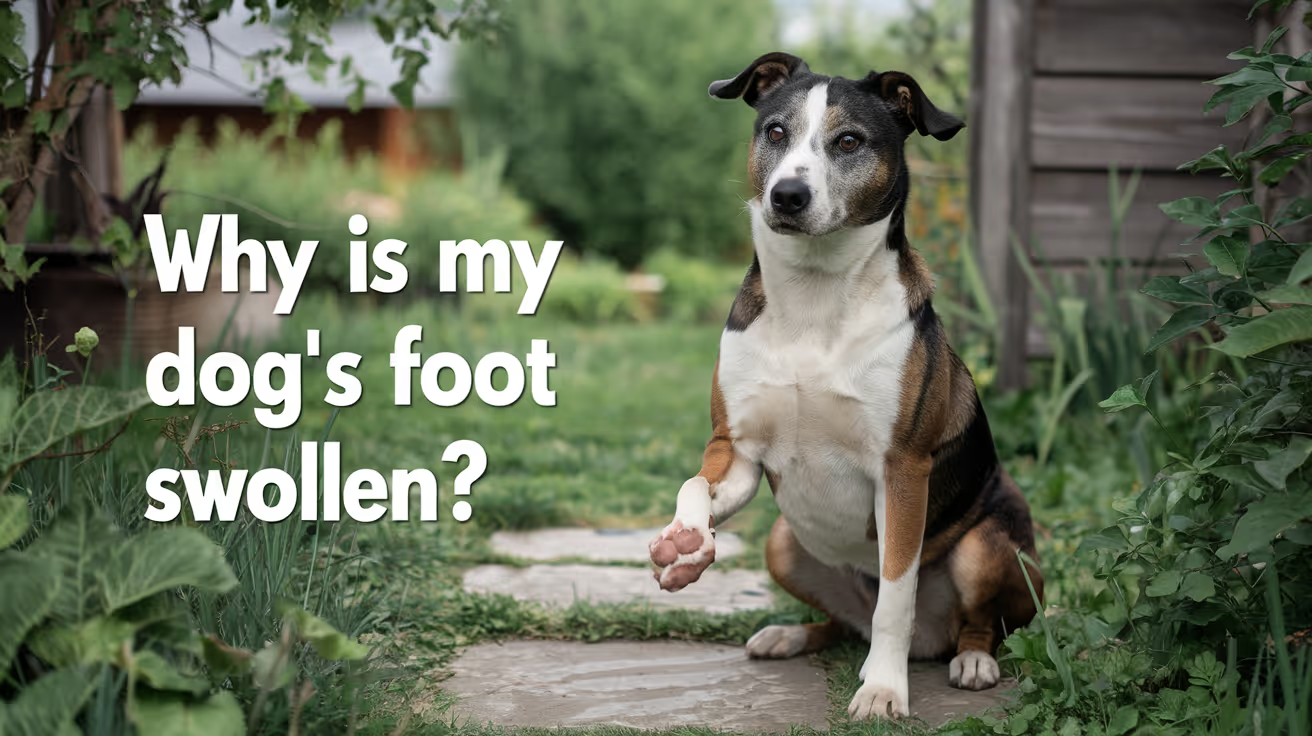
Why Is My Dog's Foot Swollen?
Discover why your dog's foot is swollen, common causes, treatments, and when to see a vet for proper care.
A swollen dog foot is one of the most common reasons owners call their vet. It can be as simple as a bee sting or as serious as a deep infection or bone tumor. The location, speed of onset, and other symptoms all help narrow down the cause.
This guide covers every common cause, how to assess severity at home, and the exact signs that mean your dog needs same-day care.
Quick answer: A swollen dog foot usually has a local cause: injury, insect sting, foreign object, or infection. Warm, increasing, or discharging swelling needs same-day vet care. Multiple swollen paws suggest allergies.
Key takeaways
- Single-paw swelling almost always has a local cause: injury, sting, foreign body, or infection
- Interdigital furunculosis (infected hair follicle cysts between toes) is among the most misidentified causes of recurring paw swelling
- Foreign objects like foxtails and glass splinters can migrate deep into tissue if left untreated
- Pododermatitis is the clinical term for inflamed paw skin; allergies are the most common underlying driver
- Swelling spreading up the leg or paired with face or neck swelling is an emergency requiring immediate care
- Most mild swelling from a sting or minor sprain improves within 24 to 48 hours with rest and monitoring
How to assess your dog's swollen foot before calling the vet
Before looking up causes, do a quick home assessment. This takes two minutes and tells you how urgent the situation is.
Step 1: Which paw?One paw = likely local cause. All four paws = likely allergic or systemic.
Step 2: Feel for heat.Warm or hot tissue means active inflammation or infection.
Step 3: Look between every toe.Redness, swelling between the digits, or visible nodules between the toes points to interdigital furunculosis or a foreign body.
Step 4: Check the pads.Burns appear as red, blistered, or peeling pad tissue. Cuts and punctures are often visible on the pad surface.
Step 5: Look at each nail.A broken nail or swollen nail bed causes localized pain and swelling at the toe tip.
VCA Animal Hospitals: "A deeper infection, like an abscess, will appear as a warm, soft to mildly firm swelling under the skin."
8 common causes of a swollen foot in dogs
1. Injury or trauma
Sprains, cuts, fractured toes, torn nails, and pad burns are the most frequent causes of sudden single-paw swelling. Dogs running on rough, hot, or icy terrain are especially prone.
PetMD notes that pad burns are particularly common in summer: check the pads after any walk on hot pavement. If your palm cannot hold against the pavement for five seconds, it is too hot for your dog's feet.
Signs: sudden lameness after activity, localized swelling, visible wound or bruising.
2. Foreign object
Thorns, glass, foxtails, and grass awns lodge between the toes or penetrate the pad. The body mounts an inflammatory response around the object, causing swelling that worsens over days.
SpectrumCare: "Foxtails and grass awns can lodge between the toes or in the pad and trigger pain, swelling, and infection."
Foxtails are particularly dangerous because they are barbed and can migrate deeper into tissue over days, eventually requiring surgical removal. If you cannot see and safely remove the object, do not probe. See a vet.
3. Insect sting or bite
Bees, wasps, fire ants, and spiders cause rapid single-paw swelling that appears within minutes of the sting. The paw may look puffy and your dog may lick or hold it up.
Dyer Animal Clinic advises watching for anaphylaxis signs: hives, difficulty breathing, excessive swelling spreading beyond the paw. These require emergency care immediately.
Localized sting swelling that stays in the paw and is not worsening can be monitored at home for 24 to 48 hours.
4. Infection: bacterial and fungal
Bacterial or fungal infections enter through cuts, puncture wounds, or damaged skin. Infected paws are typically warm, red, swollen, and often have an odor or discharge. VCA lists the visual signs: "Skin infections on the feet may result in red, moist lesions between the toes."
Pododermatitis (inflammation of the paw skin) is the umbrella clinical term. Common causes include:
- Secondary bacterial infection from chronic licking
- Yeast overgrowth in skin folds between toes
- Fungal infections (ringworm can affect paws)
- Demodectic mange (mite overgrowth)
Pododermatitis does not resolve without treatment. Antibiotics, antifungal medication, or both are typically required.
5. Interdigital furunculosis
This is one of the most commonly missed causes of recurring paw swelling. Interdigital furunculosis occurs when hair follicles between the toes become infected, forming painful reddish-purple nodules that may rupture and drain.
AKC notes that the condition is especially prevalent in short-coated, heavyset breeds: Bulldogs, Labrador Retrievers, and Chinese Shar-Pei are among the most commonly affected. Chronic licking due to allergies is a major driver.
Signs: swollen, painful nodules between the toes, draining tracts, recurrent swelling in the same location.
For how furuncles between the toes connect to abscess formation, see abscess as a cause of limb swelling.
6. Allergic reaction and pododermatitis
Environmental allergens (pollen, grass, lawn chemicals, road salt) and food allergies frequently cause paw inflammation. Dogs with allergies lick their feet chronically, creating secondary infection on top of the allergic reaction.
Wakefield Pet Vet: "Allergic reactions typically cause itching, redness, and sometimes blistering between the toes or on paw pads."
Allergic paw swelling usually affects multiple paws. It tends to recur seasonally or after contact with the trigger substance. Dogs with seasonal allergies often have their worst paw symptoms in spring and fall.
7. Bursitis
Bursae are small fluid-filled sacs that cushion joints. Repeated pressure on bony prominences, especially the elbow and hock, can cause bursitis. Affected joints may appear as soft, fluctuant swellings near a joint.
For how bursitis specifically produces foot and joint swelling, see bursitis as a common cause of foot swelling.
8. Cysts, tumors, and nail bed disease
Cysts, mast cell tumors, and subungual (under-nail) tumors can all present as localized swelling on or near the foot. Petcube notes that toenail tumors are more prevalent in large black-coated breeds such as Standard Poodles, Gordon Setters, and Schnauzers.
A lump that is growing, firm, or pigmented should always be evaluated by a vet rather than monitored at home.
For an overview of lumps that cause swelling on the legs, see lumps that can cause swelling.
Severity triage: what to do right now
Home care for mild cases
For minor swelling without infection signs:
- Keep the dog calm and limit walking
- Soak the paw in warm (not hot) water with Epsom salts for 10 minutes. PetMD recommends this as an excellent short-term measure regardless of cause.
- Gently clean any visible wound with mild soap and warm water
- Apply a cool damp cloth for 10 to 15 minutes to reduce swelling from sprains or stings
- Do not apply antibiotic ointments without vet guidance some formulations are toxic to dogs if licked
For pressure-related paw and leg swelling in dogs that rest in one position for extended periods, see pressure-related swelling in dogs.
Frequently asked questions
How do I treat my dog's swollen paw at home?
For mild swelling with no wound or discharge, rest the dog and soak the paw in warm Epsom salt water for 10 minutes. Check carefully for a foreign object or insect stinger. Do not use human antibiotic creams without vet guidance. If swelling has not reduced within 24 to 48 hours or is getting worse, contact your vet.
When should I be worried about my dog's swollen paw?
Be concerned immediately if the swelling is warm, increasing, or has discharge or odor. Call the vet the same day if your dog refuses to bear weight, if the swelling is spreading up the leg, or if there is any sign of an allergic reaction such as facial swelling or breathing difficulty.
What can I give my dog for a swollen paw?
Do not give human pain medications (ibuprofen, acetaminophen, aspirin) to dogs; many are toxic. For minor swelling, warm Epsom salt soaks are safe and effective for short-term relief. Your vet can prescribe appropriate anti-inflammatory medication if needed after examining the paw.
My dog's foot was normal this morning and is swollen now. What happened?
Sudden single-paw swelling most often means an insect sting, a foreign object picked up during activity, or a minor sprain. Check each toe carefully for a stinger, thorn, or visible wound. If swelling is mild and localized, monitor for 24 hours. If increasing or painful, call the vet the same day.
Can swelling in a dog's foot go away on its own?
Minor swelling from a bee sting or small sprain typically resolves within 24 to 48 hours with rest. Infections, foreign objects, interdigital furunculosis, and bursitis do not resolve without treatment. If swelling has not improved within 48 hours, veterinary assessment is needed.
My dog's foot smells bad and is swollen. Is that serious?
Yes. Odor from a swollen paw strongly indicates infection. A foul smell means bacteria are actively present. Common sources include interdigital furunculosis, a nail bed infection, or an abscess. This requires prompt veterinary treatment and should not be left to resolve on its own.
Resources
- PetMD. Dogs Swollen Paws: Causes and Treatments. petmd.com
- VCA Animal Hospitals. First Aid for Limping Dogs. vcahospitals.com
- AKC. Pododermatitis on Dog Paw: Causes, Symptoms and Treatment. akc.org
- SpectrumCare. Paw Swelling in Dogs. spectrumcare.pet
- Dyer Animal Clinic. Reasons Your Dog's Paw is Swollen. dyeranimalclinic.com
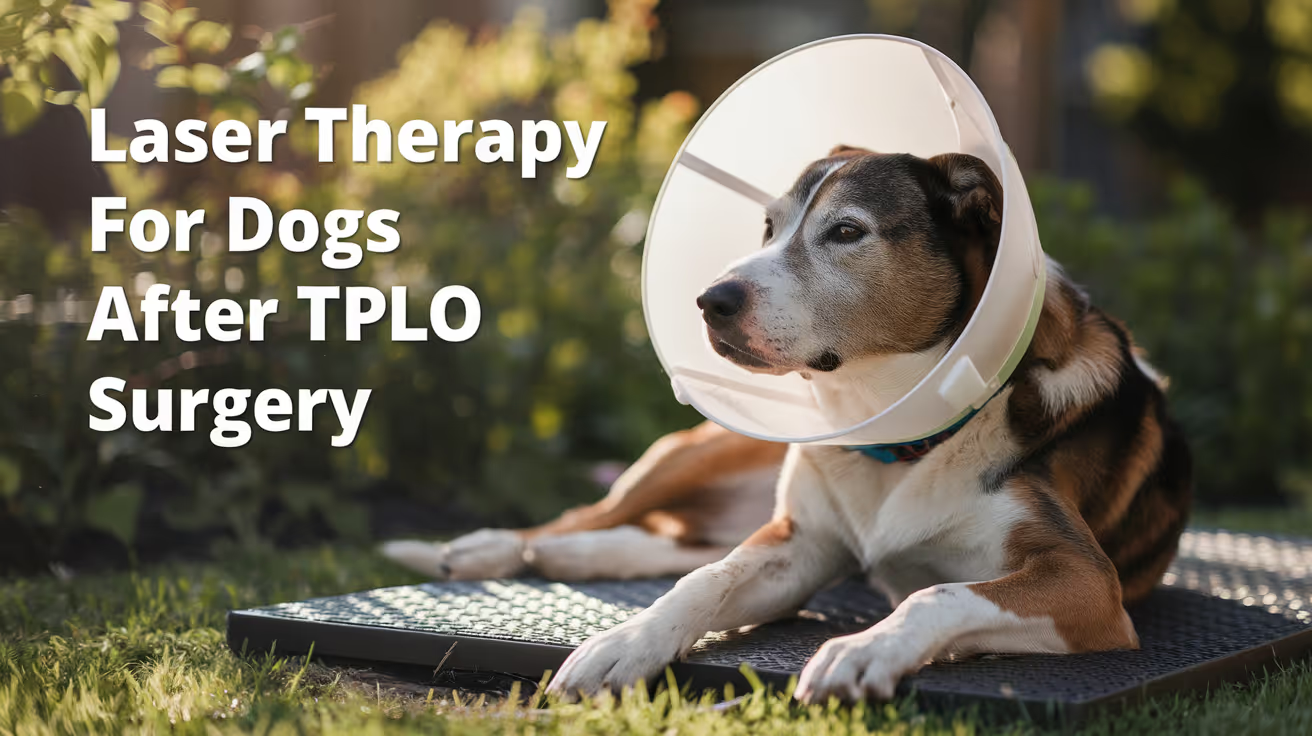
Laser Therapy for Dogs After TPLO Surgery
Learn how laser therapy helps dogs recover faster and with less pain after TPLO surgery for cruciate ligament repair.
Laser therapy also called photobiomodulation (PBMT) or low-level laser therapy (LLLT) is one of the most commonly offered adjunct treatments during TPLO recovery. Many specialist and rehabilitation centres include it routinely.
But the evidence for its benefits is more nuanced than the marketing suggests, and owners deserve an honest picture of what it does and does not reliably achieve.
Quick answer: Laser therapy after TPLO uses specific light wavelengths to reduce inflammation and support tissue healing. Evidence for early pain reduction is moderately supported; evidence for improved radiographic bone healing is weak. It is a safe adjunct but should not replace rehabilitation exercises, pain medication, or activity restriction.
Key takeaways
- Laser therapy reduces postoperative inflammation and may improve gait scores: a TPLO study found better hindlimb function at 8 weeks in treated dogs
- Evidence for improving radiographic bone healing is weak: three controlled studies found no statistically significant difference in healing time
- The 2024 AVMA randomized trial found no significant difference in CRP, weight bearing, pain scores, or SSI rates between PBMT and sham groups
- Sessions typically begin within the first few days of surgery and continue through the rehabilitation phase
- Laser therapy is safe with few contraindications: avoid eyes and active tumour sites; safe over the TPLO incision once closed
- It works best as part of a multimodal plan: exercise therapy and pain medication carry stronger evidence than laser alone
What laser therapy does
Laser therapy for dogs, also known as photobiomodulation, involves using specific wavelengths of light to penetrate tissues and promote cellular regeneration and healing. The laser light stimulates the production of ATP (adenosine triphosphate), enhancing cell repair and growth, reducing inflammation, and increasing blood circulation.
Photobiomodulation therapy has been shown to decrease inflammation, and increase analgesia, vascularization, and tissue healing after musculoskeletal injury or surgery.
The mechanism is photochemical: light energy at specific wavelengths (typically 630 to 980 nm) is absorbed by mitochondria.
This increases ATP production, modulates reactive oxygen species, and influences gene expression related to inflammation and healing.
The effects are local confined to the tissue depth the light reaches.
For post-TPLO use, the targets are: the surgical incision, the osteotomy site in the proximal tibia, and the surrounding periarticular soft tissues.
What the clinical evidence shows
Pain and function
Research following TPLO surgery showed that dogs receiving LLLT had better hindlimb function and gait scores at 8 weeks compared to controls. This is especially valuable in orthopedic recovery, where early weight-bearing can prevent muscle atrophy and joint stiffness.
In a controlled veterinary study, dogs with surgical incisions treated with laser therapy exhibited significantly less inflammatory cell infiltration and tissue necrosis within the first week post-op compared to untreated controls.
The 2024 randomized trial
54 client-owned dogs with CCL rupture undergoing unilateral TPLO surgery were enrolled. The study population was randomly assigned to either a treatment group receiving PBMT (24 dogs) or a control group (30 dogs). PBMT was performed immediately after induction, and at 6 hours, 24 hours, 48 hours, and 8 weeks postoperatively. Evaluation of CRP, pain scores, evidence of SSI, and percentage weight bearing were assessed at all time points.
The trial found the therapy showed promise but no statistically significant difference between groups on any primary outcome measure.
Bone healing
Three studies compared LLLT to a control and concluded that LLLT treatment did not make a significant difference in improving radiographic bone healing. The studies collectively provide weak evidence for this outcome.
This is an important distinction: laser therapy may support soft tissue healing, pain, and early function but it does not appear to accelerate the osteotomy healing visible on radiographs.
When to start and how often
Laser therapy uses focused light energy on the surgical site to support healing.
Most rehabilitation programmes begin laser therapy within the first 1 to 3 days after TPLO surgery, often at the surgical centre before discharge or at the first rehabilitation visit.
Typical post-TPLO laser protocol:
- Frequency: 3 to 5 sessions per week in the first 2 to 3 weeks
- Frequency: 1 to 2 sessions per week from weeks 3 to 8
- Session duration: 5 to 15 minutes depending on the laser system and dosing protocol
- Total sessions: typically 6 to 12 in the first 8-week recovery phase
The protocol varies by laser system, power output, and the individual patient's response.
Realistic expectations
Laser therapy is a useful adjunct in TPLO recovery. It is not a substitute for the treatments with stronger evidence: pain medication, activity restriction, and structured rehabilitation exercises.
Laser therapy could be particularly helpful for dogs with weight-bearing and gait issues while recovering from TPLO surgery after a cruciate injury.
Dogs with significant early swelling, wound sensitivity, or slow initial weight-bearing progress may benefit most. Dogs recovering well with standard multimodal analgesia and rehabilitation may show less measurable difference.
For the bone healing timeline that laser therapy supports during recovery, see TPLO bone healing time in dogs explained.
For the full recovery plan that laser therapy fits into, see 10 essential TPLO recovery tips for pet owners.
For the physical therapy that is the primary evidence-based adjunct, see when to start physical therapy after TPLO surgery.
For swelling management in the recovery period, see how long does swelling last after TPLO surgery.
Frequently asked questions
Is laser therapy safe over the TPLO incision?
Yes, once the incision is closed. Laser therapy is safe over sutured incisions and can be applied at the surgical site from the first post-operative day in most protocols.
Avoid direct application over open wounds or actively infected tissue.
How many laser sessions does a dog need after TPLO?
Typically 6 to 12 sessions across the first 8 weeks.
Start at 3 to 5 sessions per week for the first 2 to 3 weeks, tapering to 1 to 2 per week through the rehabilitation phase.
The exact protocol depends on the laser system and rehabilitation plan.
Does laser therapy replace pain medication after TPLO?
No. Laser therapy is an adjunct to pharmaceutical pain management, not a replacement. Post-TPLO pain management requires NSAIDs, and often gabapentin or other analgesics.
Laser therapy may reduce the pain burden and support earlier mobility but does not provide sufficient analgesia on its own.
Can I do laser therapy at home with a consumer device?
Consumer-grade red light therapy devices exist but operate at lower power densities than veterinary therapeutic lasers. The clinical evidence discussed in this article relates to veterinary-grade PBMT devices.
Home devices may offer some benefit but cannot replicate the dosing of professional equipment. Discuss with your rehabilitation veterinarian before purchasing.
Will laser therapy prevent my dog from needing more medication?
Possibly. If laser therapy reduces post-operative inflammation and pain, some dogs may need lower doses of pain medication or taper off sooner.
This should be guided by your veterinarian based on your dog's individual recovery trajectory.
Resources
- AVMA Journal. Photobiomodulation Therapy in Dogs Undergoing TPLO After Cranial Cruciate Ligament Rupture. avmajournals.avma.org
- Veterinary Evidence. Does LLLT Improve Radiographic Healing for Dogs with CCL Rupture Undergoing TPLO Surgery? veterinaryevidence.org
- AKC. Laser Therapy For Dogs: Uses, Side Effects, and Alternatives. akc.org
- Erchonia. Laser Therapy for Post-Surgical Recovery in Pets. erchonia.com
All Articles

Closure Strategy in Emergency Surgery
Learn about closure strategies in emergency surgery, including techniques, materials, risks, and best practices for optimal healing.
Sustainable Vet Group
Emergency surgery closure is not simply faster elective surgery closure. The patient's physiological state coagulopathy, hypothermia, acidosis, hemodynamic instability shapes every closure decision in ways that have no equivalent in a planned, stable procedure.
The core principle is this: do what is necessary to keep the patient alive, defer everything else to a second surgery when the patient can tolerate it.
Quick answer: Emergency abdominal surgery closure follows a spectrum: standard layered closure when the patient is stable enough to tolerate it; damage control surgery (abbreviated technique prioritizing hemorrhage control and contamination reduction, temporary closure, definitive repair 24 to 48 hours later) when the patient is hemodynamically unstable. MSPCA-Angell: "Phase 2 is the first surgery where the primary goal is to limit severe hemorrhage and control bowel leakage. No attempt is made to reconnect discontinuous sections of bowel that would be done at the second definitive surgery."
Key takeaways
- Damage control surgery (DCS) prioritizes hemorrhage control and contamination reduction over complete anatomical repair.
- Temporary abdominal closure is used when definitive closure cannot be safely performed in an unstable patient.
- Definitive surgery follows 24 to 48 hours later, once the patient is hemodynamically stable.
- Contaminated wounds from GI spillage, uroabdomen, or bite wounds require delayed primary closure principles even in emergency contexts.
- Continuous suture patterns are used in damage control to minimize time while achieving adequate contamination control.
- Standard layered closure is used when the emergency patient is sufficiently stable to tolerate full anesthetic time.
The stability spectrum: how it determines closure
Hemodynamically stable emergency patient
Some emergency patients a GI foreign body obstruction without perforation, a splenic mass removed before rupture, a planned exploratory for a suspected obstruction arrive in or can be stabilized to a state that allows complete anatomical repair.
For these patients, standard layered closure proceeds:
- Hollow organ closure with inverting patterns (Cushing, Lembert) if enterotomy was performed
- Abdominal wall closure with PDS or equivalent in simple continuous
- Subcutaneous closure with Monocryl or Vicryl
- Skin closure with interrupted nylon or intradermal Monocryl
These closures follow the same protocol as equivalent elective procedures. The emergency designation describes the urgency of the decision to operate, not necessarily a modification of technique.
Hemodynamically unstable emergency patient
The lethal triad of trauma acidosis, coagulopathy, and hypothermia creates a physiological state incompatible with prolonged surgery. Every additional minute under anesthesia risks coagulation failure, cardiac arrest, or irreversible multi-organ injury.
MSD Veterinary Manual: "Damage control surgery is a limited laparotomy designed only to control hemorrhage and/or to minimize contamination but not to perform definitive surgical repair, to avoid similar clinical complications. Definitive care is delayed until the patient is able to tolerate extended anesthesia and surgery."
Damage control surgery: the three-phase approach
MSPCA-Angell (Damage Control Surgery: Is There a Role in Veterinary Medicine?):
Phase 1: Pre-operative stabilization
- Limit hemorrhage
- Manage hypothermia
- Transfuse blood products to correct coagulopathy
- Get the patient to the operating room as quickly as safely possible
Phase 2: Damage control laparotomy
- Control hemorrhage (pack the abdomen with laparotomy pads, ligate major bleeding vessels)
- Reduce contamination (rapid running suture closure of identified bowel leaks; do not attempt full anastomosis)
- "Identified lesions are rapidly sutured in running/continuous suture pattern to reduce contamination"
- Urinary diversion if bladder or urinary tract rupture is present (urinary catheter, Jackson-Pratt drain)
- Temporary abdominal closure leave laparotomy pads in place for compression if needed
- Do not attempt bowel reconnection
Phase 3: Definitive surgery (24 to 48 hours later)
- Re-enter the abdomen once the patient has achieved hemodynamic stability
- Perform complete anatomical repair (bowel anastomosis, permanent organ repair)
- Definitive abdominal wall closure
VetEducation: "Definitive surgical repair should take place following patient stabilisation, and usually occurs 24 to 48 hours following damage control surgery."
For how the delayed primary closure principles apply after damage control, see delayed closure in emergency context.
Temporary abdominal closure
When the abdomen must be left open between damage control and definitive surgery, a temporary closure barrier is applied.
Purpose: prevent evisceration, limit contamination, allow abdominal decompression if needed.
Technique: a sterile barrier (damp laparotomy pads, sterile plastic sheeting, or negative-pressure dressing) is placed over the abdominal contents, then the skin is loosely approximated with large interrupted sutures or towel clamps. This is not a wound closure it is a controlled open abdomen.
MSPCA-Angell: "The abdomen is then left open with a temporary closure or barrier to limit contamination."
GI contamination: closure decisions after bowel leakage
Bowel spillage into the abdominal cavity creates a contaminated environment. Closure decisions must account for this regardless of whether the procedure is elective or emergency.
Intraoperative spillage during elective surgery: lavage the abdomen thoroughly, consider drain placement, proceed with standard closure. The contamination was controlled during the procedure.
Pre-existing peritonitis (e.g., GI perforation before surgery): the contamination is established. After bowel repair or resection, abdominal lavage is performed (warm saline), a drain is placed (Jackson-Pratt or closed suction), and the abdomen is closed over the drain. In severe cases of septic peritonitis, open abdominal management may be preferred.
DVM360: "Drainage of the abdomen may be indicated in cases such as septic peritonitis and bile peritonitis. In cases of septic peritonitis in small animals, the mortality rate is 30 to 50%."
For how contamination principles shape the full closure decision in wound management, see contaminated wound closure principles.
Uroabdomen and bile peritonitis: specific closure considerations
Uroabdomen (bladder or urinary tract rupture):
- Surgical repair of the rupture site using a simple continuous absorbable suture
- Urinary catheter placement for bladder decompression post-repair
- Closed abdominal drain for residual urine or ongoing minor leakage
- Standard layered abdominal wall closure once the source is controlled
Bile peritonitis:
- Cholecystectomy or biliary repair depending on the source
- Copious abdominal lavage
- Closed abdominal drain
- Patients with bile peritonitis have significant systemic consequences (inflammation, coagulopathy) the closure decision must account for the patient's metabolic state
Skin and body wall closure in emergency surgery: practical considerations
Time under anesthesia: every additional layer of closure adds anesthetic time. In an unstable patient, subcutaneous closure may be simplified or omitted if it would extend surgery time dangerously.
Contaminated skin wounds (trauma cases): bite wounds, degloving injuries, and penetrating trauma present to emergency rooms as contaminated. Do not close these wounds primarily. Manage open with daily wound care and delayed primary closure at day 3 to 5.
For how common closure errors apply in emergency settings, see closure errors in emergency cases. For the wound closure principles that underpin emergency closure decisions, see principles of wound closure in emergency context.
What owners need to understand about emergency surgery recovery
Surgery may have been abbreviated: if your pet underwent damage control surgery, a second procedure is planned. The first surgery controlled the immediate life threat; the second surgery completes the anatomical repair.
Recovery timeline is less predictable: unlike elective surgery with known procedure scope, emergency cases may have ongoing fluid losses, infection risks, or metabolic instability that extend the recovery compared to a comparable elective procedure.
Drains: emergency cases more frequently require drains for abdominal or wound fluid management. These are typically removed within 3 to 7 days but will be assessed at each recheck.
For the post-operative monitoring that follows emergency closure, see post-op monitoring after emergency surgery closure.
Frequently asked questions
My dog had emergency abdominal surgery and the vet mentioned a possible second surgery. Does that mean something went wrong?
Not at all. In some cases, damage control surgery is the planned approach controlling the most critical problem (hemorrhage or GI contamination) while the patient is too unstable for complete repair. The second surgery is part of the protocol, not a complication. Your vet should have explained this plan.
The vet said they "closed the abdomen quickly." Does that mean the closure is inadequate?
Rapid closure in an emergency does not mean inadequate closure. A skilled surgeon can perform a sound abdominal wall closure quickly using continuous suture technique. "Quickly" refers to the overall surgical time being limited by the patient's stability, not to cutting corners on the structural closure.
My cat had emergency abdominal surgery and there is a drain coming from the wound. How long will it stay?
Drains after emergency abdominal surgery typically remain for 3 to 7 days, depending on output and the underlying condition. For septic peritonitis, drains may remain longer. Drain output is assessed at each recheck decreasing volume and clearer color (from bloody to clear serous) indicate the drain is ready for removal.
Emergency closure strategy is defined by one constraint: what can this patient safely tolerate right now? Standard layered closure when the patient is stable. Damage control when they are not. Temporary closure when even damage control cannot be completed safely. In every case, the goal is the same get the patient out of the operating room alive, then finish the repair when they can survive the finishing.
Resources
- MSPCA-Angell. Damage Control Surgery: Is There a Role in Veterinary Medicine? mspca.org
- VetEducation. Damage Control Surgery for Traumatic Haemoabdomen in Dogs and Cats. veteducation.com
- MSD Veterinary Manual. Trauma in Emergency Medicine in Small Animals. msdvetmanual.com
- DVM360. Drains: Proper Use and Management. dvm360.com

Asepsis During Soft Tissue Surgery in Dogs
Learn essential asepsis techniques during soft tissue surgery in dogs to prevent infections and promote healing.
Sustainable Vet Group
Soft tissue surgery in dogs encompasses a wide range of procedures, from elective spay and neuter to emergency GI resection. The asepsis standard differs substantially across this range, and applying the wrong standard in either direction, too strict where it is unnecessary or too lax where it is essential, produces inefficiency or infection respectively.
What this covers: The perioperative asepsis protocol for soft tissue surgery in dogs, including wound classification, procedure-specific SSI risk factors, patient preparation, intraoperative standards, and tract-specific considerations for GI, urinary, and respiratory surgery.Evidence base: PMC6802975 SSI incidence study in dogs undergoing soft tissue surgery; ATDove SSI risk factor review; The Veterinary Nurse SSI preparation and prevention; wound classification framework.SSI rate context: Clean soft tissue procedures (elective, no tract entry): 2 to 5% in veterinary literature. Clean-contaminated (controlled tract entry): 5 to 10%. Contaminated and dirty: 4 to 18% depending on degree and source of contamination.
Key takeaways
- Wound class determines the asepsis standard and SSI risk baseline for each procedure.
- Procedure duration over 60 minutes is a documented independent SSI risk factor in dogs.
- Tract entry (GI, urinary, respiratory) elevates wound class and requires protocol modification.
- Patient risk factors (endocrinopathy, obesity, ASA score) compound procedure SSI risk.
- Skin antisepsis, instrument sterilization, and sterile technique apply to all soft tissue cases.
- Antibiotic prophylaxis is indicated for clean-contaminated and above; not routine for clean.
- Lavage before closure is standard for contaminated and dirty procedures.
Wound classification for canine soft tissue surgery
The CDC surgical wound classification system provides the framework for matching asepsis standard to procedure type:
For all classes, the full standard surgical asepsis protocol applies. Class II and above require additional considerations for lavage, potentially antimicrobial prophylaxis, and wound management decisions.
Patient risk factors for soft tissue SSI in dogs
Procedure class is not the only determinant of SSI risk. Published veterinary literature documents the following patient-level risk factors:
Endocrinopathies:
Hyperadrenocorticism (Cushing's disease) is the most strongly documented patient risk factor for SSI in dogs. Dogs with Cushing's disease have substantially higher SSI rates than dogs without endocrinopathy undergoing the same procedure. Hypothyroidism and diabetes mellitus also elevate risk.
Obesity:
Obese dogs have thicker subcutaneous tissue layers, reduced subcutaneous blood supply, and potentially reduced immune competence. These factors elevate SSI risk and complicate wound closure.
ASA score:
Higher ASA physical status classification (indicating more severe systemic disease) is an independent predictor of SSI in the veterinary literature, consistent with human surgical data.
Procedure duration:
Surgery duration over 60 minutes is a documented independent SSI risk factor in dogs (PMC6802975). The relationship holds when controlling for procedure type and patient factors. Efficient technique that minimizes operative time is itself an infection prevention measure.
Active infection at another site:
Presence of concurrent infection (urinary tract infection, skin infection, dental disease) elevates SSI risk through bacteremia risk and potential immune system distraction.
Pre-operative preparation for canine soft tissue surgery
Patient preparation
Clipping:
Clip margins should extend at least 5 to 10 cm beyond the anticipated incision. For abdominal procedures, clip from mid-sternum to pubis and lateral extension to include both flanks.
Clip immediately before surgery. Do not use razors.
Skin antisepsis:
Standard three-pass centrifugal scrub sequence. CHG-alcohol combination preferred for most body sites due to residual activity. PVI preferred for ophthalmic, ear, and some oral procedures.
For abdominal surgery in female dogs: include the vulvar region in the prep area and apply a sterile drape or cover to minimize contamination from normal vulvar flora.
Pre-operative fasting:
Standard pre-anaesthetic fasting (minimum 8 to 12 hours for solid food) reduces GI content volume and aspiration risk, but also reduces contamination load if GI tract is entered or perforated.
Antibiotic prophylaxis
Clean procedures (Class I):
Antimicrobial prophylaxis is not routinely indicated for clean elective soft tissue surgery in healthy dogs. Standard aseptic technique applied correctly produces SSI rates within the 2 to 5% expected range without prophylaxis.
Clean-contaminated procedures (Class II):
Prophylaxis is indicated. Selection based on likely pathogens for the specific tract entered:
- GI surgery: cover gram-negative bacteria and anaerobes (e.g., ampicillin-sulbactam or cefoxitin)
- Urinary tract: cover gram-negative uropathogens (e.g., enrofloxacin or ampicillin)
- Respiratory: cover typical respiratory pathogens
Contaminated and dirty (Class III and IV):
Therapeutic antimicrobial therapy, not prophylaxis. Culture and sensitivity where possible.
Intraoperative asepsis for canine soft tissue surgery
Sterile field management
Standard sterile field principles apply: sterile instruments, sterile gown and gloves, correct draping, sterile technique throughout.
Abdominal procedures:
- Impervious draping to isolate the abdominal incision from the flanks and thorax
- Saline-moistened laparotomy sponges used to pack off adjacent organs during GI work
- Any instrument or sponge that contacts the bowel lumen should be considered contaminated and removed from the sterile field
Soft tissue exposure:
During deep tissue dissection, retractors should be wetted to reduce tissue trauma. Minimize tissue handling. Atraumatic technique reduces devitalized tissue at the wound site, reducing the substrate available for bacterial colonization.
GI tract entry
When the GI tract is entered under controlled conditions (enterotomy, intestinal resection and anastomosis):
- Isolate the segment being operated on with intestinal forceps or umbilical tape to minimize luminal content spillage
- Double-glove change after GI closure and before abdominal closure
- Copious lavage before abdominal closure
- Instrument change: instruments that contacted the GI lumen are removed from the sterile field
For core aseptic technique, including the sterile field maintenance and instrument handling standards that apply throughout the intraoperative phase for all procedure types, that guide covers the intraoperative technique framework.
The canine skin antisepsis protocol is a critical foundation for all soft tissue cases. For skin antisepsis preparation for dogs, including the complete centrifugal scrub technique, agent selection, contact time requirements, and common preparation errors specific to canine patients, that guide covers the step-by-step preparation protocol.
Lavage before closure
Wound lavage before closure is standard for all Class II and above procedures and should be considered for extended Class I procedures.
Purpose: Remove debris, blood clots, and bacteria that accumulated during the procedure.
Volume: 300 to 500 mL minimum for abdominal procedures; larger volumes for grossly contaminated cases.
Agent: Sterile saline is the standard baseline. For contaminated or dirty cases, antiseptic lavage may be used before closure.
Dead space management
Eliminating dead space at closure reduces the blood and fluid accumulation that supports bacterial growth. Techniques:
- Obliterating subcutaneous dead space with walking sutures where anatomically appropriate
- Closed-suction drains for large dead space that cannot be eliminated
- Omentum mobilization to fill dead space in abdominal procedures when indicated
Tract-specific asepsis considerations
Pyometra surgery
Pyometra presents as a Class IV (dirty) procedure with pre-existing uterine infection. Additional considerations:
- Culture the uterine exudate intraoperatively for culture and sensitivity
- Minimize spillage during ovariohysterectomy
- Copious lavage if spillage occurs
- Therapeutic antibiotics, not prophylaxis
- Consider active infection control precautions for the post-operative patient
Cystotomy
Class II (clean-contaminated) procedure. Urine culture before surgery when possible to guide antimicrobial selection. Double-glove change after bladder closure. Lavage before abdominal closure.
For asepsis during soft tissue surgery in cats for comparison, including the feline-specific considerations that differ from the canine soft tissue asepsis protocol, that guide covers the cat-specific approach.
Frequently asked questions
Does wound class change if an unplanned event occurs during surgery?
Yes. An unexpected GI perforation during an elective procedure reclassifies the wound from Class I to Class III. This changes the intraoperative lavage requirement, post-operative monitoring intensity, and possibly the antimicrobial plan. The surgeon should acknowledge the reclassification and adjust the protocol accordingly.
Is skin closure method relevant to SSI risk in soft tissue surgery?
Yes. Subcutaneous closure technique affects dead space and wound tension. Excessive tension at the skin closure impairs blood supply to the wound edge, reducing local immune competence. Some evidence suggests that minimizing subcutaneous suture material reduces wound reaction and SSI risk, though specific data in veterinary soft tissue surgery is limited.
How should contaminated wound cases be handled in terms of OR scheduling?
Contaminated and dirty-infected cases should be scheduled last in the surgical day where possible, to allow full terminal cleaning of the OR after the procedure. If this is not possible, thorough terminal cleaning (not just between-case cleaning) should follow a contaminated or dirty procedure before the next sterile case.
For surgical asepsis standards for all canine surgery, including the five-domain surgical asepsis framework that underlies the procedure-specific applications covered in this guide, that guide covers the full standard.
Applying the correct asepsis standard to the correct procedure class requires not just knowing the protocol but consistently executing it without the errors that most commonly compromise soft tissue surgical asepsis in practice.
For common errors in soft tissue asepsis, including the most common aseptic error categories documented in small animal surgical practice and how to prevent them, that guide covers the error taxonomy that applies throughout soft tissue surgery.
Soft tissue surgery in dogs spans a wide range of contamination risk, and the asepsis protocol must be matched to that range. The same core principles apply to every case: sterile instruments, correct technique, appropriate skin prep, and matched antimicrobial strategy. What changes is the intensity, duration, and lavage requirement based on wound class and patient risk. Matching the protocol to the procedure is as important as applying it correctly.
Resources
The following sources were used as reference and background for this article:
- NIH/PMC. Incidence of SSI in dogs undergoing soft tissue surgery: risk factors and economic impact. pmc.ncbi.nlm.nih.gov
- ATDove. Surgical Site Infection. atdove.org
- The Veterinary Nurse. Surgical site infections: preparation, technique and perioperative prevention. theveterinarynurse.com
- WSAVA 2014. Maintaining a Sterile Operating Environment. vin.com

Asepsis During Soft Tissue Surgery in Cats
Learn essential asepsis techniques during soft tissue surgery in cats to prevent infections and ensure safe recovery.
Sustainable Vet Group
Feline soft tissue surgery follows the same asepsis principles as canine soft tissue surgery but requires adjustments at several points. Cats differ physiologically, anatomically, and in their response to certain antiseptic agents. These differences are clinically significant.
What this covers: The perioperative asepsis protocol for soft tissue surgery in cats, including feline-specific patient preparation requirements, antiseptic agent constraints, wound class application to common feline procedures, intraoperative technique, and post-operative wound management.Scope: Applies to all cats undergoing soft tissue surgical procedures, from elective ovariohysterectomy to emergency GI surgery, abscess drainage, and urinary tract procedures.Key feline differences from dogs: Cats are more sensitive to chlorhexidine at high concentrations; cats self-groom and may ingest residual antiseptic post-operatively; feline skin is more delicate than canine skin; stress-related immune suppression is a clinically relevant factor in feline SSI risk.
Key takeaways
- Core asepsis principles are identical to canine; the adjustments are agent-specific and anatomical.
- CHG is safe for cats at correct dilutions; concentrated CHG on wounds or cavities is not.
- Cats self-groom; any residual antiseptic on accessible skin creates ingestion risk.
- Feline skin is more delicate; clipping pressure must be reduced to prevent abrasions.
- Stress-related immunosuppression in cats can elevate SSI risk; minimize stress pre-operatively.
- Ovariohysterectomy (OHH) is the highest-volume feline soft tissue procedure; asepsis is standard.
- Post-operative wound protection (E-collar) is essential; cats can access more wound locations than dogs.
Feline-specific patient risk factors
In addition to the standard SSI risk factors (wound class, procedure duration, concurrent disease), cats present specific considerations:
Retroviral infection
FIV (feline immunodeficiency virus) and FeLV (feline leukemia virus) cause varying degrees of immunosuppression. Retroviral-positive cats undergoing surgery have potentially impaired wound immune defense.
Pre-operative retroviral status should be known before elective surgery. For retroviral-positive cats, enhanced post-operative monitoring is appropriate, and any elevation in wound class (unplanned contamination) warrants more aggressive management.
Stress and corticosteroid-driven immunosuppression
Cats under stress (hospitalization, handling, fear) produce elevated endogenous corticosteroids. Chronic corticosteroid elevation impairs neutrophil function and wound immune defense.
Minimizing pre-operative stress through:
- Reduced hospitalization time before elective surgery
- Feline-friendly handling protocols
- Anxiolytic pre-medication where appropriate
contributes to SSI prevention through immune function preservation.
Urethral obstruction patients
Male cats presenting for perineal urethrostomy or cystotomy after urethral obstruction have often had urinary catheters in place and may have concurrent urinary tract infection. These patients should be classified as Class II or III depending on urine culture results, and therapeutic antimicrobials rather than prophylaxis may be indicated.
Pre-operative preparation: feline-specific protocol
Clipping
Feline skin is more delicate than canine skin. Clipper pressure must be reduced to prevent abrasions that could compromise skin barrier function.
For ovariohysterectomy:
- Midline approach: clip from mid-sternum to pubis, with lateral extension to include bilateral flank
- Flank approach: clip the relevant flank from last rib to hindlimb; generous dorsal and ventral margins
For other soft tissue procedures:
- Clip area extends minimum 5 cm beyond anticipated incision in all directions
- Use a fine blade appropriate for feline coat
- Immediate pre-operative clipping; do not clip the night before
Skin antisepsis
Agent selection:
Chlorhexidine gluconate (CHG) is appropriate for feline surgical skin antisepsis at the correct concentrations:
- Surgical scrub: 2% CHG in 70% ethyl or isopropyl alcohol
- Final solution: 2% CHG-alcohol combination applied and allowed to dry fully
CHG safety constraints for cats:
- Do not use near ear canals: Ototoxic
- Do not use concentrated CHG on wound or cavity contact surfaces: Tissue toxic at surgical concentrations
- Wound irrigation if needed: 0.05% CHG maximum (1 mL CHG 5% to 99 mL sterile water)
- Post-operative grooming risk: Residual CHG on accessible skin creates ingestion exposure; E-collar use post-operatively is particularly important
Povidone-iodine is appropriate for ophthalmic surgical preparation and as an alternative for general sites where CHG is contraindicated.
Application technique:
Three-pass minimum centrifugal scrub (incision center outward; never reversing direction). Contact time: minimum 2 minutes for CHG combinations, 5 minutes for PVI. Full evaporation before draping.
For skin antisepsis preparation for cats, including the complete feline skin antisepsis protocol with the evidence from the 2024 circular vs. linear scrub study, that guide covers the cat-specific preparation protocol in full detail.
Wound classification for common feline soft tissue procedures
Intraoperative asepsis: feline considerations
Sterile field maintenance
Standard sterile field principles apply throughout. Feline patients are smaller than most dogs, which creates:
- Smaller operative field requiring precise draping
- Less dead space in most procedures, simplifying closure
- Different scale instruments: fine tissue forceps, smaller needle drivers, and smaller sutures
These differences do not change the asepsis standard. Every principle of sterile field management applies regardless of patient size.
Tissue handling
Atraumatic tissue handling is particularly important in cats. Feline tissue, especially bowel, mesentery, and subcutaneous fat, is more fragile than the equivalent canine tissue. Excessive trauma increases devitalized tissue at the wound, which increases SSI risk.
Fine instruments, adequate lighting, and a planned approach to tissue layers reduce unnecessary trauma and support faster wound healing.
GI tract procedures in cats
Cats present with intestinal foreign bodies, intussusception, and intestinal lymphoma among other conditions requiring GI surgery. The same tract-isolation and glove-change protocols that apply in dogs apply in cats:
- Isolate the intestinal segment with clamps or tapes before opening
- Instrument change and double-glove change after bowel closure
- Copious lavage before abdominal closure
Intestinal anastomosis in cats: The smaller feline intestinal lumen makes anastomosis technically more demanding. Reduced tissue handling requires sharp technique and fine instruments. Any spillage should be addressed with immediate copious lavage.
Pyometra surgery
Pyometra in cats requires surgical intervention in most cases. Uterine integrity determines wound class:
- Intact (closed pyometra, no rupture): Class II; controlled tract entry under antibiotic coverage
- Ruptured: Class III or IV; therapeutic antibiotics; copious lavage; drain placement may be indicated
Intraoperative culture of the uterine exudate guides post-operative antimicrobial selection.
For core aseptic technique, including the intraoperative sterile field maintenance, instrument handling, and personnel behavior standards that apply across all feline surgical procedures, that guide covers the intraoperative technique framework.
Post-operative wound protection in cats
E-collar or recovery suit use is mandatory after all feline surgical procedures where the cat can access the wound. Cats can access wounds that dogs cannot: notably the dorsal thorax, flank, and many proximal limb sites.
Why this matters more in cats than in some dogs:
- Cats are persistent and motivated groomers
- Cat tongues are barbed and more abrasive than dog tongues
- Cats often access wounds that owners believe are inaccessible
- The ingestion risk from residual antiseptic is eliminated by E-collar use
The E-collar should extend a minimum of 2 to 3 cm past the nose tip. Cats are particularly adept at working around shorter cones.
For asepsis during soft tissue surgery in dogs for comparison, including the canine soft tissue asepsis protocol with wound classification table and tract-specific considerations, that guide covers the canine equivalent in detail.
Frequently asked questions
Is the asepsis protocol for feline OHH different from canine spay?
The core protocol is the same: immediate pre-operative clipping, three-pass centrifugal antiseptic scrub, sterile gown and gloves, sterile draping, sterile instruments. The differences are agent-specific (CHG dilution requirements for cats) and anatomical (flank vs. midline approach options in cats). For a healthy young cat undergoing elective OHH, asepsis requirements are identical in principle to a dog.
Can CHG be used for wound irrigation in cats post-operatively?
Only at 0.05% concentration or below. Concentrated CHG is tissue-toxic. The 0.05% dilution (1 mL CHG 5% to 99 mL sterile water or saline) is within the safe range. Higher concentrations should not be applied to open wounds or body cavities in cats.
Should feline soft tissue cases be scheduled before or after canine cases?
Where possible, feline cases benefit from early scheduling in the surgical day to minimize stress from hospital sounds and smells. From an asepsis standpoint, scheduling contaminated cases (any species) last protects the OR environment for subsequent clean cases.
Is urinary catheterization pre- or intra-operatively relevant to SSI risk?
Yes. Pre-operative urethral catheterization carries SSI risk if performed without aseptic technique. Intra-operative catheterization (e.g., for cystotomy) should be performed using sterile catheter technique, and the catheter site should be kept out of the sterile field. Post-operative urinary catheters are a documented SSI risk factor in cats and should be removed as soon as clinically appropriate.
For surgical asepsis standards that provide the complete five-domain perioperative asepsis framework underlying these procedure-specific guidelines, that guide covers the full surgical asepsis standard.
Consistent execution of the feline soft tissue asepsis protocol requires recognizing which error categories are most likely in this specific clinical context, including CHG concentration errors, clipping micro-abrasion from excessive pressure, and insufficient E-collar use post-operatively.
For common errors specific to feline soft tissue procedures, including the error categories most frequently encountered in small animal surgery with particular relevance to feline cases, that guide covers the error taxonomy.
Feline soft tissue surgery demands the same asepsis standard as canine surgery, applied with awareness of the differences in agent sensitivity, tissue fragility, stress-related immune effects, and post-operative grooming behavior. Getting the CHG concentration right, using appropriately fine instruments, minimizing pre-operative stress, and enforcing E-collar use post-operatively are the feline-specific variables on top of the standard asepsis protocol that every cat patient undergoing soft tissue surgery deserves.
Resources
The following sources were used as reference and background for this article:
- NIH/PMC. Incidence of SSI in dogs undergoing soft tissue surgery: risk factors and economic impact. pmc.ncbi.nlm.nih.gov
- NIH/PMC. Effectiveness of two scrub methods with different chlorhexidine combinations for surgical field antisepsis in cats. pmc.ncbi.nlm.nih.gov
- ATDove. Surgical Site Infection. atdove.org
- The Veterinary Nurse. Surgical site infections: preparation, technique and perioperative prevention. theveterinarynurse.com
- ABCD Cats and Vets. Guideline for Disinfectant Choice in Feline Veterinary Hospitals. abcdcatsvets.org

Surgical Asepsis in Small Animal Surgery
Learn essential surgical asepsis practices in small animal surgery to prevent infections and ensure safe outcomes for your pet.
Sustainable Vet Group
Surgical site infection remains one of the most consequential complications in veterinary surgery. It extends recovery, increases cost, compromises implants, and in severe cases is life-threatening.
Asepsis is the discipline that prevents it. Establishing and maintaining a contamination-free surgical field from patient prep through wound closure is the foundation of safe small animal surgery.
What this covers: The core principles, protocols, and standards of surgical asepsis in small animal veterinary practice.Scope: Applies to all survival surgical procedures in dogs and cats, from routine spay/neuter to complex orthopedic reconstruction.Key distinction: Surgical asepsis aims for sterility within the operative field. Medical asepsis, applied outside the OR, aims to reduce microbial load rather than eliminate it.Clinical relevance: Halstead's principles of atraumatic surgery, first articulated in the 1880s, remain the framework. Their application in modern small animal surgery includes multimodal infection control across every phase of the perioperative period.
Key takeaways
- Surgical asepsis encompasses every phase of the perioperative period: Not just intraoperative sterility, but patient preparation, instrument sterilization, staff protocols, and OR environment.
- The sterile field is defined by physical and procedural boundaries: Anything below waist level, anything non-sterile that enters the field, and any breach of gloving or gowning technique compromises it.
- Skin preparation is a critical but imperfect step: Antiseptic scrubbing reduces surface bacteria dramatically but does not sterilize skin. Residual bacteria from hair follicles and sebaceous glands remain.
- Instrument sterilization failure is the most consequential single-point error: Contaminated instruments render all other aseptic measures irrelevant.
- Aseptic breaks are common and frequently unrecognized: Studies in veterinary surgical training contexts document high rates of undetected technique violations. Formal monitoring matters.
- Intraoperative wound lavage is an additional layer of contamination control: At the conclusion of surgery, lavage with an appropriate antiseptic agent addresses residual bacterial load before wound closure.
Defining surgical asepsis
Surgical asepsis is formally defined as the total elimination of microorganisms and their spores from materials and areas that contact the surgical wound.
This is distinct from antisepsis, which involves applying chemical agents to living tissue to reduce (not eliminate) microbial load.
The goal of surgical asepsis is sterility within the surgical field. In practice, true sterility cannot be fully achieved in a live patient, but the cumulative effect of rigorous aseptic protocols reduces contamination to levels that the immune system can contain without clinical infection.
Asepsis is not a single step. It is the sum of every contamination-prevention decision made from the moment the surgical site is identified to the moment the final skin suture is placed.
For the conceptual distinction between how surgical asepsis differs from medical asepsis, and why the sterility standard in the OR does not apply to examination rooms, treatment areas, and other clinical spaces, that guide covers the boundary between the two disciplines clearly.
The five domains of surgical asepsis
Surgical asepsis operates across five interdependent domains. A lapse in any one domain can negate the efforts of the others.
1. Patient preparation
Hair removal:
Clipping, rather than shaving, is the current standard. Razors create micro-abrasions that increase bacterial colonization at the surgical site. Clipping should be performed immediately before surgery, not the night before, to minimize recolonization time.
The clip area should extend well beyond the anticipated incision to provide margin for unexpected surgical extension.
Skin antisepsis:
A minimum of two antiseptic applications is standard, typically alternating antiseptic and sterile saline or alcohol. The most commonly used agents are:
Scrubbing should proceed in a circular pattern from the incision center outward, never reversing direction. This prevents recontamination of the prepared site from the periphery.
Patient positioning and draping:
Sterile drapes isolate the surgical site from the surrounding patient and table. All surfaces below the drape level are considered non-sterile. Only the draped field is sterile.
Drapes must be placed without contaminating the draped area. Once placed, drapes should not be repositioned.
2. Instrument sterilization
All instruments contacting the surgical wound must be sterile.
The autoclave (steam sterilization) is the primary method in veterinary practice. Critical parameters:
- Temperature: 121°C at 15 psi for 15 minutes (gravity displacement) or 132°C for 4 minutes (pre-vacuum)
- Pack density: Overpacking prevents steam penetration
- Chemical indicators: Confirm steam exposure; do not confirm sterility
- Biological indicators: Required periodically to confirm functional sterility (kill Geobacillus stearothermophilus spores)
Packs must be stored appropriately: dry, off the floor, away from moisture sources, and used within the validated shelf life.
3. Surgical team preparation
Surgical hand antisepsis:
Traditional scrub (brush and antimicrobial soap) or alcohol-based surgical hand rub are both validated methods. The goal is to eliminate transient flora and reduce resident flora to minimum levels.
Scrub duration: minimum 3 to 5 minutes for the first case of the day; some protocols allow shorter for subsequent cases with maintained sterility between procedures.
Gowning:
Gowns must be donned without contaminating the outside surface. The back of the gown is considered non-sterile. The sterile zone on a gowned surgeon extends from the chest to table level, and from sleeve cuff to elbow.
Gloving:
Closed gloving technique is preferred over open gloving for reducing hand contamination of the glove exterior. Double gloving is recommended for orthopedic and implant procedures.
Published veterinary data from AJVR (2025) found high rates of aseptic protocol breaches during scrubbing, gowning, and gloving among veterinary students. These breaches were frequently undetected without trained observers. This underscores the need for formal competency assessment rather than assumption of compliance.
Surgical attire:
- Surgical mask: mandatory; covers nose and mouth
- Cap: covers all hair
- Eye protection: recommended for all procedures with fluid exposure risk
4. Operating room environment
The OR represents a controlled-contamination zone. Standards include:
- Traffic control: Minimize personnel entries and exits; each door opening introduces airborne contamination
- Air handling: Positive pressure ventilation with HEPA filtration; air changes per hour appropriate for surgical use
- Surface disinfection: Between-case and end-of-day disinfection with an appropriate agent
- Temperature and humidity: Moderate temperature and controlled humidity reduce airborne microbial survival
For the detail on environmental factors in surgical asepsis, including specific air changes per hour standards, HEPA filtration requirements, and evidence-based guidelines for OR environmental control, that guide covers this domain comprehensively.
5. Intraoperative technique
Maintaining asepsis during the procedure is as important as the preparation preceding it.
Principles:
- Sterile items contact only sterile surfaces
- Non-sterile personnel do not reach across the sterile field
- Any item of doubtful sterility is treated as non-sterile
- Breaks in sterility are acknowledged and corrected immediately
Instrument handling:
Instruments are passed handle-first to surgeons without contaminating working ends. Instruments dropped below the sterile field level are no longer sterile and must be replaced.
Wound irrigation:
At the conclusion of the procedure, lavage of the surgical site removes residual debris, blood clots, and free bacteria before closure. Physiologic saline is the baseline. In higher-risk cases, antiseptic lavage agents targeting biofilm and resistant organisms may be used to further reduce contamination before suturing.
For aseptic technique within surgical asepsis, including the specific intraoperative protocols for sterile field maintenance, instrument handling, and technique violation response, that guide covers the procedural components in depth.
SSI risk stratification in small animal surgery
Not all procedures carry equal infection risk. The traditional surgical wound classification system provides a framework:
Class II through IV procedures require heightened aseptic attention and may warrant antimicrobial prophylaxis in addition to strict aseptic technique.
The OR environment and infrastructure that enables these standards is detailed in the guide on OR standards for surgical asepsis, covering airlock access control, traffic management, and between-case disinfection protocols.
The role of antimicrobial stewardship in surgical asepsis
Surgical site infection prevention is not solely an aseptic technique issue. Antimicrobial stewardship is the complementary discipline.
Prophylactic antibiotics:
When indicated, perioperative antimicrobial prophylaxis reduces SSI risk. Key principles:
- Administer within 60 minutes before incision (most common recommendation)
- Select an agent covering the most likely pathogens for the procedure and site
- Discontinue within 24 hours of procedure completion in most cases (prolonged courses do not reduce SSI and increase resistance risk)
Prophylaxis is not a substitute for aseptic technique. It is an adjunct.
Non-antibiotic approaches:
Surgical site washing and intraoperative antiseptic lavage represent non-antibiotic contamination control strategies that align with antimicrobial stewardship frameworks. Reducing bacterial load at the wound at the time of closure without relying on systemic antibiotics directly supports stewardship goals.
For the errors that most commonly compromise surgical asepsis in small animal practice, the guide on common errors in surgical asepsis documents the most frequent categories with practical prevention guidance for each one.
High-frequency error categories documented in veterinary surgical settings include inadequate patient clipping margins, incorrect gloving technique, instrument contamination from table-edge contact, and drape displacement without replacement. Recognition depends on trained observation, not self-reporting. Structured monitoring programs consistently identify more violations than ad-hoc supervision.
The structured reference tool for perioperative asepsis verification is the checklist to maintain surgical asepsis, which provides a phase-by-phase framework from instrument preparation through wound closure confirmation.
Frequently asked questions
What is the difference between asepsis and sterility?
Sterility means complete absence of all living microorganisms and spores. Asepsis means the absence of microorganisms capable of causing disease. In surgical contexts, sterility is the goal for instruments and drapes. The surgical site itself cannot be sterilized (it is living tissue), so aseptic technique aims to reduce contamination to levels manageable by the immune system.
How long after clipping should surgery proceed?
The shorter the interval between clipping and incision, the better. Immediate pre-surgical clipping is preferred over the previous day's clipping. Recolonization of the surgical site begins within hours of hair removal. Clipping in the OR or immediately before transport to the OR is the current standard.
Is double gloving required in small animal surgery?
Double gloving is strongly recommended for orthopedic and implant procedures due to the higher consequences of glove perforation in these cases. For routine soft tissue procedures, single sterile gloves are standard, though double gloving is never contraindicated and reduces the risk of outer glove perforation being undetected.
When should antimicrobial prophylaxis be used alongside aseptic technique?
Clean procedures in healthy patients generally do not require prophylaxis when aseptic technique is rigorously applied. Clean-contaminated and contaminated procedures warrant prophylaxis. Dirty-infected procedures require treatment-level antimicrobial therapy, not prophylaxis. The decision should be made on a case-by-case basis based on wound class, procedure duration, patient risk factors, and the implant status of the surgery.
Surgical asepsis is not a single protocol applied once. It is a continuous discipline applied across the entire perioperative period, involving every member of the surgical team, every instrument that enters the field, every square inch of the patient preparation, and every second of intraoperative technique. When it holds, outcomes are predictable. When it fails at any point, the consequences can be significant.
Resources
The following sources were used as reference and background for this article:
- Veterian Key. Principles of Surgical Asepsis. veteriankey.com
- WSAVA 2014. Maintaining a Sterile Operating Environment. vin.com
- IntechOpen. Implementing Good Practice in Aseptic Technique for Surgery in Laboratory Animals. intechopen.com
- AVMA Journals. Aseptic protocol breaches during scrubbing, gowning, and gloving in veterinary students. American Journal of Veterinary Research, 2025. avmajournals.avma.org
- ASPCA Pro. Sterile Surgical Techniques. aspcapro.org
Closure Protocol for Tumor Excision in Cats
Learn the detailed closure protocol for tumor excision in cats, including surgical steps, suture choices, and post-op care for optimal healing.
Sustainable Vet Group
Feline tumor excision creates the same fundamental closure challenge as in dogs the defect left by the tumor must be closed without compromising the margins that determined the cure rate. But the closure is performed on thinner, less elastic feline skin with fewer reconstruction options than in large-breed dogs.
Understanding how closure decisions are made helps owners interpret what the vet describes after surgery and what to expect during recovery.
Quick answer: Feline tumor excision closure follows the same layered sequence as dogs (deep margin if fascia was included, subcutaneous, skin) but with feline-specific modifications: 4-0 sutures throughout, intradermal Monocryl preferred for skin (feline skin tolerates external sutures poorly), and skin flaps used when primary tension-free closure is not achievable. Injection-site sarcomas in cats require particularly wide margins (often involving en bloc muscle removal) and frequently require reconstructive closure.
Key takeaways
- Feline skin is thinner and less elastic than canine skin, limiting primary closure options after wide-margin excision.
- 4-0 sutures throughout (vs. 3-0 in most medium dogs) feline tissue requires finer suture material.
- Intradermal Monocryl 4-0 is the preferred feline skin closure after tumor excision.
- Injection-site sarcomas (FISS) require the widest margins in feline oncological surgery and most commonly require reconstructive closure.
- Drain placement is particularly important in cats after wide excision, as dead space management is harder with thin subcutaneous tissue.
- Histopathology result timing (typically 5 to 10 business days) means re-excision discussion happens while the primary wound is still healing.
Feline tumor types and their closure implications
Injection-site sarcomas deserve specific mention. WSAVA/VIN (Soft Tissue Sarcoma 2016): "The aim of curative-intent surgery is to widely excise the primary tumor (3 cm wide and 3 cm or a fascial plane deep) and achieve negative histopathological margins."
For FISS, achieving these margins at the interscapular region frequently involves removing the trapezius muscle, spinous processes, or portions of scapula leaving a deep muscular defect that requires multi-layer closure and often a flap for the skin component.
Deep layer closure: when fascia or muscle is included
When the deep margin of excision includes the fascia below the tumor (standard for any tumor with invasion concern), the fascial defect is closed before subcutaneous work.
Pattern: simple interrupted or continuous absorbableMaterial: PDS 2-0 to 3-0
For deep muscular defects after FISS excision: the deep layers are closed in sequence (deep muscle to superficial muscle), using PDS 0 to 2-0. If the defect is too large for primary muscle closure, a mesh or mobilized flap may be used.
Subcutaneous closure and dead space
Feline subcutaneous tissue is thin and provides limited substance for suture purchase compared to dogs. Dead space management is therefore particularly challenging after wide-margin excision.
Options:
- Simple continuous absorbable (Monocryl or Vicryl 3-0 to 4-0) for the subcutaneous layer
- Walking sutures to anchor dermis to fascia when a large dead space pocket exists
- Drain placement (Penrose or closed suction) when suturing alone cannot eliminate the cavity
VCAhospitals (Penrose drain discharge instructions): "A Penrose drain is a latex tube placed into a wound with one or two ends exiting the skin, allowing fluids to drain. In most cases, the drain will exit from a new incision site, not the primary wound site."
For how dead space management relates to the broader closure strategy, see dead space management after cat tumor excision.
Skin closure
Intradermal Monocryl 4-0: the preferred method
Feline skin tolerates external sutures more poorly than canine skin. Suture-track irritation, self-trauma, and suture-mark scarring are more pronounced and more rapidly established in cats.
For routine feline tumor excision closure where tension is manageable, intradermal Monocryl 4-0 is preferred:
- No external material for the cat to lick or chew
- No removal visit required
- Finer, less visible healed scar
When primary closure is under tension
When the wound edges cannot be approximated without tension, the options match those in dogs:
Undermining: releasing skin from underlying subcutaneous tissue and fascia to mobilize it toward the defect. In cats, undermining must be carefully limited thin feline skin can be devascularized more easily than dog skin if undermining is too extensive.
Walking sutures: dermis-to-fascia advancement. Useful for moderate-sized trunk defects. Standard material: 3-0 PDS or Biosyn.
Tension-relieving sutures: horizontal mattress or vertical mattress, used with 3-0 nylon or Prolene.
Skin flap: when primary closure is not achievable. ACVS: "Closure of the defect from the excised mast cell with a small skin flap from adjacent skin near the base of the ear." Skin flaps are more commonly needed in cats than equivalent-weight dogs because feline skin has less laxity.
High-tension locations: face, ears, distal limbs
These locations have minimal adjacent skin available for advancement and carry the highest tension risk. Closure at these sites frequently requires staged reconstruction or accepting second intention healing over small residual defects.
Cosmetic closure after feline tumor excision
For tumor excision in cosmetically sensitive locations (face, visible lateral body), intradermal closure and fine suture sizes minimize visible scarring. For the cosmetic closure approach in cats, see cosmetic closure for feline tumor sites.
Histopathology and re-excision
The excised tissue is sent for histopathology, with results typically returned within 5 to 10 business days. Three possible results:
- Complete margins: no tumor cells at the inked edges. Local recurrence risk is low. No further surgery needed unless the tumor biology warrants adjuvant therapy.
- Close margins: tumor cells within 1 to 2 mm of the edge but not at the ink. Recurrence risk is elevated. Discussion of re-excision or radiation.
- Incomplete margins: tumor cells at the inked edge. Re-excision is recommended when possible.
The re-excision decision is made while the primary wound is in the active healing phase (typically at 7 to 14 days post-surgery). The entire scar track is included in the re-excision specimen meaning closure of the second wound is more complex than the first.
For how tumor excision closure compares in dogs, see tumor excision closure comparison in dogs.
Post-operative monitoring in cats
Cats hide signs of pain and discomfort more effectively than dogs. Behavioral changes (reduced appetite, hiding, abnormal posture) are often the first indicators of complications rather than obvious wound signs.
Specific monitoring for cats after tumor excision:
- Check the wound twice daily for redness, discharge, swelling, or separation
- Cats often groom the wound site even with an E-collar if the collar fits poorly verify fit at each check
- If a drain is present, monitor drainage output and color daily
- Watch for systemic signs (reduced appetite, lethargy, fever) that may precede local wound signs
For the closure checklist applicable to feline tumor excision, see closure checklist for feline tumor excision.
Frequently asked questions
What makes injection-site sarcomas so different to close?
FISS requires the widest margins in feline oncological surgery typically 3 to 5 cm laterally and removing one to two fascial planes deep, sometimes including muscle and portions of bone. The resulting defect is far larger relative to the cat's body than equivalent surgery in a dog. Closure almost always requires reconstruction, and staged surgery (debulking followed by definitive reconstruction) may be necessary.
My cat had a mass removed and the vet said they got "clean margins." Does that mean the cancer is gone?
Clean histopathological margins mean no tumor cells were identified at the edges of the tissue submitted for analysis. For many feline tumors, clean margins significantly reduce local recurrence risk. However, "clean margins" does not address the risk of metastatic spread, which depends on tumor type, grade, and whether staging (chest radiographs, lymph node assessment) was performed. Discuss the complete picture with your vet.
How long will my cat's E-collar need to stay on after tumor surgery?
Minimum until suture removal (10 to 14 days for external sutures). With intradermal closure, the E-collar remains recommended for 10 to 14 days post-surgery not for suture removal purposes, but because the incision site can still be disrupted by licking before it has adequate surface healing. Your vet will advise the specific duration based on wound appearance at the recheck.
Feline tumor excision closure is constrained by the cat's limited skin laxity, the finer tissue that tolerates suture placement, and the requirement not to compromise the margins that determine whether the tumor is fully removed. Meeting all three constraints simultaneously adequate margins, tension-free closure, appropriate suture technique is the challenge that distinguishes feline tumor surgery from routine wound closure.
Resources
- ACVS. Mast Cell Tumors. acvs.org
- VIN (WSAVA 2016). Soft Tissue Sarcoma in Dogs and Cats. vin.com
- VCA Animal Hospitals. Penrose Drain Discharge Instructions for Dogs. vcahospitals.com
- Today's Veterinary Practice. Fundamentals of Surgical Oncology in Small Animals. todaysveterinarypractice.com
Asepsis in Orthopedic Implant Surgery
Learn essential asepsis practices in orthopedic implant surgery to prevent infections and ensure successful outcomes.
Sustainable Vet Group
Orthopedic implant surgery operates under a higher asepsis standard than any other category of veterinary surgical procedure. The reason is simple: a contaminated soft tissue wound can be debrided and treated. A contaminated implant usually cannot.
Once bacteria establish biofilm on a metal implant surface, systemic antibiotics cannot reliably penetrate it. Implant removal is frequently the only option for resolving established implant-associated infection.
What this covers: The specific asepsis requirements for orthopedic implant procedures in dogs and cats, why implants elevate SSI risk, the role of biofilm, MRSP considerations, and the components of an enhanced implant surgery asepsis protocol.Evidence base: TPLO SSI retrospective study (769 procedures; PMC10133455); DVM360 TPLO protocol improvement study; Veterinary Practice News MRSP and implant infection data; TPLO SSI rate review (PMC11946642).Key clinical fact: Bacteria commonly involved in veterinary SSI, particularly Staphylococcus species including MRSP, form biofilms on implant surfaces that prevent host immune response and antibiotic penetration. This makes prevention through asepsis more important than treatment after infection occurs.
Key takeaways
- Implant surface provides bacteria a substrate for biofilm, bypassing host immunity.
- MRSP-colonized dogs have a significantly elevated SSI risk for implant procedures.
- TPLO SSI rates of 7 to 28% have been reported; stricter asepsis reduces this substantially.
- Implant-associated infection usually requires implant removal for resolution.
- Double gloving is recommended for all implant procedures.
- OR traffic restriction is more critical for implant procedures than routine soft tissue surgery.
- Intraoperative lavage before closure addresses contamination accumulated during the procedure.
Why implants change the asepsis standard
The implant-associated infection mechanism
All surgical procedures carry SSI risk. Implant procedures carry additional risk because the implant itself creates a favorable environment for bacterial colonization.
How this works:
- During surgery, bacteria are introduced into the wound through any asepsis lapse
- Bacteria adhere to the implant surface (metal plates, screws, pins) within minutes to hours
- They begin producing a polysaccharide extracellular matrix: biofilm
- Within the biofilm, bacteria are physically protected from host neutrophils and macrophages
- Antibiotic molecules cannot penetrate the biofilm at clinically achievable concentrations
- The infection persists indefinitely unless the implant is removed
The minimum infective dose (number of bacteria required to establish infection) is dramatically lower in the presence of an implant than in soft tissue alone. This is why contamination events that might be manageable in soft tissue surgery can produce catastrophic outcomes in implant procedures.
Reported SSI rates for veterinary implant procedures
The highest-volume implant procedure in veterinary small animal surgery is the tibial plateau leveling osteotomy (TPLO) for cranial cruciate ligament repair.
Published SSI rates for TPLO:
- Overall SSI rate 0.8 to 14.3% in most cohort studies (PMC11946642)
- Some reports document rates of 19 to 28% including all complications (DVM360)
- The Finnish MRSP outbreak further elevated institutional SSI rates during that period
A retrospective study of 769 TPLO procedures (PMC10133455) confirmed that MDR bacteria isolation correlated with development of major infections requiring additional surgical treatment.
A DVM360 report documented that a specialty referral hospital reduced TPLO implant-associated infection rates by implementing a stricter asepsis protocol, demonstrating directly that asepsis changes outcomes.
The enhanced asepsis protocol for implant surgery
Standard surgical asepsis applies to all procedures. Implant surgery requires every component of that standard plus specific enhancements.
Pre-operative preparation enhancements
Surgical site preparation:
- Immediate pre-operative clipping only (no night-before clipping)
- Generous clip margins beyond anticipated incision
- Minimum three-pass antiseptic scrub sequence
- CHG-alcohol or PVI-alcohol combination for optimal immediate plus residual activity
- Full contact time observed; site fully dry before draping
Pre-operative MRSP risk assessment:
For high-risk patients (prior MRSP colonization, recent antimicrobial treatment, prior SSI, chronic skin disease), pre-operative screening and decolonization protocols should be considered. MRSP carrier status is a documented significant risk factor for SSI in orthopedic procedures.
Antimicrobial prophylaxis timing:
Cefazolin administered within 60 minutes of incision. Redosing every 90 to 120 minutes for procedures exceeding that interval. Discontinuation within 24 hours post-operatively per current stewardship guidance.
Note: Standard prophylaxis does not cover MRSP. Asepsis is the primary prevention for MRSP.
For MRSP prevention through proper asepsis, including why standard antibiotic prophylaxis does not reliably prevent MRSP SSI and what asepsis-based prevention looks like, that guide covers MRSP-specific prevention in detail.
Orthopedic surgery in dogs without implants still requires rigorous asepsis, but the specific enhancements that implant presence demands build on that foundation. For orthopedic surgery asepsis without implants, including the full perioperative asepsis protocol for canine orthopedic procedures across both implant and non-implant categories, that guide covers the broader orthopedic asepsis context.
Intraoperative enhancements
Double gloving:
Strongly recommended for all implant procedures. The inner glove provides a second barrier if the outer is perforated during bone work, wire handling, or saw use. Outer glove perforation during orthopedic procedures is common and frequently undetected without double gloving.
OR traffic restriction:
Implant procedures should have the most restrictive OR traffic policy of any procedure type. Each person in the OR contributes to airborne contamination load. Each door opening disrupts positive pressure. For implant procedures lasting several hours, cumulative contamination risk is significant.
Specific traffic standards:
- Only essential personnel present
- OR door remains closed throughout the procedure
- All required supplies confirmed in the OR before first incision
- No personnel re-entry during the procedure unless clinically essential
Implant handling:
- Implants remain in sterile packaging until immediate use
- Implants are transferred to the sterile field using sterile technique
- No implant contacts any non-sterile surface after removal from packaging
- If an implant is inadvertently contaminated, it is replaced; contaminated implants are never "cleaned" and returned to the field
Intraoperative lavage:
Surgical wound lavage before closure is standard for implant procedures. Copious sterile saline lavage removes loose debris, blood clots, and free bacteria that accumulated during the procedure.
For implant procedures specifically, antiseptic lavage before closure has been used to reduce residual bacterial contamination including biofilm-forming organisms. Non-antibiotic antiseptic lavage options, such as Simini Protect Lavage, reduce bacteria, biofilms, and resistant organisms at the wound before suturing. This is an intraoperative contamination control step that does not rely on systemic antibiotics and aligns with stewardship principles.
Post-operative considerations
E-collar or recovery suit: Essential. Licking the incision introduces oral bacteria including Staphylococcus species directly onto a wound with an underlying implant.
Activity restriction: Extended (typically 8 to 12 weeks for bone healing procedures). Physical activity stress can disrupt healing and may contribute to implant failure.
Wound monitoring protocol: More frequent assessment than for routine soft tissue surgery. Early SSI detection is critical because treatment options narrow rapidly once biofilm becomes established.
For TPLO-specific asepsis protocols, including the application of enhanced implant asepsis to the most common veterinary orthopedic implant procedure, that guide covers TPLO asepsis in procedural detail.
Environmental asepsis for implant procedures
The OR environment standard for implant procedures should meet or exceed the standard for general surgical procedures.
Specific environmental considerations:
- Dedicated orthopedic surgical suite where available
- OR surfaces cleaned and disinfected with terminal cleaning protocol before implant procedures
- HEPA filtration confirmed functional
- Positive pressure differential verified
- Minimum OR personnel count enforced throughout
For environmental control critical for implant surgery, including OR airflow, positive pressure standards, and traffic management specific to implant procedures, that guide covers the environmental requirements.
Instrument sterilization for implant procedures
All instruments used in implant procedures must be sterile. This includes:
- Surgical instruments (standard pack)
- Powered instruments (oscillating saw, drill): require sterilization of the handpiece or disposable sterile covers
- Implant insertion instruments (holding forceps, screwdrivers, guides)
- The implants themselves
Implant sterility:
Commercially supplied implants arrive sterile from the manufacturer with documented sterility assurance. They should not be re-sterilized unless specifically indicated by the manufacturer. Re-sterilization can alter implant surface characteristics (coating integrity, metallurgical properties) in ways that are not always apparent.
Pre-sterilized implants should be:
- Inspected for packaging integrity before use
- Confirmed within expiry date
- Opened onto the sterile field using sterile technique immediately before use
For implant instrument sterilization standards, including the full instrument reprocessing protocol applicable to orthopedic instruments, that guide covers the sterilization standards.
Frequently asked questions
What is the most common bacteria causing TPLO SSI?
Staphylococcus pseudintermedius, including methicillin-resistant strains (MRSP), is the most commonly isolated pathogen from TPLO SSIs. MDR isolates are increasingly prevalent. Standard cephalosporin prophylaxis does not cover MRSP. Asepsis preventing MRSP from entering the wound is the primary prevention strategy.
Is lavage with saline sufficient for implant procedures?
Copious saline lavage removes loose debris and bacteria and is the standard baseline for wound lavage. For high-risk procedures or patients with elevated MRSP risk, antiseptic lavage before closure provides additional bacterial reduction including against biofilm-forming organisms. The evidence for antiseptic lavage in veterinary implant surgery is accumulating, particularly given the limitations of antibiotic prophylaxis against MRSP.
How long after TPLO can SSI develop?
SSI after TPLO can develop weeks to months after the procedure, not just in the immediate post-operative period. Early SSI (within 30 days) typically reflects intraoperative contamination. Late SSI (30 days to 12 months) may reflect delayed biofilm maturation, incision licking, or hematogenous seeding. Extended post-operative monitoring is appropriate for all TPLO patients.
Should all TPLO patients be screened for MRSP?
Pre-operative MRSP screening for all TPLO candidates is increasingly supported by the literature, particularly given the elevated SSI rates for this procedure and the treatment difficulty when MRSP is involved. Practices with high TPLO volume should consider a formal pre-operative screening protocol in consultation with a veterinary infectious disease specialist or dermatologist.
Orthopedic implant surgery is the procedure where asepsis gaps have the highest consequences. The contamination that a healthy immune system manages in soft tissue surgery cannot be managed once biofilm forms on a metal implant. Prevention through rigorous asepsis across every perioperative step is not a higher standard of care. It is the minimum standard for implant surgery.
Resources
The following sources were used as reference and background for this article:
- NIH/PMC. Surgical site infection after 769 Tibial Plateau Leveling Osteotomies. pmc.ncbi.nlm.nih.gov
- DVM360. Improving Infection Rates After TPLO. dvm360.com
- Veterinary Practice News. Old and New Thoughts on Infection Control. veterinarypracticenews.com
- NIH/PMC. Comparison of SSI Rates in TPLO Using Perioperative vs. Peri- and Postoperative Antimicrobial Prophylaxis. ncbi.nlm.nih.gov
Closure Around Surgical Drains in Dogs and Cats
Learn how closure around surgical drains in dogs and cats helps prevent infection and promotes healing after surgery.
Sustainable Vet Group
Surgical drains are not a sign that something went wrong. They are a deliberate clinical decision a way of managing fluid that the body will inevitably produce in response to dead space, contamination, or tissue injury, before that fluid becomes a seroma, abscess, or infection.
The closure decisions made around a drain placement site are as important as the drain itself. Where the drain exits, how it is secured, and how the primary wound is closed relative to the drain all affect whether the drain works as intended.
Quick answer: Surgical drains exit through a separate stab incision at least 1 cm from the primary wound closure never through the primary incision itself, as this increases wound dehiscence risk. Passive Penrose drains are secured with 1 to 2 simple interrupted nonabsorbable sutures at the exit site. Active closed-suction drains (Jackson-Pratt) are secured with a purse-string suture at the exit and a Chinese finger-trap suture to prevent migration. The primary wound is closed normally in layers above and around the drain.
Key takeaways
- Drains exit through a separate stab incision, not through the primary wound this protects the primary closure from dehiscence.
- Passive Penrose drains are secured at the exit with 1 to 2 simple interrupted nonabsorbable sutures.
- Active Jackson-Pratt drains use a purse-string exit seal and Chinese finger-trap suture for secure fixation.
- The exit site is not sutured closed at removal it heals by second intention.
- Drains typically remain 2 to 7 days depending on output volume and color.
- Never fenestrate a Penrose drain this reduces surface area for capillary drainage and increases tearing risk at removal.
When drains are placed
Drains are placed when the surgeon cannot eliminate dead space through suturing alone, or when significant contamination or fluid production is expected post-closure.
Common indications:
- Large dead space after mass excision (tumor removal, extensive soft tissue dissection)
- Contaminated wounds where seroma infection risk is high
- Seroma or abscess drainage after established fluid pockets
- Abdominal drainage after peritonitis, bile peritonitis, or uroabdomen
For how dead space elimination through suturing reduces the need for drains, see dead space management and when drains are needed. For how proper drain placement prevents seroma formation, see seroma prevention with drain placement.
Passive vs. active drains
Passive drains (Penrose)
A flat latex tube that relies on gravity and capillary action to draw fluid from the wound to the external exit. Fluid seeps along the outer surface of the tube.
Properties:
- Works by gravity and capillary action must exit at the most dependent (lowest) part of the wound pocket
- Requires an open exit (not sealed) to function
- Simple, inexpensive, easily placed
- Higher risk of retrograde bacterial contamination than active drains keep the exit covered with a sterile bandage
DVM360: "Passive drains need to exit at the most dependent part of the wound or abscess pocket and must be covered at all times."
Active drains (Jackson-Pratt, closed-suction)
A perforated tube connected to a sealed collection reservoir that maintains gentle negative pressure, actively pulling fluid from the wound.
Properties:
- Works independently of gravity can be positioned in locations where passive drainage would fail
- Closed system lower bacterial contamination risk
- More expensive; requires a functional reservoir
- Better for high-volume drainage or wounds in areas of high movement (axilla, groin)
Clinician's Brief: "Active drains are secured with a purse-string suture to create a seal and a finger-trap suture to hold it in place."
Drain placement technique: where the exit goes
The drain exit site is not through the primary incision. It must be separate.
Clinician's Brief (Wound Drain Placement): "Exit the drain through a separate incision at least 1 cm from the primary suture line. Exiting drains through the primary incision line increases the risk for wound dehiscence."
DVM360 (Surgical Drains in Small Animal Wound Management): "It should not exit along the lines or within the plane of wound closure, as this may provide an entry point for bacteria or may result in dehiscence and additional drainage along the suture line."
Stab incision technique:
- With the primary wound fully closed, the surgeon uses hemostatic forceps to tunnel subcutaneously from the wound cavity to the planned exit point
- A scalpel stab incision is made over the tip of the forceps at the exit site
- The drain is pulled through the stab incision to the external surface
- The drain is secured with exit sutures
The stab incision is sized to match the drain diameter tight enough that the drain does not slide freely but not so tight that it impedes drainage.
How drains are secured: suture technique at the exit
Penrose drain
DVM360: "1 or 2 simple interrupted nonabsorbable sutures are placed through the drain and into the skin at the exit hole."
The suture passes through the drain material itself and through the skin, holding the drain at the correct depth. The suture should be placed through the last 1 mm of the drain on one side securing it without impeding drainage flow or making removal difficult.
Important: tacking the proximal (deep, internal) end of the Penrose drain inside the wound is done cautiously. DVM360 cautions: "Tacking the proximal aspect of the Penrose drain can only be considered with caution, as this can create a natural tension causing potential for drain breakage deep inside the wound."
Do not fenestrate the Penrose drain. Vettimes: "The drain should not be fenestrated as this will reduce the surface area for capillary flow and increase the risk of tearing at the time of removal."
Jackson-Pratt drain (closed suction)
Two-suture fixation:
- Purse-string suture at exit: a circular suture around the drain at the exit site, tightened to create a seal around the drain and prevent leakage
- Chinese finger-trap suture: a wrapping pattern along the external portion of the drain tubing, providing robust fixation that resists the pull of the collection reservoir
Clinician's Brief notes the Chinese finger-trap suture should be easily distinguishable from the primary wound sutures, so it is not accidentally cut at suture removal time.
Primary wound closure around the drain
The primary wound is closed normally in layers subcutaneous closure, then skin above and around the drain, which runs out to its separate exit site.
Key principle: the drain does not pass through any of the primary closure layers. The wound closes completely around the drain, which then tunnels subcutaneously to its separate exit.
For how drain placement relates to the layered closure sequence, see drain placement in layered closure context.
Monitoring drain output at home
VCA Animal Hospitals: "Fluid should be draining from the Penrose drain's end, but the fluid amount should decrease every day. There should not be excessive fresh blood, active bleeding, or increasingly unpleasant, thick, or smelly discharge."
Normal drain output progression:
- Days 1 to 2: serosanguinous (blood-tinged watery fluid), moderate volume
- Days 2 to 4: decreasing volume, clearing toward serous (pale yellow or clear)
- Days 4 to 7: minimal volume, fully serous drain is ready for removal
Signs requiring same-day vet contact:
- Volume increasing rather than decreasing after day 2
- Output becoming purulent (thick, green, or yellow) or foul-smelling
- Fresh active bleeding from the drain
- Drain pulled inward (disappearing under the skin) or pulled outward (partially extruded)
For the post-operative monitoring protocol that includes drain assessment, see post-operative monitoring with drain in place.
Drain removal
Timing: VCA: "Drains should be removed as soon as possible, usually within 2 to 4 days. For larger, more extensive wounds, drains may need to stay in place longer."
Most soft tissue drains are removed at 2 to 7 days. Abdominal drains after peritonitis may remain longer depending on drainage character.
Removal technique:
- Penrose: cut the exit suture(s), pull the drain out with a swift, smooth traction
- Jackson-Pratt: cut the Chinese finger-trap suture, disconnect the reservoir, slide the drain out
Vettimes: "Penrose drains are removed by cutting the single external simple interrupted suture, then swiftly tugging the drain to release the tube from its internal anchorage point."
After removal: the exit hole is not sutured. It heals by second intention typically within 3 to 5 days. Keep the area clean with saline until sealed.
Verify complete removal: count the drain length removed against the length inserted. A retained drain fragment is a serious complication requiring surgical retrieval.
Frequently asked questions
My dog has a drain coming from a separate hole next to the incision. Is that normal?
Yes that is the intended placement. The drain exits through a stab incision separate from the primary wound closure. Having the drain exit away from the main incision protects the primary wound from dehiscence and contamination. Both the main incision and the drain exit site should be monitored.
Can my cat remove the drain at home?
Cats frequently attempt to remove drains. An E-collar must be worn at all times until the drain is removed by the vet. Even with an E-collar, some cats are agile enough to reach wounds check drain integrity twice daily. If the drain has been dislodged, contact your vet the same day.
Why doesn't the vet just suture the drain hole closed after the drain comes out?
The exit tract is left to heal by second intention because suturing it closed traps any residual fluid or bacteria that may be present in the tract. Healing open allows this to drain and epithelialize naturally. The resulting healed site is typically a small, flat scar.
Surgical drains work only when the closure around them maintains what the drain is trying to accomplish: fluid exits through the drain, not through a compromised wound closure. The separate exit site, the correct fixation sutures, and the correct coverage all of these protect both the drain's function and the primary wound's integrity simultaneously.
Resources
- Clinician's Brief. Wound Drain Placement: Step-by-Step Veterinary Guide. cliniciansbrief.com
- DVM360. Surgical Drains Are Useful in Small Animal Wound Management. dvm360.com
- Today's Veterinary Practice. Surgical Drains: Placement, Management, and Removal. todaysveterinarypractice.com
- VCA Animal Hospitals. Penrose Drain Discharge Instructions for Dogs. vcahospitals.com
Common Aseptic Errors in Small Animal Surgery
Learn about common aseptic errors in small animal surgery and how to prevent infections for safer pet care.
Sustainable Vet Group
Aseptic errors are not rare occurrences in poorly run clinics. They are common events in every surgical environment, including well-run ones.
Published data from the American Journal of Veterinary Research (2025) found that 46.3% of observed veterinary surgical procedures involved at least one aseptic protocol breach during scrubbing, gowning, and gloving alone. These breaches frequently went undetected without trained observers.
The implication is clear: errors are not primarily a training problem. They are a monitoring and culture problem.
What this covers: The most frequent categories of aseptic error in small animal surgery, the mechanisms through which each leads to SSI, and the evidence-based prevention strategies for each category.Evidence base: AJVR 2025 breach data; Veterian Key surgical asepsis principles; WSAVA sterile field maintenance guidelines.Key distinction: An aseptic error is any departure from correct technique. An aseptic break is a specific breach of sterility during a procedure. Errors can occur without an immediate break; breaks always constitute an error. Both matter.Clinical relevance: SSI risk increases 3.5-fold when there are lapses in aseptic principles during surgery, even for non-obvious contamination events such as general movement and OR visitors (AJVR 2025, citing human surgical data).
Key takeaways
- The most common errors occur during scrubbing, gowning, and gloving: These are the highest-traffic steps for human-origin contamination and the least reliably monitored.
- Instrument contamination is the highest-consequence single-error category: A contaminated instrument delivers bacteria directly to the wound.
- Patient preparation errors are frequently underestimated: Inadequate clip margins and reversed antiseptic technique recontaminate the surgical site before incision.
- Most errors are not detected by the person making them: Self-monitoring is unreliable. External observation and structured checklists are required.
- Errors accumulate: SSI is rarely caused by one catastrophic failure. The literature describes a pattern of recurring minor infractions that collectively exceed the infection threshold.
- Team culture determines error rates more than individual skill: Environments where errors are named and corrected immediately maintain better asepsis than those where naming a breach feels confrontational.
Error category 1: Surgical hand antisepsis failures
What happens
Inadequate scrub technique leaves transient and resident flora at counts sufficient to contaminate the surgical field through glove micro-perforations or breaches during gloving.
Specific errors
- Insufficient scrub duration (under 3 minutes for first case of day)
- Substandard nail hygiene (dirt or debris under fingernails)
- Failure to scrub all surfaces of fingers, interdigital spaces, and forearm
- Touching the faucet, sink edge, or scrub brush holder with scrubbed hands before gloving
- Sterile towel dripping onto the gown or gloves during hand drying
- Using ABHR without allowing full manufacturer-specified contact time
Published incidence
The AJVR 2025 study of 96 veterinary surgical procedures identified improper scrubbing technique in 17.4% of observed cases. This was one of the four most frequent breach categories.
Prevention
- Standardize scrub protocol with a posted visual guide at each scrub sink
- Require first-case scrubs of minimum 3 to 5 minutes, timed
- Conduct periodic competency observation of scrub technique for all team members
- Confirm ABHR contact time with timer when transitioning from traditional scrub
Error category 2: Gowning and gloving violations
What happens
Incorrect gowning or gloving technique introduces hand or body-surface contamination onto the exterior sterile surface of the gown or glove before the procedure begins.
Specific errors
- Contacting non-sterile surfaces with the exterior gown surface during donning
- Pushing hands through gown cuffs before gloving (precluding closed technique)
- Touching the exterior glove surface with ungloved skin during open gloving
- Sterile towel contacting the gown or gloves before drying is complete
- Gown back tie touching the front sterile zone during wrapping
Published incidence
AJVR 2025 found contact of the sterile towel onto non-sterile surfaces in 17.7% of procedures, and contact of the gown with non-sterile surfaces in another 17.7%. Touching sterile objects with bare hands occurred in 12.5% of procedures.
The total aseptic protocol breach rate during this single preparation phase was 46.3% of all observed procedures.
Prevention
- Train closed gloving technique as the default method for all scrub personnel
- Conduct observed gowning and gloving competency assessments at orientation and periodically thereafter
- Assign a circulating nurse specifically to monitor the gowning/gloving phase and name any breach immediately
- Designate a second sterile towel for redundancy if the first is compromised
For the correct technique these errors violate, including the step-by-step standards for surgical hand antisepsis, gowning, and gloving with closed technique, that guide provides the technical reference.
Error category 3: Patient preparation errors
What happens
Inadequate clipping or incorrect antiseptic application leaves residual bacteria on the surgical site that are inoculated into the wound at incision.
Specific errors
Clipping errors:
- Clipping performed the night before surgery rather than immediately pre-operatively
- Clip margins too narrow (inadequate buffer around anticipated incision)
- Use of a razor rather than clippers (creates micro-abrasions; increases recolonization)
- Clipper blades contaminated with debris from previous patient
Antiseptic scrub errors:
- Scrub direction reversed (scrubbing outward then back inward recontaminates the center)
- Insufficient number of scrub applications (minimum two applications is standard)
- Wrong antiseptic agent for body location (chlorhexidine in contact with ear canal, open peritoneal cavity, or cornea)
- Allowing antiseptic to dry incompletely before draping
- Alcohol pooling under the patient, creating fire risk with electrosurgery
Prevention
- Establish a standardized clip-to-incision interval policy (immediate preoperative only)
- Post visual guides showing correct centrifugal scrub technique in every prep area
- Confirm agent selection in the pre-incision time-out for body location-specific risks
- Verify alcohol is fully evaporated before electrosurgery or laser use
Error category 4: Instrument and sterile supply errors
What happens
Instruments or supplies that are not sterile, or that become contaminated during handling, introduce bacteria directly to the surgical site.
Specific errors
- Pack used despite failed chemical indicator (indicator not checked before use)
- Pack used past expiry date
- Instrument pack with compromised seal, moisture penetration, or tear used
- Non-sterile item introduced to sterile field without sterile opening technique
- Instrument passed across non-sterile surface during transfer to surgeon
- Instrument falling below table level and returned to use without replacement
- Biological indicators not used or results not reviewed before using autoclave batch
Consequence severity
This error category carries the highest direct contamination consequence. A contaminated instrument transfers organisms directly into deep tissue, bypassing the skin defense layer entirely.
For errors to avoid that compromise instrument sterility, the surgical asepsis checklist includes specific verification steps for pack indicators, expiry dates, and seal integrity at each use.
Error category 5: Sterile field maintenance errors
What happens
Actions or events during the procedure that introduce non-sterile material into the established sterile field.
Specific errors
- Non-gowned personnel reaching over or across the sterile field
- Drapes displaced and not replaced or covered
- Gowned personnel turning their back to the sterile field or stepping below table level
- Glove perforation undetected and not replaced
- Items introduced to the field without sterile opening technique
- OR door opened repeatedly during procedure, increasing airborne contamination
- Talking or sneezing across the sterile field by personnel without masks
The role of the field monitor
The most important structural prevention for this error category is a designated, named field monitor: one team member whose explicit responsibility during the procedure is to observe the sterile field and name breaches immediately.
Without designation, field monitoring becomes everyone's responsibility, which in practice means no one's.
For the breaks in asepsis that lead to errors and how to categorize, respond to, and prevent them within a systematic approach to sterile field management, that guide covers the break taxonomy in detail.
Error category 6: Environmental and behavioral errors
What happens
OR environment or team behavior creates conditions that elevate airborne or surface contamination beyond what the sterile field can absorb without risk.
Specific errors
- Excessive personnel in OR during procedure
- Frequent OR door openings during active surgery
- Personnel movement that generates air currents across the sterile field
- Failure to disinfect OR surfaces between cases
- Use of fans or non-surgical forced air systems in the OR
- Wet floors or surfaces that aerosolize bacteria with foot traffic
Prevention framework
Why errors persist despite training
The evidence is consistent: error rates in surgical asepsis do not correlate with experience or length of training. The AJVR 2025 study found no association between aseptic protocol breaches and previous scrub experience or rotation stage.
This finding has a direct operational implication: training alone is not sufficient to maintain aseptic standards. What reduces error rates is:
- Structured external observation rather than self-monitoring
- Checklists actively used rather than assumed
- Team culture that expects and normalizes immediate, non-judgmental error correction
- Audit programs that identify recurring patterns rather than isolated incidents
For training that prevents common errors, including the evidence-based elements of effective asepsis training programs in veterinary practice and how to build competency assessment into staff development, that guide covers the training design component.
Training that addresses the cultural dimension of error correction, not just the technical components of correct technique, consistently produces better long-term asepsis performance than skills-only curricula. The combination of observed competency assessment and ongoing peer monitoring is the most supported approach in the veterinary surgical literature.
For auditing to identify repeated errors, including the structured audit methods that identify systematic versus individual error patterns, that guide provides the compliance monitoring framework.
Frequently asked questions
Are experienced surgeons as likely to make aseptic errors as trainees?
The published data suggest yes. Error rates in human surgical literature are consistently high across experience levels. In veterinary surgery, the AJVR 2025 study found no significant association between breach rates and prior experience. Complacency may actually elevate risk in experienced practitioners, since automatic behavior bypasses deliberate checking.
Should a procedure be halted when an aseptic error is identified?
Not necessarily halted, but addressed immediately. The correct response depends on what was contaminated and whether it can be corrected. A contaminated glove is changed. A contaminated instrument is replaced. A significantly compromised sterile field may require reopening sterile supplies before continuing. The decision rests with the primary surgeon, informed by the field monitor's observation.
How should aseptic errors be documented?
Every identified intraoperative aseptic breach should be documented in the surgical record, including the nature of the breach, what corrective action was taken, and whether the sterile field was considered compromised. This documentation serves quality improvement, regulatory compliance, and medicolegal purposes if SSI develops post-operatively.
Aseptic errors are the rule in surgical practice, not the exception. The surgical team that acts as though errors are impossible is the team most likely to miss them. The team that builds external monitoring, immediate correction, and audit feedback into its standard operation is the one that keeps error consequences minimal.
Resources
The following sources were used as reference and background for this article:
- AVMA Journals. Aseptic protocol breaches are common among veterinary students. AJVR, 2025. avmajournals.avma.org
- PubMed. Aseptic protocol breaches during SGG in veterinary students. pubmed.ncbi.nlm.nih.gov
- Veterian Key. Principles of Surgical Asepsis. veteriankey.com
- WSAVA 2014. Maintaining a Sterile Operating Environment. vin.com
Needle Selection for Veterinary Surgical Closure
Learn how to select the right needle for veterinary surgical closure to ensure safe, effective wound healing in pets.
Sustainable Vet Group
Needle selection is the last element of suture selection that most owners hear about if they hear about it at all. But the wrong needle for the tissue causes unnecessary trauma at every suture pass, increasing inflammation, infection risk, and healing time.
The needle must match the tissue it is asked to penetrate. This principle is as consistent as the one that governs suture material and size.
Quick answer: The four main needle types in veterinary surgery are: taper-point (round body tapering to a sharp tip for soft internal tissues: muscle, subcutaneous tissue, viscera), cutting (triangular cross-section with cutting edge on the concave inner curve for tough tissues), reverse cutting (triangular with cutting edge on the convex outer curve the standard for skin closure), and taper-cut (round body with reverse cutting tip for dense but delicate tissue like fascia and periosteum). A 2026 JAVMA study found taper-point needles non-inferior to reverse cutting needles for intradermal skin closure in TPLO cases.
Key takeaways
- Taper-point needles are used for all soft internal tissues muscle, subcutaneous fat, viscera, and mucous membranes.
- Reverse cutting needles are the standard for skin closure; the convex cutting edge reduces cut-through risk.
- Cutting needles create the largest holes; reserved for the toughest, most resistant tissues only.
- Taper-cut needles combine a round shaft with a reverse cutting tip useful for dense fibrous tissue like fascia and tendon.
- Blunt needles are used for friable, highly vascular organs (liver, kidney, spleen) to push tissue aside rather than cut.
- A 2026 JAVMA study found taper needles non-inferior to reverse cutting for intradermal TPLO closure.
The four main needle types
1. Taper-point needle
A round-bodied needle that tapers smoothly to a sharp point. No cutting edges on the body the needle creates a hole by displacing tissue to the sides rather than cutting through.
How it works: tissue fibers are pushed aside as the needle passes. The resulting hole is smaller than the needle diameter, and the tissue closes snugly around the suture.
Best for: all soft internal tissues where cutting is not needed:
- Muscle belly
- Subcutaneous fat
- Hollow viscera (stomach, intestine, bladder, uterus)
- Oral and mucous membranes
- Peritoneum
Veterian Key: "Non-cutting needles are designed to suture muscle, subcutaneous tissue, fat, and viscera."
Veterinary Surgery Online: "Tapered needle points are used when minimal effort is required to penetrate the tissues as they produce the smallest holes."
2. Reverse cutting needle
A triangular cross-section needle with the cutting edge on the convex (outer) surface of the curve. The two side cutting edges cut outward, and the base of the triangle faces inward toward the wound.
The clinical advantage over conventional cutting: in a conventional cutting needle, the inner cutting edge faces the wound margin. Under tension, sutures naturally pull toward the wound and the inner cutting edge creates a line of weakness exactly where the force is directed, predisposing to suture cut-through. In reverse cutting, the cutting edge faces away from the wound, so the suture line lies within the hole rather than at its edge.
Veterian Key: "The reverse curved cutting needle, the cutting edge of which lies on the needle's convex surface, so that the suture lies within the hole created by the needle and is less likely to cut through tissue."
Best for: external skin closure across all species and wound types. The standard skin closure needle in small animal surgery.
3. Conventional cutting needle
Triangular cross-section with cutting edge on the concave (inner) surface. All three sides of the triangular body are cutting edges.
Properties: creates the largest hole of any needle type. Maximum cutting efficiency but maximum tissue disruption.
Veterinary Surgery Online: "Cutting needles produce the largest holes when passed through tissues."
Best for: very tough, highly keratinized tissues where penetration is genuinely difficult. In small animal practice, reverse cutting has largely replaced conventional cutting for skin because it produces the same penetration with less cut-through risk.
4. Taper-cut needle
A round shaft (like taper-point) with a reverse cutting tip. This hybrid design provides the cutting efficiency needed to initiate penetration through dense tissue, while the tapered round body follows through with minimal additional tissue disruption.
Veterian Key: "The tapered cutting needle combines a round shaft with a reverse cutting point to make the needle useful for suturing delicate yet dense tissue (e.g., fascia, periosteum, tendons)."
Best for:
- Dense connective tissue (fascia, linea alba in thicker patients)
- Periosteum
- Tendon and ligament (when absorbable suture is used for repair)
5. Blunt needle
No cutting edge of any kind. A rounded, blunt tip pushes tissue apart without puncturing.
MedCrave (Choosing Sutures in Small Animal Surgery): "Synthetic absorbable monofilament suture material 2-0 to 5-0 on a blunt needle is recommended" for liver and kidney parenchyma, where conventional needle points would tear the friable tissue.
Best for:
- Liver biopsy or repair
- Kidney parenchyma
- Any highly vascular, friable organ where a cutting point would tear tissue
Needle selection by tissue layer
2026 JAVMA study: taper vs. reverse cutting for intradermal closure
A prospective JAVMA 2026 study (264 TPLO patients, 96 assessed) compared SH (taper-point) and FS (reverse cutting) needles for intradermal skin closure in dogs:
"Taper suture needles are noninferior to reverse cutting needles for intradermal skin closures in tibial plateau leveling osteotomies."
Implication: for intradermal (subcuticular) skin closure where the needle passes through dermis rather than tough epidermis the taper-point needle produces clinically equivalent wound healing outcomes to the reverse cutting needle. The assumption that cutting-type needles are always required at the skin layer does not hold for buried intradermal closure.
For conventional external skin sutures (where the needle must penetrate the full epidermis), reverse cutting remains appropriate.
For how needle selection integrates with the full suture material decision, see needle choice alongside suture material selection. For how needle size relates to suture size, see suture size and needle size together. For how needle and suture selection map to each tissue layer, see needle selection by tissue type in layered closure. For the suture material selection guide in cats, see needle and material selection in cats.
Needle curve: an additional selection factor
Beyond needle point type, the curve (or shape) of the needle is also selected based on anatomical access:
Most internal tissue closure in small animal surgery uses 1/2 circle needles. The 5/8 circle is used in confined abdominal or orthopedic work.
Swaged vs. eyed needles
Virtually all modern surgical needles are swaged (eyeless) the suture material is pre-attached at the factory in the needle's shaft. This creates a smooth junction with no suture doubling at the eye, producing the smallest possible needle-entry hole.
Eyed needles (where the suture is threaded through an eye like a sewing needle) are still available but rarely used in modern veterinary surgery. Threading requires time, and the doubled suture at the eye creates a larger hole than the needle.
Frequently asked questions
My dog had surgery and the vet used different needles for different layers. Is that standard?
Yes this is correct practice. Each tissue layer has different properties and requires a different needle type for optimal closure with minimal trauma. The vet is not over-complicating the procedure; they are matching the tool to the tissue at each step.
Does needle choice affect scarring?
Indirectly. The reverse cutting needle reduces suture cut-through risk at external skin suture sites, which reduces the channel left when the suture is removed and reduces the perpendicular marks associated with external skin closure. Intradermal closure with taper needles (as confirmed by the 2026 JAVMA study) produces equivalent outcomes to reverse cutting in that specific application.
What is a "FS-2" or "SH" needle designation?
These are manufacturer codes (primarily Ethicon) for needle type and size. FS = For Skin (reverse cutting); SH = Small Half-circle (taper, small). These codes are printed on suture packaging the vet or technician selects the appropriate combination of suture material, size, and needle code for each closure layer.
Needle selection follows the same logic as suture material and size selection: match the tool to the tissue's specific needs. Cutting where no cut is needed adds trauma. Not cutting where resistance is real produces torn tissue. The right needle for each layer is the one that penetrates cleanly, creates the smallest appropriate hole, and sets the suture in the tissue with the minimum disruption.
Resources
- JAVMA (2026). Taper Suture Needles Are Noninferior to Reverse Cutting Needles for Intradermal Skin Closures in TPLO. avmajournals.avma.org
- Veterian Key. Selection of Suture Materials, Suture Patterns, and Drains for Wound Closure. veteriankey.com
- Veterinary Surgery Online. Suture Needles. vetsurgeryonline.com
- Veterinary Practice News. The Must-Read Guide to Selecting Sutures (Dr. Kendra Freeman, DACVS). veterinarypracticenews.com
Dental Surgical Asepsis in Cats
Learn essential steps and tips for maintaining dental surgical asepsis in cats to ensure safe and effective oral surgery outcomes.
Sustainable Vet Group
Dental surgical asepsis in cats is crucial to prevent infections during and after oral surgeries. Cats often require dental procedures for issues like tooth extractions, gingivitis, or oral tumors. Maintaining a sterile environment helps protect your cat’s health and promotes faster healing.
This article explains what dental surgical asepsis means for cats, why it matters, and how veterinary teams achieve it. You will learn the key steps to keep the surgical area clean and safe, what instruments and techniques are used, and how you can support your cat’s recovery at home.
What is dental surgical asepsis in cats?
Dental surgical asepsis refers to the methods used to keep the surgical site free from harmful bacteria and contaminants during dental procedures on cats. It involves sterilizing instruments, preparing the cat’s mouth, and maintaining a clean environment throughout surgery.
Proper asepsis reduces the risk of post-surgical infections, which can cause pain, delayed healing, or more serious complications. It is a standard part of veterinary dental care to ensure the best outcomes for feline patients.
- Definition clarity: Dental surgical asepsis means preventing bacteria and germs from entering the surgical site during cat dental procedures to avoid infections.
- Importance explained: Keeping the surgical area sterile helps reduce pain and speeds up healing after dental surgery in cats.
- Scope of asepsis: It includes sterilizing tools, cleaning the cat’s mouth, and controlling the environment where surgery happens.
- Common procedures: Tooth extractions, gum surgery, and oral tumor removals all require strict aseptic techniques in cats.
Understanding the basics of dental surgical asepsis helps pet owners appreciate the care involved in feline dental surgeries and the importance of following veterinary advice.
Why is dental surgical asepsis critical for cats?
Cats have sensitive oral tissues that can easily become infected if bacteria enter during surgery. Dental surgical asepsis protects against these infections, which can cause serious health issues beyond the mouth.
Infections can lead to pain, swelling, and systemic illness in cats. Maintaining asepsis also helps reduce the need for additional treatments and improves surgical success rates.
- Infection prevention: Asepsis stops harmful bacteria from causing infections in the cat’s mouth after surgery, preventing complications.
- Pain reduction: Avoiding infections reduces post-operative pain and discomfort for your cat, improving recovery quality.
- Faster healing: A sterile surgical field promotes quicker tissue repair and less inflammation in feline dental surgeries.
- Overall health protection: Preventing oral infections helps avoid spread to other organs, safeguarding your cat’s general health.
Dental surgical asepsis is a vital part of veterinary care that directly impacts your cat’s wellbeing and recovery after oral procedures.
How do veterinarians prepare cats for dental surgical asepsis?
Preparing a cat for dental surgery involves several steps to ensure the mouth and surrounding area are clean and ready. This preparation minimizes bacteria and contaminants before the procedure begins.
Veterinarians carefully examine the cat, clean the oral cavity, and use antiseptic rinses. They also ensure the cat is properly anesthetized to prevent movement and contamination during surgery.
- Pre-surgical exam: Vets check the cat’s overall health and oral condition to plan safe and effective dental surgery.
- Oral cleaning: Removing plaque and debris from the cat’s teeth reduces bacterial load before surgery starts.
- Antiseptic rinses: Applying chlorhexidine or similar solutions in the mouth helps kill bacteria and disinfect the surgical site.
- Anesthesia use: Proper sedation keeps the cat still, preventing contamination and allowing precise surgical work.
These preparation steps are essential to create a safe environment for dental surgery and protect your cat from infection risks.
What sterilization methods are used for dental instruments in cats?
Dental instruments must be sterile to prevent introducing bacteria into the cat’s mouth during surgery. Veterinary clinics use strict sterilization protocols to clean and disinfect tools.
Common methods include autoclaving, chemical sterilants, and ultrasonic cleaning. Each step ensures instruments are free of microbes before use.
- Autoclaving process: Using high-pressure steam sterilizes dental tools effectively by killing all bacteria, viruses, and spores.
- Chemical sterilants: Soaking instruments in approved disinfectants removes microbes when heat sterilization isn’t suitable.
- Ultrasonic cleaning: Vibrations remove debris and biofilm from instruments before sterilization, enhancing cleanliness.
- Packaging and storage: Sterilized tools are kept in sealed packaging to maintain sterility until the dental procedure.
Proper instrument sterilization is a cornerstone of dental surgical asepsis, ensuring no harmful germs enter the cat’s mouth during surgery.
How is the surgical environment controlled during feline dental surgery?
The surgical environment must remain clean and controlled to maintain asepsis throughout the dental procedure. This includes the surgical room, equipment, and personnel.
Veterinary teams follow strict hygiene protocols, wear sterile gloves and gowns, and use sterile drapes to isolate the surgical site. Air quality and surface cleanliness are also managed carefully.
- Clean surgical room: The operating area is disinfected before and after each procedure to reduce environmental bacteria.
- Sterile attire: Veterinarians and assistants wear gloves, masks, and gowns to prevent contamination of the surgical site.
- Surgical draping: Sterile drapes cover the cat’s body except the mouth, isolating the area and reducing infection risk.
- Air control: Some clinics use filtered air systems to minimize airborne microbes during dental surgery.
Maintaining a controlled environment helps keep the cat safe and supports the success of dental surgical asepsis protocols.
What post-operative care supports dental surgical asepsis in cats?
After dental surgery, proper care helps prevent infections and promotes healing. Owners play a key role in maintaining asepsis at home by following veterinary instructions carefully.
This includes monitoring the surgical site, managing pain, and preventing your cat from disturbing the area. Good oral hygiene and follow-up visits are also important.
- Wound monitoring: Check the cat’s mouth daily for redness, swelling, or discharge that may indicate infection.
- Pain management: Administer prescribed pain medications to keep your cat comfortable and reduce stress on healing tissues.
- Preventing trauma: Use an Elizabethan collar if needed to stop your cat from licking or scratching the surgical site.
- Follow-up visits: Return to the vet for rechecks to ensure the surgical site is healing properly and no infection is present.
Careful post-operative management supports the aseptic environment established during surgery and helps your cat recover fully and comfortably.
Conclusion
Dental surgical asepsis in cats is essential for preventing infections and ensuring successful oral surgeries. It involves careful preparation, sterilization, and environmental control by veterinary teams.
As a cat owner, understanding these steps helps you appreciate the care involved and follow post-operative instructions to support your cat’s healing. Maintaining asepsis protects your cat’s health and comfort during dental treatment.
FAQs
How long does dental surgical asepsis take in cats?
Preparation and sterilization steps usually take 30 to 60 minutes before surgery. The actual dental procedure time depends on the complexity but asepsis is maintained throughout.
Can dental surgical asepsis prevent all infections in cats?
While asepsis greatly reduces infection risk, some infections can still occur due to individual factors. Prompt veterinary care is important if signs of infection appear.
Is anesthesia safe for cats during dental surgery?
Yes, anesthesia is generally safe when administered by trained veterinarians who monitor your cat closely during the procedure.
How can I help maintain asepsis after my cat’s dental surgery?
Follow all veterinary instructions, keep the surgical site clean, prevent your cat from licking wounds, and attend follow-up appointments.
Are there risks if dental surgical asepsis is not followed?
Yes, poor asepsis can lead to infections, delayed healing, pain, and more serious health complications requiring additional treatment.
Principles of Wound Closure in Veterinary Surgery
Learn the key principles of wound closure in veterinary surgery to ensure optimal healing and reduce complications in your pet's recovery.
Sustainable Vet Group
Every closure decision which material, which pattern, which timing can be traced back to a small set of principles that apply universally across tissue types, species, and procedures.
Understanding these principles is what separates wound closure from a protocol list. A surgeon who understands why a principle exists can adapt it correctly when the case does not fit the textbook exactly.
Quick answer: The core principles of wound closure in veterinary surgery are: (1) tissue apposition without inversion or eversion where it is not desired, (2) tension avoidance at wound edges, (3) dead space elimination, (4) aseptic technique throughout, (5) minimum suture material consistent with wound strength requirements, and (6) closure timing matched to wound contamination level. These principles apply at every layer and in every tissue type.
Key takeaways
- Tissue apposition means wound edges are brought into contact, not compressed, inverted, or everted (except where eversion is specifically indicated).
- Tension avoidance is achieved through layered closure, undermining, walking sutures, and tension-relieving patterns not by pulling skin edges harder.
- Dead space elimination prevents seroma formation, which creates the conditions for bacterial growth.
- Aseptic technique throughout the closure phase is as important as during the procedure itself.
- Minimum suture is the guiding size principle every suture is a foreign body and a potential nidus for bacteria.
- Closure timing determines whether immediate primary, delayed primary, or secondary closure is used.
Principle 1: Tissue apposition
Apposition means the wound edges are brought into contact touching, aligned, and at the same plane. It is not compression, not eversion (turning edges outward), and not inversion (turning edges inward), unless those specific outcomes are indicated.
Veterian Key (Primary Wound Closure, Fahie): "In primarily closed wounds with ideal apposition of subcutaneous tissues, the dermis, and the epidermis, healing may occur simply by reepithelialization at a rate of approximately 1 mm/day. A wound with perfect apposition may therefore have an epithelial seal within 24 hours."
What disrupts apposition:
- Sutures tied too tight: wound edges are compressed, not apposed blood supply is compromised
- Sutures too far apart: gaps remain between sutures where the edges are not touching
- Wound edges at different depths: one edge is deeper than the other, creating a step that cannot close by surface healing
Where eversion is specifically desired:
- Skin closure patterns that produce slight eversion (vertical mattress) help prevent the tendency of skin closures to invert, which would sink the wound surface below the surrounding skin and delay healing
Veterinary Surgery Online: "The arrangement that creates the least amount of tension and often the smallest dog ears is the one to pick."
For how apposition applies in each layer, see apposition in the layered closure context.
Principle 2: Tension avoidance
Tension at wound edges reduces blood flow. A suture that creates ischemia at the tissue-suture interface creates conditions for infection and necrosis the opposite of healing.
Today's Veterinary Practice (Wound Care Principles): "Wounds that are deemed healthy and can be closed without tension indicate primary closure."
Tension reduction strategies:
- Layered closure: closing deep layers first removes tension from the superficial skin closure
- Undermining: releasing skin from subcutaneous attachments to provide additional reach
- Walking sutures: advancing skin subcutaneously before placing skin closure sutures
- Tension-relieving patterns: horizontal mattress, vertical mattress, NFFN
- Releasing incisions: parallel cuts in adjacent skin to allow closure without tension
- Incision orientation: Veterinary Surgery Online: "Aim to close wounds along tension lines of skin where possible."
For how tension is managed when it cannot be eliminated, see tension-relieving techniques in wound closure.
Principle 3: Dead space elimination
Any gap remaining between tissue planes after closure fills with serum. Serum is protein-rich and warm an excellent bacterial growth medium. Seromas that become infected are far more serious than the wound they formed in.
DVM360 (Wound Management Basic Principles): "Primary closure should eliminate dead space and provide good anatomical apposition of tissue."
Dead space elimination strategies:
- Subcutaneous closure to approximate fat layers
- Walking sutures to tack skin to fascia
- Drain placement when suturing alone cannot eliminate the space
For how dead space connects to surgical drain placement decisions, see dead space elimination and drain use.
Principle 4: Aseptic technique
The surgical site is at maximum vulnerability during closure. All instruments, suture material, gloves, and draping that contact the wound during closure must be sterile.
DVM360: "Sterile gloves are required to manipulate the wound. Pain medication should be delivered appropriately to the animal."
Closure-phase asepsis risks:
- Glove contamination during the procedure (re-glove before closure if contamination is suspected)
- Suture material package contamination (inspect packaging before opening)
- Instrument contamination through contact with non-sterile surfaces
Infection transmission during closure:
- Braided suture materials wick bacteria along their strands monofilament is preferred in contaminated cases
- Each suture is a foreign body that reduces the local bacterial count needed to establish infection
For how suture material type affects infection risk at closure, see suture material infection risk at closure.
Principle 5: Minimum suture material
Every suture left in the body is a foreign body. It provokes a local inflammatory response. If it is braided, it provides shelter for bacteria. If it is non-absorbable, it remains as a permanent nidus unless removed.
DVM360 (Basic Principles of Wound Management): "The amount of suture should be maintained to a minimum because it can act as a nidus for bacteria. Monofilament absorbable sutures of a small size are recommended."
Practical application:
- Use the smallest suture size that provides adequate tensile strength for the tissue
- Use monofilament rather than braided in internal layers whenever possible
- Use absorbable rather than non-absorbable in all buried layers
- Avoid using a larger suture "for security" the additional foreign material outweighs the benefit
For how suture size selection implements this principle, see suture size selection to minimize foreign material.
Principle 6: Closure timing matched to wound condition
Not every wound should be closed immediately. The contamination level, wound age, tissue viability, and patient condition all determine whether immediate primary, delayed primary, or secondary closure is appropriate.
Veterinary Surgery Online: "If a wound is contaminated or dirty, primary closure should not be performed. It is best to perform daily bandaging until debridement is complete, then reassess and close if indicated."
For the full delayed primary and secondary closure decision process, see closure timing decisions in wound management.
How the principles interact
These principles do not operate in isolation. Each one depends on the others being met:
- Apposition without tension: you cannot achieve good apposition if tension is pulling the edges apart tension management precedes the final apposition step
- Dead space elimination while minimizing suture: more sutures close more dead space but add more foreign material the right number is the minimum that achieves elimination
- Asepsis protects all the others: contamination during closure can undermine perfect apposition, ideal dead space management, and correct suture selection simultaneously
Understanding the interactions is what allows a surgeon to make correct closure decisions in cases that do not fit a standard protocol.
For the surgical closure protocol checklist that applies these principles in sequence, see closure checklist implementing these principles.
Frequently asked questions
The vet said my dog's wound needs to "close without tension." What does that actually mean?
It means the wound edges can be approximated without pulling the surrounding skin under significant mechanical force. A wound that closes "under tension" has visible stretching of the skin, pale or blanching edges, and sutures that are clearly under load. A wound that closes without tension has the edges meeting with minimal force the skin comes together naturally rather than being pulled together.
If dead space is so dangerous, why doesn't the vet always put in a drain?
Drains have their own risks they create an entry pathway for bacteria and require management and a removal visit. The decision to use a drain is made when the dead space cannot be adequately managed by suturing alone, or when the expected fluid production is too great for sutures to control. For most routine procedures, appropriate subcutaneous closure is sufficient to eliminate dead space without a drain.
Can these principles be overridden in an emergency?
Some can be adapted under emergency conditions closure timing may be abbreviated, suture material choices may be based on what is available, aseptic technique may be difficult to maintain perfectly. The damage control principle applies: do what is necessary to manage the immediate threat, then revisit the other principles at definitive surgery. The principles are not abandoned; they are reprioritized.
These six principles are not a checklist they are a framework. Apposition, tension avoidance, dead space elimination, asepsis, minimum suture, and appropriate timing are the reasons behind every specific technique and material choice in surgical wound closure. Understanding the reasons allows the decisions to be made correctly even when the situation is unfamiliar.
Resources
- Veterian Key. Primary Wound Closure (Fahie). veteriankey.com
- DVM360. Basic Principles of Wound Management. dvm360.com
- Veterinary Surgery Online. Wound Closure Continued. vetsurgeryonline.com
- Today's Veterinary Practice. Principles of Wound Care and Bandaging Techniques. todaysveterinarypractice.com
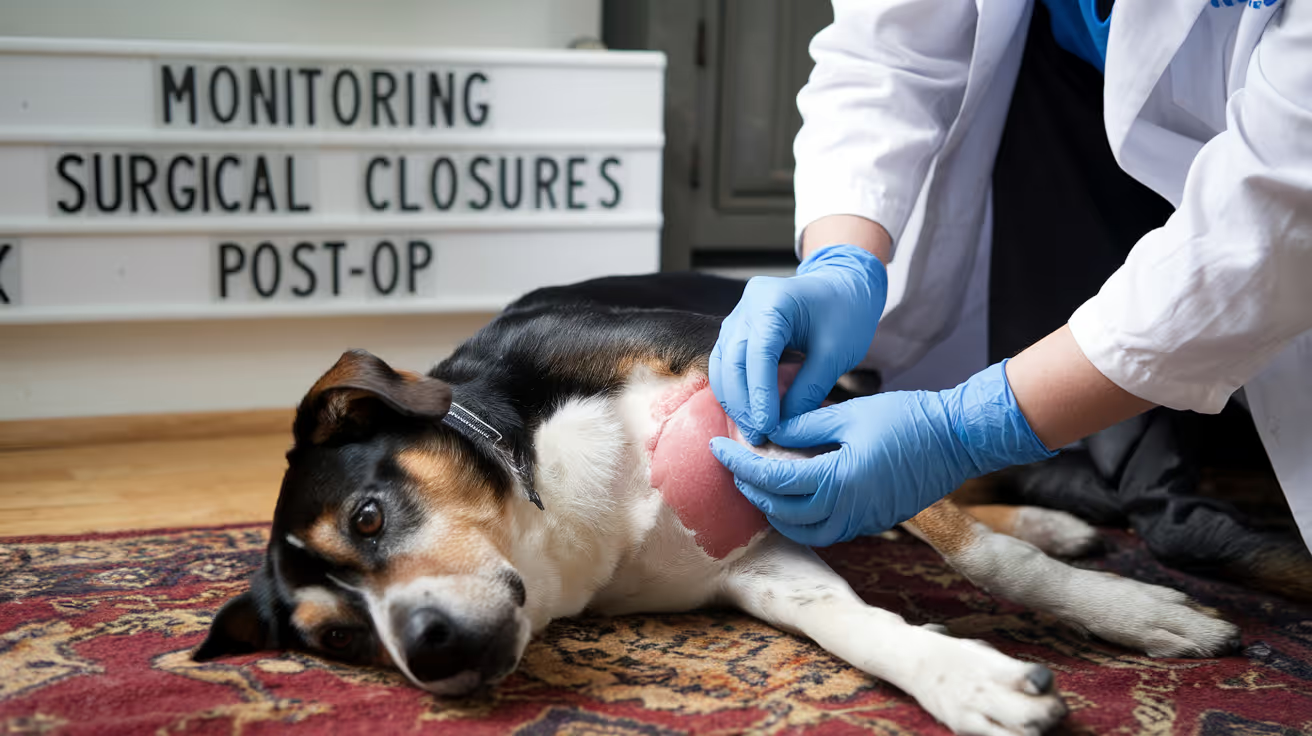
Post-Operative Monitoring of Surgical Closures
Learn essential steps for post-operative monitoring of surgical closures to ensure healing and prevent complications in pets.
Sustainable Vet Group
What happens at home in the two weeks after surgery determines as much about healing outcomes as what happened in the operating room. The wound that closes perfectly can still fail through licking, jumping, or unrecognized infection.
Owners who know what to check, how often, and what each finding means are far more likely to catch complications early when they are still manageable.
Quick answer: Check the surgical wound twice daily for the first 10 to 14 days. Normal findings: mild swelling and redness for 2 to 3 days, a thin dry crust at the wound margins, gradual improvement day by day. Abnormal findings requiring same-day contact: yellow or green discharge, foul odor, worsening redness beyond the wound margin, increasing swelling after day 3 to 4, wound opening (dehiscence), or any tissue protruding from the wound. Licking is the most preventable cause of post-operative closure failure.
Key takeaways
- Twice-daily wound checks for the full 10 to 14 days are the monitoring standard.
- Normal post-operative swelling and redness peaks at days 2 to 3, then progressively decreases.
- Seroma (soft fluctuant swelling) differs from infection and is usually harmless.
- Dehiscence (wound opening) is a same-day emergency cover with a clean cloth and call immediately.
- Licking is the most common owner-controllable cause of suture failure E-collar compliance is not optional.
- Pale gums, open wound with tissue protruding, or collapse require immediate emergency care.
What to check at each monitoring session
Twice-daily monitoring takes less than two minutes. The same checks, performed consistently, provide the trend data needed to distinguish normal healing from early complication.
Five things to assess at each check:
- Wound edges: closed and apposed at all points? No visible gaps between suture sites?
- Swelling: decreasing compared to the last check? Or increasing?
- Color: pink and normalizing? Or reddening, darkening, or developing pale areas?
- Discharge: none, or only a small amount of dried serous crust at the wound margins?
- Odor: none, or any smell from the wound area?
Metropolitan Veterinary Associates: "The incision should be monitored for redness, swelling, oozing, heat or pain to the touch. Any of these signs may indicate an incisional infection."
Normal findings by timeline
Days 1 to 2
- Mild swelling around the incision: normal the body's inflammatory response is at its peak
- Mild redness at the wound margins: normal
- Small amount of dried bloody crust at suture sites: normal
- Pet may be quiet, less active than usual: normal effect of anesthesia and post-operative pain management
MedVet: "It is normal to see mild lethargy, reduced appetite, or slight discomfort during the first 24 to 72 hours."
Days 3 to 5
- Swelling should begin to decrease from its peak
- Redness should be stabilizing or reducing not spreading
- A small firm ridge along the wound line is normal: this is early collagen deposition
- Pet appetite should be returning toward normal
Days 5 to 10
- Progressive improvement day by day
- The wound surface should look drier, flatter, and less reactive
- Sutures remain intact and wound edges remain fully apposed
Days 10 to 14
- Wound should be fully closed, dry, and healed at the surface
- Suture removal recheck visit (for external sutures)
- Vet assesses wound before removing sutures removal may be deferred if healing is incomplete
For how suture removal timing is assessed at the recheck in dogs, see suture removal timing at the day 10-14 recheck. For cats, see suture removal timing at the feline recheck.
Distinguishing seroma from infection
Both seroma and infection produce swelling near the surgical site. They require different responses.
Liberty Animal Hospital: "Seroma: fluid accumulation at the incision site due to tissue irritation this is normal. Continue with cold compress only until the swelling has gone down. The body will absorb it over time."
If you cannot confidently distinguish a seroma from an early infection, contact your vet. Assessment may require palpation or aspiration to determine fluid character.
For how seromas are prevented at the closure stage, see seroma prevention during closure.
Dehiscence: when the wound opens
Wound dehiscence is the partial or complete opening of a sutured wound. It is a same-day emergency not a wait-and-see situation.
PetPlace: "When sutures break down, the underlying tissues have the potential to protrude through the incision and be exposed to the exterior. This can lead to serious infections, which may be fatal."
What to do if the wound opens:
- Apply a clean towel or cloth gently over the wound
- Do not attempt to replace protruding tissue
- Do not apply ointments, disinfectants, or saline without vet guidance
- Transport to the vet or emergency clinic immediately
Common causes of dehiscence:
- Licking or chewing the sutures
- Jumping, running, or abrupt activity
- Sutures removed too early
- Infection undermining the closure from within
- Underlying tension that was not adequately managed at surgery
For how common closure errors produce dehiscence, see closure errors that lead to dehiscence.
Infection: what to look for
Early surgical site infection typically presents between days 3 and 7. The signs progress from mild to severe as the infection establishes.
Early signs (days 3 to 5):
- Redness extending beyond the immediate wound margin
- Increased warmth at the wound site
- Mild increase in discharge (serous becoming slightly cloudy)
Established infection (days 5 to 10):
- Purulent discharge (yellow, green, or brown)
- Foul odor
- Wound swelling increasing rather than decreasing
- Pet showing systemic signs: lethargy, reduced appetite, fever
Contact your vet the same day if you notice any of the early signs. Do not wait for the established infection stage early treatment is significantly simpler than treating an established surgical site infection.
Activity restriction: enforcing it at home
Metropolitan Veterinary: "Dogs and cats should be kept from jumping up/down on/from high surfaces, running up steps or any other activity that puts tension on the incision. Excess tension can lead to dehiscence."
Practical activity restriction strategies:
- Dogs: leash-only outdoor activity for 10 to 14 days; confine to one room or use a pen when unsupervised
- Cats: confine to a room without high furniture; prevent stair access
- Both: separate from other pets who may play with or groom the wound
The challenge is that pets often feel better before the wound has adequate tensile strength. A dog that seems completely normal at day 5 does not have a day-5 wound the tissue is still in the active repair phase and cannot tolerate the same forces the dog is willing to exert.
E-collar compliance: non-negotiable
Licking introduces oral bacteria directly to the wound surface, mechanically disrupts suture lines, and can remove external sutures within minutes of unsupervised access.
MedVet: "To prevent licking, which can delay healing, cause infection, or lead to the incision opening, use an Elizabethan collar (cone), a cervical collar, or cover the incision with a T-shirt or bandage."
The E-collar must be worn:
- At all times, including during sleep
- When the owner is in the room but not actively watching the pet
- When the pet is in its crate or confined space
Alternatives to the standard E-collar if compliance is difficult: inflatable donut collar (cats often tolerate better), surgical recovery suit, or soft fabric cone.
Emergency signs: call immediately
Some findings do not wait for a scheduled call to the vet. Seek care immediately for:
- Pale or white gums: indicates blood loss or cardiovascular compromise
- Blue-tinged gums or rapid breathing: respiratory distress
- Wound fully open with tissue protruding: cover and transport immediately
- Collapse or inability to stand
- Bright red active bleeding that does not stop within 5 minutes of gentle pressure
MedVet: "Pale gums, which can indicate potential blood loss or poor circulation seek veterinary care immediately, regardless of the time of day."
For the full closure checklist that precedes this monitoring period, see closure checklist prior to discharge. For how drain monitoring integrates with wound monitoring, see monitoring wounds with drains in place.
Frequently asked questions
My dog's wound looks fine but she keeps trying to lick it. Should I be worried?
The licking attempt is the warning sign the wound does not need to look damaged yet for the E-collar to be essential. Licking can remove sutures or disrupt healing within minutes. The fact that she is attempting to lick means the E-collar must be worn consistently, not just when she actively succeeds. Wounds that look fine often look that way because the E-collar has been working.
There is a small bump near the wound that appeared on day 4. How do I know if it is a seroma or infection?
Gently palpate (press softly) the bump. A seroma feels soft and fluid-filled, like a water balloon under the skin. An early infection usually feels firmer, is warmer to the touch, and the pet shows some discomfort when you touch it. If the bump is soft and the pet is otherwise well and eating, a seroma is more likely. Either way, contact your vet at the next business opportunity and immediately if the bump is warm, the pet seems unwell, or discharge is present.
My cat won't eat after surgery. Is that a complication?
Reduced appetite for 24 to 72 hours is common and expected. Cats that refuse to eat for more than 72 hours after surgery require prompt veterinary assessment. Metropolitan Veterinary: "Cats, in particular, cannot tolerate anorexia for long periods. They are predisposed to developing severe liver disease (hepatic lipidosis/fatty liver) within days of complete anorexia."
Post-operative monitoring is owner-controlled quality control for the surgeon's work. The wound that closes well can still fail but usually only if something external disrupts it. Every day of consistent monitoring, E-collar compliance, and activity restriction protects the closure that was placed and gives it the environment it needs to heal.
Resources
- Metropolitan Veterinary Associates. Abdominal Surgery: Post-Operative and Incisional Care. metro-vet.com
- MedVet. Caring for Your Cat or Dog After Surgery. medvet.com
- PetPlace. Postoperative Complications in Dogs. petplace.com
- Liberty Animal Hospital. Post-Surgery Guidelines. libertyanimalhospital.com

Sustainable Vet | Copyright ©2026 | All Rights Reserved

