

TPLO Surgery Cost in Brisbane
Explore TPLO surgery cost in Brisbane, ranging from $3,500 to $6,500. Factors like surgeon skill, dog size, and rehab affect pricing.

This article is for informational purposes only and is not a substitute for professional veterinary advice. Every case is unique, so always consult your veterinarian for guidance specific to your pet.
This content is intended for veterinary professionals for educational purposes. It does not replace clinical judgment or tailored advice. Always rely on your training, expertise, and the specific context of your patients.

TPLO surgery is a specialized procedure to repair a torn cranial cruciate ligament (CCL) in dogs. This surgery stabilizes the knee joint, helping dogs regain mobility and reduce pain. Understanding the cost is important for pet owners facing this significant medical decision.
Costs vary widely based on factors such as the city, surgeon experience, diagnostic tests, dog size, implants used, and post-operative rehabilitation. In Brisbane, this article covers typical price ranges, what costs include and exclude, key cost drivers, and helpful tips for owners.
Typical TPLO Surgery Cost in Brisbane
TPLO surgery pricing in Brisbane varies depending on the veterinary clinic, surgeon expertise, and the size of the dog. Different clinics offer a range of prices based on their services and equipment.
- Low estimate in Brisbane — Some clinics offer TPLO surgery starting around $3,500. These lower prices may reflect less experienced surgeons or fewer included services. Owners should be cautious as cheaper options might compromise on post-op care or implant quality.
- Average cost range in Brisbane — Most pet owners in Brisbane pay between $4,500 and $5,500 for TPLO surgery. This range usually includes surgery, anesthesia, implants, and basic post-operative care, representing a balance between quality and affordability.
- High-end TPLO specialists in Brisbane — Premium veterinary centers with board-certified surgeons and advanced surgical technology may charge $6,000 or more. These clinics often provide comprehensive care, including detailed diagnostics and rehabilitation packages.
What the Cost Usually Covers
Typically, TPLO surgery costs in Brisbane include several key components bundled into a package. Understanding these helps owners know what they are paying for.
- Surgery itself — The procedure involves cutting and rotating the tibia to stabilize the knee. This complex surgery requires specialized skills and equipment, which contribute significantly to the cost.
- Anaesthesia + monitoring — Safe anesthesia and continuous monitoring during surgery are critical. This ensures the dog’s vital signs remain stable, adding to the overall expense.
- Implants/plates — Stainless steel or titanium plates and screws are used to hold the bone in place. Titanium implants tend to cost more but may offer better durability and biocompatibility.
- Post-op care and follow-up exams — Includes pain management, wound checks, and follow-up visits to monitor healing. These services are essential for a successful recovery and are usually part of the package.
What Might Not Be Included
Some costs are often overlooked by owners when budgeting for TPLO surgery. These additional expenses can add up significantly.
- Pre-surgical diagnostics — X-rays, blood tests, and other diagnostics before surgery may be billed separately. These tests are necessary to assess the dog’s health and plan the surgery.
- Post-surgical rehab therapy — Physical therapy or hydrotherapy sessions to aid recovery are often extra. These therapies improve mobility but can increase overall costs.
- Medications beyond standard pain control — Additional medications for infection prevention or inflammation may not be included in the initial quote.
- Additional cost if both legs need surgery — If the dog requires TPLO on both knees, costs roughly double, though some clinics may offer package discounts.
Key Cost Drivers in Brisbane
Even within Brisbane, TPLO surgery prices vary due to several factors. Understanding these helps owners anticipate expenses.
- Dog size/weight — Larger dogs often require bigger implants and longer surgery time, increasing costs.
- General vet vs board-certified surgeon — Board-certified surgeons have advanced training and may charge more for their expertise and better outcomes.
- City living costs + overhead in Brisbane — Higher rent and staff wages in Brisbane clinics can raise prices compared to rural areas.
- Implant brand and surgical technology used — Premium implant brands and modern surgical tools add to the cost but may improve recovery.
- Complication or infection risk — If complications arise, additional treatments and extended care increase overall expenses.
Tips for Pet Owners in Brisbane
Careful financial planning and research can help Brisbane pet owners manage TPLO surgery costs effectively.
- Ask for a detailed itemised estimate — Request a full breakdown of costs to understand what is included and avoid surprises.
- Clarify if quote is for one leg or both — Confirm whether the price covers surgery on one or both knees to budget accurately.
- Explore pet insurance or financing options — Insurance may cover part of the cost, and some clinics offer payment plans to ease financial burden.
- Compare multiple clinics and ask about success rates — Research different providers and their outcomes to choose the best care for your dog.
- Ask about rehab or physiotherapy packages — Inquire if clinics offer bundled rehab services which can save money and improve recovery.
Conclusion
TPLO surgery is a significant financial commitment for dog owners in Brisbane. Costs vary widely depending on clinic, surgeon, and dog-specific factors. Planning ahead and understanding what influences pricing can help avoid unexpected expenses.
Comparing quotes and confirming inclusions before choosing a clinic ensures owners get the best value and care for their pets. Proper preparation supports a smoother surgical experience and recovery.
Frequently Asked Questions
How much does TPLO surgery cost in Brisbane?
TPLO surgery in Brisbane typically ranges from $3,500 to $6,500. The final cost depends on the clinic, surgeon expertise, dog size, and included services like diagnostics and rehab.
Is TPLO worth the cost for dogs with CCL tears?
Yes, TPLO is often worth the cost as it provides better joint stability and faster recovery compared to conservative treatments. It helps dogs regain mobility and reduces arthritis risk long-term.
Can pet insurance cover TPLO surgery in Brisbane?
Many pet insurance plans cover TPLO surgery partially or fully. Owners should check their policy details and pre-authorization requirements to ensure coverage.
How do I know if a TPLO quote is reasonable?
A reasonable TPLO quote includes detailed cost breakdowns, covers surgery and post-op care, and aligns with Brisbane’s average price range. Comparing multiple estimates helps identify fair pricing.

Get a Free Poster
Enhance your workspace with a high-quality radiographs reference poster, designed for veterinary professionals. This free physical poster will be shipped directly to you—just fill out the form to request your copy.


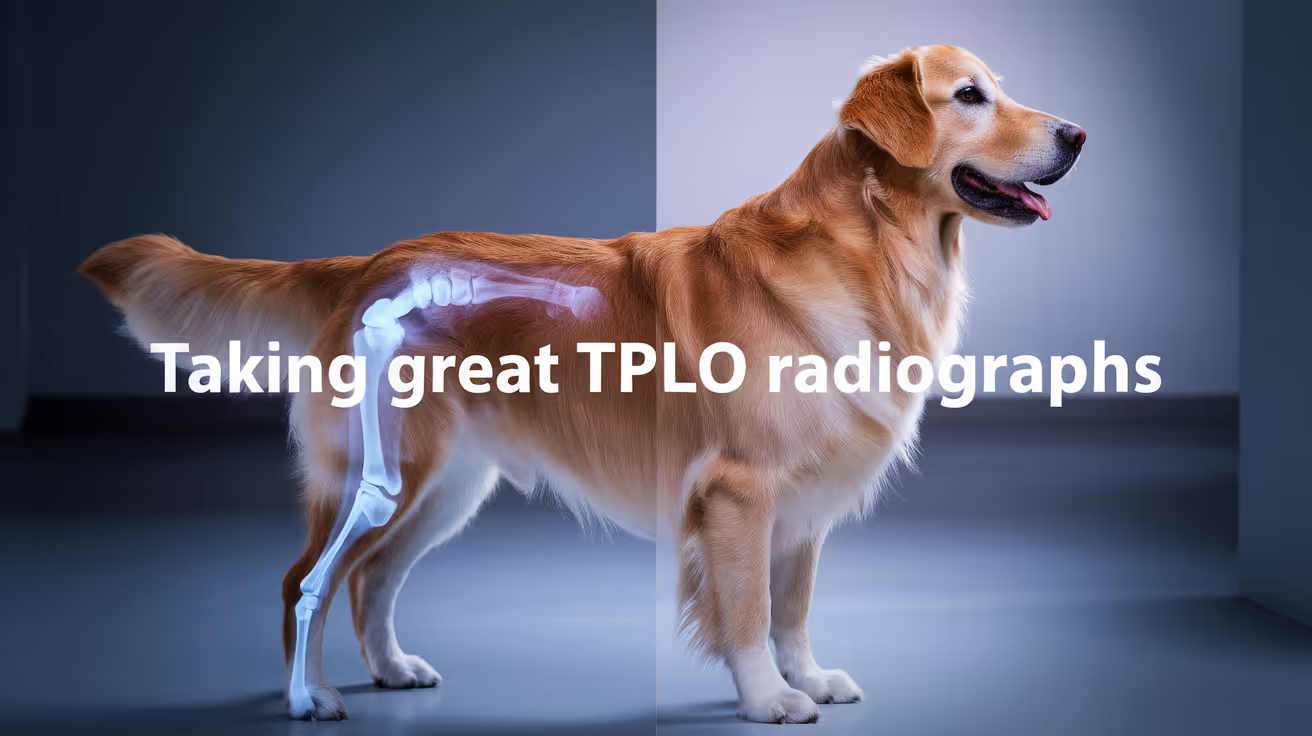



Taking Great TPLO Radiographs
Click Below to Watch Live Video Demos


We'll send you a Free Wall Poster with all the steps
Step #1
Getting Ready
Ensuring a clean surgical field starts with proper skin preparation. This video demonstrates the best practices for:
- Shaving the patient – Achieving a close, even shave while minimizing skin irritation
- The Dirty Scrub – The initial skin prep step to remove surface debris and reduce bacterial load before the sterile scrub.
Following these techniques helps reduce infection risk and improve surgical outcomes. Watch the video to see how it’s done effectively!


Step #2
Reduce Your Risks
Many surgeons are shocked to find out that their patients are not protected from biofilms and resistant bacteria when they use saline and post-op antibiotics.
That’s Where Simini Comes In.
Why leave these risks and unmanaged? Just apply Simini Protect Lavage for one minute. Biofilms and resistant bacteria can be removed, and you can reduce two significant sources of infection.
Step #3
Take the Course
Preventing surgical infections is critical for patient safety and successful outcomes. This course covers:
- Aseptic techniques – Best practices to maintain a sterile field.
- Skin prep & draping – Proper methods to minimize contamination.
- Antibiotic stewardship – When and how to use perioperative antibiotics effectively.
Stay up to date with the latest evidence-based protocols. Click the link to start learning and earn CE credits!

Things to know
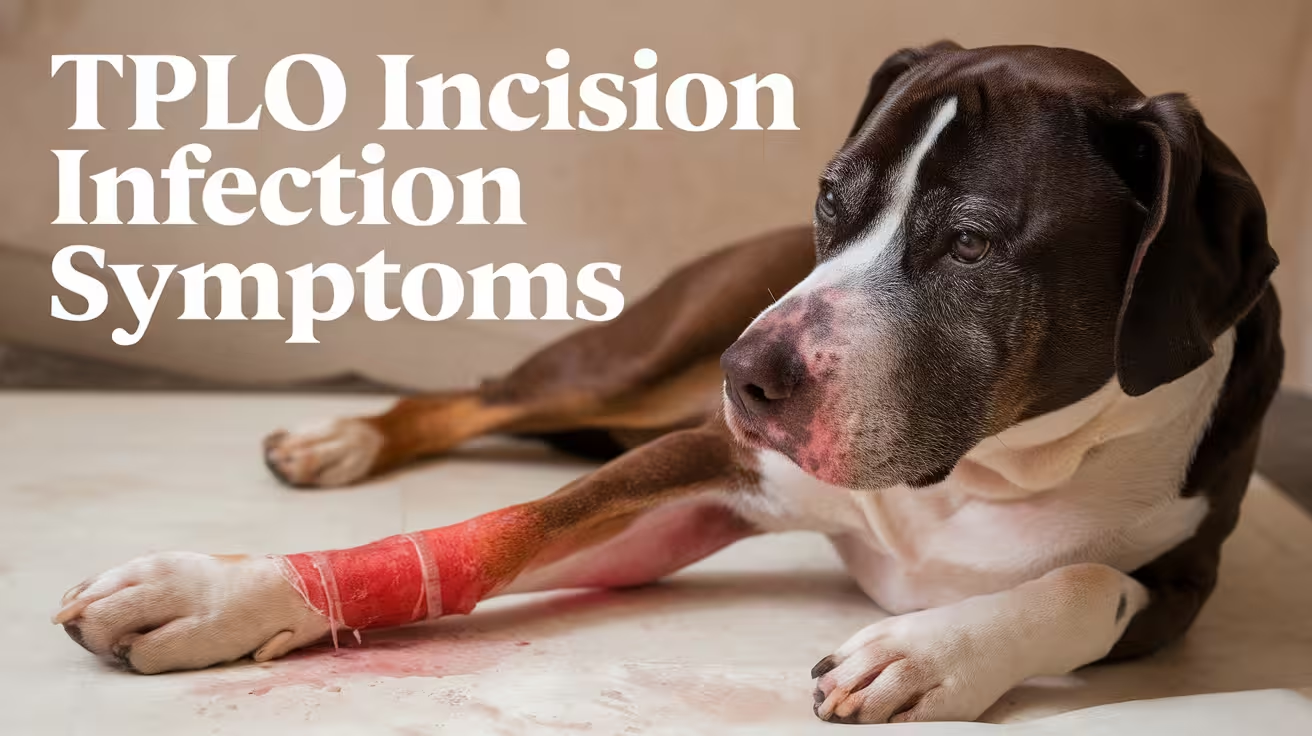
TPLO Incision Infection? Symptoms & Prevention
Worried about a TPLO incision infection? Learn the symptoms, causes, and best prevention tips to keep your dog’s recovery smooth and infection-free
TPLO incision infection is one of the most common complications after surgery. Most incision infections are preventable with consistent owner-managed wound care, and most are treatable when caught early.
The window between a superficial incision infection (treatable with antibiotics) and a deep implant infection (requiring surgical intervention) is measured in days -- which is why daily inspection is not optional.
Quick answer: Normal TPLO incision healing shows mild redness fading from day 5, no discharge after day 3, and a clean approximated incision line. Infection signs: spreading redness, increasing warmth, cloudy or malodorous discharge, swelling not resolving, wound edges separating, or lameness worsening. Prevention centers on e-collar compliance, dryness, and daily inspection.
Key takeaways
- Licking is the most common preventable cause of TPLO incision infection: the oral cavity carries S. pseudintermedius that can inoculate the incision; e-collar compliance for 10 to 14 days is the most protective owner action
- The distinction between normal healing and early infection is trajectory-based: mild redness and clear serum discharge are normal for 2 to 3 days; anything worsening from day 5 onward warrants veterinary attention
- Infection signs requiring a same-day call: spreading redness, yellow or green discharge, malodorous discharge, wound dehiscence, or systemic signs alongside local wound changes
- Keeping the incision dry is the second most important prevention measure: bacteria proliferate in moist environments; no bathing or wet-grass walks until incision healing is confirmed by the vet
- Daily inspection at the same time each day creates a baseline: daily comparison of today to yesterday reveals whether the incision is improving or worsening
- Most superficial incision infections resolve with oral antibiotics if treated promptly: treatment escalates significantly if deep implant involvement occurs; early action prevents this escalation
Normal TPLO incision healing: what to expect
Understanding normal healing is the prerequisite for recognizing abnormal changes.
Days 1 to 3: acute inflammatory phase
Normal: the incision is red, mildly swollen, and warm. A small amount of clear to pale yellow serum may seep from the wound edges. The swelling may extend slightly beyond the incision line.
Context: this is the inflammatory phase -- the biological response to surgical trauma. It is expected and appropriate.
Days 3 to 5: peak swelling subsides
Normal: redness should be fading. Swelling should begin to reduce. Any discharge should have stopped by day 3. The incision line should be approximated (edges together and not gaping).
Days 5 to 10: healing consolidation
Normal: redness is minimal or absent. No discharge. The incision line is dry and the skin edges are growing together. The dog may experience some surface itching as new skin forms.
Suture/staple removal: typically at 10 to 14 days. The vet confirms incision healing before removal.
Day 14 onward
Normal: incision is healed, sutures removed, skin intact. Mild surface discoloration (pink to pale) is normal for several weeks. No further discharge.
Signs of TPLO incision infection
Spreading redness (most concerning early sign)
Normal healing produces redness confined to the incision line (typically 1 to 2 mm on each side).
Infection produces redness that spreads outward from the incision -- a widening halo of red skin extending beyond the original margins.
SustainableVet.org confirms: redness that worsens, especially with pain or heat, often accompanies infection. Contact your vet the same day if spreading redness is observed.
Warmth that is increasing rather than decreasing
Mild warmth is normal in the first 3 to 5 days.
Warmth that is increasing at day 7 or beyond -- when normal healing produces cooling -- indicates ongoing active inflammation, typically from infection.
Discharge type and timing
- Clear serum for 24 to 48 hours: normal
- Any discharge after day 3: concerning
- Cloudy, yellow, or green discharge at any stage: infection until proven otherwise
- Malodorous discharge: infection; contact vet immediately
SustainableVet.org confirms: inspect the incision daily for redness, swelling, or discharge; yellow or green discharge is not normal and needs immediate attention.
Wound dehiscence
The incision edges separate, exposing subcutaneous tissue or deeper structures. Most often caused by licking, but can occur from excessive activity, suture reaction, or infection undermining the tissue.
SustainableVet.org (complications article) confirms: if stitches are removed too soon or dehiscence occurs, a vet should assess the wound immediately.
Swelling that is not resolving
Expected swelling peaks at days 2 to 5 and consistently resolves after that.
Swelling that is the same or larger at day 7 as it was at day 3 is not following the expected trajectory.
Systemic signs alongside local changes
Fever (rectal temperature above 39.5 C / 103.1 F), lethargy, reduced appetite, or behavioral changes accompanied by any local wound sign constitute an emergency call. These suggest the infection is systemic.
SustainableVet.org (redness article) confirms: systemic signs including fever, lethargy, or loss of appetite along with redness indicate the infection may be spreading; contact your vet immediately.
Prevention: the actions that matter most
1. E-collar compliance without exception
The e-collar prevents the single most common preventable cause of TPLO incision infection: licking. Even one licking episode directly inoculates the wound with oral bacteria.
SustainableVet.org confirms: even brief periods of licking can introduce bacteria; an Elizabethan collar or medical pet shirt should be used at all times until the incision fully heals.
The e-collar must be worn:
- During sleep
- Unsupervised periods in the crate
- Whenever the dog is not under direct eye contact with the owner
If the dog can reach the incision with the collar on, the collar is the wrong size -- contact the vet for a larger size.
2. Keep the incision dry
Moisture promotes bacterial growth and skin maceration at the incision edges. No bathing or submerging the leg until the vet confirms healing at the 2-week recheck.
During wet weather, minimize wet-grass time on outdoor bathroom trips. Pat the leg dry immediately if it gets wet.
SustainableVet.org confirms: keep the incision clean and dry; avoiding moisture reduces infection risks.
3. Daily incision inspection
Inspect the incision at a consistent time each day. Compare today directly to yesterday. The trajectory (better, same, worse) is more diagnostically useful than any single observation.
Inspection takes 30 seconds. Pick a time (e.g., after the evening bathroom walk) and make it routine.
4. Do not clean with unapproved solutions
Unless instructed by your vet, do not apply hydrogen peroxide, alcohol, iodine, or other antiseptics to the incision. These can damage healing tissue and delay closure.
If cleaning is needed, use the vet-approved solution (typically dilute chlorhexidine or sterile saline).
5. Clean bedding weekly
Bedding in contact with the incision area accumulates skin bacteria. Wash crate bedding weekly in hot water.
6. Hand hygiene before touching the wound
Wash hands before any wound inspection or dressing change. Human skin also carries bacteria capable of contaminating an open or healing incision.
Treatment
Superficial infection (SSI-S): oral culture-directed antibiotics for 2 to 4 weeks; wound cleaning; continued e-collar compliance; wound recheck in 3 to 5 days to confirm response.
Progressing or deep infection: surgical debridement; deep culture; IV or long-course oral antibiotics; imaging to assess implant involvement.
Implant-associated infection: see the dedicated TPLO plate infection guide. Treatment typically includes plate removal once the osteotomy has healed.
For the infection signs guide, see earliest signs of TPLO infection. For the prevention mistakes guide, see post-operative care mistakes that increase TPLO infection risk.
For the staph infection guide, see staph infection after TPLO surgery. For the plate infection guide, see TPLO plate infection signs and treatment.
Frequently asked questions
My dog's incision looks red but the vet said it looks normal at the 2-week recheck. Should I still be worried?
If the vet examined the incision in person at 2 weeks and found it normal, trust that assessment. Post-recheck monitoring continues -- if the incision changes after the recheck, contact the vet.
A single normal exam does not guarantee no infection will develop later.
Can I tell the difference between a seroma and an infection at the incision?
Seromas are soft, fluctuant (fluid-filled), non-painful swellings without redness, warmth, or discharge. Infection produces warmth, redness, possible discharge, and pain. If you cannot clearly distinguish the two, contact your vet for assessment.
The incision looked fine yesterday but today there is yellow discharge. What do I do?
Call your vet the same day. Yellow discharge at any point after the first 2 to 3 days is concerning. Do not wait to see if it resolves.
Keep the e-collar on and do not apply any home remedies to the wound before the vet advises.
My dog keeps trying to lick the incision even with the e-collar. What else can I try?
Ensure the collar is the correct size -- most dogs can reach their hind legs with a too-small collar.
A longer cone, a recovery suit (medical pet shirt), or a contact bandage over the incision site (applied by your vet) can supplement the collar.
Ask your vet about trazodone or gabapentin if anxiety is driving the licking behavior.
Does the incision need to be cleaned every day?
In most cases, no. Daily cleaning is not required and may introduce contamination or irritate healing tissue. Daily inspection is required.
Clean only if the vet specifically instructs it and with the approved solution only.
Resources
- SustainableVet. TPLO Incision Infection: Symptoms and Prevention. sustainablevet.org
- SustainableVet. Earliest Signs of TPLO Infection. sustainablevet.org
- SustainableVet. TPLO Plate Infection Signs and Treatment. sustainablevet.org
- VCA Animal Hospitals. Tibial Plateau Leveling Osteotomy (TPLO) in Dogs. vcahospitals.com
TPLO Failure Rate in Dogs Explained
Learn about TPLO failure rates in dogs, causes, prevention, and recovery tips for better surgical outcomes.
Tibial Plateau Leveling Osteotomy (TPLO) is a common surgery to fix cranial cruciate ligament injuries in dogs. Many pet owners worry about the TPLO failure rate in dogs and what it means for their pet’s recovery. Understanding the risks and outcomes can help you make informed decisions for your dog’s health.
This article explains what TPLO failure means, how often it happens, and what factors affect it. You will learn how to recognize complications, prevent failure, and support your dog after surgery for the best results.
What is the TPLO failure rate in dogs?
The TPLO failure rate in dogs varies but is generally low when performed by experienced surgeons. Failure means the surgery did not fully restore knee stability or complications occurred that affect recovery.
Studies show failure rates range from 2% to 10%, depending on factors like surgical technique and dog size. Most dogs recover well and regain normal function after TPLO.
- Low overall failure: Most dogs have successful outcomes with TPLO, with failure rates usually under 10% in clinical studies.
- Variation by surgeon: Surgeons with more experience tend to have lower failure rates due to better technique and planning.
- Dog factors matter: Larger dogs or those with severe ligament damage may have a higher risk of failure after TPLO.
- Definition of failure: Failure includes persistent lameness, implant problems, or the need for revision surgery after TPLO.
Understanding these rates helps you set realistic expectations and discuss risks with your vet before surgery.
What causes TPLO failure in dogs?
Several factors can lead to TPLO failure. Knowing these causes helps prevent problems and improve recovery chances.
Failures often result from surgical errors, infection, or poor healing. Other causes include implant issues and the dog’s activity level after surgery.
- Surgical technique errors: Incorrect bone cuts or implant placement can cause instability or implant failure after TPLO.
- Infection risk: Postoperative infections can delay healing and lead to surgery failure if not treated promptly.
- Poor bone healing: Factors like age, nutrition, or underlying disease can slow bone healing and cause failure.
- Excessive activity: Dogs that are too active too soon may damage the surgical site and cause failure.
Preventing these causes requires careful surgical planning, good postoperative care, and close monitoring.
How can TPLO failure be prevented in dogs?
Prevention of TPLO failure starts with choosing a skilled surgeon and following postoperative instructions closely. Proper care reduces complications and supports healing.
Owners play a key role in managing their dog’s activity and health during recovery to avoid failure.
- Experienced surgeon choice: Select a board-certified surgeon with extensive TPLO experience to reduce technical errors.
- Strict activity control: Limit your dog’s movement and exercise as advised to protect the surgical site during healing.
- Infection prevention: Keep the incision clean and watch for signs of infection to catch problems early.
- Follow-up visits: Regular vet check-ups help monitor healing and detect complications before failure occurs.
Following these steps improves your dog’s chance of a successful TPLO surgery and recovery.
What are the signs of TPLO failure in dogs?
Recognizing failure signs early lets you seek veterinary care promptly. Signs often involve ongoing lameness or swelling around the knee.
Not all postoperative discomfort means failure, but persistent or worsening symptoms should be evaluated by a vet.
- Persistent lameness: Continued limping or inability to bear weight on the leg weeks after surgery may indicate failure.
- Swelling or pain: Increased swelling, heat, or pain around the knee can signal infection or implant problems.
- Unusual noises: Clicking or popping sounds from the knee might mean implant loosening or joint instability.
- Reduced range of motion: Difficulty bending or extending the knee joint may suggest complications affecting recovery.
If you notice any of these signs, contact your veterinarian immediately for assessment and treatment.
How is TPLO failure treated in dogs?
Treatment depends on the cause of failure. Some cases require revision surgery, while others may respond to medical management.
Your vet will perform exams and imaging to determine the best approach to restore function and relieve pain.
- Revision surgery: Some dogs need a second surgery to fix implant issues or correct bone alignment after failure.
- Antibiotic therapy: Infections causing failure require antibiotics and sometimes implant removal to heal properly.
- Pain management: Medications and physical therapy help control pain and improve mobility during recovery.
- Supportive care: Weight management and controlled exercise support healing and reduce stress on the knee joint.
Early treatment improves outcomes and helps your dog regain normal activity levels.
What is the recovery outlook after TPLO failure in dogs?
Recovery after TPLO failure can be more challenging but is often successful with proper care. Many dogs regain good function after treatment.
Recovery time may be longer, and some dogs need ongoing management to maintain comfort and mobility.
- Longer healing time: Dogs with failure often require extended recovery periods compared to uncomplicated TPLO cases.
- Physical therapy benefits: Rehabilitation exercises improve strength and joint function after failure treatment.
- Possible chronic issues: Some dogs may develop arthritis or mild lameness despite treatment.
- Owner commitment: Consistent care and monitoring are essential for a positive recovery after failure.
With patience and veterinary support, many dogs live active, happy lives following TPLO failure treatment.
What factors affect TPLO failure rates in different dog breeds?
Breed and size influence TPLO outcomes. Larger and more active breeds may face higher failure risks due to greater joint stress.
Understanding breed-specific risks helps tailor surgical and postoperative care for better success.
- Large breed challenges: Heavy dogs put more pressure on the knee, increasing the chance of implant failure or delayed healing.
- Active breed risks: Energetic dogs may be harder to restrict post-surgery, raising failure risk from premature activity.
- Bone quality differences: Some breeds have denser or more fragile bones affecting healing after TPLO.
- Genetic predispositions: Certain breeds may be more prone to ligament injuries and complications after surgery.
Discuss your dog’s breed and lifestyle with your vet to plan the best approach for TPLO surgery and recovery.
Conclusion
The TPLO failure rate in dogs is generally low but depends on many factors like surgeon skill, dog size, and postoperative care. Understanding these helps you prepare for surgery and recovery.
By choosing an experienced surgeon, following care instructions, and watching for signs of failure, you can help your dog heal well and return to a happy, active life after TPLO surgery.
What is the typical TPLO failure rate in dogs?
TPLO failure rates usually range between 2% and 10%, with most dogs recovering successfully after surgery.
Can infection cause TPLO failure in dogs?
Yes, infections at the surgical site can lead to delayed healing and failure if not treated quickly with antibiotics and care.
How soon can dogs return to activity after TPLO?
Dogs typically need 8 to 12 weeks of restricted activity to allow proper healing and reduce the risk of failure.
Is revision surgery common after TPLO failure?
Revision surgery is sometimes necessary to correct implant or alignment issues when TPLO fails to restore knee stability.
Do larger dogs have higher TPLO failure rates?
Larger dogs often have increased failure risk due to greater joint stress and challenges in controlling postoperative activity.
How Soon Can a Dog Walk After TPLO Surgery?
Learn when your dog can safely start walking after TPLO surgery and how to support recovery with proper care and guidance.
TPLO (Tibial Plateau Leveling Osteotomy) surgery is one of the most common and successful procedures performed to stabilize the knee after a cranial cruciate ligament (CCL) tear in dogs.
While many pet parents expect their dog to immediately stop limping after surgery, recovery is a gradual healing process. It requires structure, careful activity restriction, and close adherence to surgical recommendations to achieve the best long-term outcome.
At SustainableVet, we emphasize that recovery is just as important as the surgery itself. The goal after TPLO surgery is not simply to get your dog walking quickly. It is to allow the bone and soft tissues to heal properly while safely rebuilding strength, comfort, and confidence in the limb.
When Can a Dog Start Walking After TPLO Surgery?
One of the most common questions after surgery is how soon dogs can walk again. The short answer: dogs are encouraged to begin controlled limb use early in recovery, but activity must remain extremely restricted while the bone heals.
We want your dog to use the operated leg, but not overuse it.
Most dogs will begin toe-touching on the operated leg within the first several days after surgery. Limping is expected during the early recovery period. What we want to see is gradual improvement over time:
- More consistent weight bearing
- Improvement in muscle mass
- Improved comfort during controlled, regimented leash walks
While early limb use is encouraging, it is crucial to understand that the bone itself is still healing internally. That process typically takes 8 to 12 weeks.
TPLO Recovery Timeline at a Glance
Indoor Recovery: 8 to 12 Weeks
During the entire recovery, exercise restriction is critical. Crate confinement or restriction to a small area with good traction is strongly recommended. Most dogs will slip and slide on hardwood floors and can easily injure themselves inside the house when not confined.
Days 1 to 10: Initial Rest Period
During the first 7 to 10 days after surgery, walking is restricted to short, slow leash walks only for bathroom breaks. These walks should be calm, controlled, and limited to what is necessary.
Days 10 to 14: First Recheck Appointment
By the first recheck appointment, many dogs are partially weight-bearing during a controlled, slow walk.
At this stage, your veterinary team will evaluate the incision, swelling, comfort level, and early limb use. Even if your dog is doing well, activity should still remain very restricted.
Weeks 2 to 8: Gradual Activity Increase
As healing progresses, 10 to 15 minute leash walks may be introduced to build more strength, reduce stiffness, and encourage bony healing without overloading the leg.
Walking activity and physical therapy are gradually increased according to your surgeon's recommendations. This stage is not about testing how much your dog can do. It is about safely rebuilding muscle mass while protecting the healing bone.
Weeks 8 to 12: Final Healing and Recheck
At the final recheck appointment, radiographs (X-rays) are typically performed to assess bone healing.
By this stage, many dogs have minimal or no lameness during controlled activity. If the osteotomy has healed adequately, your surgeon may recommend a gradual transition back toward more normal activity.
Why Strict Rest Is Required After TPLO: The Mechanics
During a TPLO procedure, a precise geometric cut is made in the tibia. The bone is then rotated into a new position and stabilized using a specialized metal plate and screws.
Until the bone heals, the plate and screws are responsible for maintaining the new bone position and protecting the osteotomy during normal controlled movement.
Excessive activity, slipping, jumping, or twisting too early can place forces on the repair that it is not yet ready to tolerate.
Even if your dog appears comfortable and eager to do more, unrestricted activity too early can create significant complications before the bone has fully healed.
Recovery after TPLO surgery is truly a situation where slow and steady wins the race.
Factors That Affect TPLO Walking Recovery Time
Recovery time depends on several individual factors. These influence how quickly walking progresses and how carefully activity must be advanced.
Postoperative Care
Strict environmental management, appropriate pain control, and structured rehabilitation directly support a safer recovery. This includes using a leash at all times outdoors, preventing stairs and jumping, keeping floors non-slip, and following medication and activity instructions closely.
Presence of Complications
Issues such as incision problems, infection, implant failure, delayed bone healing, or fracture can extend the recovery timeline and delay walking progression.
Any sudden worsening in lameness, swelling, pain, or reluctance to use the limb should be reported to your veterinary team immediately.
How to Safely Support Your Dog's Mobility During Recovery
A structured support plan improves long-term outcomes and reduces the risk of setbacks.
Use a Short Leash and Harness at All Times
All walks during recovery must remain on a short leash with a slow, controlled pace. A harness can help control movement and prevent sudden lunging or twisting.
Your dog should not be allowed to run ahead, play, greet other dogs energetically, or move unpredictably during recovery walks.
Stick to Strict Exercise Limits
Follow your veterinarian's recommended walking times and avoid any off-leash activity, running, jumping, or rough play.
Many complications occur not because a dog was walking, but because the dog suddenly slipped, jumped, twisted, or did too much too soon.
Prioritize Pain Management
Administer all prescribed pain medications on schedule. Good pain control keeps your dog comfortable and encourages more even, controlled weight-bearing during brief walks.
Do not stop medications early unless your veterinarian advises you to do so.
Incorporate Professional Physical Therapy
Gentle range-of-motion exercises may help reduce stiffness early in recovery. As healing permits, rehabilitation options such as controlled strengthening exercises, hydrotherapy, or underwater treadmill sessions may help rebuild muscle while reducing stress on the limb.
Working with a certified canine rehabilitation specialist allows for a customized plan that helps restore joint flexibility, rebuild muscle, improve comfort, and support a safe return to normal mobility.
Risks of Walking Too Soon or Too Much After TPLO Surgery
Being cautious protects the surgical repair. Allowing your dog to run, jump, slip, or play too early carries real clinical risks.
Implant Strain or Failure
Excessive weight-bearing, sudden twisting, or impact forces too early can place abnormal stress on the plate and screws. In severe cases, implants can loosen or fail, requiring additional treatment or corrective surgery.
Delayed Bone Healing
Too much motion or repeated stress at the surgical site can slow the bone's ability to heal properly, prolonging the total recovery period.
Increased Pain and Inflammation
Overexertion can cause swelling, soreness, and joint inflammation. This may make your dog less willing to use the leg and can delay functional recovery.
Setbacks in Recovery
Too much activity too soon can cause limping, soft tissue irritation, swelling around the surgical site, or a slower return to comfortable walking. In some cases, setbacks require a longer rehabilitation plan or additional veterinary care.
Frequently Asked Questions
How long should my dog be confined after TPLO surgery?
Your dog needs indoor confinement for the entire two to three months of recovery. Confinement prevents accidental running, jumping, and rough movement.
Can I let my dog run or jump after TPLO surgery?
No. Running, jumping, stair use, and off-leash activity are restricted for approximately 8 to 12 weeks. The exact timeline depends on your dog's healing and X-ray findings.
What signs show my dog is recovering well and ready for longer walks?
Positive signs include reduced swelling, steady comfort levels, consistent toe-touching, and gradual improvement in walking quality. Always confirm with your veterinary team before increasing walk duration.
Is physical therapy necessary after TPLO surgery?
Some dogs recover well with structured home care alone, but physical therapy is always an excellent adjunct to build muscle strength and improve use of the operated leg.
When can my dog return to full, normal activity?
Most dogs achieve adequate bone and soft tissue healing between 8 and 12 weeks after surgery. Full activity should only resume gradually after follow-up X-rays confirm the osteotomy has healed and your surgeon provides formal approval.
Final Thoughts
Dogs are often ready to do more before their bone is ready to tolerate more. Dogs will not moderate their own activity. That is why TPLO recovery requires a balance between early controlled limb use and strict protection of the surgical repair.
With appropriate rest, controlled leash activity, pain management, follow-up care, and rehabilitation when needed, most dogs return to comfortable, active lives after TPLO surgery.
About this Collaboration: Successful healing happens both inside and outside the operating room. This article combines structured veterinary rehabilitation guidelines with direct clinical insights from veterinary orthopedic surgeons to support pet parents through every stage of the recovery journey.
CORA-Based Leveling Osteotomy vs TPLO in Dogs
Compare CORA-Based Leveling Osteotomy and TPLO for canine cruciate ligament surgery, including techniques, benefits, and recovery.
When dogs suffer from cranial cruciate ligament (CCL) rupture, surgical options like CORA-Based Leveling Osteotomy (CBLO) and Tibial Plateau Leveling Osteotomy (TPLO) are common. Choosing the right surgery can be confusing for pet owners. This article explains the differences between CBLO and TPLO clearly.
Both surgeries aim to stabilize the knee and reduce pain, but they use different techniques. Understanding these can help you decide the best treatment for your dog. You will learn how each surgery works, their benefits, risks, and recovery expectations.
What is CORA-Based Leveling Osteotomy (CBLO)?
CBLO is a newer surgical method designed to correct the knee joint angle by cutting and rotating the tibia bone. It uses the Center of Rotation of Angulation (CORA) to plan the correction precisely. This technique aims to restore normal joint mechanics and reduce arthritis progression.
The surgery involves measuring the tibial plateau angle and calculating the exact bone cut needed. This precision helps improve joint stability and function after surgery.
- Precise correction planning: CBLO uses detailed imaging to calculate the exact bone cut angle, improving surgical accuracy and joint alignment.
- Restores joint mechanics: By correcting the tibial angle precisely, CBLO helps the knee function more naturally, reducing abnormal stresses.
- Reduces arthritis risk: Better joint alignment may slow arthritis development compared to other techniques.
- Suitable for various dogs: CBLO can be adapted for different breeds and sizes, making it versatile for many patients.
CBLO is gaining popularity because it focuses on restoring the knee’s natural biomechanics. This can lead to better long-term outcomes for dogs with CCL injuries.
What is Tibial Plateau Leveling Osteotomy (TPLO)?
TPLO is a well-established surgery that changes the slope of the tibial plateau to stabilize the knee without relying on ligament repair. It involves cutting the tibia and rotating the bone to a flatter angle. This reduces the forward thrust that causes instability in CCL injuries.
TPLO has been used for decades and is considered a gold standard for many surgeons treating CCL rupture. It is effective in restoring function and reducing pain.
- Changes tibial slope: TPLO flattens the tibial plateau angle to prevent the femur from sliding forward during movement.
- Improves joint stability: By altering bone geometry, TPLO stabilizes the knee without needing ligament reconstruction.
- Proven track record: TPLO has decades of clinical use with good success rates in many dog breeds.
- Requires specialized equipment: The surgery needs specific saws and plates designed for the procedure.
TPLO remains a trusted option for many veterinarians due to its consistent results and ability to restore mobility in affected dogs.
How do CBLO and TPLO differ in surgical technique?
Both CBLO and TPLO involve cutting and rotating the tibia, but their planning and goals differ. CBLO uses the CORA method for precise angle correction, while TPLO focuses on leveling the tibial plateau to a standard angle.
These differences affect how the bone is cut, rotated, and fixed with plates and screws during surgery.
- Planning approach: CBLO uses CORA calculations for individualized correction; TPLO uses a fixed target angle for leveling.
- Bone cut shape: CBLO often uses an angled cut based on CORA; TPLO uses a curved cut around the tibial plateau.
- Rotation amount: CBLO rotation varies by dog’s anatomy; TPLO rotation aims for a 5-degree tibial plateau slope.
- Implant fixation: Both use plates and screws, but implant design may differ based on osteotomy shape.
Understanding these technical differences helps surgeons choose the best method for each patient’s anatomy and needs.
What are the benefits of CBLO compared to TPLO?
CBLO offers several advantages due to its precise correction method. It aims to restore normal joint mechanics more closely than TPLO, which may improve long-term joint health.
These benefits can influence recovery speed, pain levels, and arthritis progression after surgery.
- Individualized correction: CBLO tailors the bone cut to each dog’s unique anatomy, potentially improving joint function.
- Potentially less arthritis: Better joint alignment may reduce abnormal wear and slow arthritis development.
- Preserves bone stock: CBLO may remove less bone compared to TPLO, preserving more natural structure.
- Improved biomechanics: Restoring the natural joint angle can lead to better limb use and comfort.
While CBLO is newer, early studies suggest it may offer improved outcomes for some dogs compared to TPLO.
What are the risks and complications of CBLO and TPLO?
Both surgeries carry risks common to orthopedic procedures, including infection, implant failure, and delayed healing. Some risks vary based on technique and patient factors.
Knowing these risks helps owners prepare and monitor their dogs after surgery.
- Infection risk: Both surgeries involve bone cuts and implants, which can become infected if not properly managed.
- Implant complications: Plates or screws may loosen or break, requiring revision surgery in some cases.
- Delayed bone healing: Healing time can vary, and some dogs may experience slower recovery.
- Postoperative pain: Both procedures cause pain that needs management with medication and care.
Choosing a skilled surgeon and following postoperative instructions reduce these risks significantly.
How do recovery and rehabilitation compare between CBLO and TPLO?
Recovery after CBLO and TPLO involves rest, controlled activity, and physical therapy. Both surgeries require careful management to ensure proper bone healing and joint function.
Rehabilitation protocols may differ slightly based on the surgery type and surgeon preference.
- Initial rest period: Both require strict rest for 6 to 8 weeks to allow bone healing without stress.
- Physical therapy: Controlled exercises help regain strength and range of motion gradually.
- Pain management: Medications and cold therapy reduce pain and swelling during recovery.
- Long-term outcome: Most dogs regain good limb function within 3 to 6 months post-surgery.
Following the veterinarian’s rehabilitation plan is crucial for a successful recovery regardless of the surgery chosen.
Which dogs are best suited for CBLO or TPLO?
Dog size, breed, age, and anatomy influence which surgery is most appropriate. Both CBLO and TPLO can treat CCL rupture effectively but may be better suited to different patients.
Veterinarians evaluate each dog’s knee anatomy and lifestyle before recommending surgery.
- Large breeds: TPLO has a long history of success in large and active breeds like Labradors and German Shepherds.
- Variable anatomy: CBLO’s precise correction suits dogs with unusual tibial angles or complex deformities.
- Older dogs: Both surgeries can be performed safely, but recovery may be slower in senior dogs.
- Activity level: Active dogs may benefit from the biomechanical advantages of CBLO or TPLO depending on anatomy.
Discussing your dog’s specific case with a veterinary surgeon helps determine the best surgical option.
Conclusion
Choosing between CORA-Based Leveling Osteotomy and TPLO depends on your dog’s anatomy, breed, and lifestyle. Both surgeries aim to stabilize the knee and reduce pain from cruciate ligament rupture.
CBLO offers precise correction tailored to the dog’s unique bone structure, potentially improving joint mechanics and reducing arthritis risk. TPLO is a proven, reliable surgery with decades of success in many breeds. Consulting your veterinarian will help you decide the best option for your dog’s health and recovery.
FAQs
What is the main difference between CBLO and TPLO?
CBLO uses precise angle correction based on the CORA method, while TPLO levels the tibial plateau to a fixed angle to stabilize the knee.
Is one surgery better for small dogs?
Both surgeries can be used in small dogs, but CBLO’s individualized correction may be more suitable for unusual bone shapes.
How long does recovery take after these surgeries?
Recovery typically takes 3 to 6 months, with strict rest and physical therapy essential for proper healing.
Are there risks of arthritis after CBLO or TPLO?
Both surgeries reduce arthritis risk by stabilizing the knee, but CBLO may better preserve joint mechanics, potentially slowing arthritis progression.
Can dogs return to normal activity after surgery?
Most dogs regain good limb function and return to normal activity levels with proper rehabilitation after either CBLO or TPLO.
TPLO Surgery for Older Dogs: Is It a Worthwhile Option?
Considering TPLO surgery for your old dog? Learn the benefits, risks, and alternatives to ensure the best decision for their joint health
Age alone does not disqualify a dog from TPLO surgery.
The decision for an older or senior dog depends on overall health status, concurrent conditions, quality of life goals, and individual assessment -- not a chronological cutoff.
Many senior dogs benefit substantially from TPLO, while some older dogs are better managed conservatively. Understanding how to approach this decision is essential.
Quick answer: TPLO is viable for most older dogs with CCL rupture who are medically suitable for anesthesia. Published data estimates 85 to 90% of senior dogs regain near-normal or improved limb function. Age increases anesthetic risk and slows recovery -- manageable factors, not contraindications. Pre-surgical bloodwork and cardiac evaluation reduce risk.
Key takeaways
- Age alone is not a contraindication for TPLO: a comprehensive veterinary assessment is essential; the decision is based on health status, not chronological age
- 85 to 90% of senior dogs regain near-normal or improved limb function: comparable to the 90 to 95% general TPLO population; older dogs achieve similar success with appropriate post-operative care
- The primary risk factors for senior dogs are anesthetic risk and comorbidities: older dogs are more likely to have heart disease, kidney disease, or arthritis complicating anesthesia; pre-surgical screening manages these risks
- Recovery takes longer in older dogs: senior dogs need a longer recovery with extra monitoring and rehabilitation; timelines should be extended and expectations adjusted
- Conservative management is appropriate for some older dogs: very elderly dogs with limited activity needs, multiple health concerns, or advanced concurrent arthritis may benefit more from conservative management
- The quality of life cost of not operating is significant: untreated CCL rupture means chronic joint pain, progressive arthritis, and severe mobility impairment; TPLO offers a better quality of remaining life for many senior dogs
What changes with age in TPLO candidates
Anesthetic risk
General anesthesia in older dogs carries higher risk than in young adults. The primary reasons:
Cardiovascular function: cardiac output typically decreases with age. Dogs with occult cardiomyopathy, valve disease, or arrhythmias have reduced ability to compensate for the cardiovascular demands of general anesthesia. Pre-surgical cardiac evaluation (auscultation, chest radiographs, echocardiography if indicated) identifies and quantifies this risk.
Renal function: anesthesia and NSAIDs both affect renal perfusion. Dogs with reduced GFR are at risk for acute kidney injury. Pre-surgical blood chemistry (BUN, creatinine, SDMA) establishes baseline renal function and guides anesthetic protocol choices.
Hepatic function: the liver metabolizes most anesthetic agents. Hepatic insufficiency prolongs drug effect and increases toxicity risk. Pre-surgical liver enzyme panel and bile acids test if enzymes are elevated.
Thermoregulation: older dogs lose body heat more quickly during anesthesia. Active warming protocols (circulating warm water blankets, warm IV fluids, warm recovery environment) are particularly important.
Healing and regeneration
Bone healing takes longer in older dogs. The osteotomy that consolidates in 8 weeks in a 3-year-old Labrador may take 10 to 14 weeks in a 10-year-old dog.
Radiographic confirmation of healing before lifting restrictions is therefore even more critical in senior dogs.
Muscle rebuilding is also slower. Full muscle recovery may take 6 to 9 months rather than 4 to 6 months in older dogs.
Pre-existing arthritis
Most older dogs with CCL disease have concurrent arthritis in the affected stifle at the time of presentation.
This does not prevent TPLO from providing benefit, but it affects the baseline from which the dog recovers.
Upland Animal Hospital confirms: dogs with advanced degenerative joint disease may not be ideal candidates; existing joint damage could limit improvement in mobility.
The realistic expectation is not a return to young-dog mobility, but elimination of instability pain and slowing of further arthritis progression -- both of which meaningfully improve quality of life.
Pre-surgical assessment for older dogs
The pre-surgical workup for a senior dog should include:
Complete blood count: rule out anemia, infection, and thrombocytopenia.
Blood chemistry panel: kidney function (BUN, creatinine, SDMA), liver function (ALT, ALP, GGT), albumin, glucose.
Urinalysis: assess renal concentrating ability and rule out urinary tract infection (a source of bacteremia that can seed the implant).
Chest radiographs: assess cardiac silhouette and pulmonary fields for occult cardiac disease or pulmonary abnormalities.
Electrocardiography: if cardiac auscultation reveals arrhythmia or murmur.
Echocardiography: if the cardiac evaluation suggests significant structural disease; quantifies severity and guides anesthetic protocol.
Blood pressure: hypertension is common in older dogs and affects anesthetic management.
Companion Animal Hospital confirms: older patients are more likely to have heart disease, kidney problems, or arthritis complicating anesthesia and recovery. Each patient is evaluated thoroughly to weigh complications against expected benefits.
When TPLO is appropriate for older dogs
TPLO is generally appropriate when:
- Pre-surgical assessment confirms the dog is medically suitable for general anesthesia
- The dog has a good quality of life before the CCL rupture
- The owner is committed to the post-operative care demands
- Life expectancy is at least 1 to 2 years (enough time to benefit from the recovery period)
- Pain from CCL instability is significantly reducing the dog's quality of life
SustainableVet.org confirms: 85 to 90% of senior dogs regain near-normal or improved limb function. Older dogs achieve similar success rates when conditions like arthritis are managed well.
When conservative management may be more appropriate
Conservative management (strict rest, NSAIDs, physical therapy, weight management) may be more appropriate when:
- The dog has severe concurrent cardiac, renal, or hepatic disease that significantly elevates anesthetic mortality risk
- Pre-existing arthritis is so advanced that functional improvement from TPLO is unlikely
- The dog has very limited mobility needs (sedentary older dog in minimal pain before the CCL event)
- Life expectancy is significantly limited by a concurrent condition
Chewy confirms: TPLO can be performed in dogs of any age, but your veterinarian will consider overall health in senior dogs.
Upland Animal Hospital confirms: very elderly dogs might benefit more from conservative management if they have limited activity needs and multiple health concerns.
Adjusting expectations and the recovery plan for older dogs
For older dogs undergoing TPLO:
- The restriction period is the same (8 to 12 weeks) but radiographic healing may take longer; follow-up imaging should be extended if healing is not confirmed at the standard 6 and 12 week timepoints
- Recovery plans should include additional physiotherapy support, hydrotherapy, and pain management beyond the standard protocol
- Concurrent arthritis management (joint supplements, periodic NSAIDs, hydrotherapy) continues long-term after recovery
- Body condition monitoring is critical -- older dogs are more likely to gain weight during restriction
SustainableVet.org confirms: senior dogs need a longer recovery with extra monitoring and rehabilitation. Physical therapy helps, but patience and adjusted expectations are essential.
For the surgery overview, see what is TPLO surgery in dogs?. For recovery, see post-surgery recovery after TPLO in dogs. For long-term outcomes, see long-term outcomes of TPLO surgery.
For anesthesia protocol, see TPLO anesthesia protocol in dogs.
Frequently asked questions
My dog is 11 years old with a torn CCL. Should I get TPLO?
Age 11 is not a contraindication. The decision depends on your dog's overall health. Schedule a thorough pre-surgical assessment including bloodwork, urinalysis, and chest radiographs.
If your dog is medically suitable for anesthesia and has a reasonable life expectancy, TPLO will likely provide a better quality of remaining life than conservative management of an unstable stifle.
Does TPLO take longer to heal in older dogs?
Yes. Bone healing in older dogs typically takes 2 to 4 weeks longer than in young adults.
Muscle recovery also takes longer -- expect 6 to 9 months rather than 4 to 6 months. Radiographic follow-up should reflect this extended timeline.
Is the anesthetic risk for TPLO too high in senior dogs?
This depends entirely on the individual dog's health status. Pre-surgical assessment quantifies anesthetic risk. Many senior dogs in good health tolerate TPLO anesthesia well.
Dogs with significant cardiac or renal disease have elevated risk that must be weighed against the benefit of surgical stabilization. There is no population-level answer -- only individual assessments.
Can conservative management work for an older dog with CCL rupture?
For some older dogs, yes.
For most medium and large dogs over 15 kg with complete CCL rupture, conservative management does not restore normal joint stability, and chronic pain with progressive OA is the expected outcome.
Whether conservative management is appropriate depends on the dog's baseline activity level, severity of rupture, concurrent health status, and owner goals.
What is the recovery quality like for older dogs after TPLO?
With appropriate rehabilitation and arthritis management, most older dogs achieve meaningful improvement in mobility and pain control after TPLO.
The realistic goal is not the function of a young adult dog but rather elimination of the pain of joint instability and a return to comfortable daily activity.
SustainableVet.org confirms: when combined with weight management and physical therapy, TPLO offers lasting relief, often keeping dogs active well into their senior years.
Resources
- SustainableVet. TPLO Surgery for Older Dogs. sustainablevet.org
- Companion Animal Hospital Maize. Senior Dogs and TPLO. maizevet.com
- Upland Animal Hospital. What Is TPLO Surgery in Dogs? uplandanimalhospital.com
- ACVS. Cranial Cruciate Ligament Disease. acvs.org

Does Pet Insurance Cover TPLO Surgery in Dogs?
Find out if pet insurance covers TPLO surgery, what affects eligibility, and how to get reimbursed for your dog’s treatment.
Understanding TPLO Surgery and Why It’s Needed
Tibial Plateau Leveling Osteotomy (TPLO) is a surgical procedure used to repair a torn cranial cruciate ligament (CCL) in dogs — a common injury that causes pain and hind limb instability. The surgery reshapes the tibia bone to restore stable joint movement without depending on the damaged ligament.
- Purpose of TPLO Surgery: Recommended for active or large-breed dogs where conservative treatments cannot restore function.
- Recovery Period: Most dogs need 8–12 weeks for bone healing, followed by controlled physical therapy for full recovery.
- Cost Overview: TPLO surgery is one of the more expensive orthopedic procedures, often ranging from $3,000 to $6,000 depending on clinic and location.
Understanding these basics sets the stage for evaluating insurance coverage options.
Average Cost of TPLO Surgery for Dogs
TPLO surgery is a complex orthopedic procedure, and its cost varies widely based on case difficulty, hospital standards, and regional pricing. Understanding the range helps owners plan financially before exploring insurance options.
- National Cost Range: In the U.S., TPLO surgery typically costs between $3,000 and $6,000 for a single leg. In some specialty hospitals or metropolitan areas, costs can exceed $7,000, especially for large breeds.
- Simple vs. Complex Cases: Minor ligament tears with minimal complications are less costly, while complex fractures, bilateral surgeries, or infections increase total expenses significantly.
- Influence of Dog Size: Larger dogs require stronger plates, longer anesthesia, and extended recovery monitoring, leading to higher bills.
- Hospital and Surgeon Type: Referral centers and board-certified surgeons charge more due to specialized equipment and experience.
- Follow-Up and Rehabilitation: Post-surgical care, including X-rays and physiotherapy, can add $500–$1,500.
Because of these high expenses, many pet owners consider insurance coverage essential to make TPLO surgery affordable without compromising care quality.
Does Pet Insurance Cover TPLO Surgery?
Most modern pet insurance plans do cover TPLO surgery, but eligibility depends on policy terms and your dog’s medical history. The key factor is whether the cruciate ligament injury is considered pre-existing.
- General Coverage Rule: If your dog’s CCL injury occurs after the waiting period and is not pre-existing, TPLO surgery is usually included under accident or illness coverage.
- Waiting Periods: Many insurers enforce a 6–12 month waiting period for cruciate ligament coverage to prevent claims on undiagnosed injuries.
- Plan Type Differences: Comprehensive plans with illness and injury coverage are most likely to include TPLO, while accident-only policies may exclude it.
- Common Exclusions: Some policies do not cover congenital joint disorders or prior CCL injuries in the opposite leg.
- Importance of Documentation: Detailed veterinary records proving the injury is new are often required for claim approval.
In most cases, TPLO is covered when the policy is active before the injury, making early insurance enrollment a smart preventive decision.
How Pre-Existing Conditions Affect TPLO Coverage
Pre-existing conditions are the most common reason pet insurance denies TPLO-related claims. Understanding what qualifies as “pre-existing” helps you protect your dog’s future eligibility.
- Definition of Pre-Existing Conditions: Any medical issue diagnosed or showing symptoms before policy activation or during the waiting period is considered pre-existing.
- Prior Cruciate Ligament Injuries: If your dog previously tore a CCL or ACL in either leg, many insurers exclude future coverage for both knees under a bilateral condition clause.
- Breed Predisposition: Large or active breeds prone to ligament tears may face stricter review before approval.
- Importance of Early Enrollment: Getting insurance while your dog is young and injury-free ensures eligibility for full cruciate coverage later in life.
- Proof of Clean Health Record: Regular vet visits and medical documentation help verify no pre-existing issues existed at policy start.
Early planning and transparent medical history are crucial for securing TPLO coverage when unexpected injuries occur.
What Pet Insurance Typically Covers for TPLO Surgery
When TPLO surgery is approved under your insurance, most plans cover a wide range of medical services related to diagnosis, treatment, and recovery. This support can significantly reduce financial stress.
- Diagnostic Imaging: X-rays, CT scans, or MRIs used to confirm ligament rupture are usually included in coverage.
- Surgery and Hospitalization: The main surgical procedure, anesthesia, and hospitalization costs are covered up to policy limits.
- Post-Surgery Medications: Pain relievers, antibiotics, and anti-inflammatories prescribed during recovery are typically reimbursable.
- Physical Therapy: Many plans include hydrotherapy or physiotherapy sessions for rehabilitation under extended recovery benefits.
- Follow-Up Visits and Complications: Recheck exams, wound care, or treatment of infections that occur after surgery are generally included within your policy’s time and cost caps.
Comprehensive coverage ensures your dog’s TPLO treatment is managed safely from diagnosis through recovery, minimizing both physical and financial strain.
What’s Not Covered by Pet Insurance for TPLO Surgery
Even though many pet insurance plans include TPLO coverage, certain conditions and costs fall outside standard policies. Knowing these exclusions helps prevent surprises during reimbursement.
- Pre-Existing Injuries: If your dog showed signs of a cruciate tear before enrollment or during the waiting period, TPLO surgery won’t be covered.
- Bilateral Exclusion Clauses: Some insurers exclude the second knee once one cruciate injury occurs, even if it happens years later.
- Preventive or Elective Procedures: Pre-surgical screenings, optional rehab sessions, or supplements are often excluded from reimbursement.
- Rehabilitation Limits: Physiotherapy or hydrotherapy may only be covered for a set number of weeks or up to a cost cap.
- Deductibles and Co-Pays: Owners are responsible for annual deductibles, coinsurance percentages, and any charges beyond policy limits.
- Waiting Period Restrictions: Claims made before the orthopedic waiting period ends are automatically denied.
Understanding these exclusions helps you plan better and choose insurance that aligns with your dog’s long-term orthopedic needs.
Best Pet Insurance Providers That Cover TPLO Surgery
Several leading pet insurance companies offer coverage for TPLO surgery, but each has unique rules for cruciate ligament injuries. Comparing policies ensures you find the best fit for your dog’s medical and financial needs.
- Healthy Paws: Covers TPLO if the injury occurs after enrollment and the waiting period. Offers unlimited annual payouts but no coverage for pre-existing conditions.
- Trupanion: Known for 90% reimbursement on eligible costs and direct vet payments, but has a 30-day waiting period for orthopedic claims.
- Embrace: Includes TPLO surgery under illness coverage, with the option to reduce or waive the orthopedic waiting period through a vet exam.
- Spot and Fetch: Both cover cruciate ligament injuries after the waiting period, with flexible reimbursement and deductible options.
- ASPCA Pet Health Insurance: Offers comprehensive coverage but applies a 14-day illness waiting period for orthopedic procedures.
Selecting a provider with transparent cruciate coverage and high reimbursement rates ensures better financial protection for major surgeries like TPLO.
How to File a TPLO Surgery Claim
Filing a TPLO surgery claim correctly helps speed up reimbursement and avoids processing delays. Most insurers require detailed veterinary documentation and itemized invoices.
- Collect Required Documents: Obtain a full medical report, diagnostic imaging results, itemized invoices, and proof of payment from your veterinarian.
- Submit Through the Portal: Most insurance providers allow online submissions through their official portals or mobile apps for faster review.
- Attach Medical History: Include your dog’s previous health records to confirm the cruciate injury isn’t pre-existing.
- Timeline for Reimbursement: Claims are typically processed within 10–15 business days, though some complex cases may take longer.
- Follow Up Promptly: Contact your insurer if documentation requests arise or delays occur. Keeping communication open prevents claim rejection.
- Save Copies: Always keep digital or printed copies of every document for future claims.
Timely, organized submission of records ensures smoother claim approval and quicker financial relief after TPLO surgery.
Tips for Choosing the Right Pet Insurance for Orthopedic Coverage
Choosing the right insurance plan can make a major difference in managing expensive orthopedic procedures like TPLO surgery. Understanding policy details beforehand prevents financial stress later.
- Avoid Bilateral Exclusions: Choose insurers that cover both knees even if one is previously injured. This is critical for breeds prone to cruciate tears.
- Check Waiting Periods: Some plans have 6–12 month orthopedic waiting periods. Early enrollment ensures coverage is active when needed.
- Customizable Reimbursement Options: Plans allowing flexible deductibles and payout percentages help control monthly premiums.
- Understand Policy Limits: Review annual and lifetime caps to ensure coverage remains adequate for long-term orthopedic care.
- Read Fine Print Carefully: Always confirm whether physical therapy, imaging, and post-surgical complications are included.
- Ask About Direct Payments: Some insurers pay veterinarians directly, saving you from covering full costs upfront.
Selecting a policy that combines comprehensive coverage with transparency ensures peace of mind when facing orthopedic surgeries like TPLO.
Conclusion
TPLO surgery is one of the costliest orthopedic procedures for dogs, making strong insurance coverage essential. While most insurers cover the operation for non-pre-existing injuries, exclusions and waiting periods can greatly affect eligibility.
- Coverage Essentials: Understand plan inclusions, orthopedic waiting times, and bilateral condition policies.
- Early Enrollment: Starting coverage before injuries occur ensures full eligibility for TPLO claims.
- Policy Comparison: Review reimbursement rates, deductibles, and annual caps to choose the best protection for your dog’s long-term health.
- Consultation: Discuss all coverage details with your insurer before scheduling surgery to avoid claim denial or hidden costs.
With the right pet insurance plan and proper timing, you can manage TPLO expenses confidently while securing the best surgical outcome for your dog.
FAQs
Will insurance cover both legs if both cruciate ligaments tear?
Most pet insurance plans cover both legs only if the policy doesn’t include a bilateral exclusion clause. Some insurers consider cruciate injuries as linked conditions, meaning if one leg tears before enrollment, the other may not be covered. Always confirm your insurer’s bilateral coverage terms in writing before surgery.
Can I get coverage if my dog already tore one ligament?
If your dog had a previous cruciate ligament injury before the policy began, most insurers will treat future TPLO claims as pre-existing and deny coverage. However, enrolling early or choosing a plan without bilateral exclusions ensures future injuries can still qualify for reimbursement.
How long is the waiting period for TPLO coverage?
Orthopedic waiting periods vary by provider, typically ranging from 6 to 12 months after policy activation. Some companies allow a vet exam waiver to shorten this period. Starting insurance early ensures your dog’s coverage is active before any ligament injury occurs.
What if my dog needs a second TPLO later?
If both legs require TPLO surgery and your policy includes bilateral coverage, the second operation is usually covered as long as it occurs after the waiting period. Keep consistent records and ensure premiums remain active to avoid claim rejection for the second procedure.
Which pet insurance companies cover TPLO the best?
Top-rated providers for TPLO coverage include Trupanion, Embrace, Healthy Paws, and Fetch. These plans typically offer 80–90% reimbursement on approved orthopedic claims with clear terms for cruciate ligament injuries. Always compare waiting periods, bilateral rules, and annual payout limits before finalizing your plan.
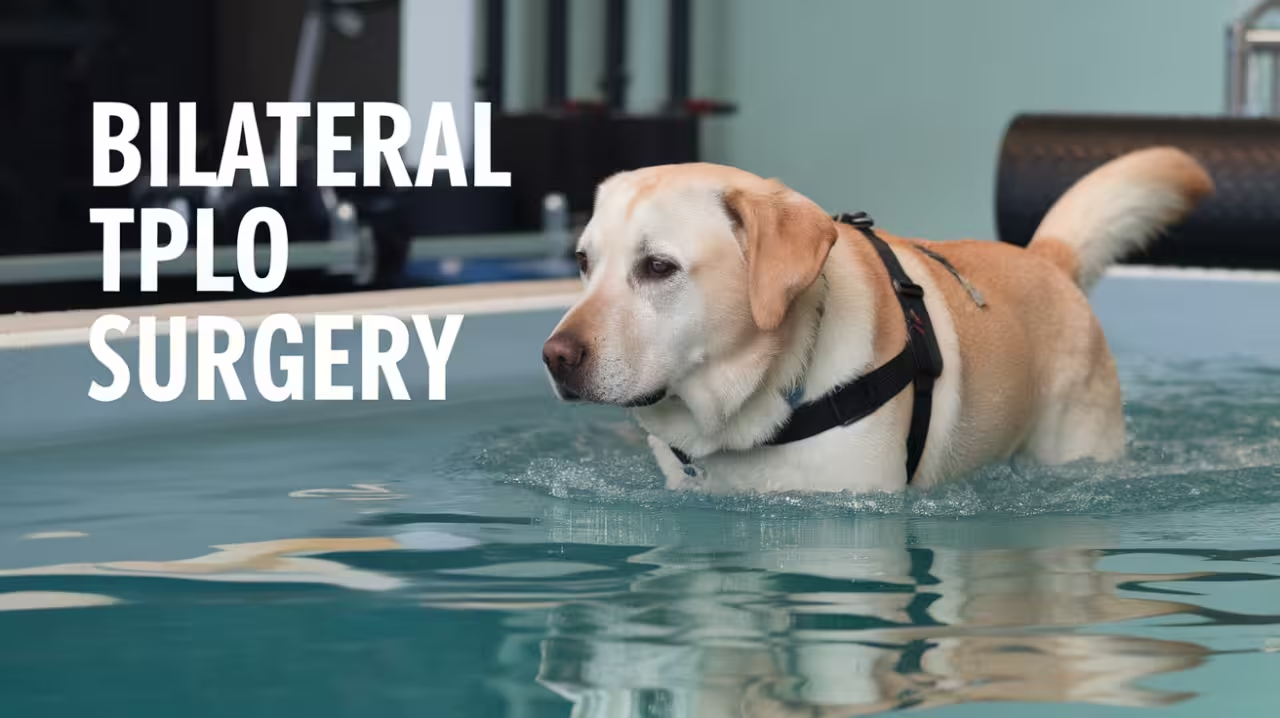
Bilateral TPLO Surgery Explained
Comprehensive guide to bilateral TPLO surgery for dogs, covering procedure, recovery, benefits, risks, and cost considerations for better mobility
Bilateral CCL (cranial cruciate ligament) disease -- affecting both stifle joints -- is common in dogs.
Midvalley Animal Clinic confirms 30 to 40% of dogs with unilateral CCL rupture will eventually develop rupture of the contralateral CCL.
When both stifles are significantly affected, the decision between simultaneous bilateral TPLO and staged TPLO is one of the most important surgical planning discussions an owner will have.
Quick answer: Simultaneous bilateral TPLO operates on both stifles in one anesthetic event, offering a single recovery period and lower total cost. Staged TPLO operates on one leg at a time, reducing anesthetic risk. Simultaneous is preferred for healthy, large dogs with both stifles unstable. Staged is preferred for older, smaller, or compromised dogs.
Key takeaways
- 30 to 40% of dogs with unilateral CCL disease develop contralateral CCL rupture: bilateral TPLO may be planned proactively at presentation or urgently when the second CCL ruptures during recovery
- Simultaneous bilateral TPLO offers a single anesthetic event and shorter overall recovery: both knees heal together; total cost is lower than two staged surgeries
- Staged bilateral TPLO reduces surgical risk: each surgery is shorter; the dog has one functional leg during recovery; preferred for older or medically compromised dogs
- The critical challenge of simultaneous bilateral TPLO is recovery: with both rear legs restricted, owners must provide intensive physical support (slings) for the first 2 to 3 weeks
- PubMed research (176 bilateral TPLO cases) found no significant difference in overall complication rates between simultaneous and staged approaches in appropriately selected patients
- Large dogs with strong front limbs handle simultaneous TPLO better: smaller or weaker dogs benefit from the staged approach due to greater difficulty bearing weight on two compromised rear legs
Why bilateral CCL disease is common
CCL disease in dogs is degenerative, not purely traumatic.
The same factors that caused one CCL to rupture -- degenerative fiber changes, abnormal tibial plateau angle, breed predisposition, obesity, and mechanical overload -- are typically present in both stifles.
When a dog ruptures one CCL, it often shifts weight onto the contralateral leg, increasing the load on the already-compromised contralateral CCL. This accelerates degeneration and the timeline to rupture.
The clinical implication: even when only one stifle is symptomatic at presentation, the surgeon will typically assess both stifles.
Pre-operative radiographs of both stifles help determine whether the contralateral joint shows early instability, effusion, or an elevated TPA that warrants planning for bilateral surgery.
Simultaneous bilateral TPLO
Overview
Both stifles are operated on during a single general anesthetic event. The dog is positioned, the first TPLO is performed, the dog is repositioned, and the second TPLO is performed.
Total surgical time is approximately 3 to 4 hours.
Advantages
Single anesthetic event: the dog is exposed to general anesthesia once rather than twice. Each anesthetic event carries inherent risk; eliminating one event reduces cumulative anesthetic risk.
Faster total recovery: both legs heal simultaneously. Rather than 8 to 12 weeks of restriction for the first leg, then a second 8 to 12 week restriction for the second leg, the dog completes one restriction period covering both.
SustainableVet.org confirms: when both knees are corrected in a single surgery, the dog undergoes just one healing phase rather than two separate ones, returning to normal activity sooner.
Lower total cost: while the simultaneous surgery costs more than a single TPLO, it is less than two completely separate procedures with individual hospitalization, anesthesia fees, and post-operative care expenses.
SustainableVet.org confirms: simultaneous TPLO often reduces overall costs by avoiding duplicate anesthesia, hospitalization, and post-operative care fees.
Risks and challenges
Both rear legs are compromised simultaneously: the dog cannot transfer weight to a strong rear leg during the recovery period. All rear-limb support requires either front-limb loading (difficult for large breeds) or active owner assistance via sling.
Increased owner demand: SustainableVet.org confirms post-surgical care is more challenging because the dog cannot rely on a strong leg for support, requiring owners to provide intensive assistance.
Longer anesthetic duration: total surgical time of 3 to 4 hours for bilateral vs. 1.5 to 2 hours for unilateral increases the physiological burden of anesthesia and surgery.
Potentially higher complication rate in some populations: the PubMed 176-case study compared simultaneous and staged TPLO complications and found no significant overall difference, but the study population was highly selected.
Staged bilateral TPLO
Overview
The more significantly affected stifle is operated on first. After a full recovery (typically 8 to 12 weeks until bone healing is confirmed), the second stifle is operated on.
Advantages
Reduced surgical risk per event: each procedure is a standard unilateral TPLO, carrying the same risk profile as any single TPLO.
One functional rear leg during recovery: the dog can weight-bear on the unoperated leg immediately after the first surgery. This simplifies nursing care significantly and allows most dogs to stand and toilet independently.
Better option for older or compromised dogs: SustainableVet.org confirms older dogs or those with other health issues benefit from a staged approach to reduce surgical risk. Dogs with cardiac, renal, hepatic, or respiratory disease may not tolerate a 3 to 4 hour bilateral procedure safely.
Disadvantages
Two separate anesthetic events: two exposures to general anesthesia over a 3 to 6 month period.
Longer total recovery timeline: the dog may not reach full bilateral function for 6 to 9 months or longer from the date of the first surgery.
Higher total cost: two separate surgeries, two hospitalizations, two sets of post-operative medications and supplies.
Risk of contralateral rupture during the first recovery: the contralateral leg bears additional load during the first recovery period, accelerating degeneration. In some dogs, the second CCL ruptures acutely during the first recovery -- this forces an emergency decision about timing of the second surgery.
Which approach is right for a given dog?
Generally prefer simultaneous bilateral TPLO when:
- Both stifles are confirmed significantly unstable at presentation
- The dog is young, healthy, and large with strong front limb musculature
- The owner is able to provide intensive physical support during the bilateral recovery period
- The surgeon is experienced with bilateral TPLO technique
- Financial considerations favor the single-event approach
Generally prefer staged bilateral TPLO when:
- Only one stifle is currently significantly symptomatic (the second may be monitored and staged only if it progresses)
- The dog is older, small, or has significant concurrent health conditions
- The owner's ability to provide intensive bilateral recovery support is limited
- The anesthetic risk for a prolonged bilateral procedure is elevated
SustainableVet.org confirms: large dogs with strong front limbs may handle simultaneous TPLO better, while smaller or weaker dogs may benefit from a staged approach.
Bilateral TPLO recovery: what to expect
Simultaneous recovery
Weeks 1 to 2: the most demanding period. Both rear legs are compromised. The dog requires a sling for all mobility. Bathroom trips require active owner support.
Crate rest at all other times.
Weeks 2 to 6: gradual improvement. Both legs begin partial weight bearing. Sling use may reduce but is still needed for most dogs on stairs or uneven surfaces.
Weeks 6 to 12: radiographic assessment of both osteotomies. Activity increases based on healing of both legs.
Key equipment for bilateral TPLO recovery
- Lifting harness or rear-end sling (essential, not optional)
- Non-slip mats throughout the house
- Ramps for car access (no jumping in or out)
- Low dog beds at floor level
For the standard TPLO recovery timeline, see what to expect after TPLO surgery in dogs. For confinement advice, see how to confine your dog after TPLO surgery.
For post-op tips, see 10 essential TPLO recovery tips for pet owners. For the cost guide, see TPLO surgery cost in dogs.
Frequently asked questions
How will I know if my dog needs bilateral TPLO?
Your vet will assess both stifles during the physical examination.
Signs that the contralateral stifle is also affected include drawer sign or tibial thrust on the second side, joint effusion on radiographs, or intermittent lameness on both rear legs.
Both stifles are typically radiographed at the pre-operative planning visit.
Can the second CCL rupture while my dog is recovering from the first TPLO?
Yes. This is one of the main risks of staged TPLO. The unoperated leg bears more weight during recovery, accelerating degeneration.
If the second CCL ruptures acutely, the dog becomes bilateral suddenly and the timing of the second surgery must be reassessed with your vet.
Is bilateral TPLO safe for large breeds?
Yes, when appropriately selected. Large dogs with good front limb strength typically handle the bilateral recovery better than small dogs.
The challenge is the nursing care requirement, which is significant regardless of size. Ensure you have the physical ability to support a large dog in a sling before committing to simultaneous surgery.
My dog needs bilateral TPLO but I can only afford one surgery now. What should I do?
This is a common situation. Staged TPLO is appropriate and legitimate. Operate on the more severely affected stifle first and monitor the second closely.
Discuss weight management and controlled activity to reduce load on the second stifle during the first recovery. Plan financially for the second surgery.
Do both TPLO plates stay in permanently?
Yes, unless a complication (infection, implant failure) necessitates removal.
If both plates require removal, it can be done as a single procedure or staged, depending on the reason for removal and the healing status of each osteotomy.
Resources
- SustainableVet. Bilateral TPLO Surgery. sustainablevet.org
- PubMed. Comparison of Intra- and Postoperative Complications Between Bilateral Simultaneous and Staged TPLO. pubmed.ncbi.nlm.nih.gov
- Midvalley Animal Clinic. Pre-Op Instructions for TPLO. midvalleyanimalclinic.com
- ACVS. Cranial Cruciate Ligament Disease. acvs.org
TPLO Plate Infection Signs and Treatment
Learn to recognize TPLO plate infection signs and effective treatments to protect your dog's recovery after surgery.
Surgical site infection (SSI) after TPLO is reported in 0.8 to 14.3% of cases depending on the study.
Infections range from superficial incision complications that resolve with oral antibiotics to deep implant-associated infections that require surgical intervention.
Distinguishing between these two categories is the most important clinical decision in TPLO infection management.
Quick answer: TPLO plate infection signs include spreading redness, warmth, swelling, purulent discharge, and increased lameness. Superficial infections appear in the first 30 days; deep and implant-associated infections appear weeks to months later. Both require culture-directed antibiotic treatment.
Key takeaways
- TPLO SSI rate ranges from 0.8 to 14.3% across published studies; superficial infections are more common than deep infections
- Superficial SSIs appear within 30 days: peak risk is days 5 to 14 post-surgery
- Deep and implant infections emerge weeks to months after surgery: new firm swelling over the plate 6 weeks post-TPLO warrants same-day vet contact
- Culture and sensitivity before antibiotics is critical: post-TPLO bacteria resistant to cefalexin found in PMC studies
- Postoperative prophylactic antibiotics do not prevent all SSIs: a 308-dog retrospective study found postoperative antibiotics were not protective against SSI
- Plate removal is required for persistent deep infections: safely performed once the osteotomy heals, typically 6 to 12 months post-TPLO
How TPLO infections are classified
Veterinary SSI classification follows the CDC framework, adapted for veterinary patients:
Superficial incisional SSI: infection involving only the skin and subcutaneous tissues of the incision. Diagnosed within 30 days of surgery. The implant is not involved.
Deep incisional SSI: infection involving deep soft tissues (fascia, muscle) of the incision site. Diagnosed within 30 days of surgery or within 1 year if an implant is in place. This category captures implant-associated infections that may appear months after the original TPLO.
Organ/space SSI: infection involving deeper structures such as bone (osteomyelitis). The most severe category, requiring prolonged treatment and often implant removal.
A wound is classified as infected when purulent discharge, an abscess, or a fistula is present; when redness, heat, fever, or dehiscence is identified; or when an organism is isolated on culture.
Signs of TPLO plate infection
Early signs (days 5 to 14)
The highest-risk window for superficial SSI is days 5 to 14 post-surgery. A wound that looks good on day 5 can develop infection signs by day 8 to 9.
SustainableVet.org's staph infection guide confirms: post-surgical infections follow recognizable patterns. Superficial ones announce themselves in the first two weeks. Daily monitoring at minimum through day 14 is essential.
Early infection signs:
- Redness spreading outward from the incision margins (not confined to the wound edge)
- Local warmth beyond expected mild post-surgical heat
- Mild discharge initially clear to yellow, progressing to cloudy or purulent
- Increased lameness compared to the previous day
- The dog licking or chewing the incision more than usual
Signs of deep or implant-associated infection
Deep infections and implant infections may appear after the surface looks healed weeks to months post-surgery.
Signs specific to deep or implant infection:
- A new firm swelling developing directly over the plate site after apparent healing
- A draining tract (fistula) a small hole in the skin near the incision that produces persistent discharge
- Lameness that was improving and then regresses
- Radiographic changes around the implant (periimplant bone loss, implant migration)
- Systemic signs: fever, lethargy, loss of appetite
The SustainableVet.org staph guide confirms: deep infections appear later, often after the surface looks healed. Implant infections can emerge months later.
A new firm swelling over a bone plate 6 weeks after apparent healing is a significant concern contact your vet the same day.
Diagnosis
Clinical examination: systematic palpation of the wound, assessment of discharge character and odor, measurement of wound margins, lameness grade.
Radiographs: check implant position, osteotomy healing status, and periimplant bone quality. Bone loss around screws is a radiographic sign of implant-associated infection.
Culture and sensitivity testing: this is the critical diagnostic step. Samples of wound discharge or surgically obtained tissue are cultured to identify the causative organism and determine which antibiotics will be effective.
PMC (SSI rate study, 2024) confirmed: two dogs developed superficial SSI infections in which the cultured bacteria were sensitive to enrofloxacin and resistant to cefalexin.
Using empirical cefalexin without culture would have produced treatment failure.
Do not start antibiotics before culture whenever possible. Culture-directed therapy is consistently more effective and contributes to antimicrobial stewardship.
Treatment
Superficial SSI
Most superficial infections respond to culture-directed oral antibiotics for 3 to 6 weeks. Local wound care gentle cleaning, keeping the incision dry, maintaining E-collar use is essential alongside antibiotic therapy.
The PMC antibiotic protocol study confirmed no benefit from extending antibiotics beyond the perioperative period.
Culture-directed targeted treatment of established infections is more effective than prolonged empirical prophylaxis.
Deep incisional SSI (fascia and muscle involvement)
Deep SSIs require longer antibiotic treatment (typically 6 to 12 weeks) guided by culture and sensitivity results.
Surgical debridement of infected tissue may be necessary if the infection does not respond to antibiotics alone.
If the implant is still required for osteotomy stability (bone not yet healed), it cannot be removed.
The goal is to control the infection with antibiotics and local measures until healing is sufficient to permit plate removal.
Implant-associated infection requiring plate removal
When infection involves the implant surface directly (periprosthetic infection), biofilm forms on the metal and renders antibiotic therapy insufficient alone.
Once the osteotomy is confirmed healed on radiographs (typically 6 to 12 months post-TPLO), plate removal is performed.
After removal, the area is debrided, flushed thoroughly, and systemic antibiotic therapy continues based on culture results. Most dogs recover well after plate removal for infection when the osteotomy is confirmed healed.
For the plate removal recovery guide, see TPLO plate removal recovery guide.
For when plate removal due to infection is indicated, see when does a TPLO implant need to be removed due to infection.
For the antibiotics guide specific to TPLO infections, see what antibiotics are commonly used for TPLO infections. For the full incision infection guide, see TPLO incision infection symptoms and prevention.
Frequently asked questions
How do I know if my dog's TPLO wound is infected or just healing normally?
Normal healing redness is mild, confined to the wound edge, and improving by day 3 to 5. Infected redness is spreading outward, deepening in color, warm to the touch, and producing discharge.
The key distinguishing feature is the trend: normal redness fades, infected redness worsens.
Should I start antibiotics as soon as I suspect infection?
Contact your veterinarian first. Ideally, wound swabs for culture and sensitivity should be taken before antibiotics are started, so the organism and its antibiotic susceptibilities can be identified.
Starting the wrong antibiotic can allow a resistant organism to thrive.
Can TPLO plate infections be cured without removing the plate?
Superficial and early deep infections often resolve with antibiotics and wound care, without plate removal. Established implant-associated biofilm infections typically require plate removal for definitive cure.
The plate can be safely removed once the osteotomy has healed, which takes a minimum of 6 to 12 months.
How long does antibiotic treatment take for a TPLO infection?
Superficial infections: typically 3 to 6 weeks of culture-directed antibiotics. Deep infections: 6 to 12 weeks, and sometimes longer for complex cases. Follow-up culture after treatment completion confirms resolution.
My dog had TPLO six months ago and now has a lump near the plate. Should I be worried?
Yes, this warrants prompt veterinary evaluation. A new firm swelling over the plate site 6 months post-TPLO is a significant concern for a late-onset deep or implant-associated infection.
Contact your vet the same day for examination and radiographs. Do not wait to see if it resolves.
Resources
- PMC. Comparison of SSI Rates in Dogs Undergoing TPLO Using Perioperative vs. Peri- and Postoperative Antimicrobial Prophylaxis. ncbi.nlm.nih.gov
- PMC. Clinical Relevance of Positive Intraoperative Bacterial Culture in TPLO in Dogs. ncbi.nlm.nih.gov
- PubMed. Influence of Antimicrobial Medications After TPLO on SSI: Retrospective Study of 308 Dogs. pubmed.ncbi.nlm.nih.gov
- Laguna Hills Animal Hospital. TPLO Surgery Complications. lhah.com
- ACVS. Cranial Cruciate Ligament Disease. acvs.org
Dog Incontinence After TPLO Surgery: Causes & Care
Learn about dog incontinence after TPLO surgery, its causes, treatment options, and recovery tips for your pet’s comfort and health.
Urinary incontinence after TPLO surgery is not a common complication, but it does occur and is understandably alarming for owners.
In most cases it is a temporary consequence of anesthesia, pain medication, stress, or reduced mobility not a sign of a serious surgical problem.
Knowing the causes, the timeline, and when to call your vet helps you respond appropriately.
Quick answer: Incontinence after TPLO is usually temporary from anesthesia, pain medications, reduced mobility, or stress. Most cases resolve within days to weeks. Call your vet if it persists beyond 2 to 4 weeks or comes with bloody urine or fever.
Key takeaways
- Immediate post-TPLO incontinence is most often from anesthesia or nerve irritation: both are temporary and resolve within days to weeks
- Opioid pain medications cause urinary retention or reduced bladder awareness in some dogs this resolves as medications are tapered
- Postoperative swelling may temporarily irritate nerves involved in bladder control; this resolves with swelling
- Reduced mobility is a practical contributor: a confined, painful dog may not signal in time or reach the door quickly
- Stress after major surgery can cause accidents in previously house-trained dogs; this is behavioral, not neurological
- Genuine nerve damage from TPLO is rare: incontinence persisting beyond 6 weeks warrants neurological evaluation
Why dogs may become incontinent after TPLO surgery
Anesthesia effects
General anesthesia temporarily suppresses normal nerve function throughout the body, including the neural pathways that control bladder filling awareness and sphincter tone.
As anesthetic drugs are metabolized over the 12 to 24 hours after surgery, some dogs have reduced bladder control.
This is the most common cause of immediate post-surgical incontinence. It resolves as anesthesia fully clears, typically within 24 to 48 hours.
Nausea, disorientation, and general sedation from anesthesia also mean the dog may not signal clearly when they need to go outside.
Scheduled outdoor bathroom trips every 2 to 4 hours in the first 24 to 48 hours post-surgery help manage this.
Opioid and sedative medications
Opioid pain medications commonly prescribed after TPLO affect bladder control in two ways: they reduce awareness of bladder fullness, and in some dogs cause urinary retention.
Both effects resolve as medications are tapered in the days following surgery.
Retention and incontinence are opposite problems retention is not urinating at all, while incontinence is involuntary urination but both can occur at different times as different medications have their effects.
As pain medications are tapered in the days after surgery, these effects resolve for most dogs.
Postoperative swelling and nerve irritation
The proximal tibia is surrounded by neurovascular structures. Postoperative swelling around the surgical site may temporarily compress or irritate nerves that travel to the bladder and urethra.
This is more likely in the first week after surgery when swelling is at its peak.
This type of incontinence improves as swelling resolves and typically does not indicate permanent nerve damage.
Reduced mobility
A dog recovering from TPLO is confined, in pain, and may not reach the door quickly enough when the bladder signals urgency.
This is a practical mobility problem, not a neurological one.
Frequent scheduled outdoor trips every 2 to 4 hours in the first week reduce accidents significantly. Waterproof mattress covers and washable bedding help manage the recovery period hygienically.
Stress and behavioral response
Major surgery is a significant stressor. Pain, an unfamiliar environment, an E-collar, restricted movement, and disrupted routine can cause previously house-trained dogs to have accidents unrelated to neurological dysfunction.
This type of incontinence typically resolves as the dog settles into a recovery routine at home, usually within 1 to 2 weeks.
Pre-existing urinary conditions
Dogs with pre-existing urinary sphincter mechanism incompetence (common in middle-aged spayed females), bladder infections, or weak bladder control may show worsened incontinence after surgery.
Anesthesia, medications, and reduced mobility all unmask or worsen underlying conditions.
If your dog was occasionally leaking urine before surgery, report this to your vet during the pre-surgical assessment so appropriate management can be planned for the recovery period.
Types of post-TPLO incontinence by timing
Immediate (within 24 to 48 hours): almost always anesthesia effects or opioid medication. Expected and self-limiting.
Early post-operative (days 3 to 14): medication effects, swelling-related nerve irritation, mobility limitation, or stress. Usually self-limiting with appropriate management.
Delayed onset (weeks 2 to 6): may indicate a developing urinary tract infection (UTI), which can occur after catheterization during surgery or from reduced immune response. A urinalysis is warranted if incontinence appears or worsens after initial improvement.
Chronic (beyond 6 weeks): uncommon. If incontinence persists beyond 6 weeks without improvement, veterinary evaluation for nerve damage or underlying urinary tract disease is appropriate.
Home management during recovery
- Scheduled outdoor bathroom trips every 2 to 4 hours for the first 1 to 2 weeks
- Waterproof mattress protectors and washable bedding in the recovery area
- Non-slip surfaces to reduce the effort required to stand and move toward the door
- Monitor urine color and odor cloudy, bloody, or foul-smelling urine suggests UTI
- Keep the genital area clean to prevent skin irritation from urine contact
- Use a belly band (for males) or absorbent dog diapers if incontinence is significant
When to contact your veterinarian
Call your vet if:
- The dog cannot urinate at all for more than 12 to 24 hours after surgery
- Urine is bloody, cloudy, or has a strong unusual odor (UTI signs)
- Incontinence is accompanied by straining, crying during urination, or frequent squatting without producing urine
- Incontinence worsens after initial improvement
- The dog has persistent incontinence beyond 2 to 4 weeks without any improvement
- Incontinence is combined with significant worsening lameness or systemic signs
For the not-peeing guide that covers urinary retention after TPLO, see dog not peeing after TPLO surgery: causes and care.
For the full TPLO complications reference, see 15 common complications after TPLO surgery in dogs.
For TPLO plate infection signs that may be contributing to systemic effects, see TPLO plate infection signs and treatment.
For post-op whining that may relate to the same pain driving accidents, see dog whining after TPLO surgery: causes and care.
Frequently asked questions
Is incontinence normal after TPLO surgery?
Temporary incontinence particularly in the first 24 to 48 hours is a recognized post-surgical finding related to anesthesia and opioid pain medications.
It is not an expected routine outcome, but it is not rare. If it resolves within a few days, it was almost certainly anesthesia-related.
Could my dog have nerve damage from TPLO surgery?
True nerve damage causing persistent incontinence from TPLO is rare. TPLO is performed at the proximal tibia, which is some distance from the pelvic nerves controlling bladder function.
Temporary nerve irritation from swelling is much more common than actual nerve injury and resolves as swelling subsides.
My dog was continent before TPLO and is now leaking at night. Why?
Nighttime leaking specifically is typical of urinary sphincter mechanism incompetence (USMI) a condition where the urethral sphincter relaxes during sleep or rest.
If this is new after surgery, anesthesia and opioid medications may have temporarily worsened underlying borderline sphincter function.
If it continues beyond 2 to 3 weeks, a vet visit for urinalysis and discussion of phenylpropanolamine (PPA) or other treatment is appropriate.
How do I know if my dog has a UTI after TPLO?
Signs of UTI include: cloudy or bloody urine, strong or unusual odor, frequent small amounts of urination, straining to urinate, and licking at the genital area more than normal.
Some dogs with UTI also show lethargy and decreased appetite. Urinalysis and culture confirm the diagnosis.
Should I limit my dog's water intake to reduce accidents?
No. Do not restrict water. Hydration is important for recovery and kidney function. Restricting water can concentrate the urine and increase UTI risk.
Instead, manage accidents through scheduled outdoor trips and waterproof bedding.
Resources
- VCA Animal Hospitals. Tibial Plateau Leveling Osteotomy (TPLO) in Dogs. vcahospitals.com
- ACVS. Cranial Cruciate Ligament Disease. acvs.org
- PetMD. Urinary Incontinence in Dogs. petmd.com
- Midwest Veterinary Specialists. Post-Operative Care Following TPLO. midwestveterinaryspecialists.com
Laser Therapy for Dogs After TPLO Surgery
Learn how laser therapy helps dogs recover faster and with less pain after TPLO surgery for cruciate ligament repair.
Laser therapy also called photobiomodulation (PBMT) or low-level laser therapy (LLLT) is one of the most commonly offered adjunct treatments during TPLO recovery. Many specialist and rehabilitation centres include it routinely.
But the evidence for its benefits is more nuanced than the marketing suggests, and owners deserve an honest picture of what it does and does not reliably achieve.
Quick answer: Laser therapy after TPLO uses specific light wavelengths to reduce inflammation and support tissue healing. Evidence for early pain reduction is moderately supported; evidence for improved radiographic bone healing is weak. It is a safe adjunct but should not replace rehabilitation exercises, pain medication, or activity restriction.
Key takeaways
- Laser therapy reduces postoperative inflammation and may improve gait scores: a TPLO study found better hindlimb function at 8 weeks in treated dogs
- Evidence for improving radiographic bone healing is weak: three controlled studies found no statistically significant difference in healing time
- The 2024 AVMA randomized trial found no significant difference in CRP, weight bearing, pain scores, or SSI rates between PBMT and sham groups
- Sessions typically begin within the first few days of surgery and continue through the rehabilitation phase
- Laser therapy is safe with few contraindications: avoid eyes and active tumour sites; safe over the TPLO incision once closed
- It works best as part of a multimodal plan: exercise therapy and pain medication carry stronger evidence than laser alone
What laser therapy does
Laser therapy for dogs, also known as photobiomodulation, involves using specific wavelengths of light to penetrate tissues and promote cellular regeneration and healing. The laser light stimulates the production of ATP (adenosine triphosphate), enhancing cell repair and growth, reducing inflammation, and increasing blood circulation.
Photobiomodulation therapy has been shown to decrease inflammation, and increase analgesia, vascularization, and tissue healing after musculoskeletal injury or surgery.
The mechanism is photochemical: light energy at specific wavelengths (typically 630 to 980 nm) is absorbed by mitochondria.
This increases ATP production, modulates reactive oxygen species, and influences gene expression related to inflammation and healing.
The effects are local confined to the tissue depth the light reaches.
For post-TPLO use, the targets are: the surgical incision, the osteotomy site in the proximal tibia, and the surrounding periarticular soft tissues.
What the clinical evidence shows
Pain and function
Research following TPLO surgery showed that dogs receiving LLLT had better hindlimb function and gait scores at 8 weeks compared to controls. This is especially valuable in orthopedic recovery, where early weight-bearing can prevent muscle atrophy and joint stiffness.
In a controlled veterinary study, dogs with surgical incisions treated with laser therapy exhibited significantly less inflammatory cell infiltration and tissue necrosis within the first week post-op compared to untreated controls.
The 2024 randomized trial
54 client-owned dogs with CCL rupture undergoing unilateral TPLO surgery were enrolled. The study population was randomly assigned to either a treatment group receiving PBMT (24 dogs) or a control group (30 dogs). PBMT was performed immediately after induction, and at 6 hours, 24 hours, 48 hours, and 8 weeks postoperatively. Evaluation of CRP, pain scores, evidence of SSI, and percentage weight bearing were assessed at all time points.
The trial found the therapy showed promise but no statistically significant difference between groups on any primary outcome measure.
Bone healing
Three studies compared LLLT to a control and concluded that LLLT treatment did not make a significant difference in improving radiographic bone healing. The studies collectively provide weak evidence for this outcome.
This is an important distinction: laser therapy may support soft tissue healing, pain, and early function but it does not appear to accelerate the osteotomy healing visible on radiographs.
When to start and how often
Laser therapy uses focused light energy on the surgical site to support healing.
Most rehabilitation programmes begin laser therapy within the first 1 to 3 days after TPLO surgery, often at the surgical centre before discharge or at the first rehabilitation visit.
Typical post-TPLO laser protocol:
- Frequency: 3 to 5 sessions per week in the first 2 to 3 weeks
- Frequency: 1 to 2 sessions per week from weeks 3 to 8
- Session duration: 5 to 15 minutes depending on the laser system and dosing protocol
- Total sessions: typically 6 to 12 in the first 8-week recovery phase
The protocol varies by laser system, power output, and the individual patient's response.
Realistic expectations
Laser therapy is a useful adjunct in TPLO recovery. It is not a substitute for the treatments with stronger evidence: pain medication, activity restriction, and structured rehabilitation exercises.
Laser therapy could be particularly helpful for dogs with weight-bearing and gait issues while recovering from TPLO surgery after a cruciate injury.
Dogs with significant early swelling, wound sensitivity, or slow initial weight-bearing progress may benefit most. Dogs recovering well with standard multimodal analgesia and rehabilitation may show less measurable difference.
For the bone healing timeline that laser therapy supports during recovery, see TPLO bone healing time in dogs explained.
For the full recovery plan that laser therapy fits into, see 10 essential TPLO recovery tips for pet owners.
For the physical therapy that is the primary evidence-based adjunct, see when to start physical therapy after TPLO surgery.
For swelling management in the recovery period, see how long does swelling last after TPLO surgery.
Frequently asked questions
Is laser therapy safe over the TPLO incision?
Yes, once the incision is closed. Laser therapy is safe over sutured incisions and can be applied at the surgical site from the first post-operative day in most protocols.
Avoid direct application over open wounds or actively infected tissue.
How many laser sessions does a dog need after TPLO?
Typically 6 to 12 sessions across the first 8 weeks.
Start at 3 to 5 sessions per week for the first 2 to 3 weeks, tapering to 1 to 2 per week through the rehabilitation phase.
The exact protocol depends on the laser system and rehabilitation plan.
Does laser therapy replace pain medication after TPLO?
No. Laser therapy is an adjunct to pharmaceutical pain management, not a replacement. Post-TPLO pain management requires NSAIDs, and often gabapentin or other analgesics.
Laser therapy may reduce the pain burden and support earlier mobility but does not provide sufficient analgesia on its own.
Can I do laser therapy at home with a consumer device?
Consumer-grade red light therapy devices exist but operate at lower power densities than veterinary therapeutic lasers. The clinical evidence discussed in this article relates to veterinary-grade PBMT devices.
Home devices may offer some benefit but cannot replicate the dosing of professional equipment. Discuss with your rehabilitation veterinarian before purchasing.
Will laser therapy prevent my dog from needing more medication?
Possibly. If laser therapy reduces post-operative inflammation and pain, some dogs may need lower doses of pain medication or taper off sooner.
This should be guided by your veterinarian based on your dog's individual recovery trajectory.
Resources
- AVMA Journal. Photobiomodulation Therapy in Dogs Undergoing TPLO After Cranial Cruciate Ligament Rupture. avmajournals.avma.org
- Veterinary Evidence. Does LLLT Improve Radiographic Healing for Dogs with CCL Rupture Undergoing TPLO Surgery? veterinaryevidence.org
- AKC. Laser Therapy For Dogs: Uses, Side Effects, and Alternatives. akc.org
- Erchonia. Laser Therapy for Post-Surgical Recovery in Pets. erchonia.com
How Long Does Swelling Last After TPLO Surgery
Find out how long swelling lasts after TPLO surgery, what’s normal, and when to call your vet for possible infection or complications.
Post-surgical swelling after TPLO is normal, expected, and self-limiting when managed correctly. Most incision-area swelling peaks within the first 2 to 5 days and resolves by 2 weeks.
Swelling that does not follow this trajectory -- that is not declining, or that appears new after initial improvement -- is the key indicator that requires veterinary attention.
Quick answer: Normal TPLO swelling peaks at days 2 to 5 and resolves within 1 to 2 weeks with cold therapy and rest. Ankle swelling from gravity-dependent fluid migration appears at days 3 to 5. Swelling increasing after day 5, or with warmth, redness, or discharge, warrants veterinary evaluation.
Key takeaways
- Normal TPLO swelling peaks at days 2 to 5: SustainableVet.org confirms mild incision swelling usually goes away within two weeks
- Ankle swelling is a normal gravity-dependent phenomenon: TPLO Info confirms ankle swelling typically appears at days 3 to 5; it is fluid migrating downward from the surgical site
- Cold therapy in the first 48 to 72 hours is the primary management tool: 10 to 15 minutes, 3 to 4 times daily, reduces swelling and pain
- Swelling worsening after day 5 or accompanied by warmth, redness, or discharge indicates infection, seroma, or hematoma; contact your vet within 24 hours
- Mild swelling can persist for weeks at a low level in larger dogs and those with poor activity restriction compliance; trajectory matters more than absolute level
- Nighttime swelling is common and normal: dogs move less at rest, allowing fluid to settle; this should improve by morning or after repositioning
Normal swelling: timeline and characteristics
Days 1 to 3: acute post-surgical swelling
Swelling begins within hours of surgery and results from:
- Surgical tissue trauma (incision through skin, subcutaneous tissue, and fascia)
- Bone cutting at the osteotomy site
- Inflammatory response to the metal plate and screws
- Fluid accumulating in the disrupted tissue spaces
This early swelling is diffuse, soft, and warm to the touch. It is the expected cellular response to surgery.
Days 2 to 5: peak swelling
Swelling typically peaks between days 2 and 5. The dog's leg may look noticeably larger at this stage, and some extension of swelling down the lower leg toward the ankle is normal.
Vetplayas confirms: swelling typically peaks within the first few days after surgery but should gradually subside over time.
Days 3 to 5: ankle swelling appears
A distinct swelling often appears at the ankle (tarsus) between days 3 and 5, sometimes alarming owners who notice it away from the surgical site. This is entirely normal.
TPLO Info confirms: it is completely normal for swelling to develop around the ankle approximately 3 to 5 days following surgery on the TPLO leg.
This swelling can be massaged and iced if it occurs and will resolve over a few days.
TPLO Austin confirms this finding identically. The mechanism is gravity-dependent migration of tissue fluid from the surgical site through the fascial planes of the lower leg.
Days 5 to 14: progressive resolution
From day 5 onward, swelling should consistently decrease with each daily inspection. Cold therapy, rest, and anti-inflammatory medication all contribute to this resolution.
SustainableVet.org confirms: mild swelling around the incision site usually goes away within two weeks. The trajectory must be consistently improving.
Beyond 2 weeks: residual low-level swelling
Some dogs retain mild soft swelling around the lower leg beyond 2 weeks, particularly larger dogs with greater tissue volume and dogs who have been less compliant with activity restriction.
This is usually minor and does not indicate a problem if:
- The swelling is soft and not warm
- There is no discharge or redness
- The dog is bearing weight and improving in lameness
Cold therapy: the primary management tool
Cold therapy is the evidence-based first-line intervention for post-surgical swelling.
Protocol:
- Wrap an ice pack or bag of frozen peas in a thin cloth or towel
- Apply to the incision and plate site for 10 to 15 minutes
- Repeat 3 to 4 times daily
- Begin on day 1 post-surgery
- Continue for the first 48 to 72 hours (the acute inflammatory phase)
SustainableVet.org confirms: cold therapy, like applying an ice pack wrapped in a towel for 10 to 15 minutes several times a day during the first 72 hours, helps reduce inflammation.
After the initial period, warm compresses can be used to promote circulation.
Never apply ice directly to the skin or incision -- frostbite and wound damage can result. Remove the pack immediately if the skin appears pale or very cold.
For the ankle specifically, TPLO Info confirms: ankle swelling can be massaged and iced. Gentle proximal-to-distal massage (toward the toes) applied after icing helps lymphatic drainage.
Concerning swelling: signs requiring veterinary contact
Swelling that is not declining after day 5
Normal swelling is consistently declining from day 5 onward. Swelling that is the same or larger than on day 3, measured at day 7, is not normal.
New swelling after apparent resolution
If swelling had reduced and then reappears -- particularly at the plate site rather than the incision -- this suggests a developing seroma, hematoma, or early infection.
SustainableVet.org confirms: you should be concerned if swelling increases after the first week or is accompanied by heat, redness, oozing, or a bad odor.
Warmth, firmness, redness, or discharge alongside swelling
These features distinguish infection from normal surgical edema. Normal edema is diffuse, soft, not dramatically warm, and has no discharge. Infection produces focal warmth, firmness, redness spreading beyond the incision, and discharge.
Swelling at the plate site (not the incision) weeks after surgery
This can indicate an implant-associated infection with seroma or early osteomyelitis. Requires radiographic assessment and deep sampling.
Seroma: a specific type of post-surgical swelling
A seroma is a localized collection of clear serous fluid under the skin, forming when tissue spaces fill with tissue fluid that has not been reabsorbed.
Seromas after TPLO are common and are distinct from infection.
Signs of seroma:
- A soft, fluctuant (fluid-filled) swelling at or near the incision
- Typically appears 1 to 3 weeks post-surgery
- Fluid is clear or pale yellow when aspirated
- No warmth, redness, or discharge from the incision itself
Most seromas resolve without treatment. Your vet will assess whether aspiration or monitoring is appropriate.
For the fluid buildup guide, see fluid buildup after TPLO surgery in dogs. For the ankle swelling guide, see ankle swelling after TPLO surgery in dogs.
For the infection signs guide, see TPLO plate infection signs and treatment. For the bruising guide, see bruising after TPLO surgery in dogs.
Frequently asked questions
Is it normal for the whole leg to swell after TPLO?
Yes, in the early days. Diffuse swelling of the lower leg, extending from the surgical site toward the ankle, is normal in the first 1 to 2 weeks.
Gravity and the inflammatory response both contribute. This resolves as the inflammatory process settles and the dog begins controlled weight bearing.
My dog's leg looks huge at day 3. Is that too much?
Day 3 is within the normal peak swelling period.
Unless the swelling is dramatically asymmetric compared to the other leg, is very hot, or is producing discharge, observe and continue cold therapy as directed.
If you are concerned, contact your vet to describe the swelling -- they can advise whether in-person assessment is needed.
Should I massage the swollen leg?
Gentle lymphatic massage (soft strokes toward the body, from the ankle upward) after icing can help reduce distal swelling.
Do not massage directly over the incision or plate site, and do not massage aggressively. Ask your vet or rehabilitation therapist to demonstrate the correct technique.
My dog's swelling is going up and down -- bigger in the evening, smaller in the morning. Is that normal?
Yes. SustainableVet.org confirms that mild nighttime swelling occurs because dogs move less while resting, allowing fluid to settle. Morning improvement after repositioning and movement is normal.
The concern is when the morning maximum is larger than the previous day's morning maximum -- a consistently worsening trend.
When does warm therapy replace cold therapy?
Cold therapy is most beneficial in the first 48 to 72 hours (the acute inflammatory phase). After 72 hours, warm compresses promote circulation and may help reabsorb residual fluid.
The transition is typically around days 3 to 5. Never apply warmth to an incision that looks infected or discharging -- this can worsen infection.
Resources
- TPLO Info. TPLO Recovery FAQ. tploinfo.com
- SustainableVet. Post-Surgery Recovery After TPLO in Dogs. sustainablevet.org
- TPLO Austin. TPLO Incision Care After Surgery. tploaustin.com
- VCA Animal Hospitals. Tibial Plateau Leveling Osteotomy (TPLO) in Dogs. vcahospitals.com

Arthrex TPLO Plate Overview and Use
Learn about the Arthrex TPLO plate, its design, surgical use, and benefits for canine cruciate ligament repair.
The Arthrex TPLO plate is a specialized orthopedic implant designed to stabilize the tibia after a tibial plateau leveling osteotomy (TPLO) surgery in dogs. TPLO surgery is a common procedure to treat cranial cruciate ligament (CCL) rupture, which causes lameness and pain in dogs. Understanding the Arthrex TPLO plate helps pet owners and veterinarians appreciate how this device supports bone healing and restores limb function.
This article explains what the Arthrex TPLO plate is, how it is used during surgery, its design features, and the benefits it offers. You will learn about the surgical technique, implant materials, and postoperative care to ensure the best outcomes for dogs undergoing TPLO surgery.
What is the Arthrex TPLO plate?
The Arthrex TPLO plate is a metal implant used to fix the tibia after cutting and rotating the bone during TPLO surgery. It holds the bone segments securely to allow proper healing and restore normal joint mechanics. The plate is contoured to fit the shape of the canine tibia and is available in various sizes to match different dog breeds and sizes.
The plate works together with locking screws that provide stable fixation without compressing the bone excessively. This design helps reduce complications and promotes faster recovery.
- Purpose of the plate: It stabilizes the tibia after osteotomy, maintaining the new bone angle to prevent joint instability and lameness.
- Material composition: Made from medical-grade stainless steel or titanium, ensuring strength, biocompatibility, and corrosion resistance.
- Plate design: Anatomically contoured to match the tibial shape, minimizing soft tissue irritation and improving fit.
- Locking screw system: Uses locking screws that lock into the plate, providing angular stability and reducing screw loosening risks.
These features make the Arthrex TPLO plate a reliable choice for TPLO surgeries in veterinary orthopedics.
How is the Arthrex TPLO plate used in surgery?
During TPLO surgery, the surgeon makes a curved cut in the tibia and rotates the bone segment to change the slope of the tibial plateau. The Arthrex TPLO plate is then applied to hold the bone in its new position. Proper placement and fixation are critical for successful healing and restoring limb function.
The surgical steps include precise measurement, plate selection, and screw placement to ensure stability and avoid complications.
- Osteotomy procedure: The tibia is cut using a saw guided by a jig to create a controlled curved osteotomy.
- Plate positioning: The Arthrex TPLO plate is aligned over the osteotomy site to match the bone contour and rotated segment.
- Screw insertion: Locking screws are placed through the plate holes into the bone, securing the plate firmly.
- Verification of stability: The surgeon checks the fixation and limb alignment before closing the surgical site.
Following these steps ensures the plate supports the bone during healing and helps the dog regain normal limb use.
What are the advantages of using the Arthrex TPLO plate?
The Arthrex TPLO plate offers several benefits compared to traditional fixation methods. Its design and materials improve surgical outcomes and reduce postoperative complications. These advantages contribute to faster recovery and better function for dogs after TPLO surgery.
Understanding these benefits helps veterinarians choose the best implant for their patients.
- Enhanced stability: Locking screw technology provides rigid fixation, reducing micromotion and promoting bone healing.
- Reduced soft tissue damage: Anatomical contouring minimizes irritation and inflammation around the implant site.
- Corrosion resistance: High-quality materials prevent implant degradation and inflammatory reactions over time.
- Versatility in sizes: Multiple plate sizes accommodate different dog breeds, ensuring proper fit and function.
These features make the Arthrex TPLO plate a preferred choice for many veterinary surgeons performing TPLO surgeries.
What materials are used in the Arthrex TPLO plate?
The Arthrex TPLO plate is manufactured from biocompatible metals that provide strength and durability while minimizing adverse tissue reactions. The choice of materials affects the plate’s performance and long-term safety.
Knowing the materials helps veterinarians and pet owners understand implant behavior inside the body.
- Stainless steel: Commonly used for its strength, corrosion resistance, and affordability in orthopedic implants.
- Titanium alloy: Offers excellent biocompatibility, lighter weight, and reduced risk of allergic reactions.
- Surface finish: Smooth, polished surfaces reduce tissue irritation and bacterial adhesion risks.
- Radiopacity: Materials allow clear X-ray visualization to monitor implant position during follow-up.
These material properties ensure the Arthrex TPLO plate performs well during the healing process and remains safe long term.
How does the Arthrex TPLO plate support postoperative recovery?
Postoperative care is essential for successful healing after TPLO surgery using the Arthrex TPLO plate. The implant provides stable fixation, but proper management of the dog’s activity and monitoring are critical to prevent complications.
Understanding the role of the plate in recovery helps owners follow veterinary instructions effectively.
- Early weight bearing: Stable fixation allows controlled limb use soon after surgery, promoting muscle strength and joint mobility.
- Reduced risk of implant failure: Locking screws and plate design minimize loosening or breakage during recovery.
- Radiographic monitoring: Regular X-rays check bone healing and implant position to detect issues early.
- Physical therapy support: Rehabilitation exercises complement implant stability to restore normal gait and function.
Following these guidelines helps dogs recover faster and return to normal activity safely.
What complications can occur with the Arthrex TPLO plate?
While the Arthrex TPLO plate is designed to reduce complications, some risks remain. Awareness of potential problems helps veterinarians and owners recognize signs early and take action.
Most complications relate to surgical technique, implant placement, or postoperative care.
- Infection risk: Surgical site infections can occur, requiring antibiotics or implant removal in severe cases.
- Implant loosening: Poor screw fixation or excessive activity may cause the plate to loosen, affecting stability.
- Delayed bone healing: Factors like poor blood supply or infection can slow osteotomy healing despite stable fixation.
- Soft tissue irritation: Improper plate positioning may cause discomfort or swelling around the implant.
Close follow-up and adherence to postoperative instructions minimize these risks and improve outcomes.
Conclusion
The Arthrex TPLO plate is a vital implant in veterinary orthopedics for treating cranial cruciate ligament injuries in dogs. Its specialized design and locking screw system provide stable fixation, promote bone healing, and support early recovery.
Understanding the plate’s features, surgical use, and postoperative care helps pet owners and veterinarians ensure the best results after TPLO surgery. Proper implant selection and management reduce complications and help dogs regain normal limb function safely.
What sizes does the Arthrex TPLO plate come in?
The Arthrex TPLO plate is available in multiple sizes ranging from small to large to fit different dog breeds and tibial dimensions accurately.
Can the Arthrex TPLO plate be removed after healing?
Implant removal is not routinely required but may be performed if the dog experiences irritation, infection, or implant-related complications after bone healing.
How long does it take for the bone to heal with the Arthrex TPLO plate?
Bone healing typically takes 8 to 12 weeks, depending on the dog's age, health, and postoperative care quality.
Is the Arthrex TPLO plate MRI compatible?
Plates made from titanium alloys are generally MRI compatible, while stainless steel plates may cause artifacts or interference during imaging.
What postoperative care is recommended after TPLO surgery with this plate?
Recommended care includes restricted activity, pain management, physical therapy, and regular veterinary check-ups with radiographic monitoring to ensure proper healing.

